


Stocks get the headlines, but property quietly does the heavy lifting for most Singaporean households. Residential property assets accounted for 42% of average household wealth as of end 2025, a figure that reveals just how central the role of property investment in wealth creation really is. Yet many investors still treat real estate as a passive, set-and-forget vehicle. The strategies that actually compound wealth involve understanding yields, financing structures, market timing, and portfolio diversification across both residential and commercial assets. This article breaks all of that down.
Table of Contents
- The role of property investment in wealth creation: Singapore market fundamentals
- How rental yield contributes to steady cash flow and portfolio returns
- Navigating financing and government regulations for strategic investment
- Balancing residential and commercial property investments for diversification
- Avoiding common pitfalls: expert insights from Singapore property investors
- Why a dynamic, diversified approach outperforms passive property investing
- Partner with Aesthetic Havens for expert Singapore property investment guidance
- Frequently asked questions
Key Takeaways
| Point | Details |
|---|---|
| Property’s wealth role | Residential property forms a core part of Singaporean household wealth with steady growth potential. |
| Rental yield income | Rental yields provide important cash flow that can offset mortgage costs and enhance returns. |
| Financing matters | Understanding ABSD and loan-to-value limits is crucial for managing investment affordability and cash flow. |
| Diversify portfolio | Combining residential and commercial properties balances yield opportunities and economic risks. |
| Active strategy wins | Proactively redeploying capital during market phases supports stronger long-term wealth creation than passive holding alone. |
The role of property investment in wealth creation: Singapore market fundamentals
Before any strategy makes sense, you need to understand the market you are operating in. Singapore’s property market is not just stable. It is one of the most resilient real estate markets in Asia, and that resilience is the bedrock of what is wealth creation in property for local investors.
Private residential prices rose 3.3% year-on-year in 2025, but the headline number understates what happened within specific segments. Landed properties surged 7.6% year-on-year, significantly outpacing non-landed condominiums and apartments. That gap matters enormously for capital gains calculations and long-term portfolio planning.
Here is how the major segments compared in 2025:
| Property segment | Price movement (y-o-y) | Key driver |
|---|---|---|
| Landed residential | +7.6% | Supply constraints, permanent resident demand |
| Non-landed (CCR) | +2.1% | Luxury upgrades, foreign interest |
| Non-landed (RCR) | +3.4% | HDB upgraders, mid-tier demand |
| Non-landed (OCR) | +3.8% | New launches, first-time investors |
What this table reveals is a core truth about growth and stability in Singapore property: different segments reward different strategies. Landed property offers superior capital appreciation but demands significantly more capital upfront. Non-landed condos in the Outside Central Region (OCR) offer a more accessible entry point with competitive yields and steady price growth.
Key factors sustaining Singapore’s market resilience include:
- Limited land supply keeping inventory tight relative to demand
- Strong immigration and population inflows supporting rental demand
- Government intervention through cooling measures that prevent speculative bubbles without killing long-term growth
- High homeownership aspirations among Singaporeans, sustaining transaction volumes
The structure of this market means that even investors entering at imperfect timing rarely suffer catastrophic losses. That predictability is precisely why property remains the foundation of wealth building with real estate in Singapore.
How rental yield contributes to steady cash flow and portfolio returns
Capital appreciation tells you what your asset is worth in the future. Rental yield tells you what it earns today. Both matter, but investors who ignore yield are essentially betting entirely on price. That is a dangerous position in a regulated market with high transaction costs.

Understanding rental yield explained starts with a simple distinction. Gross rental yield is annual rent divided by purchase price, expressed as a percentage. Net rental yield deducts property tax, maintenance fees, agent commissions, and vacancy periods. The gap between gross and net is often 0.8 to 1.2 percentage points, meaning a property advertising a 4% gross yield may only return 2.8 to 3.2% net.
Average gross yields for private condos stood at 3.3 to 3.4% islandwide in 2025, rising to 4.2 to 4.8% in high-yield OCR areas such as Woodlands and Jurong East. Here is how location choice directly shapes cash flow:
- Pick the right district: OCR areas near MRT nodes, industrial clusters, and regional centers tend to draw stable tenant pools including foreign workers and young professionals.
- Assess tenant demographics: Expat-heavy areas in the Core Central Region (CCR) carry higher rental price points but longer vacancy gaps between tenants.
- Size your unit strategically: Two-bedroom units consistently achieve higher yield-to-price ratios than three-bedroom or larger units because of stronger tenant demand.
- Factor in lease-up time: A vacant month in a $3,500/month unit costs $3,500. Build three months of vacancy buffer into your annual calculations.
- Refresh periodically without over-improving: A clean, well-maintained unit with updated fixtures consistently commands a rental premium over dated stock without requiring a full renovation.
Pro Tip: If you are choosing between two properties with a similar purchase price, run the net yield calculation after conservatively assuming 6 weeks of annual vacancy. The one that still clears 3% net is the more resilient income asset.
Navigating financing and government regulations for strategic investment
Yield analysis means nothing if your financing structure bleeds cash flow. Singapore’s regulatory environment is deliberately designed to keep leverage in check, and understanding it is non-negotiable for any investor thinking seriously about financial growth through property.
Second property purchases attract 17% ABSD with loan-to-value (LTV) ratios capped at 45 to 55%, meaning you need substantial liquid capital before acquisition.
Here is how the financing landscape differs between first and second property purchases:
| Parameter | First property | Second property |
|---|---|---|
| ABSD (Singapore citizen) | 0% | 17% |
| LTV limit | Up to 75% | 45 to 55% |
| Minimum cash down | 5% | 25% |
| TDSR cap | 55% | 55% |
Key considerations for investors navigating these rules:
- Total Debt Servicing Ratio (TDSR) caps all monthly debt obligations at 55% of gross monthly income. Investors with existing car loans or personal debt will find their borrowing capacity compressed significantly.
- ABSD timing on decoupling: Couples who hold a joint property can explore decoupling, where one party transfers their share to the other, freeing the first party to purchase the next investment property at first-property ABSD rates. This requires legal costs and stamp duty but can save tens of thousands in ABSD on higher-value purchases.
- Cash reserves beyond downpayment: Experienced investors keep 12 to 18 months of mortgage payments accessible. If a tenant vacates and rental market conditions soften, this buffer prevents forced liquidation.
Mortgages and financing for Singapore property decisions also hinge on the fixed versus floating rate choice. Fixed rates offer monthly certainty, which matters for cash flow modeling. Floating rates, tied to SORA (Singapore Overnight Rate Average), may offer lower starting costs but introduce variability.
Pro Tip: Before signing any option to purchase, run your full TDSR calculation including the new mortgage, existing liabilities, and a 3% stress-test rate increase. If you fail the stress test, you will fail it at the bank.
Balancing residential and commercial property investments for diversification
Most Singapore investors start with residential property and stop there. That is understandable, but it leaves real money on the table. A well-structured portfolio that mixes residential and commercial assets captures different economic cycles, yield profiles, and tax positions.
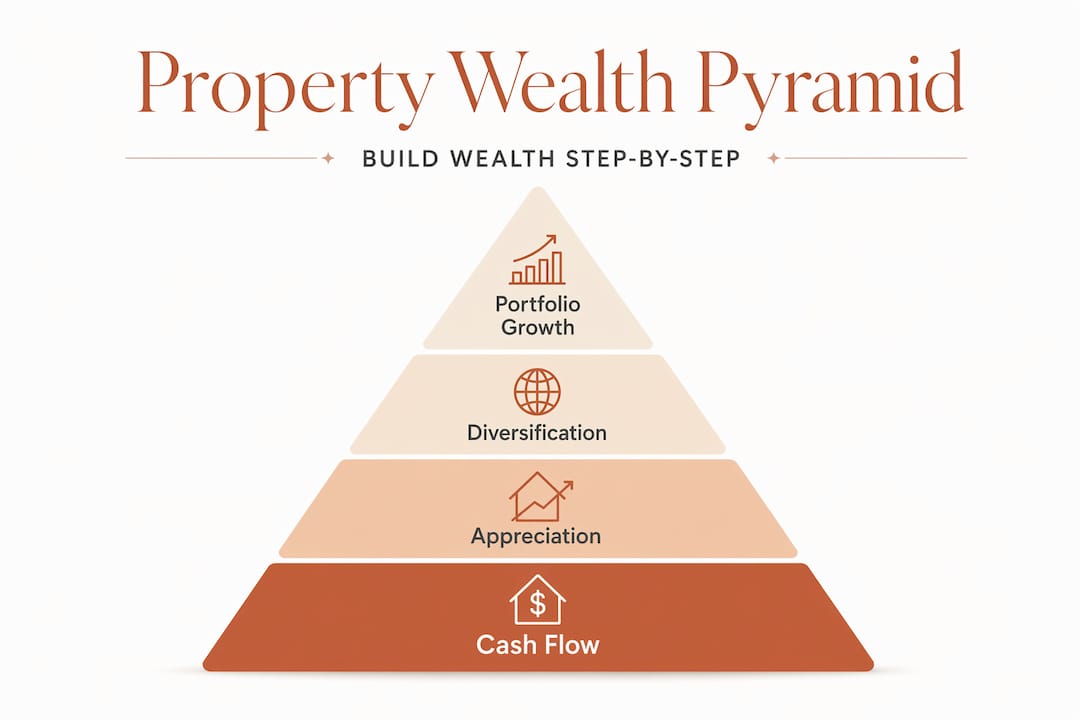
Commercial properties, exempt from ABSD, offer 4 to 6% yields but move with economic cycles more visibly than residential. Pairing them with residential holdings directly diversifies portfolio risk.
The benefits of commercial property investment in Singapore include:
- No ABSD exposure, which means commercial purchases do not trigger the 17% stamp duty surcharge that residential second properties attract
- Longer lease tenures (typically two to three years versus one year for residential), reducing vacancy frequency and agent renewal costs
- Input tax credit eligibility if you are GST-registered, allowing you to recover GST paid on expenses related to commercial property
- Triple-net leases for certain industrial and retail assets shift maintenance costs to tenants, improving net yield margins
The real estate wealth strategy for seasoned investors is not to simply own more residential units. It is to recognize that residential property builds long-term capital with moderate cash flow, while commercial assets can generate stronger income streams with different risk characteristics. Together, they create a portfolio that performs across different market conditions.
Pro Tip: Shophouses in Singapore offer a unique hybrid. They are zoned for commercial use on the ground floor and residential or office use above, carry no ABSD, and have historically appreciated well. They suit investors seeking both yield and capital gain in a single asset.
Avoiding common pitfalls: expert insights from Singapore property investors
Knowing the market and knowing financing still leaves room for expensive mistakes. The investors who build generational wealth through real estate are not necessarily smarter. They are more deliberate about avoiding specific, predictable errors.
“Property wealth-building requires identifying growth phases and redeploying capital rather than indefinite holding.” — Realtor Tan Zhi Wei
That framing cuts against the conventional “just hold forever” advice. The guide to smarter Singapore property investments that serious investors follow involves active cycle awareness, not passive waiting.
Here are the errors that derail otherwise sound investment plans:
- Holding beyond the optimal exit window: Every property goes through an appreciation cycle. Holding a property that has plateaued ties up equity that could be redeployed into an asset with stronger growth momentum.
- Underestimating transaction costs for HDB upgraders: Buyers moving from HDB to private often forget that they are paying buyer’s stamp duty, legal fees, agent commissions on both the sale and purchase, and temporary housing costs during the transition gap.
- Over-renovating for tenant preferences: Tenants are paying for location, space, and functionality. A $80,000 renovation in a mass-market condo rarely produces a rental premium that justifies the spend. Functional and clean consistently beats elaborate.
- Ignoring lease expiry concentration risk: Investors with multiple properties who let all leases expire in the same month face potential simultaneous vacancies. Stagger renewal dates across your portfolio.
Pro Tip: When you sell a property, do not let the proceeds sit idle for more than three months. Capital deployment timing is a major variable in total portfolio returns. Map your next acquisition target before listing your current property.
Why a dynamic, diversified approach outperforms passive property investing
Here is the uncomfortable reality that most property content avoids: simply buying and holding a Singapore condo for 20 years is not a real strategy. It is a default. And defaults rarely optimize returns.
The traditional “buy and hold forever” framing made more sense when property cycles were more predictable and cooling measures less significant. Today, Singapore’s regulatory environment means capital can be trapped in an asset for years if you buy at the wrong point in the cycle. The smarter framing, as Tan Zhi Wei articulates, is that active redeployment during growth phases compounds wealth more effectively than passive holding.
What does active redeployment actually mean in practice? It means watching your property’s capital gain relative to its yield. When the appreciation flattens and yield compresses because prices have risen faster than rents, that is often the signal to exit, crystallize the gain, and rotate capital into an asset with better fundamentals.
The investors I have seen build genuine property wealth across market cycles in Singapore share three habits. They diversify across asset types rather than accumulating identical condos. They maintain cash reserves that let them move quickly when market opportunities arise. And they revisit their portfolio thesis at least once per year, rather than assuming last year’s logic still holds.
The growth and opportunity in Singapore property is real, but it rewards the informed and active far more than the passive and complacent. Treating property purely as a savings account misses the compounding effect of strategic rotation, diversification, and timing.
Partner with Aesthetic Havens for expert Singapore property investment guidance
Understanding the principles of property wealth creation is one thing. Executing a strategy that accounts for your income, existing assets, financing capacity, and risk profile requires a different level of support.
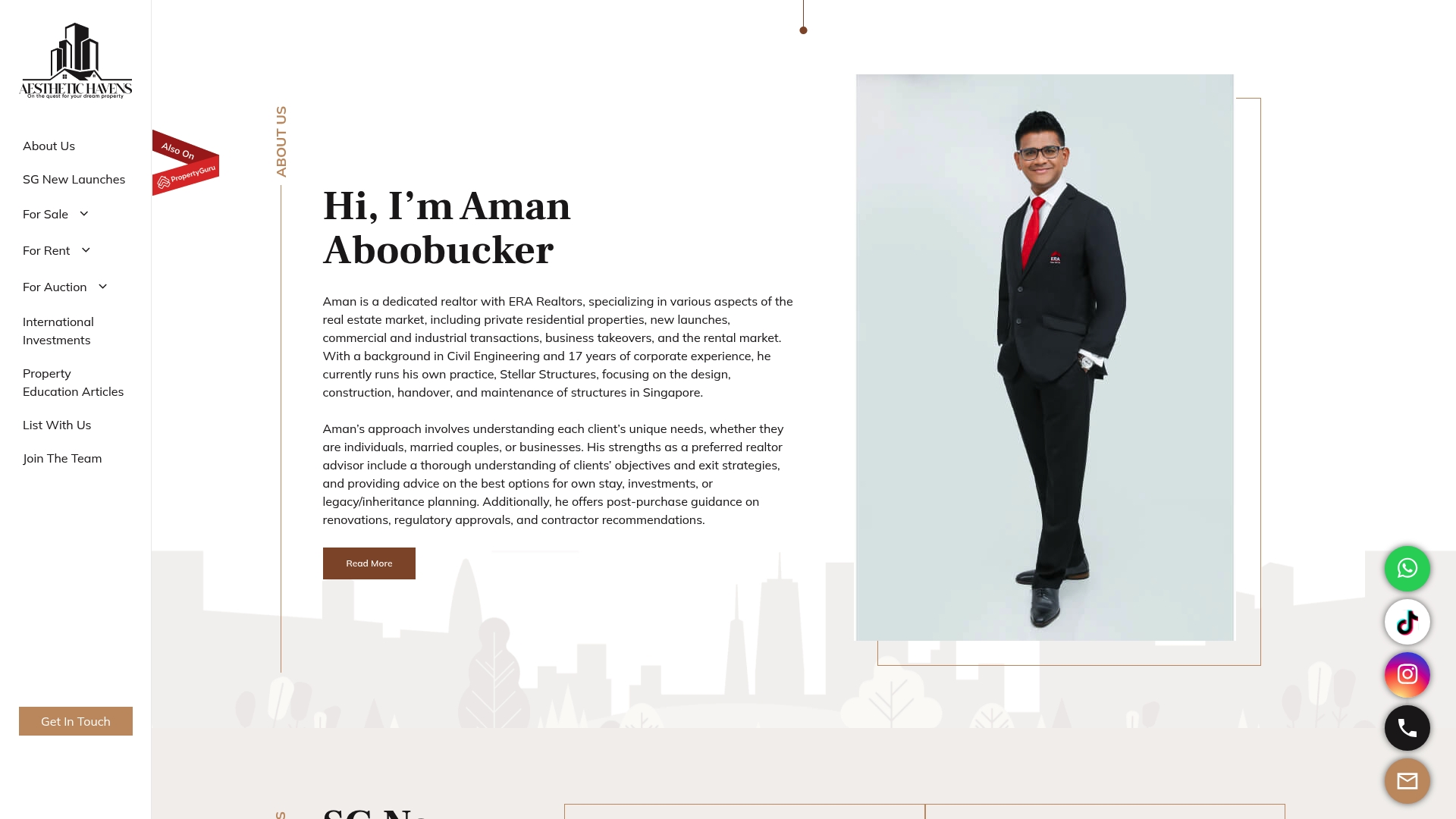
At Aesthetic Havens, Aman Aboobucker works with residential and commercial property investors across Singapore to build portfolios aligned with their long-term wealth goals. Whether you are a first-time investor evaluating your entry point, an HDB upgrader planning your transition, or an experienced investor exploring commercial property opportunities, the advisory approach is grounded in current market data, financing realities, and cycle awareness. For a deeper view of the Singapore commercial real estate market, our resources cover yield benchmarks, tenant demand trends, and asset selection frameworks that most generic platforms simply do not provide.
Frequently asked questions
How does property investment contribute to wealth creation in Singapore?
Property investment builds wealth through capital appreciation and rental income. Residential property assets accounted for 42% of average household wealth in Singapore as of end 2025, making it the single largest component of wealth for most households.
What are typical rental yields for private condos in Singapore?
Average gross yields for private condos sit at 3.3 to 3.4% islandwide, with higher yields of 4.2 to 4.8% available in selected OCR areas such as Woodlands and Jurong East where tenant demand remains strong relative to purchase prices.
What financing considerations should investors be aware of in Singapore?
The most critical factors are ABSD, LTV limits, and TDSR. Second properties attract 17% ABSD with LTV capped at 45 to 55%, making cash reserves and income capacity essential before committing to any purchase.
How can combining residential and commercial properties benefit my investment portfolio?
Residential property provides stable long-term capital growth, while commercial properties offer 4 to 6% yields without ABSD exposure, making the combination effective for yield diversification and risk management across different economic cycles.


