


Singapore’s property market is one of the most tightly regulated and consistently watched investment arenas in Asia. Whether you are a first-time investor sizing up a condo or a seasoned landlord exploring commercial assets, the sheer variety of options can be overwhelming. Residential properties, commercial offices, industrial units, REITs, and international assets all behave differently, carry different costs, and reward investors in distinct ways. This guide breaks down every major property investment type in Singapore so you can make a sharper, more confident decision.
Table of Contents
- How to evaluate property investment types in Singapore
- Residential property: Homes and apartments
- Commercial and industrial property: Offices, retail, and more
- REITs: Indirect property investment
- International property investments
- Summary comparison: Which property investment type is right for you?
- Why most investors overlook the hidden costs — and how to evaluate smarter
- Take the next step with expert property guidance
- Frequently asked questions
Key Takeaways
| Point | Details |
|---|---|
| Distinct property segments | Singapore property investments include residential, commercial, industrial, REITs, and international options. |
| Tax and legal factors matter | Investment types differ in taxes, ownership rules, and foreign buyer criteria. |
| Commercial isn’t one-size-fits-all | Office, retail, and industrial properties each come with unique risks and opportunities. |
| REITs offer diversification | Real estate investment trusts give easy property market exposure with fewer barriers and less direct management. |
| Smart investing needs multiple criteria | Top investors use a combination of yield, cost, and market risk to decide on the best property type. |
How to evaluate property investment types in Singapore
Before comparing specific property types, you need a clear framework. Not every investment fits every investor, and Singapore’s regulatory environment makes the stakes higher than in many other markets.
Start by asking: what is your primary goal? Are you chasing capital appreciation, steady rental income, or portfolio diversification? Your answer narrows the field significantly. An investor focused on passive income will think very differently from one who plans to hold and sell in five years.
The main property investment categories available to Singapore investors are:
- Residential: HDB flats, private condominiums, landed homes
- Commercial: Office spaces, retail units, shophouses
- Industrial: Factories, warehouses, logistics hubs, business parks
- REITs: Listed real estate investment trusts on the Singapore Exchange (SGX)
- International: Overseas properties across markets like the UK, Australia, Japan, and Malaysia
Each of these differs in lease horizons, financing, and transaction taxes, and how income and holding costs affect your overall returns. This distinction shapes everything from your stamp duty exposure to how you finance the purchase and what yield you can realistically expect.
Key factors to weigh across all property types include:
- Stamp duties: Buyer’s Stamp Duty (BSD) and Additional Buyer’s Stamp Duty (ABSD) differ sharply between property types and buyer profiles
- Financing: Loan-to-value ratios and bank lending terms vary between residential and commercial purchases
- Lease tenure: Freehold, 99-year, and 60-year leasehold properties carry very different resale dynamics
- Tenant demand: Commercial vacancies can last longer and hurt returns more acutely than residential ones
- Management intensity: Commercial properties often require more active lease management than a standard condo rental
Understanding the benefits of commercial property alongside residential options gives you a more complete picture before committing capital. The commercial property market guide is another strong starting point for investors new to non-residential assets.
Pro Tip: Before picking a property type, write down your investment horizon, risk tolerance, and whether you want to be actively involved in managing tenants. These three variables eliminate at least two of the five options for most investors right away.
Residential property: Homes and apartments
Residential property is where most Singapore investors begin, and for good reason. The market is familiar, demand is structurally strong, and entry points range from affordable HDB upgrader units to high-end landed homes.
In Singapore, residential property covers a broad spectrum:
- HDB flats: Only available to Singapore citizens and permanent residents, with eligibility and ownership rules governed by the Housing and Development Board
- Private condominiums and apartments: Available to Singaporeans, PRs, and foreigners (subject to ABSD)
- Landed homes: Bungalows, semi-detached, and terrace houses, generally restricted for foreign buyers
One of the most critical distinctions for investors is how the government taxes residential holdings. Residential property is taxed at either owner-occupied or non-owner-occupied rates, and property tax is fundamentally an asset tax tied to ownership, not a direct tax on rental income. Owner-occupiers pay concessionary rates on their primary home. Every additional property you own is taxed at the higher non-owner-occupied rate, which can significantly affect your holding costs.
On the income side, rental income is taxed on your net amount after allowable expenses, and if you co-own a property, income is assessed based on each owner’s legal share. Allowable deductions include mortgage interest, property tax, fire insurance, and maintenance fees.
“Rental income must be declared whether or not you receive a formal tenancy agreement, and IRAS can assess your income based on the actual rent received or the annual value of the property, whichever is applicable.”
Key pros of residential property investment:
- Deep and consistent tenant demand from locals, expats, and students
- Relatively high price stability compared to commercial assets
- Familiar and well-documented regulatory environment
- Strong resale market, especially in core and city-fringe locations
Key cons:
- ABSD rates for Singapore citizens buying a second home are 20%, and significantly higher for PRs and foreigners
- Non-owner-occupied property tax can erode net yields on lower-priced units
- Vacancy between tenants can be costly in the short term
Understanding rental property returns in detail is essential before you commit, especially when yield calculations often look rosier before taxes and expenses are factored in.
Commercial and industrial property: Offices, retail, and more
Beyond homes, Singapore offers a rich commercial and industrial property landscape. These assets behave very differently from residential property, and they attract a different kind of investor.
Commercial property includes office buildings, retail units, shophouses, and hotels. Industrial covers factories, warehouses, business parks, and logistics hubs. Each sub-segment has its own demand drivers:
- Office: Tied to corporate expansion, white-collar employment, and business formation
- Retail: Sensitive to consumer spending patterns and foot traffic
- Industrial and logistics: Driven by manufacturing output, e-commerce, and supply chain investment
As with residential, commercial property investment differs from residential in lease horizons, financing, and transaction taxes, but the differences go further. GST is chargeable on commercial transactions, loan-to-value ratios are typically lower, and lease structures can be far more complex. Tenants often negotiate longer leases with break clauses, fit-out contributions, and rent-free periods, all of which affect your actual income timeline.
| Feature | Residential | Commercial/Industrial |
|---|---|---|
| ABSD applicable | Yes | No |
| GST on purchase | No | Yes (if GST-registered seller) |
| Typical gross yield | 2.5% to 4% | 4% to 7% |
| Loan-to-value limit | Up to 75% (1st property) | Up to 80% (varies) |
| Lease management complexity | Low to moderate | Moderate to high |
| Tenant vacancy risk | Lower | Higher |

That higher gross yield on commercial and industrial assets sounds attractive, but factor in longer vacancy periods between tenants, fit-out costs, and higher management intensity, and the net returns narrow considerably.
Pro Tip: Industrial properties in Singapore, especially those with shorter remaining lease tenures, can generate strong cash yields but may face steeper depreciation in resale value. Always check the remaining lease before buying, particularly for 60-year leasehold units.
The 2026 commercial property trends show continued interest from investors in logistics and business park assets given Singapore’s role as a regional supply chain hub. If you are exploring industrial specifically, the industrial property guide breaks down eligibility, zoning, and return expectations in depth.
REITs: Indirect property investment
Not every investor wants the headache of managing a physical asset. REITs offer a way to participate in property income without owning bricks and mortar directly.
Singapore REITs provide exposure to diversified portfolios of income-generating properties without the need for direct ownership or tenant management. Singapore is home to one of Asia’s most developed REIT markets, with over 40 REITs and property trusts listed on the SGX covering sectors from retail malls to data centers and overseas offices.
Here is how Singapore REITs typically work for investors:
- Buy units on the SGX like you would buy shares, with investment amounts starting from a few hundred dollars
- Receive distributions (usually semi-annual) from the rental income generated by the REIT’s portfolio of properties
- Benefit from professional management that handles tenant acquisition, lease renewal, and asset maintenance
- Exit by selling units on the open market, giving you liquidity that direct property cannot match
The tradeoffs are real, though. REIT unit prices move with market sentiment, not just property fundamentals. During a stock market selloff, REIT prices can drop sharply even when the underlying properties are performing well. Management fees also reduce the income passed on to unitholders, and you have no say in which properties the REIT buys or sells.
When might REITs make more sense than direct ownership? Consider REITs if you have limited capital (under S$100,000), want instant diversification across dozens of properties, or simply want to avoid dealing with tenants, agents, and maintenance.
For long-term investors focused on property investment stability, a blended approach combining direct ownership with REIT exposure can smooth out volatility while maintaining control over core assets.
Pro Tip: Look at a REIT’s gearing ratio (total debt as a percentage of total assets). Singapore’s Monetary Authority of Singapore caps this at 50% for most REITs. REITs operating near the cap have less room to acquire new assets or absorb income shocks.
International property investments
Some Singapore investors look beyond local borders to access higher yields, lower entry costs, or portfolio diversification across different economic cycles.
For foreign investors wanting to buy property in Singapore, the rules depend heavily on property type. Foreign buyers face restrictions that apply mainly to restricted residential property such as landed homes, and most need government approval to purchase them. Commercial and industrial properties are significantly more accessible to foreign capital.
| Buyer type | Residential (non-landed) | Landed residential | Commercial/Industrial |
|---|---|---|---|
| Singapore citizen | Unrestricted | Unrestricted | Unrestricted |
| Permanent resident | Permitted (with ABSD) | Approval required | Unrestricted |
| Foreigner | Permitted (with ABSD) | Approval required | Generally unrestricted |
For Singaporeans investing abroad, the picture changes again. Each country has its own foreign ownership laws, tax treaties, currency risks, and financing requirements. Markets like the UK, Japan, and Australia have historically attracted Singaporean buyers for their transparent legal systems and rental demand from international student and professional populations. However, currency fluctuations, local taxes, and the challenge of managing a property from overseas all add layers of complexity.
Key considerations for cross-border property investment:
- Local foreign ownership laws and restrictions at the destination country
- Currency risk between SGD and the local currency
- Local income tax and capital gains tax on rental income or sale proceeds
- Property management costs when you are not physically present
- Loan availability for non-resident buyers (often stricter and more expensive)
A guide for foreign buyers in Singapore covers the local regulatory requirements in detail, which is equally useful for Singaporean investors who want to understand how their own government structures foreign access rules.
Summary comparison: Which property investment type is right for you?
Here is a consolidated view of how the main property investment types compare across the most important criteria:
| Investment type | Entry cost | Typical yield | Liquidity | Management effort | Best for |
|---|---|---|---|---|---|
| Residential (condo) | High | 2.5% to 4% | Moderate | Low to moderate | Stable income, capital growth |
| Commercial/Office | High | 4% to 6% | Moderate | High | Higher income, business-cycle investors |
| Industrial | Moderate | 5% to 7% | Moderate | Moderate | Yield-focused, logistics growth plays |
| REITs | Low | 4% to 7% | High | None | Passive investors, small capital base |
| International | Varies | Varies | Low | High | Diversification, offshore exposure |
To match the right type to your goals, work through this quick decision checklist:
- Define your holding period. Short-term flippers face higher transaction costs in Singapore. Most property types reward a five-year-or-longer horizon.
- Assess your capital base. REITs work with S$5,000 or less. A private condo typically requires S$300,000 or more in upfront cash and CPF.
- Calculate your true yield. Gross rental yield is a starting point only. Net yield after property tax, maintenance, insurance, and agent fees tells the real story.
- Evaluate your management capacity. Commercial and industrial tenants often need more active engagement than residential tenants.
- Factor in regulatory exposure. ABSD, stamp duty, and GST implications vary by property type and buyer profile. Get professional tax advice before committing.
Why most investors overlook the hidden costs — and how to evaluate smarter
Here is something most comparison articles will not tell you: the headline yield or price per square foot of a property type is almost never the number that determines whether your investment succeeds.
In our experience at Aesthetic Havens, investors who struggle are almost always the ones who fixated on one metric, picked a property, and then discovered the hidden costs afterward. A shophouse with a 6% gross yield can deliver 3.5% net after vacancy, management fees, renovation costs for new tenants, and property tax. That is a very different investment than the brochure suggested.
Sophisticated investors use multiple valuation approaches rather than a single quick metric to cross-check assumptions. Combining income-based analysis, replacement cost estimates, and comparable sales data gives you a three-dimensional view of what an asset is actually worth and what it can realistically return.
For Singapore investors specifically, three hidden costs consistently surprise first-time buyers: the compounding effect of ABSD on subsequent purchases, the true cost of vacancy during lease transition periods for commercial assets, and the ongoing drag of property tax on non-owner-occupied residential units. None of these appear prominently in yield calculators.
Our honest view: investors who succeed long-term in Singapore’s property market are those who build a cost-complete picture of each asset. That means modeling scenarios where rental income drops 20%, where the property sits vacant for three months, or where a regulatory change shifts the tax treatment. Understanding how yield is calculated properly is the foundation of all of this analysis.
Take the next step with expert property guidance
Navigating Singapore’s property investment landscape is complex, and the right choice depends on your goals, capital, and risk profile. Whether you are weighing your first condo purchase, exploring a smart commercial investment, or looking at international property opportunities to diversify your portfolio, Aesthetic Havens offers the market intelligence and advisory support you need to move with confidence.
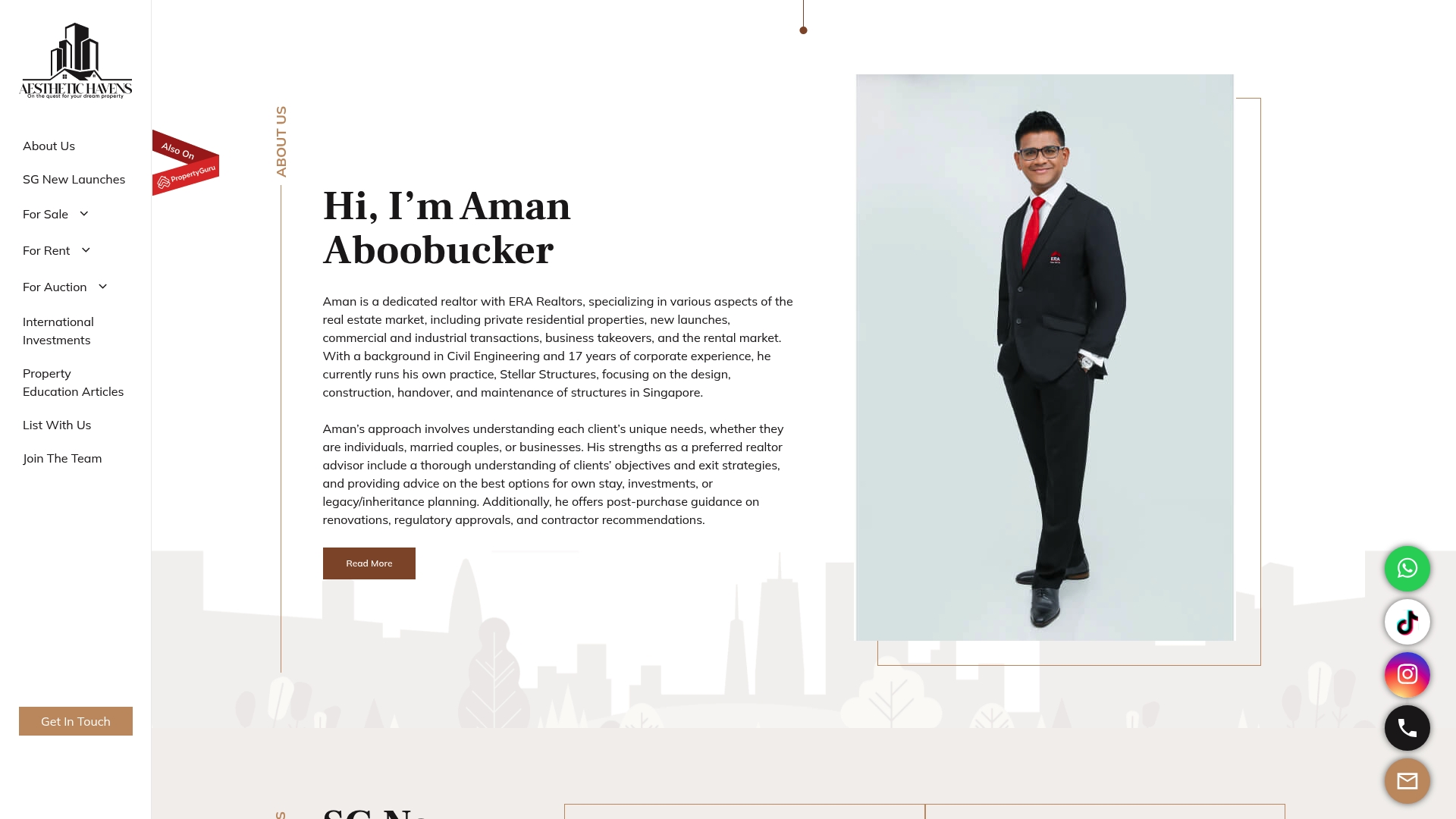
Aesthetic Havens, operated by Aman Aboobucker under ERA Realtors, works with investors at every stage, from first-time buyers to multi-asset portfolio holders. If you want personalized guidance on which property type fits your investment strategy, connect with us directly through Aesthetic Havens. Our advisory is grounded in current market data and real transactional experience across residential, commercial, industrial, and international property segments.
Frequently asked questions
Do foreigners face restrictions when buying property in Singapore?
Yes, most landed residential properties require foreign buyers to obtain government approval, whereas commercial and industrial properties are generally more open to foreign ownership.
How is rental income taxed for Singapore property investors?
Rental income is assessed based on legal ownership share and taxed on the net amount after allowable expenses; all rental income must be declared annually regardless of how the property is co-owned.
Are REITs a safe way to invest in Singapore property?
REITs offer diversified, lower-barrier exposure to property income, but their unit prices can fluctuate like equities and management fees reduce distributions, so they carry a different risk profile than direct ownership.
What’s the difference between owner-occupied and non-owner-occupied residential property tax in Singapore?
Owner-occupier tax rates apply to only one property per taxpayer at the concessionary rate; all additional properties you own are taxed at the higher non-owner-occupier rate, which directly affects your net holding costs.
Which property type is best for first-time investors in Singapore?
Many first-time investors in Singapore start with residential property for its familiar regulatory environment and stable demand, but those with smaller capital or a preference for passive income may find REITs or a commercial unit better suited to their goals.


