


Renting out property in Singapore sounds straightforward until you realize just how many moving parts are involved. Between HDB approval processes, URA zoning checks, tenant quotas, tax reporting deadlines, and lease negotiations, even experienced property owners can find themselves overwhelmed. Whether you own an HDB flat, a private condo, or a commercial shophouse, this guide walks you through every stage of the rental process with clear, practical steps so you can lease your property confidently and legally.
Table of Contents
- Understand regulations for residential and commercial properties
- Preparation steps: What you need before listing
- Step-by-step process for renting out your property
- Tax obligations and reporting requirements for landlords
- Common contractual terms and how to protect yourself
- Our take: What most landlords overlook in Singapore leasing
- Take the next step with expert help
- Frequently asked questions
Key Takeaways
| Point | Details |
|---|---|
| Know your regulations | Every type of property has unique rules, eligibility, and approval steps, so be sure to check the official requirements. |
| Prepare documentation early | Gather all fees, tenant eligibility proof, and condition reports before listing to prevent delays. |
| Screen tenants carefully | Thorough vetting helps avoid legal breaches and disputes for both residential and commercial rentals. |
| Account for tax changes | Renting a property may alter your tax rates and obligations—make sure you register and report correctly. |
| Write clear lease terms | Protect your interests by using precise deposit, fit-out, and restoration clauses in your contract. |
Understand regulations for residential and commercial properties
Before you list your property or accept a single viewing request, you need to know exactly what the rules are. Singapore draws a sharp line between residential and commercial rental regulations, and the approval processes for each are very different.
For residential properties, HDB flat owners face the strictest controls. You must meet the 5-year MOP (minimum occupancy period) before you can rent out the entire flat, apply to HDB for approval online, and stay within neighborhood and block quotas. Lease lengths are also capped depending on tenant nationality. Private condos and landed homes operate under fewer restrictions, but you still need to ensure your tenancy agreement complies with local laws.
For commercial properties, the first step is a URA zoning check for permitted use to confirm what activities are legally allowed on your premises. A space zoned for “office” use cannot automatically be used as a food and beverage outlet. Skipping this check can result in tenants operating illegally, which becomes your problem as the landlord.
Here is a quick comparison of key regulatory differences:
| Factor | Residential (HDB) | Commercial |
|---|---|---|
| Approval body | HDB | URA / Building authority |
| Pre-rental requirement | 5-year MOP | Zoning check |
| Quota restrictions | Yes (neighborhood/block) | No |
| Lease length limits | Yes (by tenant type) | Negotiable |
| Owner-occupier rules | Must reside for room rental | Not applicable |
Key regulatory checkpoints to cover before listing:
- Confirm MOP eligibility for HDB flats or verify private property ownership status
- Check URA Master Plan for commercial property permitted uses
- Review HDB’s online approval portal for residential applications
- Verify that your property insurance covers rental use
- Confirm fire safety and building compliance for commercial spaces
For a broader overview of the leasing landscape in Singapore, the complete leasing guide on Aesthetic Havens covers both residential and commercial scenarios in depth.
Preparation steps: What you need before listing
With regulations understood, you can now prepare your property and paperwork. This stage is where many landlords rush and later regret it. Taking time to get organized here saves you significant headaches down the line.
For HDB flat owners, the application fees, owner-residency requirements for bedroom rentals, and tenant eligibility rules are all clearly defined by HDB. You must be living in the flat if you are only renting out individual bedrooms, not the whole unit. Eligible tenants include Singapore citizens, permanent residents, and certain non-citizens, but quota limits apply.
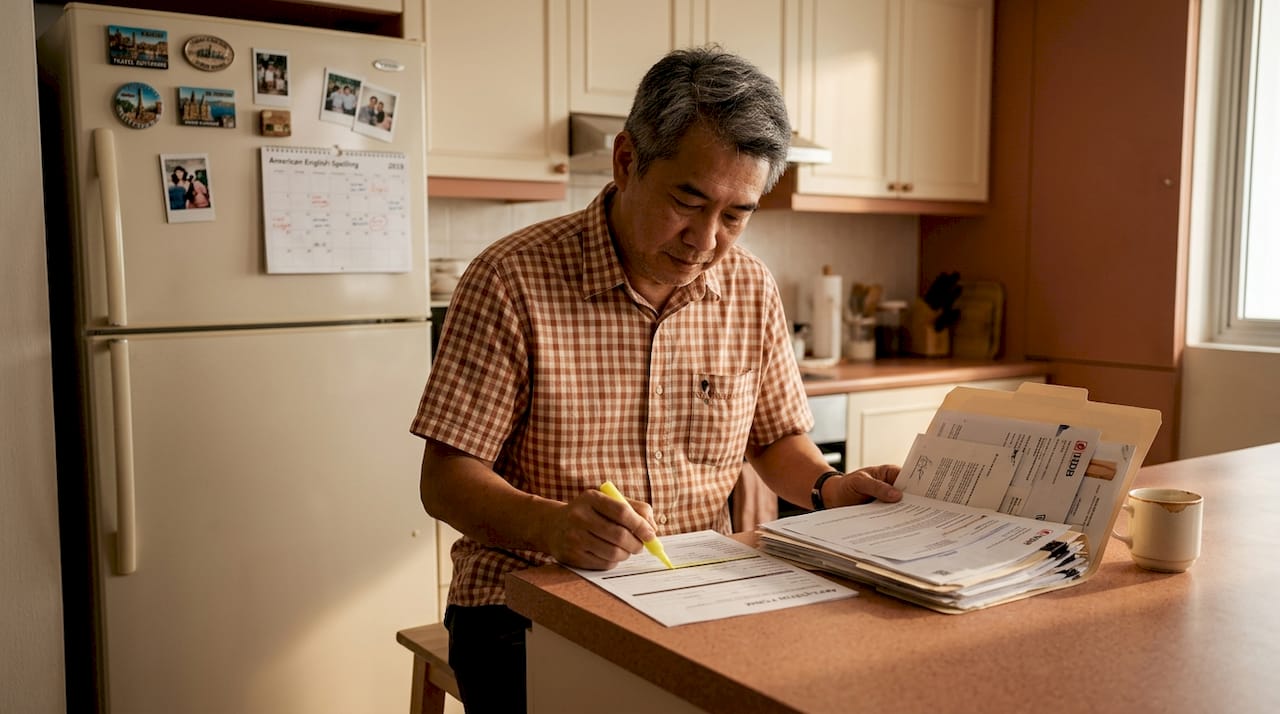
For commercial landlords, application processing fees and fit-out periods are important budget items to factor in. Fit-out periods, where the tenant customizes the space before operating, are typically rent-free and can range from two weeks to three months depending on the lease. You need to decide upfront whether you are offering a fitted or bare shell unit.
Here is a preparation checklist with typical timelines and costs:
| Preparation task | Estimated time | Notes |
|---|---|---|
| HDB approval application | 5 to 7 working days | Online via HDB portal |
| Property condition assessment | 1 to 2 weeks | Document existing defects |
| Lease agreement drafting | 3 to 5 days | Use a lawyer or agent |
| Stamping of tenancy agreement | Within 14 days of signing | Via IRAS e-stamping |
| Commercial fit-out period | 2 to 12 weeks | Negotiated in lease |
Documents you will typically need:
- HDB approval letter (for HDB flat rentals)
- Identity documents for all tenants
- Proof of tenant eligibility (employment pass, student pass, etc.)
- Inventory list signed by both parties
- Condition report with photos taken before handover
Pro Tip: Take a full video walkthrough of your property on the day of handover. This timestamped record protects you from disputes over damage at the end of the tenancy and is far more reliable than a written inventory alone.
If you are considering investing in commercial property as part of a broader wealth strategy, understanding fit-out costs and lease structures is essential before committing to a purchase. For a detailed breakdown of what landlords are responsible for throughout the tenancy, the landlord roles guide is a practical reference.
Step-by-step process for renting out your property
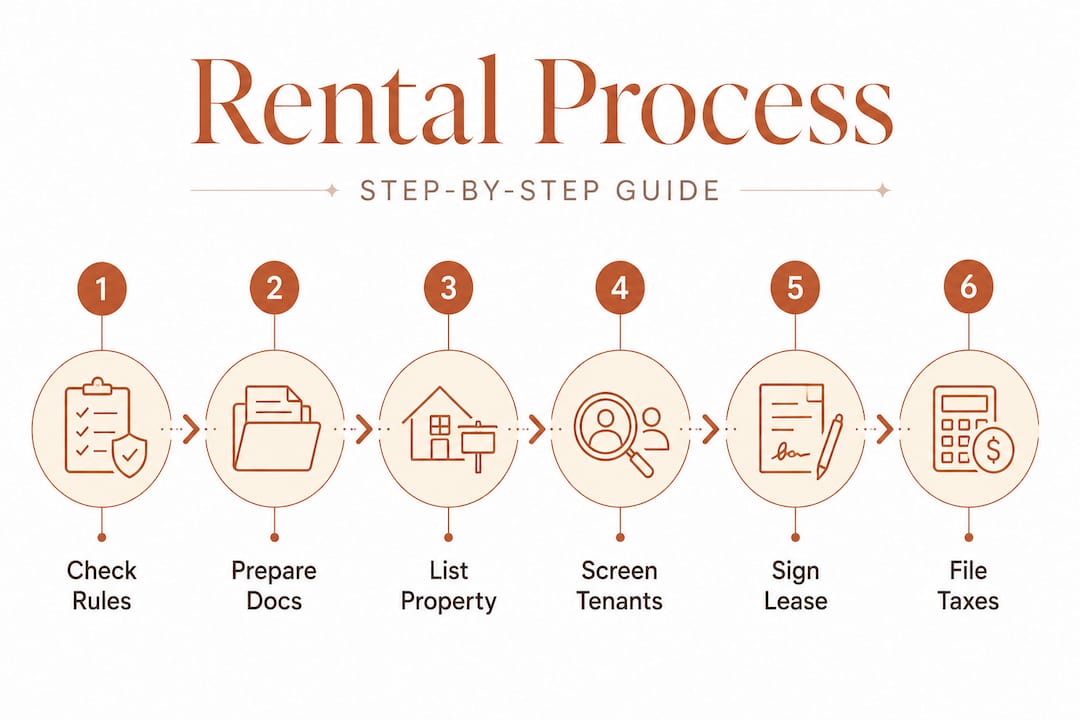
After getting ready, it is time to execute the rental process from start to finish. Here is how the process typically flows for Singapore landlords:
- Submit your HDB or URA application and wait for approval before marketing the unit. For HDB, approval is required before any tenancy begins.
- List your property on platforms like PropertyGuru, 99.co, or through an ERA agent who can access a wider pool of qualified tenants.
- Screen potential tenants carefully. For HDB flats, check non-citizen quotas, maximum lease periods, and tenant eligibility requirements before shortlisting.
- Negotiate lease terms including rent, deposit amount, maintenance responsibilities, and renewal options.
- Draft and sign the tenancy agreement, ensuring all clauses are clear and legally sound.
- Collect the security deposit (typically one to two months for residential, two to three months for commercial).
- E-stamp the tenancy agreement through IRAS within 14 days of signing.
- Hand over keys with a signed inventory and condition report.
For commercial leases, assignment and subletting clauses, and tenant fit-out and restoration requirements must be clearly defined at the drafting stage. An assignment clause controls whether your tenant can transfer the lease to another business. A restoration clause requires the tenant to return the unit to its original condition at the end of the lease, protecting your property’s value.
Pro Tip: When listing your property, always include high-quality photos taken in natural light, a floor plan, and a clear description of nearby MRT stations and amenities. Listings with these elements consistently attract more inquiries and higher-quality tenants.
For commercial landlords looking to secure the best deal, the leasing tips for office deals guide covers negotiation strategies that most landlords never think to use. For residential landlords focused on the condo market, browsing condo rental deals gives you a real-time sense of competitive pricing in your area.
Market insight: Singapore’s rental market has remained resilient, with strong demand from expatriates and professionals. Understanding current vacancy rates in your district before setting your asking rent can mean the difference between a unit that sits empty for months and one that leases within two weeks.
Tax obligations and reporting requirements for landlords
Once your lease is signed, you will need to fulfill tax and reporting duties. This is the part that catches many new landlords completely off guard.
According to IRAS requirements, you must notify IRAS within 15 days of renting out your property, e-stamp the tenancy agreement, and declare all rental income as taxable. If you rent out the entire property (not just rooms), your owner-occupier property tax rates are withdrawn and replaced with higher non-owner-occupier rates.
Key tax obligations for Singapore landlords:
- Rental income tax: All net rental income must be declared in your annual income tax filing. You can deduct allowable expenses such as mortgage interest, property tax, maintenance fees, and agent commissions.
- Property tax rate change: Renting out the whole property triggers a switch from owner-occupier rates to non-owner-occupier rates, which are significantly higher.
- E-stamping: Every tenancy agreement must be stamped via the IRAS portal. The stamp duty is typically paid by the tenant but must be completed within 14 days of signing.
- 15-day notification rule: You must inform IRAS within 15 days of the tenancy start date. Missing this deadline can result in penalties.
“When you rent out your residential property, the owner-occupier tax rates will be withdrawn. Property tax will be levied at the non-owner-occupier residential tax rates.” — IRAS, Property tax: renting out my property
Understanding how rental income affects your overall returns is critical for long-term planning. The rental yield explained article breaks down how to calculate gross and net yields after factoring in taxes and expenses, giving you a realistic picture of what your investment actually earns.
Common contractual terms and how to protect yourself
To make sure your interests are safeguarded, let’s look closer at contracts and lease terms. A poorly drafted lease is one of the most common sources of landlord-tenant disputes in Singapore, and many of these disputes are entirely preventable.
Commercial contracts commonly include base or gross rent structures, NNN leases, assignment and subletting with landlord consent, and fit-out and restoration clauses. A triple-net (NNN) lease requires the tenant to pay property tax, insurance, and maintenance costs on top of base rent, which significantly reduces your ongoing expenses as the landlord.
Key lease terms every Singapore landlord should know:
- Security deposit: One to two months for residential; two to three months for commercial
- Diplomatic clause: Allows early termination if the tenant relocates due to employment, typically after 12 months with one month’s notice
- Restoration clause: Requires tenant to return the property to its original state at lease end
- Subletting clause: Specifies whether and how the tenant can sublet the unit or assign the lease
- Rent review clause: Defines how and when rent can be adjusted during the tenancy
Here is a comparison of residential versus commercial lease protections:
| Clause | Residential lease | Commercial lease |
|---|---|---|
| Security deposit | 1 to 2 months | 2 to 3 months |
| Diplomatic clause | Common | Rare |
| Restoration clause | Basic | Detailed and enforceable |
| Subletting rights | Restricted by HDB rules | Negotiated with landlord consent |
| Rent review | Fixed or annual increment | Often tied to market or CPI |
For a broader view of current market conditions and what tenants are looking for, the rental market opportunities overview gives landlords context for setting competitive yet profitable lease terms.
Our take: What most landlords overlook in Singapore leasing
Most landlords focus heavily on getting the rent right and finding a tenant quickly. Both matter, but in our experience, the landlords who face the fewest problems over a tenancy are the ones who invested time upfront in three specific areas: tenant screening, tax preparation, and lease clarity.
Tenant screening is consistently undervalued. A tenant who pays slightly below market rate but has a verified employment history, strong references, and a track record of caring for properties is worth far more than a higher-paying tenant with red flags. Missing proper checks is the single biggest cause of disputes we see, from unpaid rent to property damage to early termination conflicts.
Tax surprises hit new landlords hard. Many first-time landlords do not realize that renting out their whole property changes their property tax rate immediately. When you add that to income tax on rental earnings, the net return can look very different from what you expected. Running the numbers before you sign a lease, not after, is essential.
Restoration clauses are often treated as boilerplate. They should not be. A vague restoration clause in a commercial lease can leave you with a stripped-out unit and a legal bill at the end of the tenancy. Be specific about what “original condition” means, document it with photos, and make sure the clause has teeth.
Finally, relying on template leases is risky. Every property and every tenancy has unique factors. A clause that works for a Toa Payoh HDB flat does not necessarily protect a Tanjong Pagar shophouse. Understanding the agent roles in Singapore commercial leasing can help you decide when professional support is worth the commission and when you can handle things yourself.
Take the next step with expert help
Navigating Singapore’s rental process on your own is possible, but it takes time, attention to detail, and a solid understanding of regulations that change regularly.
At Aesthetic Havens, we work with landlords across residential and commercial segments to simplify the leasing process from start to finish. Whether you need help understanding your obligations, drafting a watertight lease, or finding the right tenant faster, our team is ready to support you. Explore the 2026 leasing guide for a full picture of the current market, learn how real estate agents add value throughout the rental process, or connect directly with a trusted realtor to get personalized advice tailored to your property and goals.
Frequently asked questions
What is the minimum occupancy period for renting out HDB flats?
For most HDB flats, you must complete the 5-year MOP before renting out the entire unit. Flats under the Prime Location Housing model require a 10-year MOP.
Can I rent out my property to non-citizens in Singapore?
Yes, but non-citizen tenant quotas apply at both the neighborhood and block level for HDB flats, and specific lease length limits vary depending on the tenant’s pass type.
What tax changes happen when I rent out my home?
Renting out your entire property means owner-occupier rates are withdrawn and replaced with higher non-owner-occupier property tax rates, and all rental income becomes taxable.
What are typical deposit and lease terms for commercial property?
Commercial leases typically require two to three months security deposit, with base or gross rent structures, NNN lease options, and restoration clauses as standard inclusions.
Is it safer to use a real estate agent for renting out property?
Agents handle tenant screening, paperwork, quota checks, and lease drafting, reducing your exposure to legal and financial risks throughout the rental process.


