


If you are bankrupt, or about to be, you cannot sell your property on your own. Once a bankruptcy order is made, private property vests in the trustee in bankruptcy, who decides whether it is sold. An HDB flat with at least one Singapore Citizen owner is treated differently and is protected. Which side of that line your home falls on decides almost everything that follows. This guide sets out the rules, the sequence of a sale, and how co-owners, buyers and creditors are affected. If a sale is on the table, we can help you plan the exit around the trustee’s process.
TL;DR
- A bankruptcy order vests a bankrupt’s private property in the trustee, and the bankrupt cannot sell, transfer or give it away on their own.
- An HDB flat with at least one Singapore Citizen owner does not vest in the trustee. HUDC flats and HDB Executive Condominiums do not get this protection.
- Joint tenancy is severed by bankruptcy. Only the bankrupt’s share passes to the trustee, but a co-owner can still face a court-ordered sale.
- Dispositions made between the bankruptcy application and the order are void unless the Court approves them, so timing matters.
- Buying while bankrupt needs consent in some cases, such as a flat bigger than 5-room or priced at S$500,000 or more.
Table of Contents
- Who is bankrupt, and who handles the sale
- Is your home protected? HDB versus private property
- How a trustee sells a bankrupt’s property
- Joint owners: what happens to the other owner’s share
- Timing: why the application date matters
- Selling an HDB flat when you are bankrupt
- Buying property while bankrupt
- Perspective
- How we can help
- FAQ
- Sources
Who is bankrupt, and who handles the sale
In Singapore, an individual or firm that cannot repay a debt of at least S$15,000 may be declared bankrupt by the High Court. Either the debtor or a creditor can apply. A creditor first serves a Statutory Demand, a formal written demand to pay, and the debtor then has 21 days to respond.
When the order is made, the property vests in a trustee. That means legal control of the assets passes to the trustee, and the bankrupt can no longer deal with them. Since 1 November 2023, most bankruptcy cases are handled by private trustees. The Official Assignee, a government officer in the Ministry of Law’s Insolvency Office, steps in only where there is a public interest. The statute itself still speaks of the Official Assignee. Under section 327 of the Insolvency, Restructuring and Dissolution Act 2018, the bankrupt’s property becomes divisible among creditors, and creditors cannot pursue it separately without the Court’s permission.
A private trustee and the Official Assignee have the same powers. The private trustee must act in good faith and is reviewed annually by the Official Assignee. In practice, the trustee is the person you negotiate with on any property question.

Is your home protected? HDB versus private property
This is the question most owners ask first, and the answer depends on the type of home.
| Property | Does it vest in the trustee? | What it means |
|---|---|---|
| HDB flat, at least one owner a Singapore Citizen | No | Not required to be sold for creditors, per the Ministry of Law |
| HDB flat, no owner a Singapore Citizen | Yes, the bankrupt’s share | The trustee may deal with it |
| HUDC flat or HDB Executive Condominium | Yes | Not protected like an ordinary HDB flat |
| Private condo, landed home, commercial or industrial property | Yes | The trustee may sell it for creditors |
The Ministry of Law also lists other assets protected by law: CPF contributions, necessary household furniture and personal effects, limited tools of trade, and certain life insurance policies held on trust for a spouse or children.
The protection for HDB flats extends to sale proceeds. The Singapore Law Gazette notes that HDB flats, including their sale proceeds, are generally protected. A bankrupt in a protected flat can generally continue to live there until the trustee advises otherwise.
If you own an HDB flat and a private property, the private property is the one creditors can reach. Our guide on HDB versus private property explains how the two differ in ownership rules, which matters when you plan around a trustee.
How a trustee sells a bankrupt’s property
The trustee has the power under section 111(a) of the Bankruptcy Act to sell by tender, public auction or private contract, as the Singapore Law Gazette explains. The trustee must realise the parts of the estate that can be realised. The usual sequence looks like this:
- The order is made. The property vests in the trustee. You stop being able to sell, transfer or gift it.
- You tell the trustee about the property. For residential property, the Ministry of Law’s information sheet tells the bankrupt to consult the trustee on whether it is to be sold for creditors’ benefit.
- The mortgagee acts first. A secured creditor such as your bank must tell the Official Assignee within 30 days of the order that it intends to claim an interest. It must then realise its security within 12 months, or a longer period the Official Assignee allows. Any surplus goes to the Official Assignee, as the Ministry of Law’s creditors page states.
- The trustee sells. Method and timing are the trustee’s decision, guided by what fetches the best price for creditors.
- Proceeds are distributed. After the mortgage is cleared, creditors receive dividends when funds are sufficient.
The practical lesson: a forced or rushed sale tends to leave less for everyone. An accurate valuation before the trustee chooses a method helps frame the discussion, and our page on what property valuation is and why it matters shows how a value is built.
A worked example
Suppose a bankrupt owns a private condo with an outstanding mortgage of S$900,000, and the open-market value is S$1,300,000. The bank is paid first from the sale. The surplus above the secured debt, after sale costs, goes to the Official Assignee for distribution to creditors. If the condo can only fetch S$850,000 in a distressed sale, the bank may be left short and nothing reaches the other creditors. The gap between a distressed price and a properly marketed price is where planning pays off. The figures are illustrative, not a forecast.

Joint owners: what happens to the other owner’s share
Many Singapore homes are co-owned by spouses, parents and children, or business partners. Bankruptcy changes the picture in two ways.
First, a joint tenancy is severed automatically and becomes a tenancy in common. Only the bankrupt’s beneficial interest passes to the trustee, and the co-owner’s share is not affected. Joint tenancy normally lets the survivor take the whole property, so severance matters for estate planning too.
Second, the trustee can ask a co-owner to buy out the bankrupt’s share. If the co-owner refuses and will not agree to a sale, the trustee may seek a court order for sale. In Yiong Kok Kong v Liu Chien Min, the judge weighed whether the sale proceeds would be enough to clear the bankrupt’s debts, whether the resisting co-owner was connected to the events behind the bankruptcy, and the prejudice to co-owners and third parties. The Law Gazette notes that, because HDB flats are protected, no reported Singapore case had at the time seen a trustee force-sell a co-owned private property.
If you co-own a private property with someone who is bankrupt, a buyout of the bankrupt’s share is often the cleaner route than waiting for a court application. Take legal advice before signing anything. Our team can help value the property and model what a buyout or a sale would look like.
Timing: why the application date matters
The law protects creditors from a debtor selling assets just before bankruptcy. Under section 328 of the IRDA, any disposition of property made between the day the bankruptcy application is made and the day the order is made is void unless made with, or ratified by, the Court.
Creditors can also move faster. The Singapore Academy of Law’s Annual Review reports Java Asset Holding v Sin David as the first judgment on expedited bankruptcy applications under section 314. There, the creditor filed 16 days after serving a statutory demand because the debtor had granted a power of attorney to sell his apartment before the 21-day window ended.
For a seller in financial trouble, this means a quiet, hurried sale of a private property to avoid creditors invites a challenge. A sale at a fair market price, agreed in the open and with creditors’ interests in view, stands on much firmer ground. This is a legal question: speak to a lawyer before you sign an Option to Purchase if a bankruptcy application is possible.
Selling an HDB flat when you are bankrupt
HDB flats follow HDB’s own rules. Under HDB’s Resale Terms and Conditions, a seller in a household with no Singapore Citizen who is an undischarged bankrupt must get the Official Assignee’s consent before submitting the resale application. The terms say a court-appointed trustee counts as the Official Assignee for this purpose. If the seller becomes bankrupt before completion, they must inform HDB and obtain consent before completion.
For a household with a Singapore Citizen owner, the flat sits outside the trustee’s estate, but the rest of the resale process still applies: Intent to Sell, Option to Purchase, resale application and completion. Our step-by-step property sales process walks through each stage, and our note on selling a condo and buying an HDB covers the 2026 rule change for owners moving down.
Buying property while bankrupt
Bankrupts are not barred from owning property, but approvals apply. The Ministry of Law’s Insolvency Office states that a bankrupt can buy an HDB flat of 5-room or smaller without the Official Assignee’s consent. Written trustee consent is needed for a bigger flat, a 3Gen flat, or a net price of S$500,000 or above, and the bankrupt must show means and need. HDB’s terms repeat this for a buyer who is an undischarged bankrupt.
Private property bought during bankruptcy becomes part of the estate. From 1 July 2022, trustee consent is also needed before using CPF Ordinary Account monies for a private property purchase or for pre-bankruptcy mortgages during bankruptcy.
One point catches people out: assets acquired during bankruptcy stay in the estate. Even after discharge, the Official Assignee claims the money if such an asset is converted to cash, including proceeds from the sale of a property. Selling a property after discharge does not automatically free the proceeds.
Perspective
Most people who call us about bankruptcy and property come with the wrong question. They ask how to sell fast. The better question is which assets the law lets them keep, and what the property is worth if it is sold in an orderly way rather than under pressure.
Our approach starts with your objectives and your exit strategy. We bring both an engineering background and real estate experience to the numbers, and we give personalised guidance on how a sale, a buyout or a hold fits your position. That includes post-purchase support, including renovation and regulatory advice, for clients who buy again later.
The trustee and your lawyer lead on the legal steps. Our role is to make the property side clear: a realistic valuation, a sensible marketing plan, and an honest view of timing, so that the decision you make is informed.
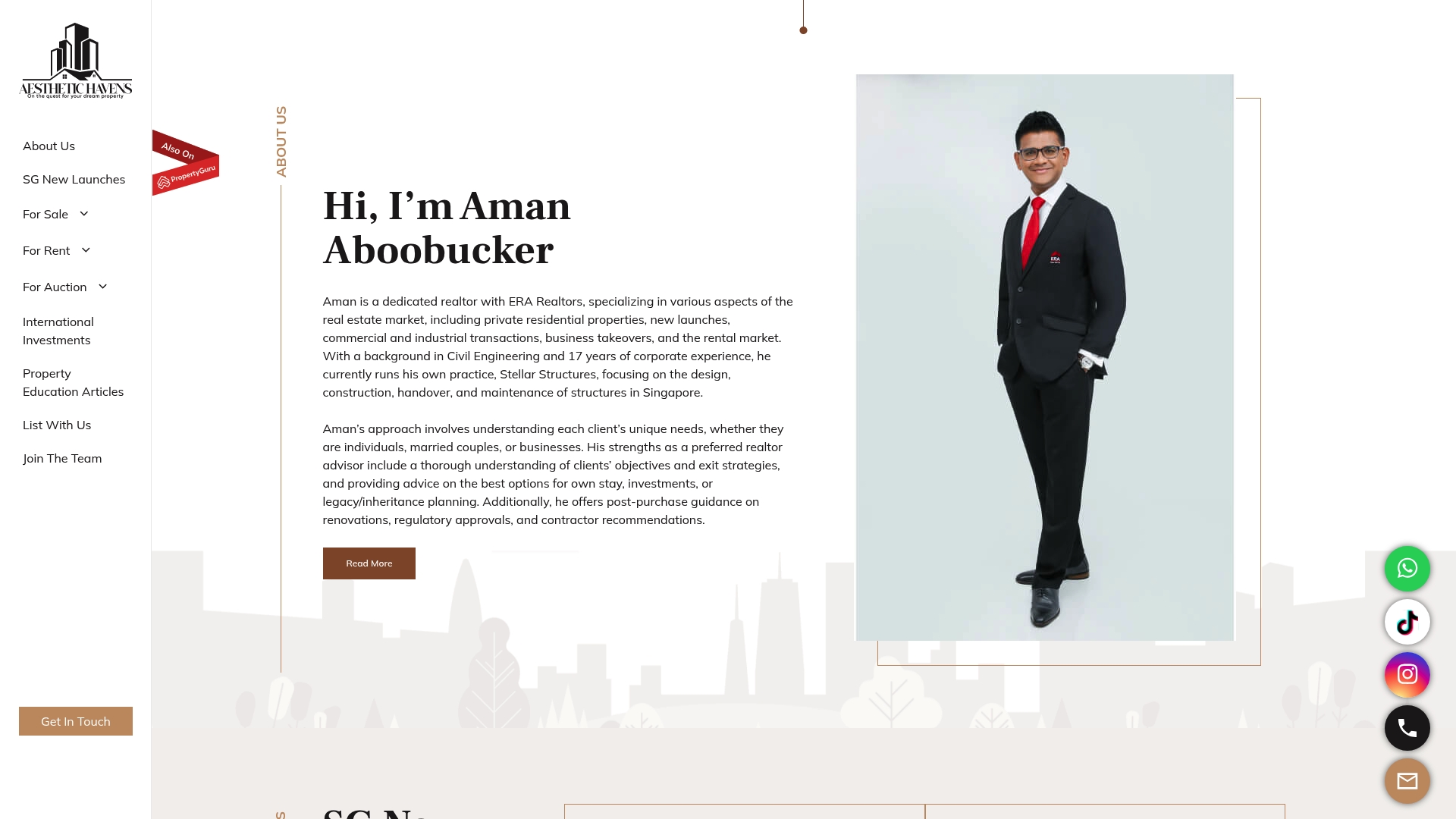
Aman
How we can help
Whether you are a co-owner of a private property with a bankrupt, a landlord with a tenanted unit, or a buyer looking at a sale arising from insolvency, the property side needs a clear plan. Aesthetic Havens offers real estate consultancy, property valuation, and sales and leasing across residential, commercial and industrial property. You can start on our consultancy and valuation page.
If you are weighing a purchase of a distressed or auction property, see our auction listings. If a tenant is in place, our guide to selling with a tenancy explains how the rules differ for HDB and private property.
FAQ
Can a bankrupt’s HDB flat be seized and sold?
Not if at least one owner is a Singapore Citizen. Such a flat does not vest in the trustee and is not required to be sold for creditors. If no owner is a Singapore Citizen, the bankrupt’s share vests in the trustee. HUDC flats and Executive Condominiums are not protected in the same way.
Can a bankrupt sell their own property?
Not independently. Private property vests in the trustee, and any attempt by the bankrupt to sell, transfer or give it away is ineffective. The trustee decides whether to sell. For HDB flats, the HDB resale terms may require the Official Assignee’s or trustee’s consent.
Can bankrupts own property in Singapore?
Yes, with limits. A bankrupt can buy an HDB flat of 5-room or smaller without consent, but needs written trustee consent for a larger flat, a 3Gen flat or a net price of S$500,000 and above. CPF Ordinary Account use for private property also needs trustee consent.
What happens to a jointly owned property?
Bankruptcy turns a joint tenancy into a tenancy in common. Only the bankrupt’s share passes to the trustee. If the co-owner does not buy it out or agree to a sale, the trustee may ask the Court for a forced-sale order.
Who gets the money when a bankrupt’s property is sold?
The mortgage bank is paid first. Any surplus goes to the Official Assignee, who declares dividends to creditors when funds are enough.
Sources
- Bankruptcy, Singapore Judiciary
- What happens after you are declared a bankrupt, Singapore Judiciary
- Insolvency, Restructuring and Dissolution Act 2018, Singapore Statutes Online
- Bankruptcy Information Sheet for Debtors & Bankrupts, Ministry of Law
- What happens to my HDB flat when I am bankrupt, Ministry of Law
- Information for Creditors, Ministry of Law Insolvency Office
- Assets of a Bankrupt, Ministry of Law Insolvency Office
- A Last Resort Legal Option for a Trustee in Bankruptcy?, Singapore Law Gazette
- Yiong Kok Kong v Liu Chien Min, Legal Wires
- Insolvency Law, Singapore Academy of Law Annual Review
- Terms and Conditions of Sale and Purchase of an HDB Resale Flat, HDB


