


Starting July 28, 2026, private property owners can buy a non-subsidised HDB resale flat before selling their condo, provided they skip the HDB loan and CPF housing grants, and dispose of the private property within six months of the HDB purchase’s completion. Miss that six-month window, and Additional Buyer’s Stamp Duty (ABSD) remission gets revoked. You’ll owe ABSD immediately, sometimes with penalties on top.
Before you do anything else:
- Check your HDB Flat Eligibility (HFE) letter status to confirm which route applies to your situation.
- Engage a conveyancing lawyer early to lock in accurate timelines for ABSD remission tracking.
- Confirm you’re buying a non-subsidised resale flat, not a BTO or EC, since those fall under different rules entirely.
Key Takeaways
Buying an HDB resale flat before selling your condo is legal from July 28, 2026, but only if you skip HDB loans and CPF grants and dispose of your condo within six months of HDB completion.
| Point | Details |
|---|---|
| Buy-first route is conditional | Available only for non-subsidised HDB resale purchases without HDB loans or CPF grants. |
| Six-month clock starts at completion | The disposal deadline runs from HDB resale completion, not from the Option to Purchase exercise date. |
| Missing the deadline is costly | ABSD remission is revoked and becomes payable immediately, sometimes with IRAS interest added. |
| Subsidised routes still wait 30 months | HDB loans, CPF grants, and EC purchases remain under the older wait-out rule. |
| Professional sequencing reduces risk | Aesthetic Havens coordinates ABSD tracking, conveyancing, and condo marketing to help meet the deadline safely. |
Table of Contents
- Who Qualifies to Sell Condo, Buy HDB Under the New Rule?
- What Does ABSD and CPF Timing Actually Cost You?
- When Does the Six-Month Clock Actually Start?
- Your Action Checklist for Executing the Sale-and-Buy Sequence
- What Goes Wrong, and How to Avoid It
- Do Resale Levy Rules Apply When You Sell Your HDB Flat Later?
- Are You Eligible to Downgrade From Condo to HDB Resale?
- Does the Ethnic Integration Policy Affect Your HDB Purchase?
- What Tax Declarations Do You Need to File?
- What If Your Condo Sale or HDB Purchase Falls Through?
- What Legal Documents Does This Transaction Sequence Require?
- Aman’s Take: When Downgrading Actually Makes Sense
- Get Help Sequencing Your Condo Sale and HDB Purchase
- Sources
Who Qualifies to Sell Condo, Buy HDB Under the New Rule?
The buy-first route only applies to a specific slice of buyers. If you’re purchasing a non-subsidised HDB resale flat, paying cash or using a bank loan, and not touching CPF housing grants, you can exercise the Option to Purchase on your new flat before your condo changes hands. That’s the entire point of the rule change HDB Pulse announced: removing the 15-month wait-out that used to force private owners to sell first, then wait over a year before buying HDB resale.
But three groups still face the older 30-month wait-out, unchanged by this reform:
- Buyers applying for CPF housing grants tied to subsidised flats.
- Buyers who need an HDB concessionary loan, since HDB confirms financing and grant eligibility windows remain untouched by the wait-out removal.
- Buyers purchasing an Executive Condominium directly from a developer.
You also can’t own both properties indefinitely. HDB owner-occupancy rules require you to physically occupy the flat, and dual ownership past six months voids your ABSD remission entirely.
Pro Tip: Don’t assume the HFE letter automatically flags which wait-out applies to you. Request written clarification from HDB or your conveyancing lawyer before exercising any Option to Purchase, since the 15-month and 30-month rules now run on parallel tracks depending on financing choice.
What Does ABSD and CPF Timing Actually Cost You?
The numbers matter more than the headline. Singapore Citizens buying a second residential property pay ABSD upfront, but the new rule lets qualifying buyers get that amount remitted rather than paid out of pocket, as long as the condo sells within six months of HDB completion. Permanent Residents and other buyer profiles face different ABSD tiers, so confirm your exact rate with IRAS before signing anything.
Buyer’s Stamp Duty (BSD) applies separately and is payable on whichever is higher: the purchase price or the property valuation. That’s a straightforward cost regardless of which route you take.
The trickier issue is financing. You cannot get an HDB loan while you still own private property, full stop. That pushes buy-first buyers toward bank loans, and banks apply tighter Loan-to-Value limits when you’re holding two properties simultaneously, sometimes capping LTV well below what you’d get on a single property.
Cash flow gets squeezed in a few predictable spots:
- Option consideration for the HDB resale flat, typically a small percentage of the purchase price, due on exercise.
- Legal fees for both the HDB purchase and the condo sale, running in parallel rather than sequentially.
- Valuation fees for the HDB flat if you’re using bank financing.
- CPF refund timing: money used for your condo’s CPF contributions isn’t available for your HDB purchase until the condo sale completes and CPF processes the refund, which can take several weeks after completion.
The six-month disposal deadline is not a soft target. It’s the exact line between remitted ABSD and a five- or six-figure tax bill landing on your desk with interest attached.
When Does the Six-Month Clock Actually Start?
The countdown begins on your HDB resale flat’s legal completion date, not when you exercise the Option to Purchase. That distinction trips up a lot of buyers who think they have more breathing room than they actually do.
Here’s the realistic sequence:
- Apply for and receive your HFE letter, confirming your eligibility and financing route.
- Grant or accept the Option to Purchase on your HDB resale flat.
- Exercise the Sale and Purchase agreement, typically within the option period.
- Register your resale intent with HDB and complete required paperwork.
- Reach HDB completion, the date your six-month disposal clock officially starts.
- Market, sell, and complete the sale of your condo before that clock runs out.
HDB resale transactions generally take six to eight weeks from exercise to completion, while private property sales can run eight to twelve weeks depending on market conditions. Stack those timelines and you’ll see why waiting to list your condo is the single most common mistake in this entire process.
Engage a conveyancing lawyer the moment you exercise your Option to Purchase on the HDB flat, not after. Early engagement preserves the documentation trail HDB and IRAS will want to see when you apply for ABSD remission.
Pro Tip: Start marketing your condo the day you exercise the HDB Option to Purchase, not the day HDB completion happens. That gap between exercise and completion is free runway most buyers waste.
Your Action Checklist for Executing the Sale-and-Buy Sequence
Turn the timeline into tasks. Here’s what to line up, and roughly when:
- Apply for your HFE letter first, since nothing else can proceed without it.
- Secure an In-Principle Approval (IPA) from your bank if you’re financing with a mortgage, ideally before you commit to any Option to Purchase.
- Engage a conveyancing solicitor immediately after exercising the HDB Option to Purchase, covered in the Option to Purchase guide if you want the mechanics explained in full.
- Get your condo professionally valued and listed the same week, not after HDB completion.
- Ask your lawyer to set up an ABSD remission tracking file, documenting every date that matters for the six-month deadline.
Contact your mortgage advisor before you exercise anything, since financing approval timelines can bottleneck the entire sequence. Bring your conveyancer in right after exercise, and get your property agent marketing the condo the same week.
Prepare a document pack in advance: title deeds, outstanding loan statements, CPF statements showing prior housing usage, and your IPA letter. Buyers who assemble this upfront close weeks faster than those scrambling mid-transaction.
Pro Tip: Ask your lawyer for a written six-month disposal deadline calendar the day HDB completion happens, with every milestone dated backward from that deadline. A visual countdown catches slippage before it becomes a crisis.
What Goes Wrong, and How to Avoid It
Missing the six-month disposal deadline isn’t a minor slip. ABSD becomes payable immediately and in full, and IRAS can add interest on top depending on how late the disposal occurs.
The most common mistakes:
- Assuming an HDB loan is available while still owning the condo. It isn’t, under any circumstance.
- Assuming CPF housing grants apply to the buy-first route. They don’t, since grants trigger the old 30-month wait-out.
- Underestimating how long a private property sale actually takes in a slower market, then running out of runway.
The fix is almost always the same: list the condo the moment you exercise your HDB Option to Purchase, price it to sell rather than to test the market, and build a contingency plan, whether that’s a short-term bridging loan or a temporary rental arrangement if the sale drags past your comfort zone.
Do Resale Levy Rules Apply When You Sell Your HDB Flat Later?
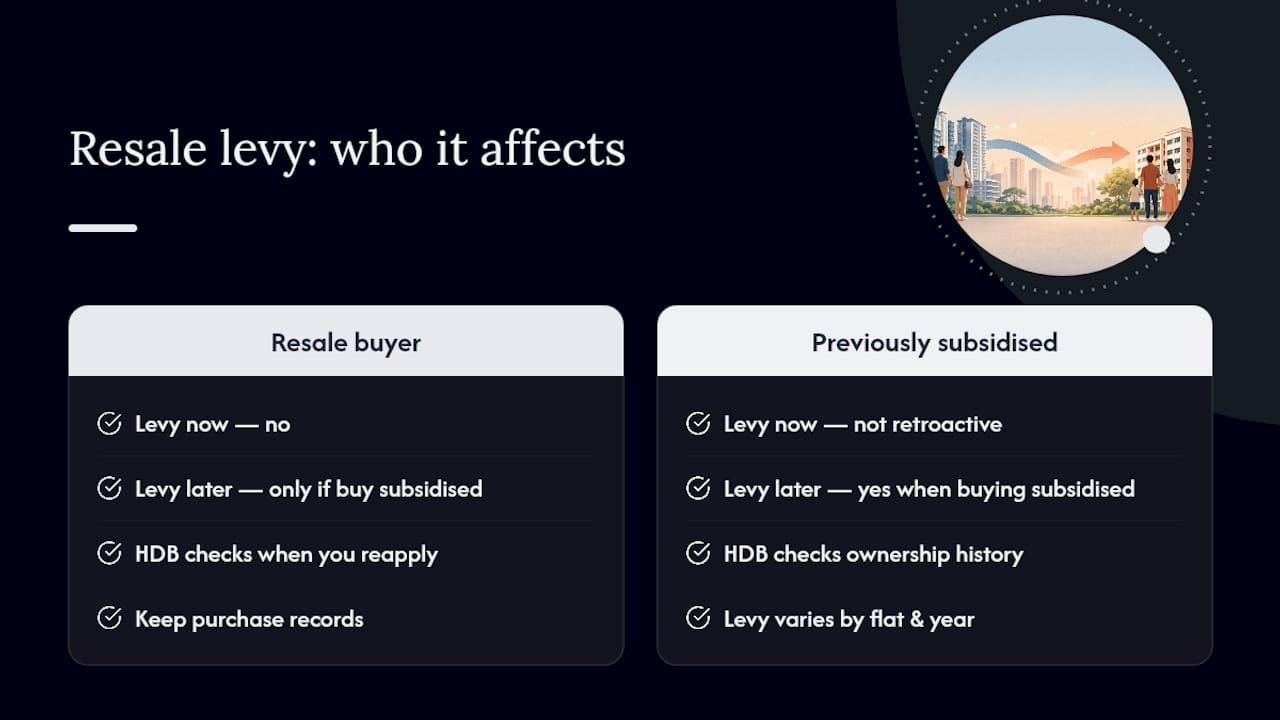
If you’re moving from condo to HDB now, the resale levy question usually surfaces later, when you eventually sell that HDB flat and consider buying another subsidised flat. The resale levy exists to recover the subsidy HDB gave you on a previous subsidised purchase, and it applies specifically to households that bought a subsidised flat directly from HDB and later sell it to buy another subsidised unit.
Since you’re buying resale, not subsidised, on the way into HDB, the levy typically won’t apply to this particular transaction. It becomes relevant only if you later sell this HDB resale flat and try to buy a new BTO or another subsidised flat, at which point HDB checks your ownership history against its subsidy recovery framework, detailed on HDB’s official conditions page.
Worth flagging for future planning: resale levy amounts differ based on flat type and when the original subsidized purchase occurred. If you’ve never owned a subsidised HDB flat before, this entire question is moot for now, but it’s worth understanding before you commit to any second HDB transaction down the road. Buyers coming from private property with no prior HDB subsidy history generally have a cleaner path than those who’ve cycled through subsidised flats before.
Keep records of your flat’s purchase type, whether it was bought directly from HDB or on the resale market, since that distinction determines resale levy exposure years from now.
Are You Eligible to Downgrade From Condo to HDB Resale?
Eligibility hinges on your family nucleus, citizenship, and current ownership status, not just the timing rules covered above. To buy an HDB resale flat, at least one buyer must be a Singapore Citizen, and you’ll need to form an eligible family nucleus, whether that’s a married couple, a single citizen over 35 under the Single Singapore Citizen Scheme, or an extended family arrangement.
If you’re a Permanent Resident couple without a Singapore Citizen in the mix, resale purchases remain available to you under the Non-Citizen Spouse or Non-Citizen Family Scheme, though grant eligibility and financing options narrow considerably compared to citizen households.
Owning a condo doesn’t disqualify you from HDB resale eligibility outright. What it does is trigger the disposal timing rules already covered, plus a hard requirement that you occupy the HDB flat as your primary residence once you own it. You cannot hold onto the condo as a rental property and treat the HDB flat as a secondary residence. Dual ownership beyond the six-month grace period breaks both your ABSD remission and your basic HDB occupancy compliance.
Household composition matters too. If adult children or extended family members are part of your household application, each person’s citizenship and existing property ownership gets checked individually, since even one ineligible household member can affect the entire application.
Does the Ethnic Integration Policy Affect Your HDB Purchase?
The Ethnic Integration Policy sets ethnic quotas by block and by neighborhood to maintain racial diversity across HDB estates, and it applies to every resale purchase regardless of whether you’re coming from private property or another HDB flat. Before you commit to a specific unit, check whether that block and neighborhood still have quota room for your ethnic group.
This matters more than most downgrading buyers expect. If you’ve fallen in love with a particular block, and it’s already at its ethnic quota ceiling for your group, you simply cannot buy there, no exceptions. The quota check happens at the point of application, not after you’ve exercised an Option to Purchase, so confirm availability with your agent or directly through HDB’s resale portal before you commit financially.
The EIP doesn’t interact with the six-month disposal rule or ABSD remission in any special way. It’s an independent eligibility filter that sits alongside the financing and citizenship checks. Buyers sometimes assume EIP restrictions only apply to first-time HDB buyers, but that’s inaccurate: the policy governs every resale transaction, including yours if you’re moving out of a condo.
Practically, this means your unit search should factor in EIP quota status from day one, not as an afterthought after you’ve already picked a favorite. Wider search radius early on saves you from a rejected application after weeks of negotiation.
What Tax Declarations Do You Need to File?
Selling your condo and buying an HDB resale flat triggers a few distinct filing obligations, separate from the ABSD and BSD payments already discussed. If your condo was ever rented out, you’ll need to declare rental income up to the point of sale, and any capital gain itself isn’t taxed in Singapore since there’s no capital gains tax on property sales here.
Stamp duty declarations happen automatically through your conveyancing lawyer, who files the necessary IRAS forms when the Sale and Purchase Agreement is stamped. You don’t personally submit these forms, but you’re responsible for reviewing them for accuracy before they go in.
If you’re claiming ABSD remission under the new buy-first framework, your lawyer files a specific remission application with IRAS, supported by proof of your condo’s disposal within the six-month window. This isn’t automatic. Miss the paperwork deadline even if you technically sold in time, and you risk the same penalty exposure as missing the sale deadline itself.
One overlooked detail: if your condo sale price differs significantly from its last valuation, IRAS may request additional documentation to confirm the transaction reflects market value rather than an artificially low price designed to reduce stamp duty on the buyer’s side. Keep your valuation report and any renovation records on hand in case this comes up.
What If Your Condo Sale or HDB Purchase Falls Through?
Deals collapse. Buyers back out, financing falls through, or a condo sale that looked certain suddenly isn’t. Build your contingency plan before you need it, not after.
If your condo sale falls through after you’ve already exercised the HDB Option to Purchase, you’re now racing the six-month clock with no buyer in hand. Your first move should be re-listing immediately, often at a more competitive price, since a fresh urgency has entered the picture. A short-term bridging loan can cover the gap between HDB completion and a delayed condo sale, though it comes with interest costs that eat into your eventual proceeds.
If the HDB purchase itself falls through, whether the seller backs out or financing doesn’t come together, you’re in a better position: you haven’t yet sold your condo, so there’s no ABSD remission clock ticking. Your main loss is time and any option fees already paid, which are generally non-refundable if you’re the one who withdraws.

A middle scenario worth planning for: your condo sells faster than expected, but your HDB purchase drags past your expected completion date. In that case, a short-term rental arrangement bridges the gap without forcing a rushed decision on either side of the transaction. Whichever scenario you’re staring down, loop your lawyer in immediately, since remission applications and disposal timelines often have narrow windows for amendment or appeal.
What Legal Documents Does This Transaction Sequence Require?
Two transactions running in parallel means two sets of legal documentation, and they need to stay synchronized. For your HDB resale purchase, expect the Option to Purchase, the Sale and Purchase Agreement, your HFE letter, and if you’re financing with a bank, your Letter of Offer and IPA documentation.
For your condo sale, your lawyer will handle the Option to Purchase you grant to your buyer, the corresponding Sale and Purchase Agreement, and a redemption statement from your existing mortgage lender if you have an outstanding loan. If your condo purchase involved CPF funds originally, your lawyer also coordinates the CPF refund process, which needs to complete before those funds become available for your HDB purchase.
The ABSD remission application is its own document trail, separate from the standard conveyancing paperwork. Your lawyer submits proof of your HDB completion date alongside proof of your condo’s disposal, typically the completion statement from that sale, within the timeframe IRAS requires.
Ideally, use the same law firm for both transactions, or at minimum, ensure your two lawyers communicate directly rather than routing everything through you. Given how tightly the six-month deadline links these two deals, any miscommunication between separate legal teams becomes your financial risk, not theirs.
Aman’s Take: When Downgrading Actually Makes Sense
Downgrading works best for retirees releasing equity, families cutting maintenance costs, or owners who no longer need the space a condo demands. It’s riskier when your local market is slow or your condo carries an unusual layout that limits its buyer pool. If cash flow flexibility matters more than square footage, this route deserves serious consideration, but pair it with a realistic read on your condo’s sale timeline before committing, using resources like Aesthetic Havens’ HDB vs private property guide to weigh the tradeoffs properly.
— Aman
Get Help Sequencing Your Condo Sale and HDB Purchase
The six-month disposal deadline gives you almost no room for guesswork, and that’s exactly where Aesthetic Havens earns its keep for downgrading owners. Rather than juggling two transactions solo, you get eligibility assessment against your HFE letter, coordinated ABSD and CPF planning, condo marketing that starts the day you exercise your HDB Option to Purchase, and conveyancing coordination that keeps both legal tracks moving on the same calendar.
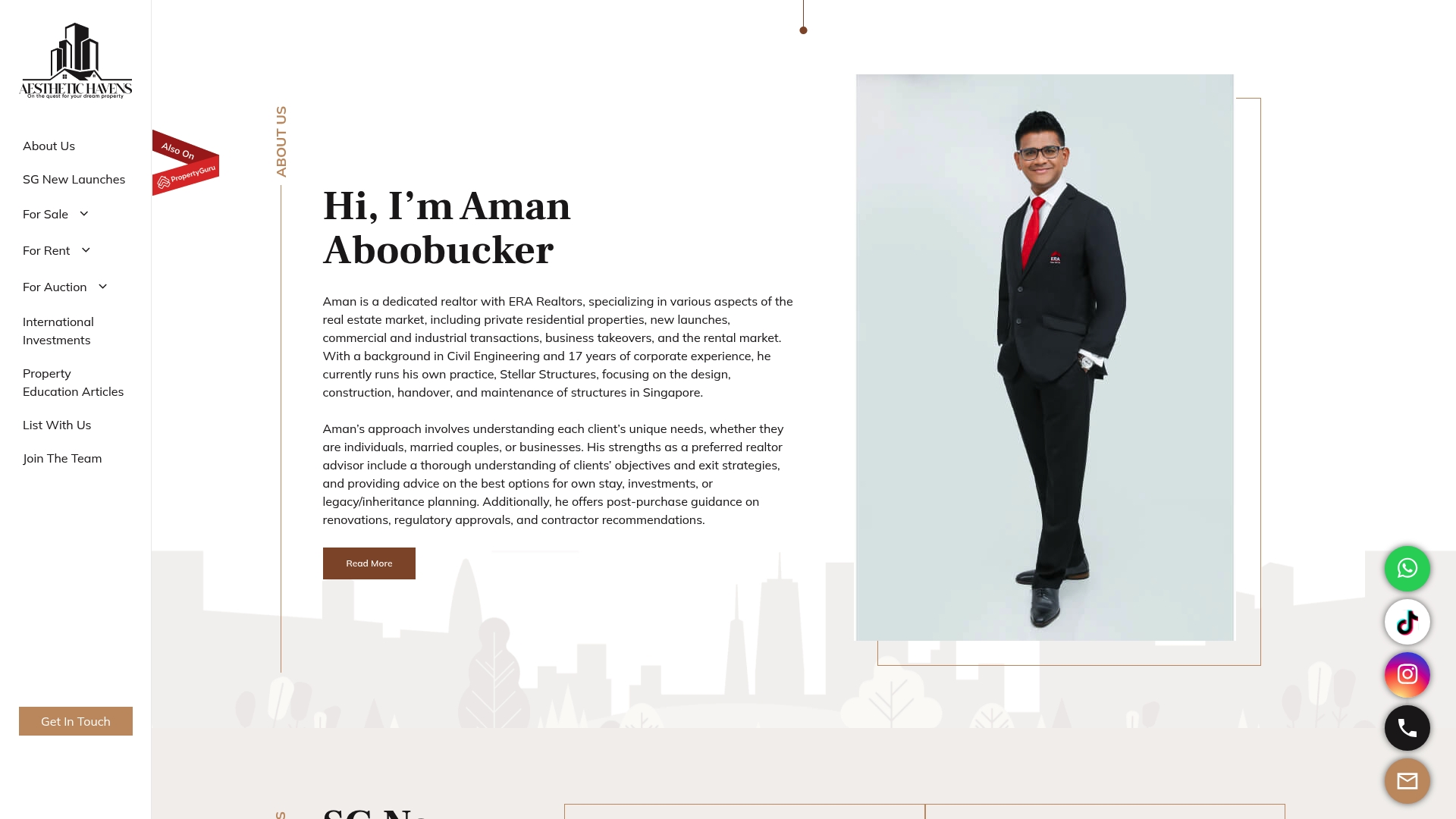
That coordination matters most in the gap most buyers underestimate: the weeks between HDB completion and condo sale completion, when documentation errors or slow marketing can quietly erode your ABSD remission eligibility. Aman and the Aesthetic Havens team under ERA Realtors manage that sequencing directly, reducing the legal and financial risk of missing your deadline. If you’re weighing this move, start with a consultation on why a property consultant matters for buyers navigating exactly this kind of dual transaction, and get your specific timeline mapped out before you exercise anything.
Sources
- Removal of the 15-month wait-out period for private residential property owners — HDB Pulse
- Singapore Property Downgrade Guide 2026: Sell Private, Buy HDB — LovelyHomes
Recommended
- HDB vs Private Property in Singapore: 2026 Guide
- The Ultimate Executive Condominium (EC) Eligibility Guide for 2026 Buyers | Aesthetic Havens
- Singapore’s H2 2025 Condo Hotspots: New Launches & URA Master Plan Catalysts | Aesthetic Havens
- The 2026 HDB MOP Wave: Impact on Private Property Prices | Aesthetic Havens


