


A Singapore new launch runs in five stages: pre-launch registration, a VIP preview, a showflat visit, the booking itself with an Option to Purchase (OTP), and then a long run of paperwork and staged payments that ends when you collect your keys. The booking is the fastest part. It can be decided in a single day, while the stages after it stretch over years. Buyers who know the sequence before they walk in choose a unit calmly. Buyers who learn it at the sales gallery tend to decide under pressure.
We advise on new launches through SG New Launches, and this guide sets out the order of events as a buyer experiences it.
TL;DR
- The sequence is: register interest, VIP preview, showflat visit, booking with an OTP, signing the Sale and Purchase Agreement, progress payments, Temporary Occupation Permit (TOP), key collection.
- Before taking a booking fee, the developer must give you a set of mandatory information on the project and the unit, according to the Urban Redevelopment Authority (URA).
- Projects launched on or after 31 December 2026 must use newly prescribed OTP and Sale and Purchase forms with stronger buyer safeguards.
- Prepare your financing, your shortlist of units and your questions before the showflat, because the decision window after a launch opens is short.
- Exact preview, appointment and launch dates are set per project by the developer, so confirm them for each development.
Table of Contents
- The full timeline at a glance
- Stage 1: Pre-launch registration
- Stage 2: The VIP preview
- Stage 3: Making a showflat appointment
- Stage 4: Booking and the Option to Purchase
- Stage 5: Signing the Sale and Purchase Agreement
- Stage 6: Progress payments during construction
- Stage 7: TOP and key collection
- How to check the dates for a specific project
- How we approach a new launch with you
- Our view
- FAQ
- Sources
The full timeline at a glance
Every development has its own calendar, but the order of stages is the same. This table shows what happens at each stage and what you should have ready.
| Stage | What happens | What you should have ready |
|---|---|---|
| 1. Pre-launch registration | You register interest and receive updates on pricing, unit mix and event dates | A budget range and preferred unit types |
| 2. VIP preview | An early viewing, usually by invitation, before the general public launch | Financing estimate, shortlist of stacks and floors |
| 3. Showflat appointment | You view the model units, the project model and the price list | Questions on layout, facing, completion date |
| 4. Booking | You select a unit and pay the booking fee in exchange for an OTP | Funds for the booking fee, ID, decision made in advance |
| 5. Sale and Purchase Agreement | The OTP is exercised and the formal agreement is signed | A conveyancing lawyer, loan approval in progress |
| 6. Progress payments | Payments fall due as construction milestones are reached | Cash and CPF planning for each stage |
| 7. TOP and key collection | The building is certified for occupation and keys are handed over | Final payment arranged, inspection plan |
The rest of this guide walks through each stage and where buyers lose time or money.
Stage 1: Pre-launch registration
Long before a project opens for sale, developers and their marketing teams collect registrations. Registering costs nothing and commits you to nothing. It puts you on the list for price guidance, unit-mix details and the dates of preview and launch events.
The useful thing to do here is narrow your search. A project with several hundred units can offer a dozen layouts across many floors. Decide first whether you are buying to live in, to rent out or to hold for the long term, because that changes which unit types and floor levels make sense. A couple planning to stay for the long term will weigh a layout differently from an investor who wants the easiest unit to rent.
We cover this planning step in our new launch property checklist, which you can use as a working list before any viewing.
Stage 2: The VIP preview
A VIP preview is an early viewing window, ahead of the official public launch, for buyers who registered or were invited. It is the first chance to see the showflat, ask about pricing and, in many projects, to indicate which units you want. The name suggests exclusivity, but its practical value is simpler: fewer people in the gallery, more time with the sales team, and a clearer picture of which stacks and floors draw interest.
What to do at a preview:
- Arrive with two or three target units, not one. If your first choice is taken, you should know the next one without improvising.
- Ask for the unit’s floor plan, its orientation and its expected completion timeframe.
- Note the pricing for each of your targets so you can compare against recent launches nearby.
Preview formats, invitation rules and whether any selection takes place at that stage differ by developer and project. Confirm those details with the project’s sales team for each development rather than assuming a pattern from the last one.
Stage 3: Making a showflat appointment
The showflat is where the project becomes concrete. Under the Housing Developers (Show Unit) Rules, the plans, models and show units a developer displays must be accurate and in accordance with the approved building plans, as URA’s buying property guide explains. That is a useful protection, since you are often buying a unit that has not been built.
Many projects manage visitor numbers by asking buyers to book a slot, so the sensible approach is to register through the project’s official channel or through your property consultant and ask for a time. Going on a weekday, where your schedule allows, usually means a quieter viewing than the launch weekend, though that is a matter of habit rather than a rule.
What to prepare before you go
- A financing figure. Know roughly how much you can borrow and how much cash and CPF you can commit. Our Singapore option to purchase guide explains the money that moves when an OTP is issued.
- Your shortlist. Unit types, preferred floors and the maximum price at which you would walk away.
- Your questions. Layout efficiency, distance to the nearest MRT station, school proximity, expected completion, and the mix of unit sizes in the project.
What to look at inside the showflat
A showflat is styled to impress. Look past the furniture and check the dimensions on the plan, where the windows and balconies sit, and what the fittings list says is included. The model shows the building’s massing and surroundings, so use it to judge which stacks face the main road, the condominium’s facilities or neighbouring blocks. A unit that looks identical on paper can live very differently depending on what it faces.

Stage 4: Booking and the Option to Purchase
When you decide to proceed, you pay a booking fee and the developer issues an OTP. URA states that the booking fee is paid for the issue of the OTP, and that before the developer accepts it, the developer must provide you with a set of mandatory information on the project and the unit.
That information is yours to read properly. Take it home or read it in the gallery before paying. It is the reference point if anything later differs from what you were told.
Two things to settle before you reach the booking desk:
- What happens to the booking fee if you walk away. The answer depends on the terms of the OTP and when you decide. We explain it in what happens to your booking fee if you walk away.
- Whether your loan will support the price. Booking a unit you cannot finance is the costliest mistake in this sequence.
The rule change from 31 December 2026
The Housing Developers Rules are being amended with effect from 31 December 2026. According to Allen & Gledhill, developers will have to give buyers clearer and more comprehensive information before accepting a booking fee, and use newly prescribed OTP and Sale and Purchase Agreement forms with stronger buyer safeguards. Projects launched on or after 31 December 2026, where no OTP was issued before that date, must use the new forms. Earlier projects may continue using the existing forms for their unsold units.
The practical effect for you is that the paperwork in front of you depends on the launch date of the project. If you are looking at a project that launched before the change, expect the existing forms. If you are looking at one launching after it, expect the new ones and the fuller pre-booking information. Either way, read before you sign.

Stage 5: Signing the Sale and Purchase Agreement
After the OTP, the next formal step is the Sale and Purchase Agreement, the contract that sets out the price, the payment schedule, the completion date and the remedies if either side fails to perform. Your conveyancing lawyer reviews it with you. Appoint one early, because the signing window runs on a clock set by the OTP and you do not want to be searching for a lawyer in the middle of it.
At this point, your loan application should already be moving. Banks need the OTP and project details to issue a formal offer, and a delay on your side can crowd the deadline. Our first-timer’s guide from showflat to key collection lays out the same sequence for someone buying their first new launch.
Stage 6: Progress payments during construction
A new launch is usually paid in stages tied to construction milestones, so you do not pay the full price upfront. Early stages involve the larger down payment from your own funds and CPF, and the balance is released to the developer as the building rises. Each stage triggers a demand for payment, and you need cash or CPF funds ready when it arrives.
Buyers should map the whole schedule on one page the day they sign: each milestone, the amount due, and where the money comes from. If you plan to use a bank loan, the bank usually disburses against these progress claims, which means your monthly repayments grow as the loan is drawn down rather than starting at the full amount.
The long gap between booking and completion also matters for investors. You carry the commitment without rental income until the unit is ready, so budget for that period.
Stage 7: TOP and key collection
The last milestone is the Temporary Occupation Permit, which certifies that the building is safe to occupy. URA notes that once the TOP is issued and you have paid the progress payment due upon TOP, the developer informs you of the procedure to collect your keys.
When the keys are in your hand:
- Inspect the unit carefully and list every defect in writing.
- Photograph each item so that the record is clear.
- Submit the list to the developer promptly, since defects are rectified within a defects liability period under your agreement.
Owner-occupiers move in and begin renovating. Investors move to leasing. If you are buying to rent out, our property leasing guide covers how to bring a tenant in.
How to check the dates for a specific project
There is no single master calendar that fits every project. Developers set the preview, appointment and launch dates, and they can move. To find the right dates for a development:
- Register interest through the project’s official channel and ask for the confirmed event schedule.
- Look at our SG New Launches listings and our new launches archive for the projects we cover.
- Re-confirm a day or two before any event, since timings shift with approvals and marketing plans.
For how demand has behaved in recent launches, our month-by-month take-up rates article is a useful companion, and our new launch trends for 2026 piece sets the wider context.
How we approach a new launch with you
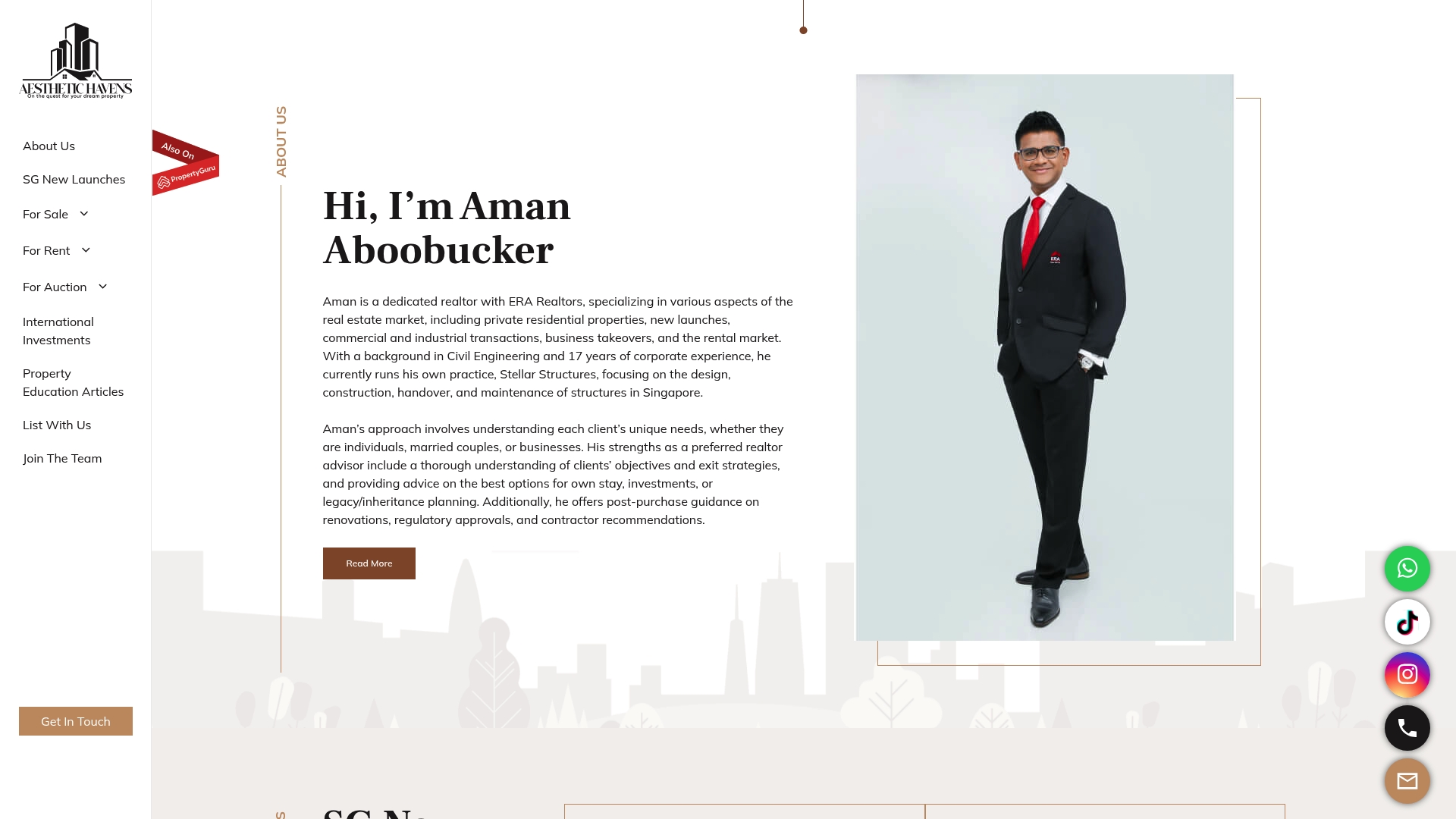
Aman Aboobucker combines engineering and real estate expertise. We work from your objective and your exit strategy first, then match the launch to it. For an own-stay buyer that means layout and long-term livability. For an investor it means rental demand, holding costs and the eventual sale. Our support continues after the purchase, with renovation and regulatory guidance.
If you are weighing a launch now, start on our SG New Launches page, where you can see the projects we cover and get in touch about a preview or showflat visit.
We also handle sales and leasing, valuation and asset progression, so the same team can follow you from the first showflat to your next move. See the full range on our main site.
Our view
Buyers often treat the booking day as the whole event. We see it differently: the booking is one afternoon, and the commitment it sets in motion lasts for years.
That is why we start with your objective. Are you buying a home for the long term, building a portfolio, or planning an exit in a few years? The answer decides which project, which unit and which floor deserve your attention, and it decides how much you should be willing to pay.
Our background in engineering shapes how we read a project: the plans, the specifications, the surroundings and the construction schedule. Combined with real estate experience, it lets us explain a showflat in terms of what you will actually live with or rent out.
We stay involved after the booking, through the paperwork, the renovation and the regulatory questions that follow. A new launch is a long relationship with a property, and we would rather you walk in prepared than walk in rushed.
Aman
FAQ
How long does a new launch take from booking to key collection?
It takes years, because the building has to be constructed and certified before you can move in. The timeline is set by the developer’s construction schedule and the completion date in your agreement. Check that date in your Sale and Purchase Agreement, and plan your housing and finances around it.
Do I need an appointment to view a new launch showflat?
Many projects ask visitors to book a slot, especially around launch weekends. Register through the project’s official channel or through your property consultant and confirm the time. Bring your ID and your shortlist so that the visit is productive.
What is a VIP preview?
It is an early viewing before the public launch, for buyers who registered or were invited. It gives you more time with the sales team and a first look at units and pricing. Who is invited and what can be done at the preview depends on the project.
What changes for new launches after 31 December 2026?
Projects launched on or after that date must use newly prescribed OTP and Sale and Purchase Agreement forms, and developers must give clearer information before accepting a booking fee. Earlier projects may continue with the existing forms for unsold units. This follows the amendments to the Housing Developers Rules described by Allen & Gledhill.
Sources
- Buying Property, Urban Redevelopment Authority
- Amendments to Housing Developers Rules enhancing protection for home buyers, Allen & Gledhill


