


The Residential Property Act prevents foreign persons from buying most landed residential property in Singapore unless the Land Dealings Approval Unit grants prior approval. The restriction covers categories like terrace houses, bungalows, and vacant land, while condominium units are generally exempt. Anyone unsure whether a property falls under the Act should verify its status with the Singapore Land Authority before signing a contract.
TL;DR:
- Foreign buyers can generally purchase condominium units without approval, but landed properties like bungalows or terrace houses require Land Dealings Approval unless exempt.
- Approval depends on factors such as having held PR for over five years and demonstrating significant economic contribution in Singapore, but approval is not guaranteed.
- Buying restricted property without approval is a breach of the law, leading to forced sale, fines, and potential criminal charges, making early legal review essential.
- Confirm a property’s restricted or exempt status through official title searches before signing any contract and include conditional approval clauses to protect deposits.
- The Act’s categories can change over time, requiring buyers to verify current restrictions on official sources rather than relying on outdated or listing information.
Table of Contents
- What Properties Does the Act Actually Restrict?
- Who Counts as a Foreign Person Under the Act
- How LDAU Approval Works: Criteria and Conditions
- Checking Title and Submitting an LDAU Application
- What Happens If You Buy Without Approval
- Avoiding Common Pitfalls in RPA-Affected Purchases
- Can You Appeal a Rejected LDAU Application?
- Recent Changes to the Act and What They Mean for Buyers
- How the Act Has Played Out in Practice
- Why the Act Exists: The Policy Behind the Restrictions
- Restricted vs. Exempted Properties: A Closer Look
- How the Act Affects Locals, PRs, and Foreign Buyers Differently
- What the Conventional Advice Gets Wrong
- How Aesthetic Havens Supports RPA-Affected Purchases
- FAQ
- Sources
What Properties Does the Act Actually Restrict?
The Residential Property Act defines “residential property” broadly, then carves out exemptions that most foreign buyers end up relying on. Restricted categories, where a foreign person needs LDAU approval before purchase, include:
- Vacant residential land zoned for housing.
- Terrace houses, semi-detached houses, and bungalows.
- Strata landed houses that sit outside an approved condominium development.
- Landed properties in Sentosa Cove.
- Shophouses intended for non-commercial use.
- Association premises and similar landed dwellings.
Exempted property types, which a foreign person can generally buy without LDAU approval, include condominium units (even in developments with landed-style layouts, as long as they are part of an approved condo), HDB flats and executive condominiums subject to their own eligibility rules, leases of seven years or less, and commercial or industrial property. The Singapore Land Authority also notes that the Minister can declare additional categories as restricted or exempt from time to time, so checking the current list on Singapore Statutes Online or with SLA directly, rather than relying on a property listing description, is the safer move. A condo purchase guide covers the exemption in more depth for buyers weighing condo versus landed options.
Who Counts as a Foreign Person Under the Act
The Act’s definition of “foreign person” is wider than most buyers expect, and getting this wrong before signing an option to purchase can be costly. A foreign person includes:
- Anyone who is not a Singapore citizen, including most permanent residents.
- A foreign company, meaning one incorporated outside Singapore or controlled by foreign shareholders or directors.
- A company that converts from a qualifying structure to one with foreign control, which can trigger restrictions retroactively for property it already holds.
- A society or other entity not formed under Singapore law.
Permanent residence does not automatically clear the path to buying restricted property. SLA guidance indicates LDAU commonly expects an applicant to have held PR status for at least five years and to show exceptional economic contribution to Singapore, often evidenced through tax-assessable employment income, before an application stands a reasonable chance. Meeting these benchmarks does not guarantee approval either, since each case is assessed on its own facts. Corporate buyers face an added layer: a company that looks “local” today can become a foreign person overnight if its shareholding changes, which matters for anyone structuring a purchase through a holding entity.
How LDAU Approval Works: Criteria and Conditions
LDAU does not operate on a checklist that guarantees a yes. The Singapore Land Authority assesses every application case by case, weighing an applicant’s ties to Singapore against the policy goal of keeping landed housing accessible to citizens. The factors that typically carry weight include:
- Permanent Resident status held for five years or more.
- Evidence of exceptional economic contribution, most often tax-assessable employment income earned in Singapore.
- The specific property’s category and location, since Sentosa Cove and other landed segments can carry their own conditions.
- The applicant’s overall profile, including any prior property holdings subject to the Act.
Approval, when granted, usually comes with strings attached. A non-disposal period is common, during which the owner cannot sell the property. SLA may also restrict subdivision of the land or attach other conditions specific to the case.
Processing is not instant. Some applications move quickly, others require more deliberation, particularly where the economic contribution evidence is thin or the property sits in a sensitive category. This is exactly why a buyer should never treat LDAU approval as a formality to sort out after signing.
Pro Tip: Build a clause into your Sale and Purchase Agreement that makes completion conditional on LDAU approval, with a clear fallback if approval is refused or delayed.
SLA itself recommends that foreign buyers consult independent legal advisors before entering into contracts, precisely because the financial exposure of a failed application after signing can be severe.
Checking Title and Submitting an LDAU Application
Before any application goes in, confirm what you are actually buying. Here is the practical sequence:
- Pull a title search through INLIS using the property’s lot number and survey district rather than its street address, since address-based searches can mismatch and lead to wrong assumptions about ownership or encumbrances. A title types guide walks through how Singapore’s deeds and Land Titles systems differ.
- If the record is not available online, a manual search at the Land Titles Registry counter fills the gap.
- Assemble your application documents: identification, evidence of PR status or economic contribution, full property particulars, and a draft Sale and Purchase Agreement with the LDAU condition built in.
- Engage a conveyancing lawyer early. The structure of the contract, and how the non-disposal period gets recorded, matters as much as the application itself.
- Submit through SLA’s online services using SingPass, and plan around realistic processing windows rather than assuming a quick turnaround.
- Lodge a caveat on the title where appropriate, and keep completion conditional until written approval arrives.
A step-by-step buying guide covers the wider transaction timeline for readers who want the full purchase process alongside the LDAU-specific steps above.
What Happens If You Buy Without Approval
Buying or holding restricted residential property without the required approval is not a paperwork slip, it is an offense under the Residential Property Act, and the consequences escalate quickly. Key enforcement points:
- The Act gives the Minister and the Controller power to issue a divestment notice, typically requiring the owner to sell within six months.
- The Minister may extend that period in some circumstances, but non-compliance after the deadline opens the door to attachment and forced sale of the property.
- Statutory offenses carry fines, including daily fines for continuing breaches, on top of the loss of the property itself.
- Some breaches carry criminal exposure rather than purely civil consequences.
Anyone who receives a divestment notice or suspects their holding may be non-compliant should get legal advice immediately rather than waiting to see if the issue resolves itself.
Avoiding Common Pitfalls in RPA-Affected Purchases
Most problems we see trace back to timing, not eligibility. Buyers sign an option to purchase before confirming whether a property is restricted, then scramble to apply for approval with a deadline already ticking.
A conveyancing lawyer should confirm early whether a title sits under the Land Titles Act or the older Registration of Deeds system, since that affects how the transfer gets lodged. Coordinating LDAU timing with conditional clauses in the Sale and Purchase Agreement, rather than treating approval as a side process, protects deposits and avoids forfeiture risk. Buyers also need a plan for post-approval obligations, including IRAS property tax submissions, which carry their own processing windows worth building into the schedule.

Pro Tip: Ask any lawyer or agent handling an RPA-restricted deal to show you the lot number and survey district before you sign anything, not after.
Can You Appeal a Rejected LDAU Application?
A rejected application is not necessarily the end of the road, but Singapore does not publish a formal, codified appeal tribunal process for LDAU decisions the way some regulatory regimes do. In practice, applicants whose cases are declined typically have the option to submit a fresh application with stronger supporting evidence, such as updated proof of economic contribution or a longer PR track record, rather than appealing the original decision through a separate channel.
Because LDAU assessments are case-by-case, the most effective response to a rejection is understanding exactly which factor fell short. If the economic contribution evidence was thin, gathering additional tax-assessable income documentation before reapplying matters more than disputing the original outcome. If the property category itself was the issue, for example a Sentosa Cove parcel with added restrictions, no amount of additional paperwork changes that outcome.
Given the lack of a published formal appeal mechanism, engaging a conveyancing lawyer or consultant familiar with LDAU submissions before resubmitting is worth more than attempting to contest the decision directly. Buyers who received conditional approval with terms they find onerous, such as a shorter-than-expected non-disposal period or an unexpected subdivision restriction, should also raise questions through their legal advisor rather than assuming the conditions are fixed and non-negotiable.
Recent Changes to the Act and What They Mean for Buyers
The core structure of the Residential Property Act has remained stable for decades, but the restricted and exempt property categories are not frozen. The Act itself grants the Minister ongoing power to declare additional categories as restricted or exempt, which means the list of what counts as “restricted residential property” can shift without a full legislative overhaul.
This matters most for buyers eyeing properties in gray zones, such as strata landed housing in developments that sit near the line between an approved condominium and a standalone landed cluster. A development’s status can affect whether a foreign buyer needs LDAU approval at all, and that status is set administratively rather than printed permanently into the statute text.
The practical takeaway for 2026 buyers is to treat the restricted and exempt lists as something to verify at the time of purchase, through Singapore Statutes Online or directly with SLA, rather than relying on what a listing agent or an older article states. A property that was exempt a few years ago could, in principle, be reclassified, and relying on outdated information is a risk entirely within a buyer’s control to eliminate.
How the Act Has Played Out in Practice
The pattern that shows up most often in real transactions involves foreign buyers who fall in love with a landed property, often in Sentosa Cove or a strata landed cluster, before confirming its restricted status. The deal stalls, or the buyer scrambles to submit an LDAU application against a tight contractual deadline, sometimes with a deposit at risk.
A second recurring pattern involves permanent residents who assume PR status alone opens the door to landed property. When an application does not meet the five-year PR expectation or lacks strong tax-assessable income evidence, the applicant is left reworking the deal structure, sometimes switching to a condominium purchase instead, which carries no LDAU requirement.
A third pattern involves corporate buyers whose shareholding structure shifts after a purchase, converting what was once a qualifying local entity into a foreign person under the Act. This retroactively exposes the company’s existing landed holdings to divestment requirements it did not originally face.
Each of these scenarios points to the same lesson: confirming eligibility and property category before committing, not after, is what separates a smooth transaction from a stressful one. A guide to residential property categories offers useful background for buyers trying to map out where their target property sits before they go further.
Why the Act Exists: The Policy Behind the Restrictions
The Residential Property Act is not an arbitrary bureaucratic hurdle. Its underlying goal, reflected in how SLA applies the LDAU approval process, is to preserve landed residential land, a genuinely scarce resource in a small country, for Singapore citizens first.
Condominium units, HDB flats, and short leases are treated differently because they do not carry the same land-use implications as standalone landed houses. A condominium sits on shared land with a managed, higher-density footprint, while a bungalow or terrace house occupies land directly, land that cannot be replicated as the population grows. Restricting foreign ownership of landed housing, while keeping high-rise and leasehold options open, lets Singapore balance openness to foreign investment against protecting a finite type of housing stock.
This explains why LDAU’s assessment leans so heavily on economic contribution and long-term ties to Singapore, through the five-year PR expectation and tax-assessable income evidence, rather than simply ability to pay. The policy is not designed to exclude foreign buyers from Singapore’s property market altogether. Condominiums, commercial property, and industrial property remain fully open. It is designed specifically to slow and control foreign demand for a particular, limited category of housing.
Restricted vs. Exempted Properties: A Closer Look
“Restricted residential property” under the Act covers any landed dwelling that is not folded into an approved condominium scheme. In practice, this means a standalone bungalow on its own land title is restricted, even if it sits in the same neighborhood as a condo tower that is exempt. A semi-detached house, a terrace unit, or a strata landed home outside a gazetted condominium development all fall into the same restricted bucket.
Sentosa Cove deserves its own mention because landed homes there are explicitly restricted, despite the area’s international reputation and the number of foreign residents in nearby condominiums. Shophouses are restricted when used residentially or left non-commercial, but shophouses actively used for commercial purposes generally fall outside the Act’s residential scope.
On the exempt side, the clearest category is condominium units within developments approved under the relevant planning framework, which foreign buyers can purchase without LDAU involvement. HDB flats and executive condominiums are exempt from the RPA specifically, though they carry their own separate eligibility rules tied to citizenship and income. Leases of seven years or less are exempt regardless of property type, which is why short-term rental arrangements never trigger LDAU review. Commercial and industrial properties sit outside the Act entirely. A complete guide to residential property categories breaks down how these categories interact with other ownership rules buyers should know before shortlisting properties.

How the Act Affects Locals, PRs, and Foreign Buyers Differently
Singapore citizens are unaffected by the Act’s restrictions and can buy any residential property type, landed or otherwise, without LDAU involvement. For citizens, the Act is essentially invisible in day-to-day property transactions.
Permanent residents occupy a middle position that trips up more buyers than any other category. PR status does not exempt a buyer from the Act, but it does form the foundation of an LDAU application. The practical effect is that a PR holder eyeing a landed property needs to budget time and documentation for the application process, and should not assume the purchase will close on the same timeline as a condominium deal. Many PR buyers, after weighing the five-year expectation and the economic contribution test, choose a condominium instead simply to avoid the uncertainty.
Foreign persons who are not PRs face the strictest practical outcome: landed residential property is effectively closed to them unless they can build a compelling LDAU case, which is uncommon without substantial, demonstrable ties to Singapore. For this group, condominium units, commercial property, and international property markets elsewhere typically become the realistic paths forward. A foreign buyer’s guide covers taxation and eligibility details relevant to this group in more depth, and buyers considering a trust structure to hold property should review a trust ownership guide for the legal and tax implications before committing to that route.
What the Conventional Advice Gets Wrong
Most online guidance on the Residential Property Act treats LDAU approval as a formality for anyone who looks eligible on paper. That framing causes real damage, because it encourages buyers to sign an option to purchase first and sort out the application afterward, exactly backward from how the risk should be managed.
The evidence from how SLA describes its own process points to something closer to a genuine evaluation, not a rubber stamp. Meeting the five-year PR benchmark or having steady employment income does not guarantee a yes, and treating it as a checklist underestimates how much weight the specific property category and the applicant’s overall profile carry in each decision.
If there is one priority worth acting on before anything else, it is sequencing: confirm the property’s restricted or exempt status through official sources, then structure the contract around a conditional approval clause, before any deposit changes hands. Everything else, the documents, the timeline, the conditions attached to approval, follows naturally once that order is respected. Buyers who skip this step are the ones who end up explaining to a lawyer why their deposit is at risk.
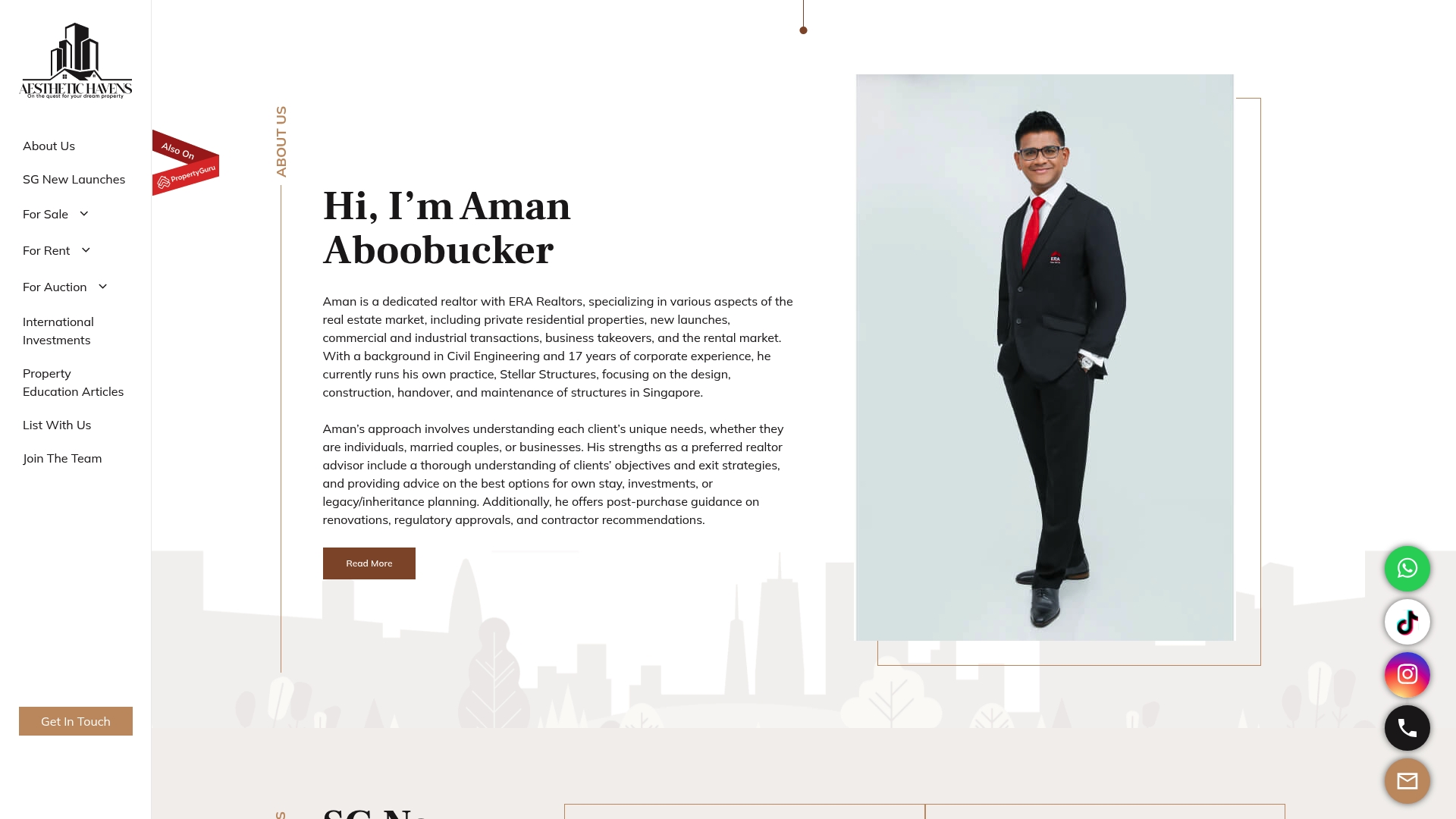
— Aman
How Aesthetic Havens Supports RPA-Affected Purchases
Buying a property that falls under the Residential Property Act takes more coordination than a standard transaction, and that is a situation where consultancy support can add value. We help buyers confirm a property’s restricted or exempt status before any money changes hands, coordinate the documentation an LDAU application needs, and can connect clients with conveyancing lawyers who structure contracts around conditional approval clauses.
Support for RPA-affected buyers typically includes:
- Due-diligence coordination to confirm title, lot number, and restricted or exempt status upfront.
- Referral to conveyancing lawyers with experience in LDAU-conditional Sale and Purchase Agreements.
- Property valuation and negotiation support including considerations of any non-disposal conditions attached to approval.
- Guidance on sequencing the application alongside contract deadlines to protect deposits.
If you are weighing a landed purchase or want a second opinion before signing, reach out through our consultancy services page to start the conversation.
This article is general information, not a substitute for advice from a qualified lawyer. Consult a qualified legal professional about your own circumstances before acting on anything here.
FAQ
What new laws will be implemented in Singapore in 2026?
The Residential Property Act’s core restrictions remain in place, with the Minister retaining power to adjust restricted and exempt property categories administratively rather than through a fixed annual schedule. Buyers should verify current categories on Singapore Statutes Online or with SLA rather than assuming last year’s list still applies.
How do I check my property ownership?
The most reliable method is a title search through INLIS using the property’s lot number and survey district, since address-based searches can return mismatched results. If the record is not available online, a manual search at the Land Titles Registry counter fills the gap.
Can I sell my house without a property agent?
Yes, selling without an agent is legal in Singapore, though you still need a conveyancing lawyer to handle the title transfer and any Residential Property Act conditions that apply, such as a non-disposal period tied to a prior LDAU approval. Many sellers use an agent anyway for pricing, marketing, and negotiation support, which our sales and leasing services can provide.
How many tenants are allowed in a condo?
Tenant limits for condominium units in Singapore are generally set by Urban Redevelopment Authority guidelines and the property’s own lease terms rather than the Residential Property Act itself, since condo units sit outside the Act’s restricted categories. A leasing guide covers the occupancy and leasing rules landlords and tenants should check before signing a tenancy agreement.
Sources
- Foreign ownership of property | Singapore Land Authority
- Residential Property Act 1976 – Singapore Statutes Online
- IRAS digital services — property professionals


