


Not every renovation needs a permit, but the ones that touch structure, wiring, or wet-area waterproofing almost always do. If your plans include hacking a wall, moving a fire-escape door, or adding a bathroom, check HDB’s e-services before you book a contractor, then hire only from the Directory of Renovation Contractors. Skip either step and you risk reinstatement orders and prosecution.
TL;DR:
- Most renovation projects involving structural changes, plumbing, or waterproofing require HDB permits, especially in flats less than three years old where finish removal is restricted.
- Only contractors listed on HDB’s Directory of Renovation Contractors and licensed trades like EMA electricians or BCA-certified installers can legally undertake certain specialized work.
- HDB enforces strict noise, timing, and tool usage rules that limit demolition to three consecutive days and restrict noisy work to set weekday hours.
- Permit applications are best filed online with proper documentation, including drawings and certification, and delays often stem from slow responses or incomplete submissions.
- Unauthorized work such as hacking load-bearing walls or blocking fire exits results in penalties including permit revocation, fines, and flat reinstatement at owners’ costs.
Table of Contents
- Which Renovation Works Need an HDB Renovation Permit
- Who You Must Engage: DRC Contractors, Licensed Trades, and Qualified Persons
- Renovation Timelines, Noisy-Work Hours, and Tool Limits
- How to Apply for a Renovation Permit Without the Delays
- Prohibited Works, Penalties, and Your Reinstatement Obligations
- Your Pre-Renovation Checklist Before Work Begins
- Notes From the Field: Common Renovation Mistakes I See in Singapore Flats
- Aesthetic Havens Can Help You Navigate Permits and Contractor Liaison
- Where to Verify HDB Renovation Rules Yourself
- Sources
- FAQ
Which Renovation Works Need an HDB Renovation Permit
The clearest way to plan is to sort your job list into two buckets: works that need HDB sign-off and works that don’t. Understanding this split early saves you from a stalled project or a rejected application weeks into planning.
Permit-required works generally include:
- Hacking of walls, columns, or any structural element
- Changing or removing fire-escape doors and gates
- Raising or lowering floor levels in bathrooms and kitchens
- Major plumbing changes, including relocating waste pipes or sanitary fittings
- Installing or removing internal partition walls
- Enlarging or altering window and door openings
Relaxed, no-permit items typically cover cosmetic work: repainting, changing light fixtures without rewiring, laying loose furniture, or swapping cabinet doors. Even these still fall under HDB’s general renovation guidelines, which cap floor and wall finish thickness at 50mm combined.
One rule catches new owners off guard: flats less than three years old face a restriction on removing wall and floor finishes in bathrooms and toilets, to protect the waterproofing membrane underneath. Most owners in that window overlay new tiles instead of hacking out the old ones.
Who You Must Engage: DRC Contractors, Licensed Trades, and Qualified Persons
You cannot legally hire a random handyman for anything beyond the smallest cosmetic touch-ups. The Housing and Development (Renovation Control) Rules require every renovation contractor to appear on HDB’s Directory of Renovation Contractors. Using an unlisted contractor can trigger prosecution and a forced reinstatement of the flat at your own cost.
Certain trades need further layers of certification on top of DRC registration:
- EMA-licensed electricians for any rewiring, new circuits, or load changes
- BCA-trained installers for window replacements and air-con installation
- A Qualified Person, typically a Professional Engineer, for structural alterations like hacking load-bearing walls
- Certified Supervisors (CSC) overseeing demolition crews on larger hacking jobs
Pro Tip: Ask your contractor to show their DRC listing number and their electrician’s EMA license before signing anything. A five-minute check on HDB’s website beats a five-figure reinstatement bill later.
Renovation Timelines, Noisy-Work Hours, and Tool Limits
HDB is strict about when you can make noise and how long the messy phase can drag on. Demolition and hacking works are capped at three consecutive days, and contractors may run only two approved handheld power tools at a time on site.
| Rule | Limit |
|---|---|
| Existing flat, full renovation | a limited time to complete as stipulated by HDB |
| Newly completed flat | a longer time period to complete as allowed by HDB |
| Window works | 2 weeks from permit date |
| Demolition/hacking | limited to a few consecutive days maximum as prescribed by HDB |
| Handheld power tools in use | 2 approved tools at a time |
| Noisy work hours | permitted only during set weekday hours as defined by HDB |
| Weekends, public holidays, certain eves | No noisy work permitted per HDB rules |
Miss the completion window and you may need to file for an extension, which invites extra scrutiny on the rest of your permit. Plan the hacking-heavy stages first, since those carry the tightest clock.
How to Apply for a Renovation Permit Without the Delays
Most permit applications go through HDB’s e-services rather than a paper form, and your contractor can usually file on your behalf once you authorize it in writing. That delegation matters: DRC-listed contractors already know HDB’s technical formatting requirements, which cuts down on rejected submissions.
- Confirm which works need a permit using HDB’s checklist and your floor plan.
- Gather floor plans, elevation drawings, and section drawings showing the “before” and “after” layout.
- Attach an electrical load check if you’re adding high-draw appliances, and a QP certification if structural work is involved.
- Verify utility points with SP Services before finalizing plumbing or electrical positions.
- Make sure the contractor lists the certified workers who will actually be on site.
- Submit through HDB e-services and respond to any queries within the stated deadline. Slow replies are the single biggest cause of permit delays.
Prohibited Works, Penalties, and Your Reinstatement Obligations
Some renovation requests get rejected outright because they threaten the block’s structural safety or public access. Hacking load-bearing walls without a QP’s certification, blocking fire-escape routes, and altering common corridors all fall into this category.
The penalties for unauthorized work are not minor:
- Revocation of any existing renovation permit
- Reinstatement of the flat to its original condition, entirely at the owner’s cost
- Prosecution under the Housing and Development (Renovation Control) Rules
- Fines on top of reinstatement costs
- Debarment of the contractor from the DRC list
Renovation works also have to satisfy multiple government agencies at once, not just HDB. MOM, BCA, SCDF, NEA, and URA requirements can all apply depending on the scope of your job, which is exactly why unlicensed shortcuts rarely stay hidden for long.
Your Pre-Renovation Checklist Before Work Begins
A little paperwork discipline up front prevents most of the headaches owners run into halfway through a project. Work through this before your contractor picks up a single tool:
- Confirm whether your planned works need a permit, and map out the realistic timeline against HDB’s completion windows.
- Engage a DRC-listed contractor early, ideally before you finalize your design.
- Serve a Notice of Renovation to neighbors within a two-unit radius at least five days before starting.
- Confirm your contractor’s certified workers are named on the permit, and that the crew understands the two-tool limit.
- Book any skip bin or debris disposal permits with your town council in advance.
- Photograph the flat’s current condition, room by room, before any hacking starts.
- Keep digital copies of every permit and submission document in one folder for the whole project.
Pro Tip: Schedule your noisiest work for the first week of the permit period. If a neighbor complains or an inspection flags an issue, you still have runway left to fix it before your deadline.
Notes From the Field: Common Renovation Mistakes I See in Singapore Flats
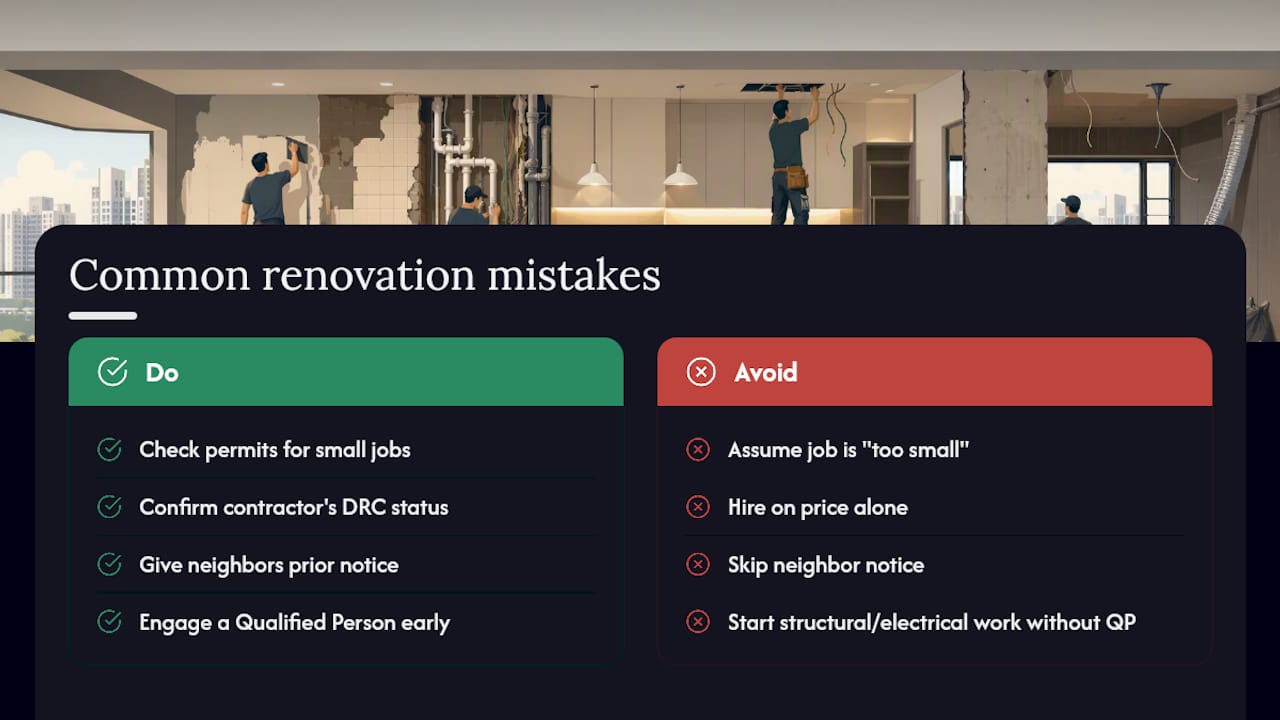
The mistake I see most often isn’t ignorance of the rules. It’s owners assuming their job is “too small” to need checking. Removing a section of wall to open up a kitchen, or swapping out a fire-escape door for something more stylish, both sound cosmetic but land squarely in permit territory.
The second recurring error is hiring based on price alone, without confirming DRC status. And the third is skipping the neighbor notice entirely, which almost always backfires the moment hacking starts. When structural work or electrical loading is involved, bring in a Qualified Person before your contractor touches anything.
— Aman
Aesthetic Havens Can Help You Navigate Permits and Contractor Liaison
If you’re renovating an HDB flat you just bought, or planning ahead of a resale, the permit maze is easier to walk through with someone who has seen it before. There are advisory services available that help homeowners with renovation timelines, understanding permit requirements for specific units, and liaising with DRC-listed contractors to ensure smooth communication between design briefs and paperwork.

This is advisory and facilitation support, not construction work itself. It does not include construction work. It offers guidance before committing to a contractor and additional review of permit documents before submission to HDB. If you’re weighing a resale purchase where renovation scope will affect your budget, our property sales workflow guide is a useful starting point, or you can reach out directly to talk through your flat’s specific renovation plan.
Where to Verify HDB Renovation Rules Yourself
Before signing any contractor agreement, check these primary sources directly:
- HDB’s renovation guidelines for noise hours, tool limits, and time windows
- Housing and Development (Renovation Control) Rules for the legal basis behind contractor and permit requirements
- MyNiceHome’s renovation guide for step-by-step timelines and application logistics
- HDB’s permit application page for document requirements and licensed-professional rules
Sources
- Housing and Development (Renovation Control) Rules
- Important information — renovation guidelines | HDB
- How to Renovate Your HDB Flat | MyNiceHome
- Application for a renovation permit | HDB
FAQ
Do I Need a Permit to Renovate My HDB Kitchen?
You need a permit if you’re hacking walls, moving plumbing points, or altering the floor level; cosmetic changes like new cabinets or paint generally don’t require one.
How Long Does an HDB Renovation Permit Last?
Existing flats get one month to complete works, newly completed flats get three months, and window works must finish within two weeks of the permit date.
Can I Hire Any Contractor for HDB Renovation Work?
No. The contractor must be listed on HDB’s Directory of Renovation Contractors, or you risk prosecution and a forced reinstatement of your flat.
When Do I Need a Qualified Person for Renovation Work?
Structural changes, such as hacking load-bearing walls or altering the flat’s layout, require certification from a Qualified Person, usually a Professional Engineer.
How Much Notice Must I Give Neighbors Before Renovating?
HDB requires a Notice of Renovation at least five days before work starts, served to units within a two-unit radius of your flat.


