


The HDB resale process runs entirely through the My Flat Dashboard on the HDB Flat Portal, and it moves faster than most people expect once both sides are ready. Buyers need a valid HDB Flat Eligibility (HFE) letter, sellers must register Intent to Sell at least seven days before issuing an Option to Purchase (OTP), and HDB then takes up to 28 working days to verify a complete application. The earliest possible completion date lands about eight weeks after HDB accepts that application.
TL;DR:
- The resale application can be delayed if the Intent to Sell registration is completed before the seven-day waiting period, requiring a restart of the process.
- Buyers must finalize their bank or HDB loan approval separately from signing the Option to Purchase, as the OTP does not lock in financing.
- Missing the seven-day application window for the second party results in application lapse and non-refundable fees, which necessitates starting over.
- Document validity is crucial, with the HFE letter valid for six months and the Intent to Sell for twelve months, both needing to be active at OTP issuance.
- Proper coordination and timely document submission, ideally with professional assistance, can prevent common lapses and ensure an eight-week completion timeline.
Table of Contents
- What Are the Steps in the HDB Resale Process?
- What Documents Do You Need for HDB Resale Requirements?
- How Does Financing Fit Into the HDB Resale Timeline?
- How Much Does HDB Resale Cost in Fees?
- What Happens at the Resale Completion Appointment?
- A Practical Checklist Before You Start Your HDB Resale Application
- Why a Property Consultant Still Matters in a Digital Process
- Get Hands-On Help With Your HDB Resale Steps
- Sources
What Are the Steps in the HDB Resale Process?
The resale journey has a fixed order, and skipping ahead usually backfires. Here’s how it actually unfolds from the first login to the final handshake at the completion appointment.
- Buyer applies for an HFE letter. This confirms loan eligibility (HDB loan or bank Approval in Principle) and CPF housing grant entitlement before any flat hunting gets serious.
- Seller registers Intent to Sell. This has to sit in the system for at least seven days before an OTP can legally be issued. Sellers often forget this lead time and lose a week they didn’t budget for.
- Buyer and seller negotiate and sign the OTP. The HDB-prescribed OTP is the only legally valid contract for a resale transaction. It carries a unique serial number, and both parties must declare the true resale price. Side agreements that quietly adjust the declared price are void.
- Buyer submits a Request for Value. This must happen by the next working day after receiving the OTP, with a scanned copy of the OTP’s first page attached.
- Both parties submit their resale application on My Flat Dashboard. One side typically goes first. The other has exactly seven calendar days to follow. Miss that window and the whole application lapses.
- HDB verifies the application. This takes up to 28 working days for a complete submission with no missing documents.
- Endorsement and document preparation. Once HDB accepts the application, this stage typically runs about three weeks while HDB prepares the paperwork.
- Resale completion appointment. Payments, signatures, and key handover happen here, roughly eight weeks after acceptance at the earliest.
A few things trip people up along the way:
- Buyers assume the OTP locks in financing. It doesn’t. Loan approval still needs to be finalized separately.
- Sellers list the flat before their Intent to Sell has cleared the seven day mark, then have to delay OTP issuance.
- Either party treats the Request for Value as optional paperwork instead of a next-working-day deadline.
What Documents Do You Need for HDB Resale Requirements?
Timing rules on documents cause more rejected applications than anything else in the HDB resale procedure. The HFE letter stays valid for six months, and the Intent to Sell registration is valid for twelve months. Both need to still be active when the OTP is issued, not just when you first applied.
Documents you’ll typically need on hand:
- NRIC for all buyers and sellers listed on the application
- The OTP serial number and a scanned copy of the signed pages
- Spouse’s identification documents, even for a co-owner not physically present
- Power of Attorney (POA) documents if someone is signing on another’s behalf
- Divorce or grant of probate documents where the flat’s ownership involves a legacy or matrimonial settlement
Miss the seven-calendar-day window for the second party’s application, and the entire submission lapses. The administrative fee already paid is not refunded, and both parties have to start the application from scratch.
How Does Financing Fit Into the HDB Resale Timeline?
Your HFE letter already reflects whether you’re going the HDB loan route or using a bank’s Approval in Principle. If you’re financing through a bank, that Approval in Principle needs to convert into a formal Letter of Offer before you exercise the OTP, not after.
The Request for Value has to be submitted by the next working day after the OTP is signed, with the scanned OTP page attached and a $120 processing fee (including GST). A few other financing details matter more than buyers expect:
- HDB loan takers must arrange mortgage fire insurance before completion.
- Bank loan buyers should confirm their Letter of Offer terms match what was declared in the HFE letter.
- Sellers can expect their CPF refund only after completion, not before, and the timing is worth planning around if you’re using those funds for your next purchase.
Readers weighing bank financing against an HDB loan can find a broader breakdown in KAPVOY Advisory’s property financing guide, which covers loan structuring beyond what HDB’s own portal explains.
How Much Does HDB Resale Cost in Fees?
The dollar figures in the HDB resale process are small compared to the transaction itself, but they’re non-refundable if you lapse an application, so get them right the first time.
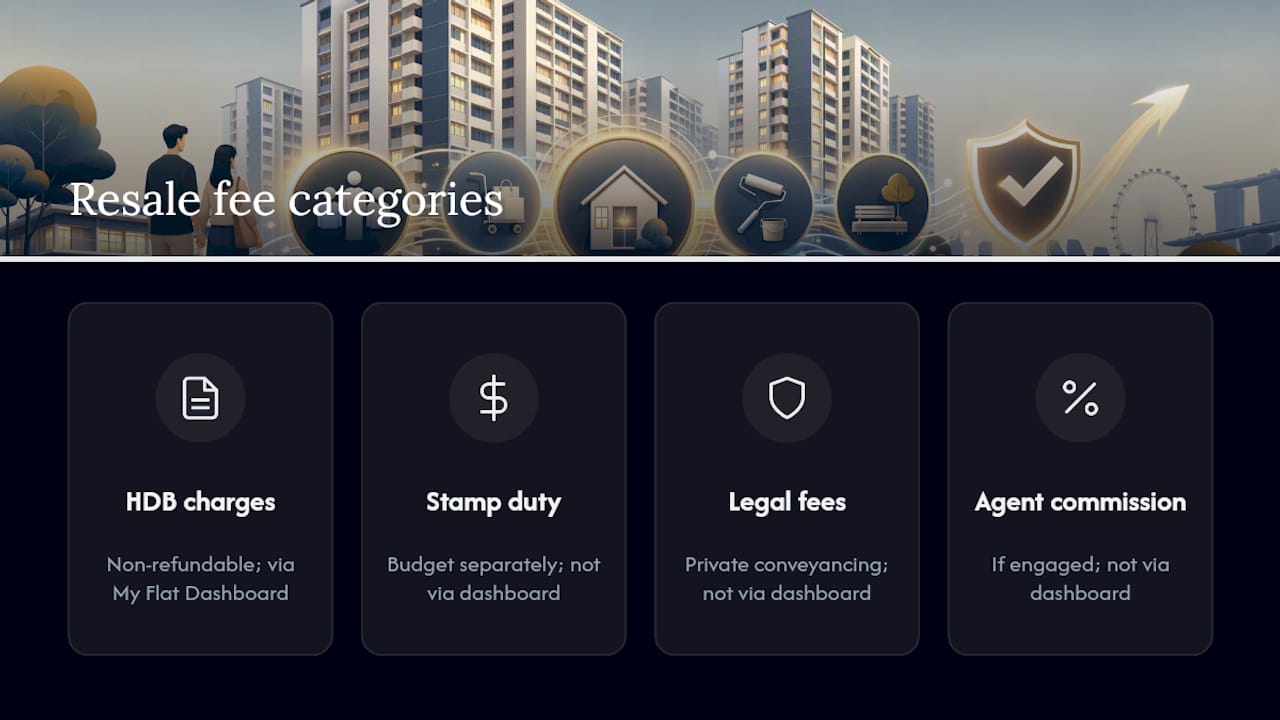
Beyond these HDB-specific charges, budget separately for the buyer’s stamp duty, any legal conveyancing fees if you’re not using HDB’s own solicitor service, and agent commission if one is engaged. None of those run through My Flat Dashboard.
What Happens at the Resale Completion Appointment?
HDB notifies both parties of the appointment slot by SMS, and the exact time depends on how the buyer is financing the purchase. HDB loan, bank loan, and cash buyers often get different appointment windows on the same day, and HDB will not move the date forward once it is set. If a genuine scheduling conflict comes up, both parties have to jointly request a deferment through MyRequest@HDB.
- Bring the original signed OTP, identity documents, and (for HDB loan cases) the mortgage insurance certificate.
- Confirm town council payment status. Sellers need a clearance letter showing service and conservancy charges are settled.
- Private solicitors may attend on a client’s behalf; if HDB is acting as your solicitor, you or your appointed representative still needs to show up in person.
- Payments, endorsements, and signatures happen at this appointment, followed by key handover to the buyer.
- After completion, sellers typically receive their CPF refund within 7 to 14 working days, along with any cash proceeds by cheque.
A Practical Checklist Before You Start Your HDB Resale Application
Run through this before you touch the OTP:
- Confirm your HFE letter is still within its six-month validity.
- Confirm the seller’s Intent to Sell has been active for at least seven days.
- Have the OTP’s scanned pages ready to attach to your Request for Value submission.
- Pay the Request for Value fee immediately, not “sometime this week.”
- Pull your latest town council payment confirmation and property tax receipts ahead of the completion appointment.
- Sort out POA or insurance arrangements early if a co-owner can’t attend in person.
Pro Tip: Set a calendar reminder for the seven-calendar-day submission deadline the moment the first party submits their portion. That window is the single most common reason resale applications lapse, and it’s entirely avoidable with a two-minute reminder.
Why a Property Consultant Still Matters in a Digital Process
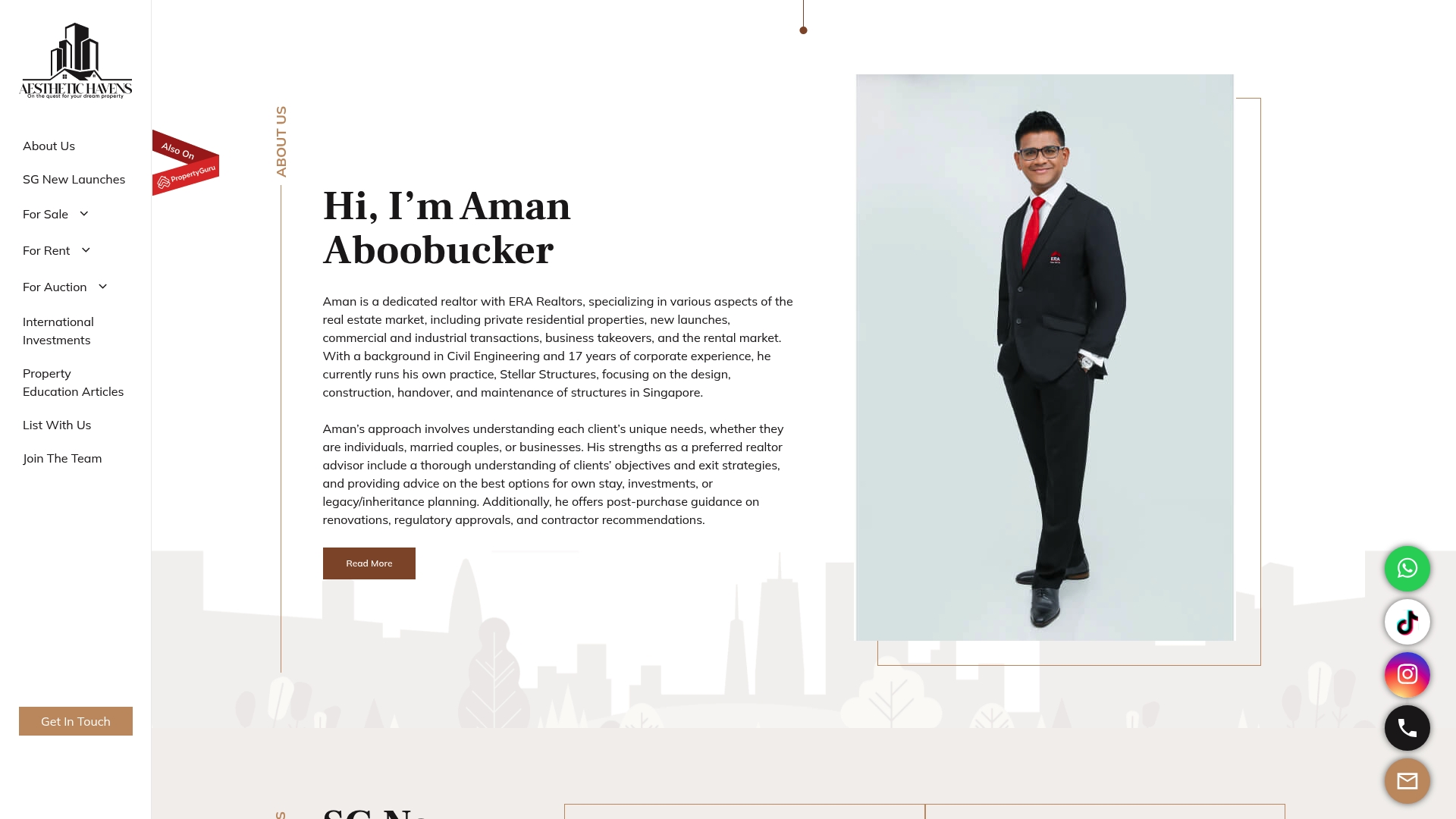
Aman Aboobucker has watched the HDB resale procedures tighten around exact deadlines, and the digital portal has not removed the human error that causes lapses. A consultant’s real value sits in document quality control, catching an expired Intent to Sell before it derails an OTP, and keeping solicitors and both parties moving on the same clock. The rules are public. Executing them without a missed step is where most transactions actually go wrong.
— Aman
Get Hands-On Help With Your HDB Resale Steps
Reading the rules and executing them under a ticking seven-day clock are two different things. Aesthetic Havens works alongside sellers and buyers through the entire HDB resale procedure in Singapore, from checking HFE and Intent to Sell validity before you sign anything, to liaising with solicitors so the completion appointment doesn’t get derailed by a missing document.
That hands-on coordination is the actual difference between a smooth eight-week completion and a lapsed application that costs you the admin fee and a fresh start. If you want a second set of eyes on your timeline, document checklist, or financing sequencing before you exercise an OTP, read why using a property consultant benefits buyers and book a consultation with Aesthetic Havens to walk through your specific resale timeline.


