


Choosing the wrong commercial lease structure in Singapore can quietly drain your cash flow, box in your operations, or turn a promising expansion into an expensive setback. Yet most business owners compare only the headline rent figure, completely missing the fine print that determines whether a lease actually works for their business model. This guide breaks down the main types of commercial leases used in Singapore, walks through real-world examples across retail, office, and industrial settings, and highlights the critical clauses that separate a solid deal from a costly mistake before you sign anything.
Table of Contents
- Understanding key commercial lease structures in Singapore
- Examples of retail, office, and industrial leases in Singapore
- Critical commercial lease terms: what to watch
- How to compare lease options in Singapore: all-in occupancy analysis
- Our take: why smart tenants focus on edge cases and not just rent
- Unlock your ideal commercial lease in Singapore with expert support
- Frequently asked questions
Key Takeaways
| Point | Details |
|---|---|
| Lease types impact costs | Base rent, gross rent, and triple net leases have very different financial obligations for tenants in Singapore. |
| Critical clauses matter | Use restrictions, fit-out rules, and break clauses can make or break your business flexibility. |
| Compare ‘all-in’ prices | Factor in every recurring charge, not just monthly rent, to avoid budget shocks. |
| Edge-case risks are real | Permitted-use drift, exclusivity, and delayed handover are pitfalls that experienced tenants address up front. |
| Expert advice pays off | Working with knowledgeable advisors can help you secure more favorable lease terms and avoid hidden risks. |
Understanding key commercial lease structures in Singapore
Singapore’s commercial property landscape covers three broad categories: retail, office, and industrial. Each comes with its own set of lease norms, and understanding how rent is structured is the first step to comparing options accurately.
Base rent vs. gross rent is the most fundamental distinction. Base rent refers to the pure cost of occupying the space, nothing added. Gross rent bundles in certain operating expenses, typically building maintenance, service charges, or management fees. Landlords in Singapore quote rent in different ways, so always clarify what is included before drawing comparisons. As part of the leasing process overview, understanding these distinctions early prevents budget surprises during negotiation.
Rent per square foot per month (psf/month) is the standard unit in Singapore, so you must also account for additional costs like service charges, maintenance fees, and GST currently charged at 9%. These additions can shift the real cost by 20% to 40% above the stated rent, which is a gap that matters enormously when you are modeling occupancy budgets for a new location.
A Triple Net Lease (NNN) takes cost responsibility even further. In this structure, the tenant pays base rent plus property taxes, building insurance, and maintenance costs. NNN leases are more common in industrial and standalone commercial properties. They give landlords highly predictable returns, but they shift significant financial risk onto the tenant.
The common lease terms that appear across nearly all Singapore commercial leases include:
- Permitted use clause: Restricts the business activities allowed in the space. A food and beverage tenant, for example, cannot quietly start a retail shop without landlord approval.
- Assignment and subletting rights: Governs whether you can transfer your lease to another party or sublease part of your space, which matters enormously if you want flexibility to exit or downsize.
- Fit-out obligations: Details what renovations you can make, who pays, and what must be restored at the end of the lease.
- Break clause: Allows early lease termination under defined conditions, usually subject to a penalty period.
- Renewal terms: Outlines your right to renew and whether the landlord can change the rent significantly at renewal.
“The permitted use clause is not just a formality. It defines the legal scope of your business operations within that space, and straying outside it, even slightly, can trigger penalties or termination.”
| Lease component | Base rent model | Gross rent model | Triple net (NNN) |
|---|---|---|---|
| Base space cost | Tenant pays | Tenant pays | Tenant pays |
| Service charges | Separate | Usually included | Separate |
| Property tax | Excluded | Excluded | Tenant pays |
| Insurance | Excluded | Excluded | Tenant pays |
| Maintenance | Excluded | Often included | Tenant pays |
| GST (9%) | Applicable | Applicable | Applicable |
With the basics established, let’s look at how these lease types work in practice across Singapore’s main commercial segments.
Examples of retail, office, and industrial leases in Singapore
Real-world lease scenarios reveal details that general definitions never fully capture. Here is how the three major categories typically play out.
Retail leases are the most complex. Singapore shopping malls frequently tie rent to a percentage of monthly turnover, often structured as a base rent plus a percentage of gross sales (known as percentage rent). Retail landlords may also offer a fit-out period, typically two to four weeks of rent-free time to allow the tenant to complete renovations before opening. Watch for exclusivity clauses that prevent the landlord from leasing nearby space to a direct competitor, though these are rarely granted without strong negotiation leverage. Retail leases also often contain continuous operation clauses requiring you to stay open during trading hours, which limits your flexibility if business slows.
Office leases in Singapore’s CBD typically run on a gross rent model, with service charges bundled in. A typical three-year office lease might be quoted at SGD 10 to 14 psf/month gross in a Grade A building, with GST added on top. Tenants often receive a fit-out contribution from the landlord for longer leases, structured as a tenant improvement allowance. The landlord fits out the shell, and the tenant customizes the interior within agreed parameters.

Industrial leases, whether for warehouses, logistics hubs, or light industrial units in JTC-managed estates, tend to be simpler. Rent is usually quoted as base rent without service charges bundled in, and triple net arrangements are not uncommon for standalone facilities. Industrial leases also come with stricter permitted use conditions tied to URA or JTC zoning classifications.
| Lease type | Typical tenure | Rent range (SGD psf/month) | Key clauses to check |
|---|---|---|---|
| Retail (mall) | 2 to 3 years | 15 to 35 psf (varies widely) | Turnover rent, exclusivity, fit-out period |
| Office (Grade A CBD) | 2 to 5 years | 10 to 14 psf gross | Service charges, GST, fit-out allowance |
| Office (suburban) | 1 to 3 years | 4 to 7 psf gross | Renewal options, subletting rights |
| Industrial (JTC) | 2 to 3 years | 1.50 to 3.50 psf | Permitted use (JTC approval), NNN terms |
| Standalone retail | 3 to 5 years | 5 to 15 psf | Property tax, insurance, maintenance |
Pro Tip: Before you compare any two leases side by side, always convert both to an all-in per square foot figure. Include GST, service charges, and any NNN components. A lower headline rent can easily become the more expensive option once all costs are accounted for. For a deeper look at the buying commercial property process versus leasing, understanding these cost layers applies to both decisions.
Understanding how these scenarios compare in your specific industry segment is easier with context from Singapore market specifics that reflect current supply, demand, and rental trends by zone.
Critical commercial lease terms: what to watch
Having seen what example leases look like, let’s zoom in on the high-stakes clauses where businesses inadvertently lose leverage or face surprises.
-
Use clause and permitted use drift. The use clause is arguably the most restrictive element of any commercial lease. Landlords use it to control the tenant mix of a building or mall. If your business model evolves, as many do, expanding from pure F&B to a hybrid retail model, you may need landlord approval and a lease amendment. Many tenants discover this restriction only when they try to pivot. Exclusivity provisions work in reverse: they protect you from direct competitors moving into adjacent units, but they are hard to secure and often narrowly worded.
-
Assignment and subletting rights. If your business needs to downsize or you are acquired by another company, the ability to assign your lease or sublet part of your space can be the difference between a clean exit and a costly legal standoff. Most Singapore commercial leases require landlord consent for assignment, and landlords are not always obligated to grant it. Negotiate this clause upfront, not when you are already under pressure to exit.
-
Renovation and fit-out provisions. The fit-out timeline is a significant operational risk, especially for F&B businesses or retail concepts that require heavy customization. Delays in fit-out approvals, contractor scheduling, or handover of the space can push back your opening date by weeks. Every week of delay without a corresponding rent-free period hits your bottom line directly. Always negotiate a delayed handover clause that extends your rent-free period if the landlord delivers the space late.
-
Break clause mechanics. A break clause sounds protective, but most commercial leases in Singapore attach conditions that make exercising it costly. You may need to give six months’ notice, pay a penalty equal to several months of rent, and have the space in original condition. Understand the full cost of activating a break clause before treating it as a safety net.
-
Service charges and GST surprises. Landlord responsibilities in Singapore typically include building structure and common area upkeep, but service charges for air conditioning, security, and common area maintenance are almost always passed to tenants. These charges fluctuate annually. Some leases cap the annual increase; many do not. Knowing the role of agent specialists in negotiating these terms can give you real leverage before signing.
“The break clause is the fire exit of your lease, but like a real fire exit, it only works if you have read the instructions and know exactly what triggers it.”
For additional negotiation strategies and practical tactics, leasing tips from experienced advisors in Singapore’s commercial market can make a measurable difference in your final lease terms.
How to compare lease options in Singapore: all-in occupancy analysis
Armed with an understanding of the most important clauses, let’s put this into practice by showing how total costs stack up across typical leases.
The mistake most tenants make is comparing leases at the headline level. A CBD office at SGD 11 psf gross feels comparable to a suburban office at SGD 8 psf base rent, until you calculate that the suburban option adds SGD 1.50 psf in service charges, SGD 0.72 psf in GST, and possible NNN costs. Suddenly the gap narrows dramatically.
All-in occupancy modeling means stacking every recurring cost into a single comparable figure. Here is how a realistic comparison across three lease types might look for a 2,000 sqft space in Singapore:
| Cost component | Retail (mall) | Office (CBD) | Industrial (JTC) |
|---|---|---|---|
| Base/gross rent (psf/month) | SGD 22 | SGD 11 | SGD 2.20 |
| Service charges (psf/month) | Included | Included | SGD 0.50 |
| Property tax allocation | Excluded | Excluded | SGD 0.30 |
| Insurance | Excluded | Excluded | SGD 0.10 |
| GST (9%) | SGD 1.98 | SGD 0.99 | SGD 0.28 |
| All-in cost (psf/month) | SGD 23.98 | SGD 11.99 | SGD 3.38 |
| Monthly total (2,000 sqft) | SGD 47,960 | SGD 23,980 | SGD 6,760 |
The benefits of commercial property investment as an owner versus leasing become clearer when you run this kind of occupancy analysis. Tenants who own their space absorb none of these variable charges.
Pro Tip: Always request a full expense schedule from the landlord or property manager before making any lease offer. This document lists every fee you are expected to pay monthly and annually, and it often reveals costs that are buried in the lease agreement itself.
Our take: why smart tenants focus on edge cases and not just rent
Most guides written about Singapore commercial leases focus on negotiating rent lower. That is useful but frankly incomplete advice. In our experience advising businesses across retail, office, and industrial sectors here, the tenants who consistently come out ahead are the ones who obsess over the edge cases, not the headline number.
We have seen a food and beverage operator secure a competitive rent in a mid-tier mall, only to discover six months in that their lease’s permitted use clause prevented them from adding alcohol service. The amendment cost them months of delay and a significant legal fee. The clause was in the lease from day one. Nobody asked about it.
We have seen a tech firm sign a five-year office lease without a subletting clause, then pivot to a hybrid work model that left them holding 60% unused floor space with no legal path to sublet it. The break clause existed, but the penalty was eight months of rent. They stayed and absorbed the cost.
What separates tenants who thrive from those who struggle is not how hard they negotiate on rent. It is whether they did thorough scenario planning before signing. Questions like: What if we need to pivot our business model? What if the handover is delayed? What if we get acquired or need to downsize? These are not pessimistic questions. They are professional ones.
Getting experienced advisory support, particularly from specialists who understand agent leasing value in the Singapore context, is where tenants consistently recover more value than the cost of that advice. Edge cases are exactly where experience matters most.
Unlock your ideal commercial lease in Singapore with expert support
Navigating Singapore’s commercial lease market is genuinely complex, and the cost of a misstep compounds over a two to five year lease term. Whether you are setting up a new retail outlet, expanding your office footprint, or securing industrial space for operations, the right advisory support helps you identify hidden risks, negotiate better terms, and structure a lease that fits your actual business needs.
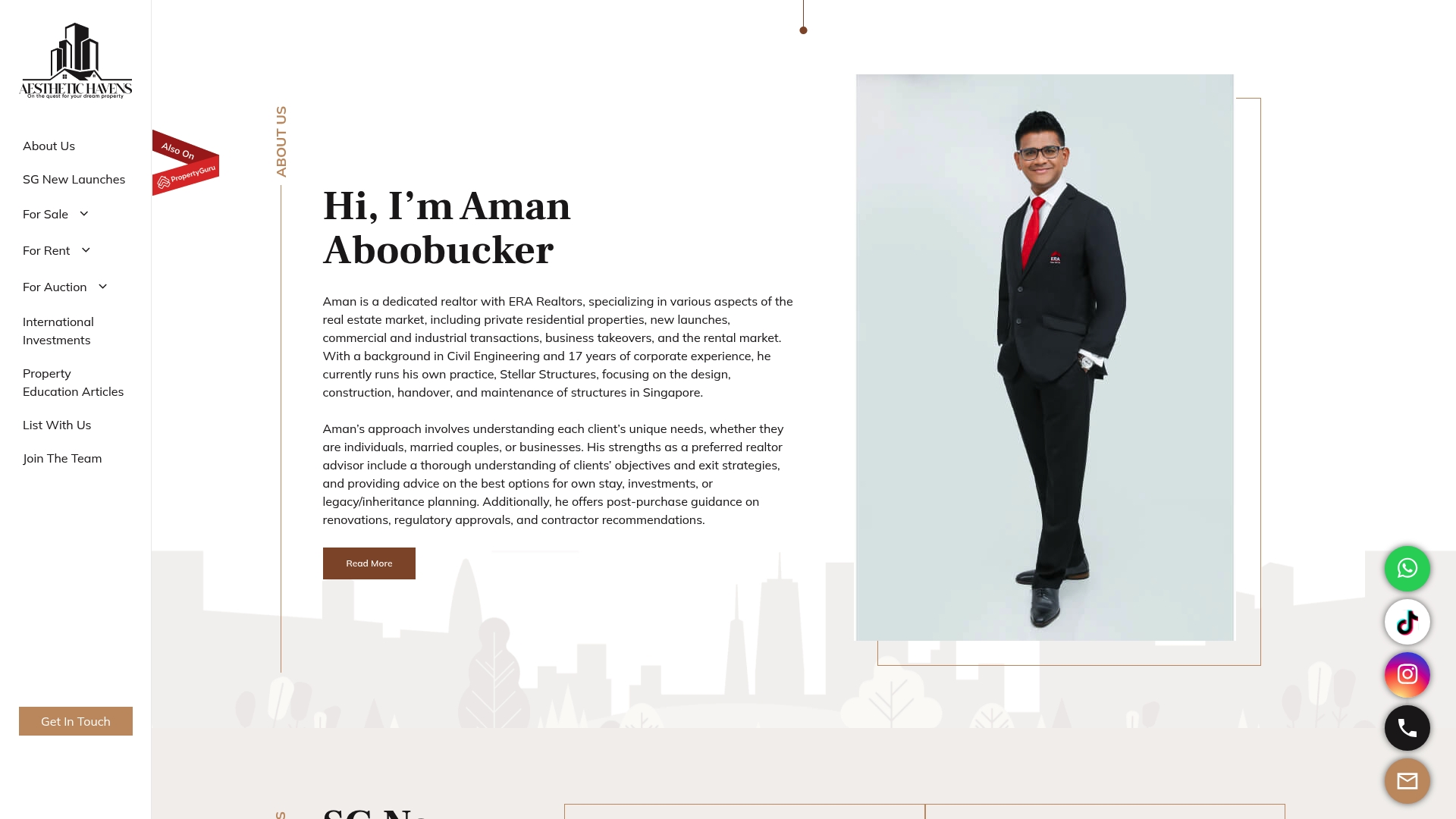
At Aesthetic Havens, Aman Aboobucker and the ERA Realtors team bring hands-on Singapore commercial leasing expertise to every client engagement. From reviewing real estate advisory fundamentals to understanding the tangible agent benefits of professional representation, working with specialists gives you a negotiating edge that self-navigated searches simply cannot match. Explore your options with Aesthetic Havens and make your next commercial lease a strategic asset, not a liability.
Frequently asked questions
What is the difference between base rent, gross rent, and triple net lease in Singapore?
Base rent covers only the space itself, gross rent includes some operating costs like service charges, while a triple net lease means you pay base rent plus all property taxes, building insurance, and maintenance fees directly.
What is a “permitted use” clause and why does it matter?
A permitted use clause defines the specific business activities allowed in your leased space, and use restrictions can prevent you from pivoting or expanding your operations without costly lease amendments or landlord approval.
What extra costs should I expect beyond rent in Singapore commercial leases?
Beyond your monthly rent, expect service charges and GST at 9%, and in some leases, additional triple-net charges covering property tax, insurance, and building maintenance that can add 20% or more to your total occupancy cost.
How can I avoid unexpected costs or operational problems in my lease agreement?
Request a complete expense schedule before making any offer, verify every clause in the lease including break terms, fit-out obligations, and subletting rights, and engage a commercial leasing professional to review the full agreement before you commit.


