

Introduction
Conservation shophouses in Singapore have quietly cemented their position as one of the most sought-after capital appreciation and wealth-preservation tools among ultra-high-net-worth (UHNW) families and family offices. Despite gross rental yields that often sit below 2–4% and entry prices that have risen from S$5 million–S$8 million to S$15 million–S$20 million over the past decade, demand for Singapore shophouses from the wealthiest tier of investors has only intensified. This article explains why Singapore’s wealthy keep buying conservation shophouse units-and why shophouses as a capital appreciation tool continue to outperform most expectations.
The focus here is on Singapore URA-gazetted conservation shophouses, primarily commercial and mixed-use units, analysed through the lens of capital appreciation, capital preservation, and investor strategy. This is not a guide to HDB shophouses or generic strata retail. The target readers are business owners, high net worth individuals, family offices, and corporate occupiers weighing shophouses against other commercial assets. AESTHETIC HAVENS, as a B2B real estate advisory platform, provides data-driven guidance for exactly these decisions.
Why do the wealthy keep buying? The typical shophouse buyer in this market is a high-net-worth individual, family office, or business owner seeking long-term wealth preservation, after which the appeal comes from fixed supply (only about 6,500 units are conserved in Singapore), freehold or 999-year tenure, ABSD exemptions for commercial zoned units, and strong long-run capital growth with legacy and prestige value. Shophouse capital values grew over 120% from 2010 to 2024, and no new heritage shophouses can be built in Singapore-making them the only fixed-supply commercial property in Singapore.
By reading this article, you will:
-
Understand the conservation framework enforced by the Urban Redevelopment Authority and why it creates irreversible scarcity.
-
See hard numbers on historical price growth and rental yields, including CAGR ranges, typical psf bands (D1/D2 shophouses have a typical price range of S$8,600–17,100 psf), and transaction volumes.
-
Learn how wealthy investors structure acquisitions for capital appreciation and legacy planning-including ABSD-exempt strategies and SPV structures.
-
Recognise key risks: illiquidity, conservation compliance costs, large quantum concentration, financing constraints, and regulatory exposure.
-
Get a practical, step-by-step approach to evaluating a shophouse deal with the kind of analysis AESTHETIC HAVENS applies for clients.
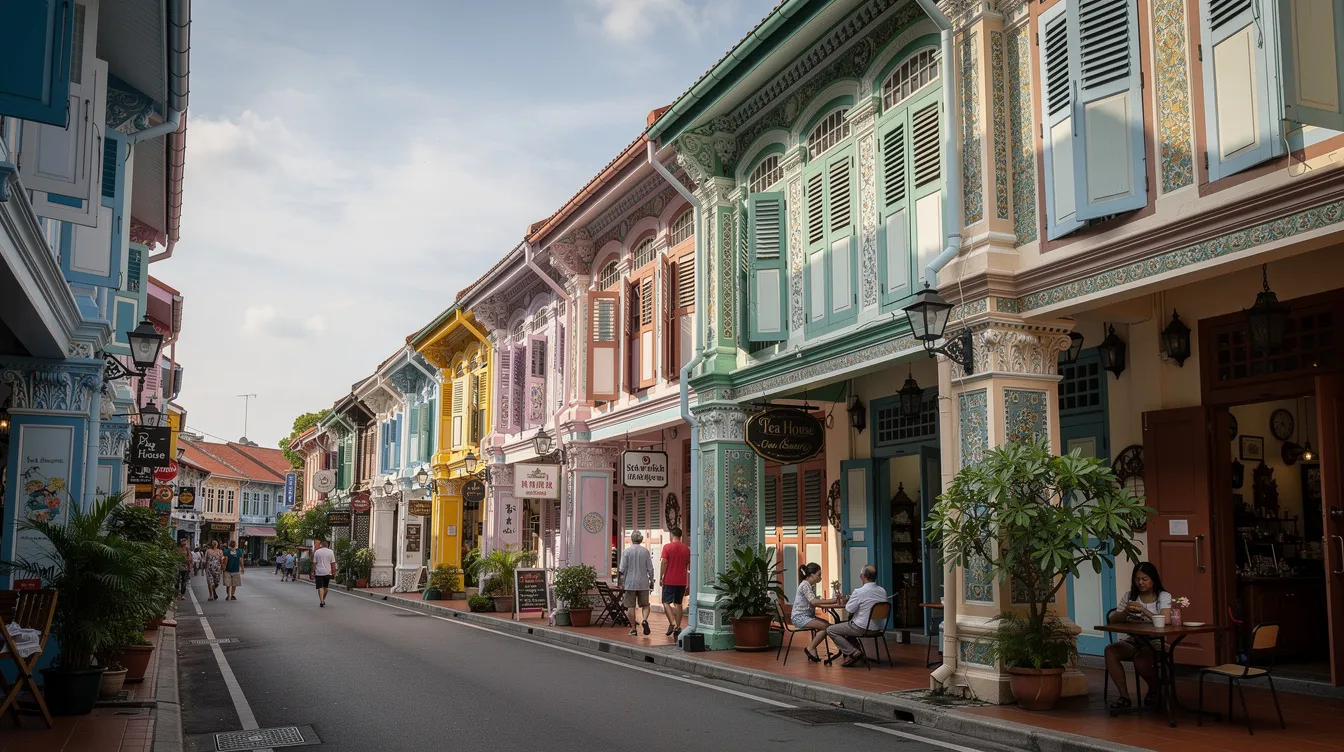
Throughout, visual references to iconic streets-Amoy Street’s restored façades, the five-foot-way rhythm of Joo Chiat, Duxton Road’s pastel terraces-illustrate the streetscape character that underpins this unique asset class.
Understanding Conservation Shophouses as an Asset Class
A conservation shophouse in Singapore is a heritage-protected building gazetted by the Urban Redevelopment Authority, typically two to four storeys, built between the early 1800s and the 1950s, and designated under either Historic Districts or Secondary Settlements. These buildings sit at a unique intersection of asset classes: part landed property, part commercial property, part hospitality or lifestyle venue. They are neither modern office buildings nor standard residential properties, and that hybrid character is precisely what gives them distinctive investment attributes.
Approximately 6,500 shophouses are conserved across the island, clustered in districts like Chinatown, Tanjong Pagar, Boat Quay, Kampong Glam, Little India, Joo Chiat, and Blair Plain. Shophouse transaction values have ranged from S$1.6 billion to S$2.45 billion annually in recent years, underscoring the scale of capital flowing into this segment despite the limited stock.
Three pillars support the capital appreciation thesis: scarcity (fixed, irreplaceable supply), zoning and tax advantages (ABSD exemption for commercial zoned shophouses, freehold tenure), and heritage prestige (cultural cachet, branding power, tourism appeal). Understanding each pillar-explored in the subsections below-is essential before committing capital.
Conservation Policy and Fixed Supply
The Urban Redevelopment Authority governs the conservation and development of shophouses in Singapore. URA’s conservation policy was formally launched via the Conservation Master Plan in 1989, which systematically gazetted entire precincts-Boat Quay, Chinatown, Little India, Kampong Glam, Blair Plain, and others-bringing rows of pre-war buildings under legal protection. Prior to 1989, conservation efforts were selective; the Master Plan marked the shift to comprehensive heritage preservation.
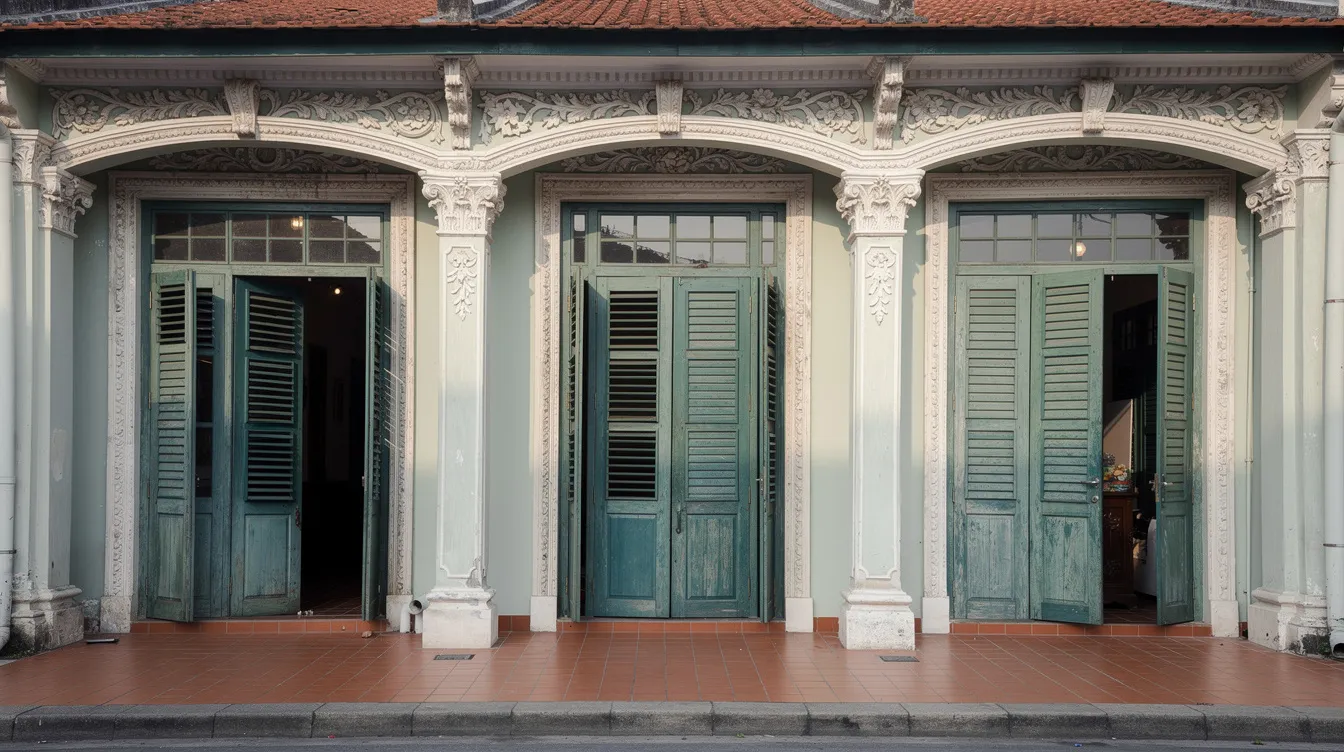
The result is a hard cap on supply: only about 6,500 shophouses are conserved in Singapore, and URA’s Conservation Programme prevents new shophouse construction. Existing units cannot be demolished. Conservation guidelines mandate facade retention for shophouses, and height controls and envelope restrictions prevent intensification that would dilute the heritage streetscape. The “3R” principles-Retention of original structure, Restoration of damaged elements, and Repair through ongoing maintenance-ensure that the physical character of these buildings is preserved indefinitely.
This fixed supply is the primary driver of long-run price resilience. Unlike strata offices or modern retail developments where developers can add new supply to meet demand, conservation shophouses face zero new competition. When an asset cannot be replicated, sustained or growing demand translates directly into capital appreciation. A conserved row along Keong Saik Road, for example, looks essentially the same today as it did in the 1920s-visual continuity protected by regulation, scarcity guaranteed by law.
Zoning, Tenure and Investment Profiles
Conservation shophouses come in several zoning categories, each with distinct implications for stamp duty, permissible uses, and financing:
-
Commercial: Pure commercial use across all floors. Exempt from Additional Buyer’s Stamp Duty (ABSD) regardless of buyer nationality. This is the most tax-efficient structure for foreign buyers and family offices.
-
Commercial & Residential: Typically commercial at ground floor with residential use on upper storeys. The residential component may trigger partial ABSD and affects the IRAS definition of residential property.
-
Residential with first-storey commercial: Less common among prime conservation shophouses but present in some precincts. Full residential ABSD exposure applies to the residential portion.
Tenure varies significantly. Many prime shophouses in the CBD fringe-Telok Ayer, Amoy Street, Ann Siang Hill, Club Street-sit on freehold or 999-year leases, effectively perpetual ownership. Freehold shophouses command an approximate 15–30% premium over comparable leasehold shophouses on the same street, according to ZeroABSD’s investment thesis research. Some Bugis and Kampong Glam locations, by contrast, are 99-year leasehold, which affects bank valuation, loan tenure, and the long-run appreciation trajectory.
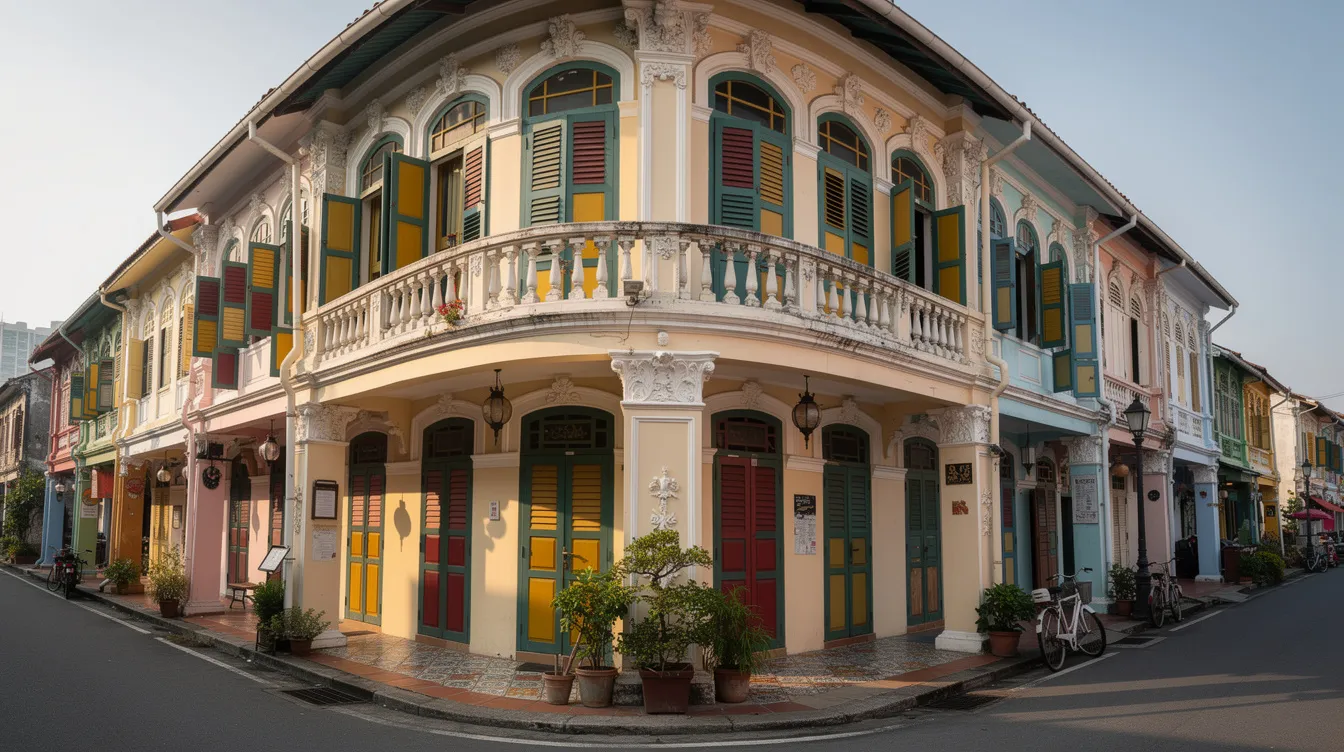
This creates two distinct investment profiles. Trophy assets-corner lots, wide frontages, dual-street exposure on iconic roads like Ann Siang Hill or Amoy Street-command the highest psf and attract buyers who measure value in legacy, prestige, and land banking over decades. Workhorse assets-inner-row units on secondary streets-offer higher initial yields and lower entry quantum but less dramatic psf growth. Both profiles serve different investor mandates, but both benefit from the structural advantages that make shophouses behave differently as capital appreciation tools compared with condos, strata offices, or modern office buildings.
Why Singapore’s Wealthy and Family Offices Keep Buying Conservation Shophouses
Moving from structural characteristics to investor psychology: for UHNW families, family offices, and corporate principals, shophouses are treated not as conventional commercial property but as a hybrid of core real estate, private equity, and collectible art-an art piece you can occupy, lease, and pass down through generations. Conservation shophouses primarily serve as multi-generational legacy investments, and this mindset shapes how deals are sourced, priced, and held.
Scarcity, Trophy Value and Signalling
Owning a row or cluster of shophouses in streets like Club Street, Ann Siang Hill, or Duxton Road carries the same signalling weight among Singapore’s business elite as owning a flagship address in London’s Mayfair or Manhattan’s SoHo. Shophouses are often viewed as ‘trophy assets’ for legacy building-possessions that communicate permanence, taste, and deep-rooted wealth.
Transaction data confirms the trend: family offices have been assembling adjoining units in Club Street and Amoy Street between 2015 and 2025, with deal sizes commonly in the S$20–S$80 million range. In 2H 2025, ERA’s landed shophouse report noted that 65 Club Street sold for S$21 million, one transaction among 36 landed shophouse deals in the period-a modest volume that underscores how rarely trophy assets change hands.
This demand is not price-sensitive in the conventional sense. A typical shophouse buyer may accept sub-2.5% yields-prime shophouses yield below 2% but appreciate significantly over time-because the qualified buyer pool for these assets measures value in decades, not quarters. Limited trophy stock combined with a growing pool of wealth in Asia drives price competition for the top 5–10% of assets, creating a self-reinforcing dynamic where scarcity begets further capital appreciation.
Freehold Land, Inflation Hedge and Long-Run Appreciation
Many conservation shophouses sit on freehold or 999-year land, giving them characteristics similar to landed properties in Districts 1, 2, 7, 8, and 15-Singapore’s most coveted addresses. This permanence of tenure is central to the capital appreciation story.
The numbers speak clearly. Knight Frank’s H1 2024 shophouse report documented landmark returns: 34 Bussorah Street in Kampong Glam transacted for S$4.5 million after approximately 21 years of ownership, delivering a total return of roughly 1,223.5%-implying annualised appreciation of 11–12%. At 135 Dunlop Street in Little India, a sale at S$5.3 million after 22 years yielded approximately 650% total return, or 8–9% annualised. Meanwhile, ZeroABSD data shows median prime shophouse psf rising from approximately S$2,500 in 2014 to S$5,200 by 2024-a compound annual growth rate of roughly 7.6%.
Shophouses function as an inflation hedge because land scarcity tends to track or outrun monetary expansion, while rents-particularly for F&B, office, and hospitality uses in prime locations-adjust upward over time. Even during economic uncertainty and crises like COVID-19, pricing for high-quality conservation shophouses proved resilient, with transaction volumes dipping but capital values holding firm.
For UHNW investors with multi-decade holding horizons, this compounding capital growth matters far more than immediate cash-on-cash yield. Over 15–20 years, a freehold shophouse on a well-chosen street can deliver total returns that dwarf most conventional commercial or residential properties.
ABSD Exemption and Tax Positioning
One of the most powerful structural advantages: shophouses are exempt from Additional Buyer’s Stamp Duty (ABSD) when they are fully commercial zoned units. Under IRAS rules, ABSD does not apply to the acquisition of commercial shophouses regardless of whether the buyer is a Singapore citizen, permanent resident, or foreigner. Foreign investors can purchase commercial-use shophouses in Singapore on similar terms as local citizens.
Contrast this with residential properties, where foreign buyers now face ABSD of up to 60%. For global capital seeking exposure to Singapore real estate, ABSD-exempt commercial shophouses represent one of the few avenues to deploy large tickets-S$15 million, S$30 million, or more-without punitive stamp duty. This regulatory asymmetry is a primary driver of strong demand from foreign individuals and regional family offices.
Family offices can acquire multi-million-dollar positions via company or SPV structures, optimising GST treatment and income tax positioning while sidestepping residential purchase restrictions entirely. Mixed-use shophouses with a residential component may attract partial ABSD, so zoning verification is critical-but for pure commercial zoned shophouses, the tax advantage is unambiguous.
This tax positioning alone, however, does not make an investment. The rental covenant and tenant quality that underpin a shophouse’s bankability and downside protection are equally important, as explored next.
Rental Covenant, Cashflow and Capital Appreciation Dynamics
While wealthy buyers may prioritise capital appreciation and legacy, rental income and tenant stability still matter. A strong rental covenant protects downside, supports financing, and enhances exit valuation. Investors accept lower immediate rental yields in exchange for long-term capital appreciation potential-but the quality of that income stream determines how comfortably they can hold through market cycles.
Who Rents Conservation Shophouses?
The tenant profile varies by district and reflects the adaptive reuse possibilities inherent in shophouse layouts:
-
Boat Quay and Club Street: F&B operators, bars, and restaurants dominate ground floors. Upper floors often house boutique fund offices or creative agencies.
-
Telok Ayer and Amoy Street: Professional services, boutique asset managers, fintech firms, and wellness studios. Tenants value the heritage character for branding and client-facing identity.
-
Joo Chiat and Tiong Bahru: Cafés, wellness studios, co-working spaces, and creative studios. The lifestyle district continues to attract tenants willing to pay for character and street-level visibility.
-
Kampong Glam and Arab Street: Boutique hotels, co-living operators, design studios, and lifestyle retail. Heritage tourism footfall drives demand.
These tenants pay a premium for what modern office buildings cannot offer: character interiors, street-front branding visibility, flexible floor plates (typically 1,500–4,000 sq ft per floor over two to four storeys), and the intangible cachet of operating from a heritage address. Shophouses allow for versatile dual or multi-use configurations such as retail and office space, maximising per-floor revenue.
Prime ground-floor rents in the CBD fringe can reach S$15–S$30 per square foot per month. Lifestyle districts like Joo Chiat might average S$8–S$15 psf depending on frontage, footfall, and street anchoring. Higher tenant demand in prime locations increases rental income growth potential for shophouses, and stable, brand-name tenants with long leases underpin valuation uplifts when buildings are sold fully tenanted.
Yield Ranges vs Other Asset Classes
Indicative gross rental yields for conservation shophouses:
-
Prime CBD and Boat Quay: Typically 2.5–4.0% gross yields.
-
Fringe lifestyle districts (Joo Chiat, Kampong Glam): Often 3.5–5.0% gross yields.
-
For comparison: Core CBD Grade A offices might yield approximately 3–4%, while residential apartments often deliver 2–3%.
UHNW investors are willing to accept lower yields at the very top end-sometimes below 2% for the most iconic addresses-because the real return comes from capital appreciation, optionality (future change of use, amalgamation of adjoining units), and the intangible value of owning legacy assets. For mid-market investors, combining a secure rental covenant with moderate leverage (60–80% LTV) can still produce attractive equity IRRs over a 10–15 year hold, particularly if rental repositioning is part of the strategy.
Rental Covenant, Leases and Bankability
Longer leases-typically three to five years with renewal options-to creditworthy tenants improve valuation and make it significantly easier to secure financing. Banks tend to support 60–80% LTV for well-tenanted, commercial zoned conservation shophouses, according to ZeroABSD’s buying guide.
Fitting the tenant profile to zoning and URA use-class approvals is essential. F&B licensing (Type 1 vs Type 2), entertainment restrictions, and hotel or serviced-apartment licensing all affect which tenants can legally operate. Certain zones restrict tenant mix for shophouses, and misalignment between zoning and actual use can erode value or block transactions.
Vacant or heavily under-rented assets trade at a discount but can offer value-add appreciation upside after repositioning-a strategy favoured by more active investors willing to manage renovation risk and temporary rental downtime.
Key linkages between cashflow quality and future sale price:
-
Strong tenants with long leases increase buyer confidence and reduce discount-to-asking at exit.
-
Rental growth validates capital appreciation narratives and supports refinancing at higher valuations.
-
Vacancy or tenant instability during ownership erodes holding-period returns and can delay exit timelines.
How the Long-Run Capital Appreciation Story Plays Out
Capital appreciation in conservation shophouses is driven by forces at three levels: macro (Singapore as a wealth hub), meso (district regeneration, infrastructure expansion), and micro (asset upgrading, tenant repositioning). This section provides an evidence-backed view on 10–20 year outcomes.
Macro Tailwinds: Wealth Hub, Policy Stability and Safe-Haven Status
Singapore’s rise as a family office and wealth management hub since 2010 has generated sustained demand for uniquely scarce assets, with Singapore shophouses standing out as a preferred expression of that demand. The growing pool of single-family offices and multi-family offices established through 2025–2026 has intensified competition for conservation shophouses, which offer a rare combination of commercial use flexibility, capital preservation, and cultural prestige.
Political stability, currency strength, and rule of law make Singapore’s commercial real estate-especially fixed-supply assets-a preferred store of value for capital markets participants and regional wealth. Even through cycles like COVID-19 and the 2022–2024 rate-hiking environment, shophouse pricing was resilient. In 2H 2025, transaction volumes were modest (36 landed shophouse deals per ERA’s report), but trophy deals inflated headline prices, confirming that the buyer pool for the best assets remained deep.
District Regeneration, Prime Locations and Infrastructure Catalysts
MRT expansions and precinct upgrading are powerful appreciation catalysts:
-
The Downtown Line and Thomson-East Coast Line have dramatically improved connectivity for Little India and Jalan Besar. Conservation shophouses in those precincts saw marked increases in both rents and land-basis psf after new stations opened.
-
The Cross Island Line and further Thomson-East Coast Line extensions are expected to enhance access to Joo Chiat and East Coast precincts by the mid-2030s, positioning those conservation areas for the next wave of appreciation.
-
URA’s focus on mixed-use, lifestyle-oriented precincts-Bugis–Beach Road, the Civic District-creates a halo effect on nearby shophouse clusters, increasing street activation, footfall, and heritage tourism.
Consider Jalan Besar as a “before vs after” example: prior to the Downtown Line opening in 2013–2014, conservation units in the area traded at relatively modest psf levels. Post-opening, improved connectivity brought new F&B operators, boutique offices, and lifestyle tenants. Rents and capital values rose significantly as the district continues to gentrify, rewarding early investors with outsized returns.
Case-Style Examples of Capital Appreciation
Three real-world examples illustrate the range of outcomes:
Example 1: Kampong Glam trophy hold. 34 Bussorah Street was acquired in the early 2000s and sold in March 2024 for S$4.5 million. Over approximately 21 years, the total return was roughly 1,223.5%, implying annualised capital appreciation of 11–12%. The asset benefited from the precinct’s rising tourism appeal, improved MRT connectivity, and tightly controlled heritage streetscape.
Example 2: Little India long hold. 135 Dunlop Street sold in January 2024 for S$5.3 million after roughly 22 years of ownership, generating a total return of approximately 650%-annualised at roughly 8–9%. Similarly, 46 Clive Street, also in Little India, was held for approximately 14 years and sold for S$5.2 million with a return of approximately 425%. These examples demonstrate how holding period, street quality, and asset management intensity influence outcomes.
Example 3: Freehold psf benchmarks. Research from The6500 shows that in 2026, freehold shophouse land-basis psf averages approximately S$4,900, with prime well-restored built-up psf units approaching S$6,800 and land-basis highs exceeding S$20,000 psf for corner or trophy lots in Ann Siang Hill and Boat Quay.
Realised outcomes differ by street, frontage, zoning, and asset management intensity. But the pattern is consistent: patient, informed capital deployed into well-chosen conservation shophouses has achieved annualised capital appreciation between 6–10% over the past decade, with exceptional trophy units exceeding that range. Such results, however, require discipline in acquisition, financing, and compliance-not just buying any shophouse at any price.
Practical Implementation: Evaluating a Shophouse as a Capital Appreciation Tool
Theory is only valuable if it can be applied. This section provides a structured approach similar to how AESTHETIC HAVENS would evaluate deals for clients considering S$4–30 million assets with a 10+ year horizon.
Step-by-Step Acquisition Framework
-
Define investment mandate. Clarify whether the priority is capital growth, yield, or a blend. Set a target ticket size and preferred districts (D1/D2 for trophy plays vs D8/D15 for lifestyle-district growth). Determine acceptable leverage and holding period.
-
Screen districts and streets. Use recent psf benchmarks from URA Realis or The6500, URA zoning maps, and upcoming infrastructure plans (MRT lines, precinct revitalisation) to shortlist precincts. Note that D1/D2 shophouses have a typical price range of S$8,600–17,100 psf.
-
Assess asset-level fundamentals. Evaluate land tenure (freehold vs 99-year), plot size, frontage width, corner or dual-frontage exposure, rear access, conservation status, and structural condition. Fire safety compliance is essential for modern shophouse usage and should be verified early.
-
Underwrite rental potential. Survey comparable ground-floor rents in target roads, understand permitted uses under URA zoning, assess the current tenant profile, and identify repositioning opportunities if rents are below market.
-
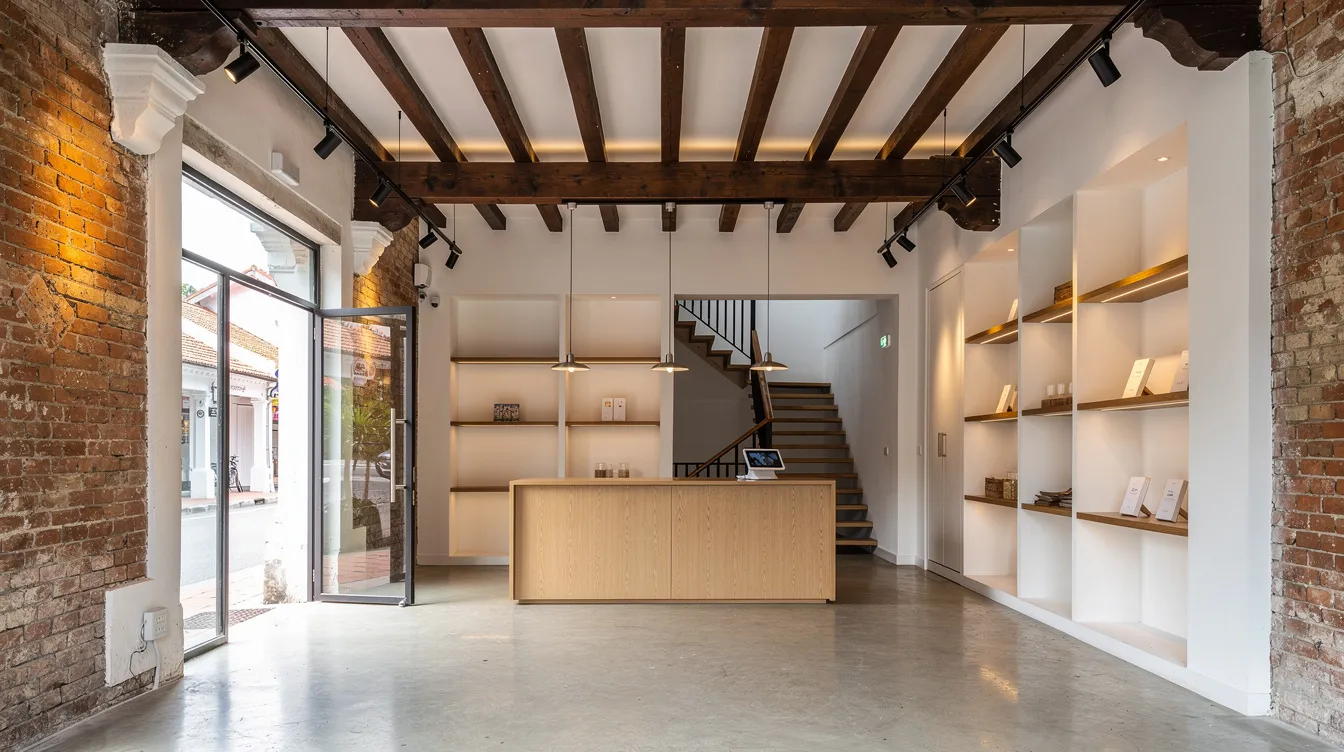
Model full investment costs. Purchase price plus Buyer’s Stamp Duty (BSD), potential ABSD (for mixed-use properties), GST, legal and valuation fees, and restoration or fit-out budgets. Heritage restoration can range from S$300–400 psf for premium work, with basic fit-out at S$150–200 psf. Add a 10–15% contingency for hidden structural issues.
-
Structure financing. Typical bank LTV ranges from 60–80% for commercial conservation shophouses. Model interest rate scenarios carefully-low yields mean carry costs can consume returns if rates spike. Evaluate owner-occupier use versus pure investment letting.
-
Plan asset management. Budget 12–18 months for significant restoration, including URA conservation permission, BCA structural approvals, and SCDF fire-safety clearance. Plan for vacancy during works. Build realistic holding cost assumptions from day one.
-
Consider exit pathways. Options include partial sale (one unit from a row), portfolio sale to another family office, long-term hold as a family legacy asset, or potential adaptive reuse if zoning permits.
AESTHETIC HAVENS can assist with steps 2–7, providing data, valuation perspectives, and introductions to conservation architects, engineers, and compliance consultants.
Comparative Lens: Shophouse vs Other Commercial Investments
|
Criterion |
Conservation Shophouses |
Grade A CBD Offices |
Suburban Strata Retail / Business Park |
|---|---|---|---|
|
Supply dynamics |
Fixed (~6,500 units, no new supply) |
Elastic (new developments ongoing) |
Elastic (government land sales add supply) |
|
Typical ticket size |
S$4–30M+ (high concentration) |
S$5–50M+ (strata) or S$100M+ (whole floor/building) |
S$1–10M (lower quantum) |
|
Typical tenure |
Freehold / 999-year (prime); some 99-year |
99-year (most); rare freehold |
30–60 year (business park) or 99-year |
|
Indicative gross yield |
2.5–5.0% |
3.0–4.0% |
4.0–6.0% |
|
ABSD / tax treatment |
Exempt (commercial zoned) |
Exempt (commercial) |
Exempt (commercial) |
|
Management intensity |
High (conservation compliance, heritage restoration) |
Moderate (standard fit-out cycles) |
Low–moderate |
|
Historical volatility in downturns |
Low (limited supply, resilient pricing) |
Moderate–high (vacancy spikes, rental pressure) |
Moderate (tenant turnover, suburban demand shifts) |
Synthesis: Shophouses clearly shine for investors prioritising scarcity, legacy value, and long-run capital appreciation with minimal new-supply risk. They are weaker on liquidity and demand higher management intensity. Grade A offices offer more liquid markets but face supply competition and obsolescence risk. Suburban strata assets provide lower entry points and higher yields but lack the heritage premium and long-term appreciation story. The right choice depends on whether the investor values irreplaceable scarcity or portfolio liquidity.
Working with an Advisory Partner like AESTHETIC HAVENS
A specialist B2B advisory adds value at several critical junctures:
-
Off-market access: Many prime shophouse transactions are negotiated privately. An advisory with established relationships among owners and intermediaries can surface opportunities that never reach the open market.
-
Commercial use analysis: If the buyer is an operating business-seeking an HQ, gallery, private club, or flagship retail space-the advisory can model how operational revenue interacts with asset appreciation.
-
Financial modelling: Incorporating restoration costs, rental projections, leverage scenarios, and exit timing into a unified return model.
-
Conservation coordination: Managing the relationship between conservation architects, structural engineers, URA, BCA, and SCDF to ensure compliance without unnecessary delays or cost overruns.
The goal is informed decision-making, not salesmanship. Even trophy shophouses can underperform if risks are misjudged-which brings us to the challenges sophisticated investors must navigate.
Common Challenges, Risks and How Sophisticated Investors Manage Them
Despite the strong appreciation story, shophouses are not risk-free. This section covers the key pitfalls and the mitigation strategies used by experienced investors to protect their capital.
High Entry Quantum and Concentration Risk
Shophouse prices rose from S$5 million–S$8 million to S$15 million–S$20 million for prime units over the past decade. In trophy locations, a single acquisition can represent a significant concentration of wealth in one illiquid asset.
Solutions:
-
Use of club deals or co-investment SPVs among family members or business partners to distribute risk.
-
Balance one or two shophouse holdings with more liquid assets (REITs, listed equities, bonds) in the broader portfolio.
-
Stress-test debt service coverage ratios under higher interest rate scenarios before committing to leverage.
Conservation Compliance, Restoration Costs and Time Lag
Typical restoration budgets range from S$300,000 to S$1.2 million for a 3,000–4,500 sq ft unit, depending on the scope of works. Full heritage restoration with premium fit-out runs approximately S$300–400 psf on built-up area, and structural or shell works can cost substantially more once hidden defects-old timber, deteriorated drainage, electrical rewiring-are uncovered.
Timelines are also significant: concept to URA/BCA permit can take 6–9 months for major projects, with total restoration spanning 12–18 months. Conservation guidelines mandate facade retention, which constrains the speed and flexibility of works.
Solutions:
-
Engage experienced conservation architects and contractors with a defined scope and a contingency buffer of 10–20%.
-
Phase works to keep some floors income-producing where layout and zoning permit.
-
Build realistic holding cost assumptions-including vacancy during restoration-into the investment model from day one.
Liquidity, Tenant Volatility and Regulatory Shifts
Liquidity: Annual transaction volumes are modest. In 2H 2025, only 36 landed shophouse transactions were recorded. Selling a large shophouse can take months, particularly in weak markets. Shophouses tend to attract a narrow buyer pool of UHNW individuals and family offices, which limits exit speed.
Tenant risk: F&B-heavy streets are vulnerable to cyclical downturns, shifts in consumer behaviour, food-cost inflation, and licensing changes. Certain zones restrict tenant mix for shophouses, and URA use-class restrictions may block desirable tenants.
Regulatory shifts: Stamp duty rules, GST rates, and conservation guidelines have all evolved over the past decade. Future policy changes-tighter ABSD definitions, amended conservation envelope controls, or new environmental compliance requirements-could affect returns.
Solutions:
-
Diversify tenant mix (F&B plus office or lifestyle) where frontage and layout permit.
-
Avoid overpaying purely on hype streets; focus on fundamentals like MRT proximity, street anchoring, and flexible zoning.
-
Stay close to regulatory updates and model “what if” scenarios. An advisory like AESTHETIC HAVENS can provide ongoing monitoring and scenario analysis.
Informed, patient capital can manage these challenges and still realise strong appreciation-but only with eyes open to the risks.
Conclusion and Next Steps
Conservation shophouses are a niche but powerful capital appreciation and wealth-preservation tool, underpinned by irreversible scarcity (only 6,500 units, no new supply), freehold land, ABSD advantages for commercial zoned units, and documented long-run performance exceeding 120% capital value growth from 2010 to 2024. They are not, however, a passive investment: they demand expertise in conservation compliance, tenant strategy, and long-horizon financial planning.
Actionable next steps for readers:
-
Clarify personal or corporate investment goals and time horizon-shophouses reward patience over at least 10–15 years.
-
Shortlist two to three target districts that align with your risk appetite, tenant strategy, and budget (prime CBD for trophy plays, lifestyle districts for growth and yield).
-
Engage professional valuation and conservation due-diligence before issuing any Option to Purchase.
-
Model full-cycle returns-including restoration costs, holding costs, and realistic rental assumptions-under conservative scenarios.
-
Reach out to AESTHETIC HAVENS for a tailored shophouse or commercial asset review if you are considering a purchase.
Related topics readers may wish to explore: industrial property for business operations, comparative analysis of strata offices vs shophouses, and structuring family property SPVs in Singapore.
Frequently Asked Questions
These FAQs address the most common questions investors ask about conservation shophouses as a capital appreciation tool.
Can foreigners buy conservation shophouses in Singapore without ABSD?
Yes. Foreign investors can purchase commercial-use shophouses in Singapore on similar terms as local citizens. Fully commercial zoned shophouses are exempt from ABSD regardless of buyer nationality. However, mixed-use shophouses with a residential component may attract partial ABSD and may require SLA approval. Always verify the zoning classification with URA before proceeding.
What is the minimum investment size I should expect for a conservation shophouse?
Realistic entry points range from S$4–8 million for smaller or fringe-district units (Joo Chiat, Jalan Besar) to S$10–30 million or more for prime CBD or Club Street rows. Financing can reduce upfront equity, with banks typically offering 60–80% LTV for well-tenanted commercial assets, but lenders will require strong income covenants and borrower profiles.
Are shophouses better for capital appreciation or for income?
Most wealthy shophouse buyers prioritise capital appreciation and legacy with moderate rental income as a holding-period bonus. Gross rental yields typically range from 2.5–5.0%, which is competitive but not exceptional. Yield-focused investors may prefer secondary streets or value-add plays with higher initial yields and repositioning upside. The strongest total returns historically have come from combining moderate income with significant capital growth over 10–20 years.
How long should I be prepared to hold a conservation shophouse?
Investors should be comfortable with at least a 10–15 year horizon to ride out market cycles and fully realise appreciation. Some owners have seen strong gains in 5–8 years in rapidly gentrifying districts, but the deepest returns-exemplified by the 1,223% total return at 34 Bussorah Street over 21 years-accrue to those with patient, multi-generational perspectives.
Can my operating business use a shophouse as an HQ while still treating it as an investment?
Absolutely. A common strategy involves an SPV owning the building while the operating business leases from the SPV, blending operational fit with long-term asset growth. This approach allows the business to benefit from a distinctive heritage HQ while the SPV captures capital appreciation over time. AESTHETIC HAVENS specialises in advising on such business-use real estate structures.
Additional Resources
For readers who want to go deeper into conservation shophouse investing:
-
URA conservation guidelines and conservation area maps: Detailed precinct-level information for Chinatown, Little India, Kampong Glam, Joo Chiat, and Blair Plain is available on the URA conservation portal.
-
AESTHETIC HAVENS guides: The platform offers related resources including a guide to Singapore commercial zoning and permitted uses, an explainer on industrial vs commercial vs mixed-use property for business owners, and a checklist for pre-acquisition due diligence for high-value commercial assets.
-
Market data: ShiokNest’s shophouse investment guide provides additional context on yield ranges, district comparisons, and historical pricing trends.
Future editions of this article may include photo galleries of façade styles-Early, Transitional, and Late Shophouse typologies-to help investors recognise building characteristics, conservation constraints, and restoration requirements at a glance.

