

Introduction
Luxury buyers looking to deploy capital in Singapore’s Core Central Region in Q4 2026 should focus on a handful of freehold and ultra-scarce leasehold launches where tenure strength, micro-location scarcity, and long-term holding fundamentals converge. This guide ranks the most compelling CCR launches by four investment-grade metrics – tenure, price per square foot ($psf), scarcity, and long-term holding appeal – so that readers can move from browsing to shortlisting with confidence, while comparing these upcoming CCR projects against other new homes in Singapore.
The scope here is prime non-landed residential launches and selected boutique luxury projects across CCR districts (9, 10, 11, the Downtown Core, and Sentosa), either confirmed or credibly expected to reach market by year end 2026. Mass-market OCR condominiums, ECs, and pure landed housing fall outside this analysis. The focus is deliberate: Singapore’s luxury real estate market in the CCR is selective and resilient, and the projects worth watching sit at a very different price frontier from the rest of the new launch market, not a guide for HDB upgraders moving into mass-market or RCR projects.
This article is written for UHNWIs, family offices, private bankers, and affluent Singaporean or foreign buyers evaluating tickets of S$5 million and above – readers concerned with wealth preservation, legacy planning, and ABSD efficiency rather than speculative flipping.
Early answer: The three standout CCR launches for Q4 2026 are River Valley Green (rare freehold riverfront in District 9 with roughly 210 units), The Serra Residences (freehold, 133-unit boutique project in District 11), and Amberwood at Holland (212 units on Holland Link in District 10, offering school-belt proximity and a residential feel). Each scores differently on tenure, $psf, and buyer fit – the ranking below unpacks why.
Key takeaways you will gain:
-
How Q4 2026 fits into the broader Singapore luxury property cycle and what the global economy means for prime district demand.
-
A ranked list of CCR launches scored by tenure, $psf, scarcity, and holding appeal.
-
How tenure type, quantum, and layout mix affect long-term performance of luxury units in the coming months and beyond.
-
Which profiles of buyers each top project best suits – from legacy families to yield-tilted investors.
-
A practical decision framework for comparing competing launches before cheque placement.
Understanding Singapore’s CCR Luxury Property Landscape in 2026
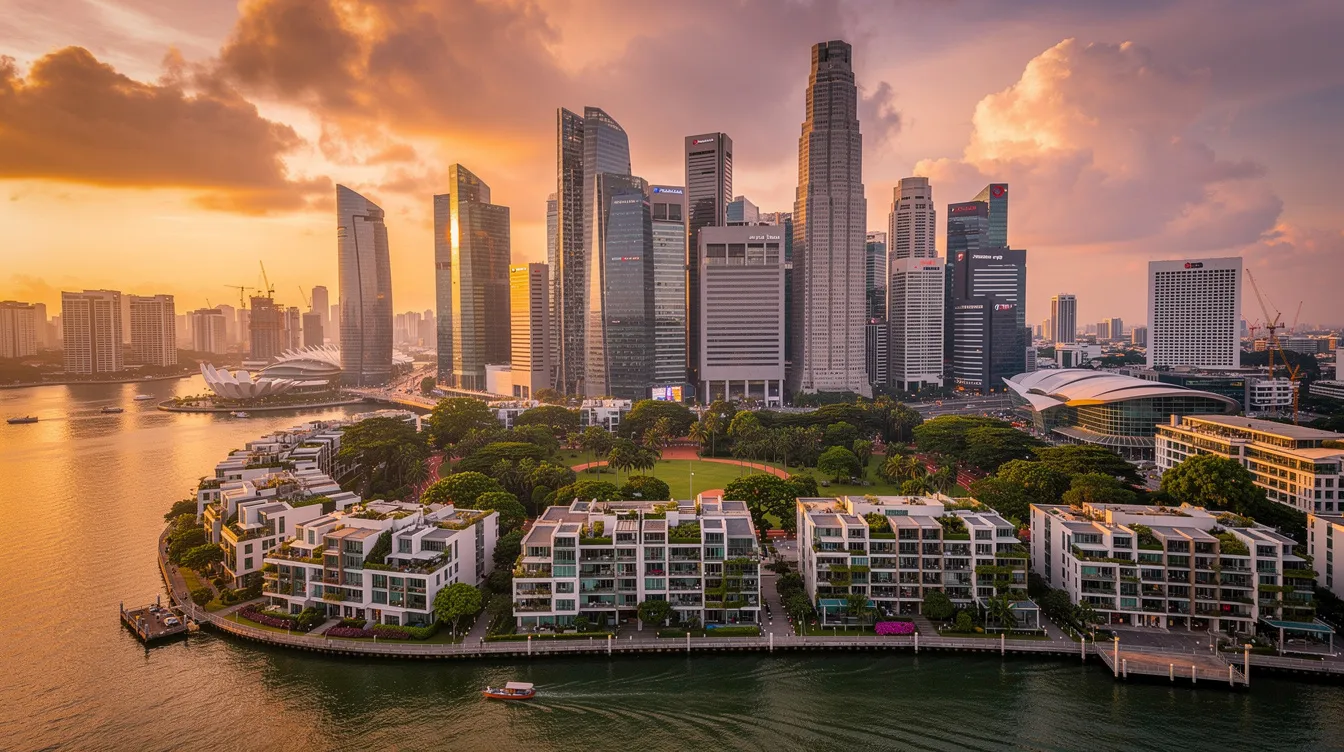
The Core Central Region encompasses Singapore’s most prestigious addresses – Districts 9, 10, 11, the Downtown Core (Districts 1, 2, 6, 7), Tanglin, Orchard, River Valley, and Sentosa Cove. In 2026, the CCR remains the premier destination for luxury property investment in Singapore, functioning as the reference point for wealth-preservation real estate across Asia-Pacific. Supply constraints in private condos have led to high pricing resilience in prime CCR districts, making every new freehold or ultra-scarce leasehold launch a market event in its own right, especially when contrasted with the broader pool of new homes elsewhere in Singapore.
What Counts as “Luxury” in the CCR in 2026
Working thresholds for luxury in the CCR have shifted upward. Quantum entry for non-landed luxury starts at roughly S$5 million for larger units – spacious 3-bedroom-plus layouts, penthouses, and sky villas – with branded residences and boutique freehold projects routinely exceeding that. The $psf band for new launches sits between S$3,000 and S$3,500+ in core locations; District 9 new launches averaged S$3,251 psf over the twelve months to September 2026, while resale median in the same district was S$2,351 psf – a roughly 38% launch premium.
Beyond numbers, qualitative markers define true luxury: concierge and hotel-style services, architectural distinction by internationally recognised studios, branded collaborations with global hospitality names, privacy-oriented layouts with private lift lobbies, and exclusive wellness and leisure facilities. Developments in high-demand districts are tailored toward ultra-luxury buyers prioritizing privacy, and luxury buyers prioritize distinctive architectural and well-integrated prime addresses. These attributes connect directly to the CCR’s identity: districts 9, 10, and 11, along with Orchard, Tanglin, River Valley, Marina Bay, and Sentosa Cove, set the benchmark for such projects because of irreplicable combinations of frontage, zoning, and prestige heritage.
Macro Drivers Shaping CCR Luxury Demand Going into Q4 2026
Singapore’s GDP growth has remained resilient through 2026, supported by strong employment fundamentals and the city-state’s role as a regional wealth-management hub. Interest rates globally are stabilising after the 2024–2025 peak, easing debt-servicing pressure and encouraging affluent capital inflows from Asia-Pacific, Europe, and Middle East family offices seeking stable jurisdictions. The global economy’s trajectory – cautious but improving – benefits Singapore disproportionately: money gravitates toward rule-of-law markets with transparent property rights and deep liquidity.
Policy, however, remains a defining constraint. Additional Buyer’s Stamp Duty (ABSD) for foreign individuals stands at 60%, and entities face 65%. High Additional Buyer’s Stamp Duty influences luxury property demand toward local buyers – Singaporeans accounted for 89.6% of new home sales in May 2026, with foreign buyers representing just 1.8% of total transactions that month. Singaporean Citizens made up half of luxury purchases in May 2026, while Singapore Permanent Residents made five luxury home transactions in the same period. Cooling measures including tight loan-to-value ratios, stricter total debt servicing ratio thresholds, and elevated hurdle rates remain in effect, making big-ticket CCR deals a deliberate, well-structured exercise rather than an impulse buy.
Structural trends reinforce this selectivity. There is a growing shift from landed homes to large-format condos among ageing affluent Singaporeans seeking turnkey luxury without the maintenance burden. Demand for new launches over older resale stock continues to grow – buyers perceive better layout efficiency, longer remaining lease, and fewer renovation surprises. The luxury property market may see more selective buying rather than a broad new-launch hunt, which means developers must deliver genuine scarcity and design excellence to command premium prices. Some buyers are waiting for clearer pricing and sharper launch differentiation before committing. Buyers are becoming more price-sensitive in the luxury real estate market, and the days of paying a blind premium for a developer’s name alone are behind us.
This environment is precisely why buyers now must scrutinise tenure, $psf, and scarcity rather than chasing headline launch names.
Key Investment Metrics for Ranking CCR New Launch Market Launches
This guide’s rankings rest on four core metrics, each defined here for consistency:
Tenure – Freehold versus long 999-year versus standard 99-year leasehold. Tenure rankings indicate that freehold properties command a premium over leasehold assets, and the luxury property market features a strong preference for freehold status. For legacy and multi-generational buyers, freehold eliminates lease-decay risk entirely. A 99-year lease is acceptable for shorter hold horizons, but after approximately 50–60 years remaining, the buyer pool contracts sharply as financiers and insurers become more conservative.
Price per square foot ($psf) – How a launch’s guide pricing compares to CCR resale benchmarks in 2026. District 9 resale median is S$2,351 psf; new launches average S$3,251 psf. A 25–40% premium for launches is broadly defensible if backed by location and scarcity, but anything significantly beyond that demands exceptional justification.
Scarcity – Site size, unit count, view corridors, and zoning constraints that limit future supply. Scarcity of freehold prime land in Singapore drives investor interest in luxury properties, and only roughly 16% of the 2026 pipeline falls within the CCR – the bulk (around 80%) is in the OCR. This structural undersupply elevates every genuine CCR launch.
Long-term holding appeal – Rental demand from expat and corporate tenants, maintenance and management costs, design longevity, developer track record, and potential for future collective sale interest. Gross yields in CCR typically range from 2.5% to 4%, declining as quantum rises. For a District 9 three-bedroom resale unit of approximately 1,100 sq ft renting at a median of S$8,000 per month, gross yield is around 2.7%.
These metrics matter differently depending on buyer type. Own-stay families weight tenure and layout over yield. Pure investors prioritise rentability and $psf relative value. Legacy and wealth-preservation buyers focus on freehold scarcity and district performance. Each ranked project below will reference all four metrics for direct comparison.
Where to Focus in Q4 2026: CCR Micro-Markets for Luxury Buyers
Not all CCR districts behave the same way. Before ranking individual launches, it is essential to map the most important luxury clusters – each with distinct pricing ceilings, buyer profiles, and pipeline dynamics.
Orchard–Tanglin–Ardmore Belt
This belt across Districts 9 and 10 is Singapore’s most traditional ultra-prime corridor. Embassy rows, top-end retail frontage on Orchard Road, and legacy freehold addresses like Ardmore Park and Paterson Hill define the area. Resale $psf here regularly hits S$3,200–S$4,000+ for prime stacks in iconic projects. District 10 continues to dominate luxury property demand due to educational institutional proximity, and the buyer mix skews toward old-money Singaporean families, multi-generational homeowners, and select foreign buyers who treat ABSD as an “entry fee” for capital parking.
The Q4 2026 pipeline in this belt includes boutique freehold redevelopments – single-tower luxury projects on quiet cul-de-sacs off Orchard Boulevard, where developers have amalgamated former large single-owner sites. UPPERHOUSE at Orchard Boulevard (UOL / SingLand), a 301-unit development, has already set a pricing benchmark with 82% pre-sold by August 2026, pushing $psf into the high S$3,200–S$3,500+ territory. This belt remains core for long-horizon wealth preservation, but entry $psf is among the highest in Asia and yields are limited.
River Valley–Robertson Quay–Martin Area
Lifestyle-centric and riverfront, this District 9 cluster appeals to expats, younger affluent couples, and right-sizers leaving landed homes for full-facility living with walkable F&B and international school proximity. The tenure mix here includes both 99-year and effectively perpetual 999-year leaseholds – Robertson Opus, for instance, sits on a 999-year lease with 348 units and Singapore River frontage.
In 2026, launches in this micro-market are trending toward larger 3–4BR units aimed at right-sizers exiting landed homes who want river views, resort-grade pools, and Robertson Quay’s dining scene at their doorstep. Medium-density towers with full facilities and generous common areas are the dominant format. Rentability here is strong: corporate tenants from nearby office nodes and a deep pool of expatriate demand support steady occupancy and competitive gross yields within the CCR band.
Marina Bay–Downtown Core & Integrated Luxury
The financial district–adjacent cluster features integrated developments positioned above malls, offices, and MRT interchanges, offering seamless connectivity. The appeal is unmistakable to global executives and investors who value skyline and bay views – the kind of panorama that defines a “global city” pied-à-terre. Tenure is usually 99-year, yet $psf can rival or exceed some freehold projects because of icon status and the scarcity of true bayfront sites.
Expected Q4 2026 activity around Downtown Core includes repositioned mixed-use sites near Shenton Way, with branded residences and serviced-apartment-style options designed to attract trophy buyers. These projects lean heavily on architecture and service partnerships – concierge, housekeeping, and residents’ dining – to justify premium pricing.
Holland–Bukit Timah Fringe of CCR
Straddling CCR prestige with a quieter, more residential feel, the Holland–Bukit Timah fringe offers proximity to top schools (Nanyang Girls’, Raffles Girls’, among others) and lifestyle enclaves such as Holland Village and Dempsey Hill. The typical buyer here is a family planning for school catchment with a mid- to long-term own-stay horizon and an eye toward legacy.
The pipeline includes smaller, freehold boutique launches on elevated or quiet roads – projects with 60–80 units, private lift lobbies, and generous ceiling heights that appeal to privacy-focused buyers. Amberwood at Holland (Sim Lian Group) is a notable example, previewed in September 2026 with 212 units on Holland Link.
The ultimate “best” launch depends heavily on which of these micro-markets aligns with each buyer’s objectives – which brings us to the ranking.
Ranked: Top CCR Luxury Launches to Watch in Q4 2026
The ranking below uses weighted scoring across the four metrics defined earlier: tenure (~25%), $psf relative to micro-market benchmarks (~25%), scarcity (~25%), and long-term holding appeal (~25%). Qualitative assessment of design, developer credibility, and buyer fit supplements the quantitative framework. Investment considerations for luxury buyers include freehold scarcity and district performance as overarching principles.
Note that 2026 will see over 19 new private residential projects across Singapore, placing these launches within a much wider field of new homes, but only a slim fraction fall within the CCR – making each of the launches below genuinely significant.
#1: River Valley Green – Freehold Riverfront in District 9
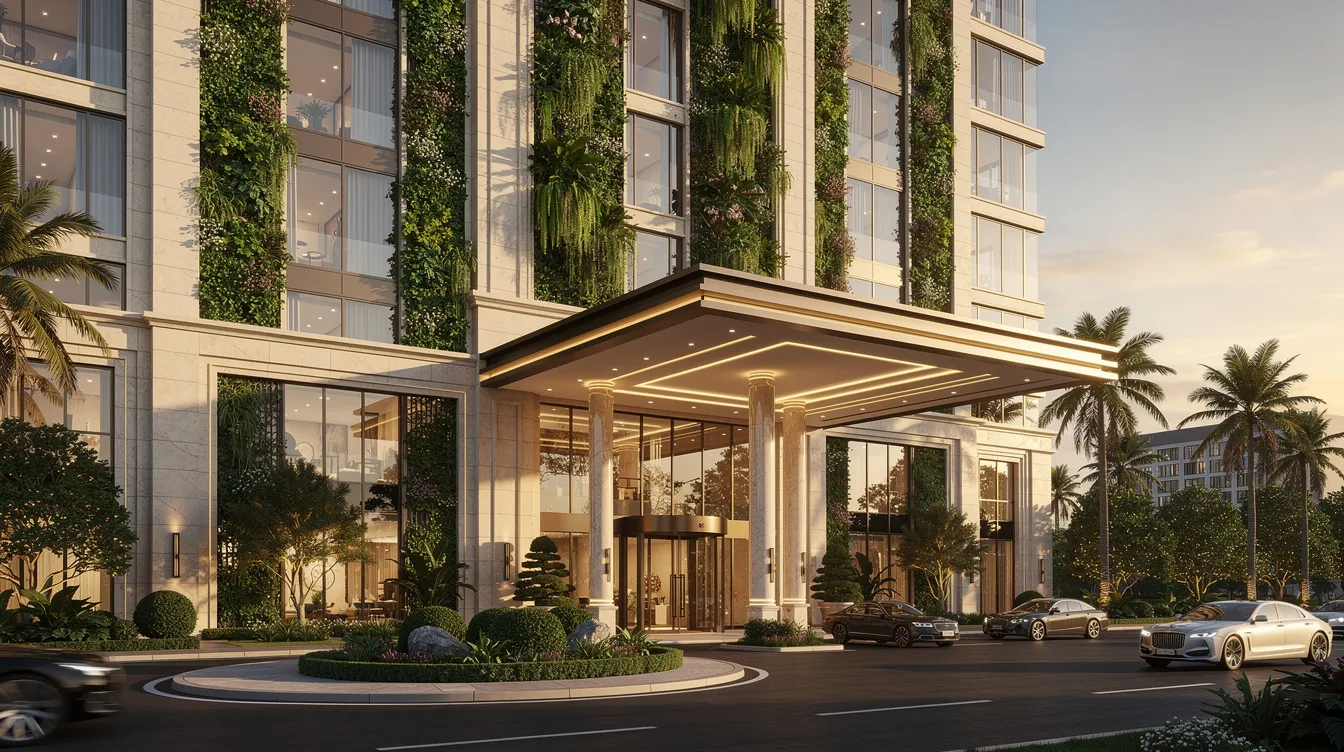
River Valley Green by Wing Tai Holdings earns the top rank because it combines what is rarest in the 2026 launch market: freehold tenure, Singapore River adjacency, and a contained unit count of approximately 210 homes. Expected to launch in Q4 2026, guide pricing is estimated at S$3,000–S$3,500 psf – a range that sits at or modestly above the District 9 new launch median of S$3,251 psf, which is reasonable given the freehold premium.
Investment case: Freehold riverfront parcels in District 9 are vanishing. With only around 16% of the 2026 pipeline in the CCR, a freehold site of this calibre is a scarcity event. The $psf is competitive versus 99-year peers in the Robertson Quay area, and the freehold status eliminates lease-decay risk entirely – critical for legacy or family-office capital parked across decades. Rental demand from the nearby expat and corporate tenant base supports steady occupancy, while the River Valley corridor’s walkability to Great World and Orchard MRT stations underpins long-term desirability.
Buyer fit: Multi-generational local families, UHNW clients consolidating portfolios, and yield-aware investors who want freehold without sacrificing riverfront lifestyle. Also suited to foreign buyers treating ABSD as a sunk cost for capital preservation in a stable jurisdiction.
#2: The Serra Residences – Freehold Boutique in District 11
The Serra Residences by Far East Organisation delivers 133 freehold units ranging from two-bedroom-plus-study layouts to penthouses. District 11 is quieter than Orchard but valued for its school belt and residential character. With a modest unit count, this is a boutique project that scores highly on exclusivity and tenure.
Investment case: High-net-worth buyers are focusing on boutique luxury launches in the CCR, and Serra Residences fits that thesis precisely. A freehold project with fewer than 150 units in a school-proximate district offers durable demand from families and right-sizers. The limited supply of new freehold stock in District 11 means resale liquidity should hold, though $psf at launch will likely carry a premium over nearby 99-year peers. Long-term holding appeal is strong: low unit density keeps maintenance manageable, and freehold status preserves optionality for en bloc or indefinite hold.
Buyer fit: Own-stay families prioritising school catchment and a quiet, established neighbourhood. Also appeals to legacy buyers who value freehold rights above river or bay views, and who prefer intimate developments over large-scale towers.
#3: Amberwood at Holland – 99-Year School-Belt CCR
Amberwood at Holland by Sim Lian Group offers 212 units of three- to five-bedroom configurations on Holland Link in District 10. Preview began 11 September 2026. Tenure is 99-year leasehold, which tempers its ranking versus the two freehold projects above, but its location on the Holland–Bukit Timah fringe – close to top schools, Dempsey, and the Botanic Gardens – makes it a compelling option for families.
Investment case: The proximity to Good Class Bungalow areas and elite schools creates natural demand from landed right-sizers seeking easier maintenance without leaving the neighbourhood they know. Larger units (3–5BR) cater to families who need space, and the Holland Village lifestyle node adds rental appeal for expatriate tenants. The 99-year tenure means buyers should plan a realistic exit horizon – ideally within 20–30 years – rather than assuming indefinite legacy holding.
Buyer fit: Right-sizing landed owners seeking turnkey luxury with school-belt convenience. Also suits families with medium-term own-stay plans who intend to sell or upgrade before significant lease decay.
#4: UPPERHOUSE at Orchard Boulevard – 99-Year Orchard Benchmark
UPPERHOUSE by UOL / SingLand is a 301-unit development on Orchard Boulevard in District 10 – already 82% sold as of August 2026, making it less a “launch to watch” and more a pricing benchmark that defines the competitive landscape. Its $psf in the high S$3,200–S$3,500+ range for premium stacks has set the ceiling for 99-year projects in the Orchard–Tanglin belt.
Ranking rationale: While limited remaining inventory constrains buyer access, UPPERHOUSE earns its spot because any unit still available represents a proven address in the heart of Orchard with strong developer backing. The 99-year tenure and larger scale (301 units) mean it ranks below freehold and boutique competitors on exclusivity, but its sales velocity validates the micro-market’s resilience.
Buyer fit: International UHNWIs wanting a “global city” address, C-suite executives relocating to Singapore, and investors seeking the Orchard postal code with confidence that resale demand is established.
#5: Vela Bay – Waterfront Living on the East Coast Fringe (Vela Bay New Launch)
Vela Bay offers waterfront living with East Coast Park views, providing a lifestyle-driven alternative for buyers who value sea-facing orientation and recreational proximity over traditional CCR prestige addresses. While positioned differently from the Orchard or River Valley launches, its waterfront scarcity and design ambition earn it a watch-list spot for buyers seeking a differentiated luxury home rather than a conventional prime district trophy.
Ranking rationale: Waterfront sites with unobstructed park and sea views are inherently scarce. However, the micro-market trades at a discount to core Orchard or Robertson Quay on a $psf basis, and the buyer pool is narrower. Long-term holding appeal depends on whether the surrounding precinct continues to mature in terms of dining, retail, and connectivity.
Buyer fit: Lifestyle-oriented buyers who prioritise waterfront living, open views, and recreational access over Orchard centrality. Also appeals to buyers seeking relative value compared to the highest-priced CCR micro-markets.
How These CCR Launches Compare on Tenure, $PSF, Scarcity and Holding Appeal
This section synthesises the individual project assessments into a side-by-side comparison to help readers prioritise based on their own constraints.
Side-by-Side Comparison of Q4 2026 CCR Launches
|
Project |
Tenure |
Indicative Avg $PSF |
Approx. Units |
Key Scarcity Angle |
Long-Term Holding |
|---|---|---|---|---|---|
|
River Valley Green |
Freehold |
S$3,000–S$3,500 |
~210 |
Freehold + riverfront D9 |
Strong – legacy asset |
|
The Serra Residences |
Freehold |
Est. S$3,200–S$3,600 |
133 |
Freehold boutique, school belt D11 |
Strong – low density |
|
Amberwood at Holland |
99-year |
Est. S$2,800–S$3,300 |
212 |
GCB adjacency, school proximity D10 |
Moderate – plan exit |
|
UPPERHOUSE |
99-year |
S$3,200–S$3,500+ |
301 |
Orchard Boulevard address |
Moderate – proven demand |
|
Vela Bay |
TBC |
Est. S$2,500–S$3,000 |
TBC |
Waterfront, East Coast views |
Moderate – niche appeal |
Tenure: Freehold projects (River Valley Green, The Serra Residences) suit buyers with indefinite horizons and succession-planning needs. The 99-year options (Amberwood, UPPERHOUSE) are defensible for 15–30 year holds but require a clear exit strategy. Align tenure choice with your time horizon.
$PSF: River Valley Green and Serra Residences carry freehold premiums that are justified by scarcity. Amberwood offers relative value on a per-square-foot basis, reflecting its 99-year tenure and fringe location. UPPERHOUSE’s proven sales validate its $psf ceiling. Always compare launch $psf to the latest transaction data in the same micro-market – in District 9, the resale median of S$2,351 psf remains the baseline.
Scarcity: The truly irreplicable attributes are River Valley Green’s freehold river frontage and Serra Residences’ freehold boutique positioning. GCB adjacency (Amberwood) and Orchard Boulevard (UPPERHOUSE) are scarce but not singular – other projects in similar corridors exist on the resale market.
Holding appeal: Projects that should age gracefully combine low unit density, manageable maintenance, durable tenant demand, and timeless design. River Valley Green and Serra Residences score highest here. Amberwood’s family-oriented sizing supports solid occupancy but requires lease-aware planning.
Map this comparison to your own buyer profile and constraints below.
Matching Ranked Launches to Different Luxury Buyer Profiles
Legacy / multi-generational wealth preservation buyer: River Valley Green or The Serra Residences. Freehold tenure removes generational risk. Both projects have limited unit counts, supporting exclusivity and long-term value. The luxury property market features a strong preference for freehold status precisely because these buyers think in decades, not market cycles.
Yield-tilted investor maintaining a global property portfolio: River Valley Green (freehold with strong rental demand from the Robertson Quay–River Valley expat catchment) or Amberwood at Holland (lower entry $psf, solid family rental appeal). Monitor gross yield assumptions carefully – CCR yields of 2.5–4% are typical, and higher quantum compresses returns.
Right-sizing landed owner seeking turnkey luxury: Amberwood at Holland is the natural fit – larger units, school proximity, Holland Village lifestyle, and familiar neighbourhood feel. Unlike HDB upgraders focused on affordability in the RCR, this buyer profile is usually prioritising continuity of neighbourhood and space standards in CCR. The Serra Residences also appeals if the buyer values freehold and a quieter District 11 setting.
International executive or family office seeking a Singapore base: UPPERHOUSE (if units remain) for Orchard centrality, or River Valley Green for riverfront lifestyle with freehold permanence. ABSD at 60% for foreigners makes freehold tenure even more important – paying a substantial stamp duty on a depreciating 99-year lease is harder to justify than on a freehold asset.
Practical Framework: How to Decide Between Competing CCR Luxury Launches
In Q4 2026, several launches will overlap, and developers will compete aggressively for the limited pool of qualified buyers. A clear, step-by-step decision framework is essential to avoid making choices driven by marketing hype rather than fundamentals.
Step-by-Step Process to Shortlist and Evaluate
-
Clarify objectives – Determine whether the purchase is own-stay, investment, or legacy. Define your planned holding period and desired exit scenarios (resale, rental, en bloc, or indefinite family hold).
-
Fix your total budget and ABSD envelope – Incorporate purchase price, ABSD (60% for foreign individuals, lower for SCs and PRs depending on property count), buyer’s stamp duty, legal fees, renovation, and furnishing. A S$10 million purchase by a foreign buyer incurs S$6 million in ABSD alone.
-
Zero in on 1–2 micro-markets – Match your lifestyle, school, or tenant priorities to the micro-market profiles above. Do not spread research across all CCR clusters; depth beats breadth.
-
Compare tenure and $psf bands – Benchmark shortlisted projects against recent transactions in the same micro-market. Use District 9’s resale median of S$2,351 psf and new launch median of S$3,251 psf as reference points.
-
Visit showflats with a checklist – Evaluate layout efficiency, ceiling height, finish quality, stack orientation, noise exposure, and service-level commitments. Do not rely on renders alone.
-
Stress-test the downside – Model subsale liquidity if you need to exit within five years, potential rental dips if demand softens, and policy scenarios if ABSD rules tighten further.
-
Engage independent advisory – Validate assumptions and run sensitivity analysis with an adviser who is not tied to the developer’s sales commission, especially if you have been waiting through multiple launch previews before making a final commitment.
Analysing Numbers: A Simple CCR Luxury Investment Lens
Consider a simplified comparison between a 3BR unit in a freehold project (River Valley Green) and a 99-year project (Amberwood at Holland):
|
Metric |
River Valley Green (FH) |
Amberwood at Holland (99-yr) |
|---|---|---|
|
Estimated $psf |
S$3,250 |
S$3,050 |
|
3BR size (approx.) |
1,200 sq ft |
1,300 sq ft |
|
Estimated total quantum |
~S$3.90m |
~S$3.97m |
|
Est. monthly rent (2026) |
S$8,500 |
S$7,500 |
|
Gross yield |
~2.6% |
~2.3% |
|
10-year holding cost (interest, maintenance, tax) |
Higher maintenance; no lease decay |
Lower maintenance; lease shortens to ~89 yrs |
|
Exit optionality |
Broad buyer pool (freehold) |
Narrower over time; plan 15–25 yr exit |
These figures are illustrative and based on 2026 market assumptions. Actual pricing, rental, and costs will vary by stack, floor, and market conditions at the time of transaction.
The key insight: while quantum may be similar, the freehold asset preserves optionality and supports a broader exit buyer pool over time. Emotion and lifestyle often matter more for UHNW buyers – the home you actually want to live in will always outperform a spreadsheet-optimal purchase you avoid – but numeric discipline prevents major missteps.
Working with AESTHETIC HAVENS for CCR Luxury Decisions
AESTHETIC HAVENS operates as a B2B and HNW-focused real estate advisory and content platform, distinct from mass-market agencies. For Q4 2026 CCR launches specifically, the value-add includes:
-
Independent pricing opinions benchmarked against actual transaction data, not developer guide prices.
-
Portfolio-level analysis for buyers who hold industrial, commercial, or multiple residential assets – ensuring the CCR purchase complements rather than concentrates risk.
-
Coordination of viewings, legal structuring, tax planning, and trust-buyer arrangements for corporate or family-office purchasers.
If you are evaluating any of the ranked launches above, consider requesting a private CCR portfolio consult before committing to an option exercise or cheque placement.
Common Pitfalls Luxury Buyers Face in Q4 2026 CCR Launches (and How to Avoid Them)
Even seasoned investors make avoidable mistakes in a launch-heavy quarter. The following are the most common – and most costly.
Over-Paying for Branding Without Underlying Scarcity
The trap: fixating on a developer’s name or a hotel brand partnership while ignoring tenure, site attributes, and competing supply in the same micro-market. Branded residences can command premiums of 20–30% over non-branded peers, but that premium is only defensible when underpinned by genuine scarcity – a unique view corridor, freehold tenure, or a truly limited unit number.
Fix: Insist on comparative $psf analysis against nearby non-branded peers. Research the long-term resale track record of similar branded projects. If the brand premium exceeds the scarcity premium, you are paying for marketing, not value.
Ignoring Lease Decay and Exit Horizon for 99-Year CCR Stock
A 99-year lease starting in 2026 gives comfortable runway for a 20–30 year hold, but becomes problematic for legacy buyers who have no exit plan. After approximately 50–60 years remaining, financing options narrow, the buyer pool shrinks, and valuations compress. Avoid assuming automatic en bloc outcomes – collective sales in prime CCR are rare and require supermajority consent.
Solution: Align lease tenure with your realistic exit timeframe. If your intention is to hold beyond 30 years or pass the asset to the next generation, prioritise freehold.
Buying Too Small for True Luxury Market Liquidity
Very small units (1BR or compact 2BR) in ultra-prime CCR may appeal today due to lower absolute quantum, but they attract a thinner future buyer pool at very high $psf. A 500 sq ft unit at S$3,500 psf is a S$1.75m purchase that competes awkwardly with larger, better-valued homes in the RCR – note that RCR new home prices increased by 30% year-on-year by April 2026, and new RCR homes averaged S$2.56 million in 2026, making the comparison uncomfortably close.
Solution: Prioritise layouts and sizes that fit long-term family or executive living standards. An efficient 3BR of 1,100–1,400 sq ft will always find more buyers than a micro 1BR in the same building.
Underestimating Total Cost of Ownership
Overlooked costs erode returns silently: maintenance fees in amenity-heavy projects (sky pools, concierge, branded services), property tax under current progressive rates, and the financing impact of ABSD on cash flow. Luxury home transactions fell from 29 to 12 in May 2026 – a sign that the market is thinning at the top, partly because total cost of ownership makes some projects uneconomic at current pricing.
Fix: Run full cashflow models incorporating maintenance, property tax, insurance, and financing costs – not just headline mortgage estimates. The highest luxury transaction in May was S$14.5 million; at that quantum, even a 0.5% annual cost differential compounds into six-figure sums over a decade.
Conclusion and Next Steps
Q4 2026 is a rare window: multiple strong CCR launches are reaching the market simultaneously, but the pipeline is structurally limited – only about 16% of 2026’s new supply falls within the CCR. The “best” launch depends on your tenure preference, micro-market fit, and holding strategy. River Valley Green leads this ranking on freehold scarcity and riverfront location; The Serra Residences offers boutique freehold exclusivity in a school-belt district; and Amberwood at Holland provides a practical, family-oriented entry into CCR at a more moderate $psf – with the trade-off of 99-year tenure.
The overarching recommendation: focus on scarcity-backed assets – freehold tenure, irreplicable views, limited unit counts – while respecting your own liquidity and yield requirements. Do not let launch-day urgency override disciplined research.
Actionable next steps:
-
Shortlist 1–2 CCR micro-markets that align with your personal or corporate use-case (Orchard belt for prestige, River Valley for lifestyle, Holland for schools).
-
Select 2–3 projects from the ranked list above that best map to your objectives and budget envelope.
-
Request a data-backed CCR review session with AESTHETIC HAVENS before option exercise or cheque placement – independent analysis pays for itself many times over at this quantum level.
Adjacent topics worth exploring include the comparison between CCR and RCR luxury (Hudson Place Residences at Media Circle, within a wider research and media cluster, sold 209 units in May 2026 at a median price of S$2,465 psf, and new home sales in the RCR made up 64% of all transactions that month – evidence that the RCR is increasingly competitive, with some buyers waiting on stronger value signals there before reallocating capital), industrial versus residential portfolio allocation, and ABSD-efficient ownership structures for foreign and corporate buyers.
Additional Resources for CCR Luxury Buyers in 2026
The following resources support deeper research and decision-making:
-
CCR transaction heat map (2024–2026): Track $psf trends by micro-market and compare against the resale median and new launch benchmarks cited in this article. Only two more RCR projects are expected to launch in 2026, further concentrating attention on CCR.
-
Showflat viewing checklist: A structured PDF covering orientation, noise, finish quality, ceiling height, service-level commitments, and stack comparison – essential for any viewer walking into a luxury launch.
-
Singapore stamp duty and ABSD explainer: A linkable reference covering current rates, remission conditions, and structuring options for PRs, citizens, and foreign purchasers as at 2026.
-
Quarterly CCR & luxury market briefing by AESTHETIC HAVENS: An upcoming launch calendar extending beyond Q4 2026, including Thomson Reserve (1,268 units in District 20), emerging projects in Sentosa, and RCR benchmarks. The median price for RCR homes has risen 5.7% annually over five years, providing useful context for CCR versus RCR allocation decisions.
Subscribe or connect with AESTHETIC HAVENS for ongoing updates on prime residential, as well as complementary industrial and commercial investment opportunities.

