

Introduction
Singapore property cooling measures in late 2026 remain among the most aggressive in Asia-Pacific, and the additional buyer’s stamp duty continues to dominate every residential property purchase decision. If you are a property buyer planning a second property acquisition, an HDB upgrader eyeing a private condo, or a business owner weighing residential versus industrial investments, the tax and financing framework you face today is essentially unchanged from the April 2023 tightening round.
This article breaks down the current ABSD tiers, the extended four-year seller’s stamp duty that took effect in July 2025, the total debt servicing ratio (TDSR) cap at 55% of gross monthly income, the mortgage servicing ratio for HDB flats and executive condominiums, and the loan to value limits that determine how much you can actually borrow. The focus is residential property, but these measures also matter for investors considering commercial and industrial assets-where ABSD does not apply and the capital allocation calculus looks very different.
Here is the direct answer many buyers need: in late 2026, ABSD, TDSR (55%), and the tighter four-year SSD all remain firmly in force. No easing was announced in Budget 2026 or in subsequent MAS and URA statements through Q3 2026. Treat these rules as permanent constraints when you plan finances for any property purchase.
By the end of this article, you will:
-
Understand the exact late-2026 ABSD rates by buyer profiles and property count
-
Learn how the extended four-year SSD (post-July 2025) affects exit planning into 2029–2030
-
See how TDSR, MSR (for HDB/EC), and LTV limits interact to determine your maximum loan size
-
Identify what these measures mean for business owners considering shifting capital from residential into commercial or industrial assets
-
Get practical steps to structure a purchase or upgrade without breaching cooling measures rules
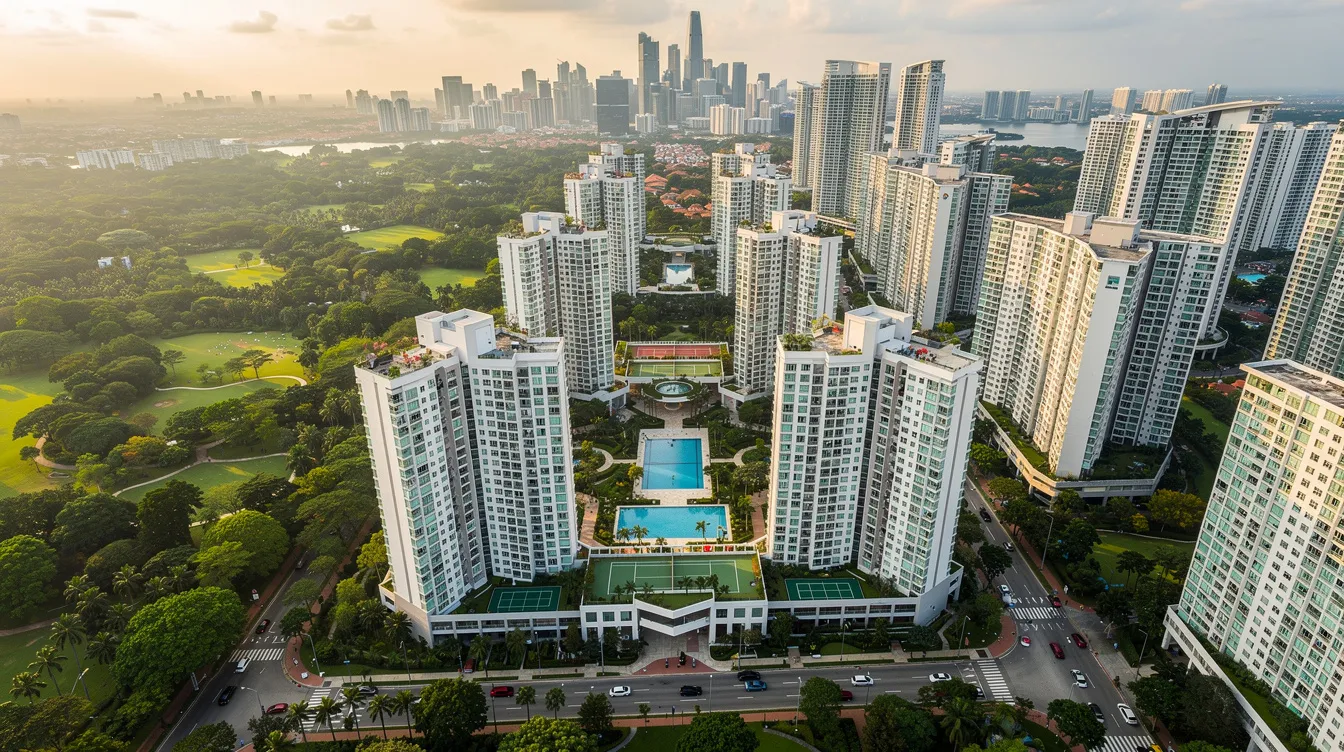
Understanding Singapore’s Cooling-Measure Framework in 2026
Cooling measures are a coordinated set of tax, borrowing, and holding-period rules that Singapore has deployed since the early 2010s to manage housing demand, discourage speculation, and reduce systemic risk in the financial system. The residential property market in Singapore is influenced by these credit guardrails and tax policies, which together determine the true cost and feasibility of every transaction.
These measures matter to both individual home buyers stretching for their first flat and to corporate investors allocating capital across residential, commercial, and industrial segments. Understanding the framework is essential before you commit cash upfront to any deal.
The Three Pillars: Taxes, Financing, and Holding-Period Rules
Singapore’s cooling measures rest on three main levers:
-
Transaction taxes – additional buyer’s stamp duty and standard buyer’s stamp duty change the entry cost of every residential property purchase. ABSD adds significant costs to property purchases in Singapore, especially for those buying a second property or more.
-
Financing constraints – the TDSR framework, mortgage servicing ratio MSR, and LTV limits cap how much leverage financial institutions will extend. These financing limits encourage prudent borrowing and strengthen credit underwriting standards across the banking system.
-
Holding-period penalties – seller’s stamp duty imposes a tax on properties sold within a short holding period, discouraging speculative flipping and forcing longer investment horizons.
These pillars work in concert. High ABSD on second homes plus lower LTV plus a four-year SSD holding period creates a structural bias toward owner occupation and long-term holding. The result: most buyers find that speculative entry and quick exits are financially punitive, while first time buyers who prioritise owner occupation face the gentlest version of the rules.
This article will zoom into each pillar with late-2026 numbers, worked examples, and practical guidance.
Why Cooling Measures Remain Stringent in Late 2026
The late-2026 backdrop shows modest but positive private home price growth. In Q1 2026, private residential prices shifted by 0.8%, and HDB resale price growth slowed to 2.9% in 2025, with HDB resale prices experiencing slight dips in early 2026 before policy changes were implemented. Transaction volume has been subdued since the 2023 ABSD hikes, but property prices have not collapsed-they have simply moderated.
Market conditions remained differentiated across segments in late 2026: prime districts behaved differently from suburban launches, and the 15-month wait-out period was removed for private property owners buying HDB resale flats, opening a new channel of demand. Despite softer sentiment and public calls for easing, Budget 2026 and subsequent monetary authority statements through Q3 2026 did not ease ABSD, TDSR, or LTV limits.
The policy rationale is clear: preserve affordability for first-time Singaporean households, avoid speculative spikes ahead of the 2027–2028 supply pipeline, and maintain financial stability. For investors, this means the rules are structural, not cyclical.
Understanding the exact ABSD tiers is the first step before planning any purchase or portfolio move.
Late-2026 ABSD: Current Rates and Their Practical Impact
Singapore’s Additional Buyer’s Stamp Duty is levied on residential property purchases and remains the most visible cooling measure-and the one that has seen the sharpest increases since April 2023. The ABSD rates depend on residency status and property ownership count, and they have remained unchanged through late 2026. No relaxation has been signalled.
Current ABSD Tiers in Late 2026
The following table summarises the current ABSD schedule from IRAS as of late 2026:
|
Buyer Profile |
First Property |
Second Property |
Third & Subsequent |
Key Notes |
|---|---|---|---|---|
|
Singapore Citizens (SC) |
0% |
20% |
30% |
First property has zero ABSD |
|
Permanent Residents (PR) |
5% |
30% |
35% |
Higher rates from second property onward |
|
Foreign Buyers |
60% |
60% |
60% |
Foreign buyers face a 60% ABSD rate as of March 2026 on any residential purchase |
|
Entities (companies, trusts) |
65% |
65% |
65% |
Includes trusts and non-individual entities |
Singapore citizens pay 0% ABSD for the first residential property purchase-a deliberate advantage that underscores the government’s intent to prioritise owner occupation. Singapore Citizens pay 20% ABSD for their second property, and the ABSD rate for a third property is 30% for Singapore Citizens. Permanent Residents pay 30% ABSD for their second property.
Foreign investment in residential property is discouraged due to high ABSD rates-at 60%, the stamp duty alone on a S$2 million condo would be S$1.2 million.
A critical detail many buyers overlook: the applicable ABSD rate depends on the date of the Option to Purchase (OTP) acceptance or Sale & Purchase Agreement, not the completion or TOP date. ABSD remissions were extended for licensed housing developers undertaking large-scale redevelopments, subject to strict construction and sales timelines, with a non-remittable 5% component payable upfront.
How ABSD Reshapes Buying Decisions in 2026
Consider these numerical examples:
Example 1: A Singapore citizen buying a second private condo at S$2.0 million faces ABSD for second residential property at 20%-that is S$400,000 in stamp duty on top of standard buyer’s stamp duty, payable cash upfront or via CPF (subject to limits). This single tax often exceeds several years of potential rental income from the unit.
Example 2: A PR couple currently owning an HDB resale flat and buying a private property without first selling their HDB would be classified as purchasing a second property. That triggers 30% ABSD. Remission is only available if the HDB is sold within the stipulated period (typically six months for married SC couples; PR rules may differ). Timing the sale incorrectly can cost hundreds of thousands of dollars.
The knock-on effects are significant. ABSD is pushing yield-seeking capital into commercial and industrial assets, which are generally ABSD-exempt. Many buyers who would otherwise expand a residential portfolio are instead evaluating factory units, warehouses, and business parks. Families delay upgrading or choose smaller units to avoid second-property ABSD exposure entirely.
After ABSD, the next major pain point in late 2026 is the longer four-year SSD, which affects how long you must hold before selling without penalty.
The Four-Year SSD and What It Means for Your Exit (2026–2030)
From 4 July 2025, the seller’s stamp duty was extended from three to four years with higher rates for new acquisitions. For anyone buying residential property in 2026, this means your exit window just got longer and more expensive if you need to sell early.
SSD Structure After July 2025
For residential properties acquired on or after 4 July 2025, the SSD schedule is as follows:
|
SSD Holding Period |
Rate (Post-July 2025) |
Rate (Pre-July 2025, from Mar 2017) |
|---|---|---|
|
Year 1 (within 12 months) |
16% |
12% |
|
Year 2 |
12% |
8% |
|
Year 3 |
8% |
4% |
|
Year 4 |
4% |
0% |
|
After 4 years |
0% |
0% |
The date of acquisition-specifically the OTP acceptance or Sale & Purchase Agreement-determines which SSD schedule applies. For purchases between 11 March 2017 and 3 July 2025, the older three-year SSD tiers (12% / 8% / 4%) continue to apply. Buyers whose transactions straddle the July 2025 boundary should confirm their classification with their conveyancing lawyer.
How SSD Affects 2026–2030 Planning
Here is a concrete example: a S$1.8 million condo bought in August 2026 and sold in mid-2028 would incur 12% SSD-S$216,000-calculated on the higher of selling price or market value. Add ABSD already paid at entry, standard buyer’s stamp duty, agent commissions, and legal fees, and the total transaction costs can consume years of capital appreciation.
This creates several planning issues:
-
Families with uncertain plans (job relocations, children’s schooling changes) need a bigger holding-period buffer or may prefer renting over buying in 2026.
-
Investors must model SSD into best- and worst-case IRR calculations through at least 2030. Selling under pressure in 2027–2029 carries severe penalties.
-
Exit strategy and holding-period assumptions should be stress-tested before committing. This is a key part of any thorough investment advisory for both residential and industrial assets.
Even if you can tolerate SSD and ABSD, financing rules-TDSR, MSR, and LTV-still cap what you can safely borrow.
Financing Rules in Late 2026: TDSR, MSR and LTV in Plain English
From a property buyer’s perspective, the key questions are “How much can I borrow?” and “How much cash or CPF must I put in?” Both answers are dictated by the debt servicing ratio TDSR, mortgage servicing ratio, and LTV limits-all of which remain unchanged in late 2026.
Total Debt Servicing Ratio (TDSR): Still 55% in 2026
The TDSR framework was introduced in June 2013 and limits total monthly debt obligations to 55% of gross monthly income. TDSR aims to prevent over-leveraging in property purchases and applies to property loans for both residential property and non-residential property (commercial, industrial) under MAS rules.
TDSR includes all debt repayments, not just your mortgage. When calculating TDSR, financial institutions count:
-
All mortgage loan repayments (existing and proposed)
-
Car loans
-
Personal loans, renovation loans, and education loans
-
A percentage of outstanding credit card limits
-
Guarantor and co borrower obligations
The stress test rate of 4% is used for TDSR calculations-or the actual rate plus a buffer, whichever is higher. This floor rate ensures that even if current interest rates are lower, banks assess your borrowing power against a medium term interest rate scenario that accounts for fluctuating interest rates.
Numerical example: A single buyer earning S$12,000 in monthly income with S$1,500 of existing debt service (car loans, personal loans, other debts) has a TDSR threshold of S$6,600 (55% × S$12,000). Subtracting the S$1,500 in existing obligations leaves S$5,100 available for new mortgage monthly repayments at the stress-test rate. At 4% over a 25-year loan tenure, that supports a maximum loan of roughly S$970,000-far less than many buyers expect.
For joint borrowers, income is combined, and the income weighted average age of both borrowers may affect loan tenure and LTV. Variable income (commissions, bonuses, rental income) is typically haircut by banks when calculating TDSR, reducing effective borrowing power further.
Mortgage Servicing Ratio (MSR): For HDB and EC Only
The mortgage servicing ratio MSR applies a stricter limit: housing loan repayments for HDB flats and new executive condominiums (bought directly from developers, during the Minimum Occupation Period) are capped at 30% of gross monthly income. This is not just your mortgage-it specifically limits the housing instalment component.
Borrowers must meet both MSR (30%) and TDSR (55%) simultaneously when buying HDB or EC with a bank loan. MSR is often the binding constraint.
Example: A couple with combined gross monthly income of S$9,000 buying an EC faces an MSR ceiling of S$2,700 per month for loan repayments-even if their TDSR would technically allow S$4,950. The MSR limit sets the effective maximum loan for this purchase, and many buyers find it surprising that even bank loans for HDB resale flats are subject to the same 30% MSR cap.
Loan-to-Value (LTV) Limits in Late 2026
LTV limits determine the maximum percentage of the property’s market value that a bank or HDB will lend:
|
Scenario |
Maximum LTV |
Minimum Down Payment |
|---|---|---|
|
No outstanding housing loan (first housing loan) |
75% |
25% (of which at least 5% in cash) |
|
One existing property loan |
45% |
55% |
|
Two or more existing loans |
35% |
65% |
|
HDB loan (for eligible buyers) |
80% |
20% |
LTV is capped at 75% for first housing loans via bank. LTV is 45% for buyers with one existing property loan, and LTV is 35% for buyers with two or more existing loans. For HDB loans, LTV is 80% with a 20% down payment.
Age and loan tenure interact with LTV limits: LTV drops to 45% if loan tenure exceeds 30 years or if the borrower’s age at loan maturity exceeds 65. This can bite older buyers or those stretching repayment periods-financial institutions will reduce LTV tiers accordingly, requiring substantially more cash upfront.
After understanding these rules, readers need practical steps to work within them across different buyer profiles.
Applying the Rules: How Different 2026 Buyer Profiles Are Affected
The impact of cooling measures varies dramatically depending on who you are, what you already own, and whether you are buying for owner occupation or investment. Here is how the rules play out for the most common late-2026 buyer profiles.
First-Time Singapore Citizen Home Buyers
First time buyers enjoy the most favourable position under current rules:
-
0% ABSD on first residential property-no additional stamp duty at all
-
Highest LTV tier (75% bank loan, or 80% HDB loan) if no existing home loan
-
Eligibility for CPF housing grants when purchasing HDB flats (income-dependent)
However, even first-time home buyers face real constraints. TDSR at 55% and MSR at 30% still limit maximum loan size, especially when the stress-test floor rate of 4% is applied. Standard buyer’s stamp duty still applies on tiered rates. And for anyone buying private property after July 2025, selling within four years triggers SSD-something to consider before committing to a home you might outgrow quickly.
Practical advice: stress-test your loan capacity at a 4.0–4.5% interest rate, compare “buy smaller now” versus “wait and rent” options, and ensure you have sufficient liquidity beyond just your mortgage payments.
HDB Upgraders Planning a Private Condo in 2026–2027
The common upgrade path-selling an HDB flat and buying a private condo-requires careful sequencing in late 2026.
If your private property purchase completes before your HDB sale, ABSD for a second property is payable upfront. For a Singapore citizen, that is 20% of the purchase price. ABSD for second residential property is 20% as of March 2026. Remission is available only if the HDB is disposed of within the stipulated period (typically six months for married SC couples).
Timing issues compound with SSD: upgraders who buy in 2026 under the four-year SSD regime must plan not to sell again until at least 2030. A detailed buy-sell sequence worked through with a qualified advisor can prevent double-loan and ABSD cash-flow crunches.
Investors and Business Owners Considering Residential vs Industrial in 2026
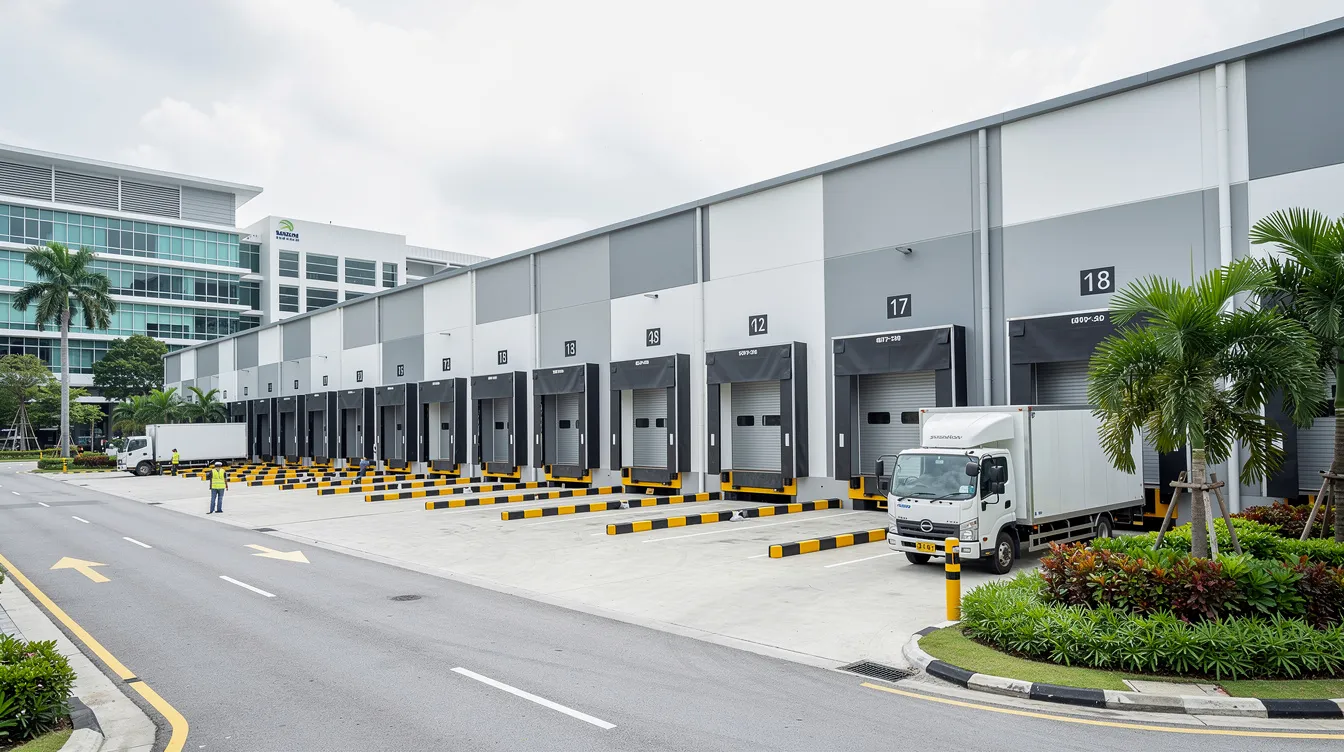
High ABSD and SSD on residential property are encouraging many buyers to re-evaluate commercial and industrial options. While TDSR and LTV frameworks still apply to investment property loans, ABSD does not typically apply to pure commercial and industrial assets-B1/B2 factory units, warehouses, and business parks-subject to zoning and use conditions.
Comparative example: A second residential property at S$2.5 million incurs 20% ABSD (S$500,000 for an SC) plus BSD, versus a S$2.5 million freehold B1 industrial unit with zero ABSD, a different yield and risk profile, and potentially longer tenancy terms. For business owners whose operational premises overlap with investment objectives, the industrial route may offer better net risk-adjusted returns in a high-ABSD regime.
Planning Under 2026 Cooling Measures: Practical Steps and Checklists
Plan on the assumption that ABSD, TDSR, LTV limits, and the four-year SSD will remain unchanged throughout your intended holding period. Any future easing is upside, not a base case.
Step-by-Step: Structuring a Purchase in Late 2026
-
Clarify your buyer profile: citizenship, PR, or foreigner status; number of existing residential properties (including HDB flats); whether purchase is for owner occupation or investment.
-
Check the latest ABSD and SSD schedules from IRAS and record the applicable rate and SSD holding period for your planned purchase date.
-
Compute your realistic borrowing limit using TDSR at 55% with a 4.0–4.5% stress-test floor rate. If buying HDB or EC, also apply MSR at 30%. Factor in all other debts-car loans, personal loans, credit lines.
-
Determine your LTV tier based on existing housing loans, borrower age, and chosen loan tenure. Calculate minimum cash and CPF needed for the down payment.
-
Stress-test exit scenarios: Model selling in years 1–4 with applicable SSD rates, and consider a rental alternative if exit flexibility is crucial. Maintain liquidity buffers.
-
For investors, compare net returns from a second residential property versus a commercial or industrial property with no ABSD but possibly higher operational complexity and different lease structures.
Residential vs Industrial Under Cooling Measures: A Snapshot
|
Criterion |
Residential Investment (2026) |
Industrial/Warehouse Unit (2026) |
|---|---|---|
|
ABSD (SC, second property) |
20% |
0% |
|
SSD holding period |
4 years (16%/12%/8%/4%) |
Not applicable (residential SSD) |
|
LTV (first investment loan) |
Up to 45% (if one existing loan) |
Varies; typically 70–80% for first commercial loan |
|
Typical gross rental yield |
2.5–3.5% |
4–6%+ |
|
Typical tenancy length |
1–2 years |
3–5+ years |
|
Key risk |
High entry cost, SSD lock-in |
Business-cycle exposure, lease expiry |
Residential investment carries high ABSD, strict SSD, and strong owner-occupier demand but lower net yields after tax. Industrial property offers no ABSD, no residential SSD, and potentially higher yields with longer leases-but with exposure to business-cycle risk and tenant quality.
Common 2026 Mistakes and How to Avoid Them
Many late-2026 buyers still misinterpret dates, remission rules, or underestimate the cash impact of SSD and ABSD. Here are the most common errors and how to avoid them.
Misreading the “Policy Date” and Missing a Rate Change
Problem: Buyers assume the completion date determines ABSD and SSD rates, when IRAS actually uses the date of OTP acceptance or Sale & Purchase Agreement execution.
Solution: Always confirm with your conveyancing lawyer which instrument date determines the applicable tax rate. Keep signed OTP, acceptance letter, and resale application documents clearly filed and date-stamped.
Assuming ABSD Will Be Relaxed Soon
Problem: Buyers delay commitments or over-commit financially based on hope that ABSD will be cut in the next Budget or after a soft quarter of property prices data.
Solution: Plan every purchase on the basis that current ABSD and LTV rules will remain throughout your holding period. There has been no official indication of near-term ABSD cuts through late 2026. Treat any future easing as upside, not a base case.
Over-Leveraging by Ignoring the 4-Year SSD
Problem: Investors using high leverage on 2026 purchases without acknowledging that selling under pressure in 2027–2029 could incur 16–8% SSD on top of all other transaction costs.
Solution: Maintain liquidity buffers well beyond just your mortgage payments. Avoid “must sell” timelines inside the SSD window, and pre-plan rental strategies if the market turns or personal circumstances change.
Overlooking Industrial and Commercial Alternatives
Problem: High-net-worth individuals and SMEs defaulting to second or third residential properties despite punitive ABSD, because residential property is familiar and feels safe.
Solution: Evaluate ABSD-free commercial and industrial opportunities that may offer better net risk-adjusted returns in a high-ABSD regime. The comparison should account for different risk factors (tenant quality, lease structure, business-cycle sensitivity), but the tax drag difference is substantial.
Conclusion and Next Steps
ABSD tiers and the four-year SSD in late 2026 significantly raise the cost of holding multiple residential properties and compress speculative upside. Singapore Citizens pay 20% ABSD on a second property and 30% on a third; Permanent Residents face 30% on a second; foreign buyers face 60% on any residential purchase. These are not minor frictions-they are structural costs that reshape investment returns.
TDSR at 55% of gross income, MSR at 30% for HDB flats and executive condominiums, and LTV limits (75% / 45% / 35% depending on existing loans) drive true affordability far more than headline property prices suggest. The stress-test floor rate of 4% means that even in a lower-rate environment, your borrowing power is tested against a conservative scenario that accounts for fluctuating interest rates.
Investors and business owners should treat these measures as structural, not temporary, and seriously explore industrial and commercial asset classes where ABSD does not apply and net yields may be more favourable.
Your concrete next steps:
-
Check your current property count, outstanding loans, and buyer profile to identify your ABSD and LTV tiers
-
Use a conservative TDSR calculator at 4.0–4.5% to size your maximum safe home loan
-
Draft a 5–7 year holding and exit plan that respects the four-year SSD window
-
Seek in principle approval from your bank early to confirm actual borrowing capacity before committing
-
Contact AESTHETIC HAVENS for a consultation on whether your next move should be residential, commercial, or industrial, given 2026 cooling measures
Related topics worth exploring next include detailed industrial zoning and lease structures (B1/B2, JTC versus freehold), structuring property ownership through companies and the ABSD consequences for entities, and refinancing strategies within TDSR and LTV caps.
Frequently Asked Questions on 2026 Cooling Measures
These FAQs target the specific queries that Singapore property buyers and investors most frequently search for in late 2026.
Will Singapore Cut ABSD in Late 2026 or 2027?
There has been no official indication of near-term ABSD cuts. Any easing would likely follow sustained multi-quarter price declines and weaker economic conditions, neither of which had materialised through Q3 2026. Buyers should plan as if current ABSD tiers will persist for at least their first holding cycle. Budget 2024 made only narrow refinements (ABSD concession extensions for elderly replacement properties and developer remissions), not broad loosening.
What Are the Exact ABSD Rates for Singapore Citizens Buying a Second Property in 2026?
ABSD for second residential property is 20% as of March 2026 for Singapore citizens. On a S$1.5 million condo, that translates to S$300,000 in additional stamp duty payable upfront-on top of standard buyer’s stamp duty calculated on tiered rates (1%, 2%, 3%, 4%, up to 6% on higher bands). This must be paid in cash or CPF before or at the time of instrument execution.
How Long Must I Hold to Avoid SSD on a 2026 Purchase?
For residential properties acquired on or after 4 July 2025, you must hold at least four full years to avoid SSD completely. Selling within year one incurs 16%; year two, 12%; year three, 8%; year four, 4%. Confirm your acquisition date classification with your conveyancing lawyer, especially for transactions near the 4 July 2025 policy change date.
What Is the TDSR Limit in 2026 and Does It Apply to Investment Properties?
The TDSR limit is 55% of gross monthly income and applies to loans for both owner-occupied and investment properties-residential, commercial, and industrial-under monetary authority rules. TDSR includes all debt repayments, not just mortgages: car loans, personal loans, credit facilities, and co-borrower obligations all count. Some limited exemptions exist for certain refinancing cases, but most new property purchase loans must meet the 55% TDSR threshold.
How Can AESTHETIC HAVENS Help Me Navigate 2026 Cooling Measures?
AESTHETIC HAVENS provides independent, data-driven advice on residential versus commercial and industrial allocation under current ABSD, SSD, TDSR, and LTV rules. The firm offers scenario modelling for business owners optimising both operational premises and investment properties, helping clients quantify the true after-tax returns of residential holdings versus ABSD-free industrial alternatives. Access curated industrial and commercial listings through AESTHETIC HAVENS’ marketplace, and schedule a consultation to receive a personalised 2026 property plan tailored to your buyer profile and financial position.

