

Introduction
Thomson Reserve and Lentor Gardens Residences are two of the most closely watched new launches sitting on the same MRT line in 2026 – and the question every buyer is asking is which Thomson-East Coast Line (TEL) launch offers better value per psf. Both are 99-year leasehold projects, both promise strong connectivity along the thomson east coast line, and both target upgraders and families. But their price positioning, location maturity, and long-term prospects diverge sharply.
This is a side-by-side 2026 new-launch comparison focused on price per square foot (psf), MRT walk time, unit mix, schools within 1km, and likely rental demand. It is not a survey of every project in the lentor hills estate or the upper thomson corridor – only these two TEL launches, using data available up to October 2026.
Early verdict: Lentor Gardens Residences offers lower entry psf and quantum, making it the more accessible choice for HDB upgraders. Thomson Reserve commands a premium psf justified by a scarcer RCR location, proximity to Ai Tong School, and future cross island line interchange upside at Bright Hill. The “better value” depends entirely on your budget ceiling, school plans, and investment horizon.
This article is written for HDB upgraders, family owner-occupiers, and investors deciding between these two TEL projects for 2026–2027 entry. This content does not constitute financial or investment advice; always consult a licensed professional before committing.
By the end, you will understand:
-
Current and expected psf ranges for both projects, including entry quantum by bedroom type
-
MRT access and walk-time differences, including interchange implications
-
School-catchment strengths – Ai Tong, CHIJ St Nicholas, Anderson Primary, and more
-
Likely rental yield and exit prospects over 5–10 year holding periods
Understanding Value per PSF Along the Thomson-East Coast Line
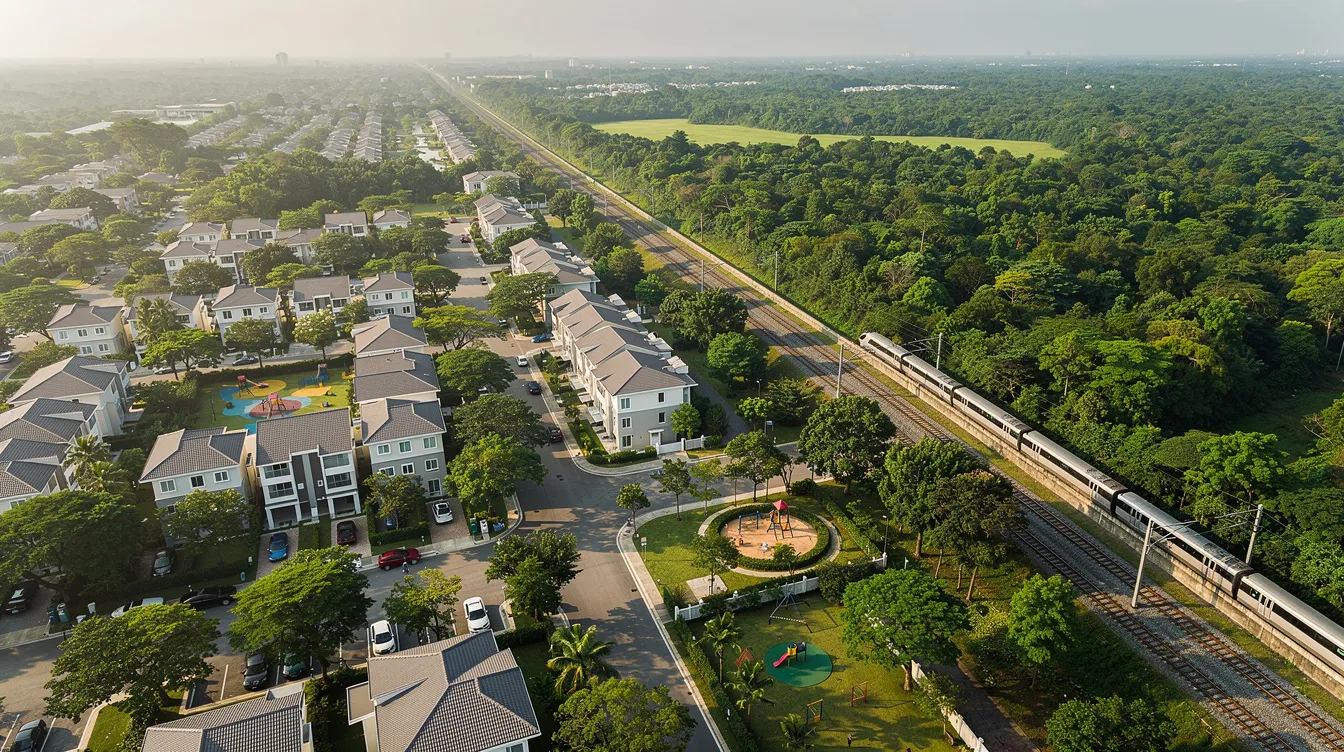
“Value per psf” in a Singapore new launch is never just about the sticker price. It reflects land cost, location maturity, connectivity premiums, school access, and the competitive supply environment. Along the TEL, projects at different stations can sit in entirely different planning regions – one in the Rest of Central Region (RCR), the other in the Outside Central Region (OCR) – which structurally shapes how psf is formed and how it appreciates over time.
Thomson Reserve and Lentor Gardens Residences are often benchmarked against each other because they share the same mrt line, yet their micro-locations create fundamentally different value propositions. Understanding those differences is the foundation for deciding which offers better value per psf for your specific profile.
How PSF Is Formed in OCR vs RCR Launches
Thomson Reserve sits in District 20 (Upper Thomson / Bishan), classified as RCR – a city-fringe zone where psf historically commands a structural premium over OCR addresses. Lentor Gardens sits in District 26 (Lentor Hills), classified as OCR – a suburban zone with typically lower land prices and launch psf.
The land cost basis plays a critical role in determining developer pricing strategies. Thomson Reserve was acquired at S$1,178 psf ppr, reflecting its premium RCR positioning – the former Thomson View en bloc site on bright hill drive secured for approximately S$810 million by the UOL / Singapore Land Group / CapitaLand Development consortium. Lentor Gardens was acquired at S$920 psf ppr, the lowest in Lentor among eight GLS parcels awarded since 2021, giving developer Kingsford Lentor Pte Ltd a meaningful margin cushion.
Higher land acquisition costs typically lead to higher launch prices for developers. But buyers must compare psf alongside total quantum, layout efficiency, and micro-location rather than psf alone. A “cheaper” psf on a poorly oriented, smaller unit may deliver less real value than a slightly higher psf on a better-facing stack with superior school proximity.
Why TEL-Line Proximity Matters for PSF and Rental
The thomson east coast line provides important connectivity for developments in both areas – running from Woodlands North through Orchard to marina bay and onward to the east coast by the late 2020s. Accessibility to public transport can strongly influence property pricing and demand, and TEL is no exception: projects within a 5-minute walk of a TEL station consistently transact at higher psf than those further out.
How station distance, shelter, and interchange status translate into psf is critical. Thomson Reserve sits approximately 100 meters from Upper Thomson MRT (TE8), with residents reaching Orchard in approximately 11 minutes. It also benefits from proximity to bright hill mrt (TE7), which is slated to become a TEL/cross island line interchange by around 2030. Lentor Gardens sits 5–7 minutes’ walk from lentor mrt station (TE5), connecting to Orchard in approximately 16 minutes.
For tenants and CBD workers, every extra 5 minutes on the commute can influence willingness to pay rent – and thus the effective psf value embedded in a unit. With that context established, readers need a granular, numbered comparison across psf, MRT access, unit mix, schools, and rental demand.
Quick Answer: Which Launch Looks Better Value per PSF Today?
For buyers who need a direct answer before the deep dive: Lentor Gardens Residences is the lower-psf, lower-quantum entry point, while Thomson Reserve is the higher-psf play that bets on scarcity, school premiums, and interchange upside. Neither is universally “better” – market positioning affects pricing strategies, and your buyer profile determines which trade-offs make sense.
Lentor Gardens’ starting price is S$2,050 psf, with the median settling around S$2,300–2,370 psf for standard 2–4 bedroom units. Thomson Reserve’s indicative pricing is estimated at S$2,500 to S$3,100 psf depending on stack, floor, and bedroom type, with luxury collection units potentially pushing higher.
-
Lentor Gardens = lower psf and quantum, OCR address, but heavier lentor cluster supply and softer long-term scarcity
-
Thomson Reserve = higher psf, but RCR city-fringe location, stronger school belt (Ai Tong within 1km), dual-line MRT interchange upside, and limited land supply in Upper Thomson
-
For pure psf affordability: Lentor Gardens wins
-
For “value per psf” adjusted for scarcity, schools, and connectivity: Thomson Reserve edges ahead for longer holds of 7–10+ years
Solid analysis of market trends is vital for making informed real estate investment decisions. The sections below unpack each dimension so you can match the verdict to your budget and horizon.
Project Snapshot: Key Facts Side by Side
Before diving into detailed analysis, here is a quick orientation comparing both developments on their core specifications.
|
Criterion |
Thomson Reserve |
Lentor Gardens Residences |
|---|---|---|
|
Location & District |
Upper Thomson, D20 (RCR) |
Lentor Hills, D26 (OCR) |
|
Developer |
UOL Group / Singapore Land Group / CapitaLand Development |
Kingsford Lentor Pte Ltd |
|
Tenure |
99-year leasehold |
99-year leasehold |
|
Site Area |
~555,067 sqft |
~222,160 sqft |
|
Total Units |
~1,268 units (6 towers) |
499 units + 3 strata terrace houses |
|
Land Cost |
S$1,178 psf ppr |
S$920 psf ppr |
|
Indicative PSF Range |
~S$2,500–S$3,100 |
~S$2,050–S$2,470 |
|
Expected TOP |
~2032 |
~2030 |
|
Nearest TEL Station |
Upper Thomson MRT (~100m) |
Lentor MRT (~565m) |
|
Walking Time to MRT |
~1–3 minutes (sheltered linkway) |
~5–7 minutes |
|
Future Interchange |
Bright Hill TEL/CRL (~2030) |
None announced |
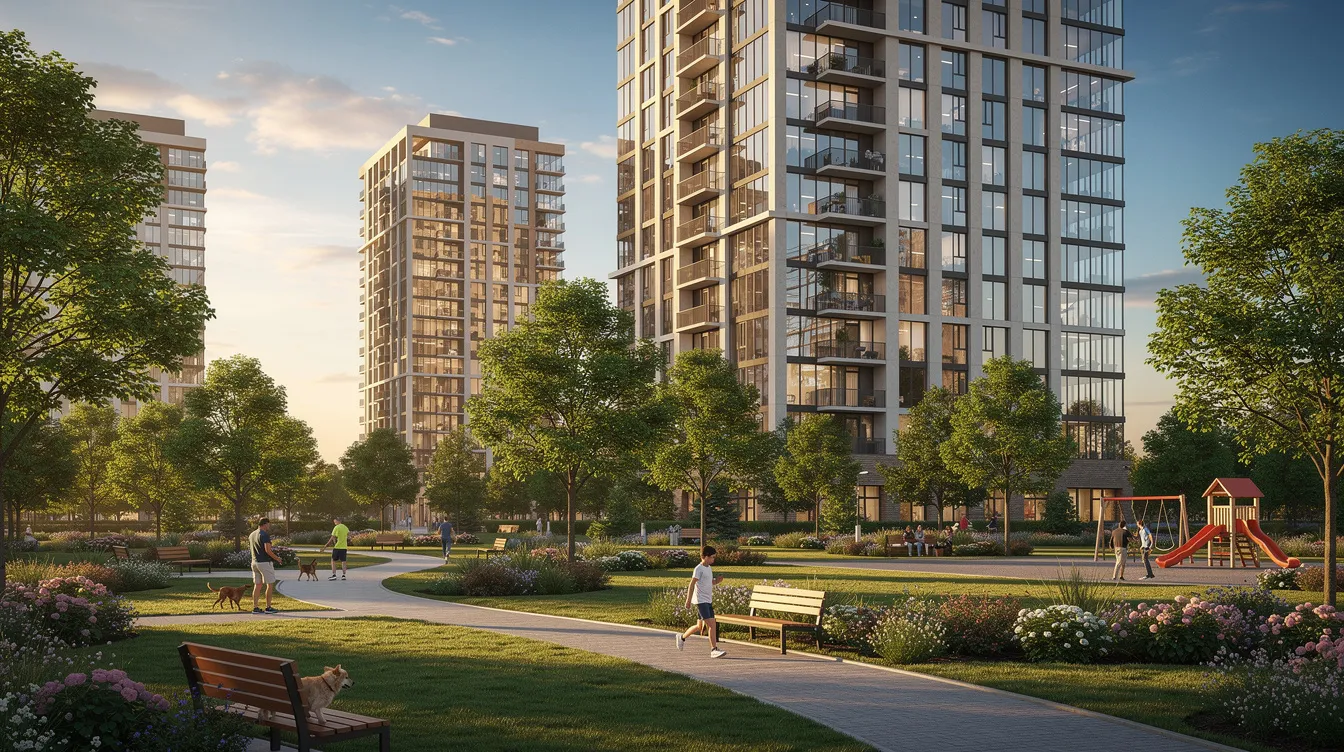
Thomson Reserve is a mega RCR project positioned in an established residential enclave with interchange potential and a deep school belt. Lentor Gardens Residences is a boutique OCR project offering cost advantage as part of a rapidly developing new township. Thomson Reserve is developed by three SGX-listed companies, with Thomson Reserve’s developers having a combined balance sheet in billions – a factor that reassures buyers about project completion and build quality. Kingsford has delivered over 3,500 residential units in Singapore and won the Singapore Prestige Brand Award in 2019, providing its own credibility for lentor gardens residences pricing.
Price and PSF Analysis: Where Is the Real Value?
Pricing structures in real estate often reflect both land cost and market competition dynamics. This section drills into the numbers – land cost, expected launch psf, quantum by unit type, and exit potential – to determine where the real value lies.
Land Cost vs Expected Launch PSF
Thomson Reserve’s acquisition of the former thomson view site at bright hill drive cost approximately S$810 million, translating to roughly S$1,178 psf ppr. While this is a premium for 2026 RCR TEL land, it remains competitive compared to some CCR land sales. The consortium’s scale helps: UOL Group sold 87% of 1,193 units at Parktown Residence, demonstrating strong execution on large projects.
Lentor Gardens’ GLS award in April 2025 at S$920 psf ppr was the lowest among all lentor precinct parcels. This gives developer Kingsford Lentor Pte a meaningful margin cushion compared to earlier Lentor launches like lentor mansion and lentor modern, whose land costs ranged from S$1,060 to S$1,204 psf ppr. Lower land cost is a buffer, not a guarantee of discounted psf, but it supports more value-driven pricing for lentor gardens.
Comparing quadrants in real estate includes evaluating land cost, project scale, and environmental factors. Here is how psf bands compare by bedroom type:
|
Unit Type |
Lentor Gardens Residences |
Thomson Reserve (Estimated) |
|---|---|---|
|
2-Bedroom (~650–750 sqft) |
~S$2,050–S$2,450 psf |
~S$2,500–S$2,700 psf |
|
3-Bedroom (~900–1,100 sqft) |
~S$2,290–S$2,400 psf |
~S$2,500–S$2,750 psf |
|
4-Bedroom (~1,200–1,400 sqft) |
~S$2,310–S$2,490 psf |
~S$2,600–S$2,900 psf (Luxury) |
Note: Thomson Reserve’s official price list has not been publicly released as of October 2026. Ranges above are based on pre launch estimates, comparable project data, and developer indications.
Quantum and Affordability by Unit Type
Lentor Gardens Residences’ pricing reflects its emerging precinct status. Entry quantum for a 2-bedroom unit starts at approximately S$1.37–1.56 million at mid-range psf, fitting comfortably within most HDB upgrader budgets under current TDSR requirements. Three-bedroom units range from approximately S$2.0–2.4 million, while 4-bedrooms reach S$2.7–3.4 million.
Thomson Reserve offers a broader unit mix – from compact 2-bedroom layouts to 5-bedroom luxury suites – but quantum runs higher across the board. A 2-bedroom at Thomson Reserve likely starts around S$1.5–1.7 million, with 3-bedrooms at S$2.1–2.6 million and 4-bedroom luxury units exceeding S$3.0 million. For family buyers seeking 3–4 bedroom units, the quantum gap widens significantly.
“Value per psf” is experienced as monthly mortgage, not just list price. A buyer stretching for Thomson Reserve’s higher quantum must consider whether the school belt, scarcity, and RCR address justify the additional S$200,000–500,000 over an equivalent-sized Lentor Gardens unit. For sub-S$1.6 million 2-bedroom budgets, Lentor Gardens is the clear winner. For families committed to the D20 school belt, Thomson Reserve’s 3–4BR units cost more but sit in a fundamentally stronger catchment.
Exit PSF and Capital Growth Potential
Resale benchmarks guide future exit expectations. In District 20, Jadescape – a 2018-launched RCR project – trades at a median resale psf of approximately S$2,341 over the past 12 months. Other D20 comparables like Sky Vue and Thomson Three range from S$2,000 to S$2,500 psf. Upper Thomson has limited future new launch supply, which supports structural price resilience.
For Lentor, existing projects in the lentor cycle – lentor modern, lentor hills residences, lentor mansion, lentor central residences, and others – have launched at average psf around S$2,100–2,350. But Lentor Gardens is the seventh launch in the Lentor Hills estate, and the cluster now totals over 3,400 units within a 2km radius. This resale competition from multiple similar-age projects may cap psf upside compared to scarcer D20 supply.
Long-term psf appreciation is arguably stronger for Thomson Reserve, especially for 7–10 year holds. The Bright Hill MRT interchange expected by 2030 will be operational at or before Thomson Reserve’s TOP (~2032), embedding connectivity value into resale pricing. But numbers alone aren’t enough – station proximity and real commute times also shape value.

MRT Connectivity and Walk-Time: How Each TEL Launch Stacks Up
Both projects benefit from the thomson east coast line, but micro-differences in walk-time, shelter, and interchange status translate into real rental demand and psf premium differences.
Distance, Shelter, and Commute Times
Thomson Reserve is 100 meters from upper thomson mrt – the developer describes it as a 1-minute sheltered walk via covered linkway for most stacks, though actual walking time varies by tower (3–4 minutes from further blocks is more realistic). Direct access to the TEL platform means residents can be at Orchard in approximately 11 minutes and at marina bay in under 20 minutes.
Lentor Gardens is a 5–7 minute walk from lentor mrt (TE5), with portions of the route sheltered through nearby retail podiums including those at lentor modern. Lentor MRT connects to Orchard in approximately 16 minutes. The extra 5 minutes of walk time plus 5 minutes of ride time add up – for tenants and CBD commuters, this can influence willingness to pay rent and thus effective psf value.
Interchange Upside: Bright Hill vs Single-Line Lentor
Thomson Reserve has a future MRT interchange expected by 2030: Bright Hill station (TE7) is planned to become a TEL/cross island line interchange, dramatically expanding the catchment of commuter routes accessible without transfer. This interchange will connect corridors from Punggol through Ang Mo Kio and onward to the west, making Thomson Reserve residents beneficiaries of a dual-line node.
Interchange stations tend to support stronger resale psf and higher rents. Historical data from projects near circle line / north south line interchanges (e.g., Bishan) shows 10–15% psf premiums compared to single-line stations of similar maturity.
Lentor MRT currently has no announced second-line interchange. The nearest alternative line access is Yio Chu Kang (north south line) via bus, which is less “baked into” psf. From a transport-resilience and long-term connectivity perspective, Thomson Reserve holds the structural advantage – though Lentor’s TEL access remains very decent for OCR standards.
For family buyers, however, school proximity can outweigh minor commute differences. That’s the next critical comparison.
Schools Within 1km and Family Appeal
Phase 2C(S) balloting rules mean that living within 1km of a sought-after primary school is a tangible financial and lifestyle asset. Families prioritize school proximity when buying homes, and this preference is directly capitalised into psf and resale liquidity.
Thomson Reserve: Ai Tong and the Elite Belt
Thomson Reserve is within 1km of Ai Tong School – and that single fact is one of the most powerful psf drivers for this project. Ai Tong School is highly oversubscribed in Upper Thomson, making Phase 2C(S) balloting extremely competitive. Living within the 1km priority zone gives families a meaningful advantage.
Beyond ai tong primary school, the broader D20 school belt includes:
-
Catholic High School – top-tier SAP school for boys, within practical distance
-
CHIJ St Nicholas Girls’ School – within 1–2km radius
-
Raffles Institution – accessible secondary/JC option nearby
-
Marymount Convent – additional girls’ school option
-
Eunoia JC – Bishan campus within the broader catchment
Ai Tong proximity historically supports resilient psf for surrounding developments. This is a major driver for 3–4BR family units at Thomson Reserve despite higher psf – families are effectively paying for school access embedded in property value.
Lentor Gardens Residences: CHIJ St Nicholas and Anderson Primary
Lentor Gardens is near Anderson Primary and CHIJ St Nicholas. CHIJ St Nicholas is also within 1km of Lentor Gardens – specifically, parts of the lentor hills estate fall within the MOE’s official 1km measurement band for st nicholas girls school. Anderson Primary School and Mayflower Primary are also within the wider vicinity.
These are solid schools, but they carry slightly less “trophy” branding than ai tong school in the competitive primary school landscape. Still, for parents with a girls’ school preference, CHIJ St Nicholas within walking distance of lentor gardens residences is a genuine draw – and at significantly lower psf than Thomson Reserve.
Lentor Gardens sits in a credible family-friendly environment, especially compared to OCR estates without any strong school branding. For some parents, the combination of girls’ school proximity and Lentor pricing may outweigh the D20/RCR pull.
Impact of School Catchment on PSF and Rental Demand
Strong school belts enhance willingness-to-pay for larger units (families stretching budgets), support steady rental demand from families seeking an address near a school before P1 registration, and bolster psf resilience during downturns – units near established schools are often the last to correct sharply.
On a pure “school premium per psf” basis, Thomson Reserve likely enjoys a stronger uplift due to the Ai Tong allure in D20. But school appeal intersects with unit mix and layout – you need the right type of unit to actually benefit from that premium.
Unit Mix, Layout Strategy, and Buyer Fit
PSF value must be read together with what you actually get for that psf: bedroom count, facing, stack diversity, and overall project scale. The unit mix at each project reveals who the developers are really targeting.
Thomson Reserve: Mega-Project Range and Family Skew
Thomson Reserve has approximately 1,268 units spread across six towers – four “Classic” blocks (~21 storeys) and two “Luxury” towers (~30 storeys). The unit mix spans 2-bedroom through 5-bedroom layouts, with over 700 units being 2-bedroom types. The Luxury Collection focuses on larger 3–5 bedroom configurations for families.
Pros:
-
Wide stack choice for families targeting tong school proximity – quieter stacks, park views toward central catchment nature reserve, or pool views
-
Mega-project scale creates more liquidity on resale as the broad buyer base attracts diverse demand
-
Thomson Reserve features a grand 50m lap pool and multiple function rooms, appealing to tenants and owner-occupiers alike
Cons:
-
Large number of near-identical 2-bedroom units could increase competition when exiting
-
Premium psf for high-floor, best-facing luxury blocks pushes quantum significantly
Thomson Reserve’s site spans approximately 555,067 sqft – one of the largest private residential sites in D20. Master-planned developments can impact property valuation and market demand, and the scale here allows for a comprehensive amenity offering.
Lentor Gardens Residences: 2-Bedroom Heavy and Boutique Scale
Lentor Gardens Residences has 499 units, offering boutique living at a markedly different scale from Thomson Reserve. The unit mix is approximately: 252 units of 2-bedroom variants (646–732 sqft), 123 units of 3-bedrooms (872–1,001 sqft), 105 units of 4-bedrooms (1,184–1,356 sqft), and 3 strata terrace houses (~1,496 sqft). There are no pure 1-bedroom units.
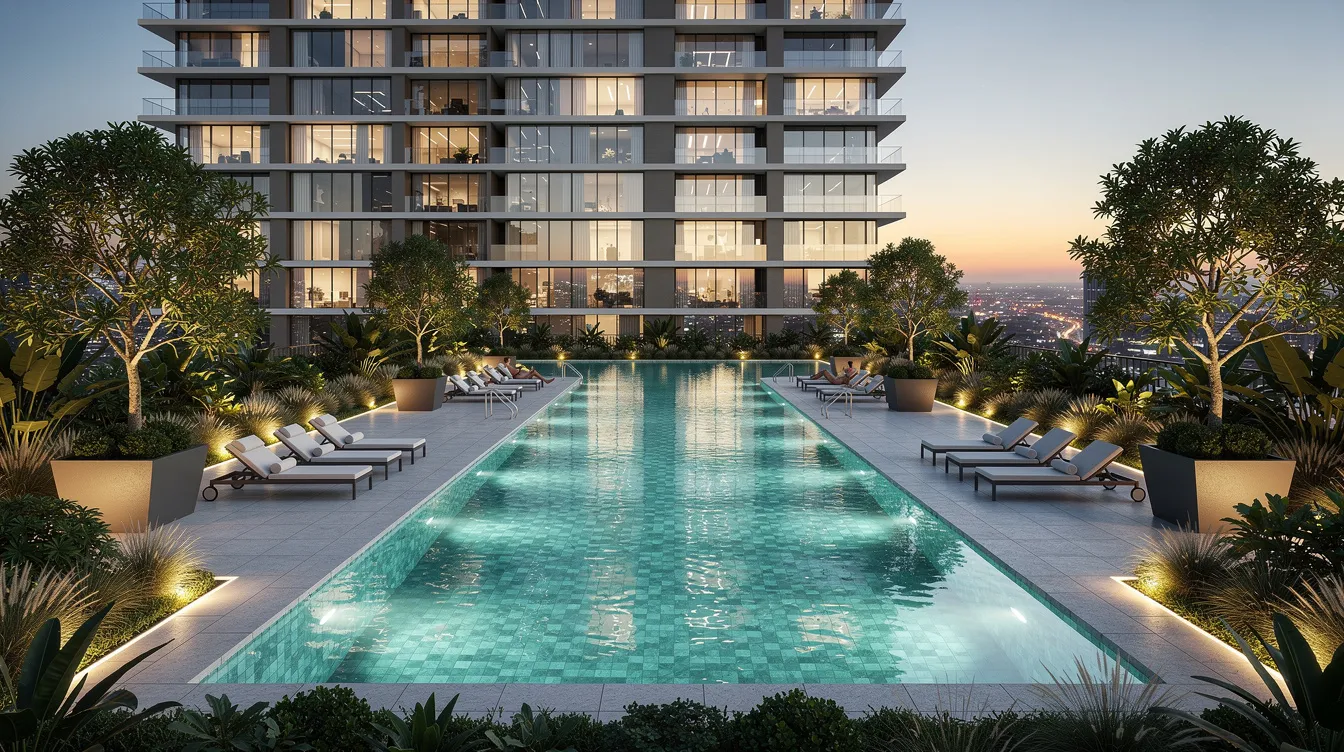
The project is designed for HDB upgraders and small families entering the OCR private market with manageable quantum. Lentor Gardens includes a 75m skyline pool and a tennis court – smaller in amenity footprint than Thomson Reserve but competitive for its boutique positioning.
The strata terrace houses offer a niche, landed-style lifestyle but do not define the overall psf profile. Smaller average unit sizes help keep quantum low even if psf is comparable to other Lentor projects. Investors may favour efficient 2-bedroom stacks but must recognise intense competition from six earlier Lentor launches in the same precinct.
Matching Unit Types to Buyer Profiles
|
Buyer Profile |
Best Fit |
Reasoning |
|---|---|---|
|
Budget-capped upgrader (S$1.3–1.6m) |
Lentor Gardens 2BR |
Lower entry quantum, TEL access, private condo status – more realistic fit than Thomson Reserve’s 2BR quantum |
|
School-driven family (2 kids, Ai Tong target) |
Thomson Reserve 3–4BR |
Higher psf justified by long-term school and location upside; D20 mature estate amenities |
|
Investor seeking TEL exposure |
Lentor Gardens compact 2BR (yield) or Thomson Reserve 2BR (capital growth) |
Lentor for better immediate yield; Thomson Reserve for longer-term capital appreciation in scarcer RCR market |
Tenant profiles track these archetypes closely, shaping yield and vacancy risk at each project.
Likely Rental Demand and Yield: TEL Tenants in D20 vs D26
Both projects sit on the TEL, which appeals strongly to tenants working in Orchard, Novena, and the CBD. But rental demand drivers – and the resulting yields – differ between District 20 and District 26.
Rental Demand Drivers at Thomson Reserve
Thomson Reserve’s primary tenant pools include:
-
Professionals and expats working in CBD/Novena who value short commutes and a city-fringe lifestyle near nature reserves like MacRitchie and Thomson Nature Park
-
Families renting to secure an address near ai tong school and other D20 schools before P1 registration
Expected gross yields sit around 2.4–2.6%, reflecting the higher entry quantum. Thomson reserve’s pricing means each rental dollar covers less of the purchase price, compressing yield. However, thomson reserve offers stronger tenant-profile resilience: the school belt and nature-fringe lifestyle attract a segment willing to pay premium rents, particularly expatriate families.
The mega-project scale also helps rental absorption – larger gyms, pools, function rooms, and higher visibility on property portals aid tenant discovery. Thomson reserve residents will benefit from proximity to established amenities along the upper thomson corridor, including Thomson Plaza and the hillock park area.
Rental Demand Drivers at Lentor Gardens Residences
Lentor Gardens targets a different tenant profile:
-
Young professionals and small families upgrading from ang mo kio, Yishun, and Bishan but wanting to stay near parents
-
Teachers, medical staff, and office workers along the TEL corridor seeking value OCR rents relative to Orchard and city-fringe alternatives
Estimated gross yields are stronger at approximately 2.7–3.0%, driven by the lower entry quantum. A S$1.5 million 2-bedroom unit renting at S$3,500/month delivers roughly 2.8% gross – competitive for a new launch.
However, headwinds exist. A high concentration of similar units is expected to TOP around 2029–2031 across the lentor cluster and nearby Springleaf developments, raising vacancy risk. Unit availability in competing projects like lentor mansion, lentor modern, lentor hills residences, and lentor central residences means tenants have significant choice within the same precinct.
Comparing Yield vs Risk Profiles
-
Thomson Reserve: Lower yield but stronger location moat, school access, nature proximity, and future interchange – a “capital appreciation” play
-
Lentor Gardens: Slightly better yield potential but more supply pressure and pricing competition – an income-oriented, cluster-competitive play
Yield-focused investors with shorter 5–7 year horizons may find Lentor Gardens more workable. Capital-growth buyers willing to hold 10+ years may lean toward Thomson Reserve, where limited land supply in the upper thomson area supports structural price resilience. Both carry specific execution and timing risks.
Common Challenges When Choosing Between These Two TEL Launches
With agent marketing in full swing for both projects, information overload is real. Here are the key decision pain points and how to navigate them.
Challenge 1: Focusing Only on PSF Without Considering Quantum and Holding Power
Buyers fixated on “cheaper psf” may over-stretch on larger units at Thomson Reserve or under-allocate budget at Lentor Gardens. A lower psf on a 4-bedroom at Lentor still means a S$2.7 million commitment – and a higher psf on a compact Thomson Reserve 2-bedroom may fit within a tighter budget.
Solution: Model monthly cash flow under current interest rates, factoring maintenance fees, ABSD (if applicable), and realistic rental assumptions before deciding which project and unit type fits. Operational fit and zoning regulations are crucial factors in the decision-making process for property investments.
Challenge 2: Underestimating Supply Saturation in Lentor Cluster
The lentor hills estate now has over 3,400 planned units across multiple projects within a 2km radius. This concentration may dampen both rental rates and resale leverage for any single project, including Lentor Gardens.
Solution: Buyers choosing Lentor Gardens should focus on best stacks – those with park views toward hillock park, quiet facing, and higher floors – and consider more family-friendly 3-bedroom units where supply within the cluster is thinner, improving exit prospects relative to the heavily concentrated 2-bedroom segment.
Challenge 3: Overpaying for School Premiums Without a Long Enough Horizon
Paying the D20/RCR premium at Thomson Reserve for Ai Tong proximity only makes financial sense if your family actually plans to use Phase 2C(S) priority and hold through at least one schooling cycle (6+ years). The 4-year SSD period alone means you cannot exit quickly without penalties.
Solution: Align your children’s ages, P1 registration windows, and SSD period with your purchase timeline. If your children are already past P1 age or you have no school plans, Lentor Gardens could be a more rational “value per psf” choice without the school premium built into your purchase price.
Challenge 4: Ignoring Exit Competition from Resale Condos Nearby
Thomson Reserve will compete against Jadescape and older upper thomson condos on resale. Lentor Gardens will face resale competition from lentor modern, lentor hills residences, and other cluster projects that will have similar age and condition.
Solution: Benchmark your entry psf against current resale psf of nearby comparables plus a realistic 10–20% new-launch premium. If the premium far exceeds this range – for example, paying S$2,800 psf at Thomson Reserve when Jadescape resales trade at S$2,341 psf – reconsider timing, unit type, or whether the premium is genuinely supported by differentiated attributes like interchange access, views of central catchment nature reserve, or school proximity. Location maturity affects property value perception in real estate markets, and buyers should factor this into their analysis.
Conclusion and Next Steps
The core trade-off is clear: Lentor Gardens Residences delivers lower psf and quantum with the trade-off of heavier cluster competition and softer scarcity. Thomson Reserve commands higher psf but backs it with a stronger school belt, mrt access to a future dual-line interchange, and limited competing supply in D20. “Better value per psf” is not a universal answer – it depends on your upgrader budget, school plans, and investment horizon.
Here are your immediate next steps:
-
Fix your maximum all-in budget and holding period (5, 7, 10, or 15 years) – this single decision narrows the field dramatically
-
Decide whether school proximity to ai tong school or CHIJ St Nicholas is a must-have or just a nice-to-have for your family
-
Shortlist 1–2 unit types in each project and compare monthly cash flow, including mortgage, maintenance, and exit scenarios side by side
-
Seek independent advisory support – a neutral, data-driven comparison across TEL projects will serve you better than relying on a single developer’s narrative
Related topics worth exploring include comparative analysis of non-TEL new launches like Normanton Park resale performance, portfolio balancing between residential and commercial properties, and the broader impact of the cross island line interchange on District 20 property values. The track record of each developer – UOL/Singapore Land Group/CapitaLand Development versus Kingsford – is also worth studying for build-quality confidence.
Frequently Asked Questions
These are concise, direct answers to the most common thomson reserve vs lentor gardens questions buyers ask.
Which project has the lower psf and quantum for a typical 2-bedroom?
Lentor Gardens Residences offers lower psf and lower total quantum for 2-bedroom units. Lentor Gardens’ starting price is S$2,050 psf, with typical 2-bedroom quantum ranging from approximately S$1.37–1.86 million. Thomson Reserve’s 2-bedroom units are expected to start around S$2,500 psf, pushing quantum to S$1.5–1.7 million for similar-sized layouts. Exact quantum depends on stack, floor, and unit availability at the time of booking.
Is Thomson Reserve’s higher psf justified compared to Lentor Gardens?
Thomson Reserve’s pricing premium is linked to its RCR District 20 location, ai tong primary school within the 1km band, established mature estate amenities, and bright hill cross island line interchange arriving by ~2030. These are structural advantages that Lentor Gardens does not replicate. However, buyers should still benchmark thomson reserve’s pricing against Jadescape resale psf (~S$2,341) and their own budget ceiling. Indicative pricing at S$2,500–3,100 psf represents a meaningful premium over D20 resale comparables.
Which has better long-term appreciation potential?
Thomson Reserve edges ahead on capital appreciation given D20 supply scarcity, the interchange catalyst, and school-belt demand. Upper Thomson has limited future new launch supply, meaning thomson reserve sits in a market with fewer competing new projects on resale. Lentor Gardens benefits from being the low-land-cost entrant in a proven lentor cycle, but the cluster’s total supply may moderate psf growth over time.
Which is better for rental yield in the first 5–7 years?
Lentor Gardens likely delivers slightly better gross yields (~2.7–3.0%) due to lower entry quantum. Thomson Reserve compensates with a stronger tenant profile – families and expats willing to pay premium rents for school proximity and nature-fringe living – and more resilient rents in downturns. Estimated gross yields for Thomson Reserve sit around 2.4–2.6%. Investors must weigh yield against the risk of higher vacancy in the lentor cluster as multiple projects TOP simultaneously.
How important is walking time to the TEL station in this decision?
Both projects are within comfortable walking distance of the TEL. Thomson Reserve’s ~1–3 minute walk to upper thomson mrt versus Lentor Gardens’ ~5–7 minute walk to lentor mrt is a noticeable but not transformative difference for daily commuters. The bigger differentiator is Thomson Reserve’s dual-station and future interchange benefit at bright hill – this adds an entirely separate mrt line to the connectivity equation, which single-line Lentor cannot match. For tenants and resale buyers, interchange access is a more meaningful psf driver than a 2–3 minute walk-time gap.
Can I rely on these psf estimates for my purchase decision?
The indicative pricing and psf ranges discussed here are based on developer signals, land cost analysis, and comparable project data available up to October 2026. Thomson Reserve’s official price list has not been publicly released as at the time of writing, and lentor gardens residences pricing may shift based on unit availability and phase of sales. These figures do not constitute financial or investment advice. Always verify current pricing directly with the developer or a licensed property professional, and conduct your own due diligence before committing.

