

Introduction
A couple in their mid-30s sold their Punggol 4-room HDB flat for S$700,000 and purchased a 3-bedroom new launch condo near an interchange MRT station in Singapore’s North-East corridor for S$1.85 million. This case study shows how a Punggol 4 room HDB family upgraded to a 3 bedroom new launch without overstretching their finances, keeping monthly mortgage obligations below 35% of household income and maintaining an 18-month cash and CPF buffer throughout the process.
This is not a generic comparison of HDB versus condo living. It is a detailed financial walkthrough covering sale proceeds, CPF refund mechanics, loan structuring, progressive payments, and risk buffers, modelled on composite advisory cases from 2026. The target reader is a family currently in a 4 room HDB (in Punggol, Sengkang, or the surrounding corridor) asking whether a safe upgrade to a 3-bedroom new launch condo is realistic on a combined income of S$12,000 to S$16,000 per month.
The short answer: yes, upgrading is feasible if you sell first to avoid ABSD, pre-compute your CPF refund including accrued interest, size the new purchase so that monthly instalments stay below 30–35% of gross household income even at 4% interest, and retain at least 12–18 months of mortgage payments in combined CPF OA and cash reserves.
By the end of this article, you will:
-
See a full worked example of budget, CPF flows, and loan sizing for a Punggol HDB-to-new-launch upgrade
-
Understand the sell-first versus buy-first trade-offs with ABSD and cash flow implications
-
Learn how progressive payment schemes reduce short-term burden during construction
-
Know how to structure a buffer plan that survives interest rate increases and temporary income loss
-
Identify the four most common pitfalls and how to avoid each one
Understanding the Punggol HDB-to-New-Launch Upgrade
Upgrading from a Punggol HDB flat to a private property in 2026 means selling a flat that has passed its minimum occupation period and using the unlocked equity, combined with a bank loan, to purchase a new launch condo. With Punggol’s Digital District expected to boost local property values, the opening of Punggol Coast MRT station on December 10, 2024, and 1,641 HDB sales recorded in Punggol over the last 12 months, the estate has matured into a corridor where HDB resale prices support a viable upgrade path.
Many families consider moving from a 4-room flat (approximately 93–100 sqm) to a smaller but better-located 3-bedroom condo (around 850–1,000 sqft). Singaporean families typically target compact three-bedroom units to optimize square footage and manage costs. The logic: children are growing, income has stabilised, and the family wants facilities, security, and proximity to MRT stations that an HDB estate cannot match.
“Not overstretching” is the critical constraint. The Total Debt Servicing Ratio (TDSR) in Singapore is capped at 55% of gross monthly income, but passing that regulatory threshold does not mean a family can comfortably service the debt for 25 years. Stricter affordability stress tests are run to avoid over-leveraging when applying for loans.
Key Terms: Equity, CPF Refund, and Upgrading Budget
Equity in the context of a Punggol 4-room flat equals the resale price minus the outstanding HDB loan balance and selling costs (agent commission, legal fees, minor repairs). Four-room HDB flats have resale values estimated between $600,000 and $850,000, with Punggol HDB resale prices averaging S$683K for 4-room flats. Punggol 4-room HDB owners have S$650K–S$690K of resale equity, depending on floor, view, and remaining lease.
CPF refund is the amount that must flow back into your CPF accounts upon sale. It includes the principal amount used for the property plus accrued interest at 2.5% per annum, calculated from the date of each withdrawal. For a flat purchased around 2016–2017 using substantial CPF OA savings, the refund can easily reach S$400,000–S$450,000 combined for both spouses. This is not optional; the CPF Board requires full refund of principal plus accrued interest before any cash surplus is released.
The relationship between these three numbers (equity, CPF refund, and available cash) determines the ceiling on what a family can safely buy. If the CPF refund absorbs most of the sale proceeds, the household has less free cash for the new purchase’s down payment and stamp duty, even though the CPF OA balance itself can be redeployed for the next property.
What “Not Overstretching” Means for an Upgrade
Concrete affordability for this case study means total property-related monthly outflow (mortgage, MCST fees, property tax) stays below 30–35% of gross household income, and the household retains at least 12–18 months of full mortgage payments in combined CPF OA and cash after all completion payments are made.
There is a difference between “the bank approves the loan” and “the family can sustain payments for 20 years.” Maximum loan eligibility is typically calculated based on gross income and prevailing interest rates, but a bank approval at 55% TDSR leaves no margin for childcare costs, enrichment, retirement contributions, or a period where one spouse is between jobs. Monthly mortgage estimates depend on interest rates and the duration of the loan tenure; a 1.5-percentage-point rate increase on a S$1.38 million loan adds roughly S$1,000 per month.
Income, existing debts (car loans, study loans), and the borrowers’ age all affect borrowing power. Loan tenure for private property is capped at 35 years, and if the tenure exceeds age 65, the limit for loan-to-value (LTV) drops by 20 percentage points. For most people in their mid-30s, a 30-year tenure is feasible, but those with outstanding vehicle financing or nearing 40 face tighter constraints.
With these definitions established, the next section applies them to one specific Punggol household.
The Family Profile: A Real-World Style Punggol Case
The numbers below are drawn from a composite of advisory cases handled in 2026. Names and block numbers are anonymised; prices, loan conditions, and CPF mechanics reflect real market data and regulatory rules as of mid-2026.
Their Starting Point in 2026
The flat: a 4 room HDB in Punggol Northshore, completed in 2017, MOP status cleared in 2022. Mid-high floor with partial waterway view, remaining lease above 90 years. The original purchase price was approximately S$390,000 (BTO), with about S$40,000 spent on renovation at move-in.
The market: Punggol’s HDB prices increased by 1.9% year-over-year as of September 2026. Recent transactions for comparable 4-room flats in the block’s vicinity ranged from S$650,000 to S$750,000. Based on the 12-month median, the family expected a valuation between S$680,000 and S$720,000.
The household: a concerned couple, both aged 35, weighing the move carefully, with two children (ages 4 and 7). Combined gross income of S$14,000 per month (S$8,000 and S$6,000 respectively). No car loan. One remaining study loan of S$10,000. Outstanding HDB loan of approximately S$250,000 at 2.6% interest with 20 years remaining. CPF usage for the flat (both spouses combined, principal plus accrued interest): approximately S$440,000. Cash savings outside of emergency fund: S$80,000.
Why They Wanted to Upgrade
The family situation had shifted, and this was a case where a couple upgraded from an HDB to match changing family needs. Two children sharing a single bedroom created friction over study space and sleep schedules, while both parents worked from home two to three days per week using the dining table as a makeshift desk. There was no fourth bedroom or dedicated work area. Storage was at capacity.
Their location priorities had also evolved. They wanted walking distance to an interchange MRT for the husband’s CBD commute and proximity to at least two primary schools within 2 km for the older child’s upcoming P1 registration. Grandparents lived in Serangoon, making the Hougang–Kovan–Serangoon corridor appealing.
On the investment side, Punggol Digital District is expected to boost local property values, and upcoming Cross Island Line connectivity adds investment potential to North-East properties purchased now. Real estate investment decisions should consider family needs and financial goals; for this couple, the upgrade was both a lifestyle and a wealth-planning move.
Their primary concern: fear of overcommitting to a S$2M+ purchase and being forced to sell at a loss if one income disappeared or interest rates spiked. This fear shaped every subsequent decision.
Their Constraints and Non-Negotiables
Monthly comfort threshold: mortgage plus MCST fees at or below S$4,900 per month, even if the interest rate reached 4%. That figure represents 35% of their S$14,000 gross income, and the main challenge was finding an upgrade path that met their non-negotiables without overstretching.
Buffer requirement: a minimum 12 months of full mortgage payments in combined CPF OA and cash after all upfront costs, rising to 18 months by TOP.
Schooling and commute: no more than 45 minutes door-to-door for the CBD job. At least two primary schools within 2 km.
Space trade-off: they accepted a smaller internal floor area (915–980 sqft in a 3-bedroom condo versus approximately 1,000+ sqft in their current flat) in exchange for condo amenities, security, and location. Not everyone upgrading to private property gains square footage; the trade is often space for facilities and positioning.
These constraints drove the shortlisting process.
Narrowing the Options: New Launch vs Resale 3-Bedroom
Rather than visiting every showflat in the North-East, the family screened options against their price ceiling, commute requirements, and buffer rules. Careful planning at this stage prevented wasted weekends and emotional overspending.
Shortlisting the 3-Bedroom New Launches
Three projects fit their criteria:
Project A: A fringe North-East new launch near an interchange MRT, 3-bedroom units at S$1.80M–S$1.95M, approximately 925–980 sqft, psf around S$2,000–S$2,100. Estimated TOP 2029. Two primary schools within 1.5 km.
Project B: An integrated development near Hougang MRT, 3-bedroom units at S$2.05M–S$2.25M, approximately 900–950 sqft, psf around S$2,250–S$2,400. Estimated TOP 2030. Retail and hawker centre at podium level.
Project C: A Punggol waterfront project, 3-bedroom units at S$1.70M–S$1.85M, approximately 950–1,050 sqft, psf around S$1,800–S$1,950. Estimated TOP 2029. Further from interchange MRT (12-minute walk).
Project B exceeded their price ceiling. Project C traded location convenience for size. Project A hit the balance point: S$1.85M for a 925-sqft unit near the interchange, within their loan and buffer thresholds.
Why Not a Resale 3- or 4-Bedder Condo? The Impact of HDB Resale Prices
Two resale alternatives made the shortlist. A 1,200-sqft resale condo in Sengkang, built in 2005, listed at S$1.75M. And a younger 1,050-sqft resale condo near Hougang MRT, completed in 2015, listed at S$1.90M.
The older unit would have required S$80,000–S$120,000 in renovation (kitchen, bathrooms, flooring, built-in carpentry). Its remaining lease of approximately 74 years raised a concern: lease decay can limit buyer pool and financing options when the family eventually sells. Older flats face financing constraints due to lease decay, and 80% of buyers for older flats are singles above 35, which narrows the resale market.
The younger resale condo was competitively priced but still required S$40,000–S$50,000 in renovation and had MCST fees 15% higher than the new launch, reflecting the development’s larger common areas and ageing facilities.
The new launch offered a fresh 99-year lease, minimal renovation cost (S$30,000–S$40,000 for carpentry and lighting at TOP), and a progressive payment schedule that reduced cash flow pressure during construction. The family chose investment potential and lower upfront cash outlay over a bigger home in an older estate.
Side-by-Side Financial Comparison
|
Criterion |
Option A: 3-BR New Launch (925 sqft) |
Option B: 3-BR Resale Condo (1,150 sqft) |
|---|---|---|
|
Purchase price |
S$1,850,000 |
S$1,750,000 |
|
BSD payable |
~S$63,000 |
~S$59,000 |
|
Estimated renovation |
S$30,000–S$40,000 (at TOP) |
S$90,000–S$110,000 (immediate) |
|
Monthly MCST fees |
~S$350 (estimated) |
~S$420 (current) |
|
Vacant possession / TOP |
2029 (progressive payments) |
Immediate |
|
Remaining lease |
99 years (new) |
~74 years |
|
Monthly mortgage at 3.5%, 30 yrs |
~S$6,230 (on 75% LTV) |
~S$5,890 (on 75% LTV) |
Option A’s progressive payment structure meant the family would pay only a fraction of the full mortgage during the first 2–3 years of construction. Option B required full mortgage servicing from day one plus a six-figure renovation outlay within the first three months. For a family prioritising buffer preservation, the new launch’s payment rhythm was the deciding factor.
With the unit selected, the next decision was purchase sequence and precise budgeting.
The Upgrade Plan: Sequence, Budget, and Buffer
This section lays out the complete financial pathway: HDB sale proceeds, CPF refund, stamp duties, loan quantum, monthly payments, and buffer verification. Before purchasing new properties, families should reconcile HDB sale proceeds, CPF usage, and mortgage approvals.
Step-by-Step Process
-
Financial health check. Computed maximum loan eligibility based on S$14,000 combined income, the S$10,000 study loan, and no other debts. Simulated monthly payments at 3.5%, 4.0%, and 4.5% interest. Tested a one-income scenario (S$8,000 only) to confirm the family could still meet obligations for 12 months.
-
Valuation and HDB sale. Pulled recent transactions from HDB and property portals. Set asking price at S$720,000. After five viewings over three weeks, the couple granted an option at S$700,000. A property agent handled staging, photography, and listing. The HDB sale completed within the standard resale timeline.
-
CPF refund and cash proceeds calculation. After repaying the outstanding S$250,000 HDB loan from the S$700,000 sale proceeds, the remaining S$450,000 was allocated. Approximately S$440,000 flowed back into CPF OA (principal plus accrued interest for both spouses). Seller’s costs (agent commission at 2% plus GST, legal fees, minor repairs) totalled approximately S$19,000. Net cash proceeds from the sale: roughly S$41,000, which, combined with existing savings of S$80,000, formed the funds available for the next purchase.
-
In-principle approval (IPA). Secured IPA from two banks based on post-sale financials. With no outstanding housing loan after the HDB sale, the family qualified for the full 75% LTV on the new launch. The limit for loan-to-value is generally up to 75% of the property’s value for residential properties when no existing mortgage is outstanding.
-
New launch booking. Booked the 3-bedroom unit with a 5% option fee (S$92,500), paid from CPF OA. Timing was coordinated so that the booking occurred during the HDB sale completion window. Additional Buyer’s Stamp Duty (ABSD) can be avoided by selling a property before purchasing a new one; the sell-first sequence eliminated the risk of a S$370,000 ABSD liability (20% on S$1.85M).
-
Bridging and loan lock-in. Arranging the extension of stay and interim rental preserved funds and reduced pressure during the transition. This family arranged a two-month extension with the buyer, then moved to a rental HDB in Punggol at S$2,600/month for the construction period. They locked in a 3-year fixed-rate mortgage package at 3.45% before the first progressive payment milestone.
The Hard Numbers: From 4-Room Sale to 3-Bedroom New Launch
Sale side:
-
HDB sale price: S$700,000
-
Outstanding HDB loan repaid: S$250,000
-
CPF refund (principal + accrued interest, both spouses): S$440,000
-
Seller’s incidental costs (agent, legal, repairs): ~S$19,000
-
Net cash from sale: ~S$41,000
-
Total cash available (sale proceeds + prior savings): ~S$121,000
Purchase side:
-
New launch condo price: S$1,850,000
-
Buyer’s Stamp Duty: ~S$63,000
-
Down payment breakdown: 5% cash/CPF option fee (S$92,500) + 15% CPF/cash on exercise (S$277,500) + 5% at later progressive stage
-
Bank loan at 75% LTV: S$1,387,500
-
Legal and miscellaneous fees: ~S$7,000
Post-purchase reserves:
-
CPF OA balance after down payment and BSD: ~S$85,000 (combined both spouses). Homeowners utilize CPF Ordinary Account savings to minimize cash outlay on new property purchases.
-
Cash reserves after all upfront payments: ~S$35,000 (excluding a separate S$25,000 emergency fund for non-housing expenses)
-
Total buffer (CPF OA + dedicated cash): ~S$120,000
After selling an HDB property, the cash proceeds can be used to fund down payments on new purchases. Families should verify that the minimum cash component can be met before committing to property purchases.
Monthly Cash Flow and Buffer Plan
Progressive Payment Schemes allow buyers to make staggered payments as construction milestones are achieved. During the first 18–24 months, only 10–20% of the loan is drawn down, producing monthly mortgage payments of approximately S$1,200–S$2,500 rather than the full S$6,230.
At full drawdown (post-TOP), the monthly mortgage on S$1,387,500 at 3.5% over 30 years comes to approximately S$6,230. At 4.0%, it rises to approximately S$6,620.
Monthly CPF OA contributions for a combined income of S$14,000 (at current employer + employee rates for under-55): approximately S$3,220/month credited to OA. This means the cash top-up required at full swing is approximately S$3,010–S$3,400/month, depending on the interest rate. Add MCST fees of ~S$350 and property tax of ~S$100, and total monthly housing outflow from cash is approximately S$3,460–S$3,850. That is 24.7%–27.5% of gross income, below their 35% ceiling.
Buffer check: if one spouse stopped working, the remaining income (S$8,000) would cover approximately S$4,400 in housing costs (using reduced CPF contributions plus cash). The S$120,000 buffer covers 18+ months of the shortfall. Planning timelines carefully helps avoid additional financial burdens during property transactions.
This clears every threshold defined in the “not overstretching” framework.
Timeline: From First Question to Keys
The emotional weight of an upgrade often sits not in the numbers but in the sequencing. This section maps the actual calendar.
Key Milestones in Their Upgrade Journey
Month 0 (January 2026): First advisory session. Financial assessment, loan simulations across three interest rate scenarios, and CPF refund calculations completed. In 2026, 13,480 HDB units will reach MOP, which means more supply entering the resale market. HDB resale prices are stabilizing due to increased supply, making timing relevant for sellers.
Month 1–2 (February–March 2026): HDB valuation requested. The flat was styled for photography: decluttered living room, children’s shared bedroom staged to show space, and waterway views photographed in morning light. Professional listing prepared.
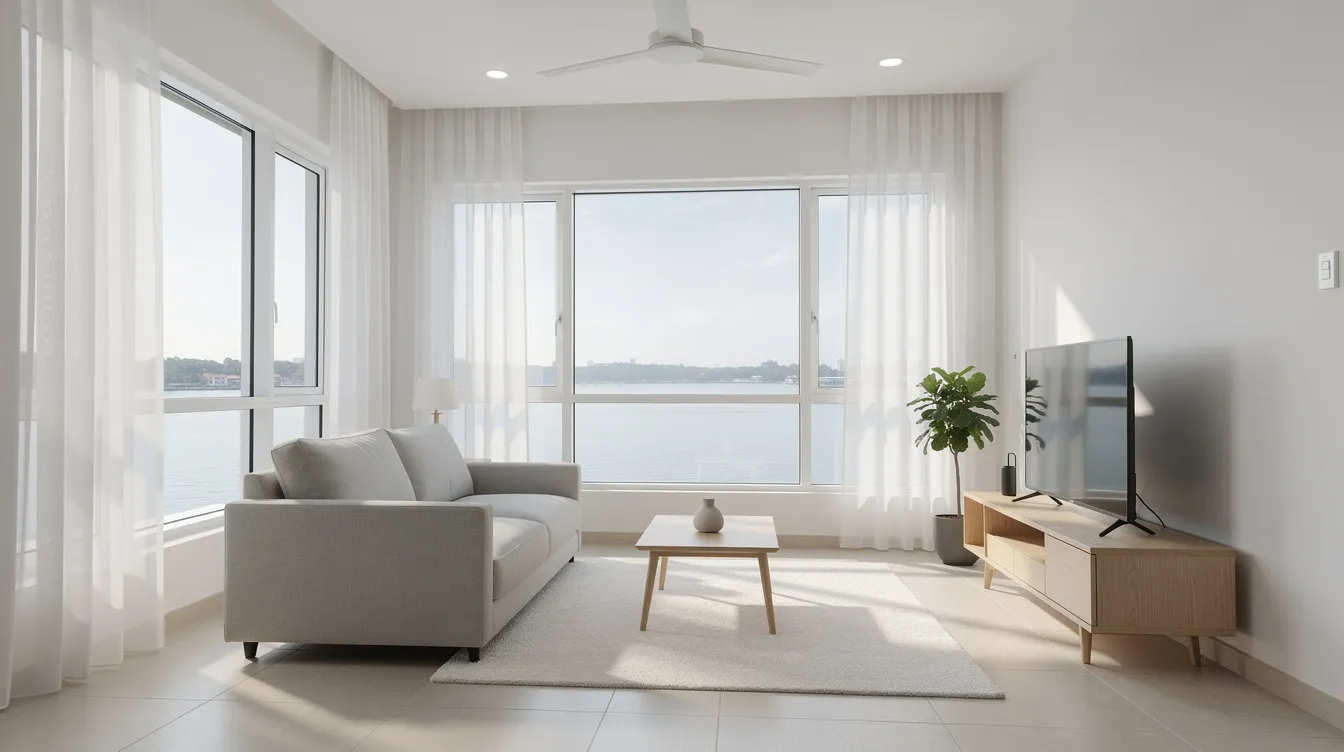
Month 3 (April 2026): Flat listed on portals. Five serious viewings in three weeks. Option granted at S$700,000. Buyers were a young couple upgrading from a 3 room HDB.
Month 4–5 (May–June 2026): HDB resale completion process. Documentation, appeal period, and handover date fixed. Negotiated a two-month extension of stay with the buyers.
Month 5 (June 2026): Visited the new launch showflat. Selected stack and floor based on afternoon sun orientation and distance to the pool deck. Booked the 925-sqft unit. Paid 5% option fee from CPF OA.
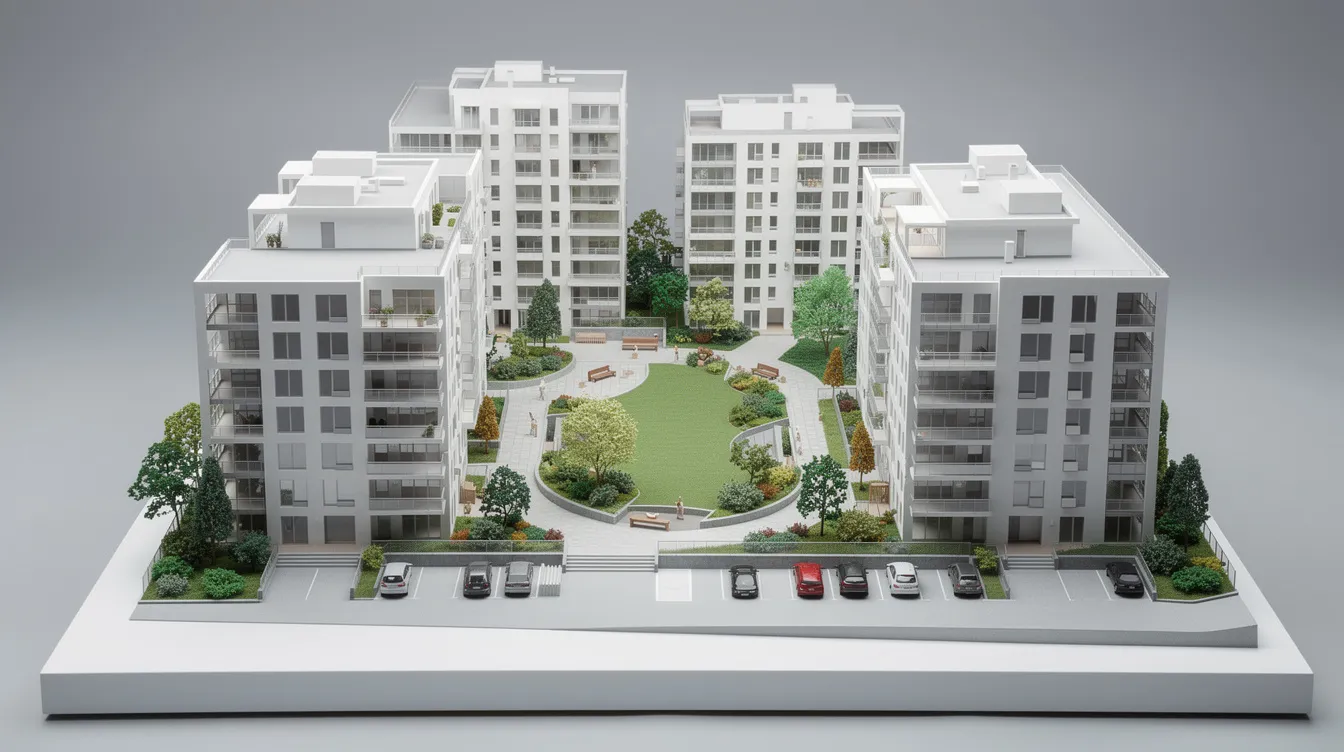
Month 6 (July 2026): Exercised OTP. First progressive payment triggered. Family moved to a rental unit in Punggol at S$2,600/month.
Month 6–36 (July 2026–June 2029): Construction phase. Progressive payments made at each milestone (foundation, structural completion, walls, ceiling, roofing, etc.). Financial review conducted every six months; interest rate exposure reassessed at each stage. The buying process for new launches typically requires a clean credit profile to secure favorable loan terms, and the family maintained zero additional debt throughout.
TOP window (second half of 2029): Key collection. Renovation scope limited to S$35,000 (carpentry for bedroom wardrobes, shoe cabinet, lighting, and a simple kitchen backsplash). Move-in four weeks after defect inspection.

Two decision windows were critical: the week before listing the HDB (confirming the sale price floor that would keep the upgrade viable) and the 48 hours before exercising the new launch OTP (re-running the full budget model with final HDB sale figures).
Common Pitfalls and How This Family Avoided Them
In 2026, 13,480 HDB flats will reach Minimum Occupation Period. Many of those homeowners will consider upgrading. Not everyone will avoid the following traps.
Ignoring CPF Refund and Accrued Interest
Some sellers treat the full sale price as new cash. It is not. CPF refund includes the principal amount used for the property plus accrued interest. For this family, the refund was S$440,000 out of S$700,000 in gross proceeds. They pre-computed this figure 12 months before listing by downloading their CPF Property Withdrawal Statements and projecting accrued interest forward.
Download your CPF statements and simulate the refund at least 12 months before you plan to sell. The number is usually larger than expected.
Buying Before Selling and Triggering ABSD
Upgrading from HDB to private properties can incur ABSD. If this family had purchased the new launch condo while still owning the HDB, they would have owed 20% ABSD on S$1.85M: S$370,000 payable upfront. ABSD remission is available if the existing property is sold within six months, but tying up S$370,000 in cash (even temporarily) was not feasible on their balance sheet. Selling first eliminated this risk entirely.
Check the latest ABSD rates and remission windows on IRAS before committing to any OTP sequence.
Underestimating Interest Rate and Income Risk
Planning at a 2.5% mortgage rate with dual income assumed forever leaves zero margin. This family stress-tested at 4.0% with one income reduced by 30%. Under that scenario, their buffer of S$120,000 still covered 18 months of full housing costs. They also retained S$85,000 in CPF OA rather than sweeping every dollar into the down payment.
Model at least 1.5 percentage points above your expected mortgage rate and assume a temporary income reduction. If the numbers still work, the purchase is defensible.
Letting Facilities and Location Trump Financial Reality
Project B (the integrated development near Hougang MRT) had a better mall, a sky terrace, and a marginally shorter commute. Its price tag: S$2.1M. At 75% LTV, the loan would have been S$1,575,000, producing monthly payments of approximately S$7,070 at 3.5%. Cash top-up from income after CPF would have hit S$3,850/month, and the buffer would have dropped below six months under a one-income stress test.
They walked away. A property portfolio built on financial resilience outlasts one built on showflat impressions. The S$250,000 price difference between Project A and Project B translated into S$840/month in reduced mortgage payments and an additional 10 months of buffer coverage.
Conclusion and Next Steps
This case study traced one Punggol family’s path from a 4-room HDB to a 3-bedroom new launch condo. The key decisions:
-
Sold their Punggol HDB flat at S$700,000, unlocking equity within the S$650K–S$690K band typical for the estate
-
Selected a new launch condo at S$1.85M where monthly mortgage plus MCST stayed below 28% of gross income at 3.5% interest
-
Used a sell-first sequence to avoid ABSD entirely, preserving over S$370,000 in cash that would otherwise have been locked up
-
Pre-computed CPF refund of S$440,000 and structured down payment to retain S$120,000 in combined buffer
-
Stress-tested at 4.0% interest and single-income scenarios; the plan survived both
For readers considering a similar move:
-
Download your latest CPF Property Withdrawal Statements and HDB loan balance
-
Simulate your sale proceeds: resale price minus loan, CPF refund, and seller’s costs
-
Set a purchase price ceiling where 4% interest on 75% LTV produces monthly payments below 35% of your income
-
Shortlist only projects within that price band; skip showflats for anything above it
-
Book a personalised assessment with AESTHETIC HAVENS to verify your numbers before signing any OTP
For homeowners interested in broader property portfolio planning, including using a first private condominium as a stepping stone toward commercial or industrial property for investment purposes or own stay, AESTHETIC HAVENS covers those pathways in separate case studies.
Frequently Asked Questions
These questions come directly from Punggol 4-room owners exploring a similar upgrade in 2026.
Is my Punggol 4-room HDB enough to fund a 3-bedroom new launch upgrade?
Punggol HDB resale prices average S$683K for 4-room flats, with recent transactions ranging from S$600,000 to S$850,000 depending on flat type, floor, and view. Punggol HDB owners have S$650K–S$690K of resale equity. Whether that equity is “enough” depends on your outstanding loan, CPF refund obligation, and the purchase price of the new launch. For a S$1.8M–S$1.9M target, a household income of at least S$12,000–S$14,000 is needed to keep affordability within safe limits. AESTHETIC HAVENS can run the individual numbers using your actual CPF and loan data.
What household income do I need for a S$1.8M–S$1.9M 3-bedroom new launch?
At 4% interest over 30 years, a 75% LTV loan on S$1.85M produces monthly payments of approximately S$6,620. Keeping housing costs below 35% of gross income requires at least S$13,500–S$14,000 combined monthly income, assuming no large car or personal loans. Households with vehicle financing or shorter loan tenures need proportionally higher income. The income ceiling for executive condominiums (S$16,000) is sometimes confused with private condo affordability; there is no income ceiling for private property, but TDSR at 55% of gross income is the hard regulatory cap.
Do I need to move out between selling my HDB and collecting new launch keys?
Yes, for most upgraders. New launches purchased in 2026 typically reach TOP in 2029–2030, creating a 2–3 year gap. Rental of a 3 room HDB or 4-room flat in Punggol or Sengkang costs approximately S$2,600–S$3,200/month in 2026. 3-room flats are expected to generate rental income of $2,800–$3,400 monthly, which gives a rough benchmark. Budget for 24–30 months of rent. Some families negotiate an extension of stay with their HDB buyers or move in with relatives to reduce this cost.
How does upgrading to a 3-bedroom new launch affect long-term investment and retirement plans?
A well-bought new launch in a location benefiting from infrastructure upgrades (Punggol Digital District, Cross Island Line) has capital appreciation potential over a 10–15 year hold. 3-room flats are expected to outperform larger units in 2026 for rental demand, and a 3-bedroom private condo in mature estates or premium locations near MRT stations holds its value for both own stay and future rent-out scenarios. Long-term impact depends on purchase price discipline and exit planning rather than on the “condo vs HDB” label itself.
How can AESTHETIC HAVENS help me plan a similar upgrade?
AESTHETIC HAVENS provides data-backed valuation checks for Punggol and surrounding estates, customised cash flow and CPF simulations under multiple interest rate and income scenarios, sequencing advice to avoid ABSD and unnecessary bridging loans, and longer-term property portfolio planning that extends beyond the first condo into commercial and industrial opportunities. Contact us for a no-obligation upgrade and investment assessment.

