

Introduction
One Sophia strata office units sit inside a 13-storey commercial podium at 1 Sophia Road, District 9, with 122 units ranging from 1,100 to 4,500 sq ft. The development is expected to receive its TOP in December 2029, and prospective buyers are asking the same question: can these units deliver around 3% net rental yield at completion?
Based on mid-2026 pricing (averaging around S$2,766 psf for the broader project, with office units indicated in the S$2,439–S$2,846 psf range) and current city-fringe office rents of S$6.50–S$9.00 psf/month, a 3% net yield falls in the “plausible but not guaranteed” range. Gross yields at entry may land between 3.5% and 4.5%, but property tax, MCST fees, vacancy, and agency costs typically shave 0.7–1.5 percentage points off that figure. Achieving 3% net requires strong leasing at S$8.50+ psf/month and disciplined cost control.
This review focuses on the strata office component only, not the 367 residential units in The Collective towers or the 127 retail units in the integrated retail podium. The residential component and retail podium are separate strata titles with different market dynamics.
Target readers: SME business owner profiles, professional firms evaluating an owner-occupier purchase, readers looking to purchase commercial property, and investors seeking commercial property exposure in Singapore’s city-fringe market without the additional buyer’s stamp duty that applies to residential property.
What this article covers:
-
Pricing bands, unit types, and how One Sophia compares to other District 9 strata office stock
-
A step-by-step yield calculation with worked numbers
-
Owner-occupier vs investor trade-offs at the 3% yield threshold
-
Risks around leasing, interest rates, and strata fragmentation, with mitigation approaches
Understanding One Sophia’s Strata Office Component
One Sophia is a mixed-use development by a joint venture between Sophia Commercial Pte Ltd and Sophia Residential Pte Ltd, entities linked to the Ho Lee Group and TID (a Mitsui Fudosan-Hong Leong partnership), and buyers should verify these entities’ standing as housing developers and the related licences when assessing execution risk. The site was formerly occupied by Peace Centre and Peace Mansion; Peace Centre was completed in the mid-1970s as a mixed-use complex, and the site was sold en bloc for S$650 million in December 2021. Before demolition, the developers launched a community project called “PlayPan” to document the site’s history.
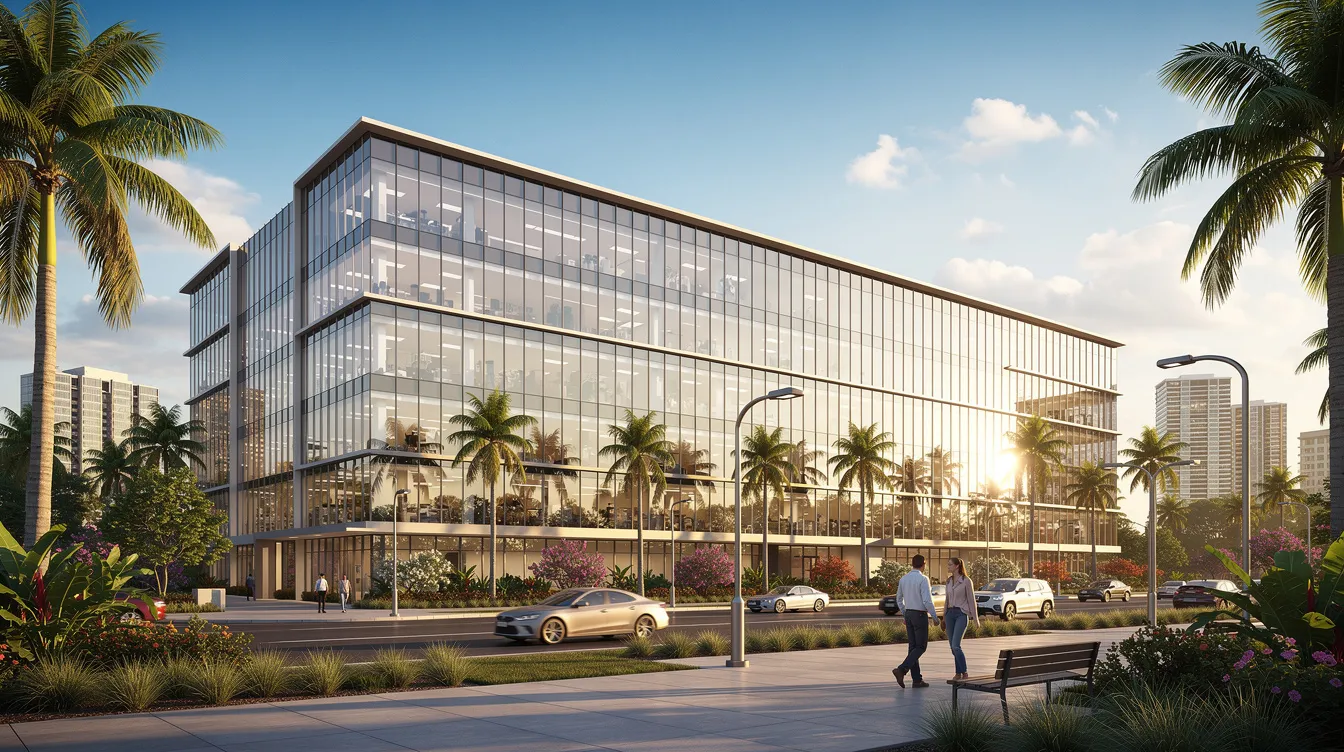
The commercial podium rises 13 storeys, housing offices and retail units beneath two 19-storey residential towers. The office component spans approximately 220,000 sq ft of gross floor area across 11 office floors, with the lower podium levels allocated to 127 retail units. The strata office component contains 122 units, each individually titled and sellable. The project has a 99-year lease starting December 2023, meaning buyers at TOP will hold roughly 93 years of remaining tenure; a fresh lease that gives financing and resale advantages over older commercial strata units with 50–60 years remaining.
Key Specs: What You’re Actually Buying
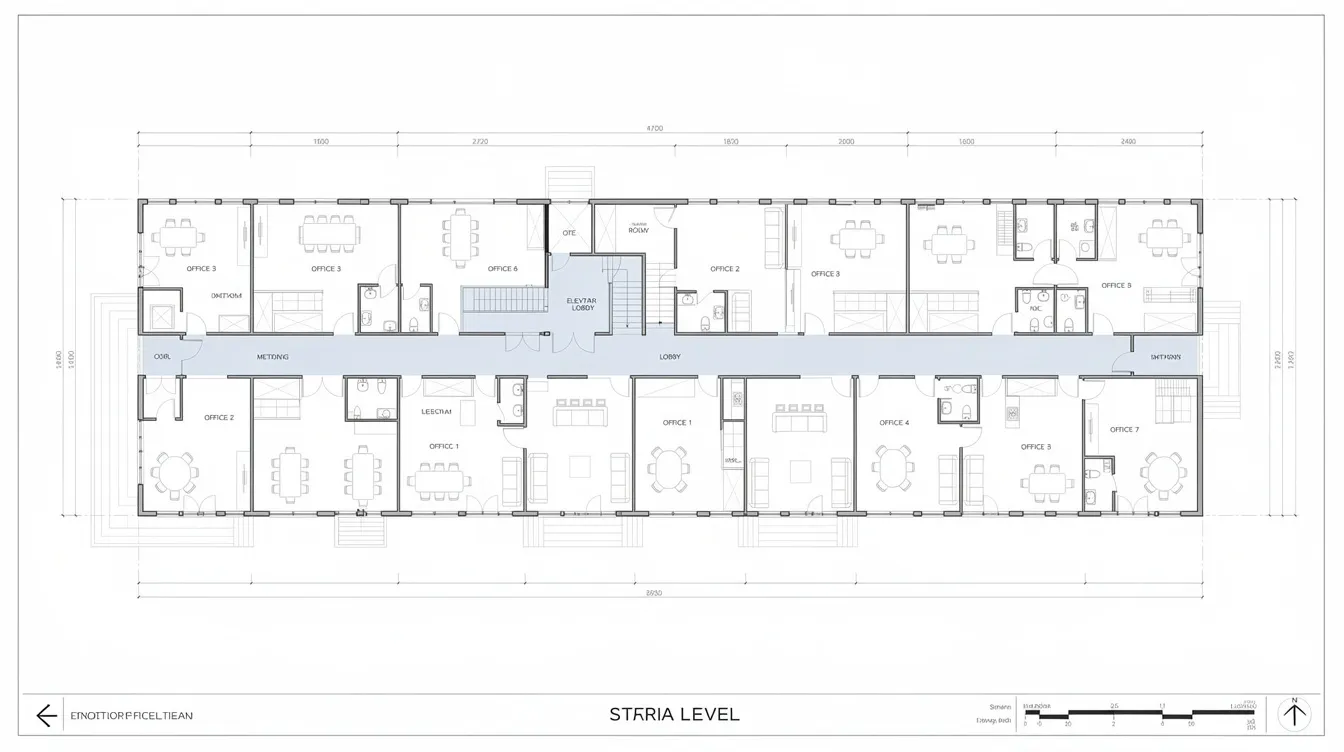
Strata office units range from about 1,100 sq ft to 4,500 sq ft, with whole floor plates reaching approximately 12,600 sq ft. Floor-to-soffit height is around 3.10 m across the 11 office storeys, which allows for a raised floor or dropped ceiling while still leaving usable clearance of about 2.7 m; enough for standard office configurations. Floor loading is rated at 3.0 kN/m², suitable for general office use but not heavy storage or equipment-intensive operations. Contemporary design and modern specifications can provide a competitive edge in the commercial property market, and One Sophia’s specs reflect that positioning.
Air conditioning uses VRV fan coil units with provisions for future ducting and fresh air supply termination within each unit. Each strata unit gets glass doors at the entrance and reinforced concrete slabs with approximately 150 mm step-down from common corridor level. For a 1,500 sq ft unit, these dimensions accommodate roughly 8–12 workstations or a combination of private offices and a meeting room for 8–10 people.
Building-wide systems include three basement carpark levels, commercial drop-off points, and lift access zoned between the commercial podium and residential towers. One Sophia also features a level 3 facilities deck, and amenities include a pool, gym, and children’s play area in the same development. The rooftop lounge offers skyline views on level 19, though these amenities primarily serve the residential units. Building services for the office floors focus on BMS monitoring, security, and dedicated lift lobbies.
Regulatory & Ownership Context for Commercial Property
Unlike residential property, strata offices at One Sophia carry commercial titles. No additional buyer’s stamp duty applies to commercial properties in Singapore, and commercial properties typically do not attract seller’s stamp duty. This makes commercial property purchases accessible to both local and foreign buyers without the 20–60% ABSD surcharges that apply to residential purchases. Foreign ownership of commercial strata units faces no restrictions beyond standard buyer’s stamp duty and legal fees.
Financing works differently from residential property. Banks typically require 30–40% cash or equity downpayment for commercial or industrial property; CPF funds cannot be used. The total debt servicing ratio framework that governs residential lending does not apply to commercial loans, but banks assess corporate or personal income independently. Interest rates on commercial property loans tend to run 0.5–1.0 percentage points above residential mortgage rates.
Property tax for non-residential properties is a flat 10% on the Annual Value (assessed by IRAS based on estimated market rent). GST applies on the purchase price at the prevailing rate. Nothing in this review should constitute financial advice or a representation of financing outcomes. These costs feed directly into the net yield calculation: a buyer paying S$5 million for a unit and collecting S$162,000 in annual rent faces roughly S$16,200 in property tax before any other deductions.
Pricing Snapshot: Where One Sophia Sits in the City-Fringe Strata Office Market
Knowing the specs establishes what you are buying. The next question is what you will pay. As of mid-2026, the project is the cheapest new launch in prime District 9, with an average price per square foot of S$2,766 across the development. Office unit pricing varies by floor, size, and aspect, but indicative figures cluster in the S$2,439–S$2,846 psf range based on current marketing materials.
This section uses high-level pricing bands rather than unit-by-unit figures, and positions One Sophia against other city-fringe strata office options available in the singapore property market.
Indicative Price Bands by Size Category
1,100–1,500 sq ft units carry ticket sizes of roughly S$2.7–3.8 million. These attract solo practitioners, two-to-three-person consultancies, and private investors seeking a manageable quantum with straightforward tenant profiles. At this size, rental income from a single tenant simplifies management.
1,500–2,500 sq ft units range from approximately S$3.8–6.5 million. Small law firms, accounting practices, creative agencies, and ed-tech companies looking for 10–20 workstations typically target this band. The higher quantum narrows the buyer pool but may offer slightly lower psf pricing on select units.
2,500–4,500 sq ft units push into the S$6.5–11 million range. Regional headquarters, multi-disciplinary firms, and investors planning to subdivide into co-working or multi-tenanted layouts consider these. Larger units tend to have slightly compressed psf but face liquidity constraints at resale because the absolute purchase price limits the buyer pool. Each floor plan within these bands dictates layout flexibility, and prospective buyers should request specific configurations from the developer.
Comparing City-Fringe Strata Office Pricing
Knight Frank’s H2 2024 strata commercial report recorded an average strata office price of approximately S$2,883 psf across 165 transactions. District 9 strata office median psf over the last 12 months sat around S$2,968 psf according to PropKaki data. One Sophia’s indicative office psf of S$2,439–S$2,846 sits at or slightly below these District 9 medians, partly because it is pre-completion stock with a 2029 delivery date.
Strata office spaces in prime districts are scarce due to government regulations on new developments; URA has limited strata subdivision in the CBD since 2019 to maintain large, institutional-grade floor plates. This policy restricts new supply of small commercial strata units in Raffles Place and Marina Bay, channelling demand toward city-fringe projects like One Sophia. Compared to pure suburban business parks (where psf can run S$800–1,500), One Sophia commands a clear premium, but it sits well below Grade A CBD tower pricing of S$4,000+ psf.
This relative pricing is the first input for assessing whether a 3% rental yield is fair compensation for capital deployed.
Location & Demand Drivers: Why Mount Sophia Matters for Offices
One Sophia occupies 1 Sophia Road, at the junction of the civic district, the Bras Basah arts belt, and Orchard Road. Location within a central area can enhance the appeal of a commercial property for potential businesses, and One Sophia’s positioning bridges corporate, creative, and educational corridors. Mount Emily Park sits just behind the development, offering green relief in an otherwise dense urban precinct.
Connectivity & Access
Four MRT stations are within walking distance: Dhoby Ghaut (NS/NE/CC interchange, approximately 500 m), Bencoolen (Downtown Line, approximately 330 m), Bras Basah (Circle Line, approximately 700 m), and Rochor (Downtown Line, approximately 600 m). One Sophia offers access to six MRT lines via four interchange stations, covering the North South, North East, Circle, and downtown line networks. Accessibility to multiple MRT stations enhances tenant convenience in commercial properties, and this density of rail connections is unusual outside the CBD core.
Car access runs via Sophia Road and Selegie Road, connecting to the CTE and PIE within minutes. Three basement carpark levels serve the mixed-use development. For firms whose staff commute from different parts of the island, multi-line MRT access reduces a practical friction point in hiring: candidates from Punggol (north east line), Jurong (east-west line via transfer), and Tampines (downtown line) can reach One Sophia without bus connections.
Tenant Pool: Education, Creative & Professional Services
One Sophia is located near six educational institutions within 2 km: Singapore Management University, NAFA, LASALLE College of the Arts, University of the Arts Singapore, and several private colleges. This education corridor feeds demand for tutoring centres, ed-tech offices, student services consultancies, and academic administration. The national museum and Singapore Art Museum anchor the civic district arts precinct, drawing design studios, media companies, and cultural organisations into the neighbourhood.
Professional services firms (law, accounting, corporate secretarial, fintech) seeking a CBD-adjacent but lower-cost address represent another tenant segment. Orchard Road is a short walk from One Sophia, giving tenants a prestigious District 9 mailing address and proximity to Plaza Singapura, the retail and F&B hub at Dhoby Ghaut. Commercial office developments can benefit from mixed-use surroundings through increased foot traffic, and the integrated retail podium below the offices reinforces this dynamic.
City-Fringe vs. CBD: Occupier Trade-Offs
Core CBD offices at Raffles Place or Marina Bay command rents of S$10–12 psf/month for Grade A space. One Sophia’s expected rents of S$6.50–9.00 psf/month offer tenants a 25–40% discount while retaining a central location and strong connectivity. Some occupiers prefer a less formal, arts-adjacent environment over the corporate uniformity of CBD towers; creative agencies and education-linked firms fall into this category.
Downsides exist. The retail podium creates a mixed-use environment that some corporate tenants may find less polished than a standalone office tower. Traffic along Selegie Road during peak hours can slow taxi and private-car access. Drop-off arrangements for a mixed-use development rarely match the dedicated porte-cochère of a Grade A CBD building. These trade-offs directly affect the tenant profile and, by extension, achievable rents and the realism of the 3% yield target.
Yield Mechanics: Is a 3% Net Yield at One Sophia Realistic?
This section is the core of the investment case. The distinction between gross and net yield determines whether a 3% target is conservative, achievable, or optimistic. The Singapore office market saw positive momentum in 2026 with rising rental rates, but high entry prices for commercial strata offices can compress immediate rental yields. Both forces are at work here.
Step-by-Step Yield Calculation Framework
Step 1: Estimate achievable rent. Current city-fringe rents for comparable strata offices run S$6.50–S$9.00 psf/month. Modern office infrastructure may attract tenants looking for upgraded facilities, and One Sophia’s new-build spec supports pricing at the upper end; assume S$8.50 psf/month at TOP as a mid-case.
Step 2: Compute gross yield. For a 1,500 sq ft unit at S$2,700 psf (mid-range), the purchase price is S$4,050,000. Annual rent at S$8.50 psf/month: 1,500 × S$8.50 × 12 = S$153,000. Gross yield: S$153,000 ÷ S$4,050,000 = 3.78%.
Step 3: Deduct costs.
|
Cost Item |
Estimated Annual Amount |
% of Gross Rent |
|---|---|---|
|
Property tax (10% of AV) |
S$15,300 |
10% |
|
MCST and maintenance |
S$22,950 |
15% |
|
Vacancy and agency fees |
S$12,240 |
8% |
|
Miscellaneous (insurance, minor repairs) |
S$3,000 |
2% |
|
Total deductions |
S$53,490 |
35% |
Step 4: Arrive at net yield. Net rental income: S$153,000 − S$53,490 = S$99,510. Net yield: S$99,510 ÷ S$4,050,000 = 2.46%.
To reach 3% net on this purchase price, the unit needs to achieve approximately S$10.30 psf/month in rent, or the entry psf needs to drop to around S$2,200. Neither is impossible, but both require conditions to align: either rental growth of roughly 3–4% annually between now and 2029, or developer pricing adjustments.
City-Fringe Benchmark Rents & Yields
Rental yields for new suburban strata offices generally range from 3.5% to 4.5% gross, benefiting from lower entry psf (often S$1,200–1,800). City-fringe offices like One Sophia sit in between: higher rents than suburban parks, but also higher acquisition costs. Colliers’ Q4 2025 office statistics showed Grade A CBD rents reaching around S$11.82 psf/month, while fringe offices traded at S$6–10 psf/month depending on building age and specification.
At One Sophia’s indicated psf, entry gross yields cluster around 3.5–4.5% before costs. After the typical 30–35% cost drag (MCST, property tax, vacancy), net yields land at approximately 2.3–3.0%. The 3% net mark is achievable only at the upper end of the rent range (S$9.50+ psf/month) or with a below-average entry psf. This makes 3% net a reasonable target for stabilised years (3–5 years post-TOP, after rents have grown) rather than an entry-year expectation.
Owner-Occupier vs Pure Investor Yield Perspectives
Owner occupiers should think in terms of “effective yield”: the cost of ownership versus leasing comparable space. If a firm currently pays S$8.50 psf/month for 1,500 sq ft in a nearby building, it spends S$153,000 annually on rent. Purchasing a unit at One Sophia eliminates that outflow. The “yield” is the rent saved relative to the capital deployed, plus any capital appreciation on the property value over the holding period.
Pure investors rely on external tenants and face vacancy risk directly. For them, cash-on-cash return matters most. If financing at 4.5% interest on 60% LTV, the annual interest cost on a S$4.05 million unit (loan of S$2.43 million) is roughly S$109,350. Net rental income of S$99,510 does not cover the interest, let alone generate positive cash flow. This arithmetic highlights why many strata office investors at current prices either buy with substantial cash (reducing leverage) or accept that yields will turn positive only after 2–3 rounds of rent escalation.
Future demand for office space might be influenced by the ongoing economic climate and market conditions, and the distinction between entry-year yield and stabilised yield is central to evaluating the investment case honestly.
Owner-Occupier vs Investor Case at One Sophia
The same 1,500 sq ft unit can look like a smart headquarters lock-in for a growing SME and a marginal income play for a yield-focused investor. The difference is whether the buyer captures value through business operations or purely through rental income.
Owner-Occupier Case: Locking In City-Fringe Office Costs
Typical owner-occupier profiles for One Sophia include law firms, education consultancies, creative agencies, family offices, and medical or allied health practices (subject to planning permission and URA use approvals). Benefits are specific:
-
Cost predictability. Owning eliminates exposure to rent escalation clauses. A firm paying S$8.50 psf/month today faces potential increases of 5–10% at each lease renewal; ownership freezes occupancy cost at MCST fees, property tax, and loan servicing.
-
Branding. A District 9 address near Orchard Road and the civic district carries weight with clients, particularly in legal, financial, and educational services.
-
Fit-out control. Owners can invest in suspended garden terraces, reception design, and IT infrastructure without landlord approval cycles or reinstatement clauses.
Financial structuring matters. A business owner purchasing through the corporate entity can claim GST input credits, deduct interest expenses, and depreciate fit-out costs. This reduces the effective holding cost compared to a personal-name purchase. The trade-off: corporate borrowing may face stricter bank scrutiny on business financials.
Investor Case: Income & Capital Appreciation
Investors seeking One Sophia strata offices are typically high-net-worth individuals diversifying away from residential property (where ABSD now reaches 20% for second properties) or family offices building a commercial portfolio. Key attractions: no additional buyer’s stamp duty, a fresh 99-year lease, and limited new strata office supply in core central areas after the government’s restrictions on CBD strata subdivision.
Risks are equally concrete. The mixed-use development approach can improve the strategic positioning of commercial properties, but 122 office units and 127 retail units entering the market simultaneously at TOP creates lease-up pressure. If 30–40% of office owners seek tenants in the same quarter, competition may push effective rents below asking rates for 6–12 months. A thinner tenant pool compared to a 40-storey CBD tower with 200+ tenants limits pricing power.
Investors will benchmark One Sophia net yields against other commercial and industrial property options: B1 industrial units (gross yields often 4.5–6%), older CBD strata offices (lower psf but shorter remaining lease), and suburban business parks. The 3% net yield at One Sophia becomes attractive only if paired with a credible capital appreciation story over a 10-year hold.
Side-by-Side Trade-Offs
For an owner-occupier, the “return” is partially non-financial: operational stability, branding, and the elimination of landlord risk. A 2.5% net accounting yield is acceptable when combined with S$150,000+ in annual rent savings and balance-sheet asset creation.
For a passive investor, 2.5% net underperforms a Singapore government 10-year bond yielding around 3% with zero vacancy risk. The investor needs either a lower entry psf, higher rent expectations, or conviction in capital appreciation to justify the holding cost and illiquidity.
-
Growing SME needing stable HQ: 3% net is a secondary metric; the primary value is business fit and cost control.
-
Passive income investor: 3% net is the minimum acceptable floor, and achieving it requires rent growth or entry-price discipline.
Risks, Challenges & How to Mitigate Them
Even in strong locations, strata office investments carry specific risks that can push yields below 3%. The period from 2026 to 2030 presents particular uncertainties in the property market.
Leasing & Vacancy Risk Around TOP
One Sophia is expected to receive its TOP in December 2029. If a majority of the 122 strata office owners list their units for lease in Q1 2030, the building faces internal competition. Tenants shopping multiple units in the same building have leverage to negotiate rent-free periods, lower psf rates, or fit-out contributions.
Mitigation: pre-marketing to the education and professional services tenant pool 12–18 months before TOP; offering fitted units (partitioned, with basic furniture) rather than bare shells to reduce tenant decision time; and engaging commercial agents who specialise in the Bras Basah/Mount Sophia corridor.
Interest Rate & Financing Risk
Buyers committing in 2026 face three years of interest rate uncertainty before TOP. A 1-percentage-point increase in borrowing costs on a S$2.4 million loan adds roughly S$24,000 in annual interest, which wipes out almost a quarter of net rental income in the worked example above.
Mitigation: stress-test yield calculations at 1–2% above current rates; keep loan quantum conservative rather than maximising LTV; and consider fixing rates for the initial 3–5 years post-drawdown if the bank offers that option.
Strata Fragmentation & Asset Management
With 122 separate strata office owners, decision-making on building upgrades, tenant mix standards, and common-area maintenance becomes fragmented. Operational fit and proper zoning are critical in real estate management; if some owners lease to lower-quality tenants or neglect unit upkeep, the building’s rental competitiveness erodes for everyone. Significant capital expenditure may be necessary to enhance property value through renovations in later years, and strata titles require majority owner consent for such spending.
Mitigation: active participation in MCST AGMs, alignment among owners on a positioning strategy (e.g., education/professional services focus), and monitoring MCST budgets to prevent deferred maintenance.
Market & Policy Shifts
Changes in URA commercial zoning, property tax rates, or office demand patterns (remote work, decentralisation) could affect occupancy and market value by 2030. A 99-year leasehold can impact long-term capital appreciation potential for commercial properties if government policy shifts favour freehold or shorter-lease structures.
The most practical response: adopt a 10+ year holding mindset. Strata office investments in city-fringe locations tend to reward patient owners who ride through leasing cycles. Short-term flips face buyer’s stamp duty on acquisition, legal fees, and the risk of selling into a soft market.
Conclusion & Next Steps
One Sophia’s strata office units represent a city-fringe, education-belt commercial play at a purchase price that sits near or slightly below District 9 strata office medians. A 3% net yield by TOP in 2029 is plausible under optimistic rent assumptions (S$9.50+ psf/month) and tight cost management, but the more likely entry-year net yield for a mid-range unit falls in the 2.3–2.8% band. Stabilised yields of 3%+ become realistic 3–5 years post-TOP if rents grow at 3–4% annually.
For owner occupiers, the return calculation extends beyond cash yield to include rent savings, branding, and operational control. For investors, the investment case rests on a combination of rental income, capital appreciation, and the structural advantage of no ABSD in a market where residential units carry steep stamp duty surcharges.
Actionable next steps:
-
Shortlist preferred unit sizes and budgets within the three pricing bands outlined above.
-
Model net yields under at least three rent scenarios (S$7.00, S$8.50, and S$10.00 psf/month) and two interest-rate assumptions.
-
Compare One Sophia against 2–3 alternative city-fringe strata options, such as Union Square Residences’ commercial component or older District 9 strata office buildings with shorter leases.
-
Request the specific floor plan and unit-level pricing from the developer or marketing agents.
-
Engage a property advisory firm for an independent hold-vs-rent analysis tailored to your business or portfolio.
Frequently Asked Questions about One Sophia Strata Offices
What is the lease tenure and expected TOP date for the office podium? The project has a 99-year lease starting December 2023. Expected completion date for One Sophia is December 2029, with legal completion by December 2032.
What is the indicative psf range for strata office units as of 2026? Office units are indicated in the S$2,439–S$2,846 psf range, with the broader project averaging S$2,766 psf. The average price per square foot positions it as the cheapest new launch in prime District 9.
Can foreigners buy One Sophia strata offices, and is ABSD payable? Strata offices are exempt from additional buyer’s stamp duty. Foreign ownership faces no ABSD or SSD surcharges on commercial titles; only standard buyer’s stamp duty and GST apply.
What are estimated achievable rents at TOP? Based on 2026 city-fringe benchmarks, S$6.50–S$9.00 psf/month is the realistic range for new-build strata offices in District 9. Premium units on higher floors may push toward S$9.50–10.00.
How does the 3% net yield compare to industrial and other commercial segments? Rental yields for new suburban strata offices generally range from 3.5% to 4.5% gross. Industrial property (B1/B2) often delivers 4.5–6% gross. One Sophia’s expected gross of 3.5–4.5% compresses to 2.3–3.0% net after costs; competitive with CBD strata offices but below industrial returns.
What unit types and sizes are available? One Sophia includes 122 strata office units ranging from 1,100 to 4,500 sq ft. Individual floors contain 10–12 units, with full floor plates of approximately 12,600 sq ft available for single-tenant occupiers.
Can medical or education uses operate in these strata offices? Subject to URA planning permission and relevant authority approvals, medical clinics, tuition centres, and education-related services may operate. Buyers should confirm permissible use classes before completing any purchase agreement. They should also confirm any use assumptions with advisers because this review does not constitute financial or legal advice.
What are typical MCST fees for similar mixed-use projects? Comparable new strata offices in city-fringe locations charge approximately S$1.00–2.00 psf/month in MCST fees. For a 1,500 sq ft unit, expect S$1,500–3,000 monthly.
How liquid is the resale market for strata offices after 2030? Strata office resale volumes are lower than residential. District 9 recorded a median of around 165 strata office transactions in H2 2024 across all buildings. Buyers should plan for a 10+ year hold and accept that resale may take 3–12 months depending on market conditions.
How many residential units has One Sophia sold so far? 98 of 367 homes sold as of September 2026, with 58 of those being studios. The project offers ten layouts from Studio to 3-Bedroom Luxury. The 3-Bedroom Luxury has not sold any units yet, and the 2-Bedroom Deluxe is priced at S$1,728,000. The residential sales pace provides context for overall project momentum but does not directly affect office unit pricing.
For a custom yield and suitability assessment tailored to your business or investment portfolio, contact our advisory team for an independent review.

