


Most citizens, permanent residents, and even many foreigners can buy a house in Singapore. The property type determines the path. Start here: (1) check your eligibility with an HFE letter if you want an HDB flat, or confirm your buyer category if you want private property; (2) get financing pre-approval, either an HDB HFE letter or a bank’s in-principle approval; (3) shortlist three listings and line up a CEA-licensed agent or a conveyancing lawyer.
Do these in order, not all at once:
- Confirm eligibility (HDB flat, EC, or private, and your citizenship/PR status).
- Lock in financing pre-approval before you view anything seriously.
- Shortlist listings and engage a lawyer or agent within the same week.
Key Takeaways
Buying a house in Singapore comes down to confirming eligibility, budgeting for BSD/ABSD in cash, and locking financing before you shortlist properties.
| Point | Details |
|---|---|
| Confirm eligibility first | Get an HFE letter for HDB flats or verify your buyer category for private property before viewing. |
| Budget cash separately for ABSD | ABSD must be paid in cash within 14 days of exercising the option, unlike BSD, which can use CPF. |
| Run a title search | Check for caveats or encumbrances at the Singapore Land Authority before signing anything. |
| Verify no unauthorized works | Buyers inherit liability for unapproved extensions or use changes after transfer. |
| Work with Aesthetic Havens | Aesthetic Havens coordinates eligibility checks, shortlisting, negotiation, and legal steps in one engagement. |
Where to Verify the Rules Yourself
For eligibility and HFE letters, check HDB directly. For approved building plans and unauthorized-works checks, use URA. For BSD and ABSD calculations, IRAS publishes the official rates. For agent conduct standards, CEA sets the rules. For CPF withdrawal limits, confirm directly with CPF Board before you plan your cash flow around it.
This article is general information, not a substitute for advice from a qualified financial advisor. Consult a qualified financial professional about your own circumstances before acting on anything here.
Table of Contents
- How to Buy Property in Singapore: Know What You Qualify For
- What Does It Cost to Buy a House in Singapore?
- Where Do You Find the Best Property Listings?
- What Checks Should You Run Before Signing?
- What Happens Between Offer and Completion?
- How Does Financing and CPF Work for a Property Purchase?
- Ready to Start Your Property Search?
- Sources
How to Buy Property in Singapore: Know What You Qualify For
The type of property you can buy depends entirely on your buyer profile, and getting this wrong wastes weeks. Here’s the breakdown.
- HDB flats: Singapore citizens can buy resale or new flats; citizen-PR couples and some other combinations qualify under specific schemes. You need a valid HFE letter before you can even option a flat.
- Executive Condominiums (ECs): Similar eligibility to HDB at launch, but ECs convert to fully private status after a set vesting period, opening resale to a wider buyer pool including foreigners eventually.
- Private strata property (condos, apartments): Open to citizens, PRs, and most foreigners without special approval.
- Landed property: Restricted for foreigners, who generally need approval from the Controller of Residential Property under the Singapore Land Authority before purchase.
Check property title types before shortlisting, since tenure affects both eligibility and resale value. Foreign buyers should also review current regulations and tax treatment before making an offer.
What Does It Cost to Buy a House in Singapore?
Budget for more than the sticker price. Here’s what actually hits your wallet:
- Deposit structure: Typically 1% option fee, then 4% more (private) or a set booking fee (HDB) when you exercise the option.
- Buyer’s Stamp Duty (BSD): A tiered tax administered by IRAS), due within 14 days of exercising the option or signing the S&P Agreement. BSD can be paid from CPF Ordinary Account funds.
- Additional Buyer’s Stamp Duty (ABSD): Applies to PRs, foreigners, and citizens buying a second or subsequent property. It falls due on the same 14-day clock and must be paid entirely in cash, not CPF.
- Legal, valuation, and bank processing fees: Usually a few thousand dollars combined, paid at various points through completion.
Pro Tip: Build a separate cash reserve for ABSD before you even start viewing. Buyers who plan to use CPF for everything get blind sided when they realize ABSD can’t touch that account.
Run the numbers on your condo down payment early so financing doesn’t derail your timeline later.
Where Do You Find the Best Property Listings?
New launches, resale portals, and the HDB Resale Flat Listing service cover most of the market. HDB’s portal lets you filter by remaining lease, price, and floor plan, and cross-check against recent transacted prices before you make an offer.

A CEA-licensed agent earns their fee through market access and negotiation leverage you won’t get solo; a DIY search works fine if you already know the neighborhood and have time to chase paperwork yourself.
Build your shortlist with five filters:
- Budget (including BSD/ABSD, not just the sticker price)
- Tenure or remaining lease
- Location and commute
- Remaining lease length or TOP date for new builds
- Red flags: unauthorized works, existing caveats, unusual layouts
Aim for 6 to 10 viewings across two to three weekends before you commit. Fewer than that and you’re guessing at market value; more than that and decision fatigue sets in.
What Checks Should You Run Before Signing?
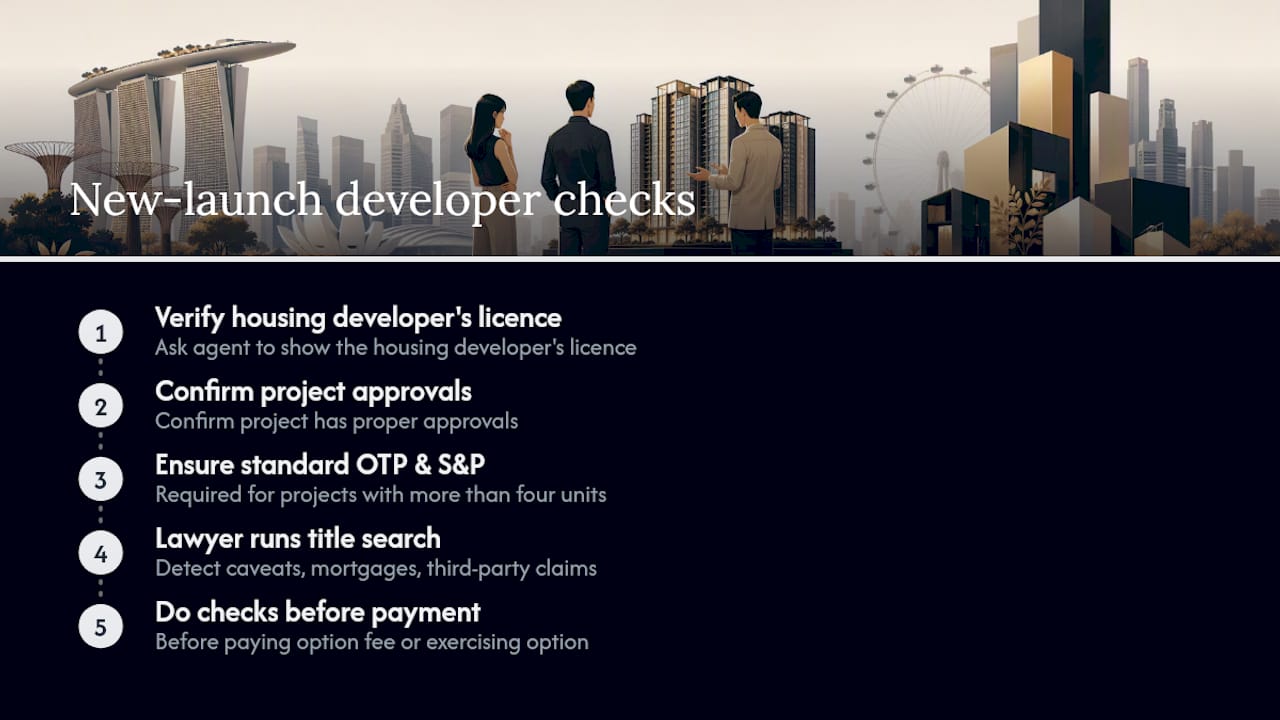
Skip due diligence and you inherit someone else’s problems, sometimes literally. A title search at the Singapore Land Authority reveals caveats, mortgages, or third-party claims that could block the transfer entirely. Buyers who delay this step often lose negotiating leverage once a competing offer appears.
For new launches, confirm the developer holds a valid housing developer’s licence and that the project has proper approvals. Projects with more than four units require a licensed developer using standard OTP and S&P forms, so ask to see the licence before you pay an option fee.
Unauthorized works are the most underrated risk in resale transactions. URA guidance is explicit: if a property has unapproved extensions or use changes, the new owner inherits liability for rectification after transfer, not the seller.
Pro Tip: Ask your agent for the approved floor plan from URA and physically walk the unit comparing it room by room. A converted balcony or extended kitchen that isn’t on the approved plan becomes your legal problem the day you take title.
The buyer typically runs the title search through their lawyer, the agent verifies developer credentials, and both happen before you exercise any option. For a full walkthrough, see the due diligence checklist for Singapore buyers.
What Happens Between Offer and Completion?
The sequence matters more than most first-time buyers realize.
- Pre-offer: Secure your HFE letter (HDB) or in-principle approval (private), and confirm your CPF Ordinary Account balance and any grant eligibility.
- Option to Purchase (OTP): Pay the option fee, negotiate the option period (usually 2 to 3 weeks for private resale), then exercise by paying the balance deposit.
- Sale & Purchase Agreement and legal work: Your lawyer lodges a caveat, coordinates the bank valuation, and tracks the 14-day BSD/ABSD payment deadline.
- Completion: Funds transfer, title registers, and you collect keys.
Timelines vary sharply by property type. Private resale typically runs 8 to 12 weeks from option exercise to completion. HDB resale often takes several months once the HFE process and required checks are factored in, while new launches follow the developer’s construction schedule through TOP. After completion, check for defects, confirm CPF refund adjustments, and note any accrued interest obligations on CPF funds used.
How Does Financing and CPF Work for a Property Purchase?
Get in-principle approval (IPA) from a bank, or an AIP if you’re going the HDB loan route, before you seriously view properties. It tells you your real budget and typically stays valid for a limited window, so don’t apply too early.
You can use CPF Ordinary Account savings toward the purchase, subject to withdrawal limits set by CPF Board, so confirm your exact figure before assuming CPF covers the gap.
If the bank’s valuation lands below your agreed purchase price, you cover that shortfall in cash, not CPF. Order the valuation early in the option period so you have time to adjust financing or renegotiate. Submit your full loan application only after you’ve exercised the option, not before. For a deeper look at LTV ratios and affordability math, see this mortgage and affordability guide.
Who Handles the Legal and Agent Work?
A CEA-licensed buyer’s agent gives you market access, negotiates on your behalf, and coordinates the transaction timeline so nothing slips. A conveyancing lawyer runs the title search, lodges the caveat, reviews the S&P Agreement, and handles completion and registration.
Ask any agent or lawyer for their track record on your specific property type, their fee structure upfront, and how they handle the 14-day stamp duty deadline. Aesthetic Havens supports buyers through a discovery call, shortlisting, negotiation, and legal coordination from offer to keys.
Pro Tip: Ask a prospective agent how many transactions they’ve closed in your target neighborhood in the last year. Vague answers are a red flag.
What Do Buyers Consistently Miss?
Unauthorized works top the list. Second is timing: buyers who don’t sync CPF processing, legal work, and bank timelines miss the 14-day stamp duty window or scramble for extensions. Third is valuation shortfall. Buyers who skip a cash buffer risk losing their deposit or renegotiating from a weak position.
Ready to Start Your Property Search?
Aesthetic Havens is the option for buyers who want one point of contact instead of juggling an agent, a lawyer, and a bank on their own. We run the eligibility check, shortlist properties that match your actual budget after BSD and ABSD, negotiate the offer, and coordinate legal work through completion.
Whether you’re weighing a resale condo against a landed property or trying to understand why private property might suit your situation, a short conversation upfront saves weeks of guesswork later. Book a discovery call through Aesthetic Havens and we’ll map out your eligibility, budget, and shortlist before you make an offer.


