


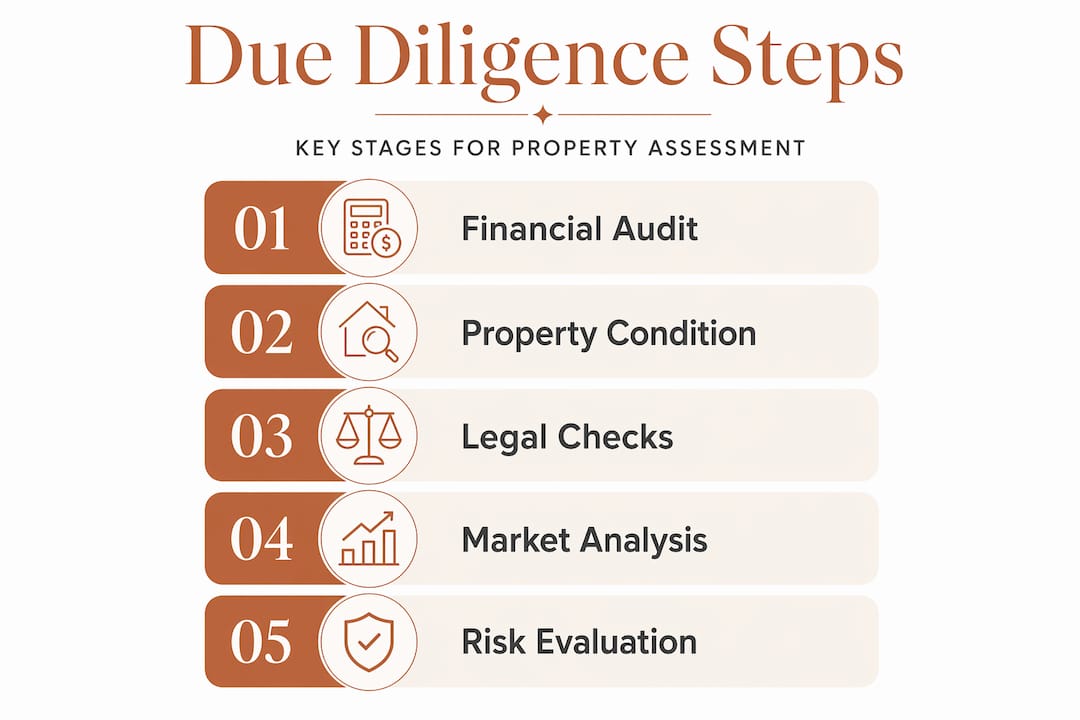
Assessing commercial property opportunities is defined as the systematic process of verifying a property’s financial performance, physical condition, legal standing, and market viability before committing capital. In Singapore’s commercial real estate market, where URA zoning rules, JTC industrial data, and lease structures directly determine investment returns, a structured evaluation process separates profitable acquisitions from costly mistakes. The core tools you need include rent rolls, Property Condition Assessments (PCAs), market comparables, and operating statements spanning three to five years. Get this process right, and you enter every negotiation with evidence rather than assumptions.
How to assess commercial property opportunities: the financial foundation
Financial due diligence is the first and most consequential layer of any commercial property evaluation. Net Operating Income (NOI) drives property value directly under the income capitalization approach, which means every dollar of misrepresented income or hidden expense distorts your purchase price calculation. Broker offering memorandums frequently contain optimistic assumptions that do not survive contact with actual lease documents and operating history. Your job is to replace those assumptions with verified numbers.
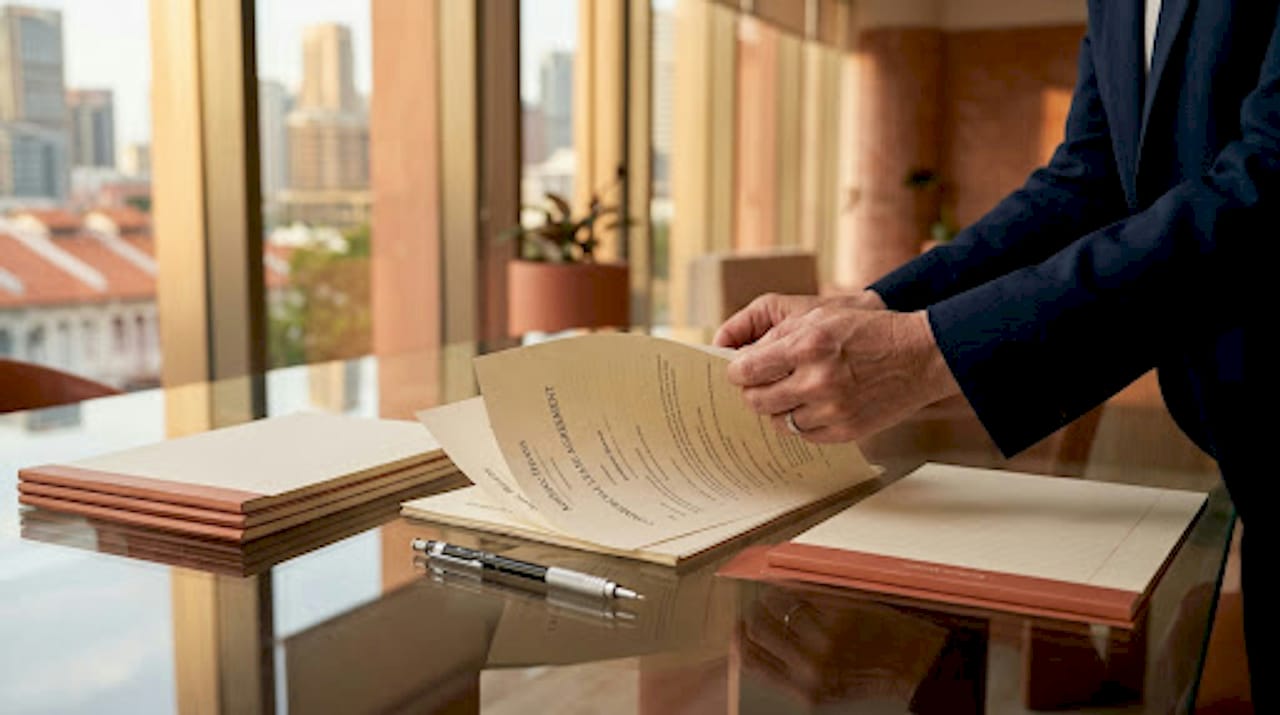
Start by auditing the current rent roll against executed lease agreements. The rent roll tells you what tenants are supposed to pay. The actual leases tell you what they are contractually obligated to pay, including rent-free periods, tenant improvement allowances, and break clauses that can reduce effective income significantly. Lease economics often hinge on operating expense reimbursement details, so reviewing these alongside service contracts is critical to understanding true effective rent.
Next, compare the seller’s pro-forma NOI against the trailing 12-month (T-12) operating statement and three to five years of historical financials. Three to five years of historical data exposes financial trends and anomalies that a single year cannot reveal. A property showing strong recent income may have benefited from a one-time lease renewal incentive or a temporarily low vacancy rate that is about to revert.
The key metrics to calculate and stress-test are:
- NOI: Total revenue minus operating expenses, before debt service
- Cap rate: NOI divided by purchase price, benchmarked against comparable sales
- Cash-on-cash return: Annual pre-tax cash flow divided by total equity invested
- Debt Service Coverage Ratio (DSCR): NOI divided by annual debt payments, with lenders typically requiring 1.25x or above
Pro Tip: Request the property tax bill, utility invoices, and insurance statements separately. Sellers sometimes exclude these from operating statements, which artificially inflates the NOI they present to buyers.
What does a property condition assessment actually reveal?
A Property Condition Assessment is not a standard home inspection. A PCA is an ASTM E2018-24 compliant report prepared by a licensed engineer that evaluates structural integrity, mechanical systems, electrical infrastructure, roofing, and environmental conditions across a commercial asset. Where a home inspection flags a leaking faucet, a PCA quantifies the cost to replace an aging HVAC system over a 12-year capital expenditure horizon. That distinction matters enormously for your underwriting.
PCA findings equip investors to forecast reserves, negotiate price, and plan capital expenditure with specificity rather than guesswork. The report separates immediate repair needs from long-term replacement reserves, giving you two distinct numbers to work with. Immediate repairs affect your opening cash position. Long-term reserves affect your annual operating budget and the property’s ability to sustain income without deterioration.
Here is how to translate a PCA into financial decisions:
- Categorize findings by cost and urgency. Separate items requiring attention within 12 months from those with a 5-year or 12-year replacement horizon.
- Build a capital expenditure schedule. Map each major system (roof, elevators, HVAC, plumbing) to its estimated replacement year and cost.
- Adjust your offer price. Use immediate repair costs as direct negotiation leverage. A $200,000 roof replacement identified in the PCA is a documented reason to reduce your bid by that amount.
- Set reserve funding targets. Divide long-term capital costs by the number of years remaining before replacement to determine annual reserve contributions.
- Identify environmental red flags. Asbestos, soil contamination, or underground storage tanks require Phase I and potentially Phase II environmental assessments before closing.
| PCA Component | What it measures | Financial implication |
|---|---|---|
| Structural systems | Foundation, load-bearing walls | Major repair costs, safety liability |
| Mechanical/HVAC | Heating, cooling, ventilation age | Replacement reserves, energy costs |
| Roofing | Condition, remaining useful life | Near-term capital expenditure |
| Electrical systems | Panel capacity, wiring standards | Upgrade costs for modern tenants |
| Environmental | Hazardous materials, contamination | Remediation costs, legal liability |
Pro Tip: Never rely on a seller-provided PCA. Commission your own report from an independent engineer. The cost is typically $3,000 to $8,000 for a mid-size commercial property, and it is the cheapest insurance you will buy in the transaction.
What legal and regulatory checks matter most in Singapore?
Legal due diligence in Singapore’s commercial property market carries a dimension that many investors underestimate: regulatory feasibility. Verifying the seller’s right to convey clear title is standard practice. What catches investors off guard is discovering after purchase that their intended business use is not permitted under URA zoning classifications.
Verifying URA zoning and usage approval is a non-negotiable step that can strand investors in unusable assets if skipped. Singapore’s Urban Redevelopment Authority assigns specific use categories to every commercial property, and operating outside those categories requires a formal change-of-use application that may be rejected. A property zoned for “Business 1” industrial use cannot automatically accommodate retail or food and beverage operations without approval. Check this before you sign anything.
The legal checklist for Singapore commercial property acquisitions should cover:
- Title verification: Confirm ownership, encumbrances, and any caveats lodged against the property through the Singapore Land Authority
- Executed lease review: Read every active lease in full, not just the rent roll summary. Focus on break clauses, rent review mechanisms, and assignment restrictions
- URA Master Plan check: Confirm the property’s zoning, plot ratio, and any development charge implications for your intended use
- Renovation and subdivision restrictions: Some commercial buildings have strata title conditions or conservation status that limit physical modifications
- Outstanding charges: Verify that property tax, maintenance fees, and service charges are current with no arrears transferring to you at completion
The due diligence period for commercial real estate deals typically runs 30 to 60 days post-agreement. Plan your legal review to complete within the first half of that window, so you retain time to renegotiate terms or exit if material issues surface.
How to analyze market dynamics and lease structure for stronger returns
Market analysis validates whether the income you are buying is priced correctly relative to what the submarket will support. A two-tiered comp process using sales comparables for value and lease comparables for market rent produces the most reliable underwriting baseline. Sales comps tell you what buyers have paid for similar assets. Lease comps tell you whether the current rents are above, at, or below market, which directly affects your renewal assumptions.
For Singapore’s industrial segment, JTC data is the authoritative source. Industrial rents rose 2.4% in 2025 with occupancy at 88.7% and quarterly growth moderating to 0.4% in Q1 2026. This tells you that rent growth is decelerating, which means underwriting aggressive rent reversion assumptions for industrial assets carries real risk. Conservative assumptions are the professional standard when market momentum is slowing. For broader Singapore commercial property trends, office and retail submarkets follow different supply and demand cycles that require separate analysis.
Tenant mix and lease structure analysis determines how predictable your income stream actually is. Tenant diversification and staggered lease expirations reduce income disruption risks significantly. A property where 60% of income comes from a single tenant is a concentrated bet on that tenant’s financial health and renewal intention. A property with ten tenants whose leases expire across different years provides a natural hedge against simultaneous vacancy.
| Lease structure factor | Low risk profile | High risk profile |
|---|---|---|
| Tenant concentration | No tenant above 20% of income | Single tenant above 50% of income |
| Lease expiry timing | Staggered across 3 to 5 years | Majority expiring in same 12-month window |
| Rent escalation clauses | Fixed annual increases of 2 to 3% | No escalation or market review only |
| Vacancy rate vs. submarket | Below submarket average | Above submarket average |
When reviewing lease rollover exposure, map every expiry date against your projected hold period. If you plan to hold for five years and three major leases expire in year two, your income stability depends entirely on your ability to re-lease at market rates. The Singapore rental market conditions in your target submarket will determine whether that is a manageable risk or a structural problem.
Key takeaways
Successful commercial property evaluation in Singapore requires integrating financial verification, physical condition analysis, regulatory compliance checks, and market data into a single, cohesive underwriting framework.
| Point | Details |
|---|---|
| Verify NOI independently | Audit rent rolls and three to five years of operating statements against actual executed leases. |
| Commission your own PCA | Use ASTM E2018-24 compliant reports to quantify capital costs and negotiate price reductions. |
| Confirm URA zoning first | Check that your intended use is permitted before any other legal or financial commitment. |
| Stress-test lease rollover risk | Map all lease expiry dates against your hold period and submarket vacancy rates. |
| Use conservative market assumptions | JTC data shows moderating industrial rent growth; underwrite to current conditions, not peak projections. |
What most investors get wrong about commercial property due diligence
After working with investors across Singapore’s commercial and industrial property segments, I have noticed a consistent pattern: most people treat due diligence as a checklist exercise rather than a hypothesis-testing process. They collect the documents, tick the boxes, and move toward closing. What they miss is the analytical step of asking whether the story the seller is telling actually holds up under scrutiny.
The most expensive mistakes I have seen come from over-relying on broker marketing materials. An offering memorandum is a sales document. It presents the best possible version of the asset’s financial performance. When I review a deal, I start by assuming the pro-forma NOI is wrong and work backward to find out by how much. That mindset shift changes everything about how you read the numbers.
Zoning is the other area where I see investors take shortcuts they later regret. Singapore’s regulatory environment is precise, and the URA does not make exceptions for buyers who failed to check the Master Plan. I have seen investors purchase commercial units intending to operate specific business types, only to discover the approved use category requires a change-of-use application that takes months and may not be approved. The step-by-step buying process for Singapore commercial property covers this in detail, and I recommend reading it before you sign any option to purchase.
The investors who consistently make good acquisitions treat the due diligence period as leverage. Every finding is either a confirmation that the price is fair or evidence that it should be lower. Walk into every deal expecting to find something worth negotiating. You almost always will.
— Aman
Work with an advisor who knows Singapore’s commercial market
Conducting thorough commercial property due diligence requires financial modeling, physical inspection coordination, regulatory research, and market analysis running simultaneously within a 30 to 60-day window. Most investors doing this for the first time underestimate how much local knowledge accelerates that process.

At Aesthetic Havens, Aman Aboobucker provides real estate advisory services specifically structured for commercial and industrial property investors in Singapore. From reviewing rent rolls and operating statements to confirming URA zoning and sourcing market comparables, the advisory process is designed to give you a complete, evidence-based picture of every deal before you commit. If you want expert support on your next commercial acquisition, connect with Aesthetic Havens through ERA Realtors to get started. You can also explore the roles and benefits of working with a licensed agent in Singapore’s commercial market.
FAQ
What financial documents should I request for commercial property evaluation?
Request the current rent roll, executed lease agreements, trailing 12-month operating statements, three to five years of historical financials, property tax bills, utility invoices, and insurance records. These documents allow you to independently verify NOI and identify expense anomalies the seller may not have disclosed.
How long does commercial property due diligence take in Singapore?
The due diligence period for commercial real estate deals typically runs 30 to 60 days after the option to purchase is signed. Plan your financial, physical, and legal reviews to complete within the first half of that window so you retain time to renegotiate or exit.
Why does URA zoning matter when buying commercial property in Singapore?
URA zoning determines what business activities are legally permitted on a property. Purchasing a unit without confirming that your intended use matches the approved use category can result in a change-of-use application that is costly, time-consuming, and not guaranteed to succeed.
What is a Property Condition Assessment and do I need one?
A Property Condition Assessment is an ASTM E2018-24 compliant engineering report that evaluates a commercial building’s structural, mechanical, electrical, roofing, and environmental condition. It converts physical findings into capital cost projections, giving you documented leverage to negotiate price reductions or plan reserve funding.
How do I evaluate tenant risk in a commercial property investment?
Review tenant concentration, lease expiry timing, and rent escalation clauses. A property where one tenant represents more than 50% of income carries concentrated rollover risk. Staggered lease expirations across multiple tenants produce more predictable cash flow and reduce the impact of any single vacancy.


