


Buying commercial property in Singapore sounds straightforward until you find yourself holding a signed option on a shophouse that can’t legally operate your intended business. This situation happens more often than most investors expect, and it costs real money in wasted legal fees, lost deposits, and missed opportunities. Singapore’s commercial property market offers genuine wealth-building potential, with URA’s zoning classifications playing a decisive role in what you can actually do with any asset you purchase. This guide walks you through every critical step, from evaluating a property’s permitted use to closing the deal and managing compliance post-purchase.
Table of Contents
- What to know before you buy
- Step-by-step process for buying commercial property
- Legal, zoning, and tax pitfalls to avoid
- What to expect after your purchase
- Our take: What most guides miss about buying commercial property
- How Aesthetic Havens can help you buy with confidence
- Frequently asked questions
Key Takeaways
| Point | Details |
|---|---|
| Check URA classification | Permitted use and investment viability hinge on URA zoning—confirm this before committing. |
| Follow clear steps | Sticking to a defined process helps avoid costly mistakes during your property purchase. |
| Beware of mixed-use traps | Mixed-use assets can pose unexpected legal and tax complications compared to pure commercial. |
| Ongoing compliance matters | After buying, continued URA and tax compliance is required to protect your investment. |
What to know before you buy
Before you start browsing listings, you need a firm grasp of what impacts your eligibility, your costs, and the range of uses your property can support. Getting this wrong at the start sets off a chain of expensive corrections later.
Asset types and how they differ
Singapore commercial property broadly falls into three categories:
- Commercial properties (offices, retail units, shophouses on commercial land): No Additional Buyer’s Stamp Duty (ABSD) for any buyer type. Open to foreigners with minimal restrictions.
- Industrial properties (factories, warehouses, business parks): Governed by JTC (Jurong Town Corporation) and URA. Often subject to minimum occupation period and user restrictions.
- Mixed-use properties (retail-residential developments, conservation shophouses with residential upper floors): Mixed-use sites are often treated as residential for legal purposes, which changes approval requirements and triggers stamp duty implications similar to residential purchases.
Understanding which category your target property falls into is not just administrative. It determines your tax liability, your financing structure, and whether your intended business can even operate there.
Why URA zoning matters so much
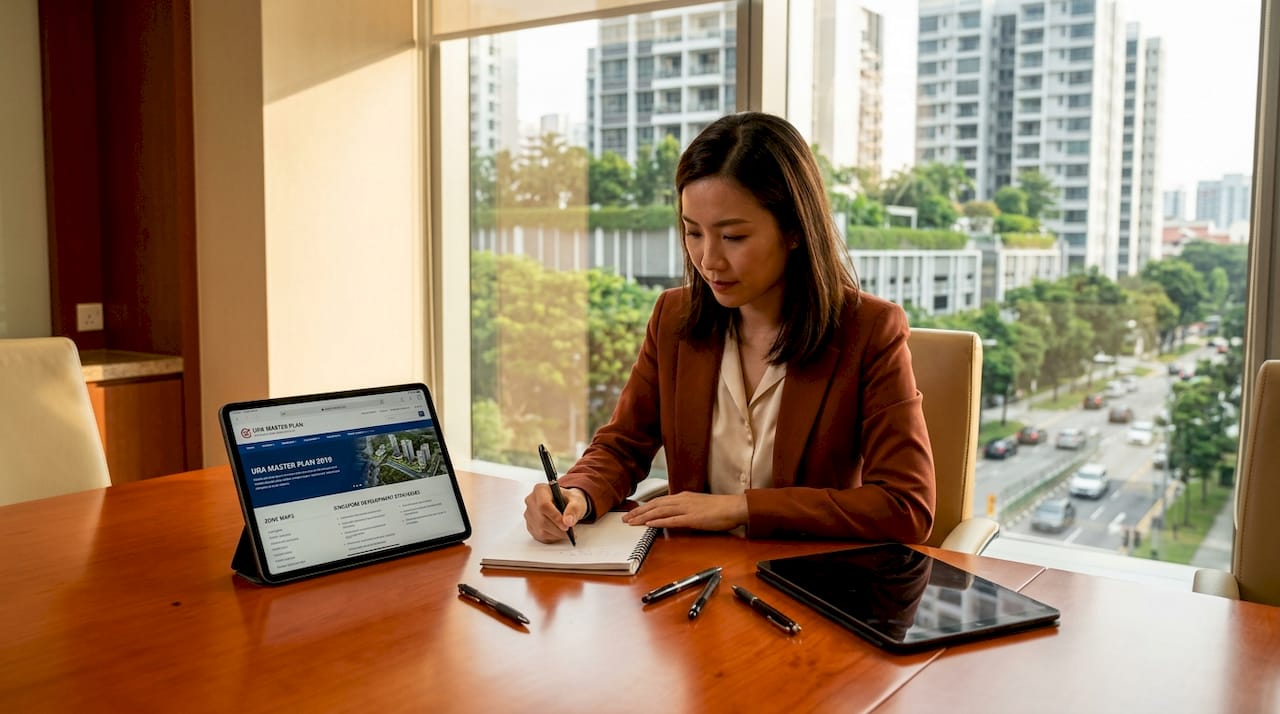
The Urban Redevelopment Authority (URA) controls land-use planning in Singapore through its Master Plan, which is reviewed every five years and assigns specific permitted uses to every plot of land. Checking the URA Master Plan overview before committing to any deal is not optional. It is the single most important due-diligence step you will take.
Here’s a quick comparison of common property types and their key characteristics:
| Property type | ABSD applicable | Foreign buyer eligible | Typical financing LTV |
|---|---|---|---|
| Pure commercial | No | Yes | Up to 80% |
| Industrial (JTC land) | No | Restrictions apply | Up to 70-80% |
| Mixed-use (with residential component) | Yes (residential rates) | Subject to approvals | Up to 75% |
Pro Tip: Before you book a viewing, open the URA Master Plan portal and verify the land-use zoning yourself. It takes five minutes and can save you from spending thousands on due diligence for an unsuitable property.
Step-by-step process for buying commercial property
With the fundamentals covered, breaking the purchase into clear phases removes the anxiety and ensures nothing critical gets missed.
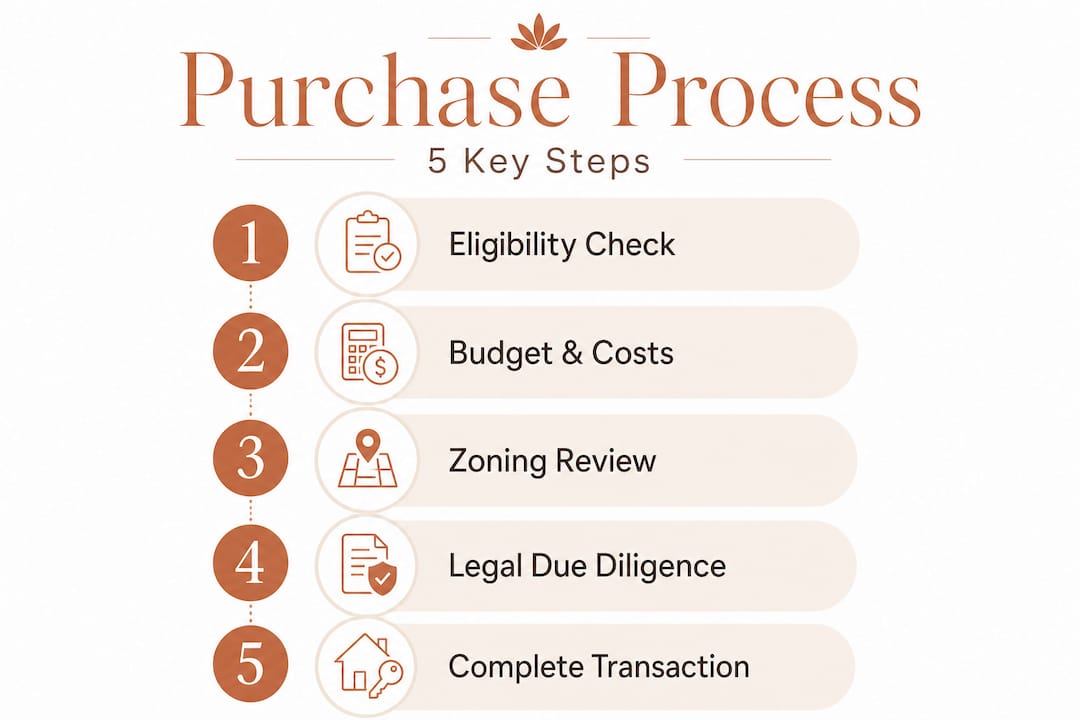
The full purchase process
-
Define your objectives. Are you buying for owner-occupation, investment yield, or capital appreciation? Each goal leads you to a different property type, location, and price range. An investor targeting rental yield will prioritize lease terms and tenant demand. An owner-occupier will prioritize floor plan, accessibility, and permitted use.
-
Shortlist and screen properties. Filter listings based on location, size, budget, and asset class. Engage a property agent with demonstrated commercial experience, not just residential background. Commercial transactions involve different legal instruments, financing structures, and due-diligence protocols. The detailed buying steps for commercial assets differ meaningfully from those for HDB or condo purchases.
-
Verify URA land-use classification. Before submitting any offer, confirm that the permitted use governs the intended business on that specific plot. A food and beverage business requires a specific use classification. An education center requires another. Assuming the use is permitted without checking is one of the most common and costly errors buyers make.
-
Make an offer and negotiate terms. If the property checks out, submit an offer in writing. Commercial transactions in Singapore typically involve an Option to Purchase (OTP) or a formal Sale and Purchase Agreement (S&P). The OTP grants you an exclusive right to complete the purchase within a defined window, usually 14 days.
-
Conduct legal due diligence. Your solicitor should verify title documents, outstanding mortgages, any caveats lodged, URA planning approvals, and any ongoing legal disputes tied to the property. This is also when you confirm the existing use certificate and check whether any renovation or change-of-use has been authorized.
-
Arrange financing. Banks in Singapore lend on commercial property, but terms differ from residential loans. Loan-to-value ratios, interest rates, and tenure differ across lenders. Get an In-Principle Approval (IPA) early so you know your ceiling before negotiating hard. Reviewing the broader Singapore commercial real estate market guide helps you benchmark pricing before approaching lenders.
-
Complete the transaction. Sign the S&P, pay the balance of the purchase price, and complete the title transfer with the Singapore Land Authority (SLA). Your solicitor coordinates this and lodges the caveat on your behalf.
Here’s a quick comparison of owner-occupation vs. investment purchase priorities:
| Factor | Owner-occupier priority | Investor priority |
|---|---|---|
| Permitted use | Must match business activity | Flexibility for future tenants |
| Location | Operational accessibility | Tenant demand and yield |
| Renovation potential | Fit-out for operations | Value-add for lease-up |
| Financing tenure | Cash flow management | ROI optimization |
Pro Tip: Engage a property agent who has closed commercial transactions recently, not just someone who can access commercial listings. The negotiation, legal coordination, and financing nuances are specialist skills.
Legal, zoning, and tax pitfalls to avoid
After understanding the process, the focus shifts to the specific traps that derail deals and cost buyers significant sums.
Common zoning and classification errors
The most frequent mistake is assuming that a property’s physical appearance matches its legal classification. A ground-floor retail unit in a shophouse development may look commercial but carry a mixed-use classification with a residential upper floor. That mixed-use status triggers ABSD for Singaporean second-property buyers, permanent residents, and foreigners. It also introduces Qualifying Certificate (QC) rules for foreign companies.
URA’s planning and master-plan zoning must be verified before committing to a purchase. This is not a step your agent or solicitor can skip on your behalf. You need the confirmation in writing.
Here is a quick checklist of must-verify legal items before signing:
- URA land-use classification and permitted use
- Any outstanding planning permissions or development charges
- Existing tenancy agreements and lease expiry dates
- Outstanding taxes, levies, or government charges
- JTC approval status (for industrial property)
- Ownership restrictions for foreign buyers or companies
- ABSD applicability based on buyer profile and property type
For buyers with foreign ownership structures or individuals holding foreign passports, checking the foreigner tax guide before proceeding is essential. ABSD rates for foreigners on residential-classified or mixed-use property can reach 60%, making what looks like a commercial deal suddenly prohibitively expensive.
Also, review the common commercial buying pitfalls that experienced practitioners have documented. Many buyers underestimate the time required for change-of-use approvals, which can delay business operations by months.
Skipping the URA check is the single most avoidable reason deals fall apart or cost more than expected. It takes minutes and can save you from a mistake that costs six figures.
What to expect after your purchase
Once the keys are in your hands, a new set of responsibilities starts. Ownership does not mean unlimited freedom to use, modify, or lease the property as you see fit.
Post-purchase compliance and management
The first task after completion is a final compliance check. Confirm that your use of the property aligns with URA’s approved classification. Permitted use as defined by URA continues to govern your asset post-purchase. Any deviation, whether from renovation, subletting, or operational changes, can attract enforcement action and fines.
Key post-purchase responsibilities include:
- Tax reporting: Property tax on commercial assets is assessed at 10% of the Annual Value (AV). Ensure you update IRAS (Inland Revenue Authority of Singapore) with any change in use or tenancy.
- GST registration: If your annual revenue from the property exceeds S$1 million, GST registration may be required. Commercial leases are typically subject to GST at the prevailing rate.
- Maintenance contributions: Strata commercial properties involve management corporation (MCST) fees. Budget for these in your financial model.
- Lease structuring: If you intend to lease the property, structure the agreement with clear use restrictions aligned to URA’s permitted use. A tenant operating outside the permitted classification is your legal problem, not just theirs.
- Asset review cycle: Review your property’s performance annually. Look at rental yield against the market, capital appreciation trends, and whether the asset still fits your portfolio strategy.
Understanding the investment benefits of commercial property helps you maximize returns from your asset over time. Equally, tracking current market trends keeps you ahead of demand shifts, vacancy cycles, and emerging growth corridors.
Ownership strategy matters as much after purchase as before. Buyers who treat commercial property as a set-and-forget asset often leave significant yield and capital upside untapped.
Our take: What most guides miss about buying commercial property
Most articles on buying commercial property in Singapore focus on price negotiation, yield calculations, and location selection. Those are useful topics, but they are not where deals actually break down.
In practice, the real risk is almost always in compliance and intended use, not in short-term market moves. A buyer who secures a property 5% below asking price but discovers six months later that the intended business requires a change-of-use approval has not won. They have lost time, operational momentum, and possibly the deposit on fit-out materials that cannot be used.
Mixed-use status is the most underappreciated complication in Singapore’s commercial market. Generic guides treat it as a footnote. In reality, a shophouse with a residential upper floor exists in a legal gray zone that affects ABSD, buyer eligibility, financing structure, and post-purchase compliance. Each of these is a separate cost center.
The other thing most guides understate is the importance of interdisciplinary coordination. Buying commercial property well requires your solicitor, your property agent, a planning consultant, and your accountant working from the same brief at the same time. Not sequentially. Simultaneously. If your solicitor is doing title checks while your accountant has not yet assessed the tax structure, you will miss conflicts that only become visible when you compare notes.
Our strongest advice, grounded in real transaction experience, is to engage real estate advisory support before you start shortlisting. An experienced advisor will not just help you find properties. They will stress-test your intended use case, flag zoning risks you would not have known to check, and help you build a deal structure that actually works operationally.
Pro Tip: Before signing any commercial property agreement, have a planning consultant run a URA development control check and confirm permitted use in writing. This step costs a few hundred dollars and prevents mistakes that cost tens of thousands.
Long-term success in commercial property comes from operational fit. The right property for the right use in the right structure will outperform a discounted asset with compliance complications every single time.
How Aesthetic Havens can help you buy with confidence
Navigating Singapore’s commercial property market requires more than market knowledge. It demands precise coordination across legal, regulatory, tax, and operational dimensions that most buyers are not equipped to handle alone.
At Aesthetic Havens, we guide buyers through every phase of a commercial property acquisition, from zoning verification and offer negotiation to legal coordination and post-purchase compliance planning. Whether you are an investor building a portfolio or a business owner seeking owner-occupied premises, we bring commercial real estate expertise that protects your interests and maximizes your outcome. We also support you with commercial leasing strategies if you intend to lease your newly acquired asset, and offer a full property leasing guide to help you structure agreements that work long-term. Reach out today to start your acquisition with the right foundation.
Frequently asked questions
What is the main difference between commercial and mixed-use property in Singapore?
Mixed-use sites with residential elements trigger different legal treatments, including potential ABSD and buyer restrictions, that pure commercial properties do not carry.
Why is checking the URA land-use classification so important?
URA zoning defines which business activities are legally permitted on the property, directly determining whether your intended use is viable before you commit any funds.
Do foreigners face special restrictions when buying commercial property?
Yes. Mixing commercial and residential elements introduces additional approval requirements and potentially very high ABSD rates for foreign buyers, sometimes reaching 60% of the purchase price.
Can I change the permitted use of a commercial property after purchase?
Changes to permitted use post-purchase require formal URA approval, and operating outside your approved classification can result in enforcement action and financial penalties.
Recommended
- Step-by-step guide: How to buy commercial property in Singapore
- How to Buy Commercial Property in Singapore: A Step-by-Step Guide | Aesthetic Havens
- Singapore commercial real estate: Market guide for smart investors
- Foreigner’s Guide to Buying Property in Singapore (2025 Regulations & Taxes) | Aesthetic Havens


