


Signing the wrong commercial lease can cost your business far more than money. It can lock you into a space that stifles hiring, limits expansion, and leaves you paying above-market rent while competitors move faster. Singapore’s office leasing market is competitive, with CBD Grade A rents climbing and landlords holding strong negotiating positions heading into 2026. But SMEs that come prepared with the right criteria, a sharp eye for clauses, and a clear comparison of space options consistently walk away with better deals. This guide gives you exactly what you need to lease smarter.
Table of Contents
- Set your leasing strategy: Criteria for success
- Compare your space options: CBD, city-fringe, and beyond
- Negotiate the essential clauses: Don’t miss these details
- Avoid common SME leasing pitfalls
- Why flexibility trumps price in Singapore’s 2026 leasing market
- Partner with experts for a winning lease
- Frequently asked questions
Key Takeaways
| Point | Details |
|---|---|
| Start with clear criteria | Define your SME’s space needs, budget, lease length, and flexibility requirements before starting your search. |
| Compare and calculate options | CBD, fringe, and HDB industrial spaces differ widely in cost, deposit, and lease flexibility—choose what fits your growth plan. |
| Negotiate lease clauses closely | Focus on rent escalation, break clauses, and reinstatement obligations to avoid costly surprises. |
| Prioritize flexibility | Shorter leases and expansion rights offer more value than lowest rent when scaling in Singapore’s tight market. |
| Avoid common pitfalls | Don’t overcommit on space, deposit, or inflexible terms—tailor your lease for both current and future needs. |
Set your leasing strategy: Criteria for success
Before you tour a single office, you need a leasing strategy. Too many Singapore SMEs start searching for space and only define their requirements after they fall in love with a specific unit. That’s a costly mistake. Your strategy should come first, and it should be built around five core criteria: budget, location, required square footage, scalability, and lease flexibility.
Commercial office leases in Singapore typically run 2 to 3 years for small and medium-sized businesses, with options to renew. That might sound manageable, but consider what 3 years means for a growing team. If you sign at 2,000 square feet today and need 4,000 square feet in 18 months, you could face costly reinstatement and relocation expenses with no legal exit in sight.
Here are the key criteria every SME should define before searching:
- Budget ceiling: Set a hard monthly cap, including service charges and utilities, not just base rent
- Location priority: CBD for client-facing credibility, or city-fringe for cost savings
- Space scalability: Can the landlord offer adjacent units if you grow?
- Lease length preference: Shorter terms offer more flexibility; longer terms can lock in favorable rates
- Break clauses: Does the lease allow early exit under defined conditions?
- Renewal clarity: Are renewal terms pre-agreed or renegotiated at market rate?
Tuning into current Singapore office property trends is essential before committing, since market shifts can affect both the rates you’ll pay and the flexibility landlords are willing to offer.
Pro Tip: Always prioritize flexible lease structures over the lowest sticker rent. A slightly higher monthly rate with a break clause or expansion option is worth significantly more than the cheapest rate with zero exit rights.
Overcommitting to space is one of the most common and expensive SME mistakes in Singapore. If your team is 15 people now, don’t lease for 30 unless you have firm growth projections. Every square foot of unused space is dead weight on your P&L.
Compare your space options: CBD, city-fringe, and beyond
Not all Singapore office space is created equal. Where you lease shapes your costs, your brand perception, your commute burden on staff, and how much flexibility you’ll have down the road. The three main categories for SMEs are CBD Grade A and B offices, city-fringe and business parks, and JTC or HDB commercial units.

CBD Grade A office rents hovered around S$11 to S$12 per square foot per month in late 2025, with projections pointing to 2 to 7% growth through 2026. That’s a significant outlay for a 1,500 square foot unit, running roughly S$16,500 to S$18,000 per month before service charges and fit-out depreciation. For client-facing businesses where location signals credibility, this can be justified. For internal operations teams, it’s often overkill.
JTC industrial space rents approximately 10% below market rates, and HDB commercial options have remained stable for over five years for 90% of tenants. These are powerful options for cost-conscious SMEs that don’t rely on prestige addresses.
| Space type | Approx. rent (psf/month) | Lease length | Security deposit | Fit-out cost | Rent escalation |
|---|---|---|---|---|---|
| CBD Grade A | S$11 to S$12 | 2 to 3 years | 2 to 3 months | High | 2 to 7% annually |
| City-fringe/business park | S$6 to S$8 | 2 to 3 years | 2 months | Moderate | 2 to 3% annually |
| JTC/HDB commercial | S$3 to S$5 | 1 to 3 years | 1 to 2 months | Low to moderate | Stable/fixed |
Exploring city-fringe and business parks is worth serious consideration for SMEs in tech, logistics, or professional services. These areas offer meaningful cost savings and are increasingly well-connected via MRT.
The key trade-off is scalability versus affordability. CBD offices tend to have more flexible subletting and expansion options, while JTC/HDB units are cheaper but come with more restrictions on permitted use and fit-out modifications. Match your choice to your business model, not your ego.
Negotiate the essential clauses: Don’t miss these details
Finding the right space is only half the battle. The lease document itself is where most SMEs lose leverage. Commercial leases are dense, landlord-favored documents, and every clause you don’t understand is a clause that probably works against you.
Key clauses to review include rent escalation (typically 2 to 3% fixed or tied to market), tenant maintenance responsibilities, termination rights, liability limits, subletting restrictions, and reinstatement obligations. Each one has real financial consequences.
Here’s a step-by-step approach to negotiating stronger tenant protections:
- Request a fixed rent escalation cap. Uncapped market-rate escalation means your rent could jump significantly at renewal. Push for a fixed 2 to 3% cap.
- Define maintenance boundaries clearly. Who handles HVAC? Electrical? Structural repairs? Vague language leads to disputes.
- Ask about break clause options. These are rare in Singapore leases, but not impossible. Even a limited break right after 18 months gives you breathing room.
- Negotiate subletting rights. If your team shrinks, can you sublet part of the space to offset costs?
- Pin down reinstatement scope. Know exactly what you’re required to restore at lease end. Fit-out removal costs can run into tens of thousands of dollars.
| Clause | What it means | Negotiation goal |
|---|---|---|
| Rent escalation | Annual rent increase formula | Cap at 2 to 3% fixed |
| Break clause | Right to exit early | Get it in writing, any conditions |
| Reinstatement | Restore space on exit | Limit scope to your fit-out only |
| Subletting | Ability to share or transfer space | Secure landlord pre-approval rights |
| Maintenance | Repair responsibilities | Define clear tenant vs. landlord split |
Understanding the role of your agent during this phase is critical. A skilled commercial agent flags problem clauses before you sign, not after. You should also review landlord obligations in leases to understand what protections are legally owed to you. For a broader view, checking red flags when leasing can save you from costly surprises.
Pro Tip: Always clarify reinstatement obligations before signing. Some landlords require full removal of all tenant fit-out, including ceilings and partitions. This can easily add S$20,000 to S$50,000 to your exit costs if left undefined.
Avoid common SME leasing pitfalls
Even experienced business owners fall into predictable leasing traps. The stakes are high because a bad lease doesn’t just cost money today. It limits your options for years.
Common pitfalls include long lock-in periods, ambiguous renewal terms, no expansion rights, and security deposits that tie up too much working capital. These aren’t rare edge cases. They’re standard features of many landlord-drafted leases in Singapore.
Here’s how to avoid each one:
- Over-committing to space: Start lean. Lease what you need now, and negotiate a right of first refusal on adjacent units for future expansion.
- Vague renewal terms: Insist that renewal rent is fixed or formula-based in the original lease, not left to renegotiation at market rate.
- No expansion rights: Ask if the landlord will offer an option to expand into a neighboring unit if it becomes vacant.
- High security deposits: Two months’ rent is standard. Three months is negotiable. Anything beyond that warrants scrutiny.
- No subletting flexibility: If your headcount drops, subletting protects your cash flow. Fight for it upfront.
“SMEs must negotiate for future needs, not just current fit. A lease that works today but not in 18 months is a liability, not an asset.” This is a principle every growing business should internalize before signing.
Monitoring the market outlook for 2026 before locking in a lease helps you understand whether the market favors tenants or landlords and how that should affect your negotiation posture. For additional guidance on the physical relocation process, office moving advice can help you plan the transition efficiently once you’ve secured the right space.
Pro Tip: Use staged leases where possible. Starting with a smaller unit and securing a contractual option to expand gives you flexibility without sacrificing certainty.
Why flexibility trumps price in Singapore’s 2026 leasing market
Most business owners approach a lease negotiation with one goal: get the rent down. It’s understandable. Rent is a visible, recurring cost. But in Singapore’s current environment, this laser focus on price often misses a much larger risk.
The 2026 landlord market dynamics show tight vacancy rates and rising rents, which means landlords hold most of the cards. In this kind of market, chasing the lowest possible rent often leads tenants to accept rigid lease structures, longer lock-in periods, and weaker exit rights just to close the deal. That’s a short-term win with a long-term cost.
Here’s the contrarian view: saving S$1 per square foot per month on a 2,000 square foot space saves you S$24,000 over two years. But if your business grows and you can’t exit or expand because your lease has no break clause or expansion rights, a forced relocation could easily cost S$80,000 to S$150,000 in fit-out, movers, reinstatement, and downtime. Flexibility is not a soft benefit. It has a measurable dollar value that most SMEs systematically underestimate. Build that calculus into every lease decision you make in 2026.
Partner with experts for a winning lease
If you’re committed to securing the best possible lease for your next stage of growth, why go it alone?
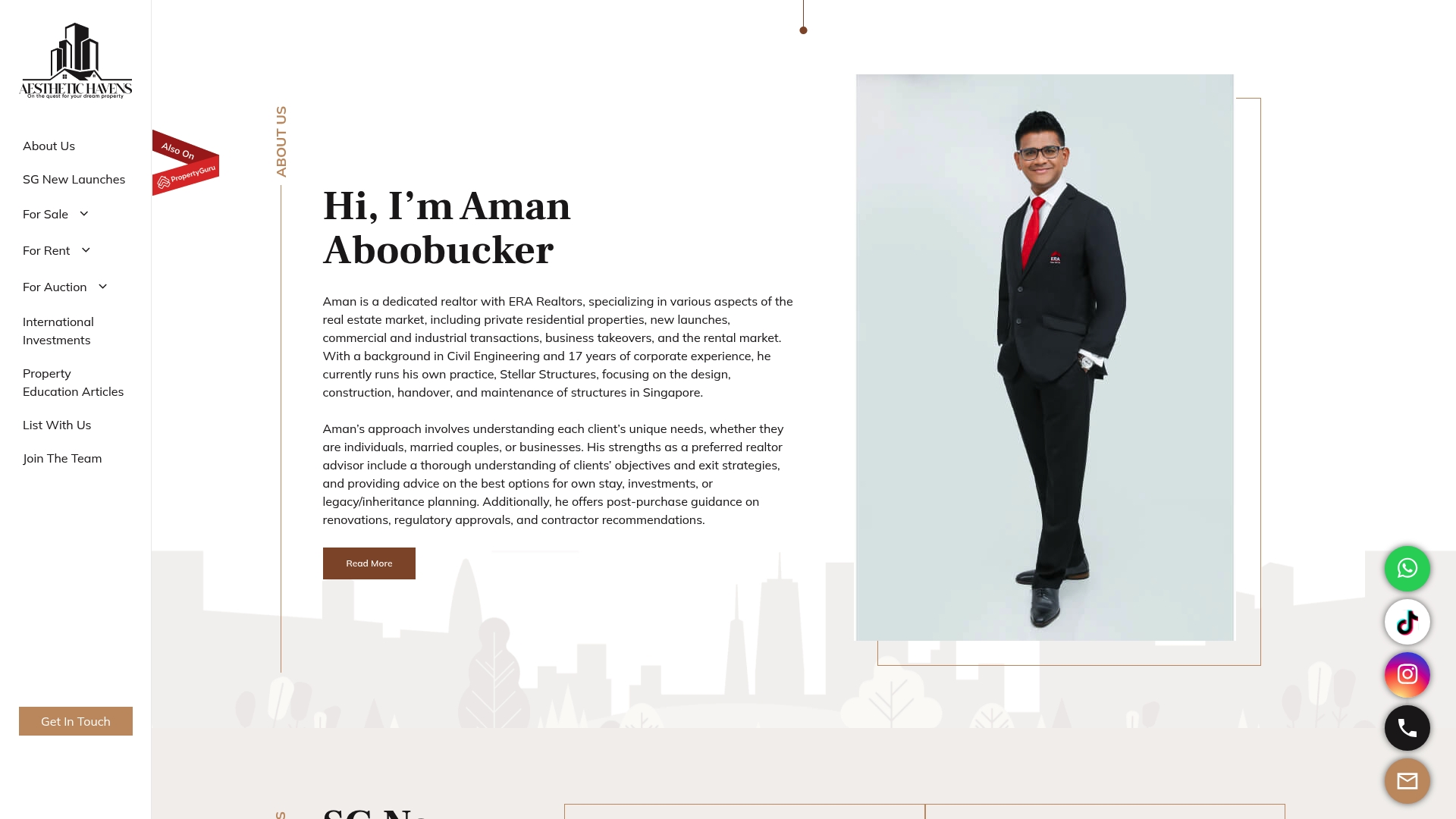
At Aesthetic Havens, our team understands exactly how Singapore’s commercial leasing market works at street level. From identifying the right spaces before they’re widely listed to negotiating clauses that protect your growth flexibility, we add real, measurable value at every stage. Understanding the full agent roles in commercial leasing shows why having the right expert in your corner changes outcomes. You can also explore the broader real estate agent benefits to see how professional guidance reduces risk and saves costs across commercial property decisions. Reach out to us to explore current listings and get personalized leasing support built around your business goals.
Frequently asked questions
How long is a typical commercial lease for SMEs in Singapore?
Most SME leases run 2 to 3 years, with renewal terms negotiated based on the landlord’s conditions and the tenant’s track record.
What clauses should I focus on when reviewing a commercial lease?
Prioritize rent escalation caps, maintenance responsibilities, and reinstatement scope, as these lease clauses carry the most financial risk if left ambiguous.
Are HDB and JTC industrial rentals cheaper for SMEs?
Yes. JTC space rents around 10% below market, and HDB commercial rents have been stable for 90% of tenants over five years, making them strong options for cost-focused businesses.
What is a break clause in commercial leasing and should I negotiate for it?
A break clause allows you to exit the lease early under defined conditions, and while break clauses are rare in Singapore, they are worth pushing for given the flexibility they provide.
How can SMEs protect against rising rents in Singapore?
Negotiate a fixed escalation cap in the lease, or consider HDB and JTC options where rents remain stable compared to the projected 2 to 7% CBD rent growth in 2026.
Recommended
- Agent roles in Singapore commercial leasing: unlock value
- Essential landlord roles in leasing: A Singapore guide
- Singapore Commercial Property Trends: Opportunities for 2026
- How to Buy Commercial Property in Singapore: A Step-by-Step Guide | Aesthetic Havens
- Commercial relocation explained: move offices efficiently


