

Introduction
Singapore Permanent Residents purchasing a luxury condo face a 5% Additional Buyer’s Stamp Duty on their first residential property and 30% on their second property. On a S$3 million unit, that translates to S$150,000 or S$900,000 in ABSD alone. This luxury condo buying guide for Singapore PRs breaks down how to navigate ABSD, size your real budget, and select prime projects that match both lifestyle and portfolio goals.
This guide is written for high-income Singapore PRs: single professionals, PR–PR couples, and SC–PR families planning to purchase property in Singapore’s Core Central Region (CCR) or city-fringe Rest of Central Region (RCR). It covers ABSD rates revised on 27 April 2023, affordability under current TDSR and loan to value rules, new launch vs resale trade-offs, and how to structure your acquisition sequence. It does not cover commercial or industrial property, detailed tax structuring, or legal drafting.
By the end of this guide, you will:
-
Understand the precise ABSD payable for Singapore PRs at each property count and how joint ownership affects liability.
-
Know how to calculate your real purchasing ceiling using TDSR, LTV limits, and all-in cost stacks for S$2–5 million units.
-
Compare new launch and resale luxury condos based on cash flow, condition, and holding strategy suited to PR families.
-
See worked examples showing how ABSD changes your total acquisition cost and long term capital appreciation outlook.
-
Follow a step-by-step buying sequence from shortlisting projects to exercising OTP, designed to avoid six-figure ABSD mistakes.
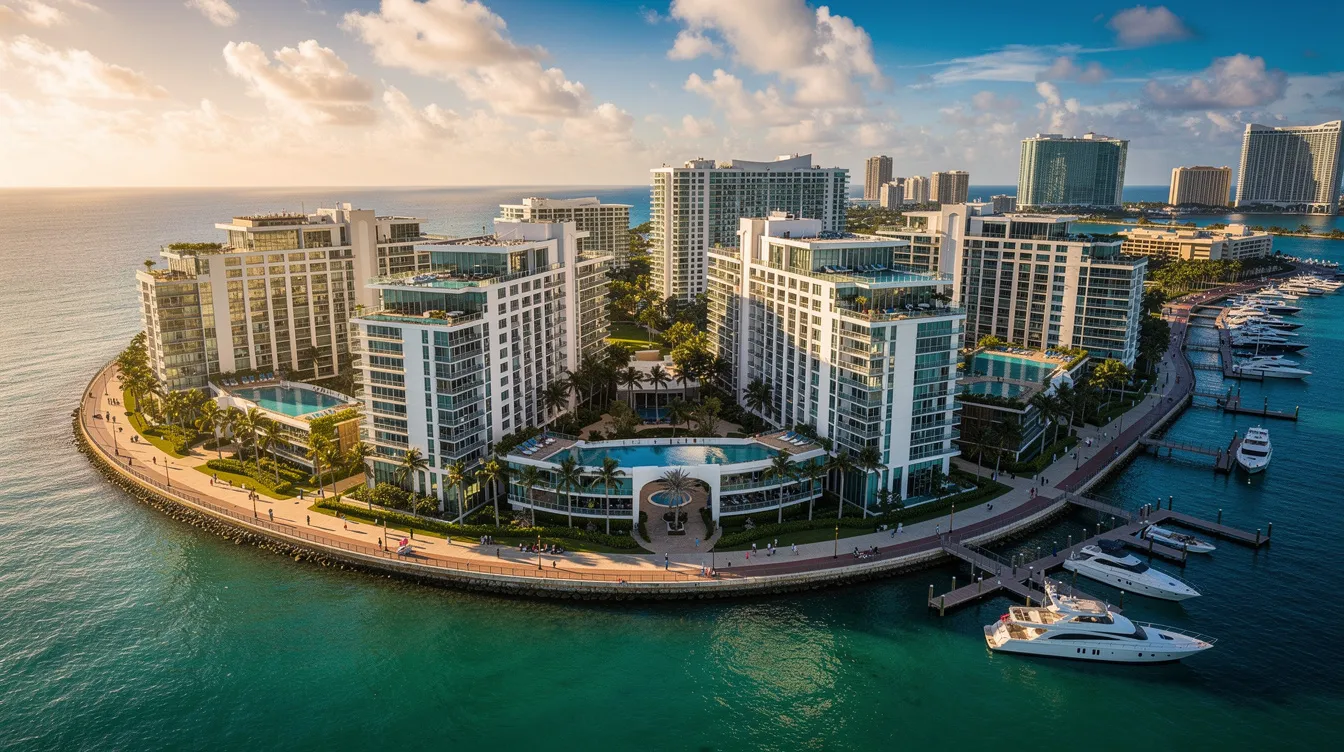
Understanding ABSD on Residential Properties and the PR Buyer Profile
Additional Buyer’s Stamp Duty is a surcharge layered on top of the standard buyer’s stamp duty that applies to every residential property purchase in Singapore. At luxury price points, where purchase prices start at S$2 million and frequently exceed S$4 million, every percentage point of ABSD represents tens or hundreds of thousands of dollars in cash. A 5% rate on a S$4 million condo costs S$200,000; a 30% rate on the same unit costs S$1.2 million. The sections below detail the current rules. All rates and policies reflect Q4 2026 IRAS schedules; always confirm directly with IRAS before committing capital.
How Additional Buyer’s Stamp Duty (ABSD) Works for Singapore PRs in 2026
ABSD is a surcharge calculated on the higher of purchase price or market value of the private residential property being acquired. It must be paid within 14 days of exercising the Option to Purchase or signing the sale and purchase agreement, collected through the conveyancing lawyer’s e-stamping process. ABSD is payable in cash; CPF ordinary account funds cannot be used for this purpose.
Current ABSD rates for a Singapore Permanent Resident as an individual buyer:
-
First residential property: 5% ABSD. PRs pay 5% ABSD on their first property purchase.
-
Second residential property: 30% ABSD. PRs pay 30% ABSD on their second property purchase.
-
Third and subsequent properties: 35% ABSD. PRs pay 35% ABSD on their third and subsequent properties.
These ABSD rates for PRs were revised on 27 April 2023 and remain in effect. For contrast, entities (companies, trusts) face 65% ABSD on such acquisitions, which is why most buyers at the individual HNW level structure purchases under personal names rather than corporate vehicles.
PR Household Types and Why They Matter
Your ABSD liability depends on who is buying, how many existing residential properties each buyer holds, and the buyer’s profile. Three common archetypes arise among PR luxury condo purchasers:
Single PR with no existing Singapore property. This buyer faces 5% ABSD on a first property. A single PR earning S$25,000–S$50,000 per month, perhaps a finance or tech professional, typically targets own-stay with possible future rental income if posted overseas. Single PRs cannot buy HDB flats as sole applicants, so a private property is often their only residential option in Singapore.
PR–PR couple purchasing their first jointly owned property. Both spouses are PRs with no prior Singapore residential holdings. ABSD remains at 5% because IRAS determines liability based on the buyer with the highest ABSD profile among co-owners; here, both are at 5% for a first property. The couple’s combined income improves loan qualification under TDSR, but no ABSD remission applies because neither holds Singapore citizen status. PR–PR couples generally need to wait three years before buying hdb resale flats, which is one reason some move straight to private housing.
SC–PR married couple upgrading from an HDB flat or mass-market condo. In a joint purchase, IRAS applies the higher ABSD profile. If the Singapore citizen buying jointly with a PR spouse is also acquiring a second property, the SC’s rate for a second property (20%) would apply. However, joint purchases by SC and PR may qualify for ABSD remission if they sell their existing HDB flat or private property within a specified timeframe and meet IRAS conditions; as a housing alternative, hdb resale flats are available immediately after marriage for SC–PR couples, while PR–PR couples typically face a three-year wait. This remission can bring the effective rate down, potentially to 0% on the first jointly owned property.
Once your ABSD profile is confirmed, the next calculation is affordability: how much can you actually borrow, and what is the total cash outlay?
Affordability for PRs Buying Luxury Condos
For S$2–5 million CCR units, ABSD alone can require S$100,000 to S$1.5 million in cash upfront, on top of the downpayment and standard stamp duties. This section explains how TDSR, LTV ceilings, and all-in costs define your real purchasing ceiling.
TDSR, LTV and Income Requirements at Luxury Price Points
The Total Debt Servicing Ratio caps monthly debt obligations at 55% of gross monthly income. TDSR includes every recurring obligation: existing mortgage payments, car loans, credit card minimum payments, business loan guarantees, and the proposed new monthly mortgage instalments. Banks stress-test at rates above the contracted interest rate, often using 3.5–4% or higher.
The maximum Loan-to-Value ratio is 75% for first loans where the borrower has no existing housing loan, provided the loan tenure does not exceed 30 years and the loan will be repaid by age 65. If tenure or age conditions are not met, LTV drops to 55%. With one existing housing loan outstanding, the LTV ceiling falls to 45%, or 25% under age/tenure triggers. Two or more existing loans reduce it further to 35%.
Consider a PR couple earning S$40,000 per month gross, targeting a S$3.5 million luxury condo in District 9. At 55% TDSR, their maximum total monthly debt servicing is S$22,000. Assuming no existing loans, their maximum bank loan at 75% LTV is S$2,625,000. At 4% interest over 25 years, the monthly repayment on that loan is approximately S$13,800. That fits within the S$22,000 TDSR ceiling, leaving room for other obligations. But if they already hold one property with an outstanding loan, LTV drops to 45%; the maximum loan falls to S$1,575,000, requiring S$1,925,000 in equity plus all stamp duties in cash.
The interaction is direct: higher ABSD on a second property locks capital that would otherwise serve as downpayment or emergency buffer.
All-In Cost Stack for PRs: Beyond Just Purchase Price
The purchase price is only one component. Here is the full cost stack for a PR buying a luxury condo:
Buyer’s Stamp Duty (BSD). Buyer’s Stamp Duty rates are tiered based on property purchase price, with a maximum of 6% on the portion above S$3 million. The first S$180,000 of property value is taxed at 1% for Buyer’s Stamp Duty; the next S$180,000 at 2%; the next S$640,000 at 3%; the next S$500,000 at 4%; the next S$1,500,000 at 5%; and amounts above S$3 million at 6%. On a S$3 million property, BSD totals approximately S$119,600.
ABSD for PRs. At 5% on a first property, ABSD on S$3 million is S$150,000. At 30% for a second property, ABSD is S$900,000. Additional Buyer’s Stamp Duty and Buyer’s Stamp Duty must be paid within 14 days of signing the purchase agreement.
Legal fees. Legal fees for conveyancing can range from S$2,000 to S$5,000 or more depending on complexity. For transactions above S$3 million, expect the upper range.
Ancillary fees. Valuation, caveat lodgement, bank administration, and survey fees typically add S$2,000–S$5,000 combined.
Renovation and furnishing. At luxury standard, renovation budgets for CCR condos typically run S$150,000–S$400,000 depending on unit size and existing condition.
Worked example: S$3 million purchase by a single PR (first property).
|
Cost Item |
Amount |
|---|---|
|
Purchase price |
S$3,000,000 |
|
BSD |
S$119,600 |
|
ABSD (5%) |
S$150,000 |
|
Legal fees |
~S$4,000 |
|
Valuation and admin |
~S$3,000 |
|
Total upfront (excl. renovation) |
~S$3,276,600 |
At 75% LTV, the minimum cash/CPF downpayment is S$750,000, plus S$276,600 in stamp duties and fees, totalling roughly S$1,026,600 before renovation.
AESTHETIC HAVENS builds personalised acquisition cost sheets covering every line item above, including scenario modelling for different holding periods and interest rate assumptions. Use the TDSR LTV Calculator for PR Buyers as a starting point.
With affordability parameters established, the next decision is what type of luxury condo and which location fits your strategy.
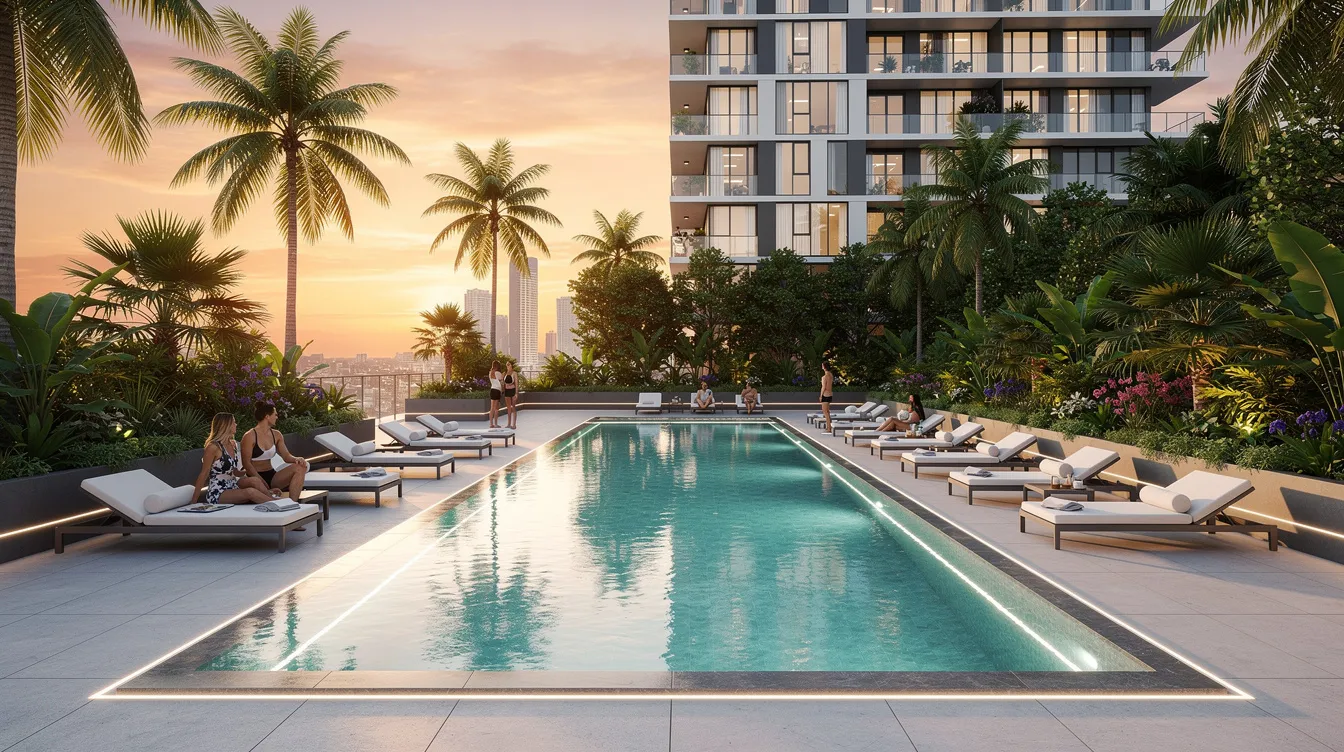
Luxury Condo Types and Locations PRs Should Consider
Choosing between prime districts, city-fringe locations, and leasehold and freehold properties requires matching your family’s lifestyle, investment horizon, and budget to specific micro-markets. This section covers the key differences before you begin shortlisting projects.
Prime Core Central vs City-Fringe Luxury: How They Differ
The Core Central Region includes Districts 9, 10, 11, the Downtown Core (Districts 1 and 2), and Sentosa. Properties located in the CCR command higher prices: new-launch luxury condos in 2026 are priced between S$2,500 and S$5,000+ psf, with representative projects like Newport Residences averaging S$3,370 psf. CCR resale condos trade at a median of approximately S$2,177 psf, roughly 40% below new-launch pricing in the same region.
The Rest of Central Region covers city-fringe districts: 3, 4, 5, 7, 8, 13, 14, and 15. RCR new launches in 2026 range from S$2,000 to S$3,400 psf; resale condos sit at a median of about S$1,950 psf. For a detailed breakdown of which districts fall into each category, see the Prime Residential Districts Guide.
Lifestyle and rental demand differ between these zones. CCR’s Orchard Road, River Valley, and Tanglin corridors attract expat tenants seeking walkable access to premium retail, international schools, and private clubs. RCR areas such as East Coast, Alexandra, and Queenstown draw families with larger layouts, proximity to reputable local schools, and parks. Rental yield in RCR can match or exceed CCR for well-located units because of the lower entry point on purchase price, even though CCR rents are nominally higher.
The price gap between CCR and RCR in new launches narrowed to roughly 10% in 2025 but widened again to about 19% by Q1 2026. Some RCR new launches now challenge CCR pricing; some older CCR resale units are priced only marginally above good RCR new launches.
Freehold vs Leasehold and Freehold Properties: 99-Year Luxury Condos at High Price Points
Tenure matters more at the S$2–5 million level because the capital at stake amplifies the effects of lease decay over a 15–20 year holding period.
Freehold properties offer indefinite ownership in Singapore. They are increasingly scarce in CCR, concentrated in enclaves like Bukit Timah, Holland, and Tanglin. For PRs focused on long-term holding and intergenerational ownership, a freehold property is an attractive option because it tends to appreciate more consistently over time and may carry en bloc potential that a 99-year leasehold property does not. The trade-off: freehold condos in District 10 or 11 carry a higher price tag per square foot, and available units tend to be older or smaller in layout.
Leasehold properties typically have a duration of 99 years. Ownership of leasehold properties ends when the lease expires and reverts to the state. Most large-scale new CCR and RCR launches in 2026 are 99-year leasehold. These projects offer modern amenities (concierge, smart-home integration, integrated retail), proximity to MRT stations, and often outperform freehold condos in capital appreciation during the first 10–15 years of the lease period. Leasehold properties can offer higher rental yields due to lower prices compared to equivalent freehold units.
A well-located 99-year condo can still be an attractive option for families who prioritise amenities, schools, or MRT access over perpetual tenure.
The risk with leasehold: banks may impose stricter conditions for financing leasehold properties as the remaining lease shortens. Buyers cannot use CPF for properties with less than 30 years of remaining lease. For a PR planning a 15-year own-stay followed by a sale, a 99-year property purchased new presents minimal lease decay concern. For a PR seeking a legacy asset or one that can be held across generations, a freehold property in a prime location is the more resilient choice.
Take two specific micro-locations as illustration. Holland–Bukit Timah (District 10) features freehold low-rise enclaves with strong demand from expat families near international schools; expect S$2,800–S$4,000 psf for newer developments. Marina Bay (District 1) features 99-year integrated towers near Grade A offices, MRT interchange, and waterfront dining; psf ranges from S$2,500 to S$3,500 for newer developments, with strong rental demand from finance professionals.
The next section compares new launch and resale luxury condos to help you decide which better fits your PR buyer’s profile, cash flow, and holding timeline.
New Launch vs Resale Luxury Condos for PRs
Whether a PR buyer should purchase a brand-new launch or a completed resale unit depends on cash flow constraints, desired holding period, and tolerance for construction risk. Both carry identical ABSD obligations; the differences lie in payment timing, unit condition, and capital deployment.
New Launch Luxury Projects: When They Make Sense
New launches offer a progressive payment schedule spread over approximately 18–30 months from booking to Temporary Occupation Permit (TOP). The booking fee is typically 5–10% of the purchase price, with subsequent stage payments tied to construction milestones. This structure eases cash flow for PR professionals who need time to liquidate other assets or accumulate savings. However, ABSD and BSD remain payable at or shortly after exercise of OTP; the time benefit lies in staged loan drawdown, not delayed stamp duties.
Newer developments in CCR and RCR feature smart-home systems, branded finishes, concierge services, and curated facility decks. CCR new launch average psf in Q3 2026 stood at approximately S$3,152, up from S$2,731 in Q3 2021. New launches in RCR averaged about S$2,670 psf in Q3 2026.
New launches suit PRs with a clear 7–10 year investment horizon who plan to move in closer to specific school enrolment dates, or who want to lock in pricing at today’s developer rate before TOP. Families planning entry to primary or secondary schools in a particular catchment can time their purchase 2–3 years ahead.
Resale Luxury Condos: When They Are Better
Resale units allow immediate physical inspection: you can verify the actual view from your chosen stack, assess noise levels, check unit condition, and speak to existing residents about MCST management. Resale CCR condos at a median of S$2,177 psf offer a lower entry point compared to new launches at S$3,078 psf; for the same budget, a resale buyer can secure a larger floor area in a mature estate.
Resale is also the route for PR investors seeking immediate rental income. A completed, tenanted unit generates yield from day one, unlike a new launch where rental income begins only after TOP.
The trade-offs are front-loaded cash demands (full downpayment due upon completion of the sale), possible high MCST fees for ageing luxury facilities (exceeding S$1,000 per month for larger units in full-facility CCR condos), and renovation costs to bring an older unit up to current luxury standards.
Who should favour which:
-
New launch: PRs with no immediate need to move in, strong monthly income but limited current liquidity, and a 7+ year holding period.
-
Resale: PRs who need to occupy or rent immediately, prefer to inspect before committing, and have large cash reserves ready to deploy.
-
ABSD timing consideration: PRs upgrading from one property to another can sometimes sell their existing unit before exercising OTP on a resale (avoiding 30% ABSD on a second property), but new launch timelines make this sequencing harder because of the gap between booking and TOP.
With the property type decision framed, the next step is a structured acquisition process that avoids costly timing errors.
Practical Buying Sequence for PRs: From Shortlist to Completion
For PRs paying ABSD on luxury condos, sequencing matters. Exercising an OTP before selling an existing property can trigger 30% ABSD instead of 5%, a difference of S$750,000 on a S$3 million unit. Mis-timing a purchase by even a few weeks can turn an affordable upgrade into an overleveraged position.
Step-by-Step Process for PR Luxury Condo Purchases
This process applies to both new launch and resale purchases, with minor timing adjustments noted where relevant.
-
Confirm your PR profile and compute your exact ABSD scenario. Verify your PR status, your spouse’s citizenship, and your current property count. PRs must hold a valid Re-Entry Permit for property purchases. Landed property purchases by PRs require Singapore Land Authority approval. Confirm whether you need to pay ABSD at 5%, 30%, or 35%.
-
Obtain in principle approval from at least two banks. Secure financing commitments based on stress-tested interest rates (typically 4% or higher). Compare maximum loan amounts, tenure options, and conditions. Use AESTHETIC HAVENS’ TDSR LTV Calculator to pre-screen your borrowing ceiling.
-
Build a realistic all-in budget. Include BSD, ABSD, legal fees, renovation at luxury standard, and a 10–15% cash buffer above the total. Factor in CPF usage rules: CPF ordinary account funds can be used for downpayment and monthly mortgage instalments on private apartments, subject to the valuation limit and accrued interest rules.
-
Shortlist 3–5 target micro-locations. Identify specific locations aligned with work, school, and lifestyle priorities. Review the Prime Residential Districts Guide for district-level data on pricing, rental demand, and transport access.
-
Screen both new launches and resale units. Work with a CEA-registered agent to identify options matching your budget and layout requirements. Singapore Permanent Residents can purchase private non-landed residential properties freely, and PRs can buy private residential property immediately after obtaining PR status.
-
Conduct site visits or showflat visits. For resale, inspect stack orientation, noise exposure, MCST maintenance records, and transport access in person. For new launches, review floor plans, facing, and comparable projects by the same developer. Download the Luxury Condo Viewing Checklist before visiting.
-
Run scenario analysis for shortlisted units. Model at least a 10-year holding period, including projected rental yield, capital appreciation based on CCR or RCR trend data, ABSD recovery breakeven, and exit strategy under different market conditions.
-
Negotiate price, inclusions, and timeline. For resale, clarify vacant possession vs tenanted handover. For new launches, confirm the developer’s progressive payment schedule and estimated TOP date.
-
Exercise the OTP and arrange immediate stamp duty payment. Engage your conveyancing lawyer to review the purchase agreement and handle e-stamping. Plan for BSD and ABSD payment within 14 days. Additional Buyer’s Stamp Duty is calculated on the higher of purchase price or market value.
-
Complete financing, final inspection, and handover. Finalise bank loan documentation, conduct the pre-completion inspection (for resale), and plan your renovation timeline against move-in or tenant start dates.
Disciplined sequencing reduces the risk of paying 30% ABSD when 5% would have applied, or of committing to a purchase that exceeds your TDSR capacity after accounting for existing debts.
Comparing Common PR Scenarios
The table below illustrates how your buyer’s profile changes the ABSD payable and the financial calculus on a S$3 million luxury condo.
|
Scenario |
ABSD Payable on S$3M Purchase |
Key Considerations |
|---|---|---|
|
Single PR, first property |
5% = S$150,000 |
Needs 25% cash/CPF downpayment (S$750,000) if LTV is 75%. Must meet TDSR with single income. Total upfront duties (BSD + ABSD) approximately S$269,600. |
|
PR–PR couple, first jointly owned property |
5% = S$150,000 |
Combined income improves TDSR headroom. No ABSD remission available because neither is a Singapore citizen. IRAS applies highest buyer profile; both at 5% for first property. |
|
SC–PR married couple, first jointly owned CCR condo (selling prior HDB flat) |
Potentially S$0 after remission |
Joint purchases with SCs may qualify for ABSD remission if prior HDB resale flat or private property is sold within the required timeframe. Must verify IRAS remission conditions before exercising OTP. |
The difference between 5% and 30% ABSD on a S$3 million unit is S$750,000. At a gross rental yield of 3% on a CCR luxury condo, S$750,000 represents more than 8 years of gross rental income on that same unit. Planning your property count and purchase sequence before shortlisting avoids this capital drain.
The next section addresses specific pitfalls that cost PR buyers six- and seven-figure sums.
Common Pitfalls for PR Luxury Buyers and How to Avoid Them
Even high-income PRs with professional advisors make preventable errors when buying luxury private property. The three most expensive mistakes involve ABSD miscalculation, exit planning failures, and underestimated holding costs.
Misjudging ABSD on Second and Subsequent Properties
PRs who already own one property sometimes assume they can purchase a second residential property and deal with the ABSD later. The jump from 5% to 30% is not gradual; it is immediate and applies to the full purchase price. On a S$3.5 million CCR condo, 30% ABSD is S$1,050,000 in cash, payable within 14 days. Combined with BSD of approximately S$149,600, total stamp duties exceed S$1.2 million before downpayment.
The solution: plan your sequence. If upgrading, sell your existing property and complete the discharge before exercising OTP on the new luxury condo. Model both scenarios (with and without second-property ABSD) before shortlisting any unit above S$2 million. AESTHETIC HAVENS’ ABSD and BSD Guide walks through each profile in detail.
Ignoring Exit Strategy and Buyer Pool
Purchasing a large or unusually configured luxury unit (penthouse with odd layout, low-floor unit facing a construction site, property type with limited demand) can trap capital. The resale potential of any unit depends on who the new buyer will be: local families, PR professionals, foreign ultra-HNW individuals, or investors. Each segment has different ABSD exposure, different financing constraints, and different location preferences.
Prioritise units in projects with a documented rental track record, a reputable developer, and limited competing new supply within a 500-metre radius. Check seller’s stamp duty rules: as of 4 July 2025, the SSD holding period for private residential property is 4 years (previously 3), with rates starting at 16% for disposals within the first year. Selling early to exit a poor purchase triggers both SSD and capital loss risk.
Underestimating Ongoing Holding Costs
Singapore’s luxury condominiums often carry high Annual Values leading to higher property taxes, particularly for non-owner-occupied units where progressive property tax rates apply. Monthly MCST contributions for full-facility CCR condos regularly exceed S$1,000 for units above 1,500 sq ft. Property tax in Singapore is based on the property’s Annual Value and can be progressive. Insurance, periodic special levies for building repairs, and potential interest rate increases on floating-rate loans add to the ongoing burden.
Build a 5-year cashflow model that includes property tax at current progressive rates, MCST fees, insurance, and mortgage repayments stress-tested at 1.5% above your current contracted rate. Ensure that rental income (if investment-held) or household income (if owner-occupied) covers these costs without requiring drawdowns from emergency reserves.
With these pitfalls mapped and mitigated, PRs who follow a disciplined process can secure a prime condo that serves both as a home and a resilient long-term asset.
Conclusion and Next Steps
ABSD is the single largest variable cost in every PR luxury condo decision. A 5% vs 30% difference on a S$3 million unit equals S$750,000 in cash, enough to fund a decade of MCST fees or furnish the unit twice over. Prime location, tenure choice (between leasehold and freehold properties), and project selection should support both your family’s lifestyle and your portfolio’s capital appreciation trajectory. A disciplined process that accounts for individual circumstances, from PR status confirmation through exit strategy modelling, converts a high-stakes property purchase into a structured investment.
Your next steps:
-
Confirm your current property count, PR/SC status in your household, and compute your ABSD exposure using the latest IRAS ABSD tables.
-
Request updated in principle approval letters from at least two banks, specifying your target purchase range (e.g., S$2–4 million).
-
Shortlist 2–3 preferred luxury districts aligned to your family and work needs: Orchard–River Valley for CBD proximity, East Coast for family lifestyle, Marina Bay for integrated living.
-
Engage AESTHETIC HAVENS for a personalised luxury condo and ABSD impact review, including scenario modelling across different holding periods and market conditions.
-
Map your acquisition timeline over the next 12–24 months: coordinate sale of any existing property, school enrolment windows, work postings, and financing milestones before committing.
Related topics worth exploring: industrial and commercial real estate for PRs seeking to diversify beyond residential holdings, structuring a mixed real-estate portfolio across property types, and understanding Singapore’s broader stamp duty regime for subsequent purchase planning.
Additional Resources for PR Luxury Condo Buyers
This section is a compact reference hub for PR buyers who want quick access to official sources and AESTHETIC HAVENS tools.
Government references:
-
IRAS ABSD page: current rates, remission conditions, and e-stamping procedures.
-
MAS/MoneySense TDSR and LTV guidelines: loan limits, affordability framework, and stress-test parameters.
-
URA private residential transaction search: verify recent transacted prices for specific projects and districts.
AESTHETIC HAVENS resources:
-
ABSD and BSD Guide for Singapore Property Investors: detailed profiles for PR, SC, and foreign buyers.
-
Industrial and Commercial Real Estate for PRs: options for PRs looking beyond residential properties.
-
Luxury Condo Viewing Checklist: stack orientation, facilities assessment, MCST health, and noise evaluation tailored to prime projects.
-
TDSR LTV Calculator for PR Buyers: input your income, existing debts, and target purchase price to estimate borrowing capacity.
AESTHETIC HAVENS provides bespoke project selection, deal evaluation, and portfolio-level real-estate planning for HNW PR clients. Contact the advisory team for a personalised cost sheet covering your specific property, ABSD scenario, and holding strategy.


