

Introduction
Aman Aboobucker’s Q4 2026 new launch shortlist narrows the field to five projects worth viewing this quarter: Lucerne Grand (D22), Thomson Reserve (D20), Vela Bay (D16), Dunearn House (D21), and Hudson Place Residences (D5). Each project was filtered on four criteria: MRT access, launch psf relative to land cost and resale benchmarks, school proximity within 1 km, and exit potential over a 7 to 10 year holding period.
This article focuses on private condos and integrated developments launching or actively selling in Q4 2026 in the Singapore property market. It is written for investment-minded home buyers, HDB upgraders weighing their first private condo purchase, and business owners building multi-asset portfolios. 2026 is a noticeably leaner launch year than 2025, with at least 18 new launch projects across Singapore and more than half of those in the outside central region. The private residential price index rose only marginally in Q1 2026, suggesting the upcoming real estate launches will serve as a reality check for market demand. With about 15,810 unsold units in the pipeline as of Q2 2026 (down from 17,032 in Q1), tightening unsold inventory combined with government land sales pushing land prices higher means Q4 2026 is a compressed window where entry price discipline separates good buys from overcommitments.
Here is what you will gain from this article:
-
A clear overview of Aman’s 5 top new launch picks this quarter, with verified data on psf, land cost, MRT distance, and schools.
-
How each project scores on MRT access, launch psf value, school proximity, and likely exit strategy.
-
How to match the right project to your budget, holding period, and life timeline.
-
Worked examples pairing buyer profiles to specific projects with approximate quantum and travel times.
-
Practical next steps: showflat strategy, benchmarks to prepare, and questions to ask agents.
Understanding Aman’s Q4 2026 Shortlist Framework
“Shortlist” here means five high-conviction new launches Aman would prioritise visiting between October and December 2026. These are not guaranteed winners. They are launch projects where the risk-reward profile, measured against land cost headroom, nearby resale comps, transit connectivity, and family-driven demand, looks attractive relative to the broader new launch market.
Aesthetic Havens operates in residential and industrial real estate management and provides digital content and insights related to real estate markets. The advisory approach is independent and data-driven: comparing launch psf against transacted resale within 1 km on the same MRT line, rather than relying on developer marketing decks.
Four Core Filters: MRT, $psf, Schools, Exit Potential
All five projects pass four non-negotiable filters before making the list.
MRT access. The threshold is approximately 500 to 600 metres walking distance from an existing or confirmed MRT station, or direct integrated access. Doorstep MRT access matters because it underpins rental demand among tenants who lack cars, widens the resale buyer pool to include singles and retirees, and historically buffers price declines during downturns. Projects with dual MRT access or interchange proximity carry additional weight.
$psf value. Aman benchmarks each project’s launch psf against two references: the developer’s land cost per square foot per plot ratio (psf ppr) and the median price of resale transactions within 1 km over the past 12 months. He looks for measurable headroom between land cost and launch price, which signals that the developer has not exhausted all margin on day one, and that future buyers at resale will not face an immediate ceiling. At least 17 new launch condos are expected in 2026, which gives buyers enough alternatives to walk away from inflated pricing.
School proximity. Being within 1 km of a reputable primary school grants priority in P1 registration under Singapore’s MOE framework. Not all five projects sit in “top school belt” zones, but each has a clear schooling story that supports family buyer demand at resale. School proximity is the single strongest predictor of upgrader demand among families with children aged 2 to 6.
Exit potential. This filter looks at future competing supply (via URA master plan and the GLS launch pipeline), transformation plans in the micro market, tenure (99-year vs freehold), and the profile of the likely next buyer. Aman’s preferred holding horizon when assessing exits is 7 to 10 years, long enough for transformation catalysts to materialise but short enough to avoid meaningful lease decay on 99-year assets.
With the framework established, the next section presents the actual five-project Q4 2026 shortlist.
Who This Shortlist Is For (and Not For)
This shortlist targets two groups. First, HDB upgraders planning to move into private housing in the next 6 to 18 months, especially those sitting on substantial HDB equity gains from Bishan, Ang Mo Kio, Bedok, or Jurong. HDB upgraders are driving demand for new residential properties across Singapore’s OCR and RCR districts. Second, business owners and investors seeking an own-stay property with reasonable rental yield and downside protection.
It is less suited for ultra-luxury core central region trophy buyers chasing branded residences above S$4,000 psf, or pure speculators hoping for en bloc flips within 3 to 5 years. Aesthetic Havens focuses on functional, investment-savvy decisions rather than prestige alone.
Aman Aboobucker’s Q4 2026 Top 5 New Launches at a Glance
The five projects span OCR, RCR, and CCR, giving buyers at different budgets a credible option. Here is a snapshot before the deep dives:
|
Project |
Region |
Nearest MRT |
Guide Launch $psf |
Key School(s) Within 1–2 km |
Aman’s Quick Verdict |
|---|---|---|---|---|---|
|
Lucerne Grand (D22) |
OCR |
Lakeside MRT (East West Line), ~1 min walk |
~S$2,400–2,550 |
Rulang Primary, Shuqun Primary |
Value entry for west-side families |
|
Thomson Reserve (D20) |
RCR fringe |
Upper Thomson MRT (TEL), Marymount MRT (CCL) |
~S$2,350–2,650 |
Ai Tong Primary, Catholic High (nearby) |
Central-north school belt at RCR pricing |
|
Vela Bay (D16) |
OCR |
Bayshore MRT (TEL), direct link |
~S$2,700–2,900 |
East Coast schools cluster |
First-mover waterfront with TEL node |
|
Dunearn House (D21) |
CCR |
Sixth Avenue MRT (DTL), upcoming Cross Island Line |
~S$3,100–3,200 |
Nanyang Primary, Hwa Chong (near) |
CCR school belt for legacy buyers |
|
Hudson Place Residences (D5) |
RCR |
Buona Vista / one-north MRT |
~S$2,480 (median) |
New Town Primary (~920 m) |
Yield play near one-north tech cluster |
Each project is examined in depth below.
Project Deep Dives: Why These 5 Made Aman’s Q4 2026 Shortlist
Each project is broken down by who it serves, why buyer demand exists at its location, what makes the site stand out, and where exit risks lie. The format varies by project because each has a different evidence base and a different risk profile.
1. Lucerne Grand (Jurong Lakeside, D22, OCR)
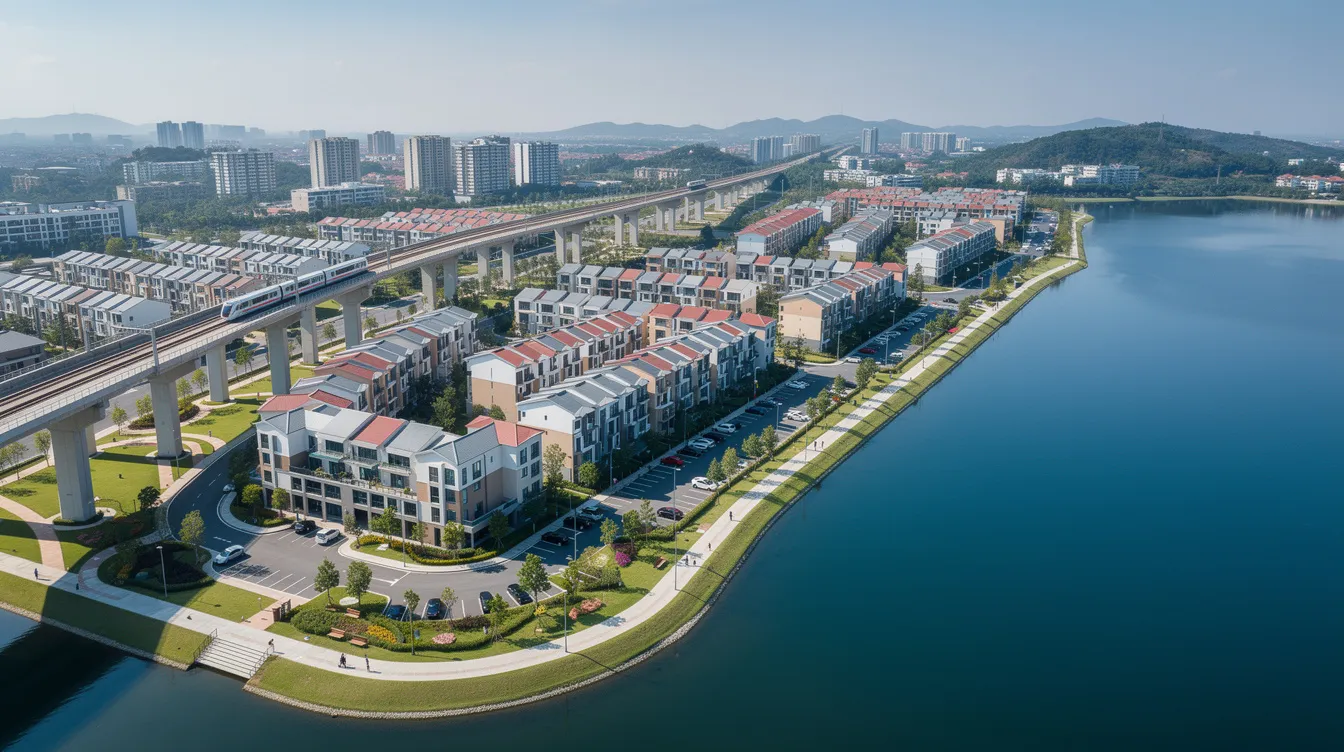
Lucerne Grand is CDL’s mixed-use development on Lakeside Drive: 570 units across five 17-storey towers, with approximately 1,000 sqm of commercial space including a ~700 sqm supermarket at the ground floor. The Lakeside Drive GLS was won by CDL for S$608 million, translating to a land cost of S$1,132 psf ppr. That land rate, set against an estimated launch psf of approximately S$2,400 to S$2,550, gives CDL over S$1,200 psf of margin to cover construction, marketing, and profit. For an OCR new launch condo, that margin structure is healthy.
Who it is for. West-side families and HDB upgraders from Jurong West, Jurong East, Boon Lay, and Bukit Batok who want an MRT-fronting home with a commercial component downstairs. Investors targeting long term capital appreciation tied to the Jurong Lake District transformation should also view this. Two-bedroom units start from approximately S$1,498,000.
Why demand exists. The Jurong Lake District master plan positions the area as Singapore’s second CBD, with planned office towers, a tourism hub around Jurong Lake Gardens, and connectivity via the East West Line. Rivelle Tampines, another OCR launch earlier in 2026, sold 92.5% of its units at launch, demonstrating that upgrader demand for well-located OCR private condos remains strong when pricing is calibrated. Lucerne Grand benefits from that same dynamic: deepest upgrader demand from surrounding HDB estates, combined with transformation-led future demand from workers in the Jurong Innovation District.
Why the site stands out. The project offers doorstep MRT access, within a 1-minute walk to Lakeside MRT on the East West Line. It sits facing Jurong Lake Gardens, giving lower-floor units garden proximity and higher-floor units lake views. Rulang Primary School and Shuqun Primary are both within 1 km, which matters for P1 registration. The commercial component, including a supermarket, adds daily convenience that standalone residential projects cannot match.
Exit potential and risks. The resale buyer pool includes families, engineers, and workers in the Jurong Innovation District and nearby industrial corridors. If the Jurong Lake District’s office take-up materialises over a decade, rental appeal should strengthen as the tenant pool grows. The risk is slower-than-expected commercial development in the district and potential supply from future GLS parcels nearby. Entry price discipline matters here: buyers should benchmark their stack’s psf against J’den resale prices and Lucerne Grand’s own early caveats to avoid paying above fair value.
2. Thomson Reserve (Redevelopment of Thomson View, D20, RCR Fringe)
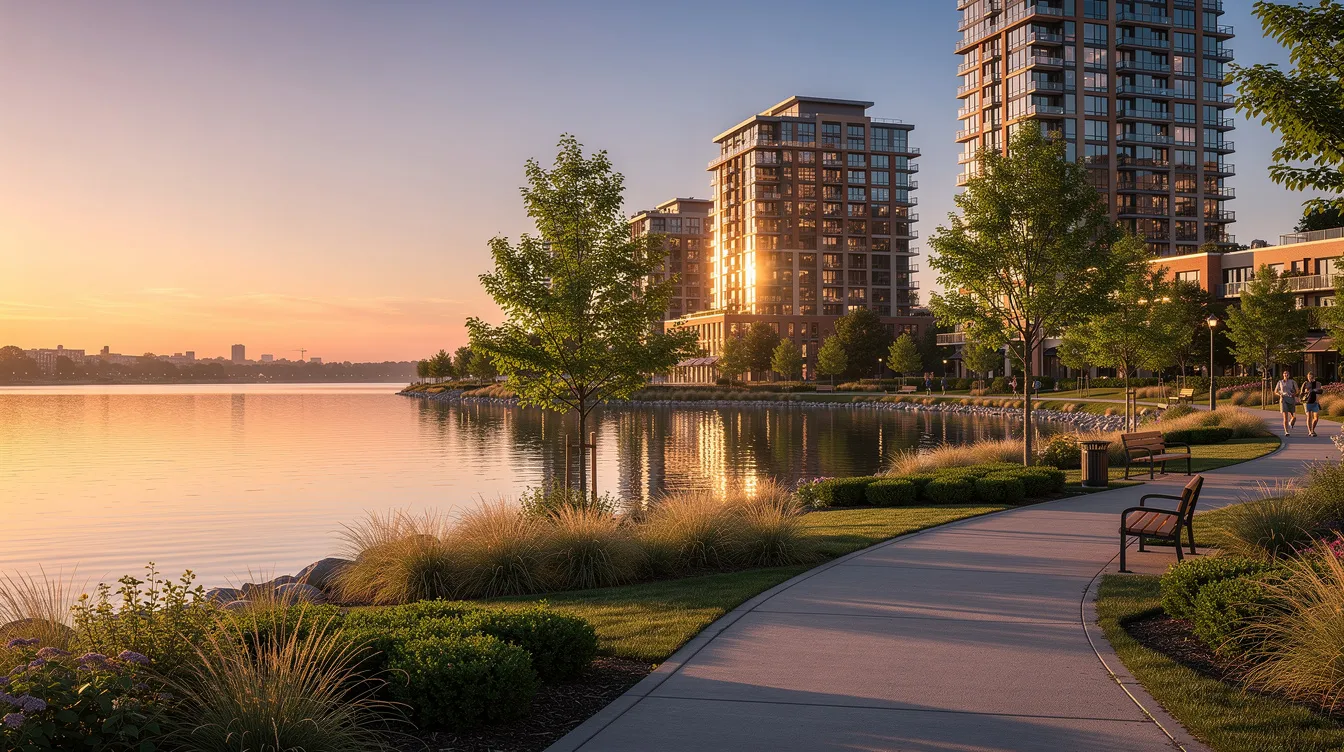
Thomson Reserve is a joint venture between UOL, Singapore Land Group, and CapitaLand, replacing the former Thomson View en bloc site. The numbers are large: 1,268 units across two 30-storey blocks and four 21-storey blocks, on a 51,567 sqm site. Land cost after lease top-up and land betterment came to S$1,178 psf ppr. Analyst estimates place the launch psf between S$2,350 and S$2,650, with developer break-even estimated at S$2,050 to S$2,150 psf. The VVIP preview period runs from 17 to 27 October 2026, making this a genuine Q4 2026 launch event.
Who it is for. Central-north families from Bishan, Ang Mo Kio, and Toa Payoh with children heading toward P1 registration. Professionals who need CBD access via the Thomson East Coast Line or Circle Line. Investors who want RCR centrality without paying CCR launch psf.
Why demand exists. The combined upgrader pool from Bidadari, Bishan, and AMK holds substantial HDB equity gains. Nearby new launch benchmarks set by AMO Residence and Jadescape show that District 20 buyers have historically absorbed mid-S$2,000 psf pricing. Thomson Reserve’s scale (1,268 units) means CDL/UOL will price competitively to move volume rather than chase peak pricing on a handful of premium stacks.
Why the site stands out. The project sits within approximately 600 to 800 metres of Upper Thomson MRT on the Thomson East Coast Line, with Marymount MRT on the Circle Line also accessible, providing dual MRT access. Ai Tong Primary School falls within 1 km, and the broader Bishan/Thomson school belt includes Catholic High and Raffles Institution within 2 km. The unit mix ranges from 2-bedroom to 5-bedroom with private lifts for larger units, and the site includes about 1,014 carpark lots. For a project this close to the central region, the estimated launch psf of S$2,350 to S$2,650 slots between OCR launches like Lucerne Grand and CCR options like Dunearn House.
Exit potential and risks. The likely buyer at resale is a family entering P1 registration phases for Ai Tong or Catholic High. Large central-north plots are scarce; the last major project of comparable scale in D20 was the original Thomson View itself, built over a decade ago. That scarcity buffers long-term prices. The risk is that psf creeps into low-CCR territory during booking, and competition from future Bright Hill or Sin Ming GLS sites could add supply pressure. Buyers should focus on standard collection units rather than overpaying for premium collection stacks where exit liquidity is narrower.
3. Vela Bay (Bayshore Waterfront Precinct, D16, OCR)
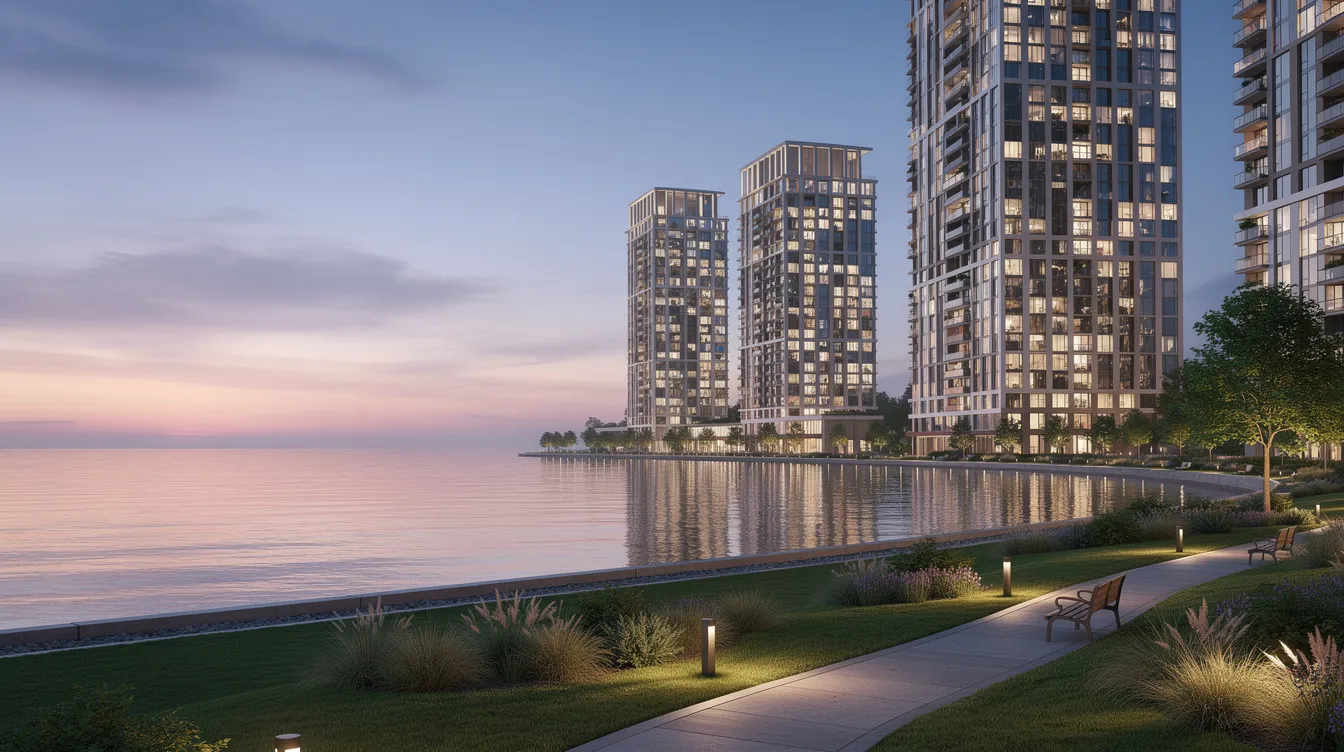
Vela Bay is the first private development in the Bayshore precinct, developed by SingHaiyi and Haiyi Holdings. It launched in April 2026 with 515 units at approximately S$2,863 psf, and 383 of those 515 units sold by Q3 2026. Vela Bay’s land was acquired for S$658.9 million at S$1,388 psf, a premium price that reflects the scarcity of waterfront sites in the east. Vela Bay is Singapore’s only integrated development in the Bayshore area, and integrated developments typically support higher rental demand and resale liquidity.
Who it is for. East-side upgraders from Bedok, Marine Parade, and Siglap who want sea views combined with Thomson East Coast Line access. Lifestyle buyers who prioritise waterfront living and East Coast Park proximity over absolute centrality.
Vela Bay is located in the new Bayshore precinct, where two TEL MRT stations, extensive park connectors, and BTO under Prime/Plus housing models will limit the internal upgrader pool competing for private condos. That constraint channels demand toward projects like Vela Bay. Historical demand for seafront units in the District 15/16 corridor has been persistent, and private waterfront supply has been limited for over a decade.
Why the site stands out. The project connects directly to Bayshore MRT on the TEL, with walking access to East Coast Park via an underpass connector. Sea-facing stacks offer unblocked views toward the strait; inner-facing stacks look onto the Bayshore town centre. The launch psf of approximately S$2,700 to S$2,900 compares against older Amber Road and Marine Parade freehold resale stock, where median price levels have risen above S$2,000 psf for ageing developments. The gap between Vela Bay’s new launch price and older resale is narrower than many buyers expect.
Exit potential and risks. True seafront units carry genuine scarcity that supports exit prices beyond 2035. Integrated developments combine residential, retail, and transport facilities, and that bundled convenience commands a premium over standard residential projects at resale. The risk is supply clustering: when the second and third private and integrated projects launch in Bayshore over the next 5 to 8 years, buyers of Vela Bay’s inner-facing stacks may face stiffer competition. First-mover status helps, but only for stacks with permanent sea views. Buyers should pay close attention to stack orientation and floor level before committing.
4. Dunearn House (Turf City / Bukit Timah, D21, CCR)
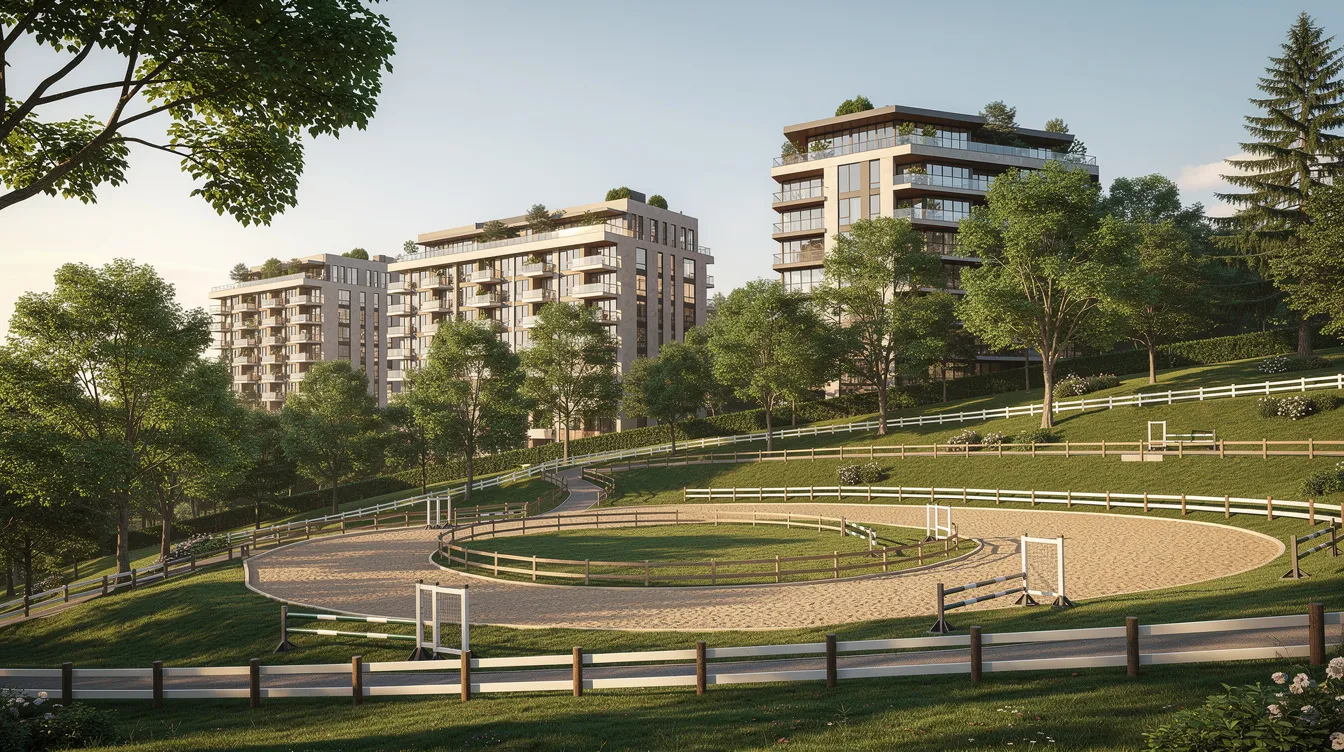
Dunearn House anchors the Turf City transformation, developed by Frasers Property, CSC Land, and Sekisui House. The project launched on 25 July 2026 with 380 units, and approximately 212 units sold in the opening phase at an average of S$3,140 psf. Dunearn House’s land bid was S$491.5 million at S$1,410 psf ppr, indicating high demand among developers for the site. For context, the average price for new launches in District 9 is S$3,251 psf, placing Dunearn House below prime D9 levels despite its CCR location.
Who it is for. Affluent families targeting elite school belt admissions and generational wealth preservation. Landed owners in Bukit Timah downsizing into full-facility condo living without leaving their enclave. High-end developments attract buyers focusing on entry valuations and transformation potential, and Dunearn House fits that profile.
Why demand exists. The Turf City transformation is a once-in-a-generation redevelopment of a major CCR site. Bukit Timah freehold and longer-leasehold stock has performed consistently over 20-year periods, and the scarcity of sizeable CCR plots in this corridor ensures that new supply is rare. Unlike the River Valley Green parcel or D9 boutique sites, Turf City delivers scale (380 units) with family-oriented layouts.
Why the site stands out. School proximity is the headline: Nanyang Primary, Hwa Chong Institution, Raffles Girls’ School, and Methodist Girls’ School all fall within the Bukit Timah school belt. The site is near Sixth Avenue MRT on the Downtown Line, and the upcoming Cross Island Line will add a Turf City station, improving connectivity further. The product targets families: 3- to 5-bedroom layouts, equestrian-heritage landscaping, and generous communal facilities. Compared to older CCR resale in Bukit Timah, such as Fourth Avenue Residences, the pricing gap offers some headroom for buyers entering at S$3,100 to S$3,200 psf versus resale stock transacting higher per square foot for similar tenure.
Exit potential and risks. Multi-decade appeal for school-driven buyers makes exit relatively predictable. Potential for en bloc down the line due to the site’s scale adds a long-horizon upside. The risk is the high entry quantum: 3-bedroom units are likely to exceed S$3 million, which narrows the tenant and resale buyer pool. Rental yield will be lower in percentage terms because of elevated pricing. This project suits strong balance sheets and holding horizons of 10 years or more. Buyers should avoid paying above surrounding Bukit Timah pricing benchmarks, especially for lower-floor or west-facing stacks.
5. Hudson Place Residences (Media Circle / one-north, D5, RCR)
Hudson Place Residences sits on the Media Circle parcel in the one-north precinct, developed by QingJian Realty and Forsea Holdings. The project has 327 units with an estimated TOP in 2029. The median price across developer sales and URA caveats over the past 12 months to September 2026 is S$2,479 psf, with a transaction range of approximately S$2,253 to S$2,710 psf. Two-bedroom units (around 646 sqft) have sold for approximately S$1.46 million; 4-bedroom units on high floors have reached S$4.61 million.
Who it is for. Investors targeting rental yields from one-north knowledge workers, NUS and NUH staff, and researchers at Biopolis, Fusionopolis, and Mediapolis. Young professionals or couples wanting city fringe convenience near Buona Vista and Holland Village.
Why demand exists. One-north is an established R&D cluster with chronic rental undersupply. The tenant pool includes multinational researchers, biomedical professionals, and university lecturers on multi-year contracts, creating stable rental demand. Earlier one-north area launches like Blossoms by the Park demonstrated strong take-up. Market analyses highlight the significance of cash flow and financial breakdowns for residential projects in this micro market, where rental yield rather than pure capital gain is the primary return driver.
Why the site stands out. Hudson Place Residences is within walking distance of one-north MRT and Buona Vista MRT, giving access to the Circle Line and East West Line. New Town Primary School is approximately 920 metres away, with Queenstown Primary and Fairfield Methodist within 1 to 2 km, providing a moderate but functional school proximity story. The balanced unit mix of 1- to 4-bedroom layouts suits both tenants and own-stay buyers. At a median launch psf of S$2,479, the project sits slightly above earlier Media Circle launches but remains competitive against central RCR peers. Recent property developments in Singapore may benefit from market stabilisation trends, and Hudson Place’s city fringe location positions it to capture both rental appeal and gradual capital uplift.
Exit potential and risks. The rental-led thesis is straightforward: expat researchers and university professionals need short-commute housing, and one-north’s employer base is expanding. The risk is micro market oversupply if multiple Media Circle parcels launch close together. Buyers should select efficient, east- or north-facing stacks and avoid fringe-facing or west-sun-heavy units where exit liquidity drops. Noise from Ayer Rajah Expressway affects certain blocks; site visits at different times of day are essential before committing.
Comparing the 5: MRT, $psf, Schools and Exit Potential Side-by-Side
This section condenses the five deep dives into a direct, numbers-oriented comparison.
|
Project |
Region |
Nearest MRT & Distance |
Guide Launch $psf (Q4 2026) |
Notable Primary School(s) |
Best-Fit Buyer |
Exit Rating |
|---|---|---|---|---|---|---|
|
Lucerne Grand |
OCR |
Lakeside MRT (EWL), ~1 min walk |
S$2,400–2,550 |
Rulang, Shuqun (both <1 km) |
West-side upgrader family |
Strong (transformation-dependent) |
|
Thomson Reserve |
RCR fringe |
Upper Thomson (TEL) + Marymount (CCL), ~600–800 m |
S$2,350–2,650 |
Ai Tong (<1 km), Catholic High (~2 km) |
Central-north school-driven family |
Strong |
|
Vela Bay |
OCR |
Bayshore MRT (TEL), direct link |
S$2,700–2,900 |
East Coast cluster |
East-side lifestyle upgrader |
Strong (sea-facing stacks) |
|
Dunearn House |
CCR |
Sixth Avenue (DTL), upcoming CRL |
S$3,100–3,200 |
Nanyang, Hwa Chong belt |
Legacy/wealth-preservation family |
Niche but resilient |
|
Hudson Place Residences |
RCR |
Buona Vista / one-north, ~7–10 min walk |
S$2,480 (median) |
New Town Primary (~920 m) |
Yield investor, young professional |
Moderate to strong |
Strongest on MRT adjacency: Lucerne Grand (direct link, 1 min walk) and Vela Bay (integrated TEL station). Thomson Reserve offers dual MRT access across two lines, which is rarer.
Lowest entry psf: Thomson Reserve and Lucerne Grand both sit below S$2,650 psf with land cost headroom above S$1,100 psf ppr. Dunearn House has the highest entry quantum and is priced for scarcity.
Yield vs. capital preservation: Hudson Place Residences and Lucerne Grand are more yield-driven and transformation-led. Dunearn House and Thomson Reserve lean toward capital preservation through school belt demand. Vela Bay blends both, with waterfront scarcity as its differentiator.
How to Decide Which of Aman’s 5 Picks Fits You
The “best” project depends on purpose, budget, income profile, and holding period. A S$1.5 million two-bedroom at Lucerne Grand and a S$3.2 million three-bedroom at Dunearn House serve fundamentally different objectives. This section provides a decision framework.
Step-by-Step Shortlisting Process
Step 1: Clarify your objective. Distinguish between own-stay (where school proximity, lifestyle, and commute time dominate) and investment (where rental yield, resale liquidity, and tenant profile matter more). Define your expected holding period. A 5-year hold favours projects with established MRT and existing tenant demand. A 10-year-plus hold can absorb transformation risk in districts like Jurong or Bayshore.
Step 2: Fix your quantum. Approximate 3-bedroom ticket sizes in Q4 2026: Lucerne Grand at S$2.5 to S$3.0 million; Thomson Reserve at S$2.8 to S$3.3 million; Vela Bay at S$3.0 to S$3.5 million; Dunearn House at S$3.2 to S$3.8 million; Hudson Place Residences at S$3.0 to S$3.5 million for the largest units. Add ABSD, buyer stamp duty, renovation, furnishing, and 6 months of mortgage buffer before deciding what you can afford. Tengah Garden Residences, the first private condo in Tengah launching from S$980,000 for one-bedroom units, offers a baseline comparison for budget-constrained buyers exploring OCR alternatives.
Step 3: Pick your primary filter.
-
For school-driven buyers: Thomson Reserve (Ai Tong, Catholic High belt) and Dunearn House (Nanyang, Hwa Chong, RGS belt).
-
For commute and MRT-heavy lifestyles: Lucerne Grand (EWL doorstep), Vela Bay (TEL integrated), Hudson Place Residences (one-north / Buona Vista).
-
For future transformation bets: Lucerne Grand (Jurong Lake District) and Vela Bay (Bayshore precinct).
Step 4: Benchmark $psf and layouts. Compare each project’s launch psf against nearby resale within 1 km on the same MRT line. Check URA caveats for the most recent transactions. Assess usable layout, stack orientation, and efficiency rather than headline square footage alone. A 900 sqft 3-bedroom with 85% efficiency beats a 950 sqft unit with a long corridor and 78% efficiency.
Step 5: Walk the ground and the showflat. Visit each shortlisted site at 8 AM, 1 PM, and 7 PM on separate days to assess noise, traffic, sun exposure, and actual walking time to MRT and schools. Capture your own photos to compare projects later rather than relying on developer renders.
Step 6: Stress-test exits. Ask yourself: “If I had to sell in 7 years, who is my next buyer? What other new launches or resale options compete then?” Check URA’s master plan and the GLS launch pipeline for confirmed or indicative sites within 1 km. Chuan Grove Residences, for example, is expected to yield about 1,055 units in D19, and Lentor Gardens Residences is anticipated to launch in the same period; both could affect supply dynamics in the broader market. Speak to an independent adviser like Aesthetic Havens before issuing cheques.
Worked Examples: Matching Profiles to Projects
Example 1: HDB upgrader family with P1 registration in 3 to 5 years. A couple in Ang Mo Kio with a 4-room HDB valued at S$620,000 and combined income of S$14,000 per month. They need Ai Tong Primary within 1 km. Thomson Reserve is the natural fit: a 3-bedroom at approximately S$2.8 million gives them an all-in budget (after HDB sale proceeds, CPF, and a 75% LTV loan) that still leaves a S$150,000 cash buffer. The Upper Thomson MRT connects to Orchard in 6 stops on the TEL. If they hold for 10 years, the resale buyer will be the next generation of families chasing the same school belt, a cycle that has repeated in D20 for decades.
Example 2: Investor seeking 3%+ gross rental yield with future upside. A business owner with S$2 million in liquid capital looking for a rental asset. Hudson Place Residences offers 2-bedroom units at approximately S$1.46 to S$1.6 million with an estimated gross yield of 3.2 to 3.5% based on one-north rental comps of S$4,200 to S$4,800 per month for 2-bedrooms. Lucerne Grand is the alternative if the investor prefers a lower entry price and is willing to wait for Jurong Lake District’s tenant base to grow. Both are city fringe locations with sticky rental demand from knowledge workers.
Example 3: East-side couple, both working in CBD/Marina Bay. A dual-income couple in Bedok earning S$18,000 combined. Vela Bay offers a TEL commute of approximately 25 minutes door-to-door to Tanjong Pagar MRT, with East Coast Park for weekend cycling and sea views from upper-floor stacks. A 2-bedroom at Vela Bay runs approximately S$2.0 to S$2.3 million. The trade-off versus a resale Marine Parade freehold is newer fittings, integrated development perks, and TEL access versus older stock with higher maintenance costs and no MRT frontage.
Common Pitfalls When Chasing Q4 2026 New Launches
Major new residential projects in Singapore are generating interest from home buyers, but interest does not guarantee sound decisions. Upcoming property launches test buyer demand against resale market dynamics, and buyers who skip due diligence on these dynamics tend to overpay.
Pitfall 1: Paying for Hype, Not Fundamentals
Launch weekend crowds and “X% sold” announcements create urgency that distorts pricing strategy. Some buyers bid above indicative pricing for fear of missing out, ignoring that resale units in adjacent projects transacted 10 to 15% lower per square foot within the same quarter.
Fix: Calculate the premium you are paying versus 3- to 5-year-old resale stock within 1 km. If the gap exceeds 15%, the MRT access, school proximity, or tenure advantage must be specific and measurable to justify it. If it is not, wait for post-launch availability.
Pitfall 2: Ignoring Future Supply Around Your Project
Clusters like Lentor, Bayshore, and one-north can see multiple launch condos within a few years. Lentor Gardens Residences and similar D26 projects add units to a micro market that Hong Leong Holdings and other developers are developing in parallel. Each additional project dilutes scarcity and can compress margins.
Fix: Before committing to any of Aman’s five picks, check URA’s Master Plan and GLS confirmed list for parcels within 1 km. If two or more sites are slated for release within 5 years, factor that supply into your exit assumptions. A project like Tengah Garden Residences faces less immediate competition because it is the first private condo in Tengah, but Lucerne Grand in Jurong or Hudson Place Residences in Media Circle may face neighbouring launches sooner.
Pitfall 3: Underestimating Cash Flow and Holding Power
Many buyers budget for downpayment and monthly mortgage but neglect quarterly maintenance fees (S$300 to S$800 for OCR/RCR), rising property tax, potential vacancy periods, and interior costs. For an executive condo or private condo held as an investment, a 2-month vacancy in year one can erase the first year’s yield.
Fix: Model full cash flow under conservative assumptions: 10% below market rent, 1 month vacancy per year, and a 0.5% interest rate increase from current levels. Run this for each of the 5 projects before signing.
Pitfall 4: Mis-Matching Project to Life Timeline
Buying far from a school you will need in 5 years, or near a retail hub you will outgrow, leads to forced sales at suboptimal timing. A family that purchases Lucerne Grand for Jurong Lake Gardens lifestyle but needs Bukit Timah schools in 4 years will face a sell-and-repurchase cycle with stamp duty costs exceeding S$100,000.
Fix: Align the TOP date and micro-location of each shortlisted project with realistic career, family, and school plans over the next 7 to 10 years. If your plans are uncertain, favour projects with the broadest resale buyer base: Thomson Reserve and Lucerne Grand both have large unit counts and strong school catchments that attract multiple buyer segments.
Conclusion and Next Steps
Aman Aboobucker’s Q4 2026 shortlist narrows the field to five projects that each pass a clear test on MRT access, launch psf value, school proximity, and exit potential. Lucerne Grand offers the lowest entry price among the five with doorstep Lakeside MRT and Jurong Lake District transformation upside. Thomson Reserve delivers the strongest school belt story in the central region at RCR-fringe pricing. Vela Bay provides the only waterfront integrated development option in Singapore’s east with TEL connectivity. Dunearn House anchors the Turf City transformation with CCR school belt prestige for long-horizon families. Hudson Place Residences targets yield-focused buyers near one-north’s expanding tech and biomedical tenant base.
2026 will see at least 18 new launch projects in Singapore, and the core central region and rest of central region remain key districts in the Singapore property market. With price sensitivity rising and unsold inventory tightening, the projects that combine fundamentals with fair launch psf will outperform those relying on branding alone.
Immediate next steps:
-
Pick 2 to 3 of the five projects that best match your profile and book showflat visits within the quarter.
-
Prepare a benchmark sheet for each: launch psf, nearby resale psf, distance to MRT, and distance to your chosen primary school.
-
Schedule a consultation with Aesthetic Havens to sense-check numbers, ownership structuring (ABSD, loan, entity), and portfolio fit across residential and industrial assets.
-
Explore adjacent research: the 2027 launch pipeline (including upcoming projects like the former Pastoral View redevelopment and Hougang Central, a rare integrated development with a bus interchange), executive condo alternatives, and industrial property for portfolio diversification.
Additional Resources and Tools
-
2026–2027 Singapore new launch pipeline overview by region and unit count (URA).
-
MRT and school proximity checklist for comparing new launches on consistent criteria.
-
Stamp duty, ABSD, and affordability breakdown for HDB upgraders and second-property investors.
-
Quarterly industrial and commercial property briefing for readers building multi-asset portfolios.
Contact Aesthetic Havens for updated stacks analysis, ongoing Q4 2026 price movements across the 5 shortlisted projects, and independent pricing checks before launch weekend commitments.
Frequently Asked Questions about Aman’s Q4 2026 New Launch Shortlist
These FAQs address the most common questions buyers ask Aesthetic Havens when reviewing these 5 launches.
Which of the 5 projects is cheapest to enter in Q4 2026?
Lucerne Grand has the lowest guide launch psf at approximately S$2,400 to S$2,550 and the smallest 2-bedroom ticket size starting from S$1,498,000. Thomson Reserve follows at an estimated S$2,350 to S$2,650 psf, though exact unit pricing becomes available during the October VVIP preview. Hudson Place Residences has a current median of S$2,479 psf with 2-bedroom units from approximately S$1.46 million.
Which project has the strongest school proximity?
Thomson Reserve (within 1 km of Ai Tong Primary) and Dunearn House (within the Nanyang Primary / Hwa Chong / Methodist Girls’ belt) are the two strongest for P1 registration. Both sit in established school belts where distance within 1 km from a specific block, not just the site boundary, determines priority. Confirm the 1 km measurement from your target stack, not the marketing brochure.
If I’m purely an investor, which two should I view first?
Hudson Place Residences for steady rental yield from one-north’s multinational tenant pool, and Lucerne Grand for lower entry price combined with transformation-led capital upside from Jurong Lake District. Both are city fringe locations where rental demand is tied to specific employment clusters rather than general residential preference.
Should I wait for 2027 launches instead?
The 2027 launch pipeline includes several confirmed GLS parcels and en bloc redevelopments, but land costs have been rising. Waiting is reasonable if none of the 5 projects match your location or budget requirements. It is less reasonable if you need a home within 18 months and a Q4 2026 project fits your filters, because 2027 launches will carry higher land cost floors and take 3 to 4 years to reach TOP. Weigh your personal timeline against pricing trends rather than trying to time the new launch market.
How can Aesthetic Havens help me choose between these 5?
Aesthetic Havens provides data-backed comparisons across all five projects: independent psf benchmarking against resale caveats, stack-by-stack orientation analysis, cash flow modelling under conservative rent and rate assumptions, and structuring advice for business owners holding property through corporate or personal entities. The advisory covers residential and industrial real estate, which is useful for buyers building diversified portfolios beyond a single condo purchase.


