

Introduction
Buyers targeting S$8M–S$30M luxury properties in Singapore often hold portfolios worth tens of millions in listed equities, bonds, and cash, yet draw monthly income of S$8,000–S$25,000 from director’s fees or dividends. Using pledged asset facility show funds to bridge the income gap for luxury properties is the mechanism that converts those dormant portfolios into qualifying power at the bank’s underwriting desk. This guide explains how the structure works, what it costs, and where it breaks down.
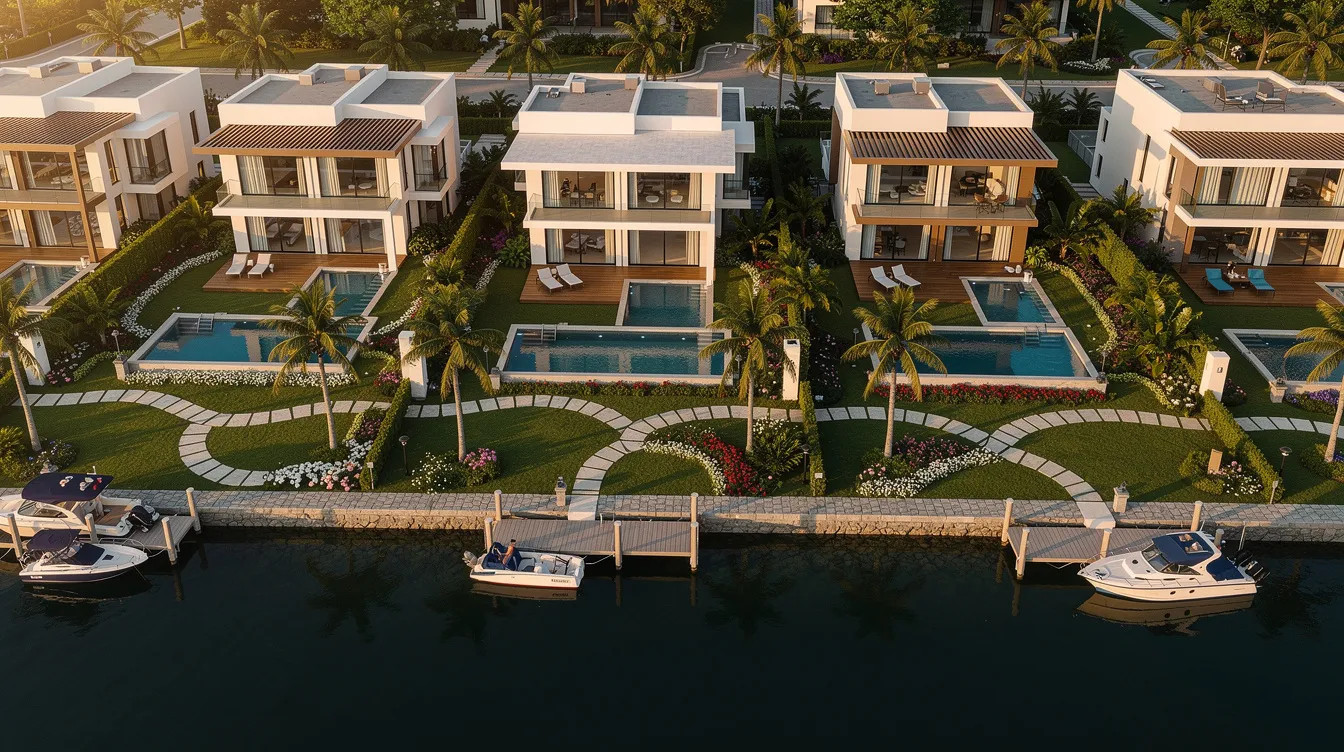
This article focuses on Singapore private luxury residential and high-end investment properties: Good Class Bungalows, District 10/11 landed homes, and ultra-prime condominiums priced from S$5 million to S$50 million. It is not generic personal finance advice, nor a product pitch for mass-market condo buyers. The target audience is self-employed founders, family business owners, high net worth individuals, family office principals, and foreign investors who are “asset rich, income light.”
A pledged asset facility allows a borrower to pledge liquid securities or cash to a lender; in practice, this works much like a pledged asset line, where investment assets serve as collateral for short-term liquidity and the bank then treats those pledged assets as an income-equivalent buffer under MAS Notice 645 rules. The result: a higher loan quantum than the borrower’s formal salary alone would support, without selling investments and triggering capital gains or losing market exposure.
What you will gain from this article:
-
A clear definition of pledged asset lines and show-funds structures in the Singapore property financing context
-
Concrete numbers showing how these facilities close Total Debt Servicing Ratio (TDSR) gaps for luxury purchases while preserving flexibility around borrowing against a portfolio for investing decisions
-
Three distinct deal structures with worked examples
-
A breakdown of risks, lender expectations, and required documentation
-
An overview of how AESTHETIC HAVENS models and negotiates these solutions with banks and private lenders
Understanding Pledged Asset Facilities and Show Funds for Luxury Property
A pledged asset facility is a credit arrangement where a borrower’s liquid financial assets serve as collateral for a loan or credit line. When structured as a securities-backed credit line, it may also be described as a pledged asset line. “Show funds” refers to demonstrating verifiable liquid wealth to a lender at the point of underwriting. Both mechanisms address the same problem: translating portfolio value into borrowing capacity for property purchases. In Singapore, MAS Notice 645 governs how banks may count eligible financial assets toward TDSR calculations, making these structures regulatory-compliant rather than informal workarounds.
What Is a Pledged Asset Line Facility in Property Financing?
A pledged asset facility is a credit line, often structured as a pledged asset line, secured against liquid assets such as cash deposits, money-market funds, blue-chip equities, mutual funds, and investment-grade bonds. The borrower transfers or pledges an investment portfolio to a private bank or lender, which then extends an investment credit line (often a revolving line) or factors the pledged assets into a higher property loan approval.
The core difference from a traditional mortgage is security type. A mortgage is secured on the luxury property itself. A pledged asset facility is secured on liquid financial assets held in a brokerage account or custodial arrangement. A pledged asset facility separates property financing from the property itself, giving the borrower more investment flexibility across their balance sheet.
Pledge terms restrict the borrower from selling or withdrawing pledged securities without lender consent. HSBC’s Wealth Lending facility in Singapore, for example, accepts equities at advance rates up to 70% and investment-grade fixed income up to 95%, with the borrower’s portfolio held under lien. Lenders usually set advance rates that do not lend 100% of the asset’s market value; each asset type in a pledged facility carries specific advance rates based on its liquidity and volatility.
The Monetary Authority of Singapore’s regulatory framework treats these structures as suitable for sophisticated clients. Under MAS Notice 645, eligible assets pledged for at least four years count at full value toward the income-equivalent calculation. Using a pledged asset facility preserves the overall investment portfolio’s market exposure, which is why high net worth individuals prefer it to outright liquidation, as it can support liquidity without interrupting long-term investing plans.
What Does “Show Funds” Mean for Monthly Income Gap Bridging?
In the Singapore luxury property context, “show funds” means demonstrating verifiable, on-shore or off-shore liquid assets that serve two purposes: topping up the cash down payment and buyer’s stamp duties (including ABSD), and acting as a buffer that lenders treat as de facto repayment capacity over the loan tenor.
The mechanics differ from pledging. Under MAS Notice 645 rules, “shown” assets (unpledged) count at only 30% of their value toward income-equivalent calculations. Pledged funds locked for four or more years count at 100%. This 70-percentage-point gap is why many buyers who initially plan to just “show” their portfolio end up committing to a full pledge agreement.
Private banks model these assets in two primary ways. The first is asset depletion: treating a S$5M liquid portfolio as equivalent to a notional monthly income stream when testing TDSR, by dividing the eligible asset value over 48 months. The second is a Lombard-style credit line whose interest-only payments are small, lowering TDSR impact compared to a fully amortising mortgage of the same amount.
Documentation requirements are strict. Lenders demand recent bank statements, custody or brokerage statements from recognised institutions, and evidence that funds are freely transferable and not encumbered. Unclear documentation is one of the most common applications of compliance rejection at the private banking level.
Once you understand how pledged assets and show funds work conceptually, the practical question becomes: how much additional loan quantum do they unlock, and at what cost?
How Pledged Asset Facilities Bridge the Income Gap for Luxury Properties
High-net-worth buyers encounter an “income gap” when buying luxury properties because Singapore’s TDSR framework was designed around salaried employment, not entrepreneurial wealth. This section walks through the specific mechanisms and numerical examples that show how pledged asset lines close that gap.

The Singapore TDSR Challenge for High Net Worth High-End Buyers
MAS Notice 645 caps aggregate debt servicing at 55% of gross verifiable monthly income. Banks apply stressed interest rates of 4–5% when calculating monthly instalments, regardless of the actual rate on the loan. Variable income sources like bonuses, dividends, rental income, and foreign earnings face haircuts of 30–70% depending on the bank and income type.
Consider a concrete example. A buyer targets an S$8M District 10 condo and declares S$25,000/month in verifiable income. At 55% TDSR, their maximum total debt servicing capacity is S$13,750/month. Under a stress test at 4.5% over 25 years, a S$5M loan requires roughly S$27,800/month in payments. The buyer cannot qualify for a S$5M loan on income alone; most banks would cap approval at S$3.5M–S$4M, forcing the buyer to deploy S$4M–S$4.5M in cash equity.
This dynamic penalises three profiles: entrepreneurs with retained earnings locked inside companies, family office principals drawing minimal salaries, and self-employed professionals with lumpy or seasonal cash flow. Their net worth may be S$20M+, but their monthly income on paper is a fraction of what a salaried executive at the same wealth level would show.
Three Ways Pledged Assets Support Higher Loan Approval
Lenders deploy several modelling approaches to bridge the income gap. The three most common applications are the asset depletion model, Lombard credit lines, and hybrid mortgage-plus-pledge structures.
Asset depletion model. The lender assumes a conservative drawdown on a pledged portfolio over 48 months, converting the asset value into a notional monthly income stream. A S$5M portfolio pledged for four years produces an income equivalent of roughly S$104,167/month (S$5M ÷ 48). Combined with S$25,000/month actual income, the borrower’s “combined income” rises to S$129,167/month. At 55% TDSR, that supports up to S$71,000/month in total debt servicing, enough for loans well above S$10M depending on tenure and rate. The actual conversion formula varies by bank and asset class; equities face haircuts of 30–50%, while cash deposits pledged for four years count at full value per MAS rules.
Lombard / investment credit line.DBS and OCBC offer multi-currency revolving term loans secured on marketable securities, often referred to as a pledged asset line when the facility is secured against an investment portfolio. A S$3M Lombard line at 4.5% interest-only costs S$11,250/month; the same S$3M as a fully amortising 25-year mortgage at 4.5% costs S$16,700/month. The interest-only structure reduces the TDSR burden by S$5,450/month, freeing capacity for a larger property mortgage. Pledged asset facilities often involve variable interest rates, which means the borrower’s costs shift with market rates. OCBC’s published example shows that with a S$750,000 investment portfolio at a 70% advance ratio, a client can access wealth financing for investment or personal needs. As part of broader investing decisions, borrowing against a portfolio should be assessed alongside portfolio risk and liquidity needs.
Hybrid mortgage + pledged facility structure. A private bank extends a conventional mortgage on the luxury unit up to its conservative LTV based on verified income (e.g., S$4M). An additional top-up facility, secured on pledged assets, covers another S$2M–S$3M. The property carries a first-charge mortgage; the portfolio carries a separate pledge agreement for the top-up line. This split structure lets the borrower reach higher overall leverage while each component stays within its own risk parameters. AESTHETIC HAVENS regularly helps clients model and negotiate such split structures across multiple institutions to optimise total borrowing cost and flexibility.
Buying a S$12M Luxury Property Without Fixed Employment: Worked Example
A 44-year-old Singapore-based founder exited a technology company in 2025. She holds S$9M in listed equities and S$2M in cash at a private bank, and this structure does not depend on an existing home being fully paid. Her only formal income is S$8,000/month in director’s fees from a holding company she still chairs. She wants to purchase a S$12M Good Class Bungalow-equivalent luxury landed property.
Without a pledged asset facility, her S$8,000/month income supports maximum TDSR of S$4,400/month in debt servicing. At stressed rates, that translates to a loan of roughly S$800,000. Even with generous income adjustments, banks would cap her mortgage at S$3.5M–S$4M. She would need S$8M+ in cash to close, liquidating most of her portfolio, selling large blocks of stock, and triggering immediate capital gains tax on appreciated assets.
With a pledged asset facility and show funds, the picture changes. The private bank pledges S$7M of her equity portfolio at 60% advance ratio, creating a S$4.2M Lombard line. Separately, the bank models the S$9M portfolio using asset depletion over 48 months, producing an income equivalent of roughly S$187,500/month (after applying a 40% haircut for equities). Combined with her S$8,000/month director’s fees, the bank treats her notional income as approximately S$195,500/month. At 55% TDSR, she can support up to S$107,500/month in debt servicing, enough to qualify for a S$7.5M mortgage on the property.
Final structure: S$7.5M mortgage on the property + S$2M drawn from the Lombard line + S$2.5M cash from her deposit account = S$12M purchase price plus stamp duties and legal fees. She retains roughly S$2M in equities outside the pledge, preserving a liquidity buffer and continued market exposure. Lenders require upfront maintenance of asset value above the loan amount to avoid margin calls, so she keeps a 15% value buffer in the pledged portfolio.
The deal closes in nine weeks from initial modelling to completion. Her cash flow obligation is S$7,500/month interest on the Lombard draw and roughly S$41,700/month on the mortgage (interest + principal at 4.5% over 25 years), totalling S$49,200/month. Her TDSR ratio stands at approximately 25% of her notional combined income, leaving room for other financial needs.

Implementing a Pledged Asset / Show-Funds Strategy for Luxury Purchases
Structures that look clean on a spreadsheet require careful sequencing between bank, broker, custodian, and legal teams. Portfolio transfers across jurisdictions can take 2–4 weeks. Pledge agreements must align with Option to Purchase (OTP) exercise dates. Misalignment on any of these timelines can collapse a deal or force the borrower into bridge funding at unfavorable prices.
Step-by-Step Process to Use Pledged Assets for a Luxury Property Purchase
Start with portfolio and income analysis before issuing any OTP. The order below reflects how AESTHETIC HAVENS typically runs S$5M–S$30M luxury acquisitions:
-
Profile and objectives review. Gather income documents, portfolio statements across all brokerage accounts, corporate structures, and the desired property budget. Identify eligible assets by asset class: cash, equities, bonds, mutual funds, and any retirement accounts or private equity holdings (which may not qualify).
-
Affordability modelling under TDSR. Run three scenarios: income-only mortgage limits, income supplemented with asset depletion assumptions, and income combined with a Lombard/pledge line. This is also where the team compares the borrowing structure with the cost and consequences of changing the client’s investing strategy. The gap between scenario one and scenario two reveals exactly how much borrowing capacity the pledged asset unlocks.
-
Shortlisting lenders and structures. Compare local banks, private banks, and non-bank private credit providers. Evaluate each on LTV for both property and portfolio, interest rate and spread, flexibility on offshore income, and willingness to work with complex ownership structures. Private credit funds offer asset-backed loans outside conventional bank constraints, which matters for borrowers whose portfolios sit in foreign jurisdictions.
-
Indicative terms and pre-approval. Secure written indications of maximum mortgage quantum, maximum Lombard/pledge line or pledged asset line, rates, margin call triggers, and haircuts on each securities class. This step determines whether the deal arithmetic holds before the buyer commits capital to an OTP.
-
Coordinating portfolio transfer and pledge. Move assets into the lending institution’s custody where required. Cross-border transfers from overseas custodians routinely take 2–4 weeks. The pledge agreement must specify LTV maintenance thresholds, rights over pledged assets, and events of default.
-
Executing OTP and final loan documentation. Align pledge agreements, facility letters, and mortgage documents with the completion date. Legal counsel reviews all instruments to confirm the property mortgage and the pledge facility do not create conflicting security interests.
-
Post-completion monitoring. Set up quarterly reviews of portfolio value, LTV on the Lombard line, and interest costs. Agree on an exit strategy: future business sale, rental income ramp-up, or partial portfolio liquidation over 3–5 years.
Comparing Key Funding Structures for Bridging the Income Gap
|
Criterion |
Income-Only Mortgage |
Mortgage + Pledged Asset Facility |
Non-Bank Bridge Loan |
|---|---|---|---|
|
Primary Security |
Property only; limited by TDSR on income |
Property + securities/cash portfolio; top-up may be structured as a pledged asset line |
Property value and planned exit event |
|
Typical Max Effective LTV on Property |
55–75%, depending on borrower profile |
Higher effective leverage when Lombard line covers part of down payment or ABSD |
70–80% from private credit lenders |
|
Assessment Focus |
Monthly income verified against TDSR 55% cap |
Income + asset depletion or Lombard servicing cost |
Asset value, not monthly income; bridging loans are assessed on property value |
|
Suitable Borrower Profiles |
Salaried executives, professionals with stable payslips |
Entrepreneurs, founders, family office principals with large portfolios |
Foreign investors, borrowers between liquidity events, anyone needing speed |
|
Pros |
Lowest interest rate; simplest documentation |
Higher loan quantum; preserves investment portfolio; flexible repayment terms |
Speed (days to weeks); bypasses TDSR entirely; bridging loans typically run 6 to 24 months |
|
Cons / Key Risks |
Limited quantum for asset-rich, income-light buyers |
Market risk on pledged securities; margin calls if asset value drops 25–30%; variable interest rate exposure |
Higher rates (8–15% p.a.); bullet repayment at maturity; refinancing risk if exit event delays |
For luxury acquisitions in the S$5M–S$30M range, the mortgage + pledged asset facility structure covers the broadest set of client profiles. Non-bank bridge loans serve a narrower purpose: bridging a gap of 6–18 months between purchase and a planned liquidity event like a business sale. AESTHETIC HAVENS typically models all three options side by side, then recommends the blend that minimises total cost of capital while maintaining a liquidity buffer against market stress.
Common Challenges and How to Manage Them
Pledged facilities and show funds unlock access to higher leverage, but they also introduce portfolio risk, compliance friction, and the temptation to over-borrow. Each of these challenges has specific mitigations.
Portfolio Volatility and Margin Calls
Market downturns can trigger maintenance calls, requiring additional collateral or repayment. A 25–30% equity market correction can push a Lombard line’s LTV past its maintenance threshold. The lender’s response is a margin call: the borrower must add cash, pledge more assets, or face forced liquidation of pledged securities at potentially unfavorable prices. Borrowers should also assess whether using a pledged facility is preferable to disrupting long-term investing plans during a market drawdown.
Pledging securities carries the risk of forced liquidation during a downturn, potentially triggering capital gains taxes at the worst possible time. Three specific mitigations reduce this exposure. First, maintain a 15–20% value buffer; never borrow at the maximum advance rate the lender offers. Second, shift a portion of the pledged portfolio into lower-volatility instruments like short-duration bonds or money-market funds, even if their advance rates are lower. Third, stress test the entire structure at a 30–40% portfolio drawdown before signing any pledge agreement.
Regulatory and Compliance Scrutiny on Source of Funds
MAS and bank-level anti-money-laundering (AML) and know-your-client (KYC) standards apply to all large, cross-border capital inflows. Buyers who hold assets in offshore brokerage accounts or foreign custodian banks face two problems: unclear source-of-wealth documentation and slow onboarding at Singapore private banks, which can delay completion past OTP deadlines.
The solution is preparation. Compile detailed source-of-wealth narratives before engaging any lender: sale-and-purchase agreements from business exits, audited company financials, tax returns, IRAS notices of assessment, and exit transaction documents. Where possible, use institutions that already hold the client relationship, as existing KYC files accelerate the process. Build time buffers into OTP and completion timelines; 4–6 extra weeks is standard for cross-border pledge arrangements.
Overleveraging and Cash-Flow Stress
Flexible structural terms with variable payments can enhance cash flow for high net worth investors, but they also create a behavioural risk: borrowing to the maximum because approval is possible on paper. Two stress scenarios test this. An unexpected rise in interest rate from 2026 onwards increases servicing costs on both the mortgage and the Lombard line. A business downturn reduces actual cash flow below the projections the lender modelled.
Set conservative internal caps on total leverage, below what lenders are willing to extend. Some borrowers also become overconfident because they own another property that is fully paid, but that trapped equity does not remove the cash-flow stress of a new leveraged purchase. Structure interest-only or retained-interest periods with a clear, time-bound exit plan: an upcoming liquidity event in 18–36 months, a rental income ramp-up with realistic vacancy assumptions (5–10% for prime Singapore residential), or a planned partial portfolio liquidation schedule. Pledged asset facilities can mitigate liquidity challenges during fluctuating cash flow periods, but only if the borrower retains enough unencumbered capital to absorb 12–18 months of debt servicing without needing to touch the pledged portfolio.
Independent modelling and advisory before committing to these structures is the difference between a well-engineered capital stack and an overleveraged position that unwinds under stress.
Conclusion and Next Steps
Using pledged asset facilities and genuine show funds allows buyers without conventional fixed salaries to bridge the income gap and secure luxury properties priced in the S$5M–S$30M range. The mechanism works because MAS Notice 645 permits banks to treat pledged eligible assets as an income equivalent under specific conditions, converting portfolio wealth into qualifying capacity. But this is a leveraged strategy that layers portfolio market risk on top of property market risk, and the cost of getting the structure wrong is margin calls, forced liquidation, or deal collapse.
Pledged asset facilities can also provide purchasing speed and improved bidding in competitive luxury real estate markets, since pre-approved borrowers with pledged-asset capacity can move faster than those assembling cash from multiple sources.
Four steps to take from here:
-
Compile your full financial picture: all income streams, existing property holdings, liquid investments with up-to-date custodian statements, and any private equity or illiquid positions that may not qualify as eligible assets.
-
Engage a mortgage advisor like AESTHETIC HAVENS to run TDSR and leverage scenarios before you shortlist properties. The modelling should cover income-only, asset depletion, and Lombard scenarios with stress tests at 30–40% portfolio decline.
-
Approach shortlisted banks and private banks early to confirm their specific pledged-asset and show-funds policies, including advance ratios per asset class, lock-up periods, and margin call thresholds.
-
Structure your OTP and completion dates around realistic timelines for portfolio transfer, approval, and funding; 8–12 weeks from initial engagement to completion is a reasonable baseline for cross-border structures.
Related topics worth exploring: Singapore equity release options for existing luxury properties (where Singapore property owners can access equity without selling, and equity release funds can be used for business capital, overseas property acquisitions, investment diversification, education funding, or debt consolidation), using industrial assets and commercial real estate as additional collateral, and how family offices integrate Lombard credit, property leverage, and private credit facilities into a single balance-sheet strategy.
AESTHETIC HAVENS offers confidential modelling sessions for S$5M–S$30M luxury acquisitions using pledged assets. If you are evaluating a purchase and want to understand your real borrowing capacity across multiple lender structures, reach out for an initial assessment.
Additional Resources and FAQs
Quick-reference answers to common questions, designed for readers who need a specific data point rather than the full walkthrough above.
Can I use pledged assets to fully replace income for TDSR in Singapore?
Most banks will not accept assets as a complete substitute for all income. MAS rules allow partial substitution: banks can model asset depletion over 48 months to produce an income equivalent, and they can grant credit lines backed by pledged securities, including a pledged asset line. But they also expect some form of recurring income, whether salary, director’s fees, dividends, or rental income. Policy differs between retail banking divisions and private banking desks; a private bank with a full relationship view of the client typically accepts lower formal income thresholds. Institution-specific advice is essential, as no two banks apply the MAS framework identically.
What kinds of assets are typically acceptable for a pledged facility?
Commonly accepted: cash and term deposits held in liquid investing accounts that a bank can value and margin consistently (highest advance rates, up to 90–95%), listed equities and ETFs with adequate liquidity and diversification (advance rates 50–70%), investment-grade bonds and certain money-market mutual funds (70–90%). Foreign currency assets face an additional cross-currency haircut of 10–20%.
Typically ineligible or heavily discounted: unlisted shares, private equity fund interests, crypto assets, and concentrated single-stock positions. A portfolio where one stock represents more than 30–40% of total value will face steep additional haircuts, as the opportunity cost of forced liquidation in a downturn would be severe. Charles Schwab and similar international brokerages can hold eligible assets, but the lending bank may require transfer to its own custody before counting them toward the pledge.
Are interest costs on pledged asset facilities tax-deductible?
In Singapore, interest on borrowing is deductible if the borrowed funds are used for income-producing investments: rental property generating assessable income, or capital deployed into an income-producing business. Interest on a loan for a personal-use residence is not deductible. For cross-border structures where funds are used partly for investment and partly for personal use, allocation becomes complex. Consult a qualified Singapore tax professional, particularly for structures involving multiple currencies and jurisdictions.
How does this strategy apply to industrial and commercial properties?
The same pledged-asset and show-funds logic applies to acquiring or refinancing high-value industrial, logistics, or commercial assets. The differences are in LTVs (typically 70–80% for commercial vs. 75% for residential), tenors (often shorter, 10–15 years), and income assessment, where lenders scrutinise the rental roll, tenant credit quality, and lease expiry profile rather than personal income alone; even where a borrower holds residential property that is fully paid, the new facility is still underwritten against asset value, income, and exit structure rather than assuming that equity is automatically available. Cash-out refinancing replaces an existing mortgage for cash access, and home equity loans remain subject to TDSR income assessment even for commercial properties owned personally. Bridging loans secured against Singapore private property bypass conventional bank TDSR criteria and are assessed on property value rather than income, with repayment often structured as a bullet at maturity.
For investors holding mixed portfolios of luxury residential and industrial assets, structuring across multiple properties and asset classes under a single advisory framework is more capital-efficient than approaching each deal in isolation. AESTHETIC HAVENS works across both segments, connecting the dots between property collateral, pledged portfolios, and private credit facilities to determine the optimal capital structure for each client’s full balance sheet.


