


Commercial property risk management is the process of identifying, evaluating, and controlling hazards to protect assets and sustain investment returns. Owners who treat this as a continuous system rather than a one-time checklist consistently outperform those who react only after losses occur. The best risk management tips for commercial property combine proactive maintenance, accurate insurance valuation, tenant screening, and regular risk assessments. Zurich, Grimes Insurance, and AllCover each confirm that written, dynamic plans reduce financial exposure far more effectively than ad hoc responses. This guide gives you a practical framework to protect your property and strengthen your investment position.
1. What are the top physical risk management strategies?
Physical maintenance is the foundation of any property risk control program. A written, dynamic maintenance plan with scheduled inspections and ongoing updates is the single most effective tool for preventing costly damage claims. Deferred maintenance does not just create safety hazards. It raises your insurance premiums and weakens your negotiating position with underwriters.
Structure your maintenance schedule by frequency:
- Monthly: Check fire extinguishers, test emergency lighting, inspect common area lighting, and clear drainage systems.
- Quarterly: Inspect HVAC filters, test smoke detectors, check roof flashings, and review plumbing fixtures for leaks.
- Annually: Commission full electrical panel inspections, test fire suppression systems, and conduct roof membrane assessments.
Zurich specifically recommends focusing on high-risk components and building supply chain contingency plans for critical replacement parts. If a chiller unit fails and the replacement lead time is 12 weeks, your tenants face months of disruption. Identifying that risk in advance lets you pre-qualify vendors and hold spare components.
Oxmaint notes that some tasks require licensed contractors for fire suppression testing, elevator inspections, and electrical work, with certification records retained for at least five years. Those records are not just compliance documents. They are evidence you can present to insurers during audits or claim reviews.
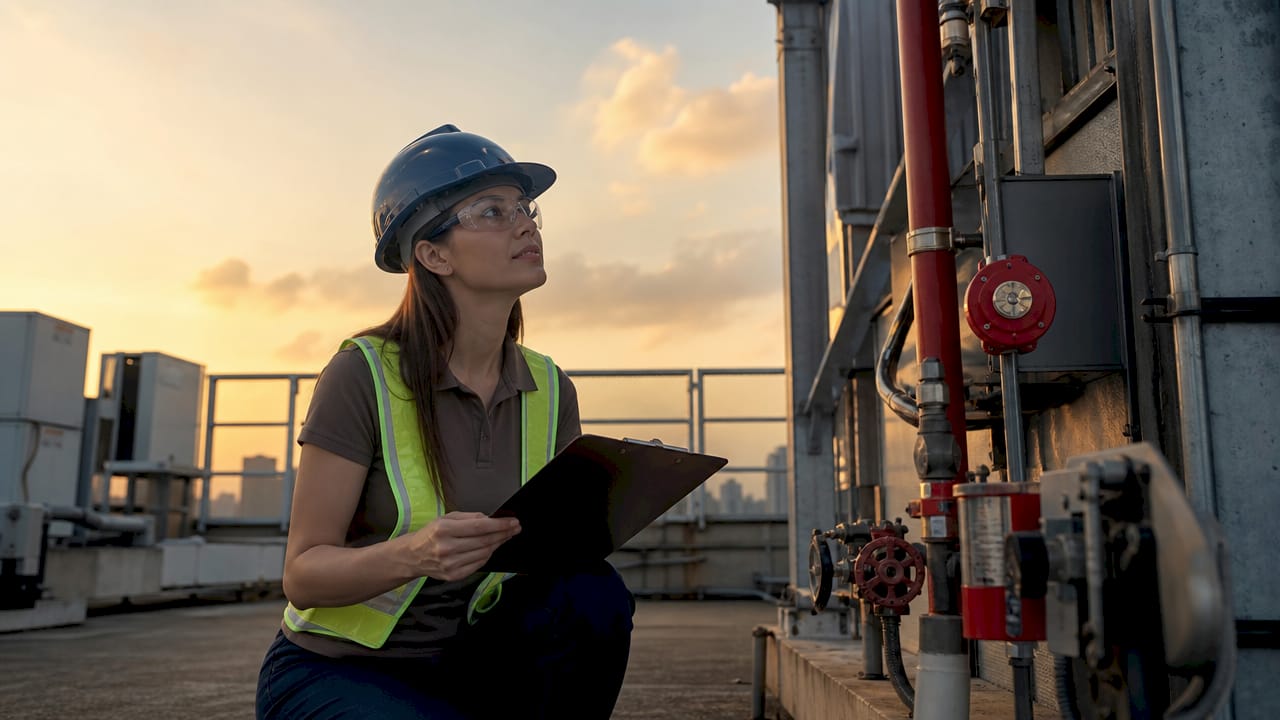
Pro Tip: Use maintenance management software such as Oxmaint or UpKeep to log every inspection, contractor visit, and certification date. A complete digital trail keeps you audit-ready and supports premium negotiations.
2. How does tenant screening reduce property risk?
Tenant quality directly affects your vacancy rate, liability exposure, and insurance risk profile. Grimes Insurance confirms that tenant screening procedures reduce theft, vandalism, and liability claims, which translates into a better risk profile with underwriters. A single high-risk tenant can raise your premiums across an entire portfolio.
Apply these screening and lease controls consistently:
- Run credit checks and business financial reviews on all prospective tenants before signing.
- Verify business licenses, operating history, and references from prior landlords.
- Avoid over-reliance on a single dominant tenant. A diverse tenant mix limits vacancy risk if one business closes.
- Use triple-net leases where appropriate. These transfer operating costs including insurance, taxes, and maintenance to the tenant, reducing your direct exposure.
- Require personal or corporate guarantees on leases to secure payment obligations beyond the lease deposit.
Obie Insurance recommends structuring lease terms to clearly define tenant responsibilities for property upkeep, liability insurance requirements, and permitted uses. Ambiguous lease language creates disputes and coverage gaps.
Pro Tip: Review and update all lease agreements every two years at minimum. Risks evolve, and lease terms written in 2020 may not reflect current liability standards or local regulatory requirements.
3. What role does insurance play in managing commercial property risks?
Insurance is not just a safety net. It is an active component of your risk management framework. The way you structure coverage, document your property, and communicate with your insurer determines how much protection you actually receive when a loss occurs.
Start with an accurate replacement cost appraisal. Zurich stresses that proper replacement cost valuations, including business interruption estimates, are the starting point for setting correct insurance limits. Underinsuring your property does not just leave a gap. It triggers coinsurance penalties.
Dragon Insurance explains the 80% coinsurance clause clearly: if your coverage falls below 80% of the property’s replacement cost, your insurer reduces partial loss payouts proportionally. A building worth $2,000,000 that is insured for only $1,200,000 will not receive full reimbursement on a $400,000 claim. Revalidate your replacement cost annually, especially after renovations or significant market changes.
- Commission a professional replacement cost appraisal every two to three years.
- Revalidate business interruption values annually, factoring in revenue growth and operating cost changes.
- Choose special form policies over basic or broad form. Dragon Insurance confirms special form policies cover all perils except those explicitly excluded, providing broader protection.
- Document all security systems, access controls, and monitored alarms. Grimes Insurance confirms that documented security measures lower premiums by demonstrating reduced theft and vandalism exposure.
- Share loss prevention records with your broker annually. Grimes Insurance notes that documented maintenance records directly influence premium pricing.
Pro Tip: Schedule an annual meeting with your insurance agent specifically to present your maintenance logs, inspection certifications, and security upgrades. Treat it as a premium review, not just a renewal.
4. How to conduct a regular risk assessment for commercial properties
A risk assessment is a structured process for identifying what can go wrong, how likely it is, and how severe the impact would be. AllCover describes risk assessment as a proactive tool that aligns physical controls with insurance requirements. Owners who skip formal assessments often discover gaps only after a claim is denied.
Follow this framework for each assessment cycle:
- Walk the premises systematically. Inspect common areas, building exteriors, mechanical rooms, parking structures, and tenant spaces. Look for slip hazards, water intrusion, electrical issues, and fire risks.
- Use a risk matrix. Plot each identified hazard by likelihood and impact. High-likelihood, high-impact risks get addressed first. Low-likelihood, low-impact risks get monitored.
- Apply the hierarchy of controls. AllCover outlines the priority order: eliminate the hazard first, then substitute a safer alternative, then isolate the risk, and finally apply administrative controls if physical solutions are not feasible.
- Maintain a risk register. Document every identified hazard, its current control measure, the responsible party, and the review date. Update the register at least annually or after major changes such as tenant turnover or renovations.
- Include tenant and vendor risks. Assess how tenant operations, contractor activities, and supply chain dependencies add exposure to your property.
Zurich recommends continuous review and dynamic updates to the risk plan as new hazards emerge, regulations change, or the property undergoes modifications. A static risk register is only marginally better than no register at all.
For investors managing multiple assets, understanding real estate asset management frameworks helps integrate risk assessments into broader portfolio governance.
5. Comparing key risk management approaches for property investors
No single strategy covers all exposures. The most effective property risk control programs combine physical maintenance, tenant controls, insurance structuring, and formal risk assessments. Each pillar addresses a different category of loss.
| Approach | Best for | Key benefit | Main limitation |
|---|---|---|---|
| Preventive maintenance | Older buildings, high-traffic assets | Reduces physical damage claims and deferred repair costs | Requires consistent scheduling and contractor management |
| Tenant screening and lease controls | Multi-tenant retail or office properties | Limits vacancy risk and liability exposure | Requires legal review of lease terms |
| Insurance structuring | All property types | Transfers financial risk and covers catastrophic losses | Only effective with accurate valuations and full documentation |
| Formal risk assessments | Properties with complex operations or recent changes | Identifies gaps before losses occur | Requires time investment and trained reviewers |
Property age, location, and tenant profile should guide where you focus first. A 30-year-old industrial building in a flood-prone area needs aggressive maintenance and accurate flood coverage before anything else. A newly built office tower with stable anchor tenants needs strong lease structuring and regular insurance revalidation. Understanding factors affecting commercial property value helps you prioritize which risks carry the most financial weight for your specific asset.
Collaboration with your insurer and property manager is not optional. Risk profiles evolve as markets shift, tenants change, and buildings age. Owners who engage their insurers proactively rather than only at renewal consistently achieve better coverage terms and lower premiums.
Key takeaways
Effective commercial property risk management requires combining physical maintenance, accurate insurance valuation, tenant screening, and regular risk assessments into one written, continuously updated plan.
| Point | Details |
|---|---|
| Document everything | Maintenance records and inspection certifications directly reduce insurance premiums and support claims. |
| Revalidate insurance annually | Replacement cost appraisals prevent coinsurance penalties and coverage gaps after renovations. |
| Screen tenants rigorously | Credit checks, diverse tenant mix, and strong lease terms reduce vacancy and liability exposure. |
| Use a risk matrix | Assess each hazard by likelihood and impact to prioritize controls and allocate resources effectively. |
| Treat risk management as ongoing | Annual reviews and dynamic updates keep your plan aligned with new hazards, regulations, and market changes. |
Why I stopped treating risk management as a checklist
Most property owners I work with approach risk management the same way they approach tax filing. They do it once a year, check the boxes, and move on. That approach works fine until it doesn’t, and when it fails, the losses are rarely small.
The shift that changed how I advise clients came from watching a well-maintained office building face a denied claim because the owner had not revalidated the replacement cost in six years. The building had been renovated twice. The insured value was 60% of actual replacement cost. The coinsurance clause cut the payout significantly. The owner had done everything right on maintenance and nothing right on insurance governance.
Maintenance documentation is an underwriting asset. Grimes Insurance makes this point directly: quarterly inspections and detailed records influence insurance pricing and loss frequency. Most owners know this in theory but never act on it systematically.
The property owners who protect their assets best treat risk management as a living system. They update their risk registers after every major tenant change. They share loss prevention evidence with their brokers before renewal, not during a claim. They build supply chain contingencies into their maintenance plans. That is not extra work. That is the actual job of owning commercial property well.
— Aman
How Aesthetic Havens supports commercial property investors
Commercial property ownership rewards those who plan ahead. Aesthetic Havens provides expert guidance on commercial property investment across Singapore and international markets, helping owners and investors build portfolios that are both profitable and well-protected.

Whether you are assessing a new acquisition, reviewing your current asset’s risk exposure, or looking for guidance on leasing structures that reduce liability, Aesthetic Havens offers the advisory support you need. Aman Aboobucker and the ERA Realtors team bring hands-on experience in commercial leasing and asset protection to every client engagement. Visit Aesthetic Havens to connect with a specialist and put your risk management plan on solid ground.
FAQ
What is commercial property risk management?
Commercial property risk management is the process of identifying, evaluating, and controlling hazards that could cause financial loss or physical damage to a property. It includes maintenance planning, insurance structuring, tenant screening, and formal risk assessments.
How often should a commercial property risk assessment be done?
AllCover recommends conducting a full risk assessment at least annually, or after significant changes such as tenant turnover, renovations, or major weather events.
What is the 80% coinsurance rule in commercial property insurance?
The 80% coinsurance clause requires your coverage to equal at least 80% of the property’s replacement cost. If it falls below that threshold, Dragon Insurance confirms that partial loss payouts are reduced proportionally.
How does maintenance documentation lower insurance premiums?
Grimes Insurance confirms that documented inspection records and maintenance logs demonstrate reduced risk to underwriters, which leads to lower premiums and stronger coverage terms at renewal.
What lease structure best reduces risk for commercial landlords?
Triple-net leases transfer operating costs including insurance, taxes, and maintenance to tenants, reducing the landlord’s direct financial exposure and aligning tenant incentives with property upkeep.


