


Most property buyers in Singapore assume their two main choices are new launches or resale properties. Sub-sale property sits in a category most people overlook, yet understanding what is sub-sale property could unlock a genuinely undervalued buying or investment opportunity. This guide cuts through the confusion, covering the sub-sale property definition, how transactions work before project completion, what the numbers actually look like, and what you need to watch out for legally before signing anything.
Table of Contents
- Key Takeaways
- What is sub-sale property in Singapore
- Benefits and challenges of sub-sale properties
- Market data and pricing insights
- Legal and procedural considerations
- Sub-sale vs new launch: which fits your goals?
- My honest take on the sub-sale market
- Ready to explore sub-sale investment opportunities?
- FAQ
Key Takeaways
| Point | Details |
|---|---|
| Sub-sale defined | A sub-sale is a private property sold by its original buyer before the project receives its Temporary Occupation Permit. |
| Profit potential is real | Condo sub-sale transactions averaged $270,000 profit per unit in 2024, showing genuine capital gain opportunities. |
| Contracts are not standardized | Sub-sale SPAs are individually negotiated, requiring thorough legal review to avoid costly disputes. |
| URA data protects you | Singapore’s URA portal makes all transaction prices publicly accessible, reducing your risk of overpaying. |
| Sub-sale vs new launch | Sub-sales offer earlier occupancy and potential savings over launch prices, but carry more legal complexity. |
What is sub-sale property in Singapore
A sub-sale property is a private residential unit that the original purchaser bought from a developer and then sold to a third party before the project has received its Temporary Occupation Permit (TOP). In plain terms, the building is still under construction, but ownership of the unit changes hands privately between two individuals before the keys are ever officially handed over.
This is distinct from two categories most buyers know well. A new launch is bought directly from the developer at the start of the project. A resale property is a completed unit with a valid TOP, typically sold on the open market. Sub-sale sits in between. The original buyer effectively transfers their contractual rights under the Sale and Purchase Agreement to a new buyer.
Here is what typically defines a sub-sale transaction:
- The property has not yet received its TOP at the time of sale
- The seller is an individual who originally purchased from the developer, not the developer themselves
- The transaction involves transferring the original purchaser’s contractual rights to the new buyer
- The sub-sale process requires a bespoke SPA rather than the standardized developer contracts used at launch
- The buyer steps into the original purchaser’s position, inheriting both the benefits and obligations of that initial contract
Why would sellers choose to go this route? Some bought early in a project cycle when prices were lower and now want to lock in a profit before TOP. Others face changed personal circumstances, like a career relocation or an upgraded property purchase, that make waiting years for completion impractical. The sub-sale market in Singapore occurs before project completion, and this timing is exactly what creates opportunity for buyers who want a brand new unit without waiting through a full construction cycle.
Benefits and challenges of sub-sale properties
Understanding the benefits of sub-sale property requires looking honestly at both sides of the ledger.

What makes sub-sales attractive
Sub-sale buyers can move in or rent out immediately after the unit receives its TOP, which often happens within months of the transaction rather than years. For investors, this means rental yield kicks in faster. For owner-occupiers, it means less time paying rent elsewhere while waiting for a new launch to complete.
The capital gain potential is the other major draw. Buyers who purchased during early launch phases at lower introductory prices can sell at a premium as the project approaches completion and surrounding comparable sales push values up. Buying early-phase units and exiting through a sub-sale can yield meaningful returns within a three to four year window.
Risks worth taking seriously
The legal complexity is where most buyers get caught off guard. Sub-sale SPAs are individually negotiated to suit each buyer and seller, which means they lack the standardized protections that govern developer sale contracts under Singapore’s Housing Developers (Control and Licensing) Act. You are not buying on standard terms. Every clause needs independent legal scrutiny.
Bank valuations can also work against you. Lenders sometimes value sub-sale units conservatively because the property is not yet complete and comparable transaction data may be limited. This can affect how much you can borrow and at what terms.
Sub-sale contracts lack the protections of statutory schedules governing new developer sales, which means disputes over defects, delays, or contract terms are harder to resolve through standard channels.
Pro Tip: Always commission an independent legal review of the sub-sale SPA before committing. Do not assume the contract mirrors what a developer would offer. Pay particular attention to clauses covering defect liability, completion timelines, and what happens if the TOP is delayed.
Market data and pricing insights
The numbers around sub-sale profitability in Singapore are compelling. Condo sub-sale transactions averaged $270,000 profit per unit in 2024, a figure that reflects genuine price appreciation between early launch prices and pre-completion market values. That average alone makes sub-sales worth serious consideration for investors building a property portfolio.
Singapore’s URA transaction data is one of the most useful tools available to both buyers and sellers in the sub-sale market. Prices are searchable publicly, with no login required, giving you a clear picture of what comparable units in the same development sold for at launch and what the sub-sale premium looks like today. This level of transparency is rare in real estate markets globally and dramatically reduces the information gap that used to favor sellers.
Here is a snapshot of how sub-sale pricing dynamics compare to new launch prices in Singapore’s current market:
| Metric | New Launch | Sub-Sale |
|---|---|---|
| Purchase price timing | Fixed at launch, developer-set | Negotiated; typically above launch price |
| Price transparency | Disclosed in developer price list | URA transaction database publicly accessible |
| Price premium | Base price at launch | Seller profit baked into asking price |
| Average 2024 profit captured | N/A (developer to buyer) | $270,000 per unit |
| Negotiation room | Limited (developer controls) | Flexible between private parties |
“Market decisions for sub-sales should be grounded in URA data to prevent information asymmetry and overpayment premiums.” This is not just advice, it is the single most practical advantage buyers have in a sub-sale negotiation.
Singapore’s 3.3% overall price growth in the private residential market supports continued interest in sub-sales, particularly in projects where original launch prices were priced aggressively and pre-completion demand is strong.
Legal and procedural considerations
Buying a sub-sale property in Singapore follows a process that differs materially from both new launch purchases and standard resale transactions. Knowing each step reduces the risk of costly surprises.
- Identify the property and verify existing SPA terms. Before making any offer, review the original developer SPA that the seller holds. You will be stepping into their contractual position, so understanding the rights and obligations in that document is non-negotiable.
- Engage a conveyancing lawyer. Singapore sub-sale transactions require a lawyer who specializes in property conveyancing. The bespoke SPA that governs your purchase must be drafted carefully to reflect the specific terms of the transfer.
- Conduct due diligence on the property. Even though the unit is not yet complete, you can review building plans, approved specifications, and any correspondence between the original buyer and developer regarding defects or changes.
- Negotiate and execute the sub-sale SPA. Unlike standardized developer contracts, this agreement is individually drafted. Both parties negotiate terms including price, payment schedule, and responsibility for any outstanding payments owed to the developer.
- Obtain bank financing approval. Submit the sub-sale SPA to your preferred lender for a formal loan offer. Budget for the possibility that the bank’s valuation may differ from the agreed purchase price.
- Complete the ownership transfer. Once all conditions in the SPA are met, the conveyancing process concludes with the legal transfer of rights under the original developer agreement to you as the new purchaser.
Foreign buyers should also verify compliance with Singapore’s Additional Buyer’s Stamp Duty rules, which apply regardless of whether you are buying new, resale, or sub-sale. The foreigners’ buying guide for 2025 covers these regulatory requirements in detail.
Pro Tip: Request a copy of the developer’s billing schedule before signing the sub-sale SPA. Some sellers have outstanding progress payments due to the developer that, if not clearly addressed in the sub-sale contract, could become your liability after the transfer.
Sub-sale vs new launch: which fits your goals?
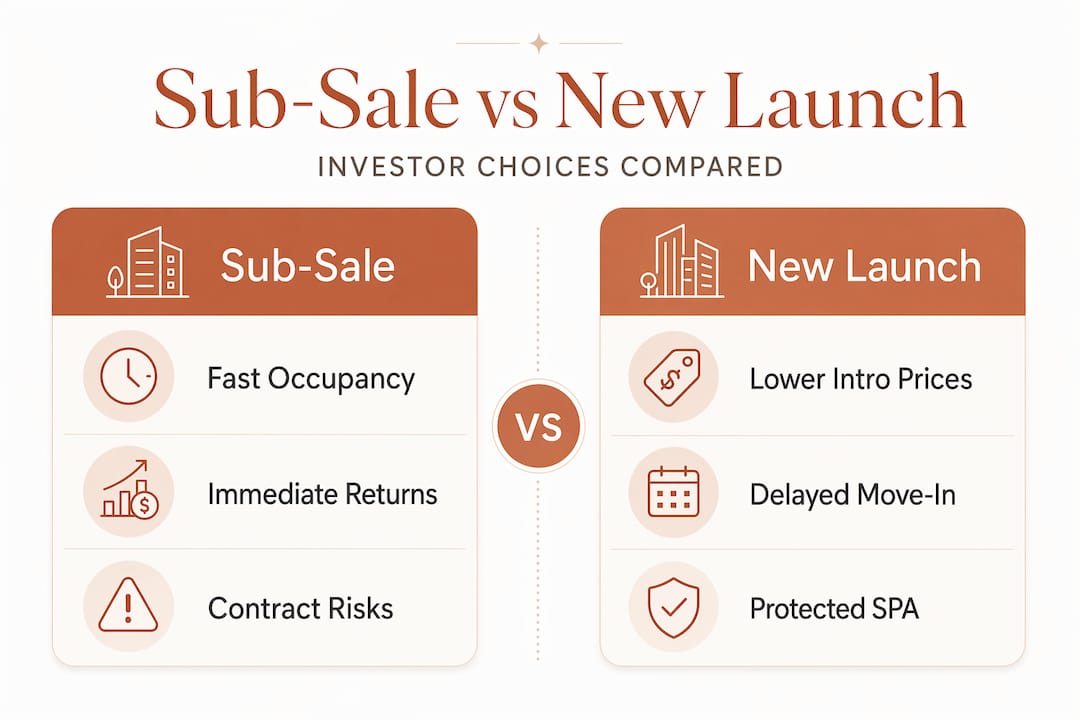
The right choice depends entirely on what you are trying to achieve. Here is how the two options compare across the factors that matter most to buyers and investors:
| Factor | Sub-Sale Property | New Launch Property |
|---|---|---|
| Occupancy timeline | Faster. Unit nears TOP. | Slower. 3 to 5 years typical. |
| Purchase price | Above launch price but below full resale | Developer-set at launch |
| Legal protection | Lower. Bespoke SPA, no statutory schedules. | Higher. Governed by Housing Developers Act. |
| Negotiation flexibility | Higher. Private sale. | Lower. Developer controls pricing. |
| Rental yield start | Sooner | Delayed until TOP |
| Capital gain opportunity | Moderate to high (price already appreciated) | High if early launch pricing is low |
| Defect risk | Moderate (inheriting original buyer’s position) | Low (developer warranty applies) |
Investors chasing capital gains often favor new launches at the earliest pricing phase, then look to exit through a sub-sale before TOP. Owner-occupiers who missed the launch window but want a new unit with minimal wait time find sub-sale properties genuinely practical. Neither option is universally better. The right call depends on your timeline, risk tolerance, and how much legal complexity you are prepared to manage.
My honest take on the sub-sale market
I have worked with buyers who wrote off sub-sales entirely because they assumed the complexity was not worth the trouble. Most of them eventually came back after watching peers capture meaningful gains by doing exactly what felt too complicated to attempt.
My view is that the complexity concern is real but manageable. What makes the difference is not whether you buy sub-sale, but whether you go into it with the right legal support and a clear-eyed view of the numbers. The URA data has genuinely changed this market. Five years ago, buyers were largely dependent on agents and sellers to tell them what a fair price looked like. Now you can cross-reference any sub-sale asking price against actual transaction records in minutes. That transparency shifts power toward informed buyers.
The one thing I consistently see buyers underestimate is the contract review. Bespoke SPAs vary dramatically. I have seen contracts that were fair and well-structured. I have also seen contracts where the seller attempted to offload significant liabilities onto the buyer with language that most people would not flag without experienced legal help.
The $270,000 average profit figure from 2024 is not accidental. It reflects a market where early movers who bought well and sold wisely at the right point in the development cycle captured real value. That window exists in most project cycles if you know where to look and how to structure the exit correctly.
— Aman
Ready to explore sub-sale investment opportunities?
If you are serious about investing in sub-sale property in Singapore, having the right advisor matters more than most buyers realize. The difference between a well-structured sub-sale deal and an expensive mistake often comes down to contract knowledge, market timing, and access to off-market opportunities.

At Aesthetic Havens, we work with buyers and investors at every stage of the sub-sale process, from identifying the right project and phase to negotiating favorable terms and connecting you with trusted legal counsel. Whether you are a first-time buyer or expanding your portfolio, our real estate advisory services are built around Singapore’s property market dynamics, including sub-sale transactions. Reach out to Aman directly to discuss your goals and get guidance tailored to your investment position. You can also learn more about how our agents support buyers throughout the transaction process.
FAQ
What is the sub-sale property definition in Singapore?
A sub-sale property is a private residential unit sold by its original purchaser to a third party before the development receives its Temporary Occupation Permit. The buyer takes over the original purchaser’s contractual rights under the developer agreement.
How does sub-sale work compared to buying resale?
In a sub-sale, the property is not yet complete and the buyer inherits the original purchaser’s position under the developer SPA. A resale property is already completed with a valid TOP, and the buyer receives a direct title transfer rather than a contract assignment.
Are sub-sale properties profitable in Singapore?
Yes. Condo sub-sales averaged $270,000 profit per unit in 2024, making them a viable capital gain strategy for investors who bought early in a development cycle and exit before TOP.
What are the main risks of buying sub-sale properties?
The primary risks are bespoke SPA contracts with limited statutory protections, conservative bank valuations on uncompleted units, and the possibility of inheriting unresolved liabilities from the original purchaser. Independent legal review is critical before signing.
Can foreigners buy sub-sale property in Singapore?
Yes, foreigners can buy sub-sale private condominiums in Singapore, but Additional Buyer’s Stamp Duty applies at higher rates than for Singapore citizens. Reviewing the relevant ownership regulations before proceeding is strongly advised.
Recommended
- Foreigner’s Guide to Buying Property in Singapore (2025 Regulations & Taxes) | Aesthetic Havens
- Singapore commercial real estate: Market guide for smart investors
- Property leasing in Singapore: A complete 2026 guide
- How to Buy Commercial Property in Singapore: A Step-by-Step Guide | Aesthetic Havens


