

Introduction
Aman Aboobucker is a Singapore-based property consultant who advises on new condo launches, resale investment properties, and structured asset progression for upgraders and investors. The reason to work with Aman Aboobucker, a new launch and asset progression consultant with an engineer’s eye, comes down to one concrete difference: he holds a Professional Engineer (PE Civil) registration (PEB No. 4751), has spent over 17 years in civil engineering across MRT tunnels, viaducts, and large townships, and can advise clients from both an engineering and property perspective through his firms Stellar Structures and AESTHETIC HAVENS.
This article is for Singapore Housing Development Board (HDB) owners approaching MOP, Executive Condominium (EC) and private condo owners planning their next move, and SME owners evaluating industrial or commercial properties. It is not a generic Singapore property guide. It is a profile of Aman’s approach, his tools, and why his background produces different outcomes for clients.
A holistic view of property can help buyers make informed decisions about investment viability, including when to invest as part of a wider asset progression plan. Real estate marketing often emphasizes properties’ aesthetics and potential rather than technical performance. Aman’s engineering discipline corrects that imbalance by putting structural condition, regulatory compliance, and financial stress-testing, importantly, ahead of showflat impressions.
Here is what you will gain from reading further:
-
How Aman’s civil engineering and corporate experience translates into concrete advantages in property decisions.
-
What “an engineer’s eye” means when selecting a new launch or planning asset progression.
-
Typical scenarios where working with Aman and AESTHETIC HAVENS creates better outcomes, from HDB upgraders to industrial property buyers.
-
What to expect when engaging Aman: process, tools, and communication style.
-
Specific next steps if you want to explore working with him.
Understanding Aman Aboobucker’s Unique Background
Why work with Aman starts with understanding who he is professionally and how he arrived at property consulting. His credibility rests on three pillars: a Professional Engineer registration earned through years of practice, a long corporate track record across major infrastructure projects, and founding two businesses that bridge engineering and real estate.
From Civil Engineer to Property Consultant
Aman earned a Bachelor of Civil Engineering (Honours) from the National University of Singapore in 2008, followed by a Master’s in Structural Engineering in 2009. He then spent half his years in the industry working across tier design consultancy firms and contractor environments before registering as a PE Civil with the Professional Engineers Board, with credentials aligned to standards associated with a Chartered Engineer and an ASEAN Professional Engineer profile.
His engineering practice covered structural design, construction supervision, and inspection for projects ranging from underground rail infrastructure to public infrastructure projects. That foundation matters because it means he reads structural drawings, understands load paths, and recognises failure modes that most property agents never encounter.
The shift from pure building engineering to entrepreneurship began with founding Stellar Structures as his own engineering practice. Stellar Structures offers engineering and architectural services in Singapore, handling structural inspections, façade assessments, and building handover advisory. From there, Aman stepped into real estate advisory because he saw a gap: clients needed someone who could evaluate both the financial case and the physical asset in the same account of a property decision.

17 Years of Corporate and Project Experience
Aman’s corporate journey runs through names that define Singapore’s built environment. He worked at AECOM, Mott MacDonald, and Meinhardt on the consultancy side. On the contractor side, he gained valuable construction experience at Lum Chang, China Railway Construction Group (CRCC), and China Communications Construction Company (CCCC). These roles placed him on MRT works, viaduct construction, bridge projects, and town infrastructure across Singapore.
Singapore’s construction demand is projected between SGD 47B and SGD 53B for 2026, reflecting the scale of work that shapes the industry Aman came from. Effective planning prevents costly delays in major infrastructure projects, and that is a lesson Aman carried from jobsites into property advisory. Construction in Singapore faces severe spatial constraints due to urban density, and authority compliance across multiple agencies can lead to costly redesigns. Aman dealt with these realities daily for decades.
The skills he gained are specific and transferable:
-
Analysing geotechnical data, including conditions like Kallang Formation marine clay, which often has undrained shear strength below 25 kPa, requiring careful foundation design.
-
Scenario planning under simultaneous constraints of budget, safety, and regulatory approvals from bodies like the Building and Construction Authority (BCA), Land Transport Authority (LTA), Jurong Town Corporation (JTC), Public Utilities Board, Singapore Civil Defence Force, and other statutory boards.
-
Coordinating with dedicated engineers, contractors, and government agencies to deliver completed projects on time.
These same competencies now support his clients when evaluating new launches, ageing leasehold projects, and industrial assets.
The Birth of AESTHETIC HAVENS and Stellar Structures
Aman founded Stellar Structures to maintain his engineering practice and then launched AESTHETIC HAVENS Pte. Ltd. in February 2024 as a real estate advisory and marketplace brand. He is also a CEA-registered property salesperson (CEA R068642A), working under ERA Realty Network Pte Ltd, with a market approach shaped by major-agency standards rather than any affiliation with PropNex Realty.
AESTHETIC HAVENS focuses on content-driven property advisory for residential, commercial properties, and industrial assets. The brand was created for business owners and investors who need more than a transaction agent. Stellar Structures handles the technical side: structural and façade inspections, building handover reviews, and maintenance advisory. The synergy between the two firms means a client buying an older leasehold condo or a B2 factory gets both the financial analysis and the structural assessment from the same team.

What It Means to Have “An Engineer’s Eye” in Property Decisions
“An engineer’s eye” is not a metaphor. It describes a systematic, evidence-based, and risk-aware evaluation of properties that goes beyond surface-level marketing. Aman treats each property like a long-term project with structural, financial, and regulatory dimensions. A strong technical background can inform better property condition assessments, and engineers can critically evaluate property conditions and identify potential structural issues.
Technical Due Diligence and Structural Engineering on Buildings and Sites
When Aman evaluates a property, he examines the building as a structure, not just a unit on a floor plan.
For older developments built between the 1970s and 1990s, he checks for concrete spalling, delamination, waterproofing failures, and M&E capacity against current standards. Over 70% of Singapore’s buildings require PE endorsement for renovations, and PE endorsement must be obtained before construction begins in Singapore. That regulatory reality means buyers who skip technical due diligence may face unexpected compliance costs after purchase.
Façade condition is a specific concern. Singapore mandates Periodic Façade Inspection (PFI) every 7 years for buildings above a certain age, and more than 20 incidents of fallen façade elements occur annually. Aman’s structural engineering background lets him interpret façade inspection reports and flag risks that affect both safety and future maintenance levies, with input from a safety professional when wider design or operational risks are also being assessed.
For industrial properties, technical fit is even more critical. Floor loading capacity (measured in kg/m²), ceiling clear-height (which determines mezzanine potential), power supply rating (3-phase vs single-phase), and loading dock access all determine which tenants a unit can support. Real-time monitoring is essential for projects involving deep excavation near existing structures, and Aman applies similar vigilance to assessing sites near ongoing construction.
Infrastructure proximity cuts both ways. A study of the Thomson-East Coast Line showed that MRT station openings boosted property and rental values for units within walking distance, while research on the Circle Line found an approximately 8.6% relative increase in property values within 600m of stations. But proximity also means construction noise, vibration, and disruption during the build phase. Aman helps clients weigh these trade-offs because he has worked on similar projects from the contractor’s side.
Numbers-Driven, Scenario-Based Financial Analysis
Aman treats each purchase like an engineering feasibility study. Data-driven strategies enhance asset progression and exit planning in real estate investments; opinions alone do not.
His financial analysis includes:
-
Stress-testing monthly cash flow under Total Debt Servicing Ratio (TDSR) limits of 55%, and Mortgage Servicing Ratio (MSR) of 30% for ECs, assuming interest rate increases of 1-2%.
-
Projecting rental yield: industrial gross yields run 4-6% for B2 ramp-up factories in areas like Jurong West, while residential gross yields sit at 2-3.5%. Aman models net yields after property tax, maintenance, vacancy allowance (roughly one month per year), and agent commission.
-
Mapping exit strategies over 5-10 year horizons, including sell, hold, or right-size options.
For new launch condos, Aman breaks down land cost as a proportion of launch price, which recent data shows ranges between 38% and 53% of launch PSF. Construction costs add approximately S$300-450 psf, plus fees, marketing, and developer profit margins of 20-30%. Launch premiums over resale median in the same district range from 2% to 46%, with one project (River Modern) recording a 35.7% premium. These numbers help clients assess whether a launch price is cost efficient or inflated.
Long-term financial strategies should consider equity growth over time rather than short-term gains. Aman’s models reflect that philosophy.
Risk Management Mindset in New Launch and Asset Progression Plans
Aman borrows risk management practices directly from engineering: identify failure modes before committing, build buffers, and prepare contingency paths.
Failure modes in property include over-leverage, unfavourable lease decay as remaining tenure shortens, and regulatory changes like ABSD adjustments. For example, a Singapore Permanent Resident buying a second residential property currently faces 30% Additional Buyer’s Stamp Duty. Industrial property carries zero ABSD, which is one reason Aman explores it as an alternative asset class for clients.
Buffers matter. Aman recommends maintaining at least 24 months of mortgage payments in CPF OA and cash reserves before upgrading. He discourages plans that depend on best-case bonus income or uninterrupted rental.
Contingency paths include renting out a property during a downturn, refinancing, or selling one asset to rebalance. This discipline reduces the risk of becoming asset-rich but cash-poor, a trap that catches upgraders who stretch without a practicable solution for adverse scenarios.
Understanding regulatory requirements is essential for property compliance and approvals; this is where Aman’s decades of working with statutory boards and government agencies provide direct value.
How Aman Supports New Launch Buyers and Asset Progression Journeys
This section shifts from who Aman is to how he works with you in practice. The examples and processes here are specific to Singapore’s HDB, EC, condo, and industrial context from 2024 onward.
New Launch Selection with Structural and Location Insight
When clients ask about new launches in 2025-2027 OCR and RCR projects, Aman follows a step-by-step approach:
-
Filter launches by client profile: family size, work locations, budget, and investment horizon.
-
Evaluate the developer’s track record by reviewing completed projects for build quality, defect rates, and maintenance history.
-
Analyse site-specific factors: proximity to industrial zones, MRT lines under construction, road expansions, and future master planning changes that affect long-term value.
-
Assess stack-level issues: west-facing units receiving afternoon sun, noise from nearby expressways, view corridors at risk from upcoming developments, and ventilation patterns.
Aman monitors active Government Land Sale (GLS) pipeline parcels like Bayshore Drive, Zion Road, and Holland Drive. By comparing land bid prices to estimated breakeven PSF, he helps clients understand what a launch price should realistically be versus the marketed figure. This prevents buyers from paying a premium that existing supply data does not support.
Evaluating diverse property classes allows for comprehensive investment strategies. Aman does not default to residential; he considers whether a client’s goals are better served by a small industrial unit, a commercial property, or a carefully selected condo.
Structured Asset Progression for Housing Development Board (HDB) and First-Home Upgraders
The common starting point: Singaporean couples in their 30s-40s reaching Minimum Occupation Period on their HDB flat between 2025 and 2030. Asset progression uses equity built up in the current property to upgrade, and homeowners can achieve 7-8% rental yields through well-planned progression into the right asset class.
Aman’s approach to asset progression covers four steps:
-
Mapping current position: outstanding loan balance, CPF usage, grants received, and income stability.
-
Clarifying priorities: does the client value more space, proximity to parents and schools, wealth-building through rental income, or retirement readiness?
-
Comparing options: HDB to EC, EC to private condo, or HDB plus a separate investment property such as a light industrial unit. New EC projects tendered after 8 May 2026 require 10 years MOP with full privatisation at 15 years, a change from earlier rules. New EC average PSF in 2026 sits around S$1,734 versus resale private homes near S$1,763 in comparable districts; the gap between EC and private condo pricing has narrowed, which changes the calculus.
-
Planning timelines to avoid unnecessary ABSD. ECs offer ABSD remission if the existing HDB flat is sold within 6 months of EC TOP, so timing is critical.
Asset progression can unlock housing equity for retirement planning, and Aman helps clients map that path with specific numbers rather than vague promises.
Supporting Business Owners and Investors in Industrial Property
Aman’s engineering experience across JTC, HDB, and public infrastructure projects gives him a practical grasp of industrial assets that most residential-focused agents lack.
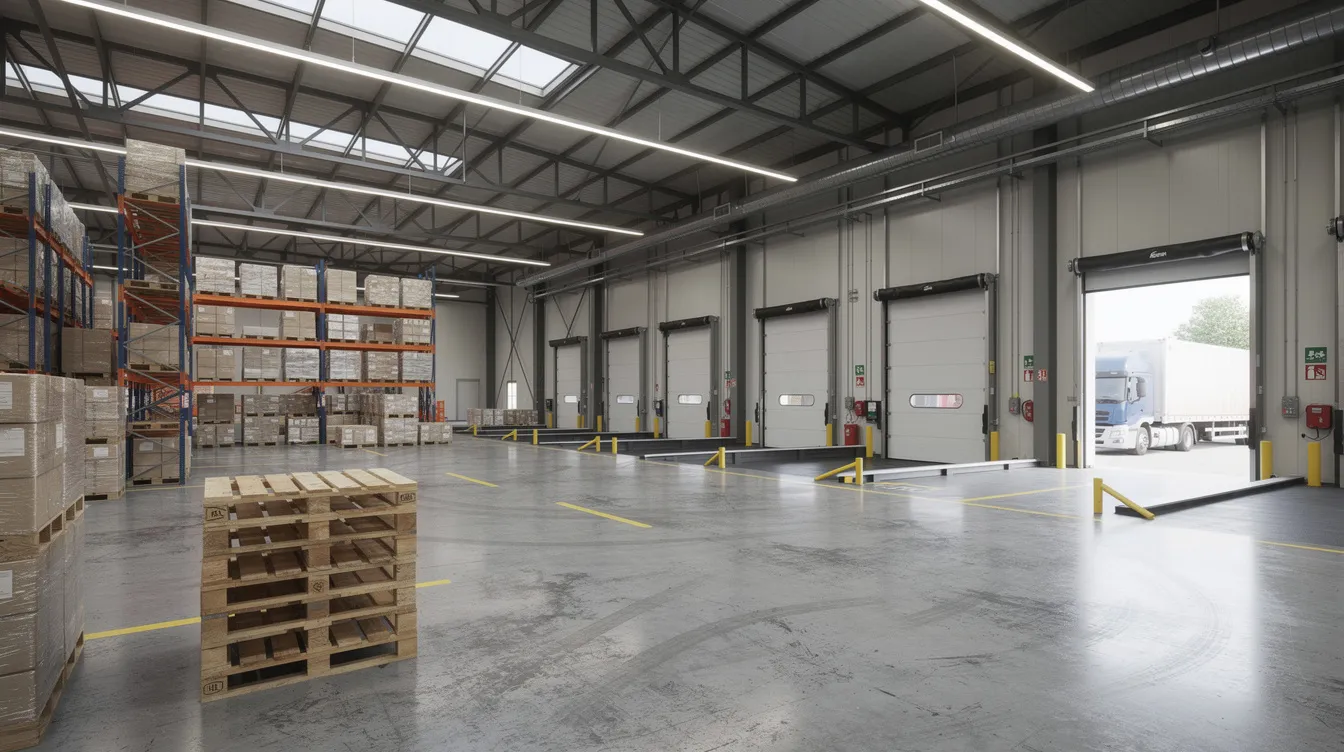
For SME owners choosing between B1 light industrial and B2 heavy ramp-up factories, the structural details determine operational fit and tenant demand. Floor loading must match intended use; insufficient capacity means costly structural reinforcement or, worse, regulatory non-compliance. Ceiling heights dictate whether a mezzanine is feasible. Power supply ratings (3-phase for manufacturing versus single-phase for office use) affect which businesses can operate. Access for container trucks versus smaller vans depends on loading dock design and estate road geometry.
For investors, industrial gross yields of 4-6% compare favourably to residential yields of 2-3.5%, and the absence of ABSD improves net returns. But Aman’s role is to distinguish between headline yield and sustainable, risk-adjusted returns. Vacancy risk, maintenance costs, and exit liquidity for units in less popular estates all erode headline numbers. He helps clients avoid costly mistakes by checking building specs against actual tenant requirements before purchase, not after.
Working with Aman: Process, Tools, and Decision Frameworks
Clients should assess their financial position and objectives before engaging in property transactions. Here is what happens from first contact through decision and beyond.
The Consultation and Planning Process
-
Initial discovery: A 30-60 minute session (online or in person) covering goals, constraints, timeline, and existing property situation.
-
Data gathering: Income statements, CPF balances, existing loan details, and current property valuations.
-
Scenario design: Aman builds 2-3 structured options with quantified pros, cons, and cash flow impacts.
-
Implementation plan: A step-by-step timeline for selling, buying, financing, renovations, and completion milestones.
-
Post-transaction review: Check-in after completion to confirm the plan is on track and adjust for changed conditions.
Aman takes an advisory-first, sales-second approach. His engineering ethics and dedication to accuracy carry over: assumptions are stated, numbers are sourced, and risks are named.
Comparing Potential Property Paths
Aman often helps clients compare three broad paths:
|
Criterion |
Stay in Current Property |
Upgrade to New Launch |
Buy Smaller Home + Investment Unit |
|---|---|---|---|
|
Monthly cash flow impact |
No change |
Higher mortgage, possible rental offset |
Moderate mortgage increase, rental income from investment |
|
Estimated 10-year equity growth |
Depends on estate and lease |
Tied to launch premium and district growth |
Split between residential appreciation and industrial yield |
|
Risk level |
Low (no transaction costs) |
Market and financing risk |
Diversified but operationally more complex |
|
Lifestyle impact |
Status quo |
Potential upgrade in space and amenities |
May require compromise on residential size |
The synthesis: Aman guides clients to choose the path that aligns with their risk tolerance and life priorities, not the path that maximises leverage. He draws the comparison in a way that accounts for both the financial model and the physical attributes of each property.
Visual Tools: From Engineering Models to Property Dashboards
Aman adapts communication habits learned from engineering projects:
-
Simple spreadsheets and charts replace vague claims about future value. Each projection shows underlying assumptions.
-
Sensitivity analysis demonstrates what happens if interest rates rise 1-2% or if rental occupancy drops below 90%.
-
Concise slide-style summaries allow clients to review scenarios with spouses or business partners outside the consultation.
This transparency reflects Aman’s philosophy: clients make better decisions when they see the numbers, not just hear reassurances.
Common Homeowner and Investor Challenges Aman Helps Solve
Many Singapore property owners face recurring pain points. Aman’s combined expertise in engineering and advisory provides grounded solutions rather than generic advice.
“I’m at HDB MOP but Unsure if I Should Upgrade”
The fear is real: overcommitting to a private property mortgage while interest rates remain uncertain. Aman’s solution starts with affordability analysis using conservative assumptions, not optimistic ones. He stress-tests monthly payments against TDSR limits and models job-loss scenarios.
He then shows side-by-side outcomes of staying versus upgrading in 5-year and 10-year snapshots, including CPF accrual implications and estimated equity growth. Non-financial factors get equal weight: school proximity, access to parents’ homes for childcare support, and commute times. The result is a decision based on the client’s full situation, not just potential capital gains.
“I Want Higher Rental Yields but Don’t Understand the Risks”
Clients attracted by 7-8% yields in commercial or industrial property often underestimate technical and regulatory realities. Aman breaks the analysis into three layers.
First, he identifies tenant types and lease structures. A B2 factory in Jurong West attracts different tenants than a B1 light industrial unit near Tai Seng, and tenant quality directly affects vacancy risk. Second, he checks the building’s physical specifications against the intended use: floor loading for heavy machinery, fire safety compliance per Singapore Civil Defence Force requirements, and ceiling height for storage racking. Third, he models cash flow including maintenance reserve, property tax, insurance, and possible downtime between tenancies.
The distinction between “headline yield” and net yield after all costs is where most investors lose money. Aman’s engineering background ensures the building itself can support the projected income.
“I’m Afraid of Being Asset-Rich and Cash-Poor”
Upgrading or buying multiple properties locks capital into illiquid assets. Aman’s guidance addresses this directly:
-
Set minimum liquidity buffers in CPF OA and cash at 24 months of instalments, not 6 months.
-
Discourage purchases that depend on bonus income or immediate rental from day one.
-
Consider right-sizing approaching age 50-60: selling a larger property to unlock cash for retirement rather than maintaining a portfolio that produces growth but no liquidity.
An exit strategy is built into every plan from the start. Aman’s caution comes from decades of managing project budgets where cost overruns meant real consequences, not just lower returns.
Conclusion and Next Steps
Working with Aman Aboobucker is different because he is a Professional Engineer and multi-business founder who applies engineering discipline to new launch selection and asset progression. He does not rely on market sentiment or developer marketing. He reads structural reports, models cash flow under stress, and names risks before they become problems.
For HDB upgraders, busy professionals, and SME owners dealing with industrial or mixed-use property, this approach means fewer surprises, more control over financial outcomes, and decisions anchored in verifiable data rather than sales momentum.
Here are your next steps:
-
Reflect on your current position: What property do you own, what is your remaining lease or MOP timeline, and what do your next 5-10 years look like?
-
Book an initial consultation: Reach out through the AESTHETIC HAVENS contact page or Aman’s direct channels to schedule a 30-60 minute discovery session.
-
Prepare key information: Gather your income details, CPF balances, existing property valuations, and outstanding loan figures for a productive first meeting.
-
Decide and implement: Work with Aman to choose a path and set a timeline for execution.
Related topics to explore on AESTHETIC HAVENS include guides on industrial property zoning and JTC lease structures for SME owners, asset progression frameworks for Singapore couples, and case studies of clients who upgraded while maintaining financial safety buffers.
Additional Resources
-
AESTHETIC HAVENS publishes articles on industrial property operational fit, commercial property selection, and residential asset progression tailored to Singapore buyers.
-
Stellar Structures provides structural inspection, façade assessment, and building handover review services relevant to pre-purchase due diligence.
-
Follow Aman on LinkedIn for his latest analyses on new launch pricing, GLS bid breakdowns, and asset progression case studies.
-
Clients engaging Aman receive a pre-consultation checklist covering the key questions to answer before committing to any new launch or asset progression move.

