

Introduction
Luxury property investment in Singapore has evolved far beyond acquiring a prime condo or a prestigious landed house. In 2026, the most sophisticated high-net-worth (HNW) and ultra-high-net-worth (UHNW) investors are building multi-asset portfolios that stretch across conservation shophouses, branded residences, mission-critical industrial facilities, and prime commercial holdings-going well beyond condos and landed to capture yield, liquidity, and legacy in a single allocation framework.
This article focuses specifically on HNW and UHNW investors based in or allocating capital to Singapore, examining the full spectrum of luxury real estate options that sit outside standard condominiums and suburban landed homes, and how these fit within a broader wealth structure. What falls outside its scope: mass-market HDB and condo buying guides, basic home-ownership tips, and deep dives into non-Asian property markets.
The core insight: Luxury investing beyond condos and landed typically means combining niche property types-heritage shophouses, good class bungalows, trophy penthouses, prime industrial assets-with non-property holdings such as private credit, private equity, and collectibles to preserve wealth and hedge against Singapore-specific regulatory and cycle risks.
Target audience: Family offices, business owners, C-suite executives, and offshore HNW individuals planning to allocate S$5–50 million or more to Singapore luxury property and related assets.
What you’ll gain from this article:
-
A comprehensive map of luxury property investment options in Singapore beyond traditional condos and landed homes
-
Real-world allocation patterns showing how affluent investors actually spread capital across real estate, business, and financial assets
-
Concrete allocation frameworks (e.g., 60/30/10 splits) tailored to different HNW profiles
-
An understanding of common pitfalls-ABSD drag, concentration risk, illiquidity-and strategies to mitigate them
-
Actionable next steps to begin designing or refining your own multi-asset luxury portfolio
Understanding Luxury Property Investment in Singapore
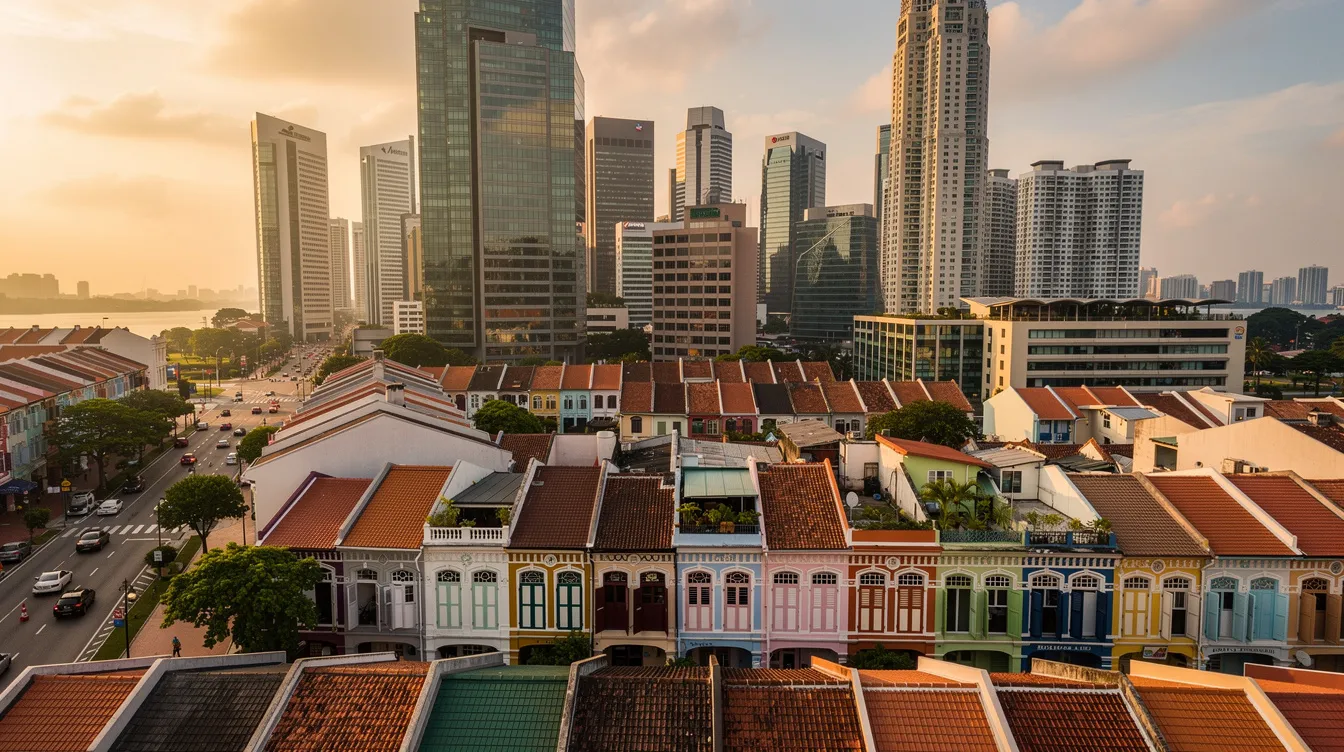
In 2026, luxury property investment in Singapore generally refers to residential assets valued at S$5 million or more-but the definition extends well beyond residential. Conservation shophouses in prime districts often trade between S$8–50 million. Good class bungalows in ultra-prime enclaves command S$25–70 million and above. Grade-A strata offices, branded residences, and high-spec industrial buildings each constitute distinct asset classes within this luxury tier.
Singapore continues to attract global wealth for compelling reasons. The city state ranks consistently among the world’s most politically stable jurisdictions, with robust rule of law, transparent property frameworks governed by the Urban Redevelopment Authority, and a predictable tax structure. By 2025, an estimated 1,400+ single family offices had established operations in Singapore, drawn by regulatory clarity and incentives for family offices seeking a stable base for multi-generational wealth preservation.
For many investors, property is the “anchor asset” around which the broader portfolio is structured. Yet concentrating exclusively into condos or landed property creates meaningful risk-particularly in a regulatory environment where Additional Buyer’s Stamp Duty rates can reach 60% for foreigners, and where property values in the residential sector are subject to periodic cooling measures and market cycles.
The Core vs Satellite Wealth Framework
The most resilient HNW portfolios operate on a core-satellite framework:
-
Core assets are capital-preserving holdings designed for long term capital preservation: freehold land, prime shophouses with established tenants, blue-chip REITs, and operating businesses that generate steady cash flow.
-
Satellite assets are higher-yield or higher-volatility plays: overseas development projects, boutique hospitality ventures, venture capital funds, or fractional ownership in art and collectibles.
Condos and landed property typically sit within the core. But increasingly, HNW investors are expanding their core to include defensive industrial and logistics assets-which offer yield without residential ABSD exposure-and conservation heritage assets that deliver both capital appreciation and cultural capital. Satellites might include hospitality redevelopment in Tokyo or London, boutique property funds, or private credit strategies that complement the Singapore property anchor.
Why “Beyond Condos & Landed Property” Matters in 2026
Several structural drivers make diversification beyond condos and landed houses essential in Singapore’s current environment:
ABSD compression of residential returns. Since 27 April 2023, foreigners pay a flat 60% Additional Buyer’s Stamp Duty on any residential property purchase. The Additional Buyer’s Stamp Duty can reach 60% for foreigners. Singapore citizens pay 0% on a first property but 20% on a second property and 30% on a third and beyond. Permanent residents face 5%, 30%, and 35% respectively. These rates remained unchanged through Budget 2026. Every incremental residential acquisition attracts punitive duty, eroding net IRR and making it increasingly difficult to scale a residential-only portfolio.
Limited landed supply. Landed properties make up less than 5% of housing stock in Singapore. Approximately 2,800 Good Class Bungalows exist in Singapore across 39 gazetted zones, with no new GCB areas introduced since the 1980s. Rising entry ticket sizes-frequently beyond S$10 million even for modest terrace houses in prime areas-mean that traditional landed living is an ever-narrower channel for capital deployment.
Regulatory focus on residential cooling. Sophisticated capital is increasingly pushed into alternative real estate and cross-border allocations as the government maintains its emphasis on housing affordability and speculation control in the residential segment. Interest rates, loan-to-value caps, and the Total Debt Servicing Ratio-which caps debt repayments at 55% of gross monthly income-all add friction to residential leverage strategies.
The investor pain points are clear: yield compression on prime condos, difficulty scaling when every unit attracts punitive ABSD, and a desire for non-correlated assets that can deliver financial resilience across global economic shifts. Understanding the alternative property “menu” is the essential first step before making portfolio-level allocation decisions.
The Alternative Luxury Property Spectrum in Singapore
With the foundational framework established, this section maps out the main non-condo, non-suburban-landed options that affluent investors are actually using in Singapore. Each asset class carries distinct deal sizes, investor profiles, return drivers, and risk characteristics.
Conservation Shophouses and Heritage Assets
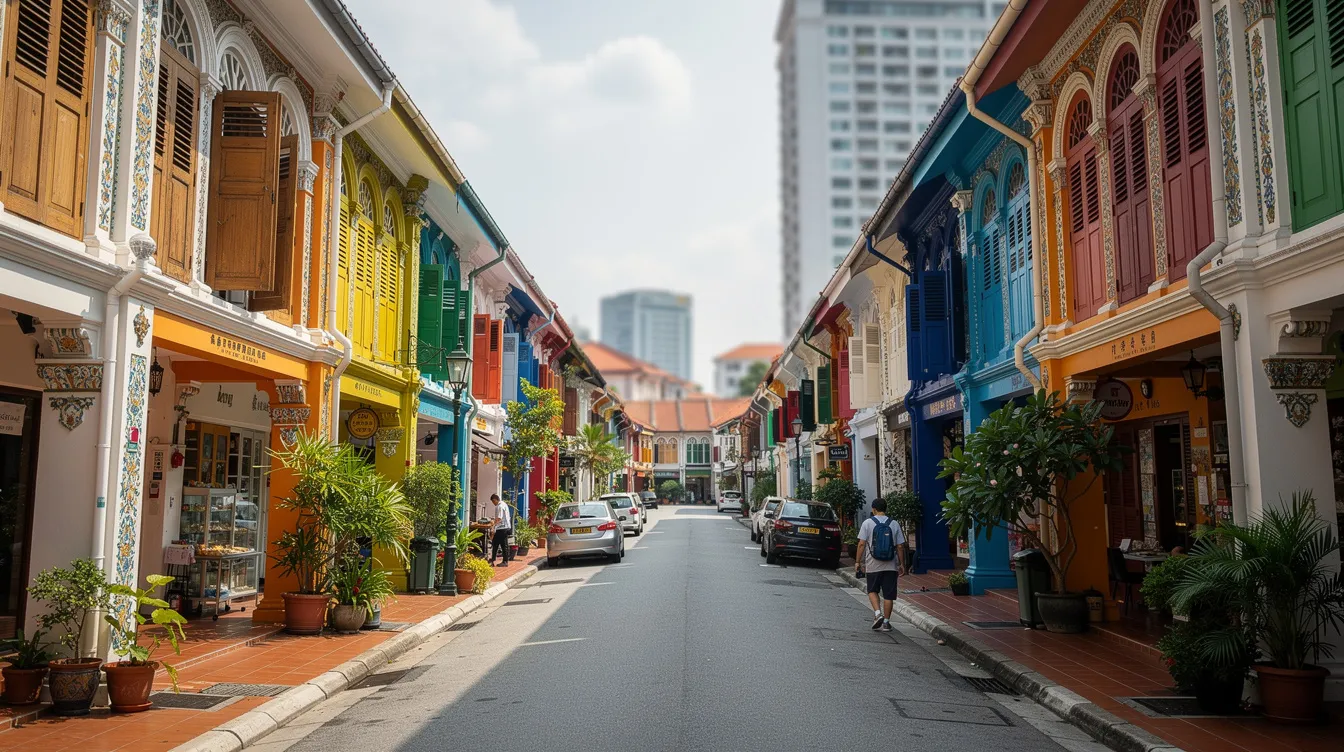
Prime shophouses in conservation districts-particularly those in Districts 1, 2, 7, and 8-are among Singapore’s most coveted trophy assets. These heritage properties combine cultural significance with commercial utility, housing F&B tenants at street level, boutique offices on upper floors, and occasionally boutique hospitality concepts.
-
Typical ticket: S$8–50 million depending on street frontage, plot size, and tenure. A trio of freehold conservation shophouses on Smith Street in Chinatown was listed at S$48 million in 2026, combining restaurant, capsule hotel, and TCM clinic tenants.
-
Investors: Family offices, UHNW individuals, and regional family clans seeking legacy assets with cultural capital.
-
Supply: URA’s conservation programme covers over 7,200 conserved buildings and structures. The conventional figure for conservation shophouses is approximately 6,500 units-a fixed, irreplaceable stock.
-
Returns: Gross rental yields typically range from 2.0–3.5% for well-let conservation shophouses. Net yields are meaningfully lower after factoring in restoration capex, vacancy, conservation compliance, and management costs. Heritage properties can provide income from various business uses, including F&B, creative offices, and boutique hospitality.
-
Risks: Conservation constraints limit facade alteration-owners cannot add solar panels externally or make structural changes without URA approval. Tenant covenant risk is concentrated in volatile F&B and lifestyle sectors. Transaction volume is exceptionally thin; in 2H 2025, only 36 landed shophouses sold across Singapore, with 30 in Central Region districts.
Critically, commercially zoned shophouses are not subject to ABSD-making them particularly attractive to foreign investors seeking exposure to Singapore’s real estate without the 60% residential duty drag. However, mixed-use shophouses with residential upper floors may be classified as residential, and classification must be verified on a case by case basis.
Good Class Bungalows & Ultra-Prime Land
Good class bungalows represent the absolute peak of Singapore’s residential land hierarchy. URA has gazetted 39 GCB areas with strict requirements: plots must be at least 1,400 square metres, freehold, with site coverage capped at approximately 40% and height restricted to two storeys plus attic.
-
Typical entry: S$25–70 million or more as of 2026, depending on enclave. Ultra-prime districts like Nassim and Dalvey can command S$40–80 million. A Peirce Road GCB sold for S$148 million in late 2025, with a land rate of approximately S$2,900 per square foot.
-
Ownership: Only Singapore citizens can purchase GCBs. Foreign ownership of landed properties in Singapore is highly regulated. Foreign buyers are generally prohibited from purchasing landed properties in Singapore. Singapore Permanent Residents must seek approval under the Residential Property Act through the LDAU (Land Dealings Approval Unit) to buy landed properties, with approval generally requiring a minimum of five years as a permanent resident. Singapore Citizens can buy any type of landed property without special approval.
-
Returns: GCBs function as long-horizon wealth vaults rather than yield plays, with gross yields often sub-2%. Landed properties derive value primarily from the underlying freehold or 999-year leasehold land. The URA’s price index for landed properties increased by 5.9% in early 2023, underscoring the capital appreciation trajectory.
-
Risks: Very low liquidity-perhaps 50–90 transactions per year across all 39 zones in active years; Q4 2025 saw just nine GCB transactions. High holding costs including property tax, upkeep, insurance, pest control, and maintenance of electrical systems. Landed homeowners are responsible for all maintenance and repairs, unlike condos where management handles shared facilities.
Landed properties are often viewed as legacy assets in Singapore-designed to be held across generations rather than traded for short-term gain. They offer total control over architectural specifications, privacy with no upstairs or downstairs neighbours, extensive customisation and renovations, and larger outdoor spaces for recreation. Landed living offers a serene environment even in bustling Singapore. That scarcity is as striking as free parking in the city.
Branded Residences, Trophy Penthouses & Serviced Luxury
Branded residences-properties developed in conjunction with global luxury hotel brands-and new-generation trophy penthouses in CCR projects represent a distinct tier of luxury investing that blends lifestyle with investment potential.
-
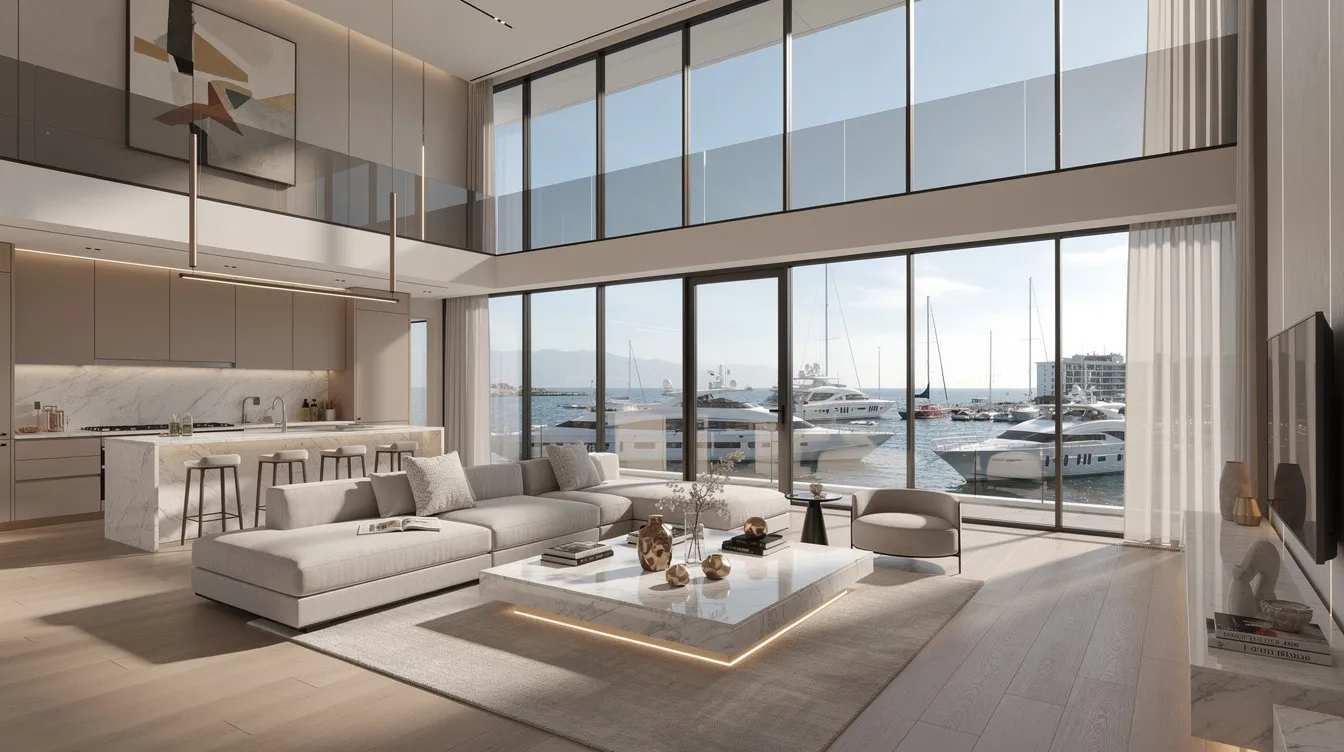
Typical size: 3,000–10,000 square foot units; ticket: S$10–80 million. A Park Nova penthouse sold for S$38.888 million (5,899 sq ft) in early 2025, approximately S$6,593 per square foot.
-
Target investors: Global citizens, frequent travellers, and offshore HNW individuals allocating from Hong Kong, Indonesia, India, and the Middle East.
-
Lifestyle + liquidity: Branded residences offer five-star hotel services and concierge care, lock-up-and-go convenience, full-service management, and modern amenities including smart home technology. They deliver higher PSF but better resale liquidity versus GCBs in some market cycles. Branded residences often outperform standalone luxury condos in capital appreciation.
-
Risks: Very high entry cost; elevated maintenance fees; exposure to residential cooling policies and ABSD if applicable; competition from new launches can compress margins in a downturn; PSF volatility and brand risk.
Prime Commercial & Business-Use Assets (Office, Retail, Hospitality)
Grade-A CBD strata offices, neighbourhood malls, and boutique hotels form an important slice of the luxury allocation, usually accessed through:
-
Direct ownership: A CBD strata office floor might cost S$20–30 million or more, depending on location and lease covenants. The office market in Singapore benefits from strong corporate demand, particularly from technology, finance, and professional services firms.
-
Club deals / syndicates: Family offices pooling capital to acquire boutique hotels or retail assets.
-
Return drivers: Rental yield of 3–5% gross, re-leasing upside, and repositioning opportunities (e.g., aged retail converted to medical or F&B use). Luxury commercial properties in prime locations can offer substantial rental income. Land intensification when zoning allows can unlock further value.
-
Risks: Leasing cycles, interest rate sensitivity, obsolescence (particularly those buildings lacking ESG compliance), and concentration in a single geographical micro-market.
Strata offices provide a sound investment pathway for investors seeking commercial exposure without ABSD, and offer greater liquidity than whole-building acquisitions.
Industrial, Logistics & Data-Centric Assets
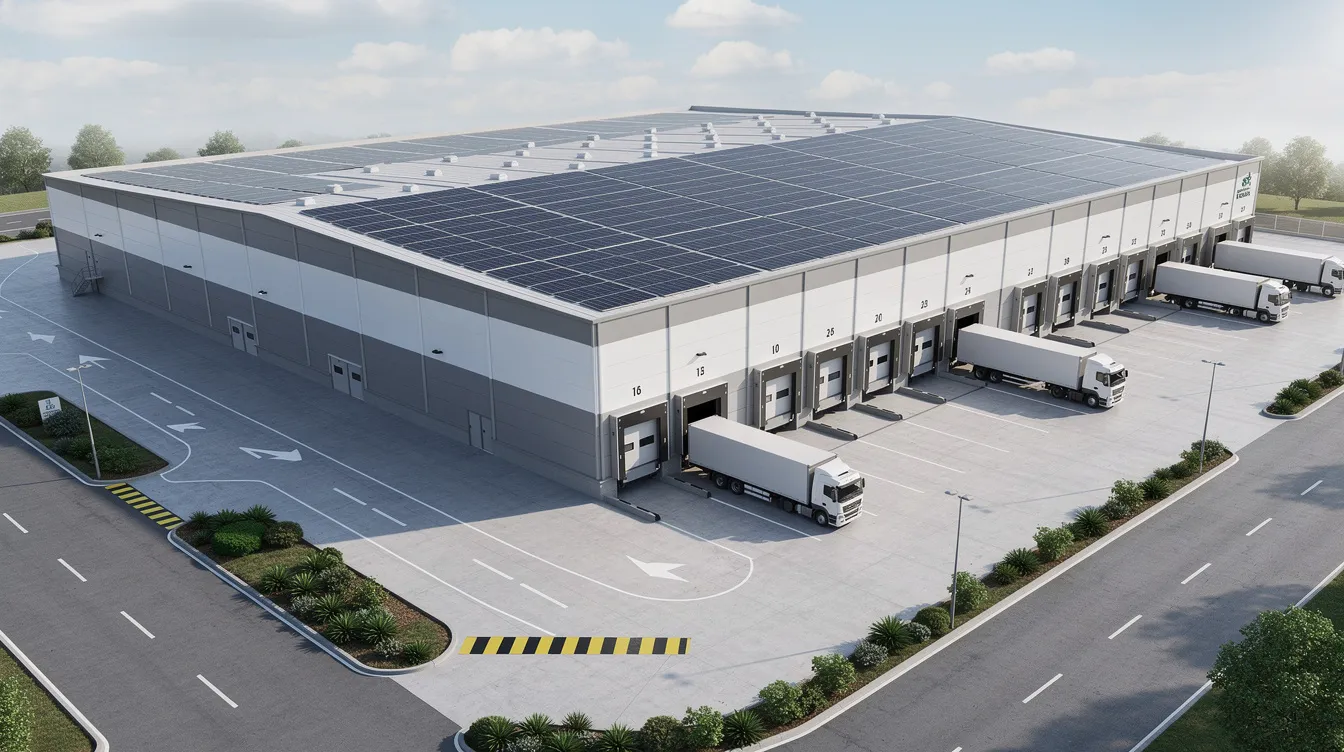
Modern industrial assets-ramp-up logistics facilities, high-spec industrial buildings, data centres, and cold storage-are increasingly central to HNW “beyond condos and landed” strategies. Market trends indicate growing interest in data centres and logistics properties, driven by e-commerce growth, cloud infrastructure demand, and pharma supply chain requirements.
-
Typical pricing: S$8–60 million for high-spec industrial buildings in western or northern Singapore; multiples of that for data centres.
-
Rents: High-spec industrial spaces command S$3.50–6.00+ per square foot per month; standard B2 spaces at S$1.60–2.10 psf/month. Colliers’ Q3 2025 data showed prime logistics rents rising to S$1.75 psf with yields for certain strata industrial classes compressing to around 7.20%.
-
Yields: Standard B2 logistics in outer estates generate gross yields of 4.5–6.5%; central high-spec B1 assets yield 2.8–4.0%.
-
Investor appeal: Mission-critical tenants-pharma manufacturers, logistics operators, cloud providers-with long leases deliver defensive cash flows and a partial hedge against residential policy risk. No ABSD applies to pure industrial or commercial acquisitions, and foreign ownership is permitted.
-
Risks: Land lease tenure (many industrial leases are 30- or 60-year), which introduces lease decay risk; tenant credit risk; high capital expenditure for fit-out; environmental and ESG requirements.
From Single Asset to Portfolio: How HNW Investors Actually Allocate
Once the alternative options are understood, the critical question becomes: how do we combine these with condos, landed homes, and non-property assets into a resilient structure? This section moves from asset descriptions to real-world allocation patterns with concrete, numeric examples.
Typical Allocation Archetypes for HNW Investors and Family Offices
The “Legacy Builder” – Multi-Generational Singapore Family
These families optimise for long term value and intergenerational wealth transfer. A typical allocation might be:
-
50% in Singapore landed properties / GCBs (the family compound, legacy planning anchor)
-
20% in heritage assets such as prime shophouses (capital appreciation + cultural identity)
-
10% in industrial or commercial real estate (yield diversification)
-
10% in listed securities / REITs (liquidity buffer)
-
10% in cash and alternatives
Landed properties are often seen as legacy assets for families. These investors prioritise capital preservation and wealth preservation above current income. They’re willing to accept sub-2% yields on their GCB because the intrinsic value of freehold land in land scarce Singapore compounds over decades.
The “Global Nomad” – Entrepreneur with Multiple Homes
These investors optimise for global mobility and optionality:
-
30% in Singapore luxury condos / trophy penthouses (lock-up-and-go lifestyle)
-
20% in overseas property (London, Tokyo, Dubai)
-
25% in operating business holdings
-
15% in private equity / venture capital
-
10% in cash / bonds
For this profile, branded residences and serviced luxury penthouses offer the living experience they require-full concierge, modern amenities, proximity to airports-while maintaining exposure to Singapore’s real estate appreciation.
The “Business-First” – Owner-Operator
These investors’ capital is tightly linked to their operating businesses:
-
40% in operating business and factories
-
30% in industrial/logistics real estate (aligned with operational needs)
-
20% in residential (one GCB or several condos)
-
10% in liquid instruments
The trade off here is clear: higher yield from industrial assets but greater concentration in a single sector. Rising demand for logistics and data-centric assets makes this profile increasingly common among Singapore’s entrepreneurial class.
Balancing Yield, Liquidity, Legacy, and Wealth Preservation
Every luxury property decision involves calibrating three dimensions:
-
Yield: Driven primarily by industrial, commercial, and some overseas assets. Industrial/logistics assets in outer estates can deliver 4.5–6.5% gross-substantially above the sub-2% typical of GCBs or the 2.0–3.5% of shophouses.
-
Liquidity: Luxury condos and listed REITs offer relatively higher liquidity. GCBs and heritage shophouses are among the least liquid asset classes in Singapore, with transactions measured in dozens per year rather than hundreds.
-
Legacy: Anchored by land-heavy assets like GCBs and conservation shophouses-valuable assets that transcend financial return and carry intergenerational significance.
Concentrating only in condos and landed property typically overweights legacy and underweights yield and liquidity, which can constrain future opportunities and leave investors “asset rich, cash poor.” Many investors discover this imbalance only when they need to deploy capital quickly for a business opportunity or next generation planning.
Sample Portfolio Blueprints at Different Net-Worth Levels
S$10 million net worth:
-
1 luxury condo (S$4m) – primary residence or rental income asset
-
1 industrial strata unit (S$3m) – yield-generating, ABSD-free
-
Diversified liquid portfolio (S$2m) – REITs, equities, bonds
-
Business or other holdings (S$1m)
S$30 million net worth:
-
1 primary GCB or detached house (S$15m) – legacy anchor. Detached houses in District 5 sold for over S$7 million in 2023; semi-detached houses in District 21 reached S$1,882 per square foot in 2023; terrace houses in Sennett Estate sold for S$2,315 psf in 2023.
-
1–2 shophouse or strata office floors (S$8m) – capital appreciation + rental income
-
Industrial/logistics (S$4m) – defensive cash flow
-
Liquid assets (S$3m) – financial resilience buffer
S$100 million family office:
-
Blend of multiple asset types across Singapore and regional holdings
-
30–40% in industrial/commercial real estate
-
20–30% in residential luxury (heritage, GCB, trophy residences)
-
Remainder in overseas real estate, operating businesses, and liquid alternatives
-
Governed by a formal investment policy statement with strategic planning oversight
These are illustrations, not prescriptions. Every HNW portfolio requires customisation based on personal objectives, family structure, tax residency, and risk tolerance. The key insight is that cross-asset blending reduces risk compared to concentrating everything into multiple condos or a single trophy bungalow.
Implementing a Luxury Allocation Strategy in Practice
With the asset spectrum and archetypes understood, this section walks through a practical process to design and execute a customised luxury property investment plan centred on Singapore. The approach combines a structured sequence with a comparison table to support decision-making.
The 6-Step HNW Allocation Process
Use this process when net investable wealth is S$5 million or more and property is expected to constitute 40% or more of total assets.
-
Clarify objectives: Define whether you’re optimising for legacy planning, rental income, global mobility, or a blend. Establish desired holding periods (e.g., 10–25 years for GCBs and shophouses; 5–15 years for industrial and branded residences). Identify whether the next generation will inherit or the portfolio should be structured for eventual liquidation.
-
Map current exposure: Quantify all existing condos, landed homes, business assets, and bank loans. Many buyers discover they hold 70–90% of wealth in just two or three residential properties. In 2023, freehold land in Eng Kong Garden was valued at S$1,841 psf-a useful benchmark for assessing your landed holdings relative to the broader market.
-
Determine policy ranges: Establish guardrails, e.g., maximum 60% in Singapore residential, minimum 20% in liquid assets. These ranges prevent emotional overconcentration and enforce discipline through market cycles.
-
Select asset buckets: Choose target weights for condos, landed property, shophouses, industrial, commercial, and offshore holdings. Landed properties include bungalows, semi-detached houses, and terrace houses-but also consider cluster houses and semi detached homes as intermediate options with different liquidity profiles.
-
Sequence acquisitions and divestments: Plan ABSD-efficient pathways. For Singapore citizens, buying a second property triggers 20% ABSD. For a permanent resident, the first purchase already incurs 5%. Sequence purchases carefully, using refinancing, decoupling strategies, and timing relative to life events. Property eligibility requirements vary for different buyer categories in Singapore. Foreigners can buy certain leasehold estates without approval, and Sentosa Cove allows foreign ownership of landed properties.
-
Monitor and rebalance: Review every 12–24 months with updated valuations, tax and regulatory changes, and business outlook. Property values and market trends shift with interest rates, global economic shifts, and new policy measures. Pay attention to infrastructure catalysts like new MRT lines and the Greater Southern Waterfront, which can reshape redevelopment potential across districts.
Comparing Key Asset Types Within a HNW Portfolio
|
Criterion |
Prime Condo |
Landed / GCB |
Conservation Shophouse |
Industrial / Logistics |
Branded Residence / Penthouse |
|---|---|---|---|---|---|
|
Typical Ticket (S$) |
S$3–15m |
S$7–80m+ |
S$8–50m |
S$8–60m |
S$10–80m |
|
Gross Yield Range (%) |
2–3.5% |
<2% |
2–3.5% |
4.5–6.5% (outer) / 2.8–4% (central) |
2–4% |
|
Liquidity |
Medium–High |
Very Low |
Low |
Medium |
Medium |
|
ABSD Impact |
Full residential ABSD |
Full residential ABSD |
None if commercially zoned |
None |
Full residential ABSD |
|
Ownership Restrictions |
Open to all (with ABSD) |
Citizens only (GCBs); foreigners restricted under the Residential Property Act |
Commercial zoning allows foreign ownership |
Open to all; no ABSD |
Open to all (with ABSD) |
|
Typical Holding Period |
5–15 years |
15–30+ years |
10–25 years |
5–20 years |
5–15 years |
|
Key Risk |
Policy shocks; yield compression |
Illiquidity; high holding costs |
Tenant risk; restoration capex; conservation constraints |
Lease decay; tenant credit risk; obsolescence |
ABSD drag; maintenance fees; PSF volatility |
This matrix helps determine which asset class should be next in line given your existing holdings. If your portfolio is already heavy in landed homes and condos, the table immediately highlights industrial/logistics as the gap-offering higher yield, no ABSD, and diversification from residential policy risk.
However, frameworks and tables only go so far. Execution is often hindered by real-world challenges and behavioural biases, particularly those that affect families with deep emotional ties to their properties.
Common Challenges and How Affluent Investors Can Overcome Them
Even experienced business owners and family principals commonly stumble on taxes, leverage, and emotional attachment when moving beyond condos and landed. Each challenge below includes a pragmatic solution tailored to Singapore’s 2026 environment.
Challenge 1: Overconcentration in Singapore Residential
Problem: Many HNW families hold 70–90% of wealth in a handful of condos and a primary landed home, leaving them overexposed to residential policy risk, interest rate cycles, and limited supply dynamics that cut both ways.
Solution: Conduct a “concentration audit” quantifying exposure by asset class and geography. Gradually reweight towards non-residential holdings-industrial, commercial, strata offices-and offshore assets. Use refinancing and staggered selling to manage ABSD and timing risk. The objective is not to abandon residential real estate investments but to ensure that no single asset class dominates to the point of undermining financial resilience.
Challenge 2: Ignoring ABSD, LTV, Residential Property Act, and Tax Frictions in Planning
Problem: Acquisitions made opportunistically-without modelling Additional Buyer’s Stamp Duty rates (which vary significantly by buyer profile in Singapore), LTV limits, and interest costs-can erode net IRR to the point where a seemingly sound investment becomes uneconomic. Landed properties require a significantly higher financial commitment than condominiums, and interest rates significantly affect mortgage costs for property investors.
Solution: Before each major deal, model 10-year cash flows including ABSD, BSD, property tax, financing costs, and realistic vacancy assumptions. Sequence purchases with careful planning-considering corporate structures where appropriate and compliant, and consulting the Land Dealings Approval Unit when foreign ownership or permanent resident purchases are involved. An investor making an exceptional economic contribution to Singapore may have additional pathways, but these require specialist advice.
Challenge 3: Underestimating Operational and Governance Demands
Problem: Shophouses, industrial buildings, and multi-tenanted commercial assets require active management. Families underestimate the governance needs-from tenant turnover and pest control to facility maintenance and conservation compliance for heritage assets. Older properties may have outdated features requiring significant capital investment. Boutique hotels have multiple revenue streams but require effective management.
Solution: Establish a family office-style governance framework with an investment committee, regular reporting cadence, and clear decision thresholds. Outsource leasing, facilities management, and industrial advisory to specialist partners. Developer warranties cover initial defects in newer properties, but ongoing maintenance of electrical systems, structural elements, and building envelopes falls entirely on the owner for landed homes and commercial assets.
Challenge 4: Emotional Attachment to Trophy Assets
Problem: Families hold underperforming trophy condos, legacy offices, or prime waterfront properties for sentimental reasons-even when capital would deliver substantially higher returns redeployed into industrial, logistics, or global assets. Prime waterfront properties serve dual purposes as luxury rentals and generational assets, but sentiment should not override sound allocation discipline.
Solution: Institute objective performance hurdles-a minimum target yield or capital appreciation threshold over five years-that trigger formal review. Use independent valuations and third-party advisors to depersonalise hold/sell decisions. High-net-worth investors often seek properties with long-term capital appreciation potential, and this standard should apply consistently across the portfolio regardless of emotional attachment.
Conclusion and Next Steps
Luxury investing in Singapore in 2026 is no longer a binary choice between condos and landed. The most sophisticated investors build multi-asset portfolios that balance legacy, yield, and liquidity across residential, industrial, commercial, and global holdings. Landed properties can appreciate significantly due to limited supply and land scarcity, but they are just one component of a well-constructed wealth architecture. Landed properties serve as a hedge against inflation and economic fluctuations-but so do mission-critical industrial assets, heritage commercial shophouses, and carefully selected offshore allocations.
The competitive edge comes from three elements: clarity on objectives, disciplined allocation frameworks, and professional deal sourcing and management-especially for industrial and business-use real estate.
Immediate next steps:
-
Map your current portfolio by asset class, geography, and leverage-quantify exactly where your capital sits today.
-
Identify overconcentrations in Singapore residential or in a single asset class that leave you exposed to policy risk.
-
Shortlist one to two alternative asset buckets (e.g., industrial/logistics, shophouse, strata offices, overseas property) that best complement your existing holdings.
-
Schedule a consultation with AESTHETIC HAVENS or your advisory team to model 10–20 year scenarios and refine your allocation roadmap.
Related topics worth exploring next include family office structuring in Singapore, industrial property zoning and lease structures, and cross-border luxury estate investing across the Asia-Pacific region.
Additional Resources for Luxury & HNW Investors
-
URA and MAS publications: Key references for foreign ownership rules under the Residential Property Act, zoning frameworks, and macroprudential regulations governing bank loans and leverage
-
Industrial property guides: Detailed analysis of Singapore industrial property outlook, warehouse and logistics investment yields, and business-use site selection
-
Shophouse market research: The6500.com research on conservation shophouses, including rental yield analysis and Master Plan 2025 implications
-
Case studies: Heritage portfolio construction, data centre investment frameworks, and HNW regional diversification strategies
-
Allocation toolkit: A one-page checklist distilling the 6-step allocation process for family principals to use during portfolio review sessions
FAQ: Luxury Investing Beyond Condos & Landed in Singapore (2026)
“How much of my net worth should be in Singapore property versus other assets?”
There is no universal rule, but most advisors recommend capping Singapore residential property at 40–60% of net investable wealth, with the remainder split across commercial real estate, industrial holdings, liquid assets, and offshore allocations. The critical factor is ensuring sufficient liquidity (minimum 15–20% in liquid instruments) to capitalise on opportunities and weather downturns without forced asset sales.
“If I already own a condo and a landed house, what should my next property investment be?”
For Singapore citizens, a third residential purchase triggers 30% ABSD-making non-residential assets far more capital-efficient. Consider commercially zoned conservation shophouses, industrial/logistics strata, or Grade-A strata offices. These avoid ABSD entirely, generate competitive rental yields, and diversify your exposure away from residential-only policy risk. Luxury resort villas in offshore markets can also attract premium short-term rental demand for those seeking geographic diversification.
“Can foreigners access Singapore’s luxury property market without overpaying ABSD?”
Yes-through commercially zoned assets. Foreign buyers are generally prohibited from purchasing landed properties, and residential purchases incur 60% ABSD. But commercially zoned shophouses, industrial properties, and strata offices carry no ABSD. Sentosa Cove allows foreign ownership of landed properties as a specific exception. Beyond Sentosa, foreigners can buy certain leasehold estates without approval under specific conditions assessed on a case by case basis.
“Where do industrial and logistics properties fit within a HNW portfolio focused on Singapore?”
Industrial and logistics assets serve as the yield engine of a diversified luxury portfolio. With gross yields of 4.5–6.5% in outer estates-versus sub-2% for GCBs and 2–3.5% for freehold properties like shophouses-they provide the cash flow that legacy-heavy portfolios typically lack. They also offer a structural hedge against residential policy risk, since no ABSD applies and demand is driven by e-commerce, pharma, and cloud computing rather than residential sentiment.
“Over a 10–20 year horizon, which tends to preserve wealth better: GCBs, shophouses, or diversified industrial?”
Historically, GCBs and prime shophouses have delivered strong capital appreciation driven by limited supply in land scarce Singapore-landed properties in Singapore appreciate due to land scarcity, and freehold properties benefit from the absence of lease decay. However, a diversified industrial portfolio can match or exceed total returns when rental income is compounded over a full cycle. The optimal answer for most families is a blend: GCBs and heritage assets for long term capital preservation and legacy, industrial for yield and reinvestment capacity, and liquid alternatives for optionality. Strategic planning with specialist advisors ensures the mix reflects your family’s unique objectives.

