

Introduction
Shophouse valuation in Singapore hinges on one metric more than any other: PSF on land. Whether you are acquiring a conservation terrace on Keong Saik Road or a fringe commercial property in Joo Chiat, the price per square foot of site area is the first number every bank, licensed valuer, and serious investor reaches for. This article explains, step by step, how to calculate, cross-check, and stress-test that figure so you can determine whether a shophouse is fairly priced.
The focus here is on landed (non-strata) shophouses across Singapore’s key districts-Chinatown, Tanjong Pagar, Kampong Glam, Little India, Joo Chiat, and selected suburban precincts. We cover both conservation shophouses and non-conservation units, examining how PSF on land interacts with built-up area, rental yield, and capex. Residential condos, HDB flats, and detailed tax structuring fall outside this scope.
If you need a single-sentence answer: to value a shophouse on a PSF-on-land basis, divide the total purchase price by the title land area in square feet, then reconcile that figure against comparable transactions, income-based yield analysis, and estimated restoration costs to confirm the number is defensible.
By the end of this guide you will understand:
-
The three main valuation methods investors and banks use for Singapore shophouses
-
How PSF on land differs from PSF on built-up-and why confusing them can distort your analysis by 200–300%
-
How to read recent URA caveats and bank valuations in the 2025–2026 market
-
A full worked example using a realistic Tanjong Pagar conservation shophouse scenario
-
The most common pitfalls that lead buyers to overpay or misjudge risk
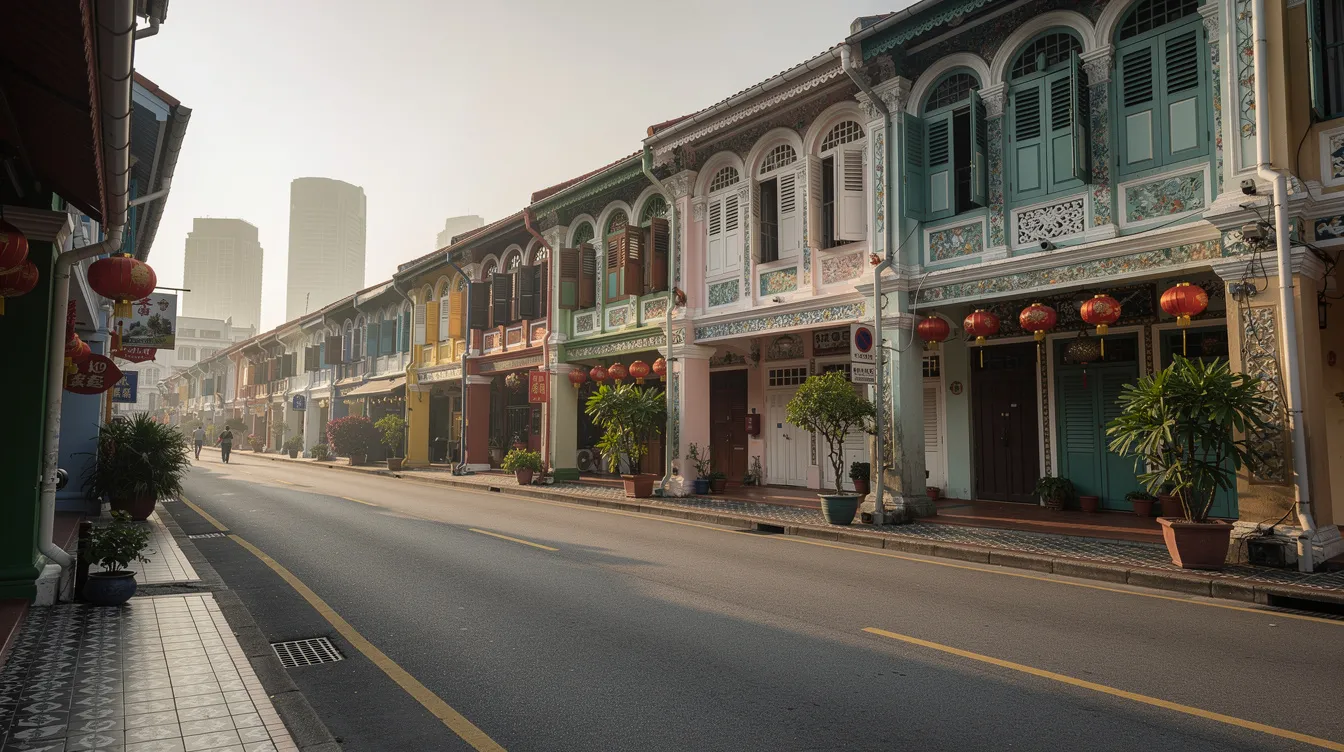
Understanding Shophouse Valuation in Singapore
A shophouse in Singapore is a contiguous terrace building-typically two to four storeys-combining a commercial ground floor with upper floors used for offices, residential, or mixed purposes. Unlike a strata office or a residential development, a shophouse buyer acquires both the land and the building in a single asset. That hybrid nature is precisely what makes valuation more nuanced: you must account for land size, building height, conservation status, zoning, tenure, and income potential simultaneously.
Shophouse valuations therefore combine several factors rather than relying on a single formula. Licensed valuers commissioned by banks weigh comparable sales evidence, income capitalisation, and occasionally residual or redevelopment value. Experienced investors mirror these same techniques-at a simplified level-to sanity-check asking prices before committing capital.
Key Measurement Bases: Land Area vs Gross Floor Area
Land area (also called site area) is the plot size stated on the title, measured in square feet. This is the denominator when you calculate PSF on land.
Built-up area (or gross floor area) is the total lettable floor area across all storeys, excluding open yards and certain non-usable voids. This is the denominator for PSF on built-up, which drives rental and income analysis.
Most shophouses generate a built-up area that is roughly 2.5–3× the land area for a three-storey building. In theory, gross floor area can serve as a working estimate for total strata area, but they may differ where facilities or other counted spaces are included in GFA. A four-storey shophouse with a basement or attic can push that multiplier higher. This means that a shophouse quoting S$7,200 PSF on land might only represent S$2,250 PSF on built-up-a critical distinction when comparing with strata offices, where the average strata office transaction price was S$2,476 psf in H1 2026.
Here is a quick illustration: a S$3 million unit measuring 1,000 sq ft of land area is S$3,000 psf on land. If that same property has 2,800 sq ft of built-up floor area, PSF on built-up drops to roughly S$1,071. Two shophouses with identical PSF on land can therefore have very different economics if one is two storeys and the other four storeys with a rear extension.
How Banks and Professional Valuers Look at Shophouses
When a buyer applies for financing, Singapore banks instruct licensed valuers to produce a formal valuation report, which may also account for legal due diligence costs and title-related checks where relevant. These reports typically reference three approaches:
-
Comparable sales approach – the primary method for conservation shophouses, drawing on recent caveated transactions within the same street or micro-location, adjusted for differences in tenure, condition, frontage, and time of sale.
-
Income capitalisation (yield) method – used where the property is income-generating, applying a market capitalisation rate to net operating income (NOI) to derive capital value. The income capitalization method is often used to assess the value of income-generating shophouses.
-
Residual / land value approach – occasionally relevant where redevelopment or change of approved use creates upside, though conservation shophouses often face restrictions on redevelopment, limiting this method’s applicability.
For conservation areas, banks put heavy weight on market comparables PSF on land in the same street or cluster. Valuers often rely on comparable sales within the same conservation area for accurate valuation, since locational factors significantly influence shophouse valuation, even within the same district. Investors can replicate this logic at a simplified level-which is exactly what the step-by-step process below walks through.
Core Valuation Approaches for Singapore Shophouses
Three lenses dominate how the market prices shophouses: PSF on land, PSF on built-up, and income/yield. Each answers a different question, and no single metric is sufficient on its own.
Method 1: PSF on Land (Land-based Comparison)
Land value per square foot (PSF) measures the cost of land beneath a shophouse. You calculate it by dividing total consideration-including any premium for vacant possession-by the site area in square feet. For example, a S$12 million shophouse on 1,200 sq ft of land is S$10,000 psf of land.
This method is most relevant for well located conservation CBD shophouses where the land itself represents the dominant store of value, and for sites with potential rear extension or additions and alterations (A&A) that could increase total floor area. It also allows comparison across buildings of different heights, since the denominator is consistent.
Underpinning this metric are the URA master plan zoning designations-whether a property is zoned “Commercial,” “Commercial & Residential,” or another category-and conservation status. Plot ratio determines maximum gross floor area for developments: a plot ratio of 2.8 allows 280,000 sq ft of GFA on 100,000 sq ft of land, which is also the metric a developer uses to assess potential buildable space on the land. However, most shophouses in conservation areas are already built close to their allowable GPR, so land value here reflects scarcity and location premium rather than development upside. In practice, these plot-ratio calculations are only a theoretical upper bound, and site constraints can limit real-world implementation.
Method 2: PSF on Built-up (Floor Area Comparison)
Built-up PSF captures all lettable floor area across storeys, excluding open yards and structural voids. This figure is useful when comparing income-generating shophouses with different land sizes but similar lettable area-or when benchmarking rental yields against other commercial property types such as strata offices.
Shophouse pricing varies based on land area and built-up area. A shophouse at S$17,100 PSF on land (as seen in a May 2026 Keong Saik Road deal) might translate to approximately S$6,800 PSF on built-up once total floor area is factored in-still a premium, but far less alarming when set against rental income potential across multiple storeys.
The divergence between PSF on land and PSF on built-up widens for tall or heavily extended shophouses and narrows for squat two-storey units. This is why density and building height matter: higher gross plot ratio and more units of lettable space on the same land parcel compress the built-up PSF and can improve yield metrics.
Method 3: Income and Yield-Based Valuation
The income approach starts with a simple formula: Market Value ≈ Net Annual Rent ÷ Capitalisation Rate (Yield). Net Operating Income (NOI) is critical in underpinning the valuation of commercial shophouses-it accounts for gross rent less vacancy, management fees, property tax, insurance, and maintenance.
In the 2026 market, prime CBD conservation freehold shophouses trade at gross rental yields of roughly 2.5–3.5%, reflecting their scarcity and capital-preservation appeal. Fringe or suburban locations may yield 4–6%+ but carry higher vacancy and licence risk. Banks tend to apply conservative yields when back-calculating value for financing purposes, which is one reason bank valuations often trail asking prices.
Key adjustments include vacancy risk, licence transferability (F&B, nightlife, hotel permits), and upcoming capex for heritage restoration. A shophouse whose current tenant holds a scarce late-night licence may justify a premium-but only if that licence can be confirmed as transferable.
Key takeaways from this section:
-
PSF on land is a starting point, not a conclusion. It must be seen alongside PSF on built-up and yield.
-
No single metric captures condition, conservation constraints, or tenant quality.
-
Reconciling all three methods is what separates a rigorous valuation from a headline guess.
Now let’s combine these methods into a step-by-step process mirroring how banks and experienced investors approach a live deal.
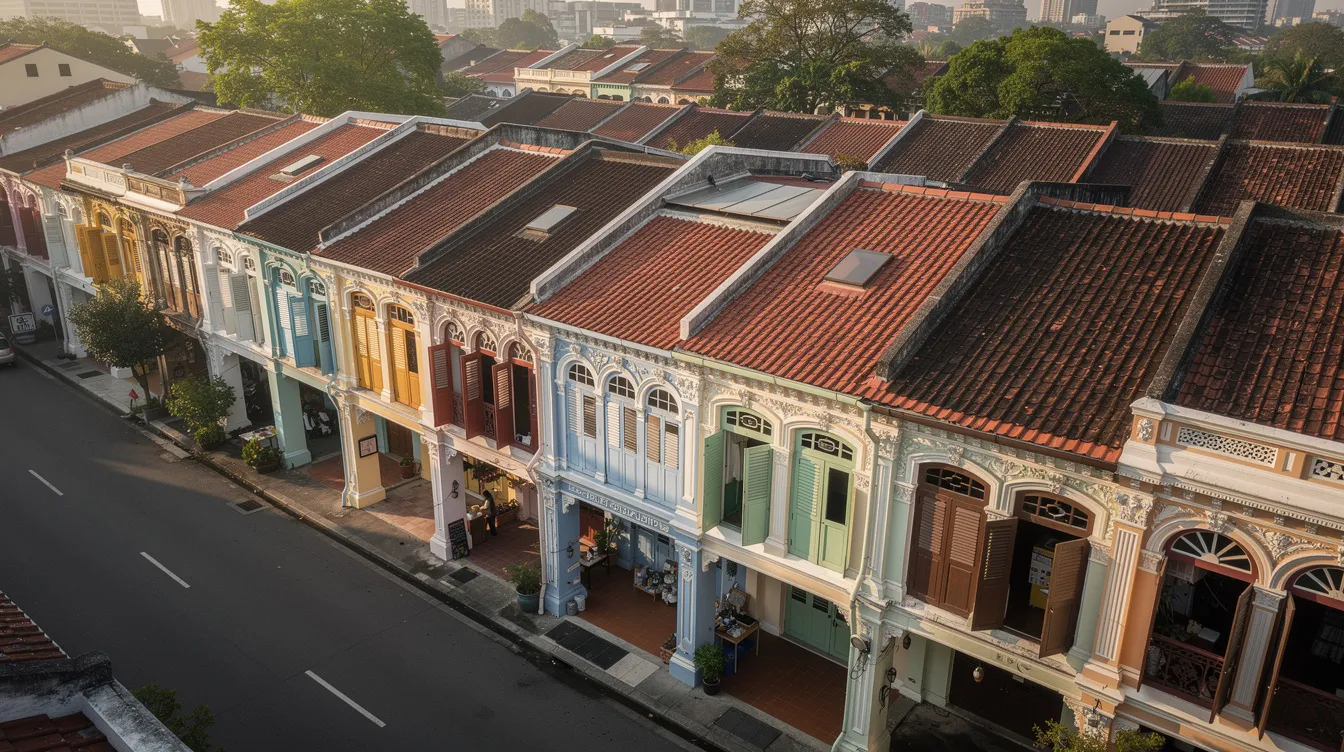
Step-by-Step: How to Value a Shophouse PSF on Land
What follows is the practical process that investors and professional advisers use to reach a defensible pricing figure. It mirrors how banks think-starting with asset fundamentals, layering on market evidence, and stress-testing against income and cost.
Step 1: Define the Asset Clearly
Before calculating anything, gather the facts that define what you are actually valuing:
-
Full address and conservation status – Is the property within a URA-gazetted conservation area (e.g. Chinatown, Kampong Glam, Joo Chiat)? Conservation guidelines dictate alterations that can be made to shophouses, affecting values.
-
URA Master Plan zoning – “Commercial,” “Commercial & Residential,” or another category. Singapore’s zoning regulations dictate property usage types, and zoning affects foreign ownership eligibility for shophouses. Zoning for commercial use allows foreign buyers to purchase shophouses without incurring ABSD.
-
Land area from title – Confirm the exact site area in square feet from the Certificate of Title.
-
Number of storeys and building configuration – Two, three, or four storeys; corner or mid-terrace; existing rear extension or open yard. The plot’s shape can also affect usable layout and extension potential even when the land area is the same.
-
Tenure – Freehold, 999-year, or 99-year leasehold (and remaining years). The remaining lease tenure of leasehold shophouses significantly influences their valuation.
Ambiguous or missing data-particularly around land size, zoning, or conservation status-leads to flawed PSF-on-land comparisons. Shophouse valuations require understanding of land tenure, conservation status, zoning, and plot ratio before any number is meaningful.
Step 2: Calculate PSF on Land and PSF on Built-up
Obtain the asking price or recent transaction price, then compute:
PSF on Land = Price ÷ Land Area (sq ft)
PSF on Built-up = Price ÷ Gross Floor Area (sq ft)
When built-up area is not stated, estimate it using URA plans, surveyor drawings, or a conservative assumption. For most shophouses in conservation areas, built-up is roughly 2.5–3× land area for three storeys. A four-storey building with rear extension might reach 3.0–3.5×.
Both numbers should sit side by side in your analysis. The land figure tells you what you are paying for the site; the built-up figure tells you what you are paying per unit of usable space. We will use both in the worked example below.
Step 3: Collect and Interpret Comparable Transactions
Recent comparable transactions are crucial for determining a fair market PSF for shophouses. Pull caveated sales data from URA Realis, EdgeProp, or specialist shophouse reports covering 2024–2026 deals within the same street or micro-cluster.
For each comparable, record:
-
Date of sale
-
Land area and built-up area (if available)
-
PSF on land
-
Tenure (freehold vs leasehold)
-
Zoning and conservation status
-
Whether sold with vacant possession or tenanted
-
Building condition (restored, original, shell)
Adjust expectations for timing (shophouse pricing peaked in 2023 at S$7,000 to S$9,500 psf; by 2026, prime CBD shophouse pricing stabilised at S$5,500 to S$8,000 psf), for location quality (corner shophouses typically command a premium due to enhanced visibility and accessibility), and for building condition. Pedestrian traffic and visibility correlate with higher rental and land values for shophouses, so a unit on a quieter stretch may warrant a discount versus a high-footfall corner.
Market averages for shophouse PSF can vary based on transaction specifics, so use the median or interquartile range rather than headline outliers.
Step 4: Cross-check with Rental Income and Yield
For tenanted properties, obtain current rent schedules by floor and apply realistic vacancy and expense assumptions to derive net income. Typical structures:
-
Ground floor (F&B / retail): S$18–20 psf/month in prime CBD
-
Upper floors (office / residential): S$7–8 psf/month
-
Vacancy & expenses: 15–20% of gross income
Apply a market yield range-roughly 2.8–3.2% for prime CBD freehold in 2026, 3.5–4.0% for fringe conservation areas-to back-calculate an implied capital value. Then translate that value into PSF on land.
If the income-based value falls significantly below the asking price, that gap represents either speculative premium or genuine risk. Reconciling this value with PSF on land comparables is essential: a wide discrepancy should flag a red alert, not be dismissed.
Step 5: Adjust for Capex, Licensing, and Upside
Estimate necessary capital expenditure for renovation or heritage restoration:
-
Light works (façade touch-up, painting, roof repair): roughly S$200–300 psf of built-up area
-
Shell condition (structural, M&E overhaul, full heritage reinstatement): S$700–1,000+ psf of built-up area
Adding extensions or modifying existing shophouses must conform to URA’s conservation guidelines, which may impose specific materials, building setbacks, and façade treatments that inflate costs and influence the final building structure.
Factor capex into your effective cost PSF on land. If you pay S$7,200 PSF on land but need S$2 million in restoration on a 2,500 sq ft plot, your effective cost rises to S$8,000 PSF on land.
On the upside, evaluate whether the shophouse permits a rear extension, change of approved use, or expansion toward the maximum gross floor area allowed under the allowable GPR. Some properties are underbuilt relative to their plot ratio, creating genuine development potential-though conservation areas impose strict restrictions on redevelopment.
Scarce licences (late-night F&B, boutique hotel, bars) may justify a premium over comparables, but confirm transferability with the relevant authorities and account for legal fees or conveyancing advice before capitalising that value into your purchase price.
With these five steps complete, the next section walks through a full numeric example tying everything together.
Worked Example: Valuing a 2,500 sqft Tanjong Pagar Shophouse PSF on Land
This example uses a realistic mid-2026 scenario to show how an investor and a bank might independently value a freehold conservation shophouse in the Tanjong Pagar precinct. The numbers are illustrative but grounded in actual market ranges from recent ERA and EdgeProp data.
Asset Profile and Basic Numbers
Assumptions:
-
Location: Duxton Road / Tanjong Pagar vicinity, within a URA conservation area
-
Land area: 2,500 sq ft
-
Storeys: 4 (including ground-floor commercial)
-
Built-up area: approximately 8,000 sq ft (3.2× land area)
-
Tenure: Freehold
-
Zoning: Fully commercial
-
Asking price: S$18 million (mid-2026)
At that asking price, PSF on land is S$7,200 and PSF on built-up is S$2,250. These are the two anchor figures we will test against market evidence and income.
Step-by-Step PSF on Land and Built-up Calculations
The arithmetic is straightforward:
-
PSF on Land: S$18,000,000 ÷ 2,500 sq ft = S$7,200 psf
-
PSF on Built-up: S$18,000,000 ÷ 8,000 sq ft = S$2,250 psf
In the 2026 context, shophouse prices in prime CBD areas range from S$5,500 to S$8,000 psf on land for freehold conservation units, placing this asking price within the upper half of the band. According to ERA’s 1H 2026 Landed Shophouse Report, the average PSF for freehold landed shophouses jumped from S$4,273 psf in 2H 2025 to about S$6,500 psf in 1H 2026, largely driven by high-profile sales on Keong Saik Road. The S$7,200 figure sits above that average but below trophy benchmarks.
Joo Chiat and Katong residential shophouses, by contrast, are priced at S$3,000 to S$5,000 psf, while Geylang and Little India fringe transactions can clear under S$2,800 psf-underscoring how dramatically location affects the figure.
Comparable Sales and Bank Valuation View
To test the S$7,200 PSF asking price, we pull three recent comparables from the same precinct:
|
Comparable |
Date |
Land Area |
PSF on Land |
Tenure |
Condition |
|---|---|---|---|---|---|
|
Keong Saik Road unit |
May 2026 |
1,290 sq ft |
~S$17,100 |
Freehold |
Trophy corner, fully restored |
|
Tanjong Pagar Road unit |
Q1 2026 |
~1,600 sq ft |
~S$6,268 |
99-year lease |
Good, mid-terrace |
|
Nearby Duxton cluster |
Q4 2025 |
~2,200 sq ft |
~S$7,500 |
Freehold |
Partially restored, mid-terrace |
The Keong Saik Road figure represents an upper bound-a trophy corner sale that is not directly comparable to a mid-terrace unit. The leasehold Tanjong Pagar Road sale at S$6,268 psf requires an upward adjustment for freehold tenure, since freehold properties typically command higher PSF than leasehold properties due to perpetual ownership. The Duxton cluster deal at S$7,500 psf is the closest comparable in terms of tenure, location, and configuration.
A bank valuer reconciling these three comparables would likely arrive at a mid-range figure of approximately S$6,800–S$7,400 PSF on land, adjusted for the subject property’s mid-terrace position and condition. That range brackets the S$7,200 asking price, suggesting it is market-consistent but leaves little negotiating margin for the buyer.
Income, Yield, and Capex Overlay
Now we test the asking price against rental income:
Gross Rent Estimation:
-
Ground floor (F&B, ~2,000 sq ft built-up): S$18 psf/month × 2,000 = S$36,000/month
-
Upper floors (office, ~6,000 sq ft built-up): S$7.50 psf/month × 6,000 = S$45,000/month
-
Total gross monthly rent: S$81,000
-
Annual gross rent: S$972,000
Net Operating Income (after 18% expenses/vacancy): S$972,000 × 0.82 = ~S$797,000
Income-based valuation at 3.0% yield: S$797,000 ÷ 0.03 = ~S$26.6 million
Income-based valuation at 3.5% yield: S$797,000 ÷ 0.035 = ~S$22.8 million
Both income-implied values exceed the S$18 million asking price, suggesting the deal is yield-accretive at current rents-a positive signal. The implied PSF on land from the income approach at 3.0% yield would be S$26.6m ÷ 2,500 = ~S$10,640 psf, well above the asking.
However, capex must be factored in. Assume light-to-moderate restoration at S$250 psf of built-up area:
-
Capex estimate: 8,000 sq ft × S$250 = S$2,000,000
-
Effective total cost: S$18,000,000 + S$2,000,000 = S$20,000,000
-
Effective PSF on land: S$20,000,000 ÷ 2,500 = S$8,000 psf
Over a 10-year hold with stable rent, the annualised return on equity (assuming 60% LTV financing at 4% interest) would be in the region of 5–7% inclusive of capital appreciation-attractive for a wealth-preservation asset but less compelling for yield-hungry investors.
Key interpretation differences:
-
An institutional investor might focus on the income spread above borrowing cost and demand a tighter yield (closer to 2.8%) to justify the price.
-
A private wealth buyer may accept thin current yield if the asset represents irreplaceable heritage property in a conservation area with long-term capital appreciation.
-
A bank will focus on the more conservative comparables-based value (S$6,800–S$7,400 psf) for financing purposes, potentially offering 50–60% LTV against its assessed value rather than the asking price.
This worked example demonstrates that PSF on land is a starting point validated-or challenged-by income, capex, and comparable evidence. The three methods converge to give a defensible range rather than a single point value.
Comparing Valuation Approaches Side by Side
Investors rarely rely on a single method. The value of a shophouse emerges from the interplay among land-based, built-up-based, and income-based perspectives-each illuminating different aspects of risk and return.
When to Prioritise Each Method
PSF on Land is the dominant lens for heritage conservation streets where land is irreplaceable and scarcity defines pricing. Family offices and long-term wealth holders typically anchor on this figure.
PSF on Built-up matters most for rental optimisation and operational business owners who need to understand cost per unit of usable space. If you are fitting out offices or an F&B concept, this metric determines your fit-out budget and break-even rent.
Income / Yield Approach is essential for leveraged purchases and bank financing. If you are borrowing to acquire, the bank will stress-test your NOI against its conservative yield assumption. Short-to-medium-term investors and operators who plan to hold for a defined period should prioritise this method.
-
Trophy asset buyers (family offices, UHNWIs): prioritise PSF on land and long-term capital preservation
-
Operating business owners: prioritise PSF on built-up and fit-out economics
-
Leveraged investors: prioritise income/yield alignment with financing terms
-
Developers or value-add buyers: prioritise residual land value and expansion potential
Illustrative Comparison Table: One Shophouse, Three Lenses
Using the Tanjong Pagar worked example above:
|
Metric |
Market Ask |
Bank View |
Investor Target |
|---|---|---|---|
|
PSF on Land |
S$7,200 |
S$6,800–S$7,000 |
S$6,500–S$7,200 |
|
PSF on Built-up |
S$2,250 |
S$2,125–S$2,190 |
S$2,000–S$2,250 |
|
Implied Value from 3.0% Yield |
– |
S$22.8M–S$26.6M |
S$24M+ |
|
Effective PSF on Land (incl. Capex) |
– |
S$7,600–S$8,000 |
S$7,800–S$8,200 |
The 5–15% gap between market ask and bank view represents negotiating leverage for buyers and a realistic expectation gap for sellers. When the income-based value materially exceeds the asking price (as in this case), it signals that current rents support the purchase-but buyers should confirm that those rents are sustainable and that licences are transferable.
When PSF on land from comparables sits below the asking price while income value sits above, the deal may still work-but the buyer carries execution risk (tenant retention, licence continuity, capex surprises). Discrepancies wider than 15–20% are potential deal-breakers that warrant deeper due diligence.
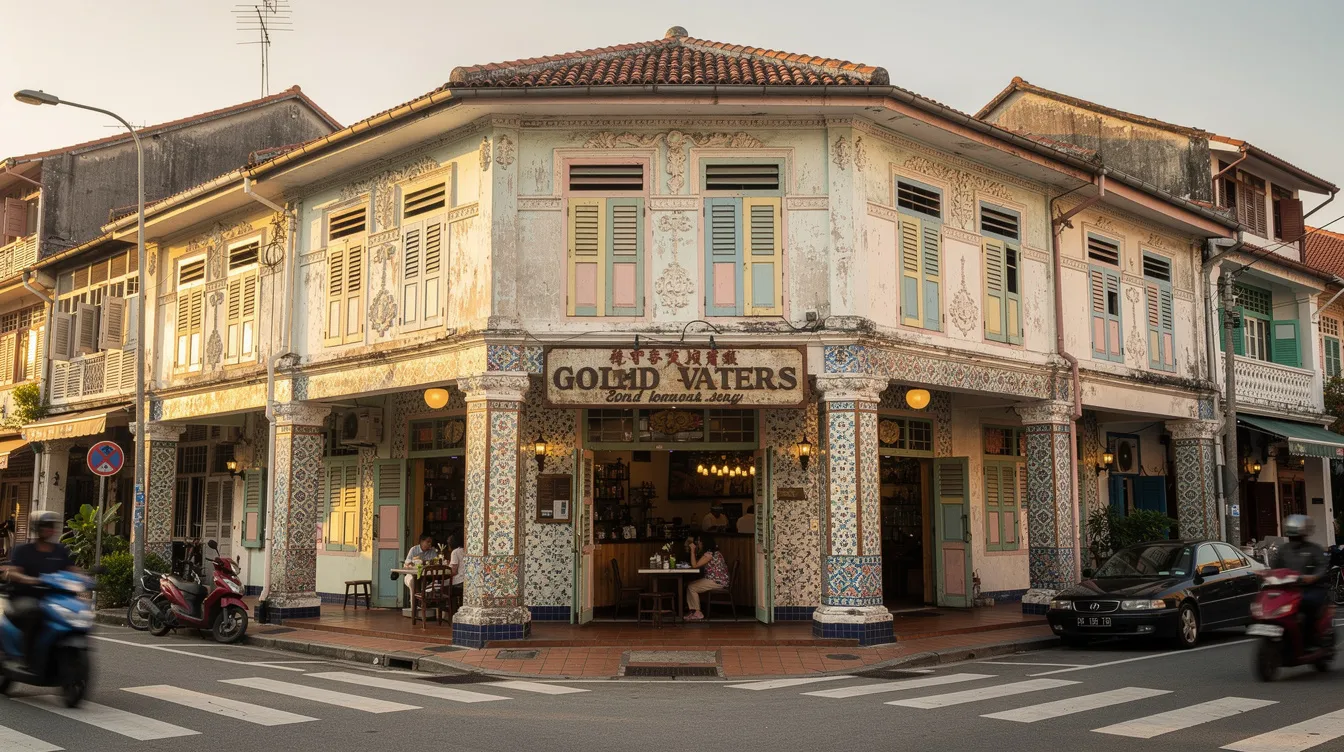
Common Valuation Mistakes and How to Avoid Them
Shophouses are highly idiosyncratic assets. Frontage width and plot configuration can enhance a shophouse’s rental and sale value-or mask underlying problems. Relying on headline PSF figures alone is a reliable way to overpay or misjudge risk.
Mistake 1: Comparing PSF on Land Without Checking Measurement Basis
The most frequent error is mixing up land area, strata area, and estimated built-up area when interpreting quoted PSF figures. A figure of “S$4,500 psf” means something entirely different when the denominator is 1,500 sq ft of land versus 4,500 sq ft of built-up floor area. This mismatch can distort perceived value by 20–30% or more-enough to turn a fair deal into an overpayment.
Always confirm whether a quoted PSF refers to land or built-up, and recompute both metrics yourself using title documents and surveyor drawings.
Mistake 2: Ignoring Condition, Conservation Compliance, and Hidden Capex
Façade deterioration, roof timber decay, non-compliant M&E systems, and structural issues can swing required capex by millions of dollars-drastically changing effective PSF on land. A shophouse quoted at S$6,000 PSF on land that needs S$800 psf of built-up in restoration work may effectively cost S$8,500+ PSF on land once the renovation budget is included.
A shophouse’s conservation status can greatly restrict its redevelopment potential and impose specific heritage reinstatement obligations. Non-compliant prior works may trigger URA enforcement and mandatory reinstatement at the new owner’s expense. Always commission a condition survey and conservation compliance check before pricing.
Mistake 3: Overlooking Tenure, Zoning, and Licence Constraints
The difference between 99-year leasehold and freehold can represent a 30–50% PSF discount in the same street, and ownership and acquisition can also be affected by the holding structure used for the asset. Approved use under URA zoning affects the desirability and marketability of shophouses-a property zoned “Commercial & Residential” faces different ABSD exposure, foreign buyer eligibility, and exit pool dynamics compared with 100% commercial zoning. Shophouses can be zoned as 100% commercial or mixed-use, and zoning affects foreign ownership eligibility for shophouses.
Special licences (F&B, nightlife, hotel) are not automatically transferable with sale. Buyers should obtain legal advice on title, use restrictions, and transaction documentation before completion. Buyers who capitalise a licence premium into their purchase price without confirming transferability may find the licence lapses on completion, destroying the income assumptions that underpinned the valuation.
Mistake 4: Blindly Trusting Asking Prices or “Record” Headlines
High-profile trophy deals set the upper bound for PSF benchmarks. The S$17,100 psf Keong Saik Road sale or the ~S$22,100 psf Ann Siang Road transaction involved exceptional attributes-corner plots, trophy frontage, pristine restoration, or strategic assembly potential. These are not representative of the broader market.
Shophouse pricing peaked in 2023 at S$9,500 psf in certain streets; by 2026, the market has stabilised with more units trading in narrower bands. Relying on outdated peaks or outlier records rather than dated completed-sales evidence and professional advice leads to unrealistic expectations on both sides of the negotiating table.
Conclusion and Next Steps
Valuing a shophouse PSF on land is not a single calculation-it is a structured process. Start with correct measurements and verified asset data, layer on comparable transaction evidence from the same conservation area and street, reconcile against income and yield analysis, and adjust for capex, tenure, and regulatory constraints. The figure you arrive at should sit within a defensible range, not a single point.
Your actionable next steps:
-
Pull URA Realis caveat data and EdgeProp records for your target street, filtering for 2024–2026 transactions
-
Compute both PSF on land and PSF on built-up for every shortlisted property
-
Stress-test rental income against a 3.0–3.5% yield range for prime CBD or 4.0–5.0% for fringe locations
-
Commission a condition survey and conservation compliance review before finalising any offer
-
Seek a second opinion from an experienced shophouse advisory team to validate your assumptions against bank valuation methodology
Related topics worth exploring next include URA zoning and gross plot ratio implications, conservation area guidelines and permitted A&A works, and the differences between commercial and residential development shophouse structures for wealth planning.
Additional Resources and How AESTHETIC HAVENS Can Help
For raw data and government resources, the following are invaluable:
-
URA Master Plan and Zoning Information – confirm zoning, plot ratio, and conservation status. Plot ratio is reviewed every five years in Singapore’s Master Plan, so staying current matters.
-
URA REALIS (Real Estate Information System) – access caveated transaction records
-
ERA Landed Shophouse Reports – periodic market analysis with PSF benchmarks
AESTHETIC HAVENS provides B2B real estate advisory focused on shophouse and industrial asset analysis, bespoke valuation perspectives, and marketplace services for owners and investors. Whether you are a family office evaluating a Kampong Glam conservation row, a business owner assessing a Joo Chiat commercial property for operational use, or an overseas investor seeking financing-ready valuation support, we bring the structured analysis that banks and institutional buyers expect.
Share your shophouse details-street, land area, zoning, condition-and we can provide a tailored valuation discussion aligned with bank approaches and long-term wealth preservation strategy.
Frequently Asked Questions on Shophouse Valuation PSF on Land
These FAQs address recurring queries that owners and investors raise when evaluating shophouse acquisitions.
How do I quickly estimate if an asking PSF on land is reasonable?
Pull 3–5 recent comparable sales from the same street or conservation cluster, compute the median PSF on land, and check whether the asking price falls within one standard deviation. Then do a quick rent check: if annual gross rent ÷ asking price produces a yield below 2.0% for prime CBD or below 3.0% for fringe, the pricing may be stretched. Adjust for any obvious capex needs to define your effective cost figure.
Why is my bank’s valuation lower than the seller’s expected price?
Banks instruct valuers to use conservative comparables, apply prudent income assumptions, and factor in downside risk-not upside marketing narratives. They typically exclude trophy outliers, use higher yield assumptions (which produce lower capital values), and apply discounts for condition or tenure risk. The gap between seller expectation and bank value often reflects genuine market liquidity risk in a thin-trading asset class.
Can I rely on PSF on land alone to pick a good shophouse investment?
PSF on land is a starting point, not a conclusion. Ignoring yield, tenant quality, building condition, zoning restrictions, and conservation compliance can lead to poor decisions. A low PSF on land in a fringe district may signal weak demand rather than a bargain, while a high PSF on land in a prime street may still deliver superior risk-adjusted returns over a 10-year period.
How often should I revalue my shophouse for wealth planning?
Revalue every 1–2 years, or after major regulatory shifts (e.g. master plan revisions, interest rate changes, new conservation guidelines). In Singapore, the gross plot ratio and zoning regulations for each site are reviewed every five years under the Master Plan cycle, making those revision periods particularly important for reassessment. AESTHETIC HAVENS can provide periodic market briefs tied to your specific asset and district.
Do banks value conservation and non-conservation shophouses differently?
Yes. Conservation shophouses carry unique heritage constraints-mandatory façade maintenance, restrictions on structural alteration, prescribed materials-that affect both capex and permitted uses. These restrictions limit redevelopment potential, which can reduce residual land value, but they also create scarcity that supports capital pricing. Banks typically apply tighter comparable pools and may offer slightly lower LTV ratios for conservation assets due to thinner market liquidity and higher maintenance risk.

