

Introduction
The good class bungalow market in 2026 has entered a phase of selective confidence – fewer headline-grabbing flips, more deliberate acquisitions by ultra-high-net-worth Singapore citizens who treat these properties as multi-generational anchors. This good class bungalow 2026 review unpacks exactly who is writing the cheques, which GCB areas command the steepest premiums, and what price per square foot on land buyers are actually paying across different tiers.
In short: the dominant buyers in 2026 are local legacy families, founders who liquidated or listed businesses between 2019 and 2025, and single-family offices deploying cash-heavy capital. The average land rate across caveated GCB transactions in 2026 sits around S$2,100–S$2,200 psf, though ultra-prime streets like Nassim Road have breached S$4,500 psf while outer-ring estates trade closer to S$1,600–S$2,000 psf. GCB prices range from S$10 million to over S$100 million depending on location, land size, and redevelopment status.
This article focuses exclusively on Singapore good class bungalows – the roughly 2,800 gazetted plots that form the country’s most restricted residential property class. It covers 2025–2026 transaction data, buyer profiles, land psf by district, and structural factors (cooling measures, interest rates, stamp duty) shaping demand. It is a market review, not legal or tax advice.
If you are a high-net-worth individual, business owner, private banker, or family office principal evaluating a GCB purchase, this piece is designed for you.
What you will take away:
-
Concrete 2026 GCB price bands by district and tier, expressed in both headline price and land psf
-
A clear picture of who is actually buying – and why their motivations differ from condo market participants
-
How cooling measures, additional buyer’s stamp duty, and interest rates practically affect GCB acquisition strategy
-
The role of plot shape, land size, and redevelopment status in 2026 GCB pricing
-
Key takeaways on what to watch for in 2027, and how to structure a GCB into core and investment portfolios
Selected recent transactions – including deals on Nassim Road, Dalvey Road, and across the Bukit Timah belt – are highlighted with contextual detail below.
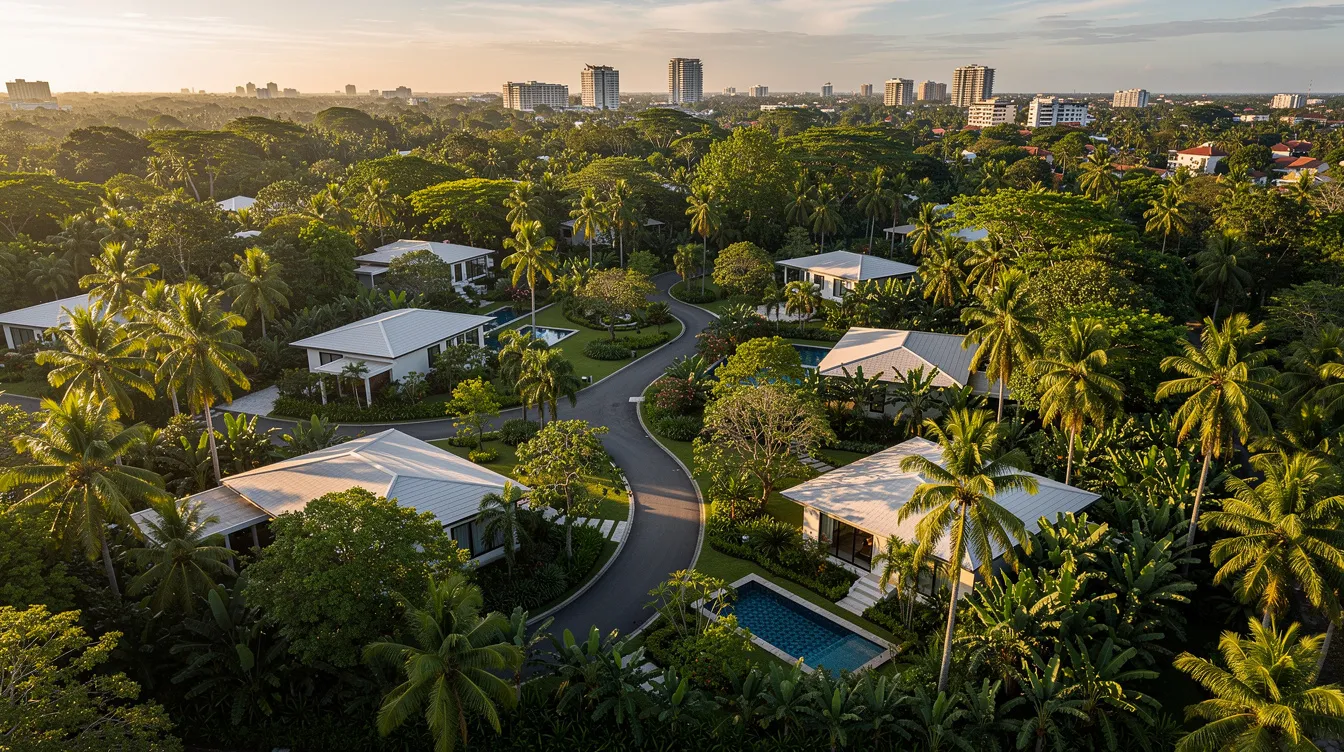
Understanding the Good Class Bungalow Segment in 2026
Good class bungalows sit at the apex of Singapore’s landed residential property hierarchy. They are not simply large detached houses – they are a planning category defined by the Urban Redevelopment Authority (URA), constrained by location, minimum plot dimensions, height limits, and ownership nationality. Understanding 2026 GCB performance matters because this segment functions as a barometer for ultra-wealth sentiment, land scarcity pricing, and long-term capital allocation among Singapore’s wealthiest citizens.
The sections below recap the regulatory framework briefly, then move quickly into 2026 data and buyer analysis. If you already know the planning rules, skip ahead to the pricing section.
What Qualifies as a Good Class Bungalow Today
Under current rules, a property qualifies as a good class bungalow only if it meets all of the following criteria set by the URA:
-
Minimum plot size: 1,400 sqm (~15,070 sq ft). A GCB must have a minimum plot size of 1,400 sqm. GCB plots must be at least 18.5 metres wide and 30 metres deep – dimensions that eliminate most standard landed homes.
-
Height cap: Limited to two storeys plus an attic. No exceptions for penthouses or multi-level extensions beyond this envelope.
-
Site coverage: Capped at 40 percent of land area, restricting the building footprint and preserving green setbacks.
-
Gazetted location: The plot must sit inside one of the 39 gazetted GCB areas. A large bungalow on a generous plot outside these boundaries is not, by definition, a GCB – no matter how grand it looks.
These planning controls create an effectively fixed supply. There are roughly 2,800 GCB plots in Singapore, and GCB supply is fixed and cannot be increased. No new gazetted areas have been added in decades, and subdivision of existing GCB plots below the minimum size is prohibited. This scarcity is the structural foundation of GCB pricing.
Where the 39 GCB Areas Sit and How They Differ
The 39 gazetted GCB areas are concentrated across a handful of prime districts:
-
District 10 (ultra-prime): Nassim Road, Cluny Hill, Cluny Park, Dalvey Road, Chatsworth Park, White House Park, Victoria Park Close
-
Districts 10–11 (prime): Queen Astrid Park, Binjai Park, Swiss Club Road, Belmont Park, Eng Neo Avenue, King Albert Park
-
Districts 20, 21, 23 (outer-ring): Caldecott Hill, Chestnut Avenue, Chancery Lane, and several estates further from the Orchard core
Later sections will show that GCB pricing in 2026 varies dramatically by belt. Ultra-prime District 10 commands S$3,000–S$4,500+ psf on land, while outer-ring estates may trade at S$1,600–S$2,200 psf – a spread wide enough to make “average GCB price” a misleading metric if used without context.
Who Is Allowed to Buy a GCB Under Current Rules
Only Singapore citizens can purchase good class bungalows freely. This restriction, enforced through the Residential Property Act, is the single most important demand-side filter in the GCB market.
Permanent residents need approval to buy a GCB, and such approval is rare – typically requiring demonstration of exceptional economic contribution. The Land Dealings Approval Unit (LDAU) under the Singapore Land Authority evaluates applications on an assessed case-by-case basis, and approvals often carry conditions such as owner occupation requirements. Foreigners are generally prohibited from buying GCBs, and foreign persons seeking to purchase require explicit approval from the government, which is almost never granted for GCB-class landed property.
GCB ownership must be held by natural persons only – corporate vehicles and trusts generally cannot circumvent the citizenship requirement without prior approval and close regulatory scrutiny. This means the buyer pool is structurally constrained to wealthy Singapore citizens, creating dynamics fundamentally different from the condo market, which is open to foreign capital.
Good Class Bungalow Market Review 2026: Volumes, Values and Price per Sq Ft
The GCB market in 2026 is best described as selectively active. Compared with the surge years of 2021–2023, transaction volumes have moderated, but deal sizes remain large and the average land rate has continued to edge upward. The recent GCB market trends indicate increasing price-consciousness among buyers – most buyers are more discerning, and the market is diverging from speculative peaks to more realistic pricing strategies.
Headline Numbers: How Big Was the GCB Market in 2026?
GCB transactions typically average 60 to 90 sales per year when both caveated and non-caveated deals are counted. In the first half of 2026, 10 caveated GCB transactions worth approximately S$304 million were recorded. By mid-October, the tally had risen to 17 caveated deals worth about S$517.5 million. Transaction volumes for GCBs increased by 15.4% in the first half of 2026 compared to the preceding period, signalling renewed but cautious appetite.
For context, the second half of 2025 saw 18 caveated deals totalling S$634 million, and the full year of 2025 produced roughly 30 caveated transactions worth about S$1 billion. Non-caveated deals – executed through share transfers, trusts, or off-market arrangements – are estimated to have added at least S$800 million in 2026 so far, though precise figures remain opaque.
The average land rate across caveated GCB deals rose to approximately S$2,121 psf in the first half of 2026, up from S$2,048 psf in the prior half-year. EdgeProp’s full-year dataset puts the 2026 average at roughly S$2,195 psf. Average GCB land price was S$2,134 psf in 2025, so the year-on-year movement is modest – consistent with a market that is stabilising rather than surging. In Q2 2026, URA’s landed price index rose by 2.5%, reflecting broad strength across detached houses and semi detached houses, not just GCBs.
Because only a handful of deals occur each quarter, a single outlier transaction can meaningfully shift averages. Interpret these headline numbers as directional signals, not precise benchmarks.
Price per Sq Ft by GCB Tier and District
The table below summarises indicative 2026 land psf ranges by GCB tier, drawn from caveated transaction data and market observations:
|
GCB Tier |
Representative Roads |
Typical Land psf (2026) |
Headline Price Range |
|---|---|---|---|
|
Ultra-prime District 10 |
Nassim Road, Dalvey Road, Cluny Hill, White House Park |
S$3,000–S$4,500+ psf |
S$40m–S$100m+ |
|
Prime Bukit Timah / Holland |
Queen Astrid Park, Binjai Park, Swiss Club Road, Belmont Park |
S$2,000–S$3,000 psf |
S$15m–S$40m |
|
Outer-ring / “value” GCBs |
Caldecott Hill, Chestnut Avenue, Alexandra Park, Eng Neo Avenue |
S$1,600–S$2,200 psf |
S$10m–S$25m |
The standout outlier in 2026 was a Nassim Road freehold GCB of approximately 14,264 sq ft that sold on 18 April 2026 for S$64.9 million – approximately S$4,550 psf of land area. This is the highest caveated land rate recorded for a detached house on that street. A Nassim Road plot sold for S$148 million in 2025, the previous year’s most talked-about transaction. At the other end of the spectrum, two Belmont Road GCBs of roughly 17,564 and 24,178 sq ft each traded at around S$1,437 psf – large plot transactions where size compressed the per-foot rate.
These variations underscore that GCB prices are driven by land rate, not built-up area. The road, the frontage, and the plot attributes matter more than the existing house in most deals.
Land Size, Plot Shape and Redevelopment Status in 2026 Pricing
In 2026, potential buyers often prioritize location, land characteristics, and redevelopment prospects. Three physical attributes drive psf premiums or discounts more than anything else:
Plot size and diminishing psf returns. Smaller GCB plots (15,000–20,000 sq ft) tend to achieve higher psf because they are more efficient to develop and their headline quantum is more accessible. When plots exceed 30,000 sq ft, psf typically compresses – the Belmont Road large plot at ~24,178 sq ft traded at S$1,437 psf, well below the district average, illustrating this dynamic.
Plot shape, elevation and frontage. Regular rectangular plots with wide frontage and good elevation command meaningful premiums. Irregular or sloping sites require more creative – and expensive – architectural solutions, and most buyers discount these accordingly. The average size of transacted landed homes in Q3 2026 decreased due to changes in buyer preferences, with more buyers targeting well-proportioned mid-sized plots over sprawling but awkwardly shaped land.
Existing house vs land value. Sites with an old, unrenovated existing house are typically priced on land value alone, with buyers factoring in demolition and rebuild costs. The Nassim Road and Dalvey Road record deals both involved older bungalows sold essentially as land assets. By contrast, recently rebuilt GCBs with high-specification finishes can command a premium above pure land psf – though such transactions are rarer. Land value is becoming increasingly important in determining GCB prices, and the gap between “old house on good land” and “rebuilt trophy home” continues to widen.
Who’s Buying Good Class Bungalows in 2026?
The typical buyers of GCBs include ultra-high-net-worth individuals and successful local entrepreneurs. In 2026, the buyer mix skews heavily toward long-term holders: legacy families consolidating wealth, founders deploying post-liquidity capital, and family offices seeking irreplaceable real assets. The GCB market is characterized by selectivity and realistic pricing expectations among buyers – gone is the 2021–2022 era of aggressive bidding wars.
Demand for GCBs is influenced by limited land supply and wealth preservation desires. For many of these buyers, a GCB purchase complements a broader portfolio that may include industrial facilities, commercial assets, or listed equities.
Local Ultra-High-Net-Worth Citizens and Legacy Families
Multi-generational Singapore families remain the bedrock of GCB demand. These buyers typically upgrade from older landed homes – a semi-detached in District 11, say, or an earlier-generation bungalow in Bukit Timah – into a flagship GCB intended to serve as the family seat for decades.
In 2026, legacy families have been most active in the S$25–S$60 million bracket, gravitating toward established residential neighbourhoods in Nassim Road, Dalvey Road, and the Bukit Timah belt. Established residential neighbourhoods continue to attract significant buyer interest among GCB purchasers – proximity to the Botanic Gardens, top schools, and the Orchard corridor remains non-negotiable for this cohort.
Their motivations are legacy, status, privacy, and capital preservation rather than rental yield. Their time horizon is intergenerational – 20, 30, or 50 years. They are least sensitive to interest rate movements and overwhelmingly pay in cash or with minimal leverage.
Business Owners, Founders and New Economy Wealth
A distinct wave of buyers has emerged from the ranks of tech, healthcare, logistics, and industrial founders who cashed out, listed, or secured major funding rounds between 2019 and 2025. These entrepreneurs – often in their late 30s to early 50s – are entering the GCB market for the first time.
One anonymised 2026 example: a tech founder acquiring a Queen Astrid Park bungalow for approximately S$40 million at around S$2,300 psf, seeking a home with architectural character and scope for personalisation. Another founder, from an industrial background, purchased on Swettenham Road (~15,553 sq ft) for S$31.8 million, roughly S$2,045 psf – prioritising greenery and proximity to international schools.
These buyers think in terms of portfolio diversification. Many already hold industrial or commercial assets and view the GCB as a separate allocation within their core and investment portfolios – a store of value rather than an income-producing asset.
Family Offices and Structured Wealth Vehicles
Single-family offices are increasingly involved in 2026 GCB deal flow. While the land itself must typically be held in an individual Singapore citizen’s name (given that GCB ownership must be held by natural persons only), family investment vehicles often fund and structure the acquisition.
These buyers typically target large, quiet GCB plots in ultra-prime areas, with budgets frequently exceeding S$50 million. They favour sites with scope to rebuild to precise family specifications – often incorporating basements, lifts, landscaped grounds, and guest quarters within the two-storey-plus-attic envelope.
For family offices, GCB purchases are usually cash-heavy, with conservative leverage. Loan-to-value limits for GCBs are lower than for condominiums, and the MAS Total Debt Servicing Ratio (TDSR) framework effectively caps borrowing for large acquisitions. These buyers prefer to minimise interest rate exposure and keep their cost base predictable.
How Cooling Measures and Interest Rates Shape the 2026 Buyer Pool
Singapore’s cooling measures – particularly additional buyer’s stamp duty – have a nuanced effect on the GCB segment. A Singapore citizen buying a GCB as a first residential property pays zero ABSD; buyer’s stamp duty on a S$30 million GCB is S$1.18 million, calculated under progressive stamp duty rates. However, additional buyer’s stamp duty can reach 30% for subsequent properties, which means a citizen buying a second home at S$40 million would face a substantial ABSD bill. High stamp duties are applied on GCB transactions, particularly for non-citizens or those acquiring additional properties.
In practice, most buyers sequence their portfolios carefully – disposing of an existing condo or upgrading from an older landed property to position the GCB as their sole or first residential property, thereby eliminating ABSD exposure. This sequencing behaviour has become more deliberate in 2026.
Interest rate hikes since 2022 have had limited impact on cash-rich ultra-HNW buyers but have reduced marginal leveraged demand and speculative interest. The result: fewer flips, more long-term end-users and legacy planners. The GCB market in 2026 is quieter but more composed.
What Are They Paying: Detailed 2026 Pricing Examples
All figures below are illustrative of 2026 ranges, drawn from URA caveats, EdgeProp transaction records, and market observations – not exact private deal disclosures. This section is intentionally rich in concrete numbers.
Recent Ultra-Prime Transactions: Nassim, Dalvey, Cluny
The headline deal of 2026 was on Nassim Road: a freehold GCB of approximately 14,264 sq ft changed hands on 18 April 2026 for S$64.9 million, achieving roughly S$4,550 psf of land. The existing house was an older bungalow – the purchase price reflects pure land value on one of Singapore’s most prestigious streets, minutes from the Botanic Gardens and foreign embassies.
On Dalvey Road, an old house on a large plot sold for S$56 million, equating to approximately S$3,029 psf. This transaction illustrates the price gradient even within District 10: Dalvey commands a meaningful discount to Nassim despite strong prestige, largely because of differences in plot attributes and immediate surroundings.
At Linden Drive, a well-proportioned 11,691 sq ft plot fetched S$28 million (approximately S$2,395 psf), likely reflecting favourable plot shape and frontage. These ultra-prime deals share a common driver: the address itself accounts for a significant proportion of the purchase price.
Prime Bukit Timah and Holland: Binjai, Swiss Club, Queen Astrid
In the prime Bukit Timah belt, GCB pricing in 2026 generally sits in the S$2,000–S$3,000 psf band. A Swettenham Road GCB (~15,553 sq ft) sold for S$31.8 million, approximately S$2,045 psf. An Oriole Crescent property (12,176 sq ft) transacted at S$23.8 million, roughly S$1,955 psf.
Queen Astrid Park and Belmont Park remain popular among successful business owners seeking greenery, privacy, and good school access without Nassim-level premiums. These areas typically see deals in the S$25–S$40 million range, with psf varying based on micro-location, road prestige, and whether the site contains a conserved bungalow or is a clean redevelopment opportunity.
Outer-Ring GCBs: Caldecott, Chestnut, Alexandra Park and Others
Outer-ring gazetted areas offer more land for a lower per-foot cost, attracting buyers who prioritise space over cachet. A Belmont Road large plot of approximately 24,178 sq ft sold for S$34.75 million at roughly S$1,437 psf – a substantial absolute quantum but well below prime-district rates.
The trade-offs are clear: less prestige, potentially longer commutes, but more generous grounds and often quieter surroundings. Entry-level GCB plots in Caldecott Hill, Chestnut Avenue, or Alexandra Park may trade from S$10 to S$20 million in 2026 for older houses or sites needing complete rebuilds.
|
Location |
Land Area (sq ft) |
Price (S$ million) |
Land psf |
Notes |
|---|---|---|---|---|
|
Nassim Road |
~14,264 |
S$64.9m |
~S$4,550 |
Ultra-prime freehold, old house |
|
Dalvey Road |
~18,500 (est.) |
S$56.0m |
~S$3,029 |
Old house, strong D10 address |
|
Linden Drive |
~11,691 |
S$28.0m |
~S$2,395 |
Good plot shape and frontage |
|
Swettenham Road |
~15,553 |
S$31.8m |
~S$2,045 |
Mid-prestige resale |
|
Oriole Crescent |
~12,176 |
S$23.8m |
~S$1,955 |
Relative value in prime belt |
|
Belmont Road |
~24,178 |
S$34.75m |
~S$1,437 |
Large plot, lower psf |
How GCB Buyers Structure Their Purchases in 2026
Knowing what buyers pay is only half the picture. How they pay – the financing, stamp duty sequencing, and total project budgeting – is equally important, especially when the all-in cost of a GCB (land, duties, rebuild) can exceed the headline land price by 30–50%.
Financing vs All-Cash: What 2026 Deals Look Like
Most 2026 GCB purchases are equity-heavy. Many buyers fund 70–100% of the purchase price from cash or liquid assets. Those who do borrow typically operate at 40–60% loan-to-value, constrained both by MAS lending limits and by their own preference to keep debt exposure low on an illiquid, non-income-generating asset.
Loan-to-value limits for GCBs are lower than for condominiums, meaning banks are inherently more conservative in their underwriting. The TDSR framework further limits how much a buyer can borrow based on total debt obligations. For a S$50 million GCB, even a 50% LTV means a S$25 million mortgage – a commitment that most buyers prefer to avoid or minimise. The practical implication: interest rate volatility matters less to GCB buyers than to the broader residential property market.
Stamp Duty, ABSD and Sequencing a GCB into a Portfolio
Consider a worked example. A Singapore citizen buying a S$40 million GCB as their first residential property in 2026 pays buyer’s stamp duty of approximately S$1.57 million under progressive stamp duty rates, but zero ABSD. If that same citizen already owns a condominium, the GCB becomes a second property and ABSD applies – at 20% for citizens on a second home, that would add S$8 million to the acquisition cost.
The solution most buyers adopt: sell or restructure existing holdings before completing the GCB purchase. Many upgrade from an older landed property or dispose of a condo, ensuring the GCB qualifies as their sole home. This sequencing is not merely a tax optimisation – it is a fundamental portfolio decision. Annual maintenance costs for a GCB can exceed six figures, so streamlining property tax exposure and carrying costs across fewer holdings is a rational strategy.
Rebuild vs Renovate: 2026 Cost Benchmarks
Most buyers purchasing an older GCB intend to demolish and rebuild. Indicative 2026 construction costs range from S$600 to S$1,200 per square foot of built-up area, depending on specification – a basic high-quality rebuild sits at the lower end; a trophy home with basement, pool, lift, and designer finishes pushes toward the upper bound.
A simplified all-in calculation for a typical 20,000 sq ft GCB plot:
-
Land acquisition: 20,000 sq ft × S$2,200 psf = S$44 million
-
Stamp duty: Approximately S$1.7 million (BSD on first property for citizen)
-
Rebuild: 10,000 sq ft built-up area × S$900 psf = S$9 million
Total project budget: ~S$54.7 million. Buyers run their own numbers to determine the maximum land psf they can accept, working backward from total budget to ensure the cost base remains defensible against long-term value expectations.
Common Challenges for 2026 GCB Buyers – And How to Navigate Them
Even ultra-HNW buyers can mis-price risk in this opaque, thin market. GCB transactions are infrequent and often take 12 to 24 months to sell, which means mistakes compound rather than correct quickly.
Challenge 1: Overpaying Because of Thin Comparable Data
Problem: With only a handful of caveated deals per quarter in any given GCB area, reliable psf comparables are scarce. Two adjacent roads can show wildly different psf outcomes based on a single transaction, and non-caveated deals remain invisible in public data.
Solution: Triangulate across multiple sources – URA REALIS caveats, valuer assessments, and broker intelligence from at least two independent agents. Benchmark against nearby roads and similar land size, not just the same street. Be wary of using a single outlier deal as your anchor.
Challenge 2: Misunderstanding Planning, Conservation and Setback Constraints
Problem: A buyer acquires a site only to discover that conservation areas designation, unusual setbacks, or heritage tree protection shrinks the effective building envelope far below what the gross land area suggests. Site coverage limits, front-yard setbacks, and conservation obligations vary – a conserved bungalow may restrict demolition entirely.
Solution: Engage an architect and qualified planner before signing the Option to Purchase. Have them model the buildable envelope and confirm capacity for basement, attic, pool, and outbuildings within URA planning rules. This upfront cost (typically S$10,000–S$30,000 for a feasibility study) is negligible against a S$30–S$60 million commitment.
Challenge 3: Liquidity, Exit Timing and Family Alignment
Problem: GCBs are among the most illiquid classes of residential property in Singapore. Marketing periods for non-trophy properties often stretch to 12 months or longer, and the buyer pool is structurally limited to Singapore citizens. Outside hot market cycles, sellers may need to offer a meaningful discount to transact within a reasonable timeframe.
Solution: Plan for a 10–20 year hold as the base case. Align expectations among family stakeholders – especially if the GCB is funded from a family office or shared wealth vehicle. Avoid funding the purchase with capital that may be needed for business operations or other investment portfolios.
Conclusion and Next Steps
The good class bungalow market in 2026 is defined by disciplined buying, modest psf appreciation, and a clear tilt toward long-term holders. Average land rates have edged past S$2,100 psf, ultra-prime streets continue to set records (Nassim Road at S$4,550 psf), and outer-ring estates offer relative value at S$1,600–S$2,000 psf. Volumes are moderate – consistent with a market where supply is permanently fixed, the buyer pool is restricted to Singapore citizens, and pricing expectations between sellers and buyers are converging but not yet fully aligned.
Immediate next steps if you are considering a GCB:
-
Clarify your budget ceiling and ABSD position – determine whether the GCB will be your first residential property or a subsequent holding
-
Shortlist preferred GCB belts: ultra-prime (Nassim, Dalvey, Cluny Park), prime Bukit Timah (Binjai Park, Queen Astrid Park, Swiss Club Road), or outer-ring value estates (Caldecott Hill, Chestnut Avenue)
-
Engage independent advisors to stress-test financing assumptions and rebuild cost estimates against your own numbers
-
Begin monitoring caveat data and off-market opportunities through trusted channels – timing matters in a market where each road sees only a handful of transactions per year
If you are weighing a GCB alongside industrial, commercial, or other real estate allocations, AESTHETIC HAVENS can provide a confidential portfolio review that integrates your GCB ambitions with broader property strategy.
Frequently Asked Questions on the GCB Market in 2026
What is the typical entry price for a Good Class Bungalow in 2026?
Entry-level GCB plots in less-prime gazetted areas (Caldecott Hill, Chestnut Avenue) start at approximately S$10–S$15 million for older houses on minimum-sized plots, equating to roughly S$1,600–S$2,000 psf of land. Mainstream prime districts (Queen Astrid Park, Binjai Park) see transaction prices of S$20–S$40 million. Ultra-prime addresses (Nassim Road, Dalvey Road) routinely exceed S$50 million, with trophy assets surpassing S$100 million.
Are GCB prices in 2026 rising, falling, or flat?
GCB prices in 2026 are best described as stabilising with modest upward drift. The average land rate rose from S$2,048 psf in H2 2025 to S$2,121 psf in H1 2026 – positive but far from the surge pace of 2021–2023. Low transaction counts make trend lines inherently noisy; a single large deal can shift quarterly averages by 5–10%. The long-run trajectory remains upward: average psf has risen from approximately S$1,317 in 2016 to S$2,195 in 2026, a gain of roughly 67% over the decade.
Can Permanent Residents or foreigners participate in the GCB market indirectly?
Permanent residents may apply to purchase a GCB, but approval for PRs is rare and requires economic contribution – specifically, an exceptional economic contribution to Singapore that the government deems sufficient. Applications go through the Land Dealings Approval Unit under the Singapore Land Authority. Foreigners are generally prohibited from buying GCBs. Structures using companies or trusts do not bypass the citizenship requirement and are closely monitored. LDAU approval, where granted, typically imposes conditions including owner occupation.
Is a GCB a good investment compared with industrial or commercial property?
GCBs function as a store-of-value, low-yield, high-prestige asset. They generate no rental income (in most cases, the buyer lives there) and carry substantial holding costs – property tax, maintenance, and insurance. Industrial and commercial properties, by contrast, generate recurring income and can be held in corporate structures. For most UHNW clients, the right question is how much capital to allocate to a GCB alongside income-producing assets, not whether to choose one over the other. A well-balanced portfolio integrates both.
How can I get independent advice before making an offer on a GCB?
Before signing an Option to Purchase, engage at least four independent professionals: a licensed property valuer to benchmark fair value against recent transaction data; a property lawyer to confirm title, encumbrances, and Residential Property Act compliance; an architect or planner to model the buildable envelope under current planning controls; and an advisory partner such as AESTHETIC HAVENS to cross-check portfolio fit, financing structure, and total project cost against your objectives.
Additional Resources
-
Stamp Duty and ABSD Calculator: Request a detailed worked example for your specific scenario – citizen, PR, or trust structure – covering buyer’s stamp duty and ABSD at current stamp duty rates
-
GCB Due Diligence Checklist 2026: A downloadable checklist covering title searches, planning verification, conservation status, plot shape assessment, and LDAU compliance – available on request from AESTHETIC HAVENS
-
Visual Guide to the 39 GCB Areas: A stylised map showing all gazetted GCB areas across Districts 10, 11, 20, 21 and 23, with indicative 2026 psf bands overlaid by belt
-
Industrial Property Investment Playbook: For business owners considering how a GCB fits alongside warehouse, factory, or logistics holdings in their broader property strategy
-
Anonymised GCB Transaction Data Pack: A curated summary of recent 2024–2026 caveated GCB transactions with land area, psf, and district breakdowns – available to serious buyers upon request

