

Introduction
Gourmet Xchange @ Kallang Way harnessing 7 yields in Singapore’s premier central food factory refers to a strata-titled food asset that combines seven monetisation paths—rental income from food production units, capital appreciation, cloud kitchen operations, F&B outlet revenue, heritage terrace premiums, food innovation lab licensing, and cold chain logistics income—with targeted gross yields of 6.0% to 7.0% for investors. Located at 1 Kallang Way, this 272-unit development by CapitaLand Development pairs a nine-storey food factory with adjoining heritage terrace units to create a purpose-built ecosystem for food production, distribution, innovation, and consumer-facing operations.
This analysis is for food industry investors, food business operators, commercial property buyers, and Singapore business owners assessing whether Gourmet Xchange Kallang fits an industrial, commercial, or mixed-use real estate strategy. It examines the seven yield drivers, the project’s central location and specifications, the regulatory and operational variables that shape returns, the effect of Singapore’s 30 by 30 food resilience policy, and practical unit-selection and tenant-mix decisions, while excluding residential comparisons and non-food industrial uses outside the development’s B2 zoning scope.
In short, Gourmet Xchange’s investment case is a diversified income model within a centrally located, purpose-built food factory aligned with Singapore’s food security agenda. That matters for buyers seeking lower entry barriers than many large-format industrial acquisitions, with the potential for stable yields and long-term capital appreciation in industrial food real estate.
After reading this analysis, you will understand:
-
How each of the seven yield streams generates returns and at what risk profile
-
Why Gourmet Xchange’s prime central location and specifications create pricing power over typical small industrial units
-
The regulatory and operational factors that affect net yields in strata food factory units
-
How Singapore’s 30 by 30 food resilience policy supports long-term demand
-
Practical unit selection and tenant mix strategies for optimizing combined returns
Understanding Gourmet Xchange as an Investment Asset
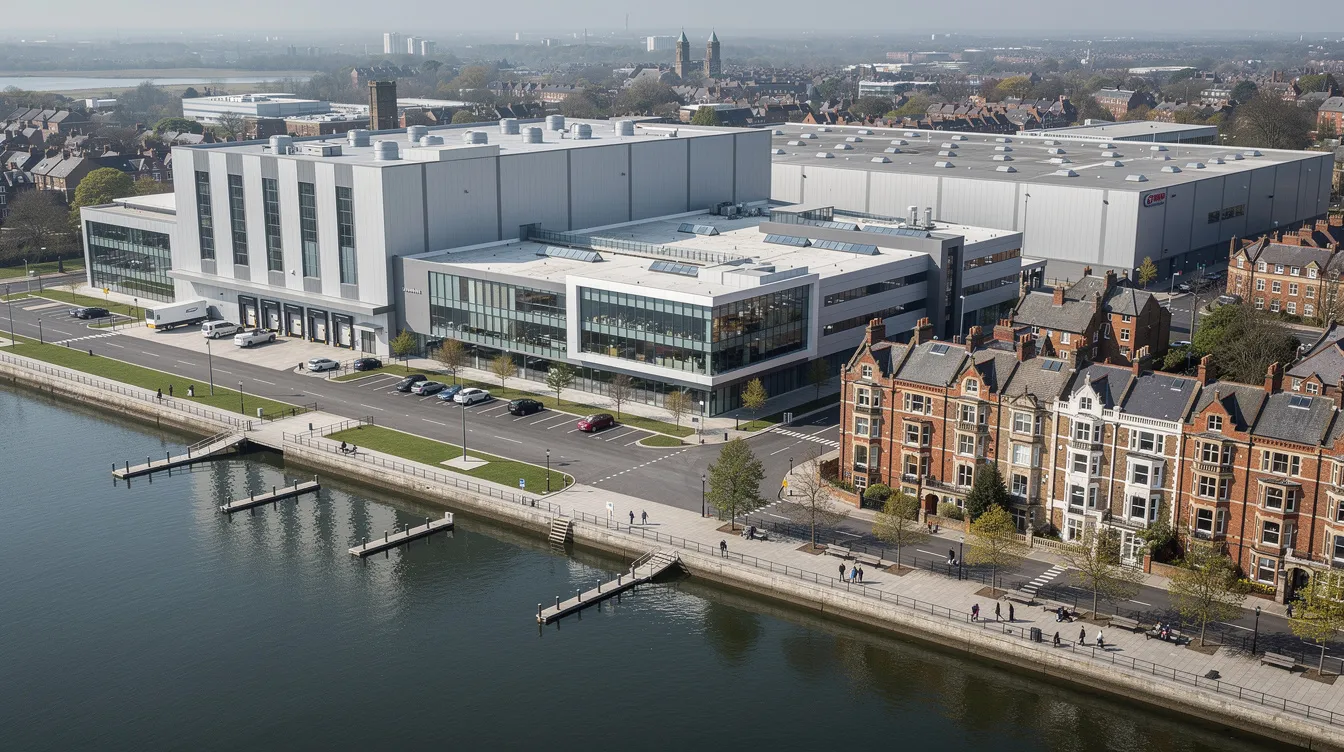
Gourmet Xchange is CapitaLand Development’s flagship adaptive reuse project spanning approximately 474,800 square feet of gross floor area across 272 total units. The development includes 264 B2 food production units in the main tower, plus eight terraced units in a preserved heritage terrace block, an industrial canteen, two restaurant outlets, and six food kiosks. The facility is conceptually structured to support an industrial business environment for food operators, covering the entire food industry value chain from manufacturing through distribution to consumer engagement.
The property sits on a 33-year leasehold commencing February 2025, with an estimated Temporary Occupation Permit in the first half of 2028. As a strata-titled industrial property, it carries a significant advantage: strata-titled properties in Singapore do not incur Additional Buyer’s Stamp Duty, making the entry barrier lower compared to residential investments. Only eight approved food factory locations exist in Singapore, and many food manufacturing facilities face scarcity due to limited prime locations – positioning Gourmet Xchange as a new benchmark in the industrial sector.
Strategic Location Advantages
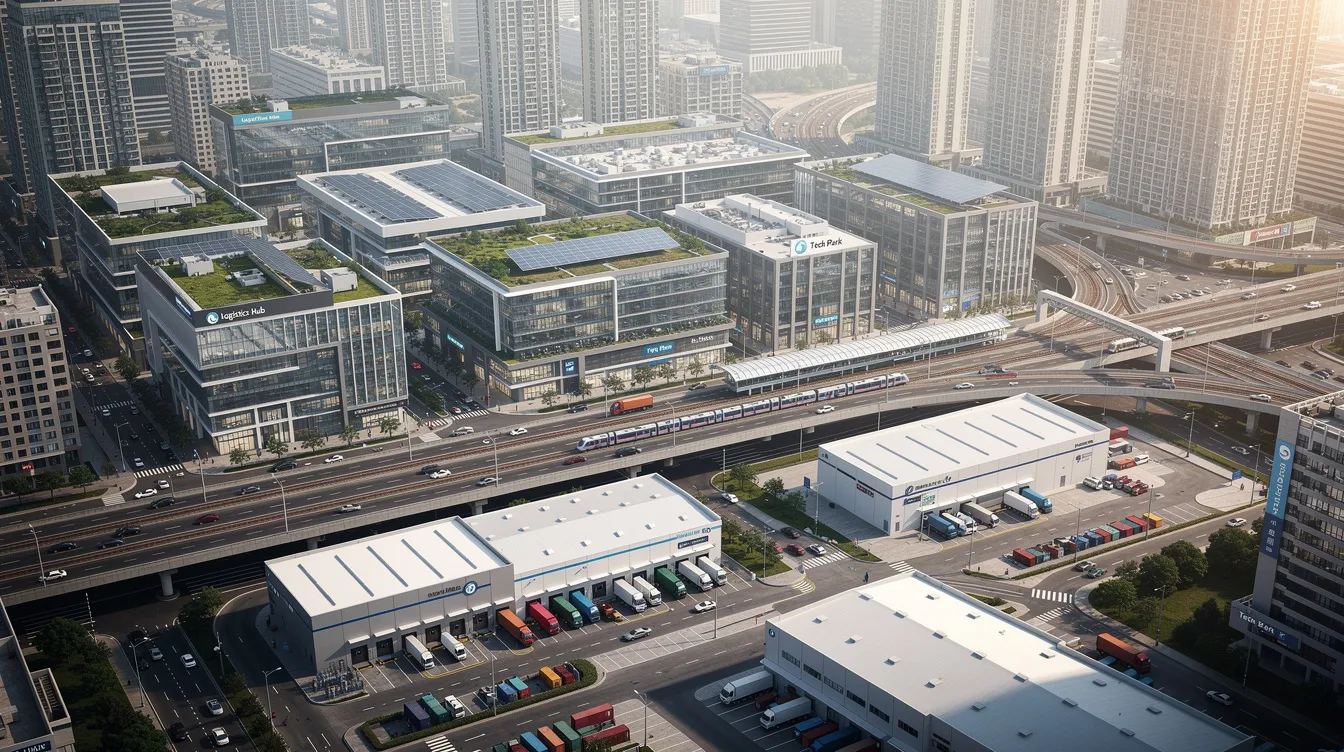
The central Kallang Way position within the Kolam Ayer industrial estate delivers connectivity that directly drives multiple yield streams. Gourmet Xchange is served by four major expressways – the PIE, CTE, KPE, and ECP – enabling island-wide food distribution with minimal transit friction. It is a 20-minute drive to the CBD, making it viable for both B2B production and direct consumer engagement through showrooms and F&B outlets.
Gourmet Xchange is near three MRT stations, including a 10-minute walk to Mattar MRT, with proximity to Aljunied and MacPherson stations. This access to residential estates in Paya Lebar, MacPherson, and Geylang ensures reliable labour pools for food manufacturing operations. Central business locations command premium rents due to reduced delivery times – a structural advantage that peripheral industrial sites in Tuas or Jurong cannot replicate.
The site is located in a mature industrial estate, surrounded by established food businesses and distribution networks that create natural synergies for tenants. This ecosystem effect, combined with direct access to major expressways and MRT stations, makes the location a compelling proposition for both small scale producers and large commercial operations operating from the same hub.
Development Specifications
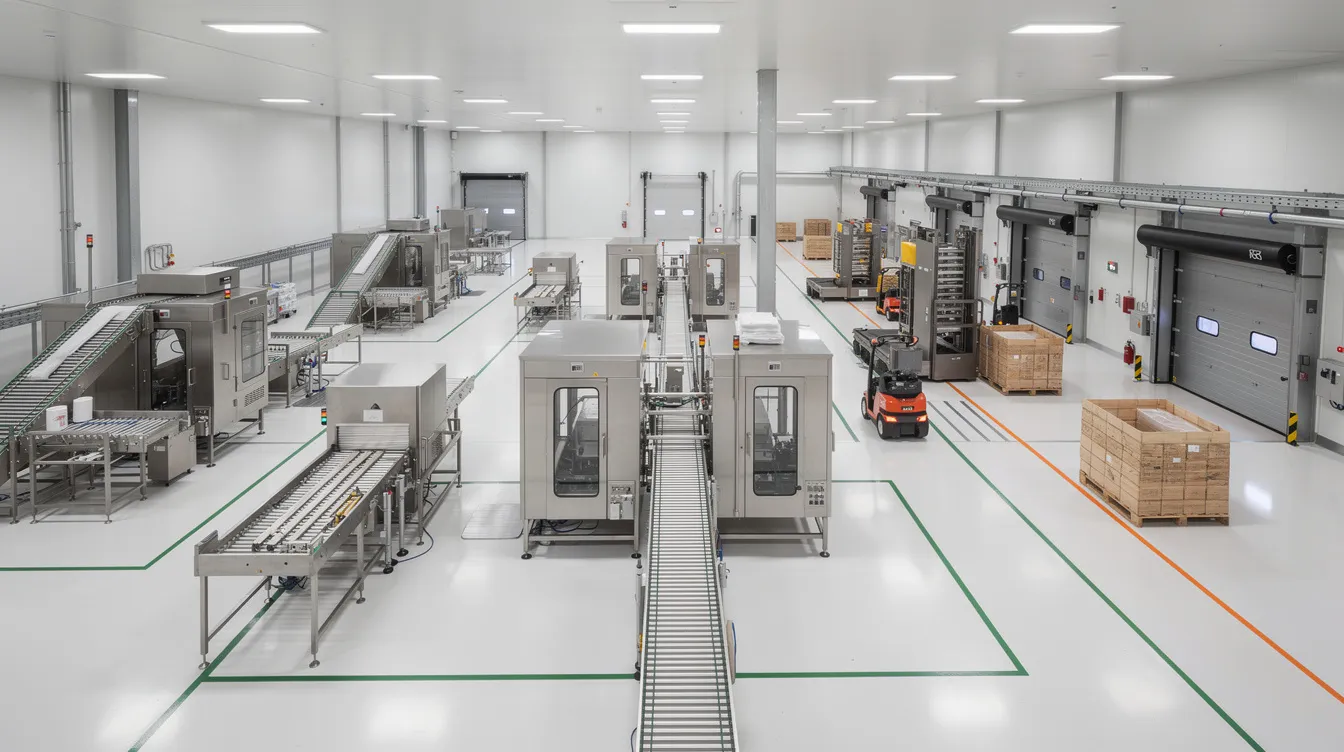
The nine storey block houses 264 modular units for food businesses, with unit sizes ranging from 3,000 to 7,000 square feet – offering large floor plates and large contiguous spaces ranging well beyond typical small industrial units found across Singapore’s mature industrial estates. Standard B2 units occupy approximately 3,175–4,230 sq ft, while deluxe units provide 6,135–8,159 sq ft of food manufacturing space, over twice the size of many competing food factory spaces.
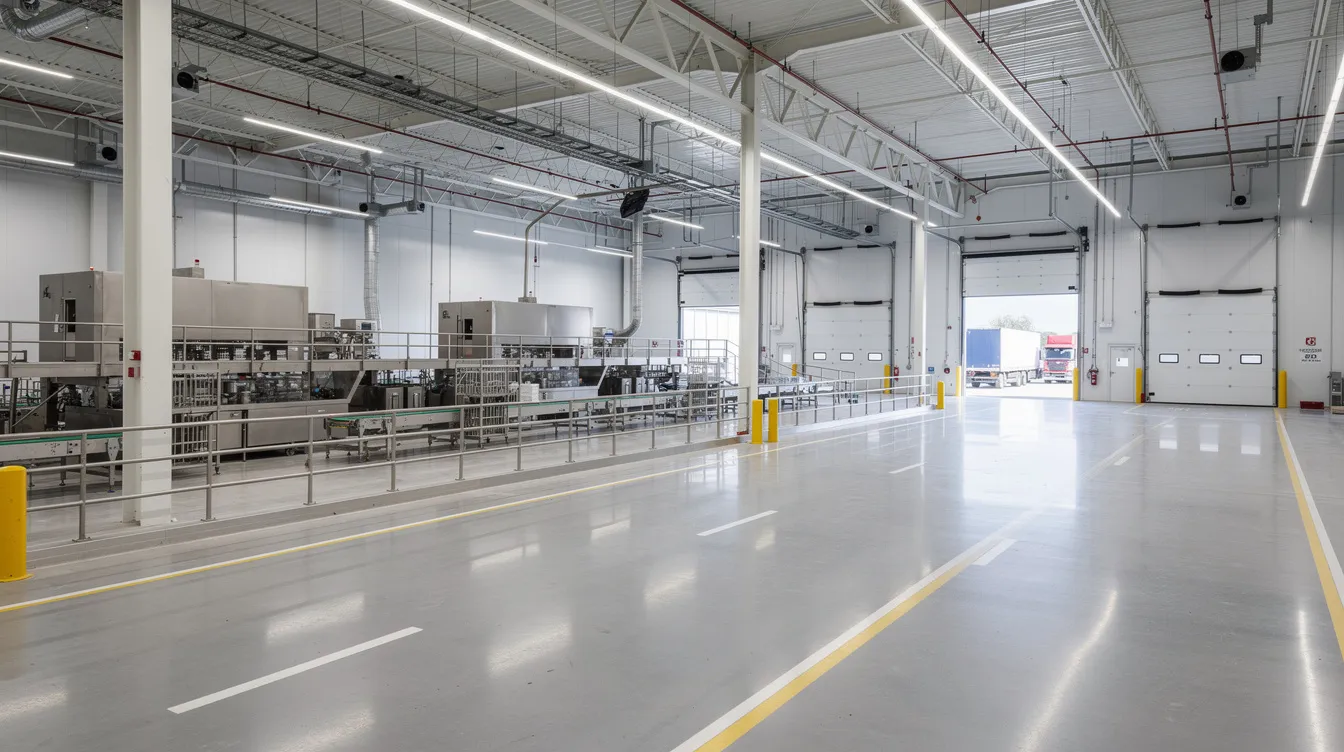
The development features ramp-up access for 40-footer trucks up to Level 3, with 24-foot rigid truck access to Levels 4–9. Ceiling heights reach 7 metres on Levels 1–3 and 5.5 metres on upper floors, supporting high capacity infrastructure requirements for food production. Driveways measure 16 metres wide, with both private and common loading bays and approximately 230 rooftop heavy-vehicle parking lots.
The heritage terrace block preserves eight three-storey terrace units with architectural heritage features, each spanning approximately 6,437–8,105 sq ft. These units accommodate B1 industrial with F&B and retail uses, enabling the facility to promote both B2B production and direct consumer engagement through showrooms and customer-facing food experiences.
Pre-fitted infrastructure tailored for food production reduces tenant fit-out delays – built-in grease traps, kitchen exhaust shafts, heavy floor loading, and Singapore Food Agency compliance-ready specifications mean tenants can begin operations faster. Units at Gourmet Xchange can be configured to support various food production needs, from central kitchens and food manufacturing to cold storage and R&D labs.
These specifications directly enable the seven diversified revenue streams that follow.
The Seven Yield Streams Explained
The convergence of prime central location, purpose-built food infrastructure, and diversified unit types creates seven distinct income channels. Each yield stream operates independently but strengthens the others when combined within a portfolio strategy – a food hub effect that isolated industrial sites cannot generate.
Core Food Production Rental Yields
The 264 food production units form the backbone of Gourmet Xchange’s income potential. Central food factories rent for $3.00 to $4.00 psf in comparable locations, but Gourmet Xchange’s enhanced specifications – ramp up access, high ceilings, and pre-fitted food factory infrastructure – position units at the premium end of this range and potentially above it.
Standard B2 food manufacturing units priced between $2.08M and $4.23M (approximately $593–$1,105 psf) can generate gross yields of 3.5–5% at baseline rental assumptions. Deluxe units commanding $6.22M–$8.23M offer scale advantages: a 7,500 sq ft deluxe unit renting at $5–6 psf per month produces $45,000 monthly or $540,000 annually, translating to approximately 7.2% gross yield on a $7.5M cost basis.
Stability underpins these returns. Singapore aims to produce 30% of nutritional needs locally by 2030 under its food resilience agenda, driving sustained demand for production facilities. The limited supply of centrally located food factory units – with only eight approved food factory locations across Singapore – creates structural rental support that peripheral industrial developments cannot match.
Cloud Kitchen Operation Returns
Cloud kitchens and central kitchens represent one of the highest-return opportunities within Gourmet Xchange. The B2 zoning permits 24/7 food production operations, and the development’s central location minimizes last-mile delivery distances to dense residential estates – a critical cost factor for food delivery platforms.
Units configured as cloud kitchens can command elevated rental rates due to their operational intensity and revenue density. A standard unit of 3,500 sq ft leased at $4.50 psf monthly generates approximately $189,000 annually. When factoring renovation costs of approximately $200 psf for kitchen fit-outs, total investment calculations must account for $700,000+ in specialized equipment and infrastructure.
Market demand from online delivery platforms and centralized food preparation operators continues to grow. Gourmet Xchange aims to maximize operational efficiency and scalability for food businesses, and cloud kitchen tenants benefit directly from the shared infrastructure – exhaust systems, grease management, heavy power loads – that would cost significantly more to install independently.
|
Revenue Component |
Cloud Kitchen (3,500 sq ft) |
Traditional Food Factory (3,500 sq ft) |
|---|---|---|
|
Monthly Rent |
~$15,750 |
~$12,250 |
|
Annual Revenue |
~$189,000 |
~$147,000 |
|
Fit-out Cost |
~$700,000 |
~$350,000 |
|
Gross Yield (on total investment) |
6.3–8.0% |
4.5–5.5% |
|
Utilization Rate |
18–24 hrs/day |
8–12 hrs/day |
F&B Outlet Revenue Potential
The two restaurant units, sized approximately 655–669 sqm and priced at $8.81M–$8.97M (~$1,246–$1,250 psf), offer direct consumer access that traditional industrial spaces cannot provide. Positioned around the central plaza and potentially along a waterfront promenade, these units benefit from foot traffic generated by the development’s 264 industrial tenants and their workforces.
The mixed-use integration – combining food kiosks, an industrial canteen, and full-service restaurant outlets within a food manufacturing complex – supports higher rental premiums than standalone food factory spaces. F&B tenants gain a captive audience of workers, visitors, and suppliers, while the development gains vibrancy and brand visibility. Gross yields on restaurant units typically range from 5–8%, though operating costs in F&B are notably higher than in production-only tenancies.
The facility promotes both B2B production and direct consumer engagement through showrooms, meaning restaurant tenants can double as showcases for products manufactured elsewhere in the building – a synergy unique to integrated food hub developments.
Advanced Yield Optimization Strategies
Beyond the three core yield streams, Gourmet Xchange offers four additional revenue channels that reward investors willing to engage with specialized tenant profiles, sustainable rejuvenation approaches, and Singapore’s growing food tech ecosystem.
Heritage Terrace Premium Positioning
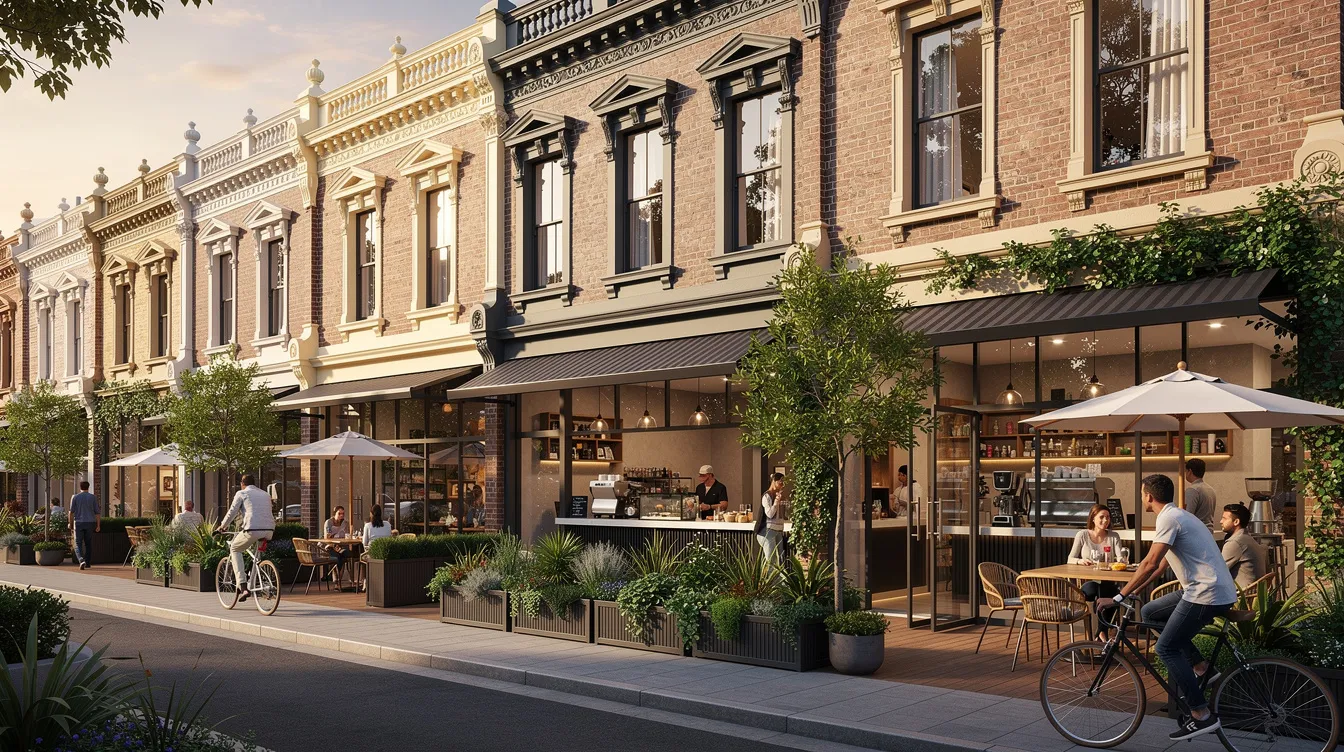
The eight terraced units in the heritage terrace block represent an adaptive reuse value proposition unlike anything in Singapore’s industrial developments. Preserving 1980s architectural heritage while integrating modern food production infrastructure, these units attract ESG-conscious tenants and premium food brands willing to pay for ambience, street-level visibility, and differentiated positioning.
Each heritage terrace unit spans approximately 6,437–8,105 sq ft across three storeys, enabling vertical integration: ground-floor F&B or retail showroom, upper floors for production or R&D. Priced from $6.11M+ (~$949 psf), these units advance sustainable rejuvenation approaches that Singapore’s planning authorities increasingly encourage. This is the first Industrial Government Land Sale site at Kallang Way to include adaptive reuse under industrial classification, signalling strong policy alignment.
Premium pricing reflects unique architectural and sustainability credentials. Rental yields on heritage terrace units may reach 6–8% gross when tenanted by consumer-facing food brands that leverage the heritage aesthetic for marketing and customer experience.
Food Innovation Lab Licensing
Singapore’s food ecosystem is expanding rapidly into alternative proteins, precision fermentation, and advanced food technology. Gourmet Xchange’s B2 units can accommodate specialized fit-outs for food innovation labs, R&D operations, and pilot-scale production – spaces that command premium rents from tenants with higher-margin business models.
Food innovation tenants typically sign longer lease terms and require specialized infrastructure (clean rooms, controlled environments, heavy power loads) that increases switching costs and reduces vacancy risk. Partnership opportunities with Singapore’s food innovation ecosystem – including agencies like A*STAR and the Singapore Food Agency – can provide grants and co-investment that offset higher fit-out costs.
The project aligns with Singapore’s food resilience and innovation goals, and the growing demand for food tech expansion space in central locations positions these units for premium PSF pricing, potentially 10–20% above standard production rents.
Cold Chain Logistics Income
Cold chain logistics infrastructure within Gourmet Xchange leverages the development’s heavy vehicle access, 16-metre driveways, and proximity to four major expressways to support temperature-controlled storage and distribution. Cold rooms and cold storage facilities serve both industrial tenants within the building and external clients requiring centrally located distribution points.
Last-mile efficiency advantages from the central location reduce delivery costs significantly compared to peripheral industrial sites. A cold chain operator at Kallang Way can service CBD restaurants, hotels, and retail outlets within 20 minutes – a capability that commands premium logistics pricing.
Additional revenue streams from logistics service provision to multiple tenants within the same hub create scale economies. However, operating costs for refrigeration, backup power, and energy consumption are substantially higher than ambient food factory spaces, compressing net margins despite strong gross revenue.
Long-term Capital Appreciation
Capital appreciation constitutes the seventh yield stream, driven by constrained supply of central food manufacturing space and supportive government policy. Strata food factory prices grew at 3.2% annually over five years, and Gourmet Xchange’s positioning in the central region – where new food-zoned industrial land is rarely released – suggests appreciation potential at or above this benchmark.
Government support through the 30 by 30 food security initiative reinforces long-term demand for urban food production facilities. As Singapore expands domestic food production capacity, purpose-built facilities in prime locations will capture disproportionate value.
Comparative data from previous industrial property appreciation in Singapore’s mature industrial estates supports 3–5% annual capital growth for well-located, well-specified assets. The combination of scarcity, policy support, and CapitaLand’s development quality positions Gourmet Xchange for sustained price appreciation across its 33-year lease term – though leasehold decay must be factored into long-term return calculations.
Investment Implementation Framework
Practical execution of a multi-yield strategy requires systematic evaluation of unit characteristics, regulatory requirements, and portfolio composition.
Unit Selection Strategy
-
Assess SFA compliance requirements for intended food production activities – confirm licensing pathways, waste treatment capacity, and exhaust infrastructure for specific food manufacturing sectors
-
Evaluate electrical load capacity and cold-chain infrastructure needs – units on lower floors (Levels 1–3) offer 7-metre ceilings and 40-footer truck access, commanding higher rental PSF but also higher purchase prices
-
Consider tenant mix synergies for cross-revenue opportunities – pairing food production tenants with cloud kitchen operators or cold storage providers within adjacent units creates operational efficiency and shared logistics
-
Analyze floor plan efficiency for specific operational requirements – smaller units (3,000 sq ft) offer easier lease-out and lower capex, while larger units (7,000 sq ft) deliver scale but require deeper capital commitment
Yield Comparison Analysis
|
Yield Stream |
Investment Range |
Expected Gross Return |
Risk Profile |
|---|---|---|---|
|
Standard Food Production |
$2.08M–$4.23M |
5–6% |
Low-Medium |
|
Deluxe Food Production |
$6.22M–$8.23M |
5–7% |
Medium |
|
Cloud Kitchen Operations |
$2.5M–$5M (incl. fit-out) |
6–8% |
Medium |
|
F&B Outlet Operations |
$8.81M–$8.97M |
5–8% |
Medium-High |
|
Heritage Terrace Premium |
$6.11M+ |
6–8% |
Medium |
|
Food Innovation Labs |
Variable (high fit-out) |
7–9% |
Medium-High |
|
Cold Chain Logistics |
Variable (high OPEX) |
5–7% net |
Medium |
The optimal portfolio approach combines stable, low-risk food production units as a base with higher-yielding but more volatile streams like cloud kitchens and heritage terrace F&B. Investors targeting overall portfolio yields of 6.0%–7.0% should allocate across at least three yield streams to diversify tenant risk and capture the full spectrum of Singapore’s food sector demand.
Common Investment Challenges and Solutions
Food factory investments carry unique regulatory, operational, and market risks that differ substantially from conventional industrial leasing or commercial property.
Regulatory Compliance Complexity
Engage specialized consultants for SFA licensing and food safety certifications early in the due diligence process. Pre-fitted infrastructure tailored for food production reduces tenant fit-out delays at Gourmet Xchange, but individual tenant operations still require specific approvals for light industrial activities, food handling, waste management, and exhaust systems. Factor compliance costs – typically 5–10% of total fit-out – into investment calculations from the outset.
Tenant Mix Optimization
Develop strategic tenant selection criteria that balance yield optimization with operational synergies. Both industrial tenants and consumer-facing F&B operators benefit when co-located, but conflicting operational hours, noise levels, and logistics patterns can create friction. Anchor tenant strategies – securing one or two large food production tenants on long leases – provide stable base income while smaller cloud kitchen or innovation tenants deliver upside.
Market Timing and Supply Pipeline
Monitor JTC’s industrial land release schedule and competing food facility developments, including JTC Bedok Food City and other B2-zoned industrial sites in non-central locations. While Gourmet Xchange’s central region positioning and specifications differentiate it from peripheral competitors, new supply in the manufacturing sectors can pressure rental rates island-wide. Leverage CapitaLand’s direct sales team for launch timing advantages and optimal unit pricing.
Leasehold Depreciation Management
The 33-year leasehold requires explicit depreciation modelling. Units purchased at launch capture maximum lease value; buyers in later years must assess residual lease economics carefully. There is currently no guarantee of lease extension, so investors exploring industrial leasing should model returns assuming full lease consumption with no terminal value.
Conclusion and Investment Action Plan
Gourmet Xchange at Kallang Way sets a new benchmark as Singapore’s largest strata-titled food hub, offering seven distinct yield streams that collectively target 6.0%–7.0% gross returns. Its combination of prime central location, purpose-built food manufacturing infrastructure, heritage terrace adaptive reuse, and alignment with Singapore’s food resilience goals creates a differentiated proposition in the industrial property landscape.
Immediate next steps for investors:
-
Financial modelling – Build unit-specific yield projections using the framework above, incorporating fit-out costs, vacancy assumptions, and leasehold depreciation
-
Regulatory due diligence – Confirm SFA licensing requirements and B2 usage restrictions for intended operations with qualified food industry consultants
-
Unit reservation – Contact the CapitaLand Development sales team to review available floor plan options, pricing, and launch incentives
-
Site assessment – Conduct physical site visits to evaluate connectivity, loading bay access, and heritage terrace positioning relative to investment objectives
For investors evaluating broader food industry investment themes, Gourmet Xchange represents the intersection of Singapore’s food sector modernization, urban food production policy, and industrial property yield optimization. The development’s role within Singapore’s food ecosystem – bridging both small scale producers and large commercial operations within the same hub – positions it as a structural beneficiary of the city-state’s long-term food security trajectory.
Additional Investment Resources
-
CapitaLand Development official project page – Detailed brochures, unit specifications, and floor plan downloads for all 272 units
-
JTC industrial property guidelines – Food facility classification requirements, B1/B2 zoning specifications, and upcoming industrial land sales
-
Singapore’s 30 by 30 food security framework – Policy context supporting long-term demand for food manufacturing space and food innovation infrastructure
-
Comparable transaction data – Industrial yield benchmarking across central region strata food factory units and Singapore’s mature industrial estates

