

Introduction
Food Central 2026 is Singapore’s purpose-built food manufacturing hub at 1 Kallang Way, developed by CapitaLand Development on a 4.41-hectare site acquired through a SGD 369 million Government Land Sales tender in 2024. For industrial real estate investors, this project anchors a broader ecosystem of food-zoned industrial properties where tenant demand is underwritten by Singapore’s national food security mandates and SFA licensing requirements.
This article covers the investment case for purpose-built food factories, cold storage facilities, and agri-tech manufacturing spaces within Singapore’s designated food hubs. It does not cover agricultural farmland tenders, residential sector developments, or generic warehouse demand outside food-zoned areas. The target audience is industrial property investors, REITs, and private equity funds evaluating specialized industrial assets in the Asia Pacific region.
Specialized food-industrial assets can promise stable, mid-single-digit yields. Food-zoned industrial properties in Singapore command rental rates of SGD 29–31 per square metre per month at facilities like JTC Food Hub @ Senoko, compared to SGD 18–25 for standard B2 industrial space. This 25–40% gross income premium, combined with lower vacancy rates driven by regulatory barriers to entry, positions food-specialized industrial real estate as a distinct asset class within commercial real estate.
After reading this article, you will understand:
-
How Singapore’s food security policy creates sustained demand for food-zoned industrial properties
-
The rental yield structure and capital appreciation drivers for purpose-built food factories
-
Evaluation criteria for SFA-compliant industrial assets, including floor loading, ceiling heights, and cold-chain infrastructure
-
Financing structures and acquisition strategies for food-specialized industrial portfolios
-
Risk factors including tenant concentration, regulatory compliance, and rising costs
Understanding Food Central 2026 as Strategic Industrial Real Estate
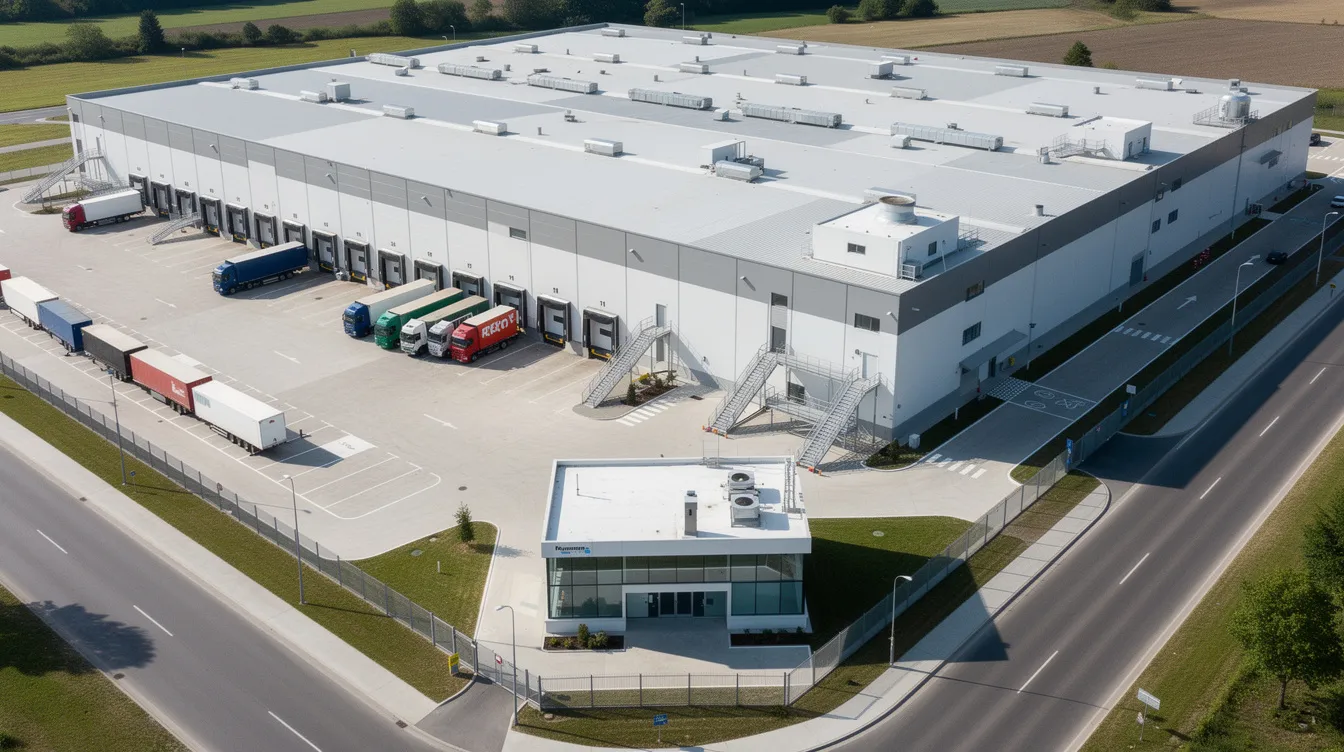
Food Central 2026 is not a single building; it is Singapore’s flagship food manufacturing ecosystem combining JTC-designated industrial land, private development by CapitaLand, and food-tech innovation facilities. The project includes the 9-storey multi-user food factory at Kallang Way, the adjacent Gourmet Xchange (the largest strata-titled food facility in Singapore as of early 2026), and connections to a broader network of food zones spanning 15 manufacturing zones and 11 multi-tenanted food factory blocks across the island.
For investors, the strategic importance lies in a convergence: government-backed tenant demand, constrained supply of food-zoned industrial land, and technical infrastructure requirements that create high switching costs for food operators, while the same food-tech infrastructure can also support adjacent high value manufacturing uses that require specialized production environments. Cold-chain and power infrastructure locks tenants into long-term occupancy. A typical new food factory unit costs over S$2.5 million to fit out, which makes tenant turnover expensive and infrequent.
Singapore’s “30 by 30” Food Security Framework
Singapore aims to produce 30% of nutritional needs locally by 2030. This target, established in 2019 under the “30 by 30” vision, creates structural demand for food manufacturing, cold storage, processing, and logistics facilities. The Singapore Food Agency oversees food safety and licensing, administering grants through the Agri-Food Cluster Transformation Fund and allocating industrial land through the Singapore Agri-Space Sales programme.
In late 2025, the government introduced Singapore Food Story 2, refining these targets by food type: 20% of consumption for leafy and fruited vegetables, beansprouts, and mushrooms by 2035; 30% for seafood and eggs. Meat production was excluded due to high land and energy intensity, which narrows the demand profile for certain specialized factory types but concentrates investor interest in seafood processing, vegetable manufacturing, and egg production facilities.
This policy framework translates directly into industrial tenant demand. SFA-compliant facilities are required for any food processing establishment, cold store, or food storage warehouse. Demand for purpose-built food factories is soaring in Singapore because older industrial units are becoming obsolete for modern food production; they lack the hygiene infrastructure, floor loading capacity, and cold-chain systems that current SFA licensing mandates.
Industrial Properties Classification and Zoning Advantages
The Urban Redevelopment Authority and JTC co-designate “food zones” within B2 (and sometimes B1) industrial estates, preventing competing land use and maintaining cluster integrity. Properties outside these zones require change-of-use approval, 100-metre buffer zone assessments, and pollution evaluations; this regulatory friction keeps supply constrained and protects incumbents.
B2 food-zoned industrial land differs from generic B2 classification in a concrete way: it permits food manufacturing with associated exhaust, wastewater, and cold-chain systems that would trigger nuisance assessments in non-food zones. Investing in approved SFA-compliant B2 industrial spaces lowers tenant friction because operators avoid months of regulatory navigation. Food production spaces operate under tight regulatory control, and this control is what creates the moat around food-zoned industrial properties.
The limited supply of food-zoned industrial land is the mechanism that converts policy mandates into rental premiums. Understanding this regulatory framework is the prerequisite for evaluating specific cash flow opportunities within Food Central and adjacent developments.
Cash Flow Potential and Market Dynamics
The regulatory and policy architecture described above produces measurable outcomes in rental rates, vacancy patterns, and capital values. Industrial property rents grew by only 0.3% in the first quarter of 2026, indicating stabilization across the broader industrial sector; but food-specialized facilities operate in a different rental band due to their technical specifications and regulatory compliance requirements, with stronger growth in rental resilience than the broader industrial market.
Rental Yield Analysis and Tenant Profiles
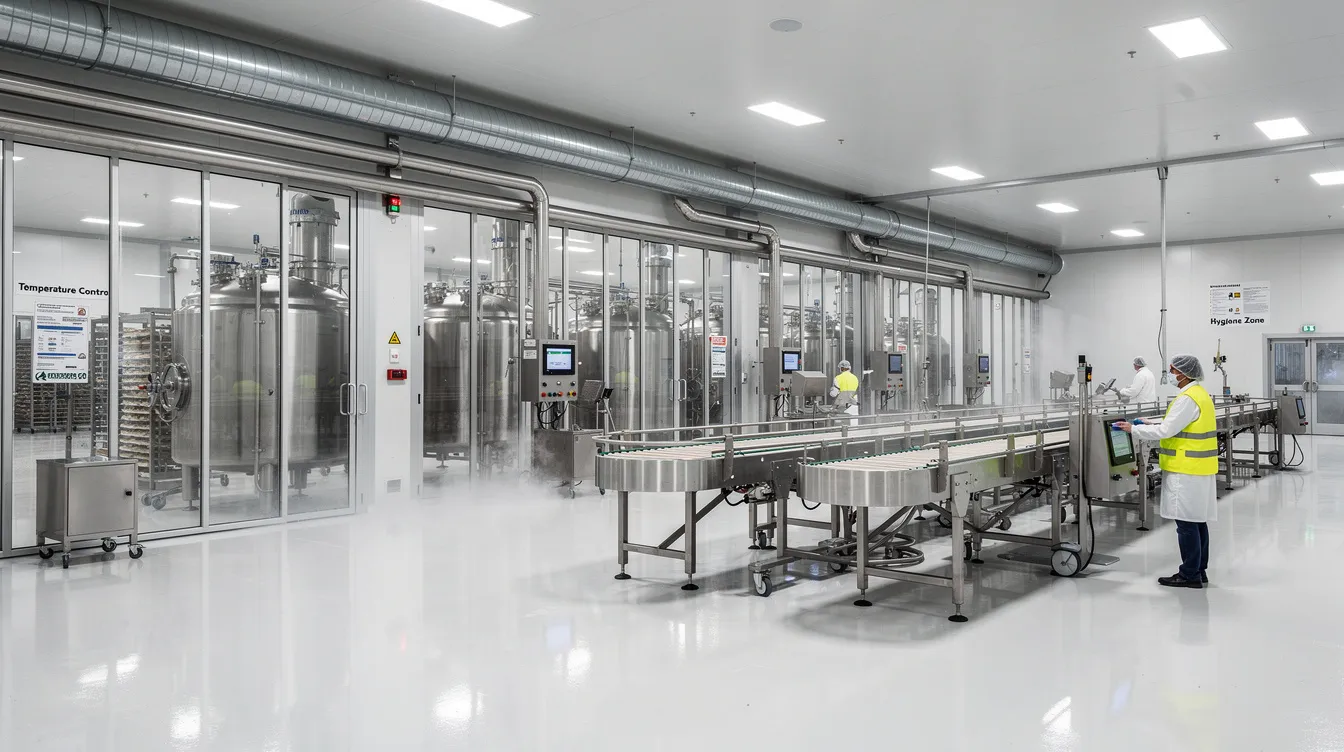
At JTC Food Hub @ Senoko, ramped-factory units rent for SGD 29–31 per square metre per month (base rent of approximately SGD 24.09 plus SGD 3.81 service charge) for units of roughly 1,100–1,300 square metres. Generic B2 industrial space in comparable locations rents for SGD 18–25 per square metre per month. The differential reflects what tenants pay for essential features: heavy floor-loading capacities (15 kN/sqm or higher), high ceiling clearances (6–7 metres minimum), dedicated exhaust and ventilation systems, grease traps, cold rooms, and separate processing zones.
Properties integrated with heavy-duty infrastructure command higher rental metrics because food manufacturing tenants cannot operate without them. Consumer demand for healthier ready-to-eat meals is rising, and cloud kitchens are now primary production sites for food brands; both trends feed growing demand for food-grade industrial space. Cold storage demand is driven by food delivery services and demographic shifts in urban areas, with demographic shifts such as busier lifestyles and smaller household sizes adding another revenue stream for facilities with built-in cold-chain capabilities.
Tenant profiles in food-zoned facilities include established food manufacturers, agri-tech companies scaling from R&D to commercial production, alternative protein producers, and logistics operators serving the food supply chain. At JTC Food Hub @ Senoko, a shared small-batch production facility established jointly by SIT, Enterprise Singapore, SFMA, and SMF reduces capital costs for tenants, improving their ability to commit to stable leases. Technologies available include spray driers, extruders, and non-thermal sterilisation methods (MATS, Pulsed Electric Field).
Evaluating rental growth requires separating contractual escalations from market rent growth. Food factory leases at JTC facilities typically run on “3+3” year terms, with tenants responsible for fixtures and reinstatement. Longer effective occupancy periods result from the high switching costs: once a food operator installs cold-chain infrastructure, exhaust systems, and hygiene-compliant fit-outs at S$2.5 million or more per unit, relocation becomes prohibitive.
Capital Appreciation Drivers
Scarcity and strategic location are key factors in high-cash-flow industrial property investments. A freehold food factory at 25 Genting Road in the Kallang area was offered for SGD 38 million with a GFA of approximately 26,287 square feet (2,440 square metres), implying a capital value of roughly S$14,700 per square metre. Freehold food assets offer defensive characteristics against lease decay, making them highly sought among institutional capital allocators.
Urban proximity is a major value driver for food-related industrial properties. Food Central’s location at Kallang Way provides access to MRT stations (Geylang Bahru, Aljunied, MacPherson, Mattar) and the PIE expressway for logistics distribution. This connectivity supports both workforce access and island-wide food distribution, which enhances tenant quality and willingness to pay premium rents.
At the strata level, Food Xchange @ Admiralty units of approximately 3,800 square feet transacted at roughly S$568 per square foot in mid-2026. Gourmet Xchange integrates production-ready industrial spaces with public amenities along the Kallang riverfront, combining food manufacturing with retail and restaurant frontage. This diversified revenue model, blending factory rents with consumer-facing income, represents the structural trends reshaping the industrial landscape.
Investment in Asia Pacific increased by 38% in Q2 2026, and global direct investment in real estate rose by 28% year-over-year, reflecting increased investor interest in specialized property types; european markets are also seeing renewed investor focus. Food-specialized industrial real estate captures a share of this capital flow because it offers recession-resistant fundamentals: people eat regardless of economic uncertainty or market cycles, and that resilience can support geographic expansion by investors seeking niche industrial exposure across regions.
Competitive Yield Comparison
Specialized food factories often yield higher gross returns than standard industrial buildings. The rental premium of 25–40% at food-zoned facilities, combined with lower vacancy from regulatory barriers, produces gross yields that outpace generic B2 assets. At Senoko, if a 1,100 sqm unit generates SGD 31/sqm/month (SGD 34,100/month, or SGD 409,200/year), and comparable capital value runs proportionally to the Genting Road benchmark, gross yields land in the mid-single-digit range with upside from rent growth over the lease term.
Cash flow quality matters more than headline yield in food factory investments. Strong tenant demand from SFA-mandated operators, combined with limited supply of compliant facilities, reduces vacancy risk. Across JTC’s portfolio, over 1,000 food-industry firms operate across 15 food manufacturing zones, indicating a deep tenant pool. By comparison, generic industrial space competes with a broader set of property types and faces pricing pressure from new construction in non-specialized categories.
New construction is expected to expand U.S. manufacturing space by 6% to 13% by 2034, but Singapore’s food-zoned industrial land faces no equivalent supply surge; the government controls release through IGLS tenders and SAS allocations.
Strategic Investment Implementation Framework
Capturing the yield premium in food-specialized industrial assets requires a systematic evaluation process. The technical specifications, regulatory compliance, and financing structures differ materially from generic industrial property remains in standard portfolios.
Investment Evaluation Criteria
This framework applies when evaluating any food-zoned industrial asset in Singapore, whether through JTC tender, secondary market acquisition, or strata purchase.
-
Verify food-zone status and SFA compliance. Confirm the property sits within a JTC-designated food zone using published zoning maps. Properties in the correct zone with verified B2-Food classification eliminate months of change-of-use applications. SFA compliance is crucial for modern food factories in Singapore; purpose-built food factories must meet strict hygiene and regulatory standards. Regulatory compliance reduces operational risk for food manufacturing tenants.
-
Assess building specifications against food manufacturing requirements. Essential features for food factories include heavy floor-loading capacities (minimum 15–20 kN/sqm) and high ceiling clearances (minimum 6–7 metres). Check for separate raw material, processing, and packing zones; cold room capacity; grease traps; exhaust and ventilation systems; pest-proofing; and dedicated sanitary facilities. At Food Central, the 9-storey structure offers ramp-up access, heavy load-bearing floors, and large contiguous units. Gourmet Xchange provides ceiling heights up to 7 metres and 16-metre-wide driveways for container trucks.
-
Evaluate location through the food supply chain lens. Location should be evaluated through the food supply chain for industrial investments. Proximity to expressways enables efficient logistics distribution; proximity to MRT stations ensures workforce access. High-cash-flow industrial investors should prioritize specialized assets and location connectivity. Strategic locations near ports support export-oriented food manufacturers.
-
Confirm lease tenure and renewal provisions. The Food Central site at Kallang Way is a 33-year leasehold. Freehold assets like 25 Genting Road are rare; investors should blend yield with future redevelopment potential in industrial portfolios. Longer lease terms or “3+3” renewal options allow tenants to amortize specialized fit-out costs, which supports tenant retention.
-
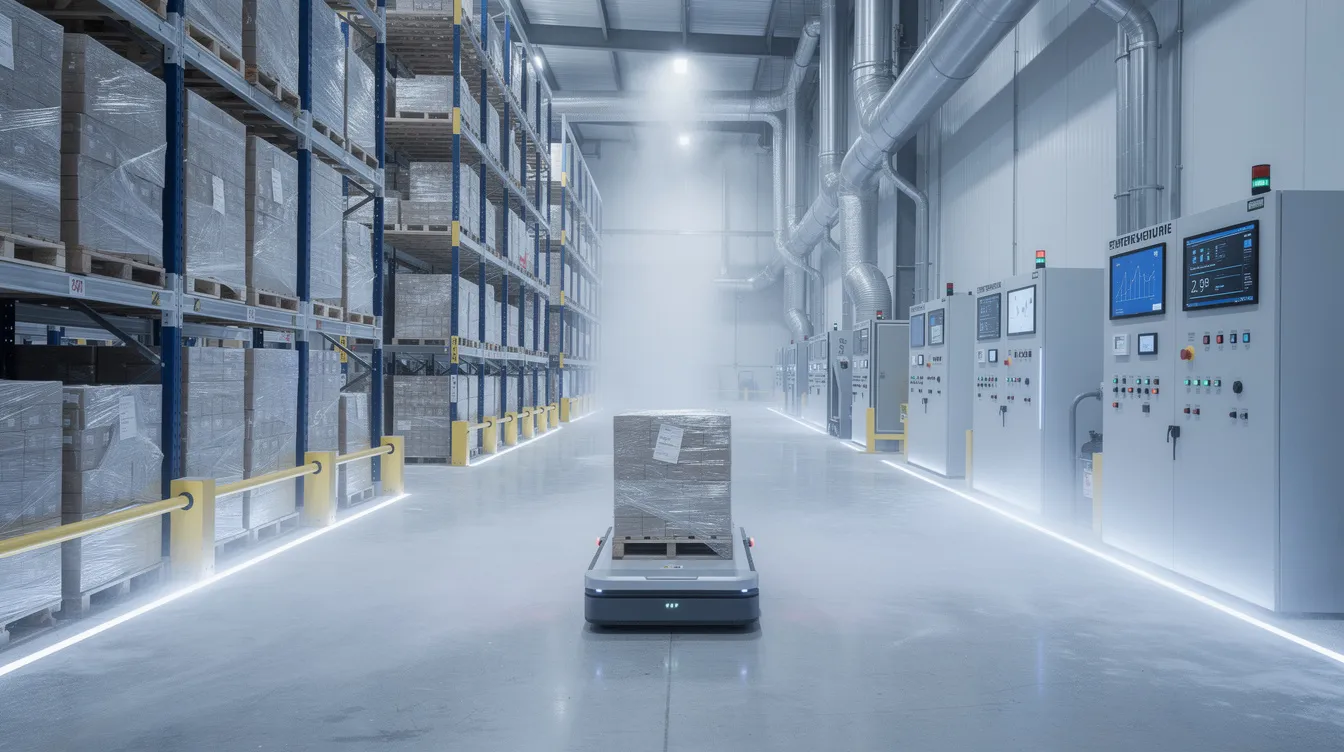
Audit technology readiness. Smart manufacturing systems are becoming standard in new facilities. IoT systems enable real-time quality control in production. Automation is redefining production in industrial properties. AI adoption is gaining traction in food manufacturing operations. AI adoption is increasing demand for data centers in industrial real estate, and food manufacturers increasingly require digital infrastructure that can handle operational data securely, including bank account details tied to payments or enterprise systems, alongside physical production capacity. Facilities wired for automation and data collection command premium rental rates from high value tenants.
Financing and Acquisition Strategies
|
Financing Option |
LTV Ratio |
Interest Rate Range |
Investor Profile |
|---|---|---|---|
|
Bank Term Loan |
60–75% |
5–7% |
Individual / Corporate |
|
REIT Joint Venture |
55–65% |
5.2–6.0% |
Institutional |
|
Private Credit |
60–70% |
6.5–8.0% |
High Net Worth |
Interest rates impact high-cash-flow investment strategies directly. At current Singapore rates of 5–7%, debt service must be modeled against the SGD 29–31/sqm/month rental income to confirm positive leverage. A joint venture with a food operator can de-risk the acquisition: an anchor tenant pre-commitment improves bank financing terms and reduces vacancy risk during lease-up.
For institutional capital, securitization via a food-focused industrial REIT offers access to stable long-term leases and low vacancy. Similar structures can also widen private real estate participation beyond institutional buyers, including through retail investments. Such structures benefit from the capital markets’ growing appetite for specialized, operational real estate. Investors are shifting focus to specialized, operational real estate in food manufacturing because the tenant stickiness, created by S$2.5 million-plus fit-out costs and cold-chain lock-in, produces predictable cash flows.
High-cash-flow strategies require prioritizing properties with operational tenant stickiness. Food Central emphasizes maximizing operational value through tenant retention strategies, not speculative leasing activity.
Common Challenges and Solutions
Three obstacles recur for investors targeting food-zoned industrial properties in Singapore. Each requires a different mitigation approach.
Capital requirements and technical complexity
Purpose-built food factories are essential for modern food production, but the construction costs for SFA-compliant infrastructure (cold rooms, exhaust systems, wastewater treatment, hygiene zones) run well above generic B2 fit-out. A single unit fit-out exceeds S$2.5 million. The solution: form joint ventures with food-tech operators who contribute operational expertise and share the capital burden. This structure also creates a pre-committed anchor tenant, which improves financing terms and reduces the cash flow gap during construction. At JTC Food Hub @ Senoko, shared cold room and warehouse facilities demonstrate how co-location reduces individual tenant CapEx, creating opportunities for landlords to capture tenants who could not otherwise afford standalone facilities.
SFA compliance and regulatory navigation
Food production spaces operate under tight regulatory control. Operating a food processing establishment requires SFA licensing; locations must be within designated food zones or undergo suitability assessments including 100-metre buffer zone evaluations. The URA’s 60:40 rule governs industrial versus ancillary use ratios. Policy uncertainty around future SFA rule changes adds risk. Partnering with industrial property consultants who have direct experience with SFA licensing requirements and JTC zoning submissions reduces approval timelines and compliance risk. Tenant concentration poses a major risk in food factory investments; diversifying across multiple food sub-sectors (seafood processing, vegetable manufacturing, cold storage logistics) within a single portfolio mitigates this exposure.
Limited inventory and competition for high quality assets
Food-zoned industrial land in Singapore is controlled through government tender. The SFA’s enhanced lease framework now provides 8 years from lease commencement to meet production obligations, giving operators more runway but also extending the timeline before facilities reach full utilization. Increased demand from both domestic operators and international food companies creates competition for the limited supply of compliant spaces. Establishing relationships with JTC and private developers like CapitaLand early in the development cycle provides access to off-market opportunities. Monitoring upcoming IGLS tenders and SAS allocations gives investors a pipeline view that the broader market lacks.
Conclusion and Next Steps
Food Central 2026 anchors an investment thesis built on three concrete pillars: government-mandated tenant demand from Singapore’s food security policy, constrained supply of SFA-compliant food-zoned industrial land, and technical infrastructure that locks in tenants for the long term. This combination produces rental premiums of 25–40% over generic B2 industrial space, with tenant stickiness driven by fit-out costs exceeding S$2.5 million per unit.
To act on this thesis:
-
Conduct facility-level analysis of specific food-zoned developments including JTC Food Hub @ Senoko (SGD 29–31/sqm/month rental rates, 1,100 sqm modular units) and Food Central at Kallang Way (33-year leasehold, 9-storey ramp-up configuration)
-
Engage industrial property advisors with SFA licensing and JTC zoning experience to evaluate compliance infrastructure and identify off-market inventory before public tender
-
Model financing structures against current interest rates (5–7% in Singapore) and confirmed rental income to verify positive leverage at target LTV ratios
-
Build tenant pipeline relationships with food-tech accelerators, alternative protein companies, and SFA-approved operators to reduce vacancy risk and strengthen lease negotiations
-
Monitor IGLS tender announcements and SAS allocations for upcoming food-zoned land releases
Related areas with growth potential include cold storage logistics (driven by food delivery services and e commerce growth), agri-tech manufacturing facilities within Singapore’s controlled environment agriculture sector, and data centers serving the food industry’s growing AI and IoT requirements. The industrial sector continues to attract institutional capital as investors recognize that specialized, operationally intensive real estate delivers more durable cash flows than generic property sectors, and unlike the office sector and hotel sector, food-specialized industrial assets are driven more by operational necessity than discretionary space demand. While the living sector and student housing attract institutional capital for different demographic reasons, food-industrial assets stand out for regulated supply and mission-critical occupancy. Prime locations in dense logistics corridors remain especially valuable for food distribution efficiency in Singapore.
Additional Resources
-
SFA food manufacturing facility licensing requirements and compliance guidelines for cold stores, food processing establishments, and storage warehouses
-
JTC Food Hub @ Senoko available units, rental rates, and shared facility specifications including cold room and small-batch production access
-
JTC food industry overview covering 15 food manufacturing zones and 11 multi-tenanted factory blocks across Singapore
-
Cushman & Wakefield Singapore Industrial MarketBeat Q2 2026 for broader industrial rental rates and market insights on leasing activity across property types
-
Singapore agri-tech funding landscape and government grant programs including the Agri-Food Cluster Transformation Fund for food manufacturing tenants
-
Asia Pacific industrial and specialized real estate market reports for comparative trends, including coverage of South Korea alongside other regional markets

