

Introduction
For a Singapore SME owner weighing whether to buy a strata office or pay rent, the answer sits in a 10-year cash flow model, not a monthly payment comparison. This article builds that model using 2026 figures: a 2,000 sq ft city-fringe office purchased at S$2,800 psf (S$5.6 million total) versus renting the same space at S$13 psf/month (S$26,000/month), with commercial property loan rates around 2.5–3.0% p.a. and rent escalation of 2.5% annually.
The short version: buying tends to produce higher net wealth and a lower total cost over 10 years when the SME plans to stay in the same location, property value holds or grows at 1–2% p.a., and the business has enough cash reserves to absorb a 25% downpayment without starving working capital. Renting wins when the business operates in a sector with volatile headcount, when the owner expects to need additional space within five years, or when deploying the downpayment into core operations yields returns above 5–6% annually.
This cost comparison focuses on commercial strata offices for owner-occupation by SMEs. It does not cover shophouses, industrial properties, or investment-grade assets. The audience is Singapore business owners, finance directors, and practice owners in professional services (law, medical, consulting, design) deciding in 2026 whether to lock in a property purchase or renew a traditional lease.
By the end of this article, you will:
-
Know every line item in the true cost of buying vs renting over 10 years
-
See worked numerical examples with year-by-year tables
-
Understand how property equity, opportunity cost, and GST affect the outcome
-
Grasp the non-financial trade-offs (flexibility, control, financing risk)
-
Have a step-by-step framework to make your own decision
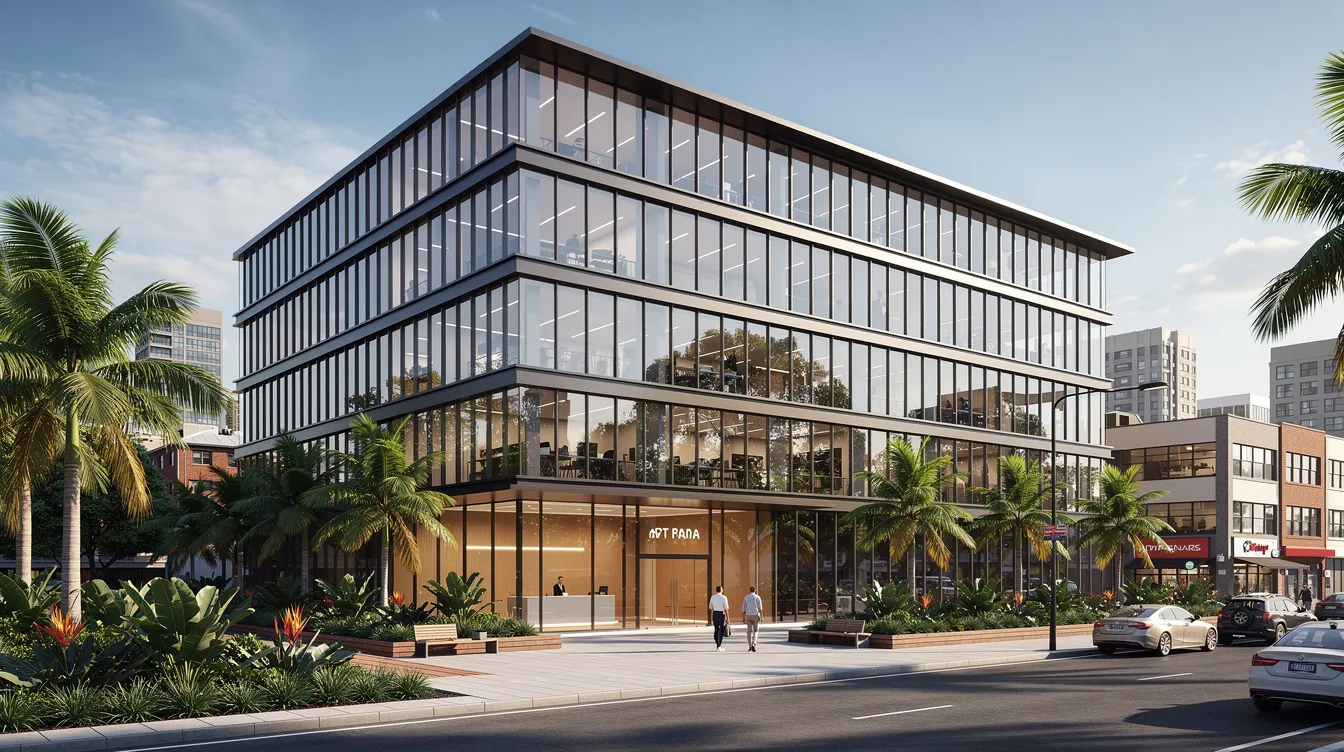
Understanding Office Ownership vs Rental for Singapore SMEs
“Buying your own office” means purchasing a strata-titled unit in a commercial or mixed-use building and occupying it for your business. “Renting” means signing a commercial lease (typically 2–3 years) in a multi-tenant building, paying monthly rent, and holding no ownership stake. Most business owners confront this choice at lease renewal, when rising rents force them to recalculate whether it makes sense to keep writing cheques to a landlord or redirect that cash flow toward building equity in their own premises.
The decision is about long term cost and wealth creation, not just which option produces a lower monthly expense.
What “Buying Your Own Office” Really Involves
A strata office is an individually owned unit within a larger commercial development. Strata offices in CBD fringe locations such as Paya Lebar, Novena, or Alexandra cost between S$800k and S$2.5m for smaller units; a 2,000 sq ft unit at S$2,800 psf reaches S$5.6 million. Average strata office prices rose in 1H 2026, with freehold units averaging S$2,999 psf and leasehold units around S$2,260 psf.
The typical purchase structure in 2026: buying requires a downpayment of 20–30% of the property price, with the remainder financed by a commercial property loan at 70–80% loan-to-value. All-in interest rates as of September 2026 sit at roughly 1.8–3.0% p.a., depending on fixed vs floating terms and borrower profile. Loan tenure is usually 15–20 years with monthly amortising repayments.
Upfront costs beyond the downpayment include buyer’s stamp duty (BSD), which can reach up to 5% on higher brackets for non-residential property. Transaction costs for buying total roughly 4–6% of property value when you add legal fees, valuation fees, and option fees (typically 0.5–1% of purchase price). GST on commercial property purchases is 9% of the purchase price if the seller is GST-registered; GST on commercial property purchases is claimable for GST-registered businesses using the space for taxable supplies.
Ongoing costs for owners extend beyond the mortgage instalment: property tax for commercial properties is a flat 10% of Annual Value, plus MCST maintenance fees, building insurance, and periodic refurbishment. Ownership turns part of your occupancy costs into equity-building. Mortgage repayments build equity in owned property, and commercial property values in Singapore can appreciate over time, acting as a hedge against inflation.
What “Renting an Office” Really Involves
A commercial lease in Singapore is typically a 2–3 year commitment with an option to renew. Renting typically requires a security deposit (2–3 months’ gross rent) and initial costs including advance rent and fit-out expenditure. Traditional office rental requires significant upfront fit-out costs, often S$120–S$180 psf for a quality finish.
Traditional offices cost S$11.69 to S$12.50 per sq ft/month in typical city-fringe locations. For businesses with smaller or more fluid space requirements, alternatives exist: private office space ranges from S$1,200 to S$2,500 per desk/month, while coworking spaces cost between S$500 and S$1,200 per desk/month. Shared office space and flexible workspaces offer features like dedicated desks, hot desks, meeting room access, reception support, and mail handling, often bundled into a single monthly fee.
Rental payments are fully tax-deductible against corporate income tax. But rental expenses do not contribute to ownership equity, making them sunk costs. Renting S$10,000 monthly totals S$2.4 million over 20 years with no equity at the end; at S$26,000/month with escalation, the 10-year figure exceeds S$3.5 million. At lease end, tenants also face reinstatement costs (returning the space to its original condition), typically S$15–S$25 psf.
Renting preserves working capital, allowing funds to be invested in core business operations. Operational flexibility is generally higher when renting compared to owning a property, and renting allows an SME to pivot quickly if business needs change. The trade-off is clear: lighter upfront cash, zero asset at the end.
Now that both paths are defined, the next section builds the numbers for a direct 10-year comparison.
Baseline 10-Year Scenario: The Singapore SME Office Case Study
This section sets up a concrete numerical model for both buying and renting office space in Singapore over 10 years, using realistic 2026 city-fringe assumptions. Later sections stress-test the model with different property value growth rates, rent inflation scenarios, and exit timings.
Assumptions for the 2,000 sq ft SME Office
The model uses a city-fringe Grade B+ strata office suitable for a 12–18 person SME. Paya Lebar strata offices commonly transact between S$2,200–S$2,600 psf; we use S$2,800 psf to reflect an upper-fringe unit in good condition.
|
Parameter |
Value |
|---|---|
|
Office size |
2,000 sq ft |
|
Purchase price |
S$2,800 psf → S$5,600,000 |
|
Downpayment (25%) |
S$1,400,000 |
|
Loan amount (75% LTV) |
S$4,200,000 |
|
Loan interest rate |
3.0% p.a. (all-in, floating) |
|
Loan tenure |
20 years, monthly amortisation |
|
Monthly rent (renting scenario) |
S$13 psf → S$26,000/month |
|
Annual rent escalation |
2.5% p.a. on renewal |
|
Capital appreciation (base case) |
1% p.a. |
|
Tenant fit-out cost |
S$150 psf → S$300,000 |
|
MCST / maintenance fees (owner) |
S$2.50 psf/month → S$5,000/month |
|
Property tax (owner) |
10% of Annual Value (~S$31,200/year) |
Buying a S$1.8 million property requires a S$540,000 downpayment at the low end of the market; for our S$5.6 million unit, the minimum cash outlay before stamp duty and legal fees is S$1,400,000. GST at 9% applies if the seller is GST-registered, but input tax is recoverable for GST-registered buyers using the space for taxable supplies, so the model assumes net-zero GST impact for a registered SME.
Cost Items to Include for a True 10-Year Comparison
Use the following line items to estimate the total cost of buying versus renting over 10 years.
Buying checklist:
-
Downpayment (S$1,400,000)
-
Buyer’s Stamp Duty (~S$220,000)
-
Legal fees, valuation, option fee (~S$45,000)
-
Monthly loan repayment (principal + interest)
-
Property tax (~S$31,200/year)
-
MCST and maintenance fees (~S$60,000/year)
-
Insurance (~S$5,000/year)
-
Periodic refurbishment (budget S$50,000 at year 5)
-
Opportunity cost of downpayment capital
Renting checklist:
-
Security deposit (2–3 months’ gross rent, refundable)
-
First month’s rent in advance
-
Fit-out cost (S$300,000 initial; partial re-fit at lease renewal)
-
Monthly rent with 2.5% annual escalation
-
Service charges (if separated from rent)
-
Reinstatement cost at lease end (~S$20 psf → S$40,000 per cycle)
The model excludes corporate income tax effects for simplicity, though it is worth noting that rental payments are fully tax-deductible and certain owner expenses (interest, property tax, maintenance) may also be deductible.
How This Comparison Is Structured (Tables and Charts)
The worked comparison below presents: (1) a year-by-year cash outflow table for each scenario, (2) a cumulative 10-year summary table comparing total cash out and net wealth, and (3) a side-by-side net wealth snapshot at year 10. Cash-flow figures show where buyers face higher early outflows (downpayment, stamp duty) and where renters face steadily climbing costs from rising rents.
Worked 10-Year Cost Comparison: Buy vs Rent
All numbers below are indicative, based on the assumptions above. Monthly mortgage repayment on a S$4,200,000 loan at 3.0% over 20 years is approximately S$23,300/month (S$279,600/year). Of that, roughly S$10,500/month is interest and S$12,800/month is principal repayment in year 1; by year 10, about S$7,800/month goes to interest and S$15,500/month to principal.
Year-by-Year Cash Flow: Owner-Occupier Scenario
|
Year |
Loan Repayment |
Property Tax |
MCST & Maintenance |
Insurance & Repairs |
Annual Cash Out |
|---|---|---|---|---|---|
|
0 (upfront) |
– |
– |
– |
– |
S$1,665,000* |
|
1 |
S$279,600 |
S$31,200 |
S$60,000 |
S$10,000 |
S$380,800 |
|
2 |
S$279,600 |
S$31,200 |
S$61,500 |
S$10,000 |
S$382,300 |
|
3 |
S$279,600 |
S$31,200 |
S$63,000 |
S$10,000 |
S$383,800 |
|
4 |
S$279,600 |
S$32,400 |
S$64,500 |
S$10,000 |
S$386,500 |
|
5 |
S$279,600 |
S$32,400 |
S$66,000 |
S$60,000** |
S$438,000 |
|
6 |
S$279,600 |
S$32,400 |
S$67,500 |
S$10,000 |
S$389,500 |
|
7 |
S$279,600 |
S$33,600 |
S$69,000 |
S$10,000 |
S$392,200 |
|
8 |
S$279,600 |
S$33,600 |
S$70,500 |
S$10,000 |
S$393,700 |
|
9 |
S$279,600 |
S$33,600 |
S$72,000 |
S$10,000 |
S$395,200 |
|
10 |
S$279,600 |
S$34,800 |
S$73,500 |
S$10,000 |
S$397,900 |
Upfront: S$1,400,000 downpayment + ~S$220,000 BSD + ~S$45,000 legal/valuation. *Year 5 includes S$50,000 periodic refurbishment.
10-year totals (owner):
-
Total cash out: ~S$5,605,000 (upfront + 10 years of running costs)
-
Principal repaid over 10 years: ~S$1,540,000
-
Outstanding loan balance at year 10: ~S$2,660,000
-
Projected property value at 1% p.a. appreciation: ~S$6,187,000
-
Net property equity at year 10: S$6,187,000 minus S$2,660,000 = ~S$3,527,000
Year-by-Year Cash Flow: Tenant Scenario
The tenant pays an initial security deposit of S$52,000 (2 months’ rent, refundable), continues to pay rent throughout the lease term, and pays S$300,000 in fit-out costs. Rent escalates at 2.5% p.a. Reinstatement costs apply if the tenant moves; we assume one reinstatement at year 6 (end of second 3-year lease cycle) and another at year 10.
|
Year |
Annual Rent |
Fit-Out / Reinstatement |
Other Costs |
Annual Cash Out |
|---|---|---|---|---|
|
0 (upfront) |
– |
S$352,000* |
– |
S$352,000 |
|
1 |
S$312,000 |
– |
S$5,000 |
S$317,000 |
|
2 |
S$319,800 |
– |
S$5,000 |
S$324,800 |
|
3 |
S$327,800 |
– |
S$5,000 |
S$332,800 |
|
4 |
S$336,000 |
– |
S$5,000 |
S$341,000 |
|
5 |
S$344,400 |
– |
S$5,000 |
S$349,400 |
|
6 |
S$353,000 |
S$40,000** |
S$5,000 |
S$398,000 |
|
7 |
S$361,800 |
S$80,000*** |
S$5,000 |
S$446,800 |
|
8 |
S$370,900 |
– |
S$5,000 |
S$375,900 |
|
9 |
S$380,100 |
– |
S$5,000 |
S$385,100 |
|
10 |
S$389,600 |
S$40,000** |
S$5,000 |
S$434,600 |
*S$300,000 fit-out + S$52,000 security deposit.***Reinstatement at S$20 psf. *Partial re-fit for new lease cycle.
10-year totals (tenant):
-
Total cash out: ~S$4,057,400 (including upfront, rent, fit-out, reinstatement)
-
Security deposit returned: S$52,000
-
Net cash out: ~S$4,005,400
-
Property equity built: S$0
A lease duty is applicable for commercial leases if the average annual rent exceeds S$1,000, adding a small amount to the tenant’s costs at each lease signing as part of the total cost.
Net Wealth at Year 10: Buy vs Rent Side-by-Side
The renter’s freed-up capital (the S$1,665,000 not spent on downpayment and stamp duty, minus the S$352,000 initial renting outlay = ~S$1,313,000) can be invested. At 5% p.a. compounded, that grows to roughly S$2,139,000 over 10 years.
|
Metric |
Buy Office |
Rent Office |
|---|---|---|
|
Total cash out (10 years) |
S$5,605,000 |
S$4,005,400 |
|
Property value at year 10 |
S$6,187,000 |
– |
|
Outstanding loan at year 10 |
S$2,660,000 |
– |
|
Net property equity |
S$3,527,000 |
S$0 |
|
Downpayment capital invested |
– |
S$2,139,000 |
|
Net wealth from premises decision |
S$3,527,000 |
S$2,139,000 |
|
Difference |
Buyer ahead by ~S$1,388,000 |
In this base case, the buyer is ahead by approximately S$1.4 million in net wealth. A mortgage is a forced savings plan over time; a property purchased for S$1.8 million may appreciate to S$3–4 million over 20 years, and a S$5.6 million purchase follows a similar trajectory if values hold. But the result shifts if capital growth stalls, if rents grow slowly, or if the business outgrows the space.
Scenario Analysis: What If the Property Market or Your Business Changes?
No 10-year plan survives contact with reality. Commercial property prices can rise or fall based on market conditions, and cash flow stability influences the decision between buying and renting office space. The following subsections isolate three variables: property price path, rent inflation, and exit timing.
Three Property Price Paths: -1%, 0%, +2% p.a.
|
Scenario |
Year-10 Property Value |
Owner Net Equity |
Renter Net Wealth (invested) |
Buyer Advantage |
|---|---|---|---|---|
|
-1% p.a. decline |
S$5,054,000 |
S$2,394,000 |
S$2,139,000 |
+S$255,000 |
|
0% (flat) |
S$5,600,000 |
S$2,940,000 |
S$2,139,000 |
+S$801,000 |
|
+2% p.a. growth |
S$6,824,000 |
S$4,164,000 |
S$2,139,000 |
+S$2,025,000 |
Even in a declining market, the buyer edges ahead because principal repayment alone builds about S$1.54 million in equity over 10 years. The buyer’s advantage narrows to S$255,000, a margin thin enough that transaction friction on selling would nearly erase it. Selling a commercial property can take months, creating liquidity risk for owners, so a buyer in a falling market may face a real cost to exit that the table does not capture.
At +2% annual appreciation, the buyer’s advantage exceeds S$2 million. This scenario aligns with recent trends: freehold strata office prices rose 34% in 1H 2026 vs 2H 2025, though that pace is well above the long-run average.
Rent Inflation and Renewal Risk: 0%, 2%, 4% p.a.
|
Rent Escalation |
Cumulative 10-Year Rent |
Renter Net Cash Out (incl. fit-out) |
|---|---|---|
|
0% (flat rent) |
S$3,120,000 |
S$3,632,000 |
|
2% p.a. |
S$3,418,000 |
S$3,930,000 |
|
4% p.a. |
S$3,744,000 |
S$4,256,000 |
At 0% rent escalation, the renter saves roughly S$370,000 more over 10 years compared to the 2.5% base case. But singapore office rents have generally trended upward; Grade A CBD asking rents sit at S$12–15 psf/month in mid-2026, and city-fringe Grade A ranges from S$8–10 psf/month. Real estate markets can experience volatility which can impact rent prices upon lease renewal, and renewal risk is a genuine concern: a landlord may increase rent by 10–15% at renewal, meaning the SME may have to pay rent at the higher rate, or decline to renew, forcing the SME to relocate, incur fresh fit-out and reinstatement costs, and absorb several weeks of disruption.
The owner’s loan repayment stays fixed (or adjusts only with interest rates), giving owning property stability against rental increases. Property tax and MCST creep up slowly but add far less variance than rental escalation.
Exit Timing: 5-Year vs 10-Year vs 15-Year Horizons
Fixed purchase costs (BSD of ~S$220,000, legal fees of ~S$45,000) are the same whether you hold for 5 years or 15. Spread over 5 years, they add S$53,000/year to the cost of ownership. Over 15 years, they add S$17,700/year. This creates a meaningful difference in per-year economics.
|
Holding Period |
Buyer Net Equity (1% p.a. growth) |
Renter Net Wealth |
Buyer Advantage |
|---|---|---|---|
|
5 years |
S$1,630,000 |
S$1,580,000 |
+S$50,000 |
|
10 years |
S$3,527,000 |
S$2,139,000 |
+S$1,388,000 |
|
15 years |
S$5,690,000 |
S$2,780,000 |
+S$2,910,000 |
At 5 years, the buyer barely breaks even. A growing business in a rapid growth phase that expects to outgrow 2,000 sq ft within 3–5 years faces real risk: either sell (absorbing months of marketing and brokerage fees) or sublet part of the unit. For SMEs confident in staying 10+ years, the numbers tilt firmly toward buying.
Strategic Considerations Beyond the Spreadsheet
The cheapest option is not always the right one. Operational fit, financing resilience, and control over your own space carry weight that the cash flow model cannot fully capture.
Flexibility, Headcount Growth, and Business Volatility
Renting allows an SME to pivot quickly if business needs change, unlike owning which may tie up resources. A tech startup doubling headcount every 18 months would find a fixed 2,000 sq ft unit constraining by year 3. The options then are subletting (subject to MCST and URA rules), paying for additional space elsewhere, or selling at a potentially unfavourable time.
Contrast that with a 12-person accounting practice that has maintained stable headcount for six years. The firm’s space requirements are predictable, client perception benefits from a permanent address, and partners value the stability of fixed monthly costs. For this profile, buying is the natural fit.
Renting offers flexibility for businesses needing to upsize quickly. Sector cyclicality matters too: export-linked and marine SMEs, whose revenue can swing 30–40% year-on-year, may prefer the exit optionality of a traditional lease over carrying a S$4.2 million outstanding loan through a downturn. Meanwhile, compare serviced office and coworking space cost options: a private office can serve as a flexible interim option for SMEs that need a furnished setup with short commitments while deciding on a permanent move.
Control, Customisation, and Brand Positioning
Ownership gives greater control. You can fully brand the space, reconfigure the layout, or invest in specialised fit out (medical suites, recording studios, training centres) without landlord approval. No reinstatement clause applies when you own. MCST rules in some buildings do restrict heavy structural alterations or external signage, so check the building’s by-laws before purchase.
Renting in a prime location Grade A CBD tower gives a brand halo that a fringe strata office may not match. For client-facing businesses where a prestigious address directly influences revenue, the client perception advantage of renting in Raffles Place or Marina Bay may outweigh the wealth-building benefit of owning in Paya Lebar. This is a trade-off, not a rule.
Financing, Covenants, and Bank Appetite in 2026
Banks in Singapore require 3–5 years of profitable operating history, a healthy debt service coverage ratio, and clean credit records before approving owner-occupier commercial property loans. Owner-occupiers can access better loan terms than investors; some banks offered fixed rates as low as 1.4–1.9% p.a. in 2026 for qualifying owner-occupiers.
Taking on a S$4.2 million loan increases balance-sheet gearing. If the SME later needs to borrow for equipment, a business buy of another company, or future expansion, the existing property loan may limit capacity. Between 2023 and early 2025, SORA-linked rates pushed all-in loan costs above 4.5%, causing many SME borrowers to defer purchase decisions. By mid-2026, rates compressed to 1.8–3.0%, reopening the window, but prudent owners should stress-test cash flow with a +1% interest rate shock.
Monthly mortgage repayment can be S$7,970 over 20 years for a smaller S$1.8 million property. For the S$5.6 million scenario here, it is S$23,300/month. Make sure the business can cover that amount through at least one revenue downturn.
A Practical Decision Framework for Singapore SMEs
You now have the numbers and the context. This section translates both into a repeatable process.
Step-by-Step Decision Process
-
Map your 10–15 year business plan. Project headcount, revenue trajectory, and whether your business needs a CBD address, city-fringe office, or decentralised location. If you cannot project past 3 years with reasonable confidence, renting is safer.
-
Assess financial health. Calculate current cash reserves, trailing 3-year profitability, existing debt, and debt service coverage ratio. If post-purchase liquidity would fall below 6 months of operating expenses, the timing is wrong.
-
Quantify your true occupancy need. Determine the size, fit-out complexity, and any compliance requirements (medical, data centre, clean room). Overpaying for space you do not need erodes the buying advantage.
-
Run a customised 10-year buy vs rent model. Plug in your actual rent, your target property purchase price, your loan terms, and your realistic capital growth assumption. The generic model above uses S$2,800 psf; your target building may differ by 20–30%.
-
Stress-test with at least one downside scenario. Model what happens if property value drops 1% p.a., interest rates rise 1%, and rent stays flat. If buying still breaks even or better, the case is robust.
-
Decide capital allocation priorities. Weigh the property purchase against investing in working capital, hiring, technology, or expansion. If S$1.4 million deployed into the business would generate returns above 8–10% annually, renting and reinvesting may produce more wealth.
-
Shortlist specific properties or leases. Only after steps 1–6 should you view units, negotiate terms, and engage brokers. Check land tenure (freehold vs remaining lease years), MCST by-laws, and building condition before committing.
When Buying vs Renting Makes More Sense
|
Owning works better if… |
Renting works better if… |
|---|---|
|
Revenue stable for 5+ years, low sector volatility |
Headcount expected to double within 3–5 years |
|
Cash reserves exceed S$2m after downpayment |
Cash reserves below 12 months’ operating expenses |
|
Bespoke fit-out needed (medical, studio, lab) |
Standard office layout is sufficient |
|
Fringe/suburban location acceptable for clients |
Prime CBD address directly drives revenue |
|
Comfortable with S$4m+ loan on balance sheet |
Already carrying business debt or equipment financing |
|
Business plan calls for 10+ years in same location |
Likely to relocate or resize within 5 years |
|
Rents in target area rising above 3% p.a. |
Rents flat or below 2% p.a. in target area |
Evaluating whether to buy or rent office space involves balancing capital outlay against operational flexibility. The table above covers the most common conditions, but every SME’s situation is specific. Generic rules-of-thumb can mislead when applied to an unfamiliar property type, sector, or growth trajectory.
Common Pitfalls and How to Avoid Them
Both paths can go wrong. The goal is to protect the SME’s core business from a premises decision that becomes a drag on operations.
Underestimating Non-Rent and Non-Loan Costs
Most SME owners compare monthly rent or mortgage instalments but miss the total cost that builds up over a decade. On the buying side, MCST service charges in Singapore typically range from S$1.50 to S$3.00 psf/month for strata offices. Commercial property ownership incurs ongoing costs like property tax, insurance, and building sinking fund contributions for lift replacements or facade works. On the renting side, fit-out costs of S$120–S$180 psf and reinstatement costs of S$15–S$25 psf add S$270,000–S$410,000 per lease cycle. Renting incurs costs for moving and reinstating premises each time you shift. Always model these as explicit line items.
Over-Leveraging or Tying Up Too Much Cash
Buying a S$5.6 million office requires roughly S$1.6–S$1.8 million in upfront cash (how much cash: downpayment S$1.4m + BSD ~S$220k + legal ~S$45k + initial fit-out). If that exhausts reserves, any revenue hiccup puts the business under strain. Maintain a minimum buffer of 6–12 months of operating expenses after purchase. If the business later needs liquidity, selling a commercial property can take months, creating liquidity risk for owners. Sale-and-leaseback is a tool to convert property equity back into cash, but it comes at a cost.
Buying the Wrong Property Type
B1 industrial properties in Singapore range from S$800k to S$3m and B2 industrial properties start at S$500k and go up to S$2m, which can tempt budget-conscious SMEs. But if your business needs a commercial address for client-facing work, buying an industrial unit with B1/B2 zoning creates a mismatch: URA rules restrict the types of businesses that can operate from industrial premises, and the building’s image may not suit a professional setting. Equally, buying a strata office with only 55 years remaining on a 99-year lease limits capital appreciation and resale liquidity compared to freehold or full-tenure units. Check the property type, remaining land lease, and MCST rules before committing.
Conclusion and Next Steps
Over a 10-year horizon in 2026 Singapore, ownership can build S$1–2 million more in net wealth than renting for an SME that commits to a single location, maintains stable space requirements, and has cash reserves to absorb the upfront costs. Renting can outperform ownership if the freed-up capital is deployed at returns above 5–6% p.a., if the business needs room to grow rapidly, or if the commercial real estate market stalls.
The real comparison is not simply whether you pay rent or service a mortgage over the next decade. It is “total 10-year cost vs net wealth created” combined with “business resilience through the cycle.” A business that stretches to buy and then cannot service the loan during a slow quarter has gained nothing from property equity it cannot access.
Your next steps:
-
Gather your current lease terms: monthly rent, expiry date, escalation clause, reinstatement obligations
-
Estimate your 10-year headcount range and whether your business operates best in a CBD, city-fringe, or decentralised location
-
Check preliminary loan eligibility with 2–3 banks (bring 3 years of audited accounts)
-
Request a tailored buy vs rent model with your actual figures; share your current rent, target district, and company profile for a personalised comparison
Renting can cost S$2.4 million over 20 years with no equity. Buying a property can yield S$3–4 million in value after 20 years. The gap is real, but only for the right business in the right property. Related areas worth exploring: industrial properties for cost-conscious SMEs, mixed-use strata investments, and sale-and-leaseback structures for owners who need to unlock capital.
Frequently Asked Questions: Buying vs Renting an Office in Singapore
Is buying always cheaper than renting over 10 years in Singapore?
No. The outcome depends on the 10-year total cost and net wealth outcome, not just whether buying looks cheaper than renting on monthly payments. In the base case above (1% annual appreciation, 2.5% rent escalation, 3% loan rate), buying produces roughly S$1.4 million more net wealth over 10 years. If property values decline 1% annually and rents stay flat, the buyer’s advantage shrinks to under S$300,000; a sum that transaction friction could erase. Owning property provides stability against rental increases, but the financial edge requires holding for at least 7–8 years.
How much cash do I realistically need to buy a 2,000 sq ft office in 2026?
For a S$5.6 million purchase: S$1,400,000 downpayment (25%), approximately S$220,000 in buyer’s stamp duty, S$45,000 in legal fees and valuation, and S$100,000–S$150,000 for initial fit-out. Total minimum: S$1.77–S$1.82 million. CPF cannot be used for commercial property purchases. Add at least 6 months of operating expenses as a post-purchase buffer before committing.
Can I use my company to buy the office and still occupy it?
Yes. Many SMEs purchase via the company entity or a special purpose vehicle (SPV). The property tax rate is the same (10% of Annual Value) regardless of whether the buyer is an individual or company. If the company is GST-registered and uses the office for taxable supplies, input tax on the purchase is recoverable. The company can also rent out surplus space to generate income, subject to MCST and URA regulations.
What if my SME outgrows the space after a few years?
Options include subletting part or all of the unit (check MCST by-laws and URA rules), retaining the unit as an investment while renting a larger space elsewhere, or selling and upgrading. Transaction costs for buying total roughly 4–6% of property value, so frequent buy-sell cycles are expensive. Leasing typically involves shorter commitments than buying, making it easier to adjust. If you expect to need more space within 5 years, renting preserves that flexibility.
How does GST affect the buy vs rent calculation?
GST on commercial property purchases is 9% of the purchase price when the seller is GST-registered. For a S$5.6 million unit, that is S$504,000 in GST. If your business is GST-registered and uses the office for taxable supplies, you can claim the full input tax back, reducing the net GST cost to zero. Rent charged by GST-registered landlords also includes 9% GST, similarly claimable. For non-GST-registered businesses, the 9% becomes a real cost on both purchase and rent, though it affects the purchase more because of the larger absolute amount.
How can Aesthetic Havens help with this decision?
Aesthetic Havens provides data-driven buy vs rent models tailored to individual SMEs, helping them compare the total cost of buying versus renting, not just monthly payments, while identifying suitable strata offices or rental options across commercial and industrial properties, assessing zoning and lease structure, and coordinating with financing partners. We prepare visual comparisons (year-by-year charts and summary tables) customised to the SME’s size, sector, and preferred districts, covering everything from coworking space cost benchmarking and a private office as an interim solution to long-term property purchase analysis.

