

Introduction
Most HDB owners planning a property upgrade lose more money waiting for “the right time” than they ever would by buying at an imperfect price. The asset progression myths circulating in Singapore coffee shops, Telegram groups, and family WhatsApp chats share one common thread: they treat timing the market as the single most important variable in a decision that actually hinges on loan tenure, cash flow, and personal milestones. These property upgrade myths Singapore homeowners cling to have cost countless families years of equity growth and compressed financing windows.
This article focuses specifically on timing-the-market mistakes made during the HDB → private condo → landed housing progression. It does not cover renovation, interior design, overseas property investments, or broader property investing strategies beyond the upgrade path. The target audience is Singapore HDB flat owners – typically aged 30 to 50 – who are actively considering or anxiously postponing an upgrade to private property.
The direct answer: Timing the Singapore property market almost never matters as much as your remaining loan tenure, total debt servicing capacity, and where you are in life. Successful asset progression depends on cash flow, financing, and transaction costs, not just timing.
Consider this: homeowners who delayed upgrading in 2020–2021 hoping for a pandemic crash instead watched the URA Private Residential Property Price Index climb roughly 28% through 2023. By 2026, with today’s mortgage rates hovering at 3.5–4% and cooling measures still firmly in place, those same families face both higher prices and shorter loan runways.
Here’s what you’ll gain from this article:
-
A clear understanding of the 5 most common timing myths HDB upgraders believe – and the data that disproves each one
-
Simple rules of thumb to decide “upgrade now or wait” without paralysis
-
How to read basic price and interest rate data instead of reacting to headlines
-
When it genuinely makes sense to delay an upgrade – and when it clearly doesn’t
-
How AESTHETIC HAVENS can support data-driven, not fear-driven, property progression decisions
Throughout, we use illustrative charts and comparison tables to visualise concepts so you can see the numbers rather than just read about them.
Understanding Asset Progression Timing in the Singapore Property Market
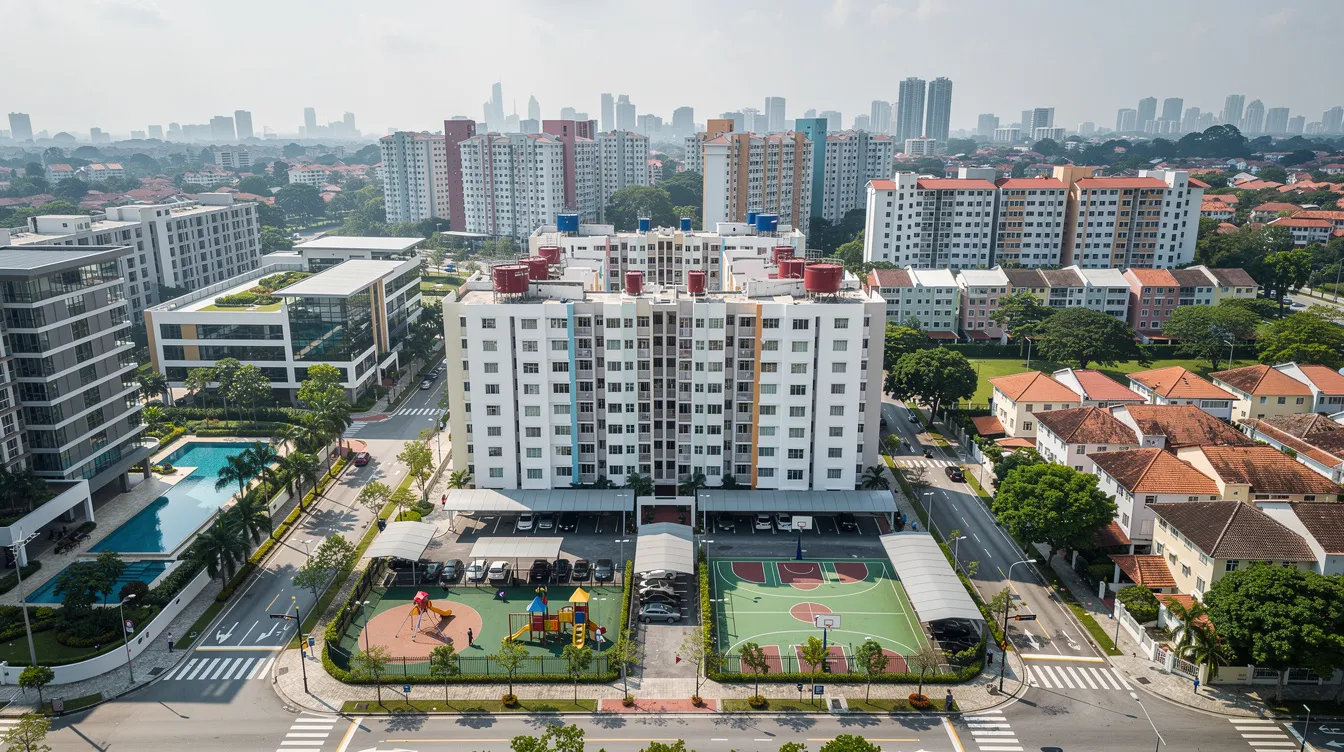
Property asset progression in Singapore follows a well-worn path: purchase a BTO flat or resale flat, serve the Minimum Occupation Period, sell, and move up to a private condo or eventually landed housing. Some families layer in industrial or commercial units to diversify across asset classes. The goal – building wealth through real estate while upgrading living standards – is straightforward, but the execution is where “timing the market” has become an obsession.
The phrase gets tossed around as though the property market behaves like equity markets, where you can dollar cost average into index funds or wait for quarterly earnings dips. Real estate doesn’t work that way. Each transaction carries stamp duties, legal fees, and months of lead time. And unlike global equities, you typically live inside your investment, which means every delay has lifestyle consequences.
What “Timing the Market” Really Means for Upgraders
For most investors in stocks, timing the market means attempting to buy at the lowest point and sell at the highest. Applied to Singapore property, it translates to a belief that you should hold your HDB flat until prices crash, then swoop in on a condo at lower prices. In practice, upgrading residential properties often leads to misconceptions about market timing because the constraints are completely different from picking properties on a stock screen.
Singapore’s real estate market is shaped by government cooling measures – TDSR, ABSD, and LTV limits – that deliberately dampen speculative swings. Government policies can create structural limits in the property market that make pure price-timing extremely difficult. Add limited land supply and a population density that supports long term growth, and you get a market that corrects modestly rather than crashes spectacularly.
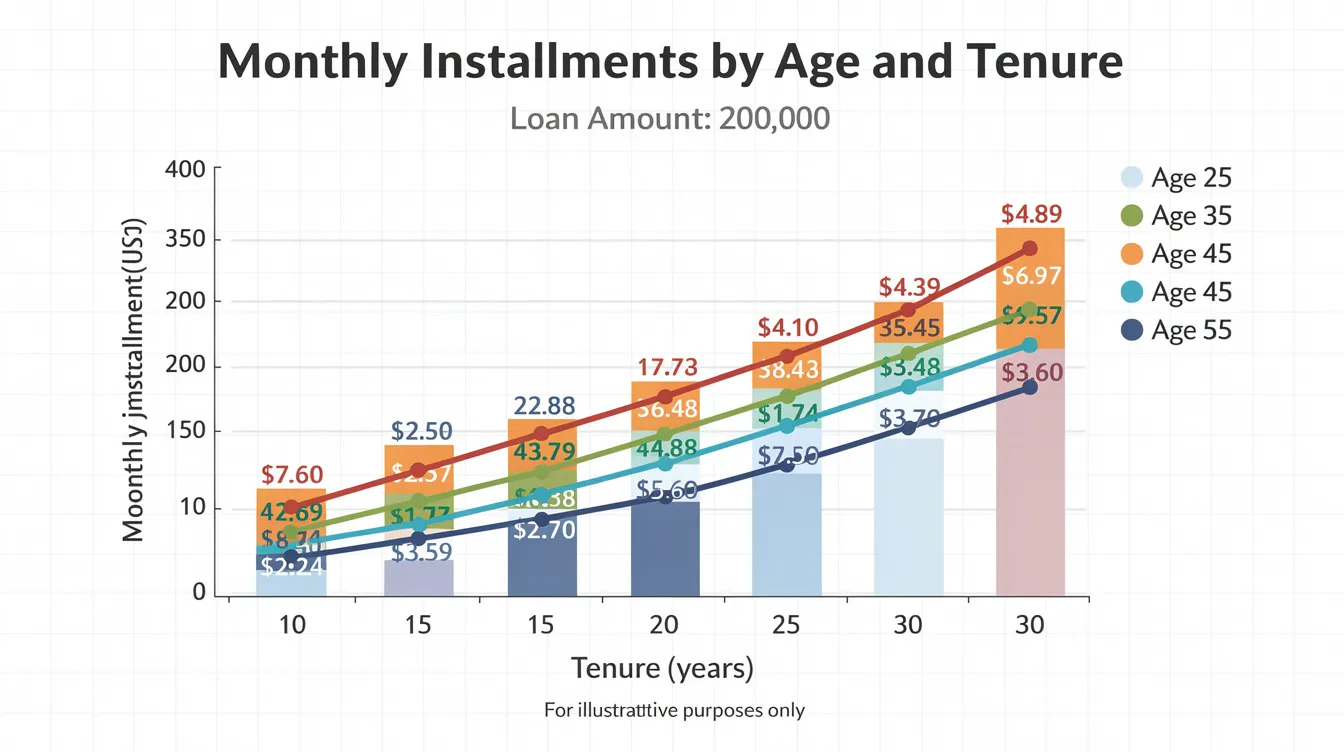
More importantly, upgrade decisions are constrained by personal factors that have nothing to do with market sentiment. Your MOP end date is fixed. Your age determines maximum loan tenure (capped so the loan ends by age 65). Your children’s Primary 1 registration window doesn’t shift because condo prices are high. Upgraders often underestimate the impact of aging on their maximum loan tenure – a 45-year-old has only 20 years of tenure available, which dramatically changes monthly instalments compared to a 35-year-old with 30 years.
Price Cycles vs Life Stages
Singapore’s private property prices move in broad cycles of roughly 7–10 years: upcycles fuelled by demand and liquidity, flat periods during cooling-measure recalibrations, and corrections triggered by global shocks. The URA Private Residential Property Price Index reached 219.4 in Q2 2026, representing a cumulative 119% gain from its Q1 2009 base – but the journey included a multi-year dip from 2013 to 2017 and a sharp post-pandemic surge.
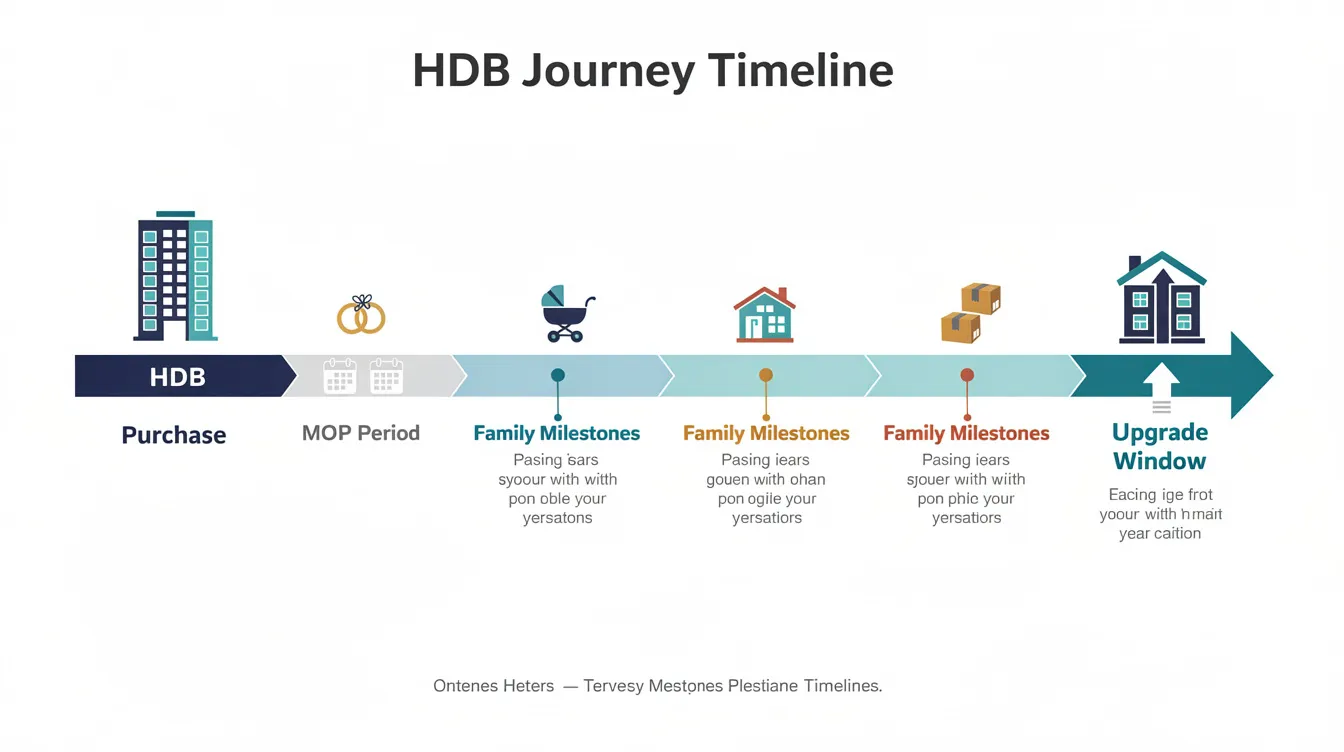
Now compare those cycles to a typical family timeline: marriage at 28–32, first child at 30–35, primary school registration at 36–41, second child in school by 40–45, retirement planning from 50 onward. These milestones rarely align with market bottoms. Most real upgraders move because of space needs, kids’ schools, or ageing parents – not because the price index dipped 5%. And that behaviour is entirely rational.
Real estate markets generally trend upward over long periods, influencing timing strategies far less than most people assume. The mismatch between long, slow property cycles and compressed, urgent life stages is exactly what feeds the most common asset progression myths. Let’s break them down.
5 Big Asset Progression Myths About Timing the Market
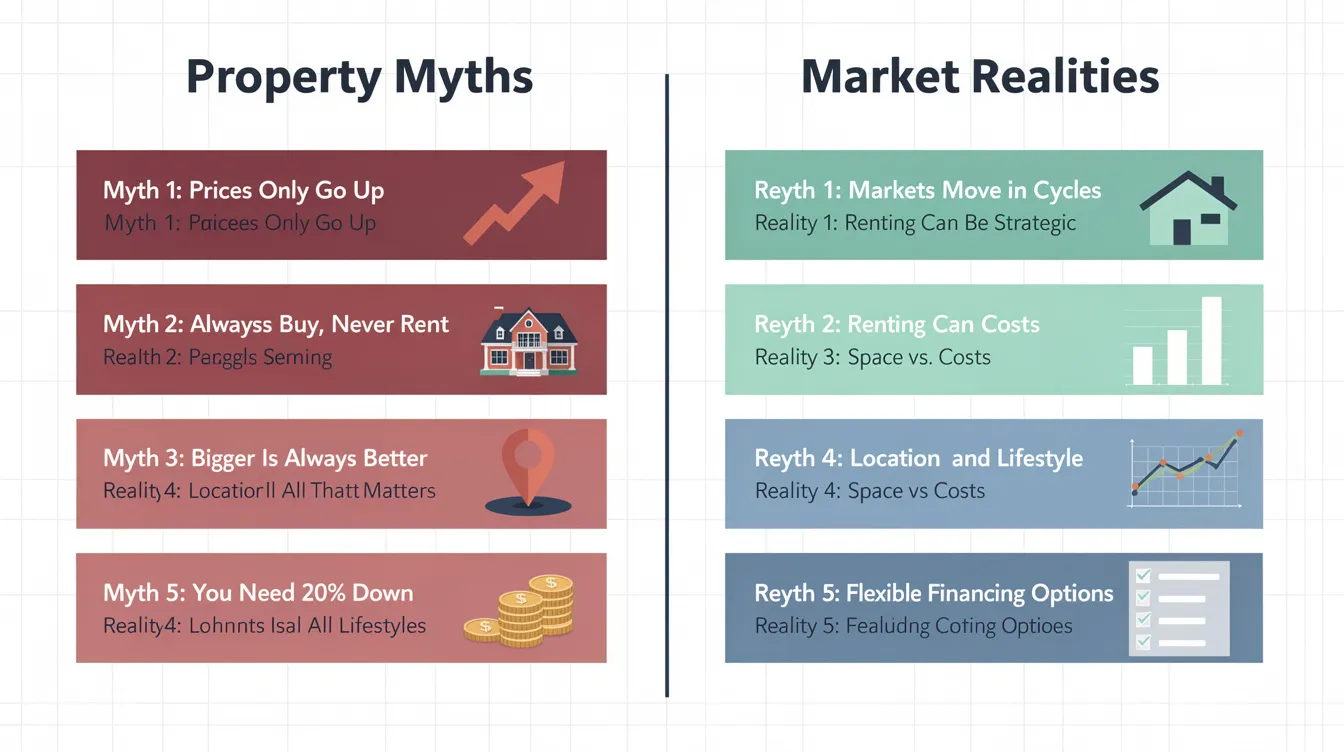
This section is the core of the article. It dissects five specific timing myths that surface repeatedly in HDB-to-condo-to-landed conversations – in property agent seminars, online forums, and dinner-table debates. Each myth is paired with data, a reality check, and a practical rule of thumb.
Homeowners frequently believe they can afford to wait for a market crash before upgrading. Waiting for market conditions to align perfectly often results in missed opportunities. Here are the five beliefs that do the most damage.
Myth 1: “I Should Wait for a Major Crash Before Upgrading”
The belief: A 1997- or 2008-style crash is coming any day now. Smart money waits it out, buys at rock bottom, and rides the recovery. This is perhaps the most persistent of all property upgrade myths Singapore owners hold dear.
The reality: Large crashes in Singapore’s property market are rare, shallow relative to the long-term trend, and followed by recoveries that punish those who stayed on the sidelines. Property downturns can occur unexpectedly, impacting upgrade plans – but the magnitude matters enormously.
During the 2008–2009 Global Financial Crisis, private property prices fell roughly 25% peak-to-trough but recovered those losses within about two years. The correction from 2013 to 2017 was even milder – a gradual slide of around 10–12%. Meanwhile, anyone who waited from 2017 for a “big crash” watched the non-landed index climb from approximately 140 to over 200 by 2022 – a gain of roughly 43%. Structural factors in property markets create upward pressure on prices over time despite cyclical downturns.
For an HDB upgrader, the cost of waiting isn’t just a hypothetical missed gain. Every year you delay once you’re past your mid-30s shortens your maximum loan tenure. At a 4% interest rate, reducing a $1 million loan from 25 years to 20 years increases your monthly instalment by roughly 20–25%. That’s real money paid every month for the rest of the loan, not a one-time hit.
Market corrections can create hidden costs and opportunity losses for potential upgraders. Delaying an upgrade due to market predictions can limit financial growth opportunities – particularly when the “crash” you’re waiting for turns out to be a 5–8% correction that barely offsets the years of tenure you’ve burned.
Rule of thumb: Only “wait for a crash” if your cash reserves and current home truly allow a comfortable delay of 3–5 years and you’ve modelled the instalment increase from shorter tenure. If you can’t absorb 20–25% higher monthly payments, the wait itself becomes more risks than the “high” entry price.
Myth 2: “If Property Prices Are at Record Highs, I Should Definitely Delay My Upgrade”
The belief: News headlines scream “record PSF” and “all-time high prices.” Buying now must mean buying at the peak. The fear of overpaying for the wrong property at the wrong time freezes decision-making.
The reality: The absolute price of an asset should not be the sole focus during upgrades; relative price gaps matter more. As a lateral upgrader – selling one property to buy another – you’re on both sides of the transaction. When condo prices are at record highs, your HDB flat’s market value has also likely appreciated. The property buying process requires a balanced focus on both the selling and buying sides of a transaction.
Here’s where it gets tricky for 2026: HDB flats and condos have widening price gaps. The HDB Resale Price Index in Q2 2026 stands at 202.8 with 0.0% year-on-year growth, while private property prices continue climbing. This means selling at a high price does not guarantee a favorable upgrade situation if the next asset’s price is equally inflated – or in this case, inflating faster.
|
Factor |
Upgrade in High-Price Year (2026) |
Wait 3 Years (2029) |
|---|---|---|
|
HDB sale price |
Higher (but growth flat) |
Likely similar or marginal gain |
|
Condo purchase price |
Record levels |
Potentially higher still |
|
Interest rate |
3.5–4% |
Unknown – could rise or fall |
|
Loan tenure (age 42) |
23 years available |
20 years available |
|
Monthly instalment (est.) |
~$4,200 |
~$4,800+ (shorter tenure) |
|
Price gap exposure |
Current gap |
Likely wider gap |
Numbers are for illustrative purposes based on a $600K HDB sale and $1.3M OCR condo purchase.
The table reveals an uncomfortable truth: waiting often widens the price gap because private property prices may rise too high for resale flat proceeds to bridge comfortably. Widening price gaps can stall property upgrading plans entirely.
Rule of thumb: Track the percentage difference between your current HDB’s realistic sale price and your target condo segment – not the headline PSF. If that gap is stable or narrowing, upgrading at “record highs” is less risky than waiting for lower prices that may never arrive.
Myth 3: “Rising Interest Rates Mean I Must Stay Put Until They Fall Again”
The belief: Interest rates jumped from around 1.1–1.2% in 2021 to over 4% in 2023–2024. Upgraders assume that buying into a higher-rate environment is financial self-harm and that they should wait for rates to return to pandemic-era lows.
The reality: Interest rate fluctuations can affect both property prices and affordability for homebuyers – but rates are only one variable in the affordability equation. Interest rates currently hover between 3.5–4% in Singapore, and while rental yields are only 2–3%, the stress-test framework already accounts for rate volatility.
MAS requires banks to assess mortgage applications at a floor rate of approximately 4%, meaning your loan approval already reflects a stressed scenario. If you pass TDSR at 4%, a moderate rate increase above that level changes your monthly payment – but it doesn’t destroy your ability to service the loan.
What actually affects monthly instalments more than interest rate alone:
|
Variable |
Impact on Monthly Payment |
|---|---|
|
Loan size (quantum) |
Direct – $100K more = ~$500/month more |
|
Loan tenure (age-driven) |
Each 5 years lost adds ~15–20% to instalment |
|
Interest rate (+1%) |
Adds roughly 8–12% to instalment |
|
Fixed vs floating package |
Determines short-term volatility, not long-term cost |
Notice that losing 5 years of tenure has a bigger impact than a full percentage point of interest rate increase. Waiting for rates to fall while your age ticks upward is often a net-negative trade.
Individual mortgages should be stress-tested against your own income, not against abstract rate forecasts. Relying on general economic forecasts can mislead individual buyers in asset progression decisions.
Rule of thumb: If total housing costs (instalment + maintenance + property tax) sit below 40–45% of gross household income at a 4% stress-test rate, the interest rate environment should not be the reason you delay. You can always refinance into better packages as rates shift – but you cannot get lost tenure back.
Myth 4: “I Must Time My Upgrade Perfectly with New Launches to ‘Confirm Earn'”
The belief: Buying at a new launch, especially in “hot” OCR or RCR projects, guarantees capital gains. Missing the launch date means missing the boat. Property agents emphasise urgency, show queue photos, and create FOMO.
The reality: Not all new launches perform equally. Past performance at one development is not a reliable indicator of future results at another. Some projects remain flat or even decline in value after TOP, depending on location quality, supply in the area, developer execution, and broader market trends.
Choosing the wrong property can hinder future upgrades significantly. For every launch that appreciates 15% by TOP, there are others where buyers find themselves underwater – particularly in oversupplied OCR corridors or projects where the initial PSF was inflated by marketing hype.
For Executive Condominiums, the constraint is even tighter: a 5-year MOP plus 10-year full privatisation timeline means your capital is locked for a long period. If you bought an EC at a premium during launch fever, you might find resale flat prices in your area have caught up or that competing supply has eroded your expected gains.
The real constraint for upgraders isn’t the launch calendar – it’s the sale timeline of your existing HDB flat. Coordinating the selling of your flat, bridging finance, potential contra arrangements, and completion dates is operationally complex. Negative cash sales can stall upgrades for months to years. Selling a flat for $500,000 may require a $515,000 CPF refund, leaving you with no cash after selling. These negative cash sales can delay property upgrades by months or years.
Rule of thumb: Choose a project and entry price that fits your long-term plan and exit strategy, not the launch hype cycle. Resale condos with established track records often offer better value and certainty than unbuilt launches with glossy showrooms.
Myth 5: “I Can Always ‘Time Back In’ If I Sell First and Rent While Waiting”
The belief: Sell your HDB flat at today’s “high” price, rent a condo for 1–2 years, and buy back in when prices correct. It sounds elegant – take profits, stay nimble, pounce when the market dips.
The reality: This strategy carries far more risks than most upgraders anticipate. Property markets can behave unpredictably, impacting upgrade plans that depend on a specific price trajectory materialising within your rental window.
Hidden costs of the sell-rent-wait approach:
-
Rent expense: A 3-bedroom non-landed unit in RCR or OCR areas costs roughly $3,500–$5,000/month in 2026. Over two years, that’s $84,000–$120,000 in cash out the door – money that builds zero equity.
-
Lost loan lock-in: If you had a favourable mortgage package, you lose it. Future loans will be assessed under then-current rates and possibly tighter policy.
-
ABSD and policy risk: Cooling measures may tighten further. What’s allowed today could be penalised tomorrow – as happened multiple times between 2022 and 2025.
-
Shorter tenure: Every year of renting is a year of aging, reducing your maximum loan tenure for the next purchase.
-
Family disruption: Changing children’s school commute and routines has an emotional cost that doesn’t appear on spreadsheets.
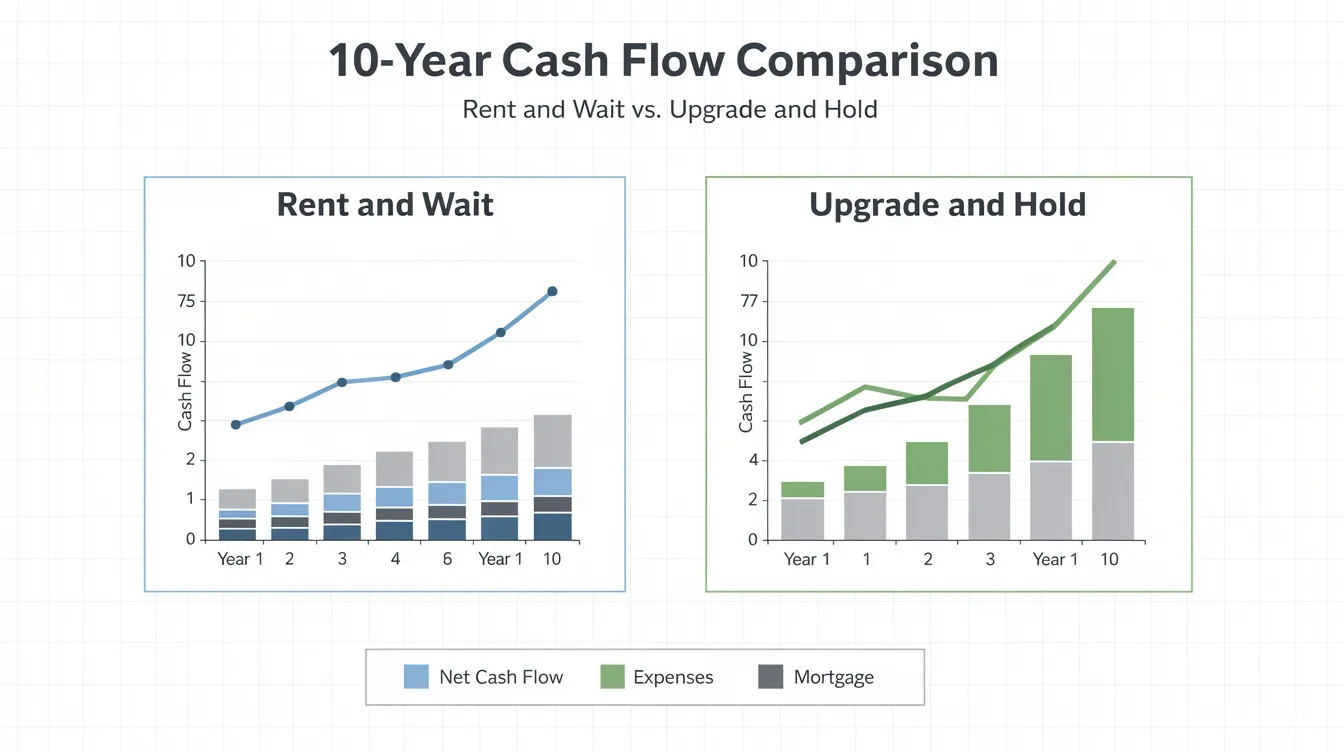
|
Factor |
Sell, Rent & Wait (2 years) |
Upgrade Now & Hold (10 years) |
|---|---|---|
|
Rent paid |
~$96,000 (at $4,000/mo) |
$0 |
|
Equity built |
$0 during rental |
~$300K+ (est. at 3% annual appreciation) |
|
Loan tenure at purchase |
2 years shorter |
Maximised |
|
Policy/ABSD risk |
Higher (rules may change) |
Locked in at current framework |
|
Emotional stability |
Disrupted |
Settled |
Figures are for illustrative purposes based on typical OCR scenarios.
Meanwhile, liquidating one property may end rental income for homeowners who were generating passive income from a tenanted unit. High concentration risk occurs when 80–90% of net worth is in property, but the solution isn’t to become 0% exposed and hope for a dip – it’s to diversify within a structured plan.
Rule of thumb: Renting to “wait for the bottom” only makes financial sense if you have a clear data-driven thesis, 18+ months of liquid buffers, and the discipline to execute when your target price arrives. If your plan is based on market sentiment and a feeling that “prices sure will drop,” you’re speculating, not planning.
From Myths to Metrics: How to Judge Upgrade Timing Objectively
Instead of reacting to myths, gut feel, or the latest headline, upgraders should anchor decisions in a small set of objective metrics. Homeowners should consider their long-term financial readiness over market timing. This section gives you the specific numbers to track and the personal timeline factors to map.
Key Data Points Every Upgrader Should Track
These six data points matter more than guessing the “top” or “bottom” of any cycle:
-
Loan-to-Value (LTV) limits: As of 2026, first housing loans allow up to 75% LTV, but this drops to 55% if your tenure exceeds 30 years or your loan runs past age 65. Second property loans face even tighter limits (45% standard, 25% in lower-limit scenarios). A minimum of 5% cash is required for the next property purchase.
-
TDSR and MSR caps: All debt commitments must stay within 55% of gross income (TDSR). For HDB and EC purchases, mortgage instalments are capped at 30% of gross income (MSR). These are assessed at stress-test rates of approximately 4%.
-
Remaining lease of your HDB: Once your resale flat’s remaining lease drops below 60 years, buyer appeal, bank financing, and CPF usage eligibility all decline. Resale flats are preferred to BTOs to limit price gap risks because they have established market value and shorter MOP.
-
URA Price Index** and HDB Resale Price Index trends:** In Q2 2026, private property index sits at 219.4 while HDB resale is at 202.8. Landed has outpaced non-landed significantly – landed rising ~7.0% year-on-year versus ~1.8% for non-landed.
-
Prevailing 3M SORA and mortgage packages: Current floating packages use compounded SORA plus bank spreads, resulting in effective rates of approximately 2.5–3.5% depending on lock-in. Fixed packages run slightly higher. Understanding these helps you model real monthly payments.
-
Transaction costs and CPF refund obligations: Stamp duties, legal fees, agent commissions, and CPF accrued interest refunds can consume 5–8% of your sale proceeds. The costs of selling property, including taxes and other expenses, can significantly impact net cash proceeds. Negative cash sales occur when sale proceeds don’t cover CPF refunds – plan for this before listing.
Personal Timeline and Financing Windows
Map these personal factors alongside market data:
-
Age and maximum practical loan tenure: A 40-year-old has 25 years of tenure available; a 50-year-old has only 15. This single variable can change monthly instalments by 30–40% for the same loan quantum.
-
Children’s Primary 1 registration: If you need to be within 1km of a target school, your upgrade has a hard deadline – typically 2–3 years before registration.
-
HDB MOP end date: Factor in 6–9 months for marketing and completion after MOP ends. Your realistic upgrade window starts MOP + 6 months.
-
Income stability: Staying invested in your career trajectory matters. Reduced income during a job transition or industry downturn can disqualify you under TDSR at exactly the wrong moment.
“Good timing” for an upgrade is when:
-
Your income is strong and stable
-
You still have long loan tenure ahead (ideally 20+ years)
-
You are near or just past MOP
-
The price gap between your current and target property is manageable with your cash and CPF account balances
Simple Rules of Thumb for “Upgrade Now or Wait?”
-
TDSR stress test: If your planned upgrade budget passes TDSR at the current stress-test rate plus 1%, your timing risk is materially lower.
-
Age threshold: If you are within 3 years of hitting age 45 and expect children within 5 years, upgrading earlier almost always beats waiting for perfect prices.
-
Lease decay: If your HDB has less than 65 years of remaining lease and you intend to move eventually, delaying erodes your resale flat’s desirability and price – sometimes faster than the market dips you’re hoping for.
-
Buffer check: If your cash and CPF monies cannot cover at least 12–18 months of mortgage payments, strengthen reserves first. This isn’t market timing – it’s financial readiness.
-
Concentration check: If 80–90% of your net worth is already in one property, and you’re layering on more through an upgrade, stress-test aggressively. Overexposure can lead to 80–90% of net worth in property, creating a single-country, single-asset-class concentration that most investors would avoid in any other portfolio.
Practical Framework: Deciding When to Move from HDB → Condo → Landed
Replace emotional market timing with a structured evaluation process. Whether you’re an owner-occupier upgrading for space or an investor-owner pursuing wealth building through property progression, the steps are the same.
Step-by-Step Upgrade Timing Checklist
-
Clarify your end-goal. Are you targeting a private condo in 10 years and landed housing in 20? Or are you optimising for a single quality home plus diversified investment across financial products? Your strategy determines which property type, location, and budget matter most.
-
Assess your current property. Determine realistic market value (not asking price), remaining lease, outstanding loan balance, and CPF refund obligation. Calculate whether your sale produces positive or negative cash proceeds. Negative cash sales can leave you with no cash after selling – this must be identified before you commit to a purchase.
-
Stress-test affordability. Model your target property’s monthly cost at 4% interest and your available tenure. Include maintenance fees, property tax, and insurance. If total housing cost exceeds 45% of gross income under stress conditions, either adjust your target or build more savings.
-
Map personal timelines against market conditions. Overlay your MOP end date, age milestones, career outlook, and children’s schooling needs. Identify your latest practical upgrade date – this is your decision deadline, not a suggestion.
-
Shortlist 2–3 realistic paths. Options might include: sell HDB and buy one property (OCR condo), sell HDB and buy EC (if eligible), or, for suitable households comfortable with higher complexity, sell HDB and work toward two private properties as a more advanced asset-progression route while comparing ownership structure, cash flow, and holding risk. Compare the risks, cash requirements, and exit flexibility of each.
-
Decide your upgrade window and pre-plan execution. Secure in-principle loan approval, engage a property agent with track record in your target segment, and plan interim housing if needed. Pre-planning reduces the panic that feeds myth-based decisions.
Comparing “Upgrade Now” vs “Wait 3 Years”: A Data-Led Lens
|
Factor |
Upgrade in 2026 |
Wait Until 2029 |
|---|---|---|
|
Estimated HDB sale (4-room, Tampines) |
~$580,000 |
~$580,000–$600,000 (flat growth) |
|
Estimated OCR 3-bed condo |
~$1,350,000 |
~$1,450,000+ (est. 2–3% annual rise) |
|
Price gap |
~$770,000 |
~$850,000+ |
|
Interest rate assumption |
3.5–4% |
Unknown |
|
Loan tenure (buyer age 42→45) |
23 years |
20 years |
|
Monthly instalment (75% LTV) |
~$4,200 |
~$4,900+ |
|
Total interest over loan life |
~$320,000 |
~$310,000 (shorter tenure, less total interest but higher monthly pain) |
|
Kids settled in school catchment |
Yes (age 6–7 in 2028) |
Potentially disruptive |
All figures are for illustrative purposes based on publicly available index data and standard loan parameters.
The synthesis: most upgraders find the biggest cost of waiting is lost tenure and compressed timelines, not just price differences. A 3-year delay in this scenario widens the price gap by approximately $80,000, shortens tenure by 3 years, and increases monthly payments by roughly $700 – a real wealth erosion that no moderate price correction would offset.
Common Challenges and How to Avoid Timing Traps
Even with a solid framework, many HDB owners stumble due to psychological biases, social pressure, and operational missteps. Each challenge below includes a Singapore-specific scenario and a clear solution.
Challenge 1: Analysis Paralysis from Too Much News and Opinions
Headlines cycle between “property bubble about to burst” and “new launch sets record PSF” within the same week. Market sentiment swings with every cooling measure rumour. Upgraders consuming daily property news often freeze for years, convinced that the last decade of growth cannot continue.
Solution:
-
Limit your market review to quarterly data checks – URA Price Index, HDB Resale Price Index, and prevailing SORA rates – rather than daily headlines.
-
Pre-agree on decision thresholds with your spouse or financial advisor: “If interest stays below X% and the price gap is within $Y, we proceed.”
-
Recognise that the cost of inaction compounds silently – lost tenure, lease decay, and widening price gaps don’t make headlines, but they erode real wealth.
An independent advisor like AESTHETIC HAVENS can help filter signal from noise, focusing on data that’s relevant to your specific upgrade scenario rather than broad market commentary.
Challenge 2: Over-Relying on Friends’ and Relatives’ “Success Stories”
Your colleague who upgraded from a BTO flat to a condo in 2015 and made $300K in paper gains had different income, different age, different risk tolerance, and frankly, different luck. Past performance of one household is not a reliable indicator of what will happen for yours. Most investors who try to replicate someone else’s strategy without adjusting for context end up picking properties that don’t suit their financial profile.
Solution:
-
Benchmark against your own numbers: income, CPF account balance, age, existing debts, and risk appetite.
-
When hearing a “success story,” ask for the full context: purchase price, holding period, cash buffers, refinancing history, and whether they actually sold or just have unrealised gains.
-
Choosing the wrong property based on someone else’s playbook can delay your upgrade timeline by years.
Challenge 3: Misjudging Industrial and Commercial Property as “Easy Side Upgrades”
Some upgraders consider adding an industrial unit, mobile shop, or commercial property to their portfolio while living in a condo or HDB flat. The idea of generating rental income from a diversified portfolio is sound in principle, but the execution is materially different from residential property investments.
Warning points:
-
Industrial and commercial properties carry different loan structures (lower LTV, shorter tenures), shorter land leases, and higher vacancy risk than residential.
-
Business-cycle sensitivity means rental income can fluctuate with economic conditions – unlike residential leases that tend to be more stable.
-
Layering commercial debt on top of residential debt can push you past TDSR limits, especially if you’re already stretching for a condo upgrade.
Solution: Ensure your residential upgrade is sustainably financed before layering industrial or commercial exposure. AESTHETIC HAVENS specialises in helping clients model cash flows across both residential and industrial property types – a strategic move that prevents overextension while still building toward financial freedom through diversified real estate holdings.
Conclusion and Next Steps
The five asset progression myths covered in this article – waiting for crashes, fearing record highs, freezing over rates, chasing launches, and the sell-rent-wait gamble – all share a common flaw: they prioritise market timing over the factors that actually determine upgrade success. What matters is your loan tenure runway, cash flow resilience, price gap management, and alignment with life stages. Staying invested in a disciplined plan beats trying to time market bottoms that may never materialise in your usable window.
One key takeaway: It is usually better to upgrade at a “good enough” time with strong fundamentals – adequate buffers, long tenure, manageable gap – than to wait indefinitely for a perfect bottom that may never come. Waiting for market conditions to align perfectly often results in missed opportunities that compound over years and decades.
Your practical next steps:
-
Run your own affordability stress-test at current rates plus 1%, using your actual income and debt profile
-
Estimate your current HDB’s realistic sale price and calculate potential cash proceeds after CPF refund (watch for negative cash sale risk)
-
Shortlist target property types – OCR condo, EC, resale condo, or a combination with industrial units – aligned with your 10–20 year plan
-
Set a personal “decision deadline” tied to age or life milestones instead of leaving the upgrade open-ended
-
Book a data-driven consultation with AESTHETIC HAVENS to review your specific scenarios, including residential and industrial property progression options
Singapore’s property market will keep evolving with new policies through 2030 and beyond. Interest rates will cycle. Cooling measures will tighten and eventually ease. New supply will enter and get absorbed. Through all of it, discipline and data will beat guesswork – and the upgraders who build real wealth will be those who acted on fundamentals rather than waiting for perfect conditions that exist only in hindsight.
Frequently Asked Questions About Property Upgrade Timing in Singapore
These answers address the most specific, practical timing questions Singapore upgraders ask.
FAQ 1: Is 2026 a Bad Year to Upgrade from HDB to Condo Since Prices Are High?
Whether 2026 is “good or bad” depends entirely on your personal affordability, price gap between your HDB and target condo, and remaining loan tenure – not the calendar year. Private property prices are elevated, but resale flat prices have plateaued (0.0% year-on-year growth in Q2 2026), meaning the gap may widen further if you wait. Some market segments may be overheated while others remain fairly priced; data-driven micro-location analysis – not broad generalisations – is essential for your next purchase decision.
FAQ 2: Should I Finish Paying Off My HDB First Before Upgrading?
Being debt-free feels psychologically safe, but paying off your HDB fully before upgrading can shorten your usable loan tenure for the next property, resulting in higher returns being required just to break even on the delayed timeline. The trade-off is between emotional comfort and financial opportunity cost: CPF monies and cash used for accelerated HDB repayment could instead fund a down payment on an earlier upgrade with longer tenure. This is a case-by-case analysis – weigh your investment horizon, age, and whether the mortgage discipline of carrying a manageable loan accelerates or slows your wealth building journey.
FAQ 3: How Do I Know If I’m “Too Late” to Start Asset Progression?
It’s rarely “too late,” but the strategy changes significantly in your 40s and 50s. With only 15–20 years of loan tenure available, monthly instalments are substantially higher for the same quantum, which means your target property type may need to adjust – a smaller condo, a dual-key unit, or a well-located resale rather than a new launch. Some buyers at this stage find more value in one strong quality home rather than chasing multiple investment properties. Industrial units with shorter holding horizons can complement residential property progression for those with the right cash reserves and income profile.
FAQ 4: Does It Ever Make Sense to Wait Intentionally?
Yes – in specific scenarios. If your job is unstable or you’re facing reduced income from an industry downturn, buying into a large mortgage is genuinely risky. If an imminent life change (relocation, divorce proceedings, health issue) could upend your housing needs within 1–2 years, locking in now creates more risks than waiting. And if your cash and CPF buffers cannot cover 12–18 months of mortgage payments, building reserves first is prudent, not fearful. The distinction is that “waiting with a plan” – with clear milestones to re-evaluate quarterly – is fundamentally different from open-ended procrastination driven by fear that prices will surely drop.
FAQ 5: How Can AESTHETIC HAVENS Help Me Time My Upgrade Better?
AESTHETIC HAVENS uses Singapore-specific market data, industrial and commercial property insights, and structured decision frameworks to stress-test your upgrade plan against real numbers – not gut feeling. The team analyses your current property’s value, CPF obligations, target property segments, and financing scenarios across multiple interest rate and price assumptions. Whether you’re evaluating a straightforward HDB-to-condo move or a more complex strategy involving residential and industrial diversification, the approach is data-driven and tailored to your age, income, and family situation. Contact the team for a personalised asset progression review that replaces anxiety with clarity.

