

Introduction
Understanding how interest rate movements in 2026 affect your monthly mortgage instalments is the single most practical thing you can do before signing – or renewing – a home loan this year. With mortgage rates Singapore 2026 sitting well below the peaks of recent years, many homeowners and buyers sense opportunity, but the direction of rates from here will determine whether that opportunity holds or narrows.
The core question is simple: if rates move up or down in 2026, how much will my monthly mortgage actually change? This article answers that with real numbers, worked examples, and a framework you can apply to your own loan. The scope is Singapore residential property – HDB flats and private homes – with additional notes for SME owners financing industrial or mixed-use premises. This is not a trading or speculation piece; it is a cashflow-planning guide built on 2026 data.
Direct answer: A 0.5% rise in mortgage rates in 2026 typically shifts monthly mortgage payments by roughly S$100–S$150 per S$500,000 borrowed over 25 years, depending on whether you hold floating or fixed packages. A 1% increase in interest rates raises monthly payments by $558 on a larger loan quantum – enough to reshape household and business budgets.
Here is what you will take away:
-
A clear grasp of how 2026 rate drivers – from the US Federal Reserve to MAS monetary policy – feed into your monthly instalment.
-
Concrete instalment tables at different rate scenarios for common loan sizes (S$400k, S$800k, S$1.2m).
-
A step-by-step method to stress-test your own mortgage against higher rates.
-
A practical framework for choosing between fixed and floating packages in the current interest rate environment.
-
Guidance on when refinancing or repricing makes financial sense this year.
Understanding How Singapore Mortgage Rates Work in 2026
Before interpreting any 2026 forecast, you need to understand how Singapore home loan interest rates are assembled. Every bank loan you see advertised is built from two components – a benchmark rate and a spread – and the type of package you choose determines how quickly market movements reach your monthly repayment.
This section is conceptual. We will get to actual 2026 numbers and forecasts in the next section.
Benchmarks, Spreads and Total Mortgage Rate
SORA is now the main benchmark for Singapore mortgage rates. The Singapore Overnight Rate Average (SORA) replaced the older SIBOR and SOR frameworks, and virtually all new bank loans in 2026 are priced off either the 1-month or 3-month compounded SORA. The compounded figure averages daily overnight interbank rates over the chosen window, creating a smoothed benchmark that adjusts with broader market conditions.
Your mortgage rate equals benchmark + spread. For example, if the 3-month compounded SORA is 1.10% and your bank’s spread is 0.60%, your all-in rate is 1.70%. SORA is influenced by global conditions – notably US Federal Reserve policy and capital flows – as well as MAS monetary policy decisions on the Singapore dollar exchange rate band. The spread, meanwhile, is set by each bank based on its own funding costs, competitive positioning, and your borrower profile, and it can change after any lock-in period expires.
Think of it as: Benchmark (market-driven) + Spread (bank-driven) = Your Rate.
Fixed, Floating and Hybrid Packages in 2026
Fixed rate mortgages lock your interest rate for a stated period – commonly 2 or 3 years in 2026. Fixed mortgage packages are projected to be around 1.4%–1.8% in 2026 for private property, depending on loan size and bank. Fixed rates provide stability for a specified period: your monthly instalment will not change regardless of what SORA does during that window.
Floating rate mortgages reset at regular intervals. A package tied to 3-month compounded SORA resets quarterly; a 1-month SORA package resets monthly. Floating rates fluctuate based on market conditions, which means your monthly mortgage repayment can move up or down at each reset. Current floating rates are significantly lower than 3%+ levels seen in 2023, with some floating packages starting as low as ~1.39%.
Some financial institutions also offer hybrid or fixed-cum-floating structures – for instance, a 2-year fixed window followed by automatic conversion to a SORA-floating rate. These are less prominently marketed but appear in HDB-focused promotions from banks like POSB.
The key connection: if you hold a fixed rate package, 2026 rate movements will not touch your instalment until the lock-in expires. If you hold a floating rate, every shift in SORA feeds – with a short lag – directly into your monthly payments.
How Instalments Are Calculated: Principal vs Interest
Banks compute your fixed monthly payment using a standard amortisation formula:
Monthly payment = P × r / [1 − (1 + r)^(−n)]
where P is your loan amount, r is the annual rate divided by 12, and n is the total number of months. Critically, doubling interest rates does not double mortgage payments – the relationship is non-linear because principal repayment is baked into every instalment.
However, in the first 5–10 years of a typical 25-year home loan, the bulk of each instalment goes to interest rather than principal. This means a rate hike early in your tenure amplifies the share of your payment consumed by interest costs, squeezing the portion that actually reduces your debt.
Worked mini-example: A S$500,000 loan over 25 years at 1.5% produces a monthly instalment of approximately S$2,071. Of that first payment, roughly S$625 is interest and S$1,446 is principal. If the rate rises to 2.5%, the same loan’s monthly repayment climbs to about S$2,335 – an extra S$264/month – and the interest portion of the first payment jumps to around S$1,042. The cash-flow impact is real.
Understanding this math will make the 2026 scenarios and stress tests that follow much easier to interpret.

Mortgage Rates Singapore 2026: What Is Moving and Why
Now that you know how property loans are priced, here is what is actually happening in 2026 and why it matters for your monthly mortgage repayment.
Key Drivers of Interest Rate Movements in 2026
The US Federal Reserve raised its target range to 3.75–4.00% in September 2026, keeping global borrowing costs elevated compared to pre-2022 norms. Fed decisions ripple into Singapore through US Treasury yields, capital flows, and import-price channels. The 10-year Singapore Government Securities yield sits at roughly 2.5% as of September 2026 – above the decade average of ~2.2% – reflecting the sustained pull of higher US rates.
On the domestic front, MAS’ July 2026 Monetary Policy Statement projected firm GDP growth and a widening positive output gap, with core inflation expected to rise from July and remain elevated before moderating around mid-2027. In response, the monetary authority increased the rate of appreciation of the S$NEER policy band, which puts upward pressure on short-term domestic interest rates – including SORA.
Inflationary pressures remain a wildcard. Energy costs, global supply-chain friction, and strong investment cycles – particularly in AI and tech sectors – could push domestic inflation higher than expected, keeping MAS policy tighter for longer. This backdrop introduces significant uncertainty for borrowers trying to predict where home loan rates land by year-end.
Where SORA and Mortgage Rates Sit in 2026
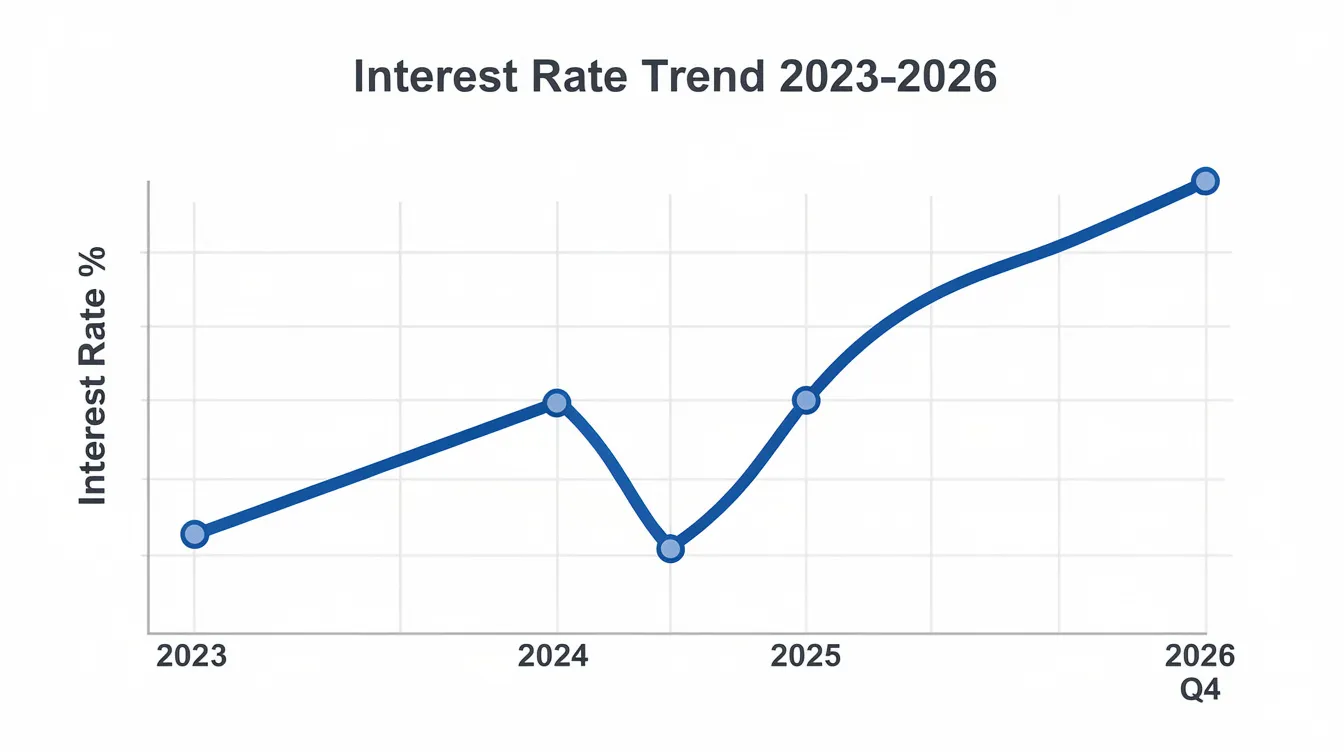
SORA is expected to hover around 1% in early 2026, and has since edged up. As of early November 2026, the 3-month compounded SORA sits at approximately 1.30%, up from ~1.06% in May. SORA fell from about 3.5% in 2023 to around 1.26% in 2026, a dramatic decline that has given borrowers materially lower rates than just two years ago. Mortgage rates in Singapore peaked above 3% in 2023, so 2026 offers lower rates than the 3%+ seen in 2023.
Current advertised bank packages reflect this environment. Floating packages for private property start from roughly 1.39% (3M SORA + 0.20%), while 2-year fixed rate mortgages for private homes generally range from 1.65% to 1.95%. Banks are expected to offer more competitive home loan packages in 2026, though recent weeks have seen major banks reprice fixed offerings upward – some two-year fixed rates jumping from ~1.40% to ~1.80%.
SORA is projected to rise to 1.3%–1.4% by late 2026, and fixed rate packages are being repriced accordingly. Fixed rates may cost more than floating rates initially, but the gap has narrowed as SORA drifts higher.
How Quickly 2026 Rate Changes Show Up in Your Instalments
For floating-rate borrowers on a 3-month compounded SORA package, rate changes feed into your instalment only after the current compounding window ends. If SORA jumps in October, you may not see the full effect until your next quarterly reset date – a lag of weeks to months. Monthly mortgage payments can change immediately upon loan reset for variable-rate loans tied to 1-month SORA, making those packages more reactive.
Banks re-price packages at different intervals. Some reset monthly; others quarterly. This means two borrowers with the same loan on different reset schedules will feel the same MAS or Federal Reserve move at different times.
Fixed-rate mortgages maintain stable monthly payments during the lock-in period. If you locked in a 2-year fixed at 1.40% in early 2025, your instalment is unchanged through early 2027 regardless of what happens to SORA. But when that lock-in expires, your rate will reset to prevailing levels – and if rates rise in the second half of 2026 or into 2027, the jump can be jarring.
Concrete 2026 Instalment Examples: How Much Your Monthly Payment Moves
This is the core of the article: side-by-side numbers showing exactly how interest rate fluctuations directly impact monthly mortgage payments for typical Singapore loan sizes. Examples assume standard 25- and 30-year tenures and are for illustration, but they are grounded in realistic 2026 rate ranges.
Baseline: Your Instalment at Today’s 2026 Rates
At current rates – floating at approximately 1.50% or fixed around 1.65%–1.78% – here is what monthly instalments look like:
|
Loan Amount |
Tenure |
Rate |
Approx. Monthly Instalment |
|---|---|---|---|
|
S$400,000 |
25 years |
1.50% |
~S$1,657 |
|
S$500,000 |
25 years |
1.50% |
~S$2,071 |
|
S$800,000 |
25 years |
1.50% |
~S$3,313 |
|
S$1,200,000 |
25 years |
1.50% |
~S$4,970 |
|
S$500,000 |
30 years |
1.50% |
~S$1,722 |
|
S$1,200,000 |
30 years |
1.50% |
~S$4,670 |
Profile 1 – Young couple buying an HDB flat: Loan of S$400,000 over 25 years at 1.50% floating → monthly repayment around S$1,657. For a combined gross monthly income of S$8,000, this represents about 21% – well within comfortable territory.
Profile 2 – Business owner financing a mixed-use shophouse: Loan of S$1,200,000 over 30 years at 1.50% → monthly repayment around S$4,670. Comfortable if revenue is stable; tight if cash flow is cyclical.
HDB concessionary loans remain stable and insulated from broader market fluctuations, pegged at 2.60% (CPF OA + 0.10%). A S$400,000 HDB concessionary loan over 25 years carries a monthly instalment of approximately S$1,810 – higher than current bank floating rates but immune to SORA movements.
Scenario 1: If Mortgage Rates Rise by 0.5–1.0% in Late 2026
Higher interest rates increase borrowing costs for homeowners. Here is how the same loan sizes look if rates rise:
|
Loan Amount |
Tenure |
Rate at 2.00% (+0.5%) |
Change |
Rate at 2.50% (+1.0%) |
Change |
|---|---|---|---|---|---|
|
S$400,000 |
25 yrs |
~S$1,760 |
+S$103 |
~S$1,868 |
+S$211 |
|
S$500,000 |
25 yrs |
~S$2,201 |
+S$130 |
~S$2,335 |
+S$264 |
|
S$800,000 |
25 yrs |
~S$3,521 |
+S$208 |
~S$3,736 |
+S$423 |
|
S$1,200,000 |
25 yrs |
~S$5,282 |
+S$312 |
~S$5,604 |
+S$634 |
|
S$1,200,000 |
30 yrs |
~S$5,300 |
+S$630 |
– |
– |
Mortgage payments increase significantly when interest rates rise. Even a 0.5% move pushes the monthly mortgage repayment for an S$800,000 loan up by over S$200/month – S$2,500 per year. For a homeowner in Tampines with a young family, that extra outflow competes directly with childcare, transport, and savings. For an SME owner servicing a S$1.2m industrial unit loan in Jurong, an additional S$300–S$630/month can erode thin operating margins.
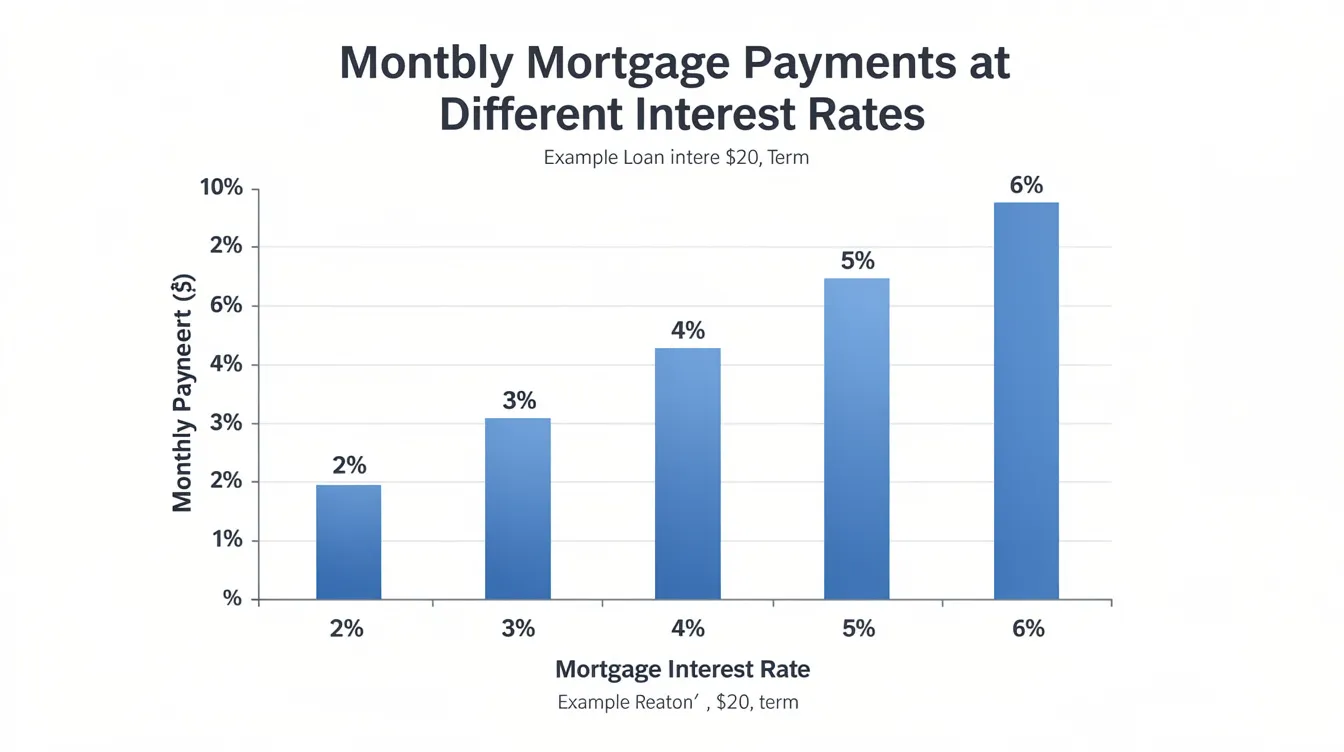
A useful rule-of-thumb: expect roughly S$100–S$150 extra per month per S$500,000 principal over a 25–30 year loan for every +0.50% rate move.
Scenario 2: If Mortgage Rates Stay Flat Near 2026 Lows
If SORA and fixed packages remain near current 2026 levels, instalments are essentially stable. Floating rates can lead to lower initial monthly payments than fixed, and borrowers on low-spread floating packages continue to benefit.
However, forecasts for SORA point to a gentle rise through late 2026 and into 2027, so budgeting as if rates will stay perfectly flat carries risk. Even at flat rates, prudent borrowers should model at least a +0.25% buffer:
-
S$500,000 / 25 yrs at 1.50% → S$2,071/month
-
Same loan at 1.75% → S$2,136/month (+S$65)
-
Same loan at 2.00% → S$2,201/month (+S$130)
The increments look small in isolation, but compounded over 12 months they represent S$780–S$1,560 in additional annual outflow.
Scenario 3: If Rates Fall Slightly Below Current 2026 Levels
A rate drop of 0.25–0.50% would offer welcome relief:
|
Loan Amount |
Tenure |
Rate at 1.25% (−0.25%) |
Savings vs 1.50% |
|---|---|---|---|
|
S$400,000 |
25 yrs |
~S$1,560 |
~S$97/month |
|
S$800,000 |
25 yrs |
~S$3,120 |
~S$193/month |
While this scenario would ease cash flow, most market observers see limited room for further downside by late 2026. SORA is projected to rise to 1.3%–1.4%, not fall. Locking in an affordable budget at current low rates is more prudent than betting on large additional declines that may not materialise.
How to Stress-Test Your Mortgage Against 2026 Rate Movements
Homeowners should stress-test finances against future rate increases – not because disaster is expected, but because responsible budgeting demands knowing your breaking point. MAS itself requires banks to assess borrowers at a stress rate of 4.0% p.a. for residential property loans. You should run a similar exercise at home.
Step-by-Step: DIY Mortgage Stress-Testing
Follow these steps to gauge your exposure to rate risk:
-
Gather your loan details: Outstanding loan amount, remaining tenure in months, current interest rate (including whether it is fixed or floating), and next reset or lock-in expiry date.
-
Calculate your current instalment: Use the amortisation formula or a mortgage calculator. Confirm it matches your bank statement.
-
Test at +1%: Increase your rate by 1 percentage point and recalculate. For most borrowers, this mirrors a plausible upside scenario over 2–3 years.
-
Test at +2%: This is closer to the MAS-style stress. If your rate is 1.60% today, test at 3.60%.
-
Test at the 4% regulatory floor: Regardless of your actual rate, compute your instalment at 4.0%. This is what your bank used to approve your loan, and it is your outer safety envelope.
-
Compare each result to your net monthly income. If the stressed instalment exceeds 35–40% of household take-home pay, you may be over-extended.
Full worked example: S$700,000 loan, 25 years remaining, current rate 1.60%.
|
Rate |
Monthly Instalment |
% of S$10,000 Gross Monthly Income |
|---|---|---|
|
1.60% (current) |
~S$2,862 |
28.6% |
|
2.60% (+1%) |
~S$3,199 |
32.0% |
|
3.60% (+2%) |
~S$3,556 |
35.6% |
|
4.00% (MAS stress) |
~S$3,710 |
37.1% |
At the MAS stress rate, this borrower is still within the total debt servicing ratio limit of 55% (assuming no other debts), but household comfort is clearly thinner. If the borrower also has car loans or other obligations, the margin shrinks fast.
Regulatory caps like TDSR limit how much you can borrow, while the mortgage servicing ratio caps mortgage payments for HDB flats at 30% of gross monthly income. These guardrails exist for financial stability, but they are ceilings, not targets – staying well below them gives you room to absorb rate shocks.
Using Online Tools and Professional Advisory
A good mortgage calculator lets you test multiple rate scenarios in seconds. Input your loan amount, remaining tenure, and various rates to see how monthly payments shift. Visual comparisons across three or four rate levels make the risk tangible.
For borrowers with complex situations – multiple properties, industrial units, or variable business income – spreadsheet modelling or professional advisory can capture nuances that generic tools miss. Compare offers across multiple banks before committing; comparing multiple banks can reveal better refinancing options and spread differences you would otherwise miss.
Budgeting Buffers and “Safe” Instalment Ratios
Aim to keep total housing costs below 30–35% of gross household income, even when stress-tested at higher 2026 rates. This applies whether you own an HDB flat or a private condo.
Practical tips for building resilience:
-
Maintain a 6–12 month buffer of mortgage instalments in liquid savings – not locked in CPF or illiquid investments.
-
Avoid over-committing CPF OA to monthly mortgage servicing. Retaining some CPF balance provides a backstop if income disruption coincides with rates rise.
-
Business owners with industrial mortgages should size the loan so that instalments are sustainable even during revenue troughs, not just peaks.
Fixed vs Floating in 2026: Which Minimises Instalment Shock?
Earlier sections showed the numbers. Now you need to decide which package structure best matches your risk tolerance for 2026–2028. This is not bank-specific advice but a framework for thinking through the trade-offs between floating and fixed packages.
Comparing Instalment Stability and Total Cost
|
Criterion |
Fixed Rate Package |
SORA-Floating Package |
|---|---|---|
|
Monthly Stability |
Locked during fixed period |
Moves at each reset |
|
Sensitivity to 2026 Rate Hikes |
None until lock-in ends |
Immediate (with lag) |
|
Flexibility to Refinance |
May carry lock-in penalty |
Often more flexible |
|
Initial Rate (2026 typical) |
~1.65%–1.95% |
~1.39%–1.50% |
|
Total Interest if Rates Rise |
Lower if rates climb sharply |
Higher, but cheaper if rates stay low |
Fixed packages cap instalment movements during the fixed window but start at a premium. Floating gives lower initial monthly payments but passes 2026 movements through more quickly.
Numeric comparison: A borrower with S$600,000 over 25 years who chooses fixed at 1.80% pays ~S$2,538/month for the first 3 years – guaranteed. The same borrower on floating starting at 1.40% pays ~S$2,364/month initially, but if floating rises to 2.20% by mid-2027, the instalment climbs to ~S$2,630. Over 36 months, the fixed borrower pays roughly S$91,368 total, while the floating borrower pays between ~S$85,104 (if rates stay low) and ~S$94,680 (if rates rise steadily) – a swing that depends entirely on where SORA goes.
Matching Package Choice to Your Profile
First-time HDB buyer with limited buffer: Many homeowners in this category have tight savings. Choose fixed home loans or a capped-rate structure to lock in predictable payments. The slightly higher starting rate is insurance against instalment shock.
Upgrader with strong income growth: If your income is expected to grow materially, a floating rate may be worth the rate risk – you can absorb moderate rises, and you save on interest costs during the low-rate window. Stay informed on SORA trends and be ready to reprice if rates accelerate.
SME owner buying or refinancing industrial premises: Revenue cyclicality makes fixed or capped-rate structures appealing. Align loan tenure with business visibility, and ensure your monthly instalment remains serviceable even during down-quarters.
Revisit your package choice ahead of lock-in expiry. If forecasts for 2027–2028 shift toward higher rates, locking in a new fixed period before the current one ends can shield you from repricing shock.
Refinancing or Repricing in 2026: Impact on Instalments
Repricing means staying with the same bank but switching to a different package – often at lock-in expiry. Refinancing means moving your loan to a different bank entirely, which typically involves legal fees, valuation costs, and administrative effort.
Refinancing is beneficial if your lock-in period ends soon. Consider this example: an owner with a S$600,000 loan currently paying 2.50% refinances to a 2026 floating package at ~1.50%. The monthly instalment drops from approximately S$2,705 to S$2,484 – a saving of roughly S$221/month, or S$2,652/year. Refinancing can save homeowners S$200–S$350 monthly, depending on the rate gap and loan size. After deducting legal and valuation costs (typically S$2,000–S$3,000), payback is achieved within 12–15 months.
Non-rate factors also matter: lock-in penalties if you exit early, potential clawback of any subsidies, and partial prepayment restrictions. Compare multiple banks before deciding – even a 0.10% difference in spread adds up materially over a 25-year tenure.
Common 2026 Mortgage Challenges and How to Handle Them
Beyond the math, homeowners face behavioural and planning hurdles when interest rates move. Here are three challenges specific to the 2026 market and how to address them.
“My Instalment Just Jumped and I Wasn’t Prepared”
A common scenario in Q3 2026: 3-month compounded SORA resets higher – from 1.10% to 1.30% – and your floating-rate instalment climbs by S$200–S$300 with little warning. Many homeowners on auto-deduction don’t notice until their cash balance starts eroding.
Solutions: Review your bank’s reset schedule and mark it in your calendar. When a reset is approaching, check recent SORA readings to anticipate the new instalment. If the increase strains your budget, explore repricing to a fixed rate package, consider partial prepayment to reduce the principal (and therefore the instalment), and engage your bank’s mortgage advisor early – not after you miss a payment.
“I’m Afraid to Commit Because Rates Might Go Higher”
Analysis paralysis is real amid significant uncertainty. Some buyers delay purchases indefinitely, hoping to time the rate bottom – only to face rising property prices that offset any rate saving.
Solutions: Use your stress-test results to identify a rate level you can live with. If you can afford your instalment at 3.5% or 4.0%, current rates below 2% represent a wide margin of safety. Choose a conservative loan amount, favour packages with refinancing flexibility over the absolute lowest published rate, and remember that waiting has its own cost when rents and prices are climbing.
“My Business Cash Flow Is Volatile and I’m Worried About My Industrial Mortgage”
SME owners with loans on factories, warehouses, or flatted factories often have revenue that swings with order cycles, supply-chain disruptions, or seasonal demand. A rate rise that coincides with a revenue dip can create acute stress.
Solutions: Build dedicated cash reserves – ideally 6–12 months of mortgage instalments – ring-fenced from operating accounts. Align loan tenure with your business planning horizon. Consider fixed or capped-rate structures that remove rate risk during uncertain periods. Regularly review whether it is more cost-effective to own or lease your premises, factoring in both interest costs and opportunity cost of capital. Seek advice from a financial adviser familiar with commercial property loans.
Conclusion and Next Steps
Interest rate movements in 2026 will not double your mortgage payments, but shifts of 0.5–1.0% move monthly instalments by enough – S$100 to S$300+ per S$500,000 borrowed – to reshape household and business budgets. The current environment of low rates relative to 2023 creates room, but that room is narrowing as SORA drifts upward and banks reprice fixed packages.
Your next steps:
-
Collect your loan details – outstanding balance, remaining tenure, current rate, lock-in expiry, and package type.
-
Run a 2026 stress-test at +1%, +2%, and the 4% MAS floor. Compare results to your income and existing obligations.
-
Compare fixed vs floating based on your risk tolerance and buffer – not just on which rate is lowest today.
-
Compare offers from multiple banks if your lock-in is expiring. Even small spread differences compound over decades.
-
Plan ahead of lock-in expiry – refinancing or repricing decisions are best made proactively, not reactively.
Related topics worth exploring: how TDSR and mortgage servicing ratio rules interact with property purchases, industrial property financing for SME owners, and how broader market trends in property prices feed back into your loan-to-value ratio and refinancing options.
Additional Resources and FAQs on 2026 Mortgage Rates
This section addresses the most common questions borrowers ask about mortgage rates Singapore 2026 and points to tools that help quantify instalment risk.
Useful Tools and References
-
Amortisation calculators: Free online tools let you input your loan amount, tenure, and rate to see exact monthly payments. Use them to run the stress-test scenarios outlined above.
-
SORA historical and forecast data: Track how the benchmark has moved and where analysts expect it to head.
-
MAS announcements: Monetary policy statements directly influence the interest rate environment and are published after each scheduled review.
Stay informed by reviewing rate comparisons regularly – market conditions in 2026 have shifted quickly, and what was the best package in January may no longer lead in November.
FAQ: Are Mortgage Rates Likely to Go Up or Down in Singapore in 2026?
Consensus among major banks points to SORA edging up toward 1.3%–1.4% by end-2026, with limited downside from current levels. Early-2026 levels are close to a floor, with modest upside risk rather than a return to 2023 highs. Inflation influences borrowing costs and mortgage interest rates significantly; if energy costs or domestic demand surprise to the upside, rates could move faster. Decisions should be based on affordability under higher stress rates, not a bet on perfect timing.
FAQ: How Much Does a 1% Rate Change Add to My Monthly Instalment?
As a rule of thumb, a 1% rate increase on S$500,000 over 25 years adds roughly S$264/month. On S$800,000, that scales to approximately S$420/month. A 1% increase in interest rates raises monthly payments by $558 for larger loan sizes around S$1m+. Exact amounts depend on your remaining tenure and outstanding balance – shorter remaining tenure or lower balance means a smaller absolute impact. Use a mortgage calculator with your specific numbers for precision.
FAQ: Will MAS Change TDSR or Stress Rates in Response to 2026 Moves?
MAS typically sets conservative stress rates well above prevailing market rates. The current 4.0% floor for residential property loans already exceeds actual borrowing costs by a wide margin in 2026, so small rate movements do not automatically loosen – or tighten – borrowing limits. Regulatory caps on debt repayment percentages impact housing affordability by design, ensuring borrowers can withstand shocks well beyond today’s rates. Self-discipline in borrowing, beyond regulatory minimums, remains essential.
FAQ: Is This Article Financial Advice?
This is educational content based on 2026 market conditions and common scenarios, not personalised financial advice. Every borrower’s situation – income stability, existing debts, property type, risk tolerance – is different. Consult your bank or a licensed financial adviser before making loan decisions. Use resources like this article as an input to more informed, tailored discussions about your home loan strategy.

