

Introduction
In 2016, a Singaporean dual-income couple – let’s call them Mr Tan and Ms Lee – booked a three-bedroom executive condominium in Punggol at a launch price of $900,000. Nine years later, they sold that EC for $1.23 million and used the sales proceeds to purchase a private condo in a city-fringe district, completing a textbook EC stepping stone case study. Their journey illustrates exactly how a dual income couple used an EC as a stepping stone to private property – methodically, without over-leveraging, and with every milestone mapped years in advance.
This article walks through their step-by-step progression: the grants that lowered their entry cost, the minimum occupation period that governed their exit, the privatisation timeline they weighed, and the financial calculation behind selling versus holding. The focus is on hard numbers – purchase price, capital gain, stamp duty, loan amount – and the decisions that shaped each phase. This is not a full EC eligibility guide or an exhaustive comparison of every condo type in the property market; it is one couple’s real-world playbook.
In short: the couple used CPF housing grants to buy a new executive condominium at roughly 25–30% below comparable private condominium prices, held through the 5-year MOP, rode the EC price curve upward, then sold and redeployed their equity into a well-located private property – all while avoiding additional buyer’s stamp duty by owning only one residential property at a time.
Here is what you will gain from this case study:
-
How EC grants, income ceilings, and pricing work in practice for a real household
-
A realistic EC-to-private upgrade timeline with concrete dates, psf figures, and dollar amounts
-
How MOP and full privatisation milestones shape exit and upgrade strategy
-
Common risks – ABSD, cash flow, interest rates – and how this couple managed them
-
When to seek professional advisory for similar upgrading plan scenarios
Understanding Executive Condos as a Stepping Stone
Executive Condominiums (ECs) act as hybrid assets in Singapore’s housing market. Built by private developers on Government Land Sales sites, they are initially priced like public housing with government grants but transition to fully private property after a minimum occupation period and, later, full privatisation. This hybrid nature is precisely what makes ECs attractive to HDB upgraders looking for a structured path into the private segment.
The value proposition is straightforward: ECs are typically purchased at a discount compared to private condominiums – historically around 25–30% below comparable new launch private condos in the same Outside Central Region (OCR) locations. That pricing gap creates embedded upside. For eligible dual-income couples who cannot yet comfortably afford a private condo, the executive condo serves as a financial head start due to government-subsidized prices and appreciation potential.
Before diving into Mr Tan and Ms Lee’s specifics, it helps to understand the structural features that make this “buy, hold, then upgrade” journey possible.
Key Features of ECs That Matter for Upgraders
Eligibility. To purchase a new EC, at least one applicant must be a Singapore Citizen. In 2016, the household income ceiling was $16,000 per month. The couple could not own private property or have disposed of one within the preceding 30 months. These gates ensure ECs serve the “sandwich class” – households earning above HDB flat thresholds but for whom a private condominium purchase is initially out of reach.
Subsidies. Singapore Citizens buying a new executive condo can tap CPF housing grants. The Family Grant for first-timer citizen households was worth up to $30,000 at lower income bands. A Half-Housing Grant applies if one spouse is a Permanent Resident. These grants reduce the effective entry price and are credited into the buyers’ CPF OA, directly lowering the cash outlay needed at purchase.
Restrictions. Owners must physically occupy the EC for the minimum occupation period – 5 years from key collection under rules applying to projects launched before May 2026. During MOP, renting out the whole unit is prohibited, and resale is limited to Singapore Citizens and Permanent Residents. Full privatisation occurs 10 years from the Temporary Occupation Permit (TOP) date for older projects, after which the unit is treated identically to a private condo – foreigners can buy, and most public-housing restrictions fall away.
Mortgage cap. ECs are subject to a Mortgage Servicing Ratio (MSR) limit of 30%, which caps monthly instalments relative to gross monthly income. This is more restrictive than the 55% Total Debt Servicing Ratio (TDSR) that applies to private property loans, and it directly constrains the maximum loan quantum an EC buyer can obtain.
These features – affordable entry, grant support, forced holding period, and eventual privatisation – create the natural stepping-stone mechanism.
MOP, Privatisation, and the Typical EC Price Curve
A typical EC project follows a predictable timeline:
-
Land sale and launch – Developer wins GLS tender and launches sales (e.g., couple books unit in Q3 2016).
-
Construction and TOP – Unit is built over roughly three years; TOP issued (e.g., late 2019).
-
MOP fulfilment – Owners occupy the unit for 5 years from key collection (e.g., late 2019 to late 2024 under old rules). New EC projects launched after May 8, 2026 have a 10-year MOP under updated regulations.
-
Full privatisation – 10 years from TOP (e.g., 2029 for a 2019-TOP project under old rules; 15 years for projects under the new framework).
The price curve broadly follows these milestones. At launch, ECs trade at a discount to private condos – in 2016, the average price was about S$782 psf for new ECs versus S$1,250–$1,350 psf for comparable OCR private new launches. After TOP, prices typically lift as the project is tangible and liveable. Demand increases further once MOP is achieved because the resale pool opens to PRs. After full privatisation, the unit becomes fully privatised, removing the last restrictions and potentially unlocking a further step-up in market value.
Mr Tan and Ms Lee deliberately rode this curve, using the MOP milestone as their trigger to sell and upgrade into a private condo.
Meet Our Couple: Profile, Finances and Objectives
With the structural logic of ECs established, let’s look at who this couple actually were, what they earned, and what they were trying to achieve. All personal identifiers are anonymised, but the financials and policy parameters reflect real 2016–2026 conditions.
Household Profile in 2016: Before Buying the EC
-
Mr Tan, 31, IT project manager – gross monthly income: $6,500.
-
Ms Lee, 29, senior staff nurse at a restructured hospital – gross monthly income: $5,000.
-
Combined gross monthly income: ~$11,500.
-
Both Singapore Citizens, married, no children yet.
-
Living in a 4-room HDB BTO in Punggol, obtained in 2011.
-
Outstanding HDB loan balance: ~$210,000 at approximately 2.6% interest.
At $11,500 combined income, they sat comfortably within the EC income ceiling of $16,000. They were typical HDB owners at a life stage where an upgrading plan made practical and financial sense – still young enough to take a 25-year loan, but established enough to have meaningful CPF ordinary account balances and cash savings.
Cash, CPF and Risk Appetite at the Start
Their financial position in 2016:
-
Combined CPF OA balances (after HDB usage): ~$140,000
-
Cash savings earmarked for housing: ~$90,000
-
No other major debts; modest emergency fund covering approximately 6 months of expenses
Their risk appetite was moderately conservative. They were comfortable servicing one mortgage but wary of carrying two properties simultaneously – the vacancy risk, the double monthly instalments, and the ABSD exposure felt excessive. They viewed property as their main retirement pillar but were not yet thinking about owning two condos or building a multi-asset property portfolio.
Long-Term Objective: Using EC as a Launchpad
Their 10–15 year goal was clear:
-
Upgrade living environment from an HDB flat to full condo facilities (pool, gym, security).
-
Build enough equity to eventually move into a well-located private condo closer to workplaces and reputable primary schools.
-
Avoid overpaying additional buyer’s stamp duty by never holding two properties simultaneously.
-
Stay within safe monthly repayment ratios – ideally keeping housing costs under 40% of gross income at all times.
These objectives guided every subsequent decision: which EC project they chose, how they structured financing, and when they eventually decided to sell.
Step 1: Buying the EC With Grants – The 2016 Entry Decision
Why EC over other options? In 2016, a comparable mass-market private condo in Punggol or Sengkang would have cost roughly $1.05M–$1.15M for a similar-sized unit – about $1,050 psf. A resale HDB would not generate meaningful capital appreciation in the same timeframe. A BTO would take years to complete and offered less upside. The new executive condo offered the best combination of immediate discount, grant eligibility, and long-term appreciation runway.
Selecting the EC Project and Unit
The couple shortlisted “Northshore Vista EC” (a representative project name using realistic 2016 stats) in Punggol, launched in Q3 2016 at an average price of approximately $780 psf. They compared it against:
-
A nearby resale EC at ~$850 psf (older, fewer remaining years to privatisation)
-
A mass-market private condo new launch at ~$1,050 psf (no grants, higher quantum)
They booked a 3-bedroom, 95 sqm (~1,023 sqft) unit on a mid-floor stack facing the pool at a purchase price of $900,000 (~$880 psf). Location, transport accessibility, and amenities were key factors – the project was within walking distance of an MRT station and surrounded by growing neighbourhood infrastructure.
How Grants and Financing Structured Their Purchase
The couple qualified for a $30,000 CPF Family Grant as a first-timer Singapore Citizen household. This grant was credited into their CPF OA, directly reducing the cash needed.
Here is how the purchase was funded:
|
Component |
Amount |
Source |
|---|---|---|
|
Purchase price |
$900,000 |
– |
|
Less: CPF Family Grant |
–$30,000 |
Credited to CPF OA |
|
Effective price |
$870,000 |
– |
|
Bank loan (75%) |
$675,000 |
2-year fixed at 1.8%, 25-year tenure |
|
CPF OA (20% of price) |
$180,000 |
Combined CPF OA (post-grant) |
|
Cash down payment (5%) |
$45,000 |
Cash savings |
Monthly mortgage instalment at 1.8%: approximately $2,780/month, well within the 30% MSR cap on their $11,500 combined income (cap = $3,450).
Exit Thinking at Point of Purchase
Even in 2016, Mr Tan and Ms Lee discussed their eventual exit. They agreed to:
-
Hold the EC at least through the 5-year MOP after key collection.
-
Monitor resale EC and mass-market private condo prices annually to decide whether to sell post-MOP or wait toward privatisation.
-
Set a target paper gain of at least $250,000 before transaction costs as a threshold for triggering an upgrade.
This early planning – not a rushed decision in year five – is what later allowed a smooth transition. They treated the EC not just as a home but as the first deliberate move in a longer real estate progression.
Step 2: Through TOP and MOP – Riding the EC Value Curve
Northshore Vista EC received its TOP in November 2019. The couple collected keys and moved in by January 2020. Their MOP clock started ticking: five years from key collection meant MOP completion in approximately November 2024.
This phase was about two things simultaneously: enjoying a genuine lifestyle upgrade and quietly building capital appreciation.
Key Collection, Move-In and HDB Disposal
The sequence was tightly managed:
-
November 2019: Key collection for Northshore Vista EC.
-
January 2020: Moved into EC; listed Punggol HDB flat for sale.
-
June 2020: Completed HDB sale at $480,000.
The HDB sale settled several accounts. The outstanding loan of ~$210,000 was repaid. Both CPF principal and accrued interest used for the HDB – approximately $80,000 – were refunded to their CPF accounts as required. After deducting legal fees and agent commission, they netted roughly $170,000 in cash, which they held as a buffer while continuing to service the EC loan. Every month, mortgage payments reduced the principal loan amount of the EC, steadily building equity.
EC Valuation and Market Context During MOP Period
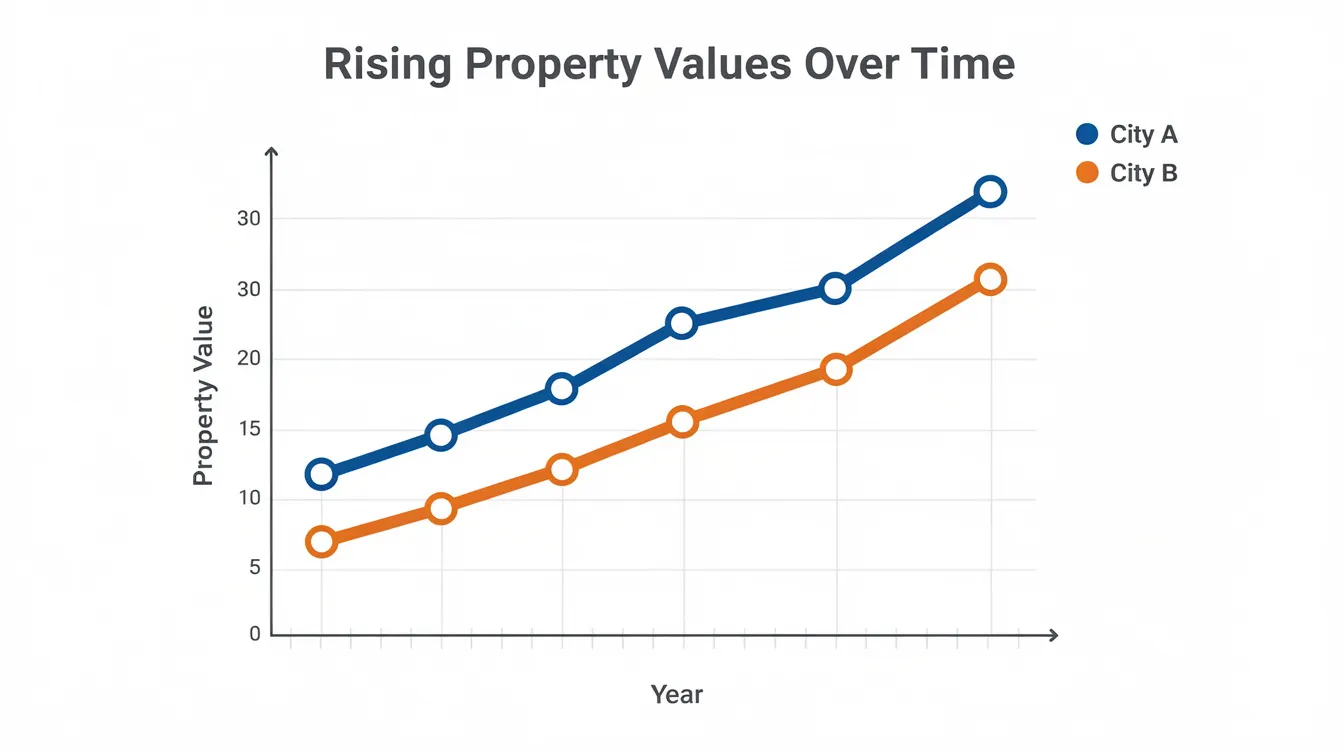
Capital appreciation materialised gradually:
|
Year |
Estimated Valuation |
Approximate PSF |
|---|---|---|
|
2019 (TOP) |
~$1.02M |
~$998 |
|
2021 |
~$1.08M |
~$1,056 |
|
2023 |
~$1.15M–$1.20M |
~$1,124–$1,173 |
|
Late 2024 (near MOP) |
~$1.22M |
~$1,193 |
By 2024, resale ECs in Punggol were averaging $1,440–$1,570 psf for newer projects, while the broader private non-landed index had risen moderately. The value gap between ECs and comparable private condos narrowed over this period – resale EC psf approached within 4–5% of resale private OCR condo psf in some locations.
Lifestyle, Income Growth and Family Changes
Life didn’t stand still during the holding period:
-
Two children born in 2020 and 2023 – the need for more space and proximity to good primary schools intensified.
-
Income growth: By 2024, Mr Tan earned ~$8,500/month and Ms Lee ~$6,200/month; combined gross income rose to ~$14,700/month.
-
Monthly EC mortgage had dropped to approximately $2,900/month after partial principal reduction and refinancing at ~2.1%.
The couple was comfortable but increasingly aware that Punggol’s commute was long, and the school catchment didn’t align with their preferred primary school. These evolving needs, combined with strong paper gains, set the stage for their upgrade decision.
Step 3: Deciding Between Holding to Privatisation vs Upgrading After MOP
By late 2024, with MOP fulfilled, the couple faced three options. Each carried different financial, tax, and lifestyle implications. They needed to weigh ABSD exposure, loan ceilings, and their tolerance for complexity.
Option 1 – Hold EC Until 10-Year Privatisation
Under this scenario, they would remain in the EC until approximately 2029, when the unit would become fully privatised. Privatization of ECs allows selling directly to foreigners after ten years from the Temporary Occupation Permit (TOP), potentially unlocking higher demand and a price premium.
Pros:
-
Lowest transaction costs in the near term – no moving, no stamp duty, no agent fees.
-
Additional upside if the EC’s location strengthened relative to the broader market.
Cons:
-
Their children’s primary school registration window (P1 in 2027–2030) would be misaligned with a move.
-
Private condo prices in target areas might also rise, preserving or even widening the trade-up gap. Waiting five more years offered no guarantee of a better deal.
-
Risk that interest rates remained elevated, constraining the new loan they could secure later.
Option 2 – Keep EC and Buy a Second Private Property
This was the most financially aggressive option. The logic: retain the EC as a current home (or future rental income source) while one spouse purchases a second condo under their name.
The problem was ABSD. Since the EC counts as a residential property, a second residential property purchase would attract 20% ABSD under current rules for Singapore Citizens. On a $1.6M RCR private condo, ABSD alone would be $320,000, plus buyer’s stamp duty of approximately $46,600. That’s $366,600 in duties before a single renovation dollar is spent.
They explored decoupling – where one spouse transfers their ownership share to the other, allowing the divesting spouse to buy a second property as a first-time buyer without ABSD. Decoupling can save couples approximately S$266,000 in stamp duties in such scenarios. However, decoupling is not allowed for HDB flats in Singapore – and while it is possible for ECs post-MOP, decoupling involves transferring ownership shares between spouses, the outstanding loan must be refinanced into a sole-name mortgage after decoupling, and the total cost of decoupling can reach approximately S$35,000 (covering buyer’s stamp duty on the transferred share’s market value, which can reach S$24,600, plus legal fees for decoupling that typically range from S$5,000 to S$10,000). The remaining owner must refinance the mortgage after decoupling, which posed its own TDSR challenges.
Ultimately, they concluded the double-mortgage risk, combined with ABSD upfront (even with the possibility of decoupling to save up to S$320,000 in ABSD), was too heavy given their two young children and the fact that not everyone has the income headroom for two properties.
Option 3 – Sell EC After MOP and Upgrade to Private Condo
This was the chosen path. To avoid Additional Buyer’s Stamp Duty (ABSD), couples should sell their EC before buying private property – and that is exactly what they did. By selling the EC and recycling equity into a single, better-located private condo, they could:
-
Sidestep the 20% ABSD entirely
-
Consolidate into one mortgage with manageable monthly instalments
-
Align the move with school proximity and commute improvement
|
Factor |
Option 1: Hold to Privatisation |
Option 2: Keep EC + Buy Second |
Option 3: Sell EC + Upgrade |
|---|---|---|---|
|
ABSD |
None |
$320,000 (20%) |
None |
|
Transaction costs |
None now |
~$400K+ upfront |
~$80K total |
|
School alignment |
Poor (2029 move) |
Complex |
Good (2025 move) |
|
Monthly exposure |
Single mortgage |
Dual mortgage |
Single mortgage |
|
Capital deployed |
Locked in EC |
Spread across two condos |
Concentrated in one asset |
They chose Option 3 in early 2025.
Step 4: Numbers Behind Selling the EC and Buying the Private Condo
This section lays out the worked financial model – the net sale proceeds, second purchase price, buyer’s stamp duty, and loan structure that made the upgrade concrete. Selling an EC after the five-year MOP allows couples to benefit from capital appreciation accumulated during the holding period.
EC Sale in Early 2025: Proceeds and Gains
The couple listed Northshore Vista EC in January 2025 at $1.25M. After viewings and negotiation, they accepted an offer of $1.23M.
|
Line Item |
Amount |
|---|---|
|
Sale price |
$1,230,000 |
|
Original purchase price (2016) |
$900,000 |
|
Gross capital gain |
$330,000 |
|
Outstanding EC loan at sale |
–$610,000 |
|
CPF refund (principal + cpf accrued interest) |
–$210,000 |
|
Legal fees and agent commission |
–$26,000 |
|
Net cash proceeds |
~$384,000 |
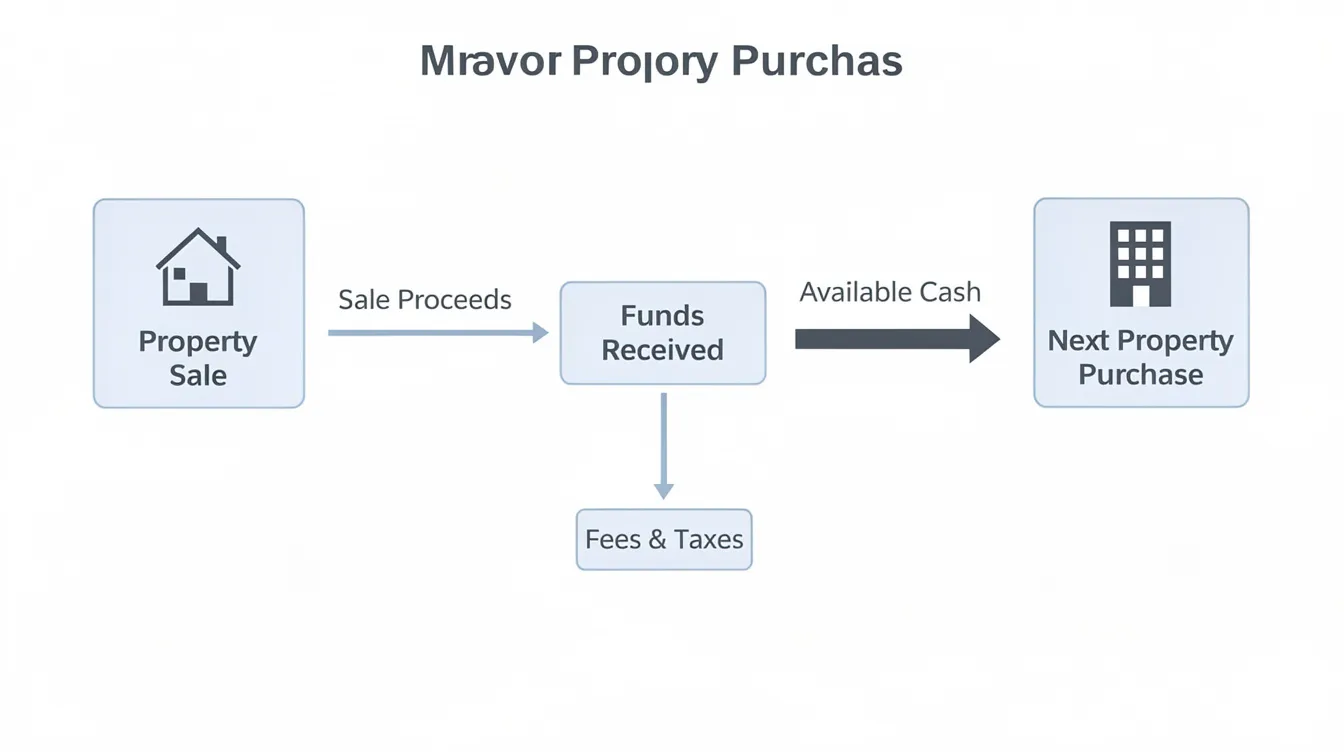
Both CPF principal and accrued interest must be refunded upon selling an EC – this is non-negotiable. The CPF refund increased their CPF OA balances substantially (useful for the next purchase), but it meant cash proceeds were $384,000 rather than the full gross gain.
No seller’s stamp duty applied because they had held the property for more than three years. (Seller’s stamp duty can be up to 16% if sold within one year of purchase, tapering to zero after three years.)
Targeting a Private Condo: Budget and Loan Eligibility
With their combined income now at approximately $15,500/month (2025), they calculated their budget:
-
Singapore’s Total Debt Servicing Ratio (TDSR) limits approval for housing loans to 55% of combined gross income – for them, that implied a maximum monthly obligation of ~$8,525.
-
They conservatively targeted housing instalments at no more than 40% of gross income (~$6,200/month) to leave room for children’s expenses, savings, and contingency.
-
The bank’s in-principle approval indicated a maximum loan quantum of ~$1.1M–$1.2M over 25 years, stress-tested at 4.0%.
Translated to new property quantum:
-
Target purchase price: $1.6M–$1.8M for a 3-bedroom private condo in the Rest of Central Region (RCR), near an MRT station and within 1 km of a reputable primary school.
-
They reserved at least 6–9 months of instalments in a cash buffer, refusing to max out both their CPF account and cash savings.
The New Private Condo Purchase: Location, Price and Structure
They purchased a 3-bedroom, 1,050 sqft unit in “Hillcrest Residences” (RCR, near an MRT station, within 1 km of a popular primary school) in mid-2025.
-
Purchase price: $1,720,000 (~$1,638 psf)
-
Buyer’s stamp duty: ~$52,000 (calculated on progressive BSD tiers from 1% to 5% on the purchase price)
-
No ABSD – they owned zero residential property at time of purchase, having sold the EC first.
Funding breakdown:
|
Component |
Amount |
Source |
|---|---|---|
|
Bank loan (75%) |
$1,290,000 |
New loan at ~3.5% fixed for 2 years |
|
Down payment (25%) |
$430,000 |
EC cash proceeds + CPF OA |
|
BSD |
$52,000 |
Cash |
|
Legal fees |
~$4,000 |
Cash |
|
Retained cash post-transaction |
~$60,000 |
Emergency buffer |
Monthly mortgage on the new loan: approximately $6,400/month – comfortably within their 40%-of-income target.
Step 5: Outcome by 2026 – Net Worth, Cash Flow and Next Moves
By late 2026 – roughly 18 months after purchasing the private condo – the EC stepping stone strategy can be evaluated against hard numbers and lived experience.
Updated Household Balance Sheet in Late 2026
|
Asset / Liability |
Amount |
|---|---|
|
Hillcrest Residences current valuation |
~$1,780,000 |
|
Outstanding private condo loan |
–$1,260,000 |
|
Property equity |
~$520,000 |
|
Combined CPF OA balances |
~$260,000 |
|
Cash savings |
~$80,000 |
|
Approximate net worth (housing + liquid) |
~$860,000 |
Compare this to where they started: a 4-room HDB flat with $210,000 outstanding. In roughly 10 years, through disciplined use of grants, holding through MOP, capturing capital appreciation, and upgrading without ABSD, they built approximately $520,000 in property equity – meaningfully more than if they had remained HDB owners in Punggol.
Monthly Cash Flow and Lifestyle Fit
-
Monthly mortgage: ~$6,400 on $1.29M at 3.5%
-
Property tax + maintenance: ~$750/month
-
Combined take-home pay (after CPF contributions): ~$12,200/month
-
Remaining for living expenses, children, savings: ~$5,050/month
Qualitatively, the upgrade delivered beyond the spreadsheet. Both spouses cut their commute significantly. Their elder child was enrolled in the nearby primary school for the 2027 P1 intake – exactly the window they had mapped years earlier. The condo’s facilities (pool, playground, security) made daily life with two young children materially easier.
Looking further ahead, once incomes and CPF grow, they may consider adding an investment property – perhaps a private residential investment condo, a commercial unit, or even a small industrial space – to generate passive income and diversify their property portfolio. Buying an EC provides a financial head start due to government-subsidized prices and appreciation potential, and this couple leveraged that head start decisively.
What If They Had Stayed in the EC?
A brief counterfactual: had they held the EC through to late 2026, its market value might have reached approximately $1.30M. They would have roughly $600K in equity (given the lower outstanding loan from two more years of repayments). But they would still face the Punggol commute, the school catchment misalignment, and the reality that private condo prices in their target area might have risen further – potentially widening the trade-up gap.
The net worth difference between the two scenarios is modest in dollar terms. But the right answer for this couple wasn’t purely about internal rate of return; it was about timing the move to align with life milestones. Not everyone will reach the same conclusion – those in strong EC locations with no urgency to move may benefit from waiting to full privatisation.
Common Challenges EC Upgraders Face – And How This Couple Managed Them
Mr Tan and Ms Lee’s journey was relatively smooth, but it wasn’t free of stress. Here are the recurring challenges EC-to-private upgraders encounter – and specific tactics from this case.
Challenge 1: Mis-timing MOP, Privatisation and Schooling Windows
Many families realise too late that their MOP completion date or privatisation timeline clashes with children’s P1 registration or a career relocation. The couple addressed this by creating a simple timeline in 2016 – years before the decision was urgent. They mapped:
-
MOP end (late 2024)
-
Elder child’s P1 registration (2026 for 2027 intake)
-
Desired move-in date (mid-2025, giving 12+ months to settle before school registration)
This kind of forward planning is basic but surprisingly rare. Draw your own timeline chart early; adjust annually.
Challenge 2: Underestimating Transaction and Holding Costs
The costs that eat into capital gain are easy to underestimate:
-
BSD on the new private condo: ~$52,000
-
Agent commission (EC sale): ~$18,000
-
Legal fees (sale + purchase): ~$8,000
-
Renovation of private condo: ~$55,000 (they budgeted modestly)
-
Moving costs and temporary storage: ~$4,000
-
Total non-recoverable costs: ~$137,000
Against a $330,000 gross gain, these costs consumed more than 40% of the upside. The couple ran a full cost spreadsheet before committing and deliberately kept a minimum cash buffer rather than exhausting everything on renovation. Without this discipline, the upgrade could have left them financially fragile.
Challenge 3: Over-Leveraging in the Second Property
The temptation is real: banks will often approve a higher loan amount than what is prudent. The couple could have stretched to a $2M property under maximum TDSR limits. Instead, they chose a purchase price where their mortgage stayed under 40% of gross income – leaving room for childcare, enrichment classes, and support for ageing parents.
They also ran a stress test: if interest rates rose by 1.5% (from 3.5% to 5.0%), their monthly instalment would jump from $6,400 to roughly $7,500. Uncomfortable but survivable on dual income. If one income disappeared entirely, they could still service the loan for 12+ months from savings. This kind of scenario planning is essential – and something advisory firms can help model systematically.
Conclusion and Practical Next Steps
An executive condominium bought with grants, clear exit planning, and disciplined budgeting can serve as a powerful stepping stone to private property. But success depends less on market timing and more on aligning the sale with MOP or privatisation milestones, running realistic financial calculations that include all transaction costs, and matching the move to family life stages.
If you are an EC owner or prospective buyer considering a similar path, here are concrete next steps:
-
Map your timeline: Plot EC booking, TOP, MOP, and privatisation dates against career milestones, children’s ages, and school registration windows.
-
Obtain a current valuation for your EC and compare average price per square foot with private condos in your target upgrade area.
-
Run a full funds-flow calculation: cash, CPF, BSD, legal fees, agent commission, renovation – and quantify net cash proceeds versus the down payment required for your target property.
-
Stress-test affordability: Model monthly instalments at current rates plus 1.5–2%, and under a one-income scenario. Ensure you can sustain the new loan comfortably.
-
Consider decoupling if applicable: Decoupling allows one spouse to buy a second property as a first-time buyer, and decoupling can save approximately S$266,000 in stamp duties – but decoupling incurs buyer’s stamp duty on the transferred share’s market value and the total cost of decoupling can reach S$30,000 to S$35,000. Weigh whether this route suits your situation.
-
Think beyond residential: After stabilising in a private home, explore whether adding a commercial or industrial investment property could generate rental yields and diversify your property portfolio.
Every household’s numbers and priorities differ. If you would like a customised progression map – including scenarios involving industrial or commercial properties as future investment steps – consider sharing your EC details, income profile, and objectives with AESTHETIC HAVENS for tailored analysis.
FAQs on Using an EC as a Stepping Stone to Private Property
These FAQs address the most common practical questions EC property owners ask when considering an upgrade in the 2024–2026 environment.
Can I keep my EC and still buy a private condo without paying ABSD?
As long as the EC counts as an existing residential property (which it does from key collection onward), purchasing a new property – a second residential property – will attract a 20% ABSD for Singapore Citizens under current rules. To avoid this, the most straightforward approach is to sell the EC before completing the private condo purchase, as the couple in this case study did.
An alternative is decoupling: one spouse transfers their share to the other, freeing the divesting spouse to buy as a first-time buyer without ABSD. Decoupling can save up to S$320,000 in ABSD. However, the total cost of decoupling can reach approximately S$35,000, buyer’s stamp duty on a transferred share can reach S$24,600, and the remaining owner must refinance the mortgage. Importantly, decoupling is not allowed for HDB flats in Singapore – only for private or fully privatised EC properties. Professional structuring advice is critical before attempting this.
When is the “best” time to sell my EC – right after MOP or after privatisation?
There is no universal right answer. It depends on the property market, your life stage, and the prices of alternative properties you are targeting.
Consider selling near MOP if: you need to relocate for schooling or work, or the EC’s value gap versus comparable private condos has substantially narrowed (reducing the benefit of waiting). After fulfilling the MOP, ECs can be sold freely to Singapore Citizens and Permanent Residents, which already expands the buyer pool.
Consider holding to privatisation if: your EC is in a strong location with continued capital appreciation potential, you have no urgent need to move, and you believe the fully privatised status will unlock meaningfully higher demand – including from foreign buyers.
How do CPF grants affect my eventual EC sale and upgrade?
CPF grants are treated as part of your CPF usage. When you sell the EC, both CPF principal used and accrued interest (including the grant portion) must be refunded to your CPF OA. This CPF refund increases your CPF OA balances – useful for funding the down payment on your next purchase – but it reduces your immediate cash proceeds.
Planning the split between cash and CPF for your second purchase is important: relying too heavily on CPF for the next down payment may leave you short on accessible cash for renovation, stamp duty, and emergencies.
What if interest rates stay high when I want to upgrade from EC to private?
Higher interest rates mean a lower maximum loan quantum from the bank and higher monthly instalments for any given loan amount. Strategies to manage this include:
-
Targeting a slightly smaller unit or a city-fringe location in the rest of central region instead of the core central region, reducing the purchase quantum.
-
Extending loan tenure judiciously (up to the age cap) while maintaining a plan to accelerate principal repayment when rates moderate.
-
Building a larger cash buffer before upgrading, so elevated instalments don’t squeeze household cash flow.
ECs have a Mortgage Servicing Ratio (MSR) limit of 30% which applies while buying another property, and private property purchases are subject to the 55% TDSR – both of which become more binding when rates are high.
Can an EC-to-private upgrade be a springboard to investment in commercial or industrial property?
Yes. Once a household has stabilised in a private home with healthy equity, manageable monthly instalments, and growing income, some couples channel surplus cash flow into a small commercial or industrial unit – for example, a B1 light industrial space or strata office – as an additional source of rental income and passive income. These assets sit outside the residential ABSD framework, making them accessible without the 20% second property penalty.
This progression – from HDB flat to executive condo to private condo to investment property – represents a deliberate, staged approach to building a diversified property portfolio. Combination of equity certainty and diversified funding can help dual-income couples upgrade to private property and beyond, provided each step is financially stress-tested and professionally guided.
AESTHETIC HAVENS specialises in analysing industrial and commercial opportunities, helping clients ensure these fit their operational or investment profiles before committing capital.


