

Introduction
Kampong Gelam is one of Singapore’s oldest urban quarters, and its conservation shophouses represent a rare intersection of heritage scarcity, lifestyle branding power, and long-term wealth preservation. For investors and business owners evaluating the district in 2026, the precinct offers a compelling middle ground: more affordable per square foot than core CBD heritage areas like Telok Ayer, yet significantly stronger in tourist exposure and tenant demand than fringe conservation zones.
This article focuses specifically on Kampong Gelam’s shophouses as both an investment asset class and a business location. This page covers current pricing, the drivers of differences across precincts, and what buyers or investors can expect in 2026, alongside price psf benchmarks, rental yields, tenant mix by street, footfall dynamics, regulatory considerations, and how the district compares with other Singapore shophouse precincts. Kampong Glam shophouses trade at about S$8,100 psf at the higher end, though entry points on quieter streets start considerably lower, making the area accessible to a range of buyer profiles-from F&B entrepreneurs and boutique hoteliers to family offices seeking heritage-backed capital appreciation.
The target audience is Singapore and overseas investors, family offices, and business owners looking for commercial shophouses with strong branding potential and heritage cachet.
By reading this article, you will:
-
Understand current Kampong Gelam pricing relative to Chinatown, Telok Ayer, Joo Chiat, and Little India
-
Know the typical gross yield range and what drives it up or down within the precinct
-
Identify the key micro-locations-Arab Street, Bussorah Street, Haji Lane, North Bridge Road-and their distinct tenant profiles
-
Recognise footfall patterns across day and night, weekday and weekend, tourist and local segments
-
Learn how to evaluate and acquire a conservation shophouse in this district
Understanding Kampong Gelam (Kampong Glam) as a Heritage Precinct
Kampong Gelam was historically a center for regional trade and cultural exchange. Originally, Kampong Gelam was allocated to the Malay royalty under the 1819 Raffles Treaty, establishing it as the Malay and Arab enclave under Raffles’s 1822 Town Plan. The area features Malay, Arab, and Bugis history, and over two centuries it evolved from a royal quarter into the creative, café-driven, and lifestyle hub it is today-anchored by the Sultan Mosque and the former Istana Kampong Gelam. Kampong Gelam is a significant cultural and historical area for Singapore’s Malay-Muslim community, and Kampong Gelam historically served as a gateway for Hajj pilgrims travelling from Southeast Asia.
Kampong Gelam was designated as a conservation area in 1989 under URA’s Historic District classification-the strictest conservation category in Singapore. This means entire buildings, including main façades, roof profiles, and architectural detailing, must be preserved. Supply of these shophouses is permanently capped: no demolition, no wholesale redevelopment. For investors, this conservation status is the single most important structural factor underpinning long-term land value.
Location, Connectivity and Urban Context: Proximity to Sultan Mosque
Kampong Gelam’s Historic District is bounded roughly by Ophir Road, Victoria Street, Jalan Sultan, and Beach Road. It sits immediately adjacent to the Bugis, Bras Basah, and City Hall / Downtown Core precincts-placing it within the broader central area of Singapore rather than on the urban fringe.
MRT access is strong. Bugis MRT station (EW12 / DT14) is within a five-minute walk, providing East-West and Downtown Line connectivity into the CBD, Marina Bay, and Expo. Nicoll Highway station (CC5) on the Circle Line is also nearby.
The walking catchment matters enormously for a district driven by F&B and experiential retail. Bugis Junction, DUO, and the Golden Mile Complex redevelopment zone all sit within a 10-minute walk, channelling office worker footfall during the day and expanding the precinct’s consumer catchment. As redevelopment progresses around Beach Road and Bugis, spillover demand exerts upward pressure on Kampong Gelam rental levels and capital values.
This connectivity is not incidental-it directly sustains the tenant mix. Cafes, bars, boutiques, and boutique hotels all depend on easy pedestrian access from transit nodes and visibility from busy streets. Without Bugis MRT and its dual-line connectivity, the district’s rental premium over more remote heritage precincts would be significantly narrower.
Heritage Identity and Streetscape
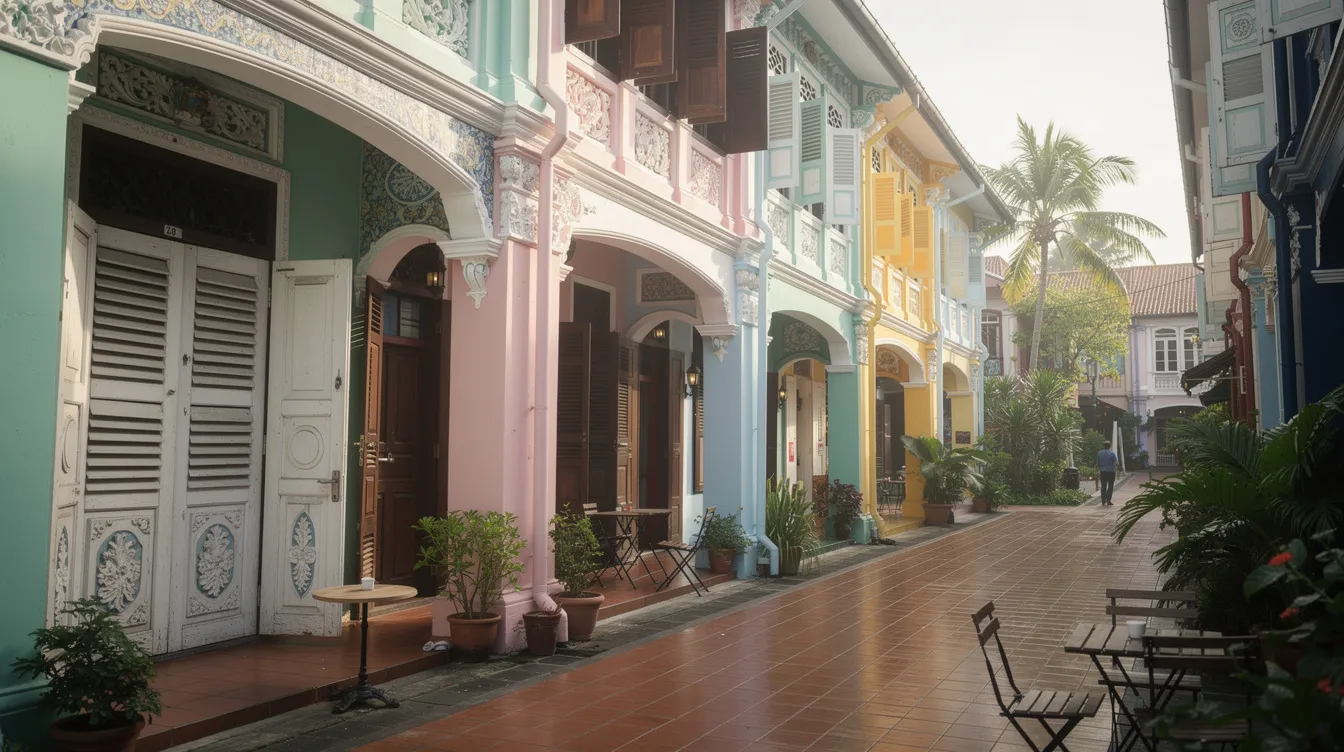
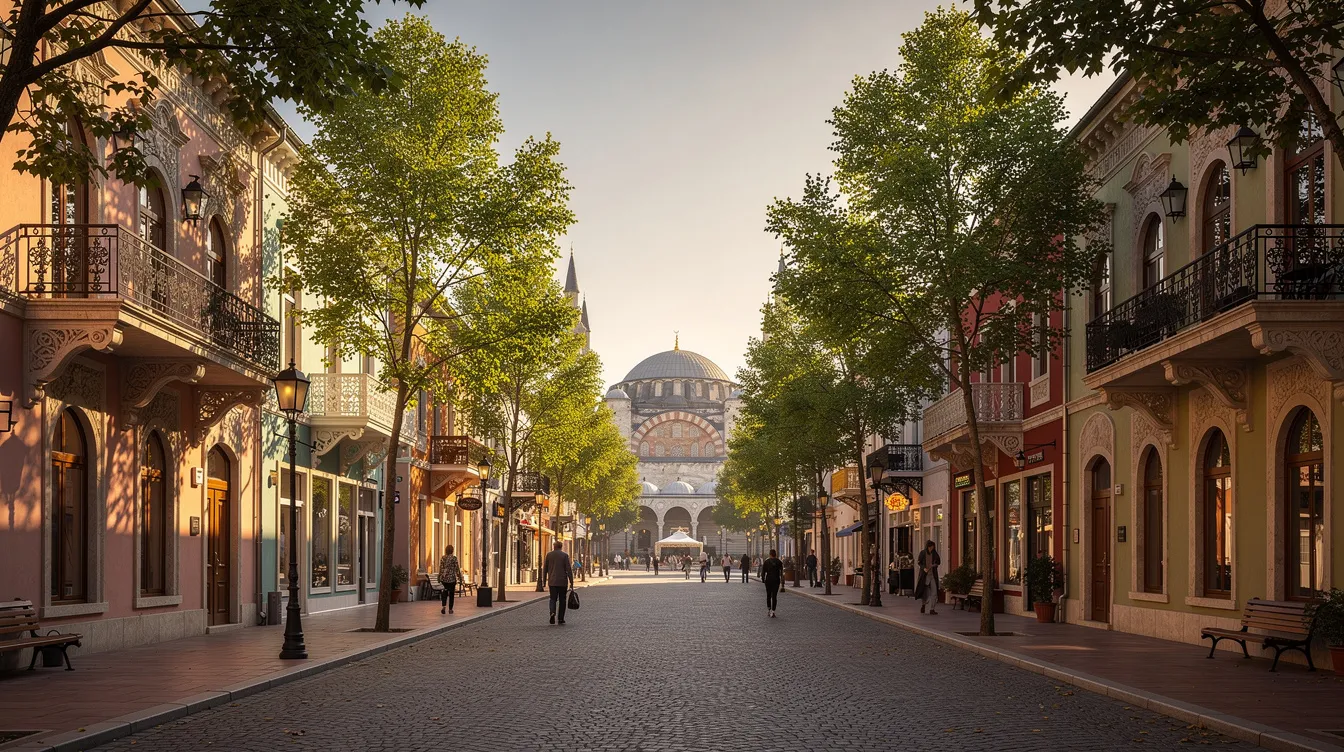
Kampong Gelam showcases a blend of four cultures. The streetscape is defined by rows of low-rise prewar shophouses with vibrant painted façades, ornate plasterwork, timber shutters, and sheltered five-foot-ways. Haji Lane is known for vibrant street art and independent boutiques-its narrow width creates the intimate, Instagram-worthy atmosphere that draws both tourists and local consumers. Palm-tree-lined Bussorah Street offers a direct sightline to the Sultan Mosque, one of Singapore’s most recognised landmarks.
The district has experienced a blend of traditional and modern influences. Traditional textile shops are prominent on Arab Street, alongside perfume merchants like Jamal Kazura Aromatics, which has operated since 1933. Kampong Gelam retains traditional culinary practices alongside modern cafes, and the Malay Heritage Centre is located in the former palace of the Sultan of Singapore-the former Istana Kampong Gelam functions as a cultural hub that reinforces the precinct’s identity.
Hajjah Fatimah Mosque features cross-cultural architectural influences, further illustrating how this neighbourhood blends Malay, Arab, Chinese, and European design traditions. Kampong Gelam is known for its vibrant street art, adding a contemporary layer to its heritage character.
This strong place identity is not merely aesthetic-it translates directly into economic value. Tenants running experiential businesses (cafés, creative agencies, boutique hotels) are willing to pay rent premiums for the ambience and branding that a generic commercial space simply cannot deliver. Understanding how this heritage character maps onto specific shophouse configurations and valuation drivers is the next step.
Kampong Gelam Shophouse Typologies and Usage
Not all Kampong Gelam shophouses are created equal. Differences in street frontage, building width, height (typically two to three storeys), architectural style, and approved use create meaningful variation in price psf and yield potential. URA recognises six shophouse architectural styles-Early, First Transitional, Late, Second Transitional, Art Deco, and Modern-each with specific conservation requirements for windows, decorative elements, and roof materials.
Common Built Forms and Frontage Characteristics
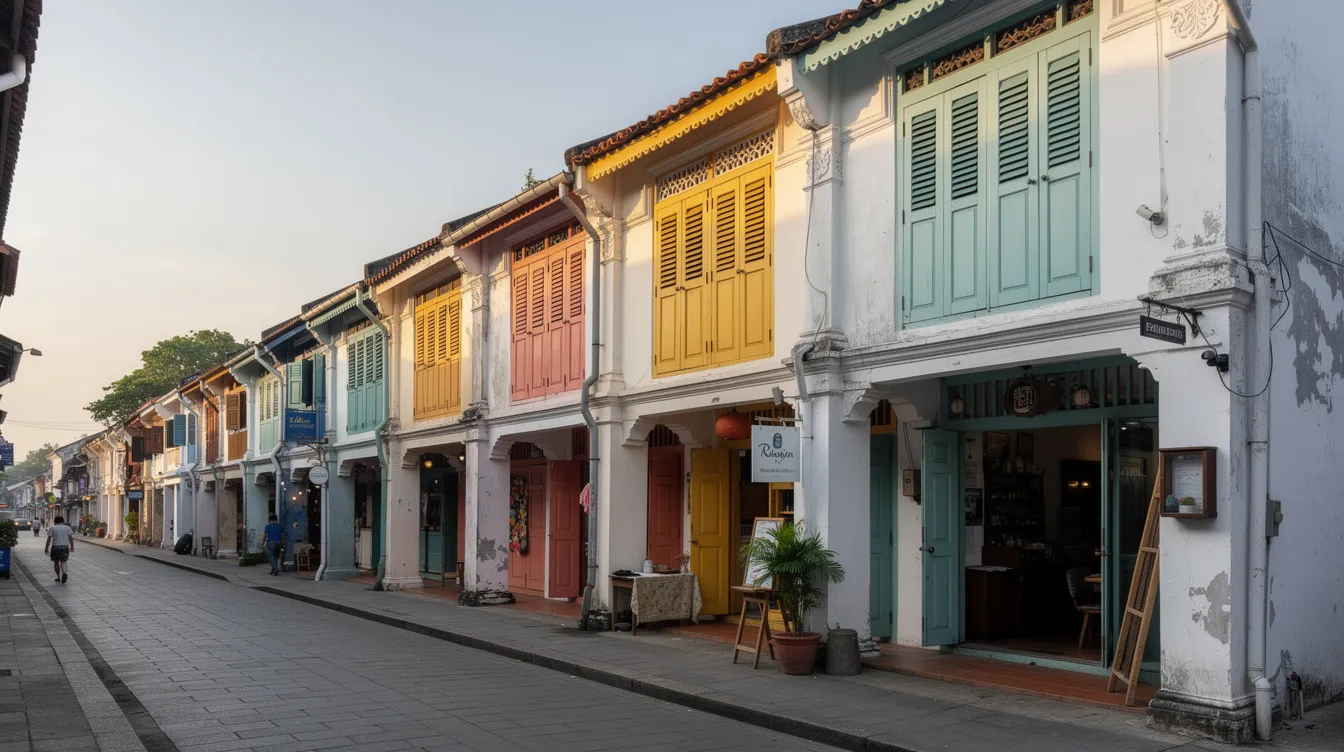
Typical Kampong Gelam shophouses have narrow frontages of 4–5 metres along streets like Haji Lane, expanding to 5–7 metres along North Bridge Road and Beach Road. Depth varies, but most units are small by modern commercial standards, with total built-up areas commonly ranging from 600 to 2,500 square feet per unit.
URA’s Conservation Guidelines require that front façades, roof shapes, and materials visible from public views are preserved. Timber shutters, decorative plasterwork, and clay tile roofs must be maintained or restored to original specifications. Internal works are more flexible-reconfiguration of floor plans, installation of modern services-but still require Conservation Permission.
Frontage width and corner position along main streets command clear premiums. A corner unit on Bussorah Street with dual-frontage visibility and potential for alfresco seating will trade at a materially different psf than a mid-terrace unit on a side lane with limited signage exposure.
Approved Uses and Zoning Nuances
Most Kampong Gelam shophouses are zoned commercial or mixed-use (commercial at ground floor with residential or office above). Commercial-zoned conservation shophouses are generally free from Additional Buyer’s Stamp Duty (ABSD), making them attractive for portfolio diversification-particularly for buyers who already hold residential property in Singapore.
Common approved uses include restaurants, cafés, retail shops, backpacker hostels, boutique hotels, offices, and studios. Several Jalan Sultan properties have received Additions & Alterations approval to convert upper floors to hotel use. However, URA maintains sensitivity around nightlife, entertainment, and loud uses near residential pockets-pubs and clubs face additional scrutiny on certain streets.
Mixed-use approval (commercial ground floor plus residential or office above) enhances income diversification: a landlord can collect retail rent from the ground floor and office or short-stay accommodation rent from upper storeys, potentially smoothing overall yield.
Positioning within the Wider Shophouse Market
Within Singapore’s shophouse landscape, Kampong Gelam occupies a distinctive middle position. Chinatown shophouses have a median price of S$12,600 psf, while Telok Ayer and Tanjong Pagar can reach S$9,000–15,000+ psf on land area. Kampong Gelam trades at a meaningful discount to these core-CBD heritage precincts but at a premium to fringe conservation areas like Joo Chiat and Little India for comparable commercial uses.
The tenant profile reinforces this positioning. Where CBD shophouses attract corporate tenants, professional services, and high-end dining, Kampong Gelam appeals to lifestyle brands, indie retailers, creative agencies, and experiential F&B. This is not a weakness-it is a distinct demand driver that sustains premium rents on streets like Haji Lane.
In short, Kampong Gelam’s built forms and approved uses set up specific price psf bands and yield expectations, which the next section details with recent transaction data.
Price psf in Kampong Gelam vs Other Shophouse Precincts (2025–2026)
The median psf sale price in Kampong Gelam rose from S$3,743 in 2020 to S$6,805 in 2025, reflecting strong capital appreciation even as foreign buyer activity softened. However, only 30 shophouses changed hands in the first half of 2026 across Singapore, highlighting the scarcity of conservation stock and helping keep prices firm despite weaker sales volume. The median shophouse resale price in Singapore is S$6.2 million, giving context to the quantum range buyers should expect.
The figures below are indicative, drawn from URA caveats and market observations through mid-2026.
Indicative Conservation Shophouse Prices by Precinct
|
Precinct |
Indicative Median S$/psf (Land) |
Typical Tenure Mix |
Typical Gross Yield Range |
|---|---|---|---|
|
Telok Ayer / Tanjong Pagar |
S$9,000–15,000+ |
Mostly freehold / 999-year |
2.0–3.0% |
|
Chinatown |
S$12,600 (median) |
Mixed freehold & 99-year |
2.0–3.0% |
|
Kampong Gelam |
S$2,800–8,100 |
Predominantly freehold / 999-year |
3.0–4.0% |
|
Little India |
S$2,500–4,500 |
Mixed freehold & leasehold |
3.0–4.5% |
|
Jalan Besar |
S$2,200–3,800 |
Mixed |
3.0–4.0% |
|
Joo Chiat / Katong |
S$2,000–3,500 |
Mixed freehold & 99-year |
3.5–4.5% |
|
Beach Road / Bugis fringe |
S$3,500–6,000 |
Mixed |
2.5–3.5% |
Freehold shophouses command a premium over leasehold units across all precincts. In Kampong Gelam specifically, the freehold or 999-year tenure mix is a structural advantage-many units held here carry perpetual tenure, which supports wealth preservation over generational timeframes.
Within-Kampong Gelam Micro-Location Pricing
The range within Kampong Gelam is wide, and micro-location is arguably the single largest pricing determinant:
-
Haji Lane: Highest street-level retail rents (S$12.94 psf/month YTD 2026). Small built-up units, strong branding appeal. Entry psf is high relative to area, but absolute quantum can be modest due to small unit sizes.
-
Bussorah Street: Premium positioning facing Sultan Mosque. Record transactions here include freehold deals at S$4,428 psf on built-up area. Strong demand from halal F&B and destination dining.
-
Arab Street: More mixed-use with textiles, professional services, and lifestyle retail. Rents have softened to about S$6.21 psf/month YTD 2026, but some transactions show very high land psf for small plots.
-
North Bridge Road / Beach Road: Larger plot sizes, wider frontages, greater road exposure. Transactions above S$5,500 psf on built-up area for well-positioned units.
-
Side streets (Bali Lane, Muscat Street, Baghdad Street): Quieter footfall, smaller creative tenants. Bali Lane rents at approximately S$7.08 psf/month YTD 2026. Entry prices lower-S$2,800–3,400 psf-with potential upside as nearby redevelopment (Golden Mile, DUO) improves the wider catchment.
Key variation factors within Kampong Gelam: corner vs mid-terrace position, proximity to Sultan Mosque, line-of-sight from main roads, frontage width, and potential for outdoor seating.
Recent Transaction Examples
|
Address / Street |
Area (sqft) |
Tenure |
Sale Price |
Approx. psf |
Notable Features |
|---|---|---|---|---|---|
|
19 & 21 Bussorah Street |
~4,473 (built-up) |
Freehold |
S$19.8M |
~S$4,428 |
Dual-unit frontage, prime mosque-facing position, F&B/retail ground floor |
|
Bussorah Street (Sep 2025) |
1,559 |
Freehold/long lease |
S$6.35M |
~S$4,074 |
Typical shophouse, mixed-use potential |
|
Arab Street (Dec 2025) |
657 |
Freehold/long lease |
~S$5.32M |
~S$8,102 |
Very small unit, high street exposure |
|
North Bridge Road (Oct 2025) |
1,798 |
Freehold |
S$9.90M |
~S$5,507 |
Major road frontage, larger format |
|
33, 35 Sultan Gate (Mar 2025) |
1,777 |
Freehold |
~S$19.1M |
~S$10,748 |
Premium corner/gateway position, significant frontage width |
Key takeaways from current transaction data:
-
Quantum for individual shophouses in Kampong Gelam typically falls between S$4M and S$10M, with multi-unit blocks exceeding S$19M
-
Psf varies dramatically by street, unit size, and frontage-from around S$2,800 to over S$10,000
-
Freehold tenure is the norm rather than the exception, which distinguishes Kampong Gelam from some other heritage precincts
Tenant Mix and Footfall Dynamics in Kampong Gelam
The distinct tenant mix and pedestrian patterns in Kampong Gelam are central to its investment thesis. Unlike purely corporate districts, this neighbourhood draws high leisure and tourism traffic, growing café culture, and niche retail-creating diversified demand that supports rental resilience.
Current Tenant Profile by Street
The tenant landscape maps clearly onto the district’s street grid:
-
Haji Lane / Bali Lane: Hip cafes, craft cocktail bars, independent fashion boutiques, vintage shops, tattoo studios, and hair salons. Units tend to be small with high turnover-trend-driven tenants rotate as consumer tastes shift.
-
Arab Street: Traditional textile shops, carpet merchants, perfume and incense retailers, traditional eateries, and shisha cafés (where permitted). Increasingly, lifestyle retailers and halal F&B concepts are entering this street. More stable tenant base with some operators spanning decades.
-
Bussorah Street: Destination halal restaurants, Middle Eastern F&B, tourist-oriented souvenir shops. High exposure from Sultan Mosque visitors and cultural event attendees. Strong weekend and evening trade.
-
North Bridge Road / Beach Road frontages: Larger format outlets including banks, clinics, chain F&B, destination restaurant brands, and offices on upper storeys. Boutique hotels and hostels are increasingly common within shophouses near these roads, with several properties having received approval for hotel conversion.
This diversified tenant mix-spanning traditional trades, contemporary lifestyle, F&B, and hospitality-reduces landlord risk by providing multiple re-positioning angles. If one concept category softens, alternative tenant profiles can fill the space without requiring a fundamentally different property configuration.
Footfall Patterns: Day vs Night, Weekday vs Weekend
Weekday daytime: Office workers from the Bugis and Beach Road commercial area form a steady lunch and errand-running crowd. Heritage tourists visiting Sultan Mosque and the Malay Heritage Centre add daytime foot traffic, as do students from nearby institutions and creative professionals working in co-working spaces and studios within the precinct.
Evenings and weekends: The district transforms. Locals and international tourists fill cafes, bars, and restaurants, especially along Haji Lane and Bussorah Street. Notable spikes occur during Ramadan bazaars and cultural events, when Bussorah Street and surrounding lanes become pedestrianised and footfall multiplies.
Seasonality: Singapore welcomed approximately 16.9 million international visitors in 2025. Kampong Gelam benefits directly from heritage-based tourism, with additional surges during Formula 1 week, school holidays, Hari Raya celebrations, and major cultural festivals. These seasonal peaks materially impact F&B and retail turnover.
The multi-source nature of Kampong Gelam’s footfall-local workers, residents, domestic day-trippers, and international tourists-provides more resilient rent support than precincts dependent on a single demand source.
Implications for Rental Levels and Lease Structures
Ground-floor rents in Kampong Gelam vary significantly by street and use:
-
Haji Lane F&B/retail: ~S$12.94 psf/month (YTD 2026), recovering from a dip to S$9.59 in 2025
-
Bussorah Street F&B: Comparable to Haji Lane for prime frontages
-
Arab Street retail/mixed: ~S$6.21 psf/month (YTD 2026), under pressure from evolving tenant demand
-
Bali Lane: ~S$7.08 psf/month, modest but stable
Common lease structures involve 2+2 or 3-year terms with step-up clauses, fit-out periods of one to three months rent-free, and security deposits of three to six months for F&B operators. Landlords face a strategic tension: long-term established tenants provide stability and reduce vacancy risk, while rotating into trendier, higher-paying concepts can capture rental upside. Careful tenant selection-balancing covenant strength, brand alignment, and willingness to invest in fit-out-is essential.
Investment Fundamentals: Yields, Wealth Preservation and Upside Drivers
Conservation shophouses are widely positioned as wealth preservation assets with modest current yield but strong long-term capital appreciation potential. Kampong Gelam fits this characterisation clearly: heritage scarcity caps supply, while growing lifestyle demand supports rental income.
Net Yields and Cashflow Profile
Gross rental yields for Kampong Gelam conservation shophouses typically fall in the 3.0–4.0% range, depending on tenant quality, lease terms, and building configuration. Prime retail frontages on Haji Lane and Bussorah Street may yield closer to 2.5–3.5% because entry prices are higher relative to rents. Side street and less exposed units, where entry psf is lower, can deliver yields toward the upper end of 3.5–4.0%.
Factors that compress or expand yields include:
-
Heavy F&B clustering: higher achievable rents but elevated capex for exhaust ducting, grease traps, fire safety, and kitchen infrastructure
-
Boutique hospitality uses: potentially higher income per square foot but requiring significant upfront conversion investment and additional regulatory approvals
-
Multi-tenancy across storeys: ground-floor retail plus upper-floor office or residential can smooth income and reduce single-tenant dependency
Operating costs landlords must budget for include property tax, maintenance of heritage façade elements, periodic restoration works, insurance, and compliance costs specific to F&B fire safety and ventilation standards.
Wealth Preservation, Scarcity and Risk Profile
URA’s conservation programme permanently caps supply. Every shophouse sold in Kampong Gelam is one fewer unit available to future buyers. This structural scarcity makes long-term land value erosion unlikely and supports intergenerational wealth preservation-a key consideration for family offices and high-net-worth individuals.
Kampong Gelam demonstrated resilience through the pandemic period. While external demand softened (particularly from foreign buyers facing AML and regulatory scrutiny), domestic café culture and local tourism supported recovery. The median psf rose from S$3,743 in 2020 to S$6,805 in 2025-a return of over 80% in half a decade.
Key risks remain:
-
Regulatory tightening on nightlife, outdoor dining rules, or alcohol licencing near heritage and religious sites
-
Gentrification pressure that may homogenise the tenant mix, reducing the indie character that originally attracted premium tenants
-
Competition from new mixed-use developments nearby (DUO, Golden Mile redevelopment) that could divert some footfall
-
Price volatility in a low-volume market where individual deals can skew median psf significantly
Capital Upside Catalysts Around Kampong Gelam
Several tangible catalysts could drive further appreciation over the next 5–10 years:
-
Golden Mile Complex redevelopment and ongoing enhancements around Bugis and Beach Road will improve the streetscape, increase pedestrian connectivity, and bring new consumer traffic into the precinct
-
Spillover from the Bras Basah–Bugis arts district and broader CBD expansion can push higher-end experiential concepts into Kampong Gelam, supporting rental growth
-
Downtown and Circle Line connectivity improvements continue to reduce perceived distance from the financial core, making the precinct viable for a wider tenant base
For investors, the opportunity is to lock in current price bands-still materially below CBD heritage shophouse psf-ahead of these structural shifts.
How to Evaluate and Acquire a Kampong Gelam Shophouse
This section provides a practical framework for analysing and transacting conservation shophouses specifically in Kampong Gelam, applicable to both owner-occupiers (F&B operators, boutique hoteliers, creative agencies) and pure investors.
Step-by-Step Evaluation Framework
Use this framework whenever evaluating a specific Kampong Gelam shophouse opportunity:
-
Clarify objective: Determine whether the primary goal is wealth preservation, yield generation, or securing a branding location for a business-each leads to different street and unit preferences
-
Define budget: Establish total quantum, gearing capacity, and tolerance for restoration capex (which can add 15–30% to purchase price for older, poorly maintained units)
-
Shortlist streets and micro-locations: Match target customer profile and brand positioning to the right street-Haji Lane for indie lifestyle, Bussorah Street for destination F&B, North Bridge Road for larger-format operations
-
Assess physical attributes: Evaluate frontage width, structural condition, ceiling height, ventilation potential, and exhaust ducting feasibility (critical for F&B)
-
Check planning parameters: Confirm zoning, permissible uses, conservation restrictions, and parking or loading considerations
-
Analyse income: Review current rent roll, assess reversionary rental potential, and evaluate covenant strength of existing tenants
-
Run financials: Compare entry psf against recent market transactions, project gross and net yield, and model exit scenarios at both conservative and optimistic psf levels
-
Perform due diligence: Verify title, remaining tenure (if leasehold), encumbrances, fire safety compliance, heritage works history, and structural inspection findings
Comparing Kampong Gelam with Other Shophouse Locations such as Joo Chiat
|
Criterion |
Kampong Gelam |
Telok Ayer / Tanjong Pagar |
Chinatown |
Joo Chiat / Katong |
|---|---|---|---|---|
|
Typical S$/psf (Land) |
S$2,800–8,100 |
S$9,000–15,000+ |
S$12,600 (median) |
S$2,000–3,500 |
|
Typical Ground-Floor Rent (S$/psf/mo) |
S$6–13 |
S$10–18 |
S$8–15 |
S$4–8 |
|
Dominant Tenant Type |
Lifestyle F&B, indie retail, boutique hotels |
Corporate, high-end dining, professional services |
Tourism retail, F&B, temples precinct |
Residential-adjacent F&B, cafes, galleries |
|
Tourist Exposure |
High (Sultan Mosque, Haji Lane) |
Moderate |
High (Chinese cultural precinct) |
Moderate–Low |
|
Suitability for Owner-Operators |
Strong (F&B, creative, hospitality) |
Moderate (high entry cost) |
Moderate |
Strong (lower entry cost) |
|
Overall Upside Potential |
High (scarcity + catalysts) |
Moderate (already premium) |
Moderate |
Moderate–High |
Interpretation: If you prioritise branding and experiential location at a more accessible entry price than core CBD, Kampong Gelam is the strongest candidate. If maximum capital preservation with blue-chip corporate tenants is the goal, Telok Ayer remains the benchmark-but at three to four times the psf. For investors seeking higher yield with a more residential catchment, Joo Chiat offers a different risk-return profile.
Working with AESTHETIC HAVENS on Kampong Gelam Assets
AESTHETIC HAVENS supports clients through precinct-level analysis, on-the-ground assessment of specific streets, financial modelling tailored to conservation assets, and negotiation of shophouse deals. The firm’s focus on commercial and industrial users means it understands clients who want ground-floor presence in Kampong Gelam alongside back-end industrial or warehouse space elsewhere-enabling cross-precinct portfolio planning.
If you are considering a Kampong Gelam shophouse, share your brief-budget, intended use, preferred streets-and AESTHETIC HAVENS can prepare a tailored shortlist with current market pricing and income projections.
Common Challenges and How to Avoid Them in Kampong Gelam
Kampong Gelam is attractive, but recurring pitfalls-especially around conservation compliance and F&B-heavy streets-can erode returns if not anticipated.
Overestimating F&B Demand and Underestimating Fit-Out Costs
The concentration of cafes and restaurants on Haji Lane and Bussorah Street can create an illusion of guaranteed success. In reality, tenant saturation is real, and F&B fit-out costs in conservation shophouses are substantial: exhaust ducting must be carefully routed to avoid façade impact, grease traps must comply with NEA standards, and older structures may need structural reinforcement to support heavy kitchen equipment.
Mitigation: Model with conservative rent assumptions, factor in 6–12 months of tenant stabilisation, and engage designers experienced with conservation guidelines before committing.
Misreading Conservation and Regulatory Constraints
Buyers sometimes assume they can make façade changes, add prominent signage, or reconfigure internal walls freely. Conservation Permission is required for most works, and the process takes time. Restricted façade modifications, signage limitations, and window-type requirements can delay projects by months and add unexpected costs.
Solution: Consult URA’s conservation guidelines early, work with conservation-accredited architects, and build realistic approval timelines into your investment model.
Ignoring Micro-Location Noise and Neighbourhood Sensitivities
Late-night noise from bars, shisha establishments, and outdoor dining can conflict with residential neighbours and religious activities around Sultan Mosque. Traffic management changes during festivals or prayer times may also affect accessibility. These street-level dynamics vary block by block.
Practical steps: Conduct on-site visits at multiple times of day and week, speak with existing tenants and neighbours, and select tenant profiles that align with the local context rather than fighting against it.
Underappreciating Tenure and Structural Condition
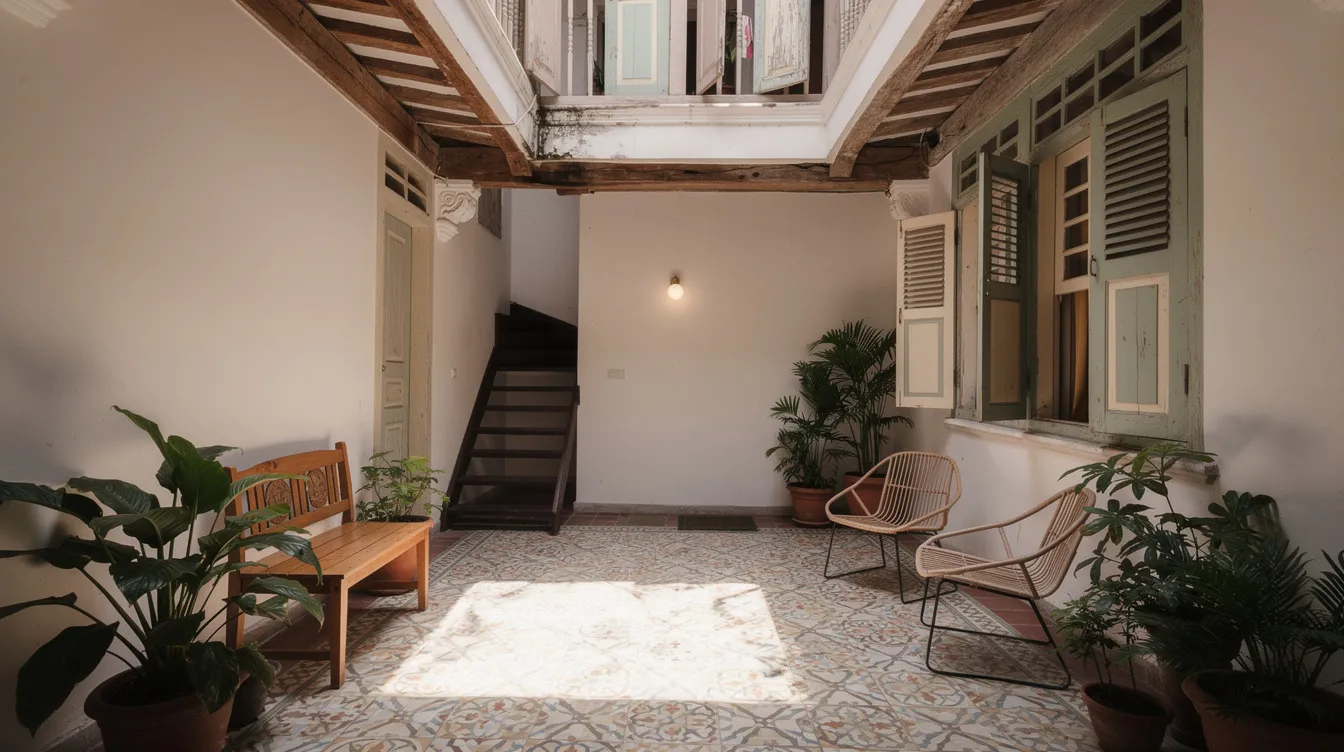
Older conservation shophouses may harbour hidden issues: termite damage in timber structural elements, outdated mechanical and electrical systems, water ingress through aging roof tiles, and inadequate foundations. These can transform an apparently attractive deal into a capital-intensive restoration project.
Recommendation: Commission thorough building inspections before purchase, budget for phased restoration over three to five years, and prioritise assets with documented upgrade history and recent conservation works.
Conclusion and Next Steps
Kampong Gelam remains one of Singapore’s most compelling shophouse locations in 2026. Its heritage identity-rooted in Malay, Arab, and Bugis history-creates a place brand that generic commercial spaces cannot replicate. The precinct offers balanced tourist and local footfall, mid-range psf compared with CBD primes, and clear long-term scarcity value underpinned by conservation status. For investors willing to accept modest current yields in return for capital appreciation and branding power, the district delivers.
Immediate next steps:
-
Clarify your investment objectives and preferred tenant profile (F&B, hospitality, creative office, or passive hold)
-
Shortlist two to three micro-locations within Kampong Gelam that align with those objectives
-
Review the recent transactions and rental benchmarks outlined in this article for your target streets
-
Engage an advisor such as AESTHETIC HAVENS to evaluate specific opportunities, run financial projections, and conduct due diligence
Adjacent topics worth exploring: other conservation precincts such as Telok Ayer, Chinatown, and Joo Chiat; industrial properties to complement a front-of-house shophouse presence; and Singapore commercial zoning fundamentals.
Frequently Asked Questions about Kampong Gelam Shophouses
What is the typical price range for Kampong Gelam shophouses in 2026?
Freehold conservation shophouses in Kampong Gelam typically trade between S$2,800 and S$8,100 psf depending on street, frontage, and unit size. In absolute quantum, most deals fall in the S$4M–S$10M range for individual units, with multi-unit blocks exceeding S$19M. Side streets like Bali Lane offer entry at the lower psf band, while prime Bussorah Street and Sultan Gate frontages command the highest premiums. Kampong Glam shophouses trade at about S$8,100 psf at the upper end for well-positioned small units.
Are Kampong Gelam shophouses subject to ABSD?
Shophouses zoned commercial in Kampong Gelam are generally exempt from Additional Buyer’s Stamp Duty. This makes them particularly attractive for investors who already own residential property in Singapore and would face significant ABSD on additional residential purchases. However, if a shophouse has a residential component (e.g., upper-floor residential zoning), the residential portion may attract ABSD. Confirm zoning with URA before purchase.
Is Kampong Gelam better suited for owner-occupiers or pure investors?
Both profiles can benefit, but for different reasons. F&B entrepreneurs, boutique hoteliers, and creative agencies gain a home for their business plus long-term asset appreciation-the heritage ambience becomes part of their brand. Pure investors benefit from wealth preservation and moderate yields (3.0–4.0% gross), but must accept higher maintenance obligations and tenant management complexity than typical commercial property. Owner-occupiers who also benefit from the capital appreciation tend to achieve the strongest overall return.
What are the main regulatory approvals needed for F&B in Kampong Gelam shophouses?
Key approvals include: Conservation Permission from URA for any physical works; change-of-use application if the unit is not already approved for F&B; food shop licence from the Singapore Food Agency (SFA); NEA clearance for exhaust, grease trap, and waste management; liquor licence if serving alcohol; and entertainment licence if offering live music or performances. Conservation considerations specifically affect exhaust placement, signage design, and structural modifications-early engagement with a conservation architect is essential.
How liquid is the Kampong Gelam shophouse market?
Conservation shophouse transactions are inherently low-volume. Only 30 shophouses were sold in the first half of 2026 across all Singapore precincts combined. Within Kampong Gelam specifically, annual deals number in the single digits. Time-on-market can extend to six to twelve months for fairly priced units. Buyers are predominantly local high-net-worth individuals, family offices, and corporates. This structural scarcity supports pricing but means investors should plan for longer holding periods and less frequent liquidity events.
How can AESTHETIC HAVENS help with Kampong Gelam shophouse deals?
AESTHETIC HAVENS provides end-to-end advisory for conservation shophouse acquisitions: precinct and street-level analysis, valuation benchmarking against recent transactions, financial modelling for yield and exit scenarios, tenant fit assessment, and negotiation support. The firm also assists clients building cross-precinct portfolios-combining a Kampong Gelam front-of-house presence with industrial or warehouse assets elsewhere in Singapore. Reach out with your budget, intended use, and preferred streets to receive a tailored Kampong Gelam shortlist.

