

Introduction
Hudson Place Residences is a 327-unit condominium on Media Circle within Singapore’s one-north precinct, developed by Qingjian Realty with an expected TOP in Q3 2029. This article evaluates whether Hudson Place’s specific location works for biomedical and tech professionals working in Biopolis and Fusionopolis – and what that means for investors seeking exposure to one-north’s deep employment base and for landlords targeting high-calibre tenants.
The short answer: Hudson Place Residences’ walkable or short-shuttle distance to Biopolis and Fusionopolis, historically constrained residential supply in the one-north precinct, and a diversified tenant pool of over 50,000 knowledge workers make it one of the stronger rental-yield plays in District 5. The trade-offs are real – MRT distance, 99-year leasehold tenure, and concentration risk in R&D employment cycles – but for the right investor profile, the fundamentals align.
This article covers micro-location analysis (exact distances and commute modes), likely tenant profiles and budget ranges from Biopolis and Fusionopolis, PSF and rental yield positioning versus comparable one-north projects like Bloomsbury Residences and One-North Eden, and practical suitability for investors versus owner-occupiers. Here is what you will take away:
-
Understand exactly how far Hudson Place is from Biopolis and Fusionopolis (in minutes and km) and typical commute modes.
-
See what kind of tenants – job types, seniority, family status – are most likely to rent here.
-
Learn realistic rent levels, gross yields, and PSF positioning relative to comparable one-north projects.
-
Know the main risks: future Media Circle supply, MRT distance, and tenant concentration risk.
-
Get an investor-focused recommendation: when Hudson Place makes sense and when it does not.
Understanding One-North’s Employment Ecosystem and Tenant Demand
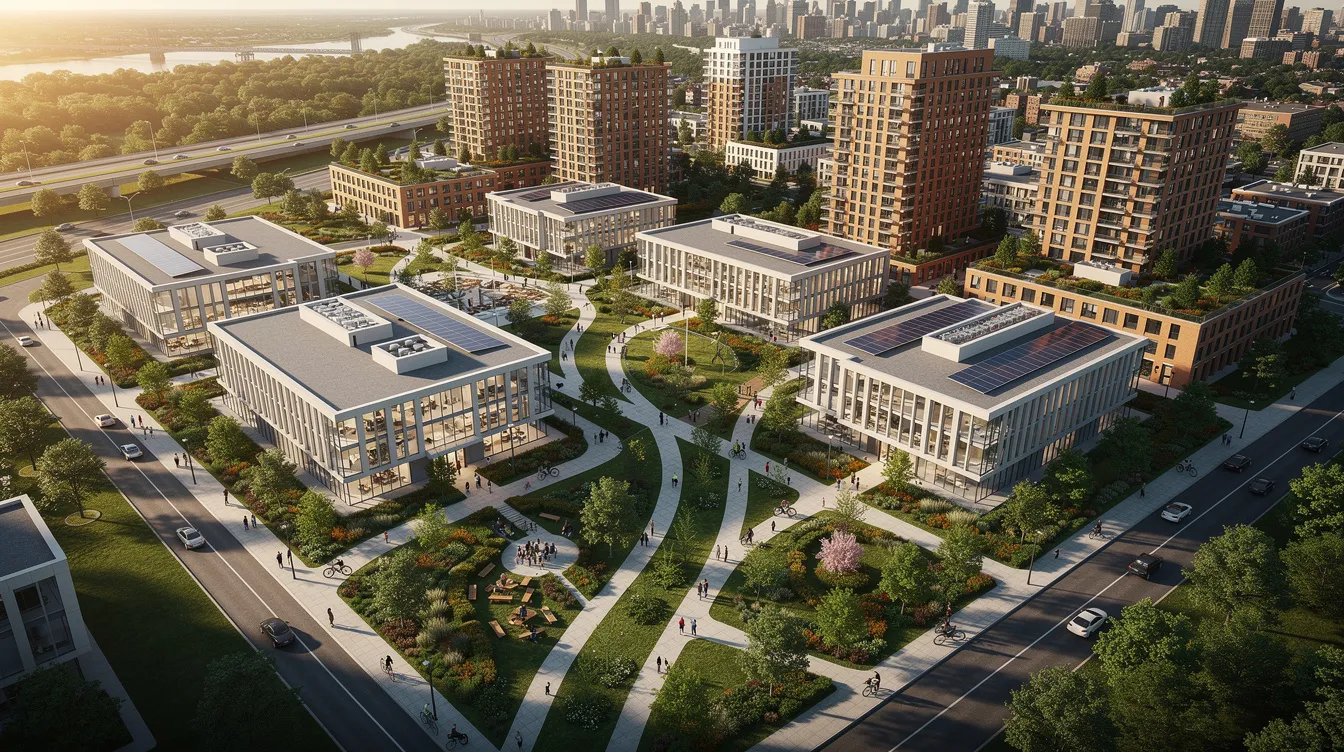
One-north is Singapore’s purpose-built R&D, technology, and biomedical employment hub – a 200-hectare innovation district master-planned by the Urban Redevelopment Authority. Its sub-zones include Biopolis, Fusionopolis, Mediapolis, LaunchPad, and surrounding business parks and research hubs. One-North is home to over 500 global companies and more than 50,000 knowledge workers across these major employment clusters. For Hudson Place Residences, the core rental thesis rests on this daily population flowing through Biopolis, Fusionopolis, Mediapolis, and nearby educational institutions like NUS and INSEAD – all of which generate sustained residential demand that far outstrips the tightly controlled residential supply within walking distance.
Biopolis: Biomedical Cluster and Tenant Profile
Biopolis is the biomedical R&D hub anchored by A*STAR research institutes, global pharma multinationals, and contract research organisations. The development is near major employment hubs like Biopolis, and this proximity shapes the tenant pool directly.
Typical worker profiles include research scientists, laboratory managers, post-doctoral researchers, and pharma regional staff. Many hold mid-to-high incomes and work irregular hours dictated by lab schedules, grant milestones, and clinical timelines. High-caliber tenant profiles often reside near workplaces to reduce commuting issues – these professionals working in Biopolis value short commutes over suburban space, preferring quiet but modern housing with flexible 1–3 bedroom layouts rather than large landed homes.
Common tenancy durations reflect project-based employment: 1–3 years for junior researchers and post-docs aligned with grant cycles; 2–4 years (or longer) for mid-level managers and regional expatriate staff. This creates moderate-to-high occupancy stability for nearby residential developments, though funding cycle volatility introduces some turnover risk.
Fusionopolis: Tech, Engineering and Media Tenants
Fusionopolis focuses on technology and engineering industries, housing ICT firms, data/AI companies, engineering R&D labs, and media-tech outfits. It sits adjacent to One-North MRT Station, making it the most transit-connected sub-zone in the precinct.
Worker demographics skew toward software engineers, data analysts, product managers, and regional tech leads – often dual-income young couples or singles. These tenants tend to be rent-sensitive on total monthly quantum (rent plus commute cost) but willing to pay a premium for walk-to-work convenience, co-working spaces, and strong broadband-ready units. Hybrid work arrangements are increasingly common, reducing daily commuting frequency but raising the importance of in-unit amenity – study spaces, good natural lighting, and quiet residential environments.
Hudson Place Residences’ 2-bedroom and 2+study layouts, combined with its 49 lifestyle facilities for residents and integrated ground-floor retail spaces, directly match Fusionopolis tenant preferences. The development is surrounded by chic cafés and artisanal dining options that reinforce the work-live-play lifestyle these tenants seek.
How Biopolis and Fusionopolis Together Shape the Rental Base
Biopolis (biomedical) and Fusionopolis (tech) collectively create a diversified yet specialised tenant pool within 1–1.5 km of Hudson Place. Biomedical tenants bring higher individual incomes but more irregular schedules; tech tenants bring predictable hours but greater sensitivity to amenity and commute efficiency. This mix of expat professionals and local tenants fills rental demand across unit types, creating a resilient base that does not depend on a single industry.
Proximity to multiple employment clusters strengthens residential rental appeal – the weekday daytime population across Biopolis, Fusionopolis, and Mediapolis (which includes media production and digital businesses) functions as the underlying demand engine. One-north is designed with a mix of workplaces, residential areas, and lifestyle amenities, and has housed thousands of knowledge workers since the early 2000s with continued expansion under URA plans. Residential supply in one-north is historically tightly controlled, impacting rental demand – earlier, only a handful of projects like One-North Residences and One-North Eden offered private homes inside the precinct.
Understanding this employment ecosystem sets the stage for evaluating whether Hudson Place’s exact micro-location on Media Circle aligns with how these professionals travel and live.
Hudson Place Residences’ One-North Location: Micro-Analysis
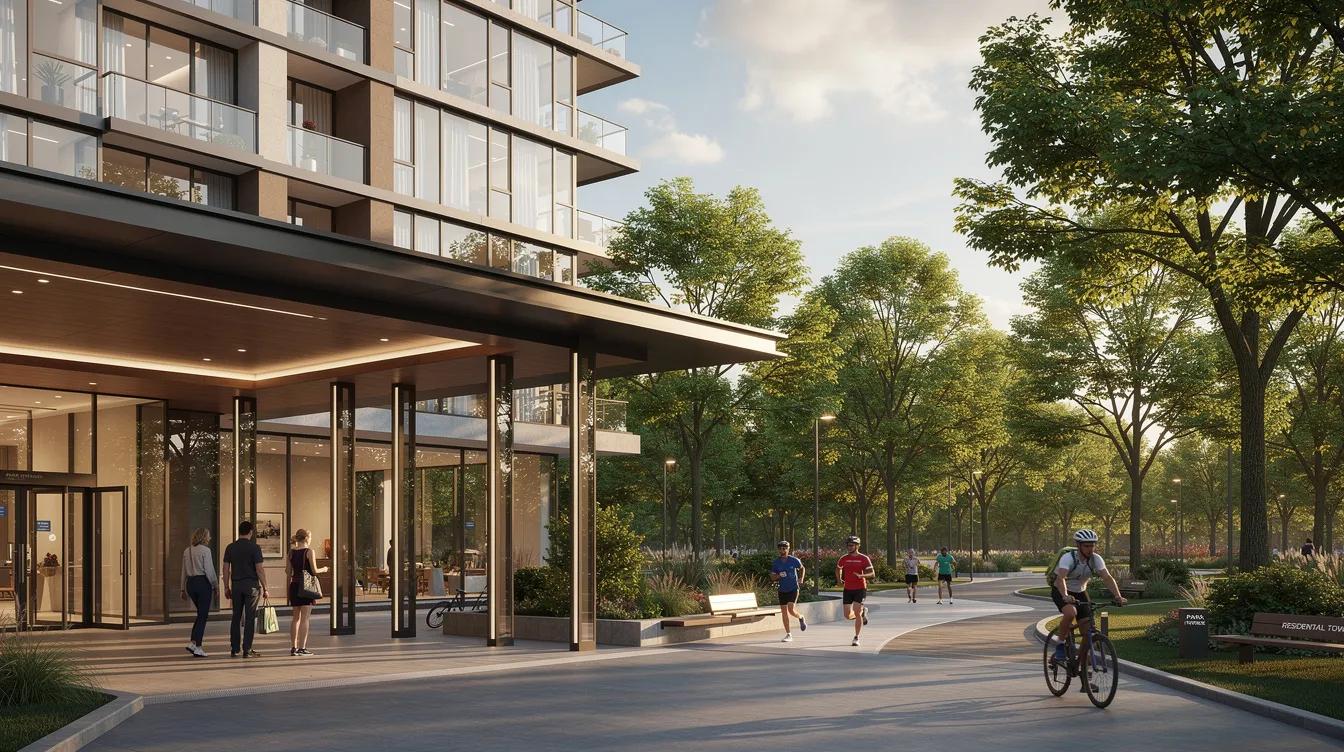
Hudson Place Residences located in the one-north precinct on Media Circle Parcel A offers genuine “work-adjacent” convenience to both Biopolis and Fusionopolis, even if it is not a doorstep-MRT site. This development sits on a 99-year leasehold site in District 5 (Queenstown/one-north RCR), comprising two towers of 15 and 23 storeys with 327 units. The micro-positioning – close enough to walk, short enough to shuttle – is central to rental resilience and distinguishes Hudson Place Residences Condo from projects further out in Clementi or Queenstown.
Distance and Connectivity to Biopolis
Walking distance from Hudson Place to key Biopolis buildings is approximately 900–1,200 metres, translating to roughly 12–18 minutes on foot depending on the specific block, via Portsdown Road and one-north park connectors. Residents can access Kent Ridge Park and One-North Park for recreation along these routes, making the walk more pleasant than typical urban commutes.
Multiple bus routes serve Media Circle for additional transport options, with bus rides from the nearest stops to Biopolis taking approximately 6–10 minutes including walking time. For lab staff with early or late shifts – common in biomedical R&D – a short bus ride or brisk walk is substantially more practical than commuting from the central business district or suburban towns.
For Biopolis-centric tenants, Hudson Place functions as a near-campus residence with acceptable non-MRT connectivity. Shortening daily commute times enhances the appeal of nearby residential options, and the ability to walk home between split shifts or during breaks is a tangible quality-of-life advantage that commands rental premium.
Distance and Connectivity to Fusionopolis
From Media Circle, Fusionopolis is within a 1.0–1.3 km radius: walking time runs approximately 12–16 minutes, or roughly 5–8 minutes by shuttle or bus depending on route. One-North MRT Station is a 10-minute bus ride away, located inside Fusionopolis One, giving Hudson Place residents convenient access to the Circle Line network.
For tech tenants working hybrid schedules (typically three days in-office), MRT distance matters less than unit quality and lifestyle amenities. These tenants are often more focused on whether the apartment has a functional study corner and fast broadband than whether the MRT is at their doorstep. Cycling and e-scooter routes via the rail corridor or one-north park connectors make a 5–10 minute ride realistic for younger Fusionopolis tenants, further compressing the effective commute.
Hudson Place Residences benefits from this positioning: close enough for daily convenience, far enough to sit in a quieter residential enclave away from the commercial density of Fusionopolis itself.
Connectivity to the Rest of One-North and Wider Job Nodes
Beyond the core Biopolis–Fusionopolis axis, Hudson Place offers convenient access to Mediapolis (Mediacorp campus), NUH/NUS Kent Ridge, and Science Park I & II – all reachable in roughly 5–10 minutes by car or slightly longer by bus. Ayer Rajah Expressway is a 2-minute drive from Hudson Place, providing direct access to the CBD corridor and Jurong Lake District.
Buona Vista MRT Interchange connects to the East-West Line and Circle Line, linking residents to HarbourFront, Paya Lebar, Marina Bay, and Bishan without complex transfers. This transport infrastructure matters for dual-income households where one partner works outside one-north – the combination of within-precinct walkability and decent islandwide transport connectivity underpins broader rental appeal.
Nearby dining options include The Star Vista and Rochester Mall, while Holland Village serves as a lifestyle hub for weekend dining, groceries, and socialising. These lifestyle amenities fill the gap that Media Circle’s still-maturing retail landscape leaves, though Hudson Place Residences includes integrated ground-floor retail spaces designed to serve daily needs on-site.
This combination of “within-one-north” access and decent islandwide connectivity underpins rental appeal – but investors still need to examine whether pricing and yield justify the location trade-offs.
Rental Demand Dynamics from Biopolis & Fusionopolis: How Strong Is It?
One-north has historically shown tight rental vacancy due to constrained private housing supply within the precinct. Hudson Place Residences enters this context with 327 units – meaningful new inventory, but nowhere near sufficient to satisfy the demand generated by over 50,000 knowledge workers. The property market’s dynamics in proximity to R&D centers affect rental prices, and the focus here is on expected rents, occupancy patterns, and tenant profiles coming primarily from Biopolis and Fusionopolis over the next 5–10 years.
Expected Tenant Profiles and Household Structures
Four core personas represent the likely tenant base:
Biopolis post-doc or junior researcher (single or sharing): Typically renting a 1-bedroom or splitting a 2-bedroom. Monthly housing budget of approximately $3,200–$4,300. Prioritises walking distance to lab, quiet environment for irregular schedules, and functional kitchen. Lease duration: 1–2 years aligned with research contracts.
Mid-career pharma manager with spouse (no children or one young child): Targets a 2-bedroom or 2+study unit. Budget around $4,500–$5,500 per month. Values modern finishes, enclosed kitchen, and proximity to weekend lifestyle options at Holland Village or Star Vista. Lease duration: 2–3 years.
Fusionopolis software engineer couple (dual income, no children): Seeks a 2-bedroom or compact 3-bedroom. Budget of $4,200–$6,000 monthly. Key decision criteria include strong broadband, co-working amenities, cycling access via the rail corridor, and urban convenience. Lease duration: 1–2 years initially, often renewing.
Senior regional tech director with family (expatriate): Rents a 3-bedroom or 4-bedroom premium unit. Budget of $7,000–$10,000+ per month. Prioritises nearby schools – New Town Primary School is within 1 km of Hudson Place, Fairfield Methodist Primary and Secondary Schools are nearby, Tanglin Trust School is a 10-minute walk from the development, and ACS International is approximately 6 minutes away by bicycle. NUS and INSEAD are located close to Hudson Place Residences, adding to the educational appeal. Lease duration: 2–4 years.
Hudson Place Residences is expected to attract expatriate tenants across all these profiles. The unit mix – dominant 2-bedrooms and well-sized 3-bedrooms – caters directly to the first three personas, with less emphasis on large 4-bedroom owner-occupier stock.
Indicative Rent Levels and Gross Yield Range
Using current one-north benchmarks from comparable projects – One-North Eden’s median 2-bedroom rent of approximately $5,250/month and One-North Residences’ 2-bedroom rents averaging $5,100/month – Hudson Place’s projected rents can be estimated with adjustments for new-launch premium, superior finishes, and amenity quality:
|
Unit Type |
Approx. Size |
Indicative Monthly Rent |
Gross Yield Estimate |
|---|---|---|---|
|
1-Bedroom |
~495–550 sqft |
$3,200–$3,800 |
~3.8–4.2% |
|
2-Bedroom Premium |
~646 sqft |
$3,800–$4,300 |
~3.5–4.0% |
|
2-Bedroom + Study |
~689 sqft |
$4,200–$4,700 |
~3.4–3.8% |
|
3-Bedroom Deluxe |
~893 sqft |
$5,500–$6,500 |
~3.0–3.5% |
|
3-Bedroom Premium |
~1,000–1,055 sqft |
$6,000–$7,000+ |
~3.0–3.5% |
|
4-Bedroom / Penthouse |
~1,152–2,196 sqft |
$7,500+ |
~2.5–3.0% |
Selected 3-bedroom Premium units start at $2,376 PSF. For 2-bedroom units at entry quanta of $1.40–$1.57M, gross yields in the 3.5–4.0% range compare favourably to many non-one-north RCR projects. Investors should assess net rental yield against actual purchase price and operational costs – including MCST fees, vacancy gaps, agent commissions, and property tax – which typically reduce gross yield by 0.5–0.8 percentage points.
Rents are supported by limited private inventory in the immediate one-north radius, strong corporate leasing budgets from A*STAR and MNC tenants, and high switching costs for tenants who would need to move further away and lose their walk-to-work convenience.
Occupancy, Lease Tenure Patterns and Tenant Stickiness
Expected occupancy patterns point to a high baseline above 90% in normal market conditions, with rapid take-up during hiring waves in biotech and tech sectors. Residential areas need to balance accessibility with a vibrant living environment – and Hudson Place’s abundant green spaces, landscaped gardens, and 49 lifestyle facilities contribute to tenant satisfaction and retention.
Typical lease tenures split along seniority lines: 1-year leases for some junior staff and visiting academics; 2-year leases more common for mid-level and senior professionals working in one-north. Families with children in nearby schools tend toward multi-year commitments. Local amenities and lifestyle options are essential for long-term tenant satisfaction, and condominium amenities can influence tenant attraction and retention – tenants prefer modern smart-home features and lifestyle amenities, which Hudson Place Residences introduces as standard.
Tenant stickiness is a genuine advantage: once a Biopolis or Fusionopolis tenant adjusts to the Media Circle commute and embeds in the neighbourhood, they are likely to renew unless a job change or schooling need forces relocation. Seasonality exists – surge in leasing enquiries aligns with academic cycles at NUS/INSEAD and hiring rounds at major R&D institutes – but the diversified employment base smooths this across the year.
Solid demand does not automatically mean good investment. Investors must weigh pricing, PSF positioning, and project comparables to determine whether Hudson Place delivers on the numbers.
Investment Positioning: PSF, Comparables and Suitability
Hudson Place Residences presents a yield-led, employment-adjacent investment case where entry PSF and unit choice matter more than speculative capital gain narratives. The analytical framework here is data-driven and neutral – designed for investors who want to understand positioning rather than marketing hype.
Price and PSF Positioning vs Other One-North Projects
Hudson Place Residences sold 61.5% of units during launch – 201 out of 327 units over the launch weekend of 16–17 May 2026 – at an average price of approximately $2,458 PSF. The majority sold under $2.5M quantum, with 3-bedrooms selling out early, reflecting strong residential demand from both investors and aspiring home owners.
How does this position against the competitive set?
|
Project |
Launch PSF (avg) |
Completion |
MRT Proximity |
Key Differentiator |
|---|---|---|---|---|
|
Hudson Place Residences |
~$2,458 |
Q3 2029 |
~1.0–1.3 km to one-north MRT |
Media Circle precinct; walk-to-Biopolis |
|
Bloomsbury Residences |
~$2,408 |
2029 |
Similar Media Circle location |
Adjacent parcel; slightly different stack orientation |
|
One-North Eden |
~$2,396 (resale) |
2024 (TOP) |
Closer to one-north MRT station |
Already tenanted; proven rental track record |
|
Blossoms by the Park |
Higher PSF band |
2027 |
More MRT-adjacent |
Different buyer pool; smaller site |
Hudson Place Residences is positioned at or slightly above Media Circle benchmarks while offering entry quanta that undercut some MRT-fronting one-north projects. This relative pricing supports rental yields by keeping denominators (purchase price) moderate against a strong numerator (rental income from major employment nodes).
The Hudson Place Residences developer, Qingjian Realty, has a track record in Singapore’s RCR market, and the project’s site plan incorporates elevated amenity decks and ~2.85m ceiling heights that add perceived value for tenants accustomed to quality residential developments in the precinct.
Which Unit Types Are Best Aligned with Biopolis/Fusionopolis Tenant Demand?
The 2-bedroom and 2+study units form the core rental engine for Biopolis and Fusionopolis staff. These units attract the widest tenant pool – dual-income couples, sharers, and senior single professionals – at quanta that generate the highest percentage yields. Proximity to business parks drives high rental demand in one-north, and these compact formats are exactly what the employment base needs.
Smaller 3-bedrooms (~893–1,055 sqft) suit senior researchers, managers, and small families wanting on-campus-style living with adequate space. They command higher absolute rents but draw from a narrower pool. Large 4-bedrooms and penthouses are more speculative, relying on a thinner segment of senior expats or owner-occupiers.
Key unit-selection criteria for investors:
-
Stack orientation: Prioritise stacks with minimal road noise, good privacy, and partial green or Wessex estate views – quiet residential environment matters to professional tenants.
-
Layout efficiency: Enclosed kitchens (important for certain cultural preferences), adequate wardrobe space, and functional study corners for WFH enhance rentability.
-
Floor level: Mid-level floors offer the sweet spot between rentability and pricing – high enough for views, not so high that quantum erodes yield.
-
Energy saving systems: Modern tenants increasingly value sustainability features, and Hudson Place incorporates these as standard.
Because the tenant pool is heavily professional, design quality and maintenance standards (MCST) influence rentability more than in pure mass-market areas. Hudson Place Residences offers landscaped gardens and abundant green spaces that contribute to the residential environment professional tenants expect.
Investor Suitability: Who Should and Should Not Buy Here?
Hudson Place Residences is suitable for:
-
Investors targeting 3–8 year holds with rental-income focus tied to one-north’s employment fundamentals, making Hudson Place Residences suitable for buyers expecting 3.3–4.0% gross yield with moderate long-term capital appreciation.
-
Landlords comfortable with a tenant base concentrated in tech and biomedical sectors.
-
Professionals working in one-north who may initially own-stay and later rent out, valuing walk-to-work urban living, with nearby schools, childcare, dining, and green spaces also broadening appeal.
-
Investors seeking exposure to the one-north precinct’s ongoing government-backed expansion without paying peak PSF for MRT-doorstep projects.
Who should avoid:
-
Buyers who require doorstep-MRT projects for resale optics or personal commuting needs beyond one-north.
-
Families prioritising primary school catchment and heartland amenities over employment adjacency (though Fairfield Methodist Primary and New Town Primary are nearby, choices are narrower than mature estates).
-
Speculators hoping for short-term capital flips without a strong rental underpin – Hudson Place Residences stands as a yield play, not a flip play.
-
Owner-occupiers who need immediate access to hawker centres, wet markets, and large-format supermarkets at their doorstep.
Even suitable investors must consider location and tenant-related risks alongside the upside.
Common Challenges and Risk Considerations
While rental demand from Biopolis and Fusionopolis is robust, there are clear trade-offs and risks that disciplined investors must factor in before committing to Hudson Place Residences.
Reliance on One-North Employment Health
Hudson Place’s rental logic is highly correlated with Biopolis and Fusionopolis headcount. Hiring freezes, biotech funding cutbacks, or tech sector restructurings could soften demand in specific years. The area is expected to see capital appreciation due to ongoing investments, and ongoing government investments support long-term capital appreciation – but these are medium-to-long-term tailwinds, not guarantees against short-term cyclical softness.
Mitigation: Avoid over-leverage, choose units with more universal appeal (2-bedrooms over ultra-niche layouts), and consider tenant diversification from NUH, NUS, Science Park, and Mediapolis – which broadens the catchment beyond pure Biopolis/Fusionopolis dependency.
Future Media Circle Supply and Competition
Additional GLS sites and private projects in the media circle precinct could add significant new homes over the next decade, increasing choice for tenants. Some reports indicate approximately 5,000 new private homes planned in the broader one-north area, with Dover-Medway GLS launches expected in 2027–2028 at potentially higher PSF thresholds ($2,800–$3,200+ PSF).
Impact: Rental growth may moderate as residential supply expands, and landlord competition on furnishing quality and asking rents will intensify. Investors should budget conservative rent escalation and focus on differentiating their units through quality interior design, inclusive Wi-Fi, and flexible lease terms. Modern residential developments near workplace hubs often attract high-income tenants, but only if the product quality justifies the premium.
MRT Distance and Lifestyle Amenity Gaps
One-North MRT Station is approximately a 10-minute bus ride away – a real friction point for tenants who need frequent travel beyond one-north or who value immediate access to the circle line and east-west line networks. Buona Vista interchange is accessible but requires a bus connection or cycling, adding time to commutes toward the central business district or Jurong Lake District.
Media Circle still lags mature towns on traditional heartland amenities. Star Vista, Rochester Mall, and Holland Village compensate for weekend and evening needs, and the emerging campus retail in Fusionopolis/Mediapolis helps with daily essentials. Hudson Place Residences includes integrated ground-floor retail spaces – a lifestyle-rich neighbourhood amenity that addresses the gap partially.
Solutions: Target tenants who work primarily in one-north and use ride-hailing or car-sharing for trips beyond the precinct. Highlight multiple bus routes, the shuttle services serving Media Circle, and emerging F&B retail. For families, emphasise nearby schools – Tanglin Trust School (10-minute walk), Fairfield Methodist Primary, New Town Primary (within 1 km), and ACS International (6 minutes by bicycle) – as well as Kent Ridge Park for recreation.
After weighing these benefits and risks, investors must align Hudson Place with their own risk tolerance and investment horizon.
Conclusion and Next Steps for Investors
Hudson Place Residences’ Media Circle location is optimised for Biopolis and Fusionopolis tenant demand rather than pure MRT convenience, making it a yield-first, employment-adjacent investment. With one-north housing over 50,000 knowledge workers across 500+ global companies, and residential supply historically tightly controlled, rental fundamentals appear solid as long as Singapore’s biomedical and tech clusters keep expanding. The strategic location within an established employment hub – combined with limited competing stock and a professionally oriented tenant pool – positions Hudson Place among the stronger rental plays in District 5.
For investors: Hudson Place Residences is likely suitable if targeting 3.3–4.0% gross yield on 2-bedroom units with moderate long-term value appreciation, accepting specialised tenant concentration in exchange for above-average occupancy.
For own-stay buyers: Best suited for professionals working daily in one-north who prioritise time savings and urban convenience over heartland amenities. View Hudson Place Residences as a lifestyle choice anchored in the work-live-play lifestyle the precinct enables.
Actionable next steps:
-
Shortlist 2–3 unit types – mainly 2-bedroom and compact 3-bedroom – and request current price lists, stack views, and the site plan from the sales team.
-
Walk or commute from Media Circle to Biopolis and Fusionopolis at peak hours to personally test connectivity and travel times.
-
Run rental yield scenarios using conservative rent assumptions ($3,800–$4,300 for 2-bedrooms) and current mortgage rates, factoring in MCST fees, vacancy costs, and agent commissions.
-
Compare Hudson Place with one MRT-fronting one-north project (e.g., One-North Eden resale) and one non-one-north RCR project to test investment conviction.
-
Consider how many units in one-north you want total exposure to – concentration in a single precinct carries sector risk that diversification across districts can mitigate.
Related topics worth exploring include deeper one-north masterplan analysis under URA’s long-term plans, comparative yields between residential developments and business park strata assets in the western corridor, and the impact of Jurong Lake District development on District 5 long-term capital appreciation.
Additional Resources and Tools
For investors evaluating Hudson Place Residences, the following resources add practical value beyond this analysis:
-
Comparative metrics summary: When assessing Hudson Place against Bloomsbury Residences (launched April 2025 at ~$2,408 PSF) and One-North Eden (~$2,396 PSF resale median), focus on three variables: PSF gap, MRT walking distance, and projected rental yield. Hudson Place’s slight PSF premium over both is offset by newer completion, superior amenity count (49 facilities), and energy-saving systems.
-
Pre-purchase documentation: Before committing, prepare loan approval-in-principle, ABSD assessment (especially for second-property buyers), and a detailed cash/CPF breakdown accounting for progressive payment milestones through to Q3 2029 TOP.
-
Yield modelling: Build a simple spreadsheet comparing gross rent against total acquisition cost (including stamp duties and legal fees), then subtract annual operating costs – MCST (~$350–$500/month for 2-bedrooms), property tax, one month vacancy per two-year cycle, and agent fees – to arrive at realistic net yield. Conservative modelling prevents disappointment.
-
On-the-ground validation: Visit Media Circle on a weekday evening and weekend to assess the lived experience – noise levels, foot traffic, retail availability, and the walk to one-north MRT station. This tells you more about tenant appeal than any brochure.

