

Introduction
Progressive payments allowed a young Singaporean couple to build a new condo without a single month of negative cash flow – and the strategy hinged not on earning more, but on sequencing when money moved. This case study walks through exactly how Daniel and Mei, both 32 and living in a 4-room HDB flat in Punggol, purchased a new launch condo in May 2024 and remained cash-flow positive throughout the entire 24-month construction period by aligning their payment schedule with rental income from their old flat and disciplined CPF usage.
Their approach combined three pillars: the progressive payment scheme mandated under Singapore’s Housing Developers Rules, which ties construction cash outflows to verified milestones rather than demanding large sums upfront; carefully timed rental of their existing HDB to generate steady income precisely when loan disbursements began stepping up; and a CPF-first, cash-later strategy that preserved liquid reserves for emergencies and renovation costs near TOP. The result was a net monthly surplus averaging SGD 650 across 24 months – a positive number that gave them breathing room even when construction progress triggered larger payments.
This article is scoped to cash flow management, payment timing, and investment strategy for owner-occupiers upgrading from HDB to private residential property. It does not cover construction methods, interior design, or detailed legal advice. The target audience is Singapore-based young couples, investor-owners, and SME business owners considering progressive payment schemes for residential or mixed-use building projects.
Here’s what you’ll learn:
-
How progressive payments actually work in a real new launch condo scenario, milestone by milestone
-
How to time downpayment, bank disbursements, rental of an old flat, and CPF withdrawals month by month
-
How to stay cash-flow positive without external financing or bridging loans
-
What could have gone wrong – and the concrete buffers that prevented cash flow shortages
-
How this sequencing strategy applies to couples balancing early-career financial constraints with property investment goals
Understanding Progressive Payments in a Singapore Residential Build
Under Singapore law, every private residential development sold by a licensed developer before completion must follow the Progressive Payment Scheme (PPS). This statutory payment structure, embedded in every standard Sale & Purchase Agreement, ensures that construction costs are paid in staggered installments linked to milestones – not in a lump sum at signing or completion. Progressive payment schedules improve cash flow management by tying outflows to completed work, which is what made Daniel and Mei’s entire strategy feasible.
The practical implication for buyers is significant: rather than committing to full loan servicing from day one, monthly progress payments start small and rise gradually over 2–3 years as the bank disburses loan tranches at each certified milestone. This creates predictable cash flow patterns that a couple can map against their income, CPF contributions, and rental receipts. Planning for progressive payments requires a structured approach to avoid cash flow issues, but when done correctly, the lower initial cash outflow is a key benefit for anyone juggling an existing mortgage alongside a new purchase.
How Progressive Payment Schemes Work with Local Banks
In a typical Singapore private property purchase, the buyer pays a 20% downpayment in two stages – 5% at booking (cash only) and 15% at SPA signing (fundable via CPF Ordinary Account and/or cash). The remaining 75–80% is covered by a bank loan, but here’s the critical detail: the bank does not release the entire loan at once.
Instead, banks release loan tranches directly to the developer as the certifying architect confirms each construction milestone, which also reduces the chance of funding strain that can otherwise affect construction work and downstream subcontractor payments. Graduated loan servicing under progressive payment schemes results in lower early repayments because interest is only paid on the amounts disbursed, reducing the overall cost during construction. In early phases, when only 10–20% of the loan has been drawn down, the buyer’s monthly instalment might be just a few hundred dollars of interest. As more milestones are certified and more principal is outstanding, instalments step up progressively.
For the 2024–2026 period relevant to this case study, bank loan packages were typically priced at SORA + margin, with floating rates averaging 3.5%–4.5%. Daniel and Mei’s loan was structured at approximately 4.2% (SORA + 1.4% margin), 75% LTV over 25 years. This meant their monthly instalment started at roughly SGD 350 during early construction and only reached full principal + interest servicing of approximately SGD 2,900 near TOP – a gradual ramp that gave them time to build their rental income buffer.
This staggered schedule suited them far better than purchasing a completed unit, where full mortgage servicing begins immediately and total upfront costs hit working capital all at once.
Key Milestones that Trigger Payments During Construction
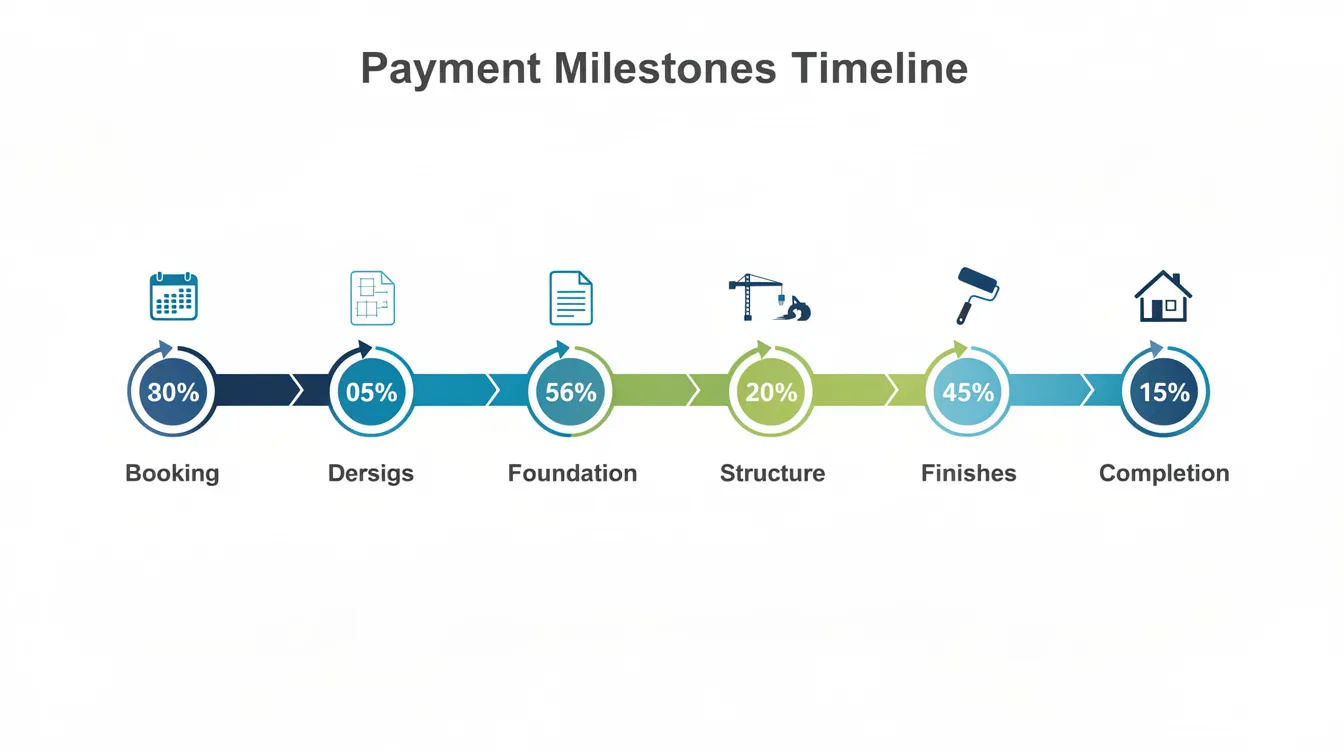
Progressive payments allow construction costs to be paid in staggered installments linked to milestones. The standard PPS schedule for private condos follows this general pattern:
|
Milestone |
% of Purchase Price |
Typical Timing |
Funding Source |
|---|---|---|---|
|
Booking fee (OTP) |
5% |
Day 0 |
Cash only |
|
SPA signing |
15% (cumulative 20%) |
~8 weeks |
Cash + CPF OA |
|
Foundation complete |
10% (cumulative 30%) |
~6–12 months |
Bank loan drawdown |
|
Reinforced concrete framework |
10% (cumulative 40%) |
~12–20 months |
Bank loan |
|
Partition walls |
5% (cumulative 45%) |
~17–26 months |
Bank loan |
|
Roofing / ceiling |
5% (cumulative 50%) |
Mid-to-late build |
Bank loan |
|
Doors, windows, wiring, plumbing |
5% (cumulative 55%) |
Subsequent months |
Bank loan |
|
External works (car parks, drains) |
5% (cumulative 60%) |
Approaching completion |
Bank loan |
|
Temporary Occupation Permit (TOP) |
25% (cumulative 85%) |
TOP issuance |
Bank loan |
|
Certificate of Statutory Completion (CSC) |
15% (cumulative 100%) |
Post-TOP |
Final payment drawdown |
Milestone verification is crucial as it ensures payments reflect actual work completed. Each payment is triggered when the project’s certifying architect issues a certificate, and buyers typically have 14 days to make payment after the developer serves notice. One important caution: several smaller 5% milestones can come in quick succession if actual progress on the construction schedule moves faster than expected, compressing payment cycles and potentially squeezing cash availability.
Understanding these milestones sets up the numerical case study that follows – because Daniel and Mei mapped every single percentage to a dollar amount, a funding source, and a month on the calendar.
Why Progressive Payments Can Support Positive Construction Cash Flow
The fundamental cash flow advantage is straightforward: monthly outgoings start small and rise over 18–24 months instead of spiking immediately. Progressive payments help align financial obligations with expected income growth over the construction period, and milestone-based billing can also limit project delays caused by mismatched funding by keeping construction activities moving in a timely manner. For a couple still servicing an existing HDB mortgage, this matters enormously.
Compare this to buying a completed unit. If Daniel and Mei had purchased a resale condo at the same price, their full mortgage instalment of approximately SGD 2,900 would have started from month one – while they were still paying SGD 1,050 on their HDB. That would have meant combined monthly property outflows of nearly SGD 4,000 before any rental income could begin, creating immediate financial strain.
Instead, progressive payments allowed them to rent out their old flat and gradually redirect that rental income to the growing mortgage on the new home. The steady flow of rent arrived precisely as construction cash flow demands increased. This synchronization – cash inflows rising in rough parallel with outflows – is what kept the couple’s project cash flow positive throughout the project lifecycle.
With these mechanics established, let’s examine Daniel and Mei’s actual financial profile and objectives.
Case Study: The Couple’s Profile and Objectives
Daniel works as a project manager at an engineering consultancy; Mei runs the operations side of a small logistics firm near Punggol’s industrial cluster. They purchased their 4-room HDB flat five years ago at SGD 420,000 and had been watching the new launch market for an upgrade that would bring Mei closer to her workplace while providing Daniel with a home office suitable for his project management work.
They approached their financial planning with a clear-eyed view: they could afford to upgrade, but only if the payment timing was right. Their primary concern was not total project cost – they had done those calculations – but rather whether they could hold their HDB for rental income throughout the project delivery period without experiencing cash flow shortages in any single month.

Financial Snapshot Before Construction Began (Q1 2024)
Before committing to the new purchase, Daniel and Mei documented their complete financial data:
-
Combined gross monthly income: SGD 16,000 (13th month excluded for conservative planning)
-
CPF Ordinary Account balances: SGD 150,000 combined (as of March 2024)
-
Outstanding HDB mortgage: SGD 220,000, monthly instalment SGD 1,050 (serviced partly from CPF)
-
Cash savings: SGD 120,000 total, of which SGD 50,000 was ring-fenced as an untouchable emergency fund (approximately 6 months of essential living expenses)
-
Monthly fixed expenses (non-property): SGD 6,000 including transport, food, insurance, and personal commitments
-
No car loan or other significant debt
Their risk constraints were explicit: remain cash-flow positive every month from purchase to TOP, avoid selling the HDB until the new home was completed, and keep at least three months of cash reserves untouched at all times. This payment structure offers advantages for young couples balancing early-career financial constraints – but only if the discipline around buffers is maintained.
Property They Decided to Build and Total Budget
Daniel and Mei selected a 3-bedroom + study unit in a new launch condo within an integrated development near an industrial cluster, purchased off-plan in May 2024.
-
Purchase price: SGD 1,350,000
-
Estimated renovation: SGD 120,000 (to be spent near TOP)
-
Legal fees and Buyer’s Stamp Duty: approximately SGD 45,000
-
Loan structure: 75% LTV bank loan = SGD 1,012,500, over 25 years at approximately 4.2%
-
Equity required (25%): SGD 337,500, funded via CPF OA + cash
-
Expected construction timeline: 24 months (May 2024 to approximately April 2026)
Their investment logic was dual-purpose: keep the old HDB as an income-generating asset rented to young professionals working in the nearby industrial estate, providing additional revenue to offset mortgage costs, while shifting their own residence to the new condo upon TOP. This approach treated the construction period not as dead time but as an opportunity to build equity in two properties simultaneously.
Objectives for Cash Flow and Investment Outcome
Daniel and Mei set four explicit targets:
-
Stay monthly cash-flow positive from May 2024 through TOP (April 2026) – every single month
-
Avoid personal loans or bridging loans unless a genuine emergency arose
-
Maintain minimum CPF OA balance of SGD 30,000 combined at all times, to improve liquidity in case of retrenchment
-
Target net surplus of at least SGD 500–800 per month on average after all property-related cash flows
A comprehensive payment schedule aids in the financial management of construction projects – and Daniel and Mei were about to build one in meticulous detail, with payment timing predictable enough to support not only their own planning but also the interests of the parties involved throughout the build.
Mapping the Progressive Payment Schedule to Real Cash Flows
The developer’s progressive payment table was the skeleton; Daniel and Mei added flesh by mapping each milestone to a specific month, a dollar amount, a funding source, and an expected instalment figure. They built a 24-month cash flow forecast that combined bank disbursement timings, CPF withdrawals, HDB rental income, and personal expenses into a single spreadsheet, a level of tracking that mirrors construction management practice, where accurate billing and cash visibility reduce downstream risk. This developed model became their primary project management tool for the entire construction period.
The following subsections walk through three phases: the cash-heavy initial outlay, the construction milestone disbursements, and the rental income timing that offset rising instalments.
The Initial Outlay: Option Fee, Booking, and Stamp Duties (May–August 2024)
The first three months were the most cash-intensive relative to income, because progress payments had not yet started and the bank loan had not been activated. Here’s how the money moved:
|
Date |
Payment |
Amount (SGD) |
Source |
Cash Reserve After |
|---|---|---|---|---|
|
May 2024 |
Booking fee (5%) |
67,500 |
Cash |
52,500 |
|
June 2024 |
SPA signing – remaining 15% |
202,500 |
CPF OA: 162,000 + Cash: 40,500 |
12,000 |
|
July 2024 |
Buyer’s Stamp Duty |
~36,600 |
CPF OA: 0 (depleted for now) + Cash: partially via earlier BSD provision set aside |
~8,000 net available |
|
August 2024 |
Legal fees |
~8,000 |
Cash |
Stabilising as salary inflows continue |
Several critical decisions shaped this phase:
-
Booking fee: The SGD 67,500 booking fee was non-negotiable cash – no CPF or bank loan could fund it. Daniel and Mei had specifically preserved this amount outside their emergency fund.
-
CPF-heavy SPA payment: Of the SGD 202,500 due at SPA, they channelled SGD 162,000 from their combined CPF OA, leaving approximately SGD 40,500 to come from cash. This was deliberate: CPF funds are “locked in” for housing anyway, so using them early preserved liquid cash for later stages.
-
ABSD planning: As they already owned an HDB flat, Additional Buyer’s Stamp Duty applied. They structured the purchase under specific timing conditions to qualify for ABSD remission by planning to sell or dispose of the HDB within the permitted timeframe after TOP.
-
Emergency fund intact: Despite these large upfront costs, their SGD 50,000 emergency ring-fence was never touched. Cash reserves dipped to uncomfortable levels in July–August but were replenished within two months by salary inflows.
The lower initial cash outflow inherent in progressive payment schemes – compared to buying a completed resale unit requiring immediate full financing – was what made this feasible. Had they needed to fund 100% of the purchase price at once, their cash position would have been untenable.
Construction Milestones and Bank Loan Disbursements (Late 2024–2026)
Once the 20% equity was paid, the bank loan took over. Each construction milestone triggered a disbursement, and Daniel and Mei’s monthly instalment stepped up accordingly. Aligning cash flow with construction progress reduced their financial risk because they never owed more than what had actually been built.
|
Month |
Milestone |
Cumulative Loan Disbursed (SGD) |
Monthly Instalment (SGD) |
|---|---|---|---|
|
Nov 2024 |
Foundation complete (10%) |
135,000 |
~350 (interest only) |
|
Mar 2025 |
RC framework (10%) |
270,000 |
~720 (interest only) |
|
Jul 2025 |
Partition walls (5%) |
337,500 |
~950 |
|
Oct 2025 |
Roofing (5%) |
405,000 |
~1,150 |
|
Dec 2025 |
Doors/windows/M&E (5%) |
472,500 |
~1,400 |
|
Jan 2026 |
External works (5%) |
540,000 |
~1,650 |
|
Mar 2026 |
TOP (25%) |
877,500 |
~2,800 (principal + interest begins fully) |
|
May 2026 |
CSC / Final payment (15%) |
1,012,500 |
~2,900 (full servicing) |
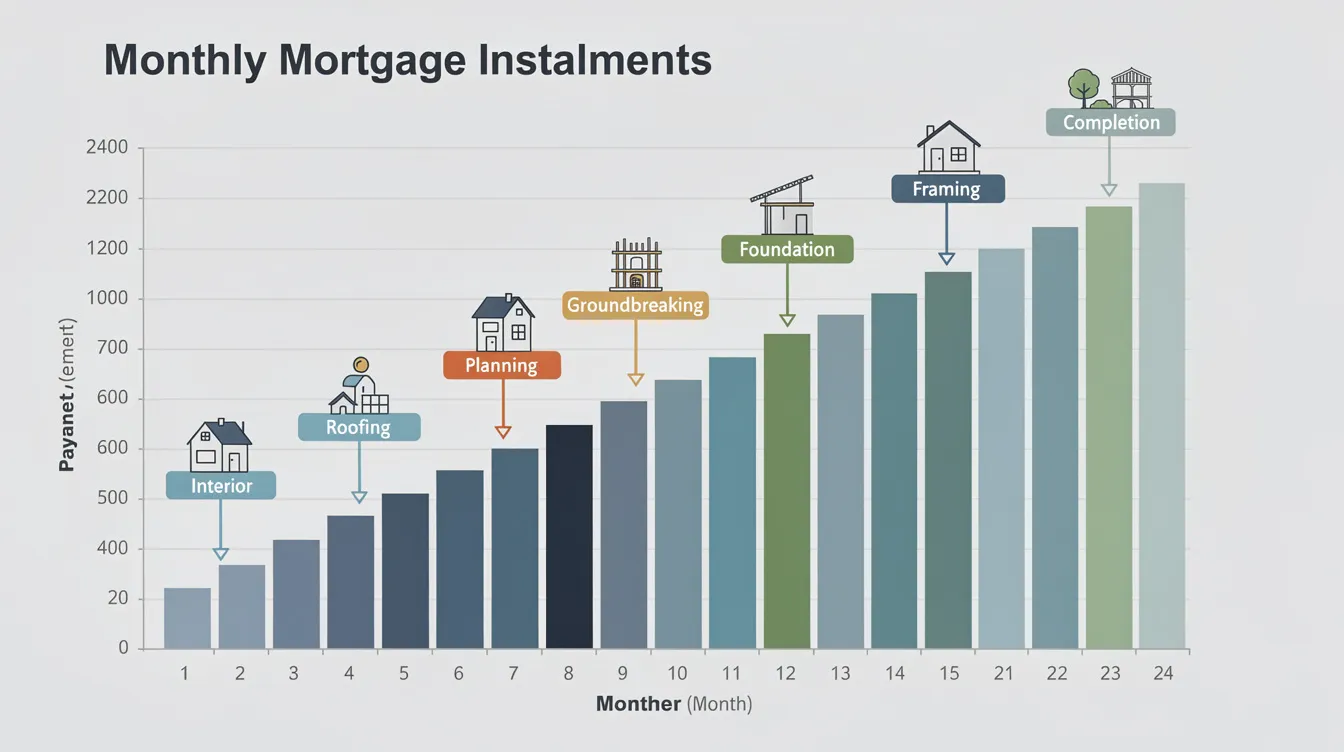
Interest is only paid on the amounts disbursed, reducing the overall cost during construction. In the first 12 months, with only 20–30% of the loan drawn down, Daniel and Mei’s condo-related payments were modest – between SGD 350 and SGD 950. This is precisely the period when their rental income was just beginning, making the timing alignment critical.
The largest single payment came at TOP: 25% of the purchase price (SGD 337,500) disbursed in one tranche, pushing their monthly instalment from approximately SGD 1,650 to SGD 2,800. This was the most financially demanding moment throughout the project – but by then, they had 16 months of rental income behind them and a rebuilt cash buffer.
Note: several smaller 5% milestones arrived in relatively quick succession between July and January (four milestones in roughly six months). Buyers who don’t anticipate this compression of payment cycles can face unexpected financial strain. Daniel and Mei’s cash flow modeling accounted for this by assuming worst-case milestone bunching.
Timing Rental of the Old HDB Flat to Match Rising Instalments
The rental strategy was the linchpin. late payments from tenants or owners are a common trigger for construction cash flow problems and can ripple into broader construction delays when buffers are thin. Misalignment between rental start date and loan disbursements is one of the most common causes of construction cash flow problems – and Daniel and Mei planned specifically to avoid it.
Timeline of rental activation:
-
September–October 2024: Moved temporarily to Mei’s parents’ flat; commissioned minor touch-up works on HDB (repainting, minor repairs: SGD 3,500)
-
November 2024: Listed HDB on rental market
-
December 2024: Tenant moved in; monthly rental achieved: SGD 3,200 (consistent with HDB rental statistics for Punggol 4-room flats in Q4 2024, showing median rents around SGD 3,200)
Here’s how rental income compared to combined property outgoings at key points:
|
Period |
HDB Mortgage (SGD) |
Condo Instalment (SGD) |
Total Outflow (SGD) |
Rental Income (SGD) |
Net Property Cash Flow (SGD) |
|---|---|---|---|---|---|
|
Dec 2024 |
1,050 |
350 |
1,400 |
3,200 |
+1,800 |
|
Mar 2025 |
1,050 |
720 |
1,770 |
3,200 |
+1,430 |
|
Jul 2025 |
1,050 |
950 |
2,000 |
3,200 |
+1,200 |
|
Oct 2025 |
1,050 |
1,150 |
2,200 |
3,200 |
+1,000 |
|
Jan 2026 |
1,050 |
1,650 |
2,700 |
3,200 |
+500 |
|
Mar 2026 (TOP) |
1,050 |
2,800 |
3,850 |
3,200 |
–650 |
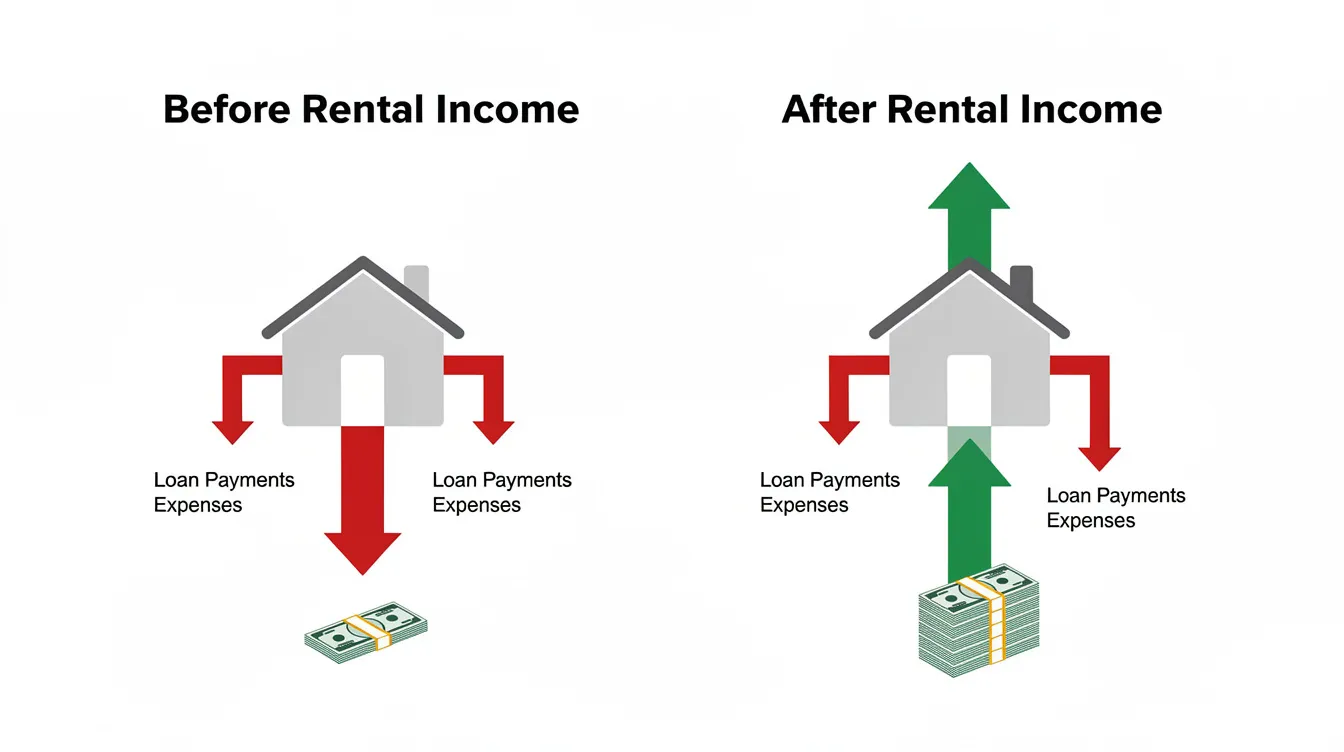
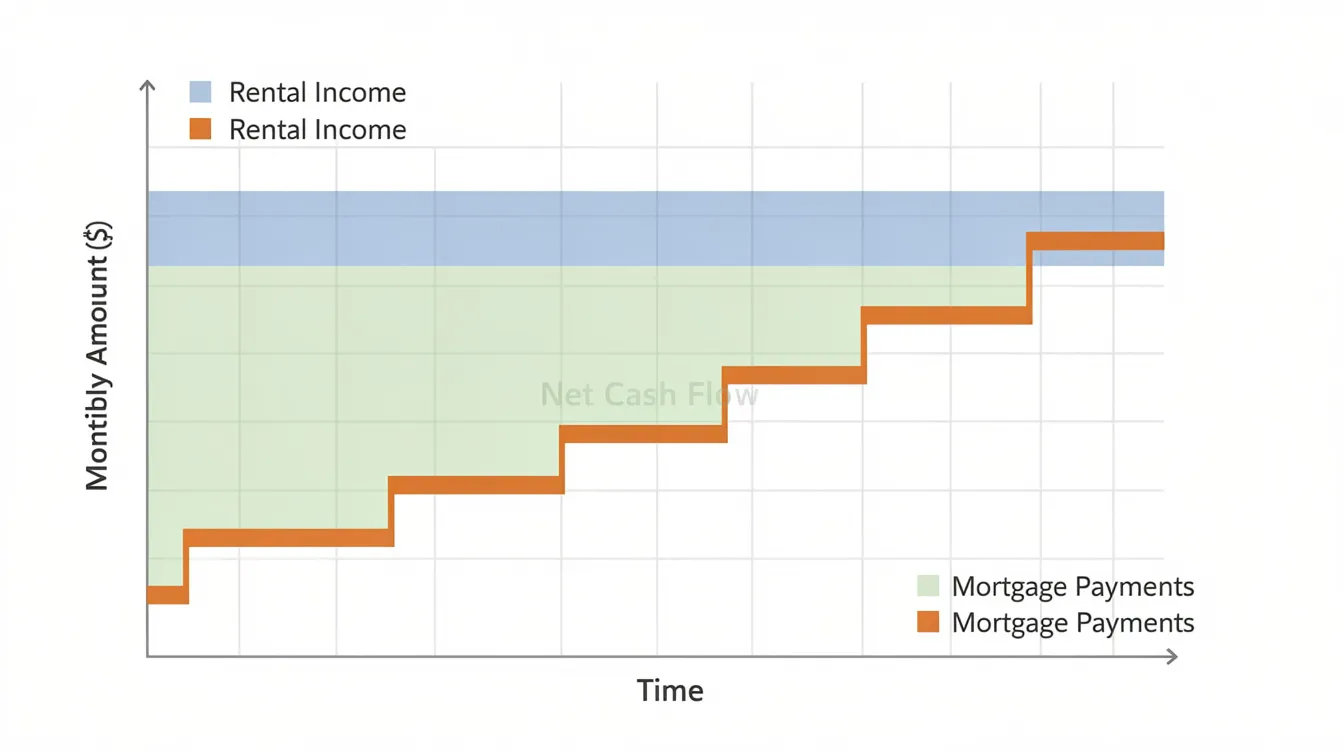
The steady cash flow from rental kept them positive for 15 consecutive months. Only at TOP – when the 25% disbursement triggered a sharp instalment increase – did the net property cash flow briefly turn negative. But by that point, they had accumulated over SGD 18,000 in surplus from the preceding months, which more than covered the two-month deficit before they moved out of the parents’ flat, ended the HDB tenancy, and prepared to sell the HDB. The steady income from rent was the counterweight to every step-up in mortgage servicing.
Sequencing CPF, Cash, and Rental: The Month-by-Month Strategy
This is the heart of the case study. The sequencing – not the total amounts – is what kept Daniel and Mei cash-flow positive. Every dollar had a designated role and a designated month. All figures below are simplified but realistic for Singapore conditions in 2024–2026. Readers should adapt these with their own financial advisers.
CPF First, Cash Later: Prioritising “Locked-In” Funds
Daniel and Mei’s guiding principle was to use CPF OA balances as aggressively as regulations allowed for the downpayment and stamp duty, while preserving cash savings for three specific purposes: the emergency buffer, renovation costs near TOP, and any gap months where rental income fell short.
CPF withdrawal timeline:
-
May–August 2024: SGD 162,000 from combined CPF OA used for the 15% SPA payment and partial BSD – the bulk of their CPF deployment
-
September 2024 onward: Minimal CPF withdrawals; monthly employer + employee CPF contributions (approximately SGD 3,700/month combined at their income level) began rebuilding OA balances
-
By March 2026 (TOP): CPF OA had rebuilt to approximately SGD 95,000 – well above their SGD 30,000 minimum target
This CPF-first approach had a specific rationale: CPF funds earn only 2.5% in OA. Using them early for housing – where the progressive payment structure meant they displaced higher-cost bank borrowing – was financially efficient. But they were careful not to drain OA completely, because CPF usage limits tied to property valuation, remaining lease, and age meant over-withdrawing could create complications. A cash reserve is essential to handle unexpected construction costs despite using progressive payments, and CPF served a similar buffer role.
Aligning Rental Inflows with Step-Up in Mortgage Outflows
The simplified monthly cash flow summary across the 24-month period:
|
Phase |
Months |
Avg HDB Mortgage (SGD) |
Avg Condo Instalment (SGD) |
Avg Rental Income (SGD) |
Avg Net Property Flow (SGD) |
|---|---|---|---|---|---|
|
Pre-rental |
May–Nov 2024 |
1,050 |
0–350 |
0 |
–1,050 to –1,400 |
|
Early rental |
Dec 2024–Jun 2025 |
1,050 |
350–950 |
3,200 |
+1,200 to +1,800 |
|
Mid-construction |
Jul–Dec 2025 |
1,050 |
950–1,650 |
3,200 |
+500 to +1,200 |
|
Near TOP |
Jan–Apr 2026 |
1,050 |
1,650–2,800 |
3,200 |
–650 to +500 |
Key inflection points:
-
Month 8 (December 2024): Rental income begins. Net property cash flow flips from negative to strongly positive. This was the single most important event in the entire cash flow forecast.
-
Month 19 (January 2026): Condo instalment crosses SGD 1,650 and the surplus narrows to approximately SGD 500. Still positive, but tight.
-
Month 23 (March 2026): TOP triggers the 25% disbursement. Monthly instalment jumps to SGD 2,800. Net property cash flow turns briefly negative – but salary income and accumulated surplus cover the gap.
Daniel and Mei kept their lifestyle expenses stable throughout the project by avoiding large new liabilities. No car purchase, no major travel, no additional investments. They ring-fenced part of the rental income in a separate savings account designated exclusively for property expenses – a simple but effective form of cash flow modeling that gave them real time visibility into their property-specific financial position. Clear internal payment policies also helped them decide when rental surplus could be spent, reserved, or redirected.
Renovation, Furnishing, and TOP: Managing the Final Cash Spike
The final payment at TOP and the subsequent renovation represented the biggest concentration of non-loan-eligible expenses:
-
Renovation budget: SGD 120,000, accumulated gradually between mid-2024 and early 2026. Sources: monthly savings of approximately SGD 2,000 from salary surplus + approximately SGD 1,500/month from rental surplus set aside = approximately SGD 84,000 over 24 months, topped up with remaining cash reserves
-
Furnishing: SGD 25,000, sourced from cash
-
Final legal fees and miscellaneous: approximately SGD 8,000
Cost overruns can occur; thus Daniel and Mei modeled expected expenses accurately during planning, adding a 15% contingency to their renovation budget. At this stage, poor planning often creates the biggest cash squeeze because final costs tend to cluster near handover. They ultimately spent SGD 112,000 on renovation – under budget, which added to their final cash buffer.
On CPF timing at TOP: they chose not to make a lump-sum CPF payment toward reducing the outstanding principal. Instead, they preserved the rebuilt CPF OA balance (SGD 95,000) as a safety net against retrenchment risk, allowing regular monthly CPF contributions to continue servicing the mortgage post-TOP. This was a conservative choice – paying down principal would have reduced monthly instalments – but it prioritised cash availability and financial stability over short-term savings.
For vacancy risk, they timed the HDB tenant’s lease expiry to coincide with their move-in date at the new condo (April 2026), minimising any rent-free gap. The tenant was given three months’ notice, and the HDB was listed for sale immediately after vacation.
Analysing Outcomes: Did the Plan Truly Stay Cash-Flow Positive?
Daniel and Mei’s original objective was unambiguous: remain cash-flow positive every month for 24 months. Did they achieve it? Nearly – with a planned, buffered exception.
Base-Case Cash Flow Results Over the Construction Period
Across the full 24-month period:
-
Average net property cash flow: +SGD 650/month (across all months, including the negative TOP months)
-
Peak monthly surplus: +SGD 1,800 (December 2024, when rental began and condo instalment was minimal)
-
Minimum monthly surplus: –SGD 650 (March 2026, TOP month – covered by accumulated surplus, not new borrowing)
-
Number of negative months: 2 (March and April 2026 only)
-
Months requiring emergency fund access: 0
|
Metric |
Amount (SGD) |
|---|---|
|
Total HDB rental collected (16 months) |
51,200 |
|
Total HDB mortgage paid (24 months) |
25,200 |
|
Total condo instalments paid (24 months) |
28,400 |
|
Net property cash surplus at handover |
~15,600 |
|
CPF OA balance at TOP |
~95,000 |
|
Cash reserves at TOP (excl. renovation) |
~38,000 |
One unplanned cost arose: a minor HDB plumbing repair in August 2025 (SGD 1,200) which was covered from the property sinking fund without touching emergency reserves. No bridging loans, no personal loans, no external financing was required at any point. The timely payments to the developer were never at risk.
Investment Perspective: Yield, Equity Build-Up, and Risk
From a pure investment standpoint, the numbers told a compelling story:
-
HDB gross rental yield during the 16-month rental period: approximately 9.1% annualised (SGD 3,200 × 12 / SGD 420,000 original purchase price)
-
Equity accumulated in new condo: approximately SGD 337,500 in direct equity (25% downpayment) plus roughly SGD 12,000 in principal repaid during construction, plus modest market appreciation (estimated 3–5% over 24 months based on construction sector trends)
-
Effective cost of capital during construction: lower than full-term borrowing because interest was only charged on disbursed amounts
Trade-offs were real. The opportunity cost of deploying SGD 162,000 of CPF into housing – rather than leaving it to compound at 2.5% – was approximately SGD 8,100 over two years. Against rental income of SGD 51,200, this was a clear net positive, but couples with lower rental potential should weigh this more carefully.
The floating-rate mortgage exposed them to interest rate risk throughout the project. Had rates risen significantly, their contractor’s cash flow equivalent – the monthly instalment – would have increased unpredictably. Daniel and Mei mitigated this by choosing a loan package with a two-year fixed-rate component, locking in 4.2% through the construction period before reverting to SORA + margin, much like project managers on larger builds track available funds against schedule-sensitive commitments.
Stress-Testing: What If Interest Rates or Rents Moved Sharply?
To validate their plan’s resilience, Daniel and Mei ran three stress scenarios:
Scenario 1: Interest rates rise 1 percentage point in mid-2025 (to 5.2%)
-
Impact: Monthly instalment at TOP increases from SGD 2,800 to approximately SGD 3,200
-
Net effect: Two additional negative months (January–February 2026), total deficit approximately SGD 2,400
-
Outcome: Still manageable from accumulated surplus; healthy cash flow maintained overall
Scenario 2: HDB rental drops 15% to SGD 2,720/month
-
Impact: Monthly property surplus reduced by approximately SGD 480 across 16 rental months
-
Net effect: Total surplus over project reduced from ~SGD 15,600 to ~SGD 7,900
-
Outcome: Tight but positive; no months requiring emergency fund
Scenario 3: Two-month vacancy between tenants (February–March 2025)
-
Impact: Lost rental income of SGD 6,400
-
Net effect: Two months of negative property cash flow during vacancy (approximately –SGD 1,770 each)
-
Outcome: Covered by surplus from December 2024 and January 2025; cash reserves dipped but recovered
Even combining Scenarios 1 and 2 – rates up and rent down simultaneously – the couple would have experienced four negative months but ended the period with a small net positive. Only the extreme combination of all three scenarios would have required touching the emergency fund, and even then only briefly. Synchronized cash flow with construction progress improves financial resilience – this stress test proved it, with practical implications for buyers to negotiate clear payment terms, maintain contingency funds, and avoid counterparties with a pattern of delayed payment behavior.
Common Challenges Couples Face When Using Progressive Payments
Not every couple will navigate progressive payments as smoothly. Based on common patterns in the construction industry and residential property advisory work, several pitfalls repeatedly surface. Each challenge below is paired with concrete, actionable solutions.
Underestimating Non-Construction Costs (Fees, ABSD, Renovation)
Buyers frequently focus on the headline purchase price and milestone percentages while overlooking material costs that fall outside the progressive payment framework: BSD (3% on the first SGD 180,000, escalating), ABSD (currently 20% for second property unless remission applies), legal fees, property tax, insurance, and renovation/furnishing at TOP. These non-loan-eligible expenses can easily total SGD 150,000–250,000 for a SGD 1.35M property.
Guidance:
-
Prepare a consolidated cost worksheet at the outset, including all documentation requirements, stamp duties, and projected renovation costs
-
Verify whether ABSD remission applies – couples upgrading from HDB to private residential may qualify if the HDB is sold within the stipulated timeframe
-
Budget renovation at 8–12% of purchase price as a realistic baseline, then add 15% contingency
Misalignment Between Rental Start Date and Loan Disbursements
If loan disbursements step up several months before rental income begins, the gap creates temporary negative cash flow that can cascade into financial strain. This is especially dangerous when multiple projects or obligations compete for the same working capital. Delayed payments from tenants – or delays in finding a tenant at all – compound the problem, much like the cash squeeze faced by general contractors when owner receipts come in late and pressure builds across payment cycles.
Solutions:
-
Coordinate HDB minor works, listing, and tenant handover so that tenancy commences before the first major construction milestone (typically foundation, 6–12 months after booking)
-
Negotiate with tenants for minimal rent-free periods – one to two weeks is standard; more than a month erodes your buffer
-
If timing is tight, consider listing the flat for rent even before vacating, with a future move-in date
Over-Reliance on CPF Leading to Liquidity or Retirement Gaps
Draining CPF OA fully can compromise both immediate resilience and long-term retirement planning, and preserving liquidity also reduces the need for capital support from external sources if cash flow tightens unexpectedly. Some couples, eager to minimise cash outlay, deplete their OA to near-zero – then face a liquidity crunch when unexpected expenses arise or when they eventually sell the property and must make CPF refunds with accrued interest.
Actionable steps:
-
Set a minimum CPF OA balance target (Daniel and Mei used SGD 30,000) that must not be touched under any circumstances
-
Use progressive payments as a way to pace CPF withdrawals rather than exhausting them upfront – the staggered nature of milestone billing means you can choose which stages to fund from CPF versus cash
-
Review CPF projections annually to ensure retirement adequacy is not being sacrificed for housing convenience
Interest Rate and Policy Changes During Construction
A 24–30 month construction period exposes buyers to changing macro conditions, and shifting conditions can disrupt construction projects more broadly when payment cycles tighten and delivery assumptions change. Interest rates may rise, pushing the floating-rate mortgage instalment higher than projected. Policy changes – adjustments to ABSD rates, LTV limits, TDSR/MSR ceilings, or CPF usage rules – could reduce the ability to fund the purchase as planned. As of 8 May 2026, for example, Executive Condominiums from GLS sites no longer offer a Deferred Payment Scheme, which affects comparability for some buyers.
Mitigation:
-
Consider partial fixed-rate packages or rate caps during the construction period – even a two-year fixed rate eliminates uncertainty for the most critical phase
-
Review cash flow projections at least annually, adjusting savings or rental strategy if conditions shift
-
Maintain awareness of policy announcements from MAS and HDB; shortened billing cycles can improve cash flow by 10 to 15 days, but policy tightening can erase that benefit
-
Build financial risk scenarios into your initial plan, not as an afterthought but as part of the project execution framework
Conclusion and Next Steps
Daniel and Mei’s experience demonstrates a clear principle: progressive payments, when paired with disciplined CPF usage and well-timed rental of an existing flat, can keep a young couple cash-flow positive through construction – but the strategy depends entirely on sequencing and buffers, not just total cost. Their average monthly surplus of SGD 650 wasn’t achieved by earning more or spending less. It was achieved by ensuring that every inflow and outflow arrived in the right month, matched against verified construction milestones.
The core lesson from this case study applies broadly across the construction sector and residential investment space: payment structures should align with actual project progress for better liquidity. A front-loaded cash flow schedule would have created unnecessary financial risk. A poorly timed rental start would have opened a cash flow gap. And draining CPF without a rebuilding plan would have left them exposed. Milestone-based invoicing improves payment predictability and cash management – whether you’re a homeowner navigating a single purchase or a general contractor managing multiple projects.
Next steps for readers considering a similar approach:
-
Map out your own 24–36 month timeline of construction milestones and expected payments, translating each percentage into a dollar amount and funding source
-
Estimate realistic rental income for any property you plan to lease out, using conservative vacancy assumptions (at least one month per year) and current HDB or URA rental statistics
-
Build a CPF and cash usage plan ensuring at least 3–6 months’ expenses in untouched reserves, with a minimum CPF OA balance that preserves retirement adequacy
-
Speak with a mortgage adviser or banker to confirm loan structures, progressive payment terms, and interest rate options – fixed versus floating – for the construction period
-
Engage a qualified property and design advisory firm for a customised cash-flow projection, particularly if your portfolio includes business, industrial, or commercial assets alongside residential holdings
Related topics worth exploring:
-
Using industrial or commercial units as income streams while upgrading residential properties – timely project completion on one asset can fund the next
-
Balancing personal housing upgrades with SME operational property needs, where schedule optimization across multiple projects reduces aggregate financial risk
Additional Resources
-
Progressive payment cash flow spreadsheet: A simple downloadable template for plotting milestone payments alongside rental income, CPF withdrawals, and monthly cash reserves – essential for any couple planning building projects with staggered disbursements
-
MAS and CPF Board housing loan resources: CPF housing usage rules for understanding OA withdrawal limits, and MAS guidelines on LTV, TDSR, and MSR applicable to private residential purchases under progressive payment schemes
-
PropertyGuru’s condo payment schedule guide: A detailed reference covering standard PPS milestones, funding source options at each stage, and recent policy changes including the removal of Deferred Payment Scheme for Executive Condominiums from GLS sites; for broader construction-sector comparison, some railway projects discussed in civil engineering research use advance payments of up to 40%, showing how payment structures can affect cash flow very differently from residential PPS

