

Introduction
Tengah Garden Residences sold 853 of its 863 units over a single booking weekend on 25–26 April 2026, a take-up rate of 99%. The average selling price of units was S$2,120 per square foot at launch. This makes it the first private condo in Tengah town to near-complete sell-out, and it reset pricing expectations for outside central locations across Singapore’s western corridor.
This article examines why this launch performed the way it did, how the upcoming Hong Kah MRT station on the Jurong Region Line and the broader Tengah masterplan supported that demand, and what lessons buyers and investors can extract for upcoming OCR new launches through 2027. The analysis is structured as a new launch review, not a sales pitch. It is aimed at HDB upgraders weighing their next move, investors seeking OCR exposure, and industry readers tracking launch market dynamics.
The project achieved a 99% sales rate during its opening weekend because of converging forces: pent-up upgrader demand from surrounding West-side HDB estates, limited supply of private condo stock within Tengah, competitive pricing relative to other 2026 OCR launches, and strong buyer confidence in Tengah as a sustainable town with direct MRT connectivity. A combination of attractive pricing and local buyer demand drove sales success, even against a backdrop of cautious macroeconomic sentiments in the market.
Here is what you will take away from this piece:
-
Concrete sales numbers, buyer profile breakdowns, and price bands for Tengah Garden Residences across all unit types.
-
How the Jurong Region Line (especially Hong Kah station) and Tengah’s “Forest Town” concept created early-mover demand.
-
Investment implications for OCR prices, HDB upgrader behaviour, and future Tengah projects.
-
Signals this launch sends for upcoming GLS sites and new launches in the wider West region.
-
A framework for evaluating whether to buy into new-town launches or wait for maturity.
Understanding Tengah Garden Residences As A Landmark Launch
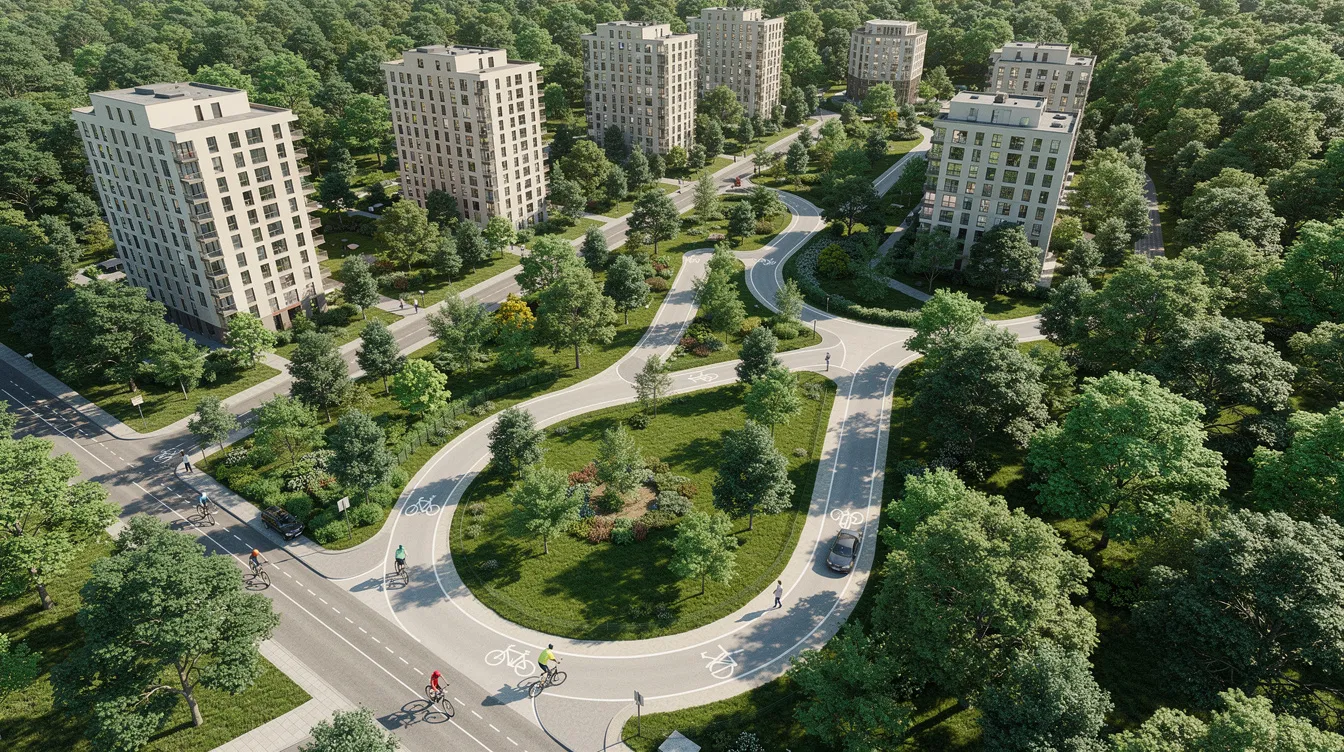
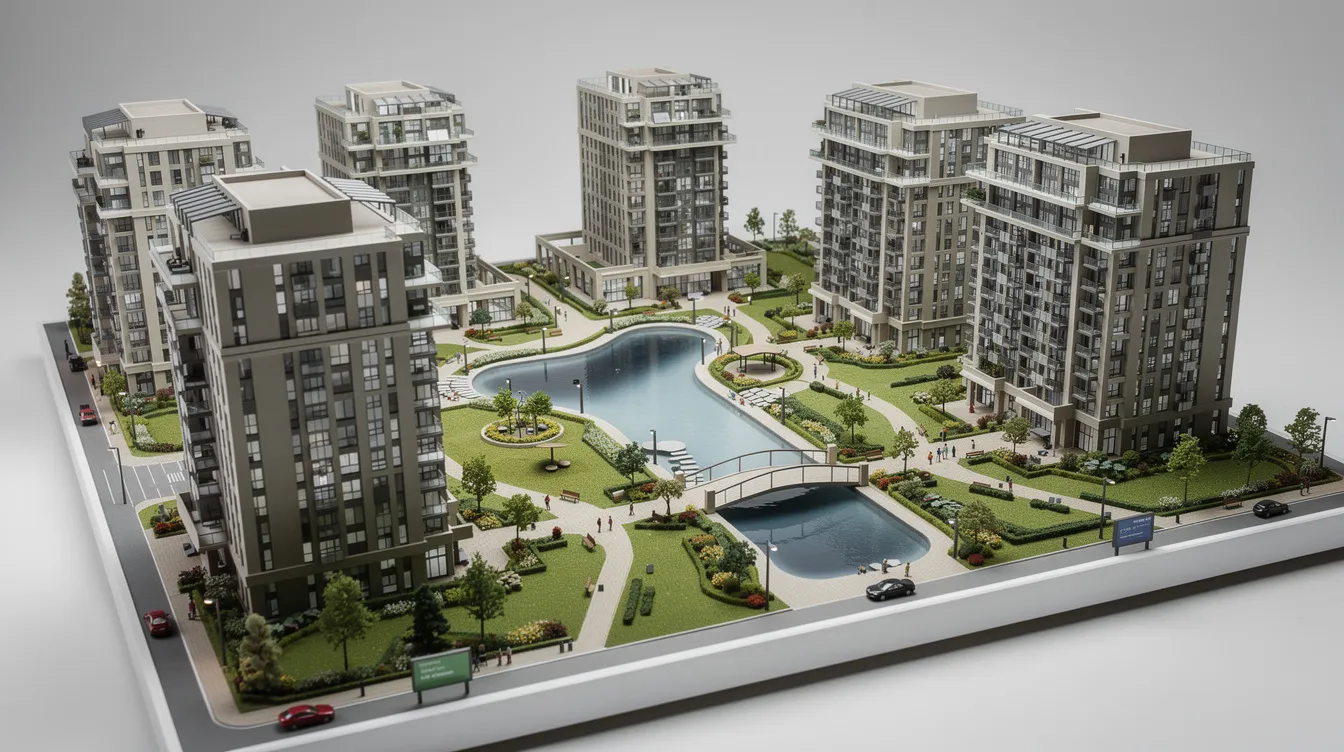
Tengah Garden Residences is a 99-year leasehold private condo within HDB Tengah town’s Garden District. Developed jointly by Hong Leong Holdings, GuocoLand, and Mitsui Fudosan, the project launched in April 2026 as the town’s first non-EC private development. The development will offer around 860 residential units, with configurations ranging from 2 to 5 bedrooms, including penthouses. Tengah Garden Residences spans approximately 25,458 m² with a plot ratio of roughly 2.8.
This launch is foundational for understanding where property prices are heading in the “New West.” Because no private condo had previously been built inside Tengah, every future Tengah private project and every GLS bid in the area will reference this transaction data. The project set a high benchmark for private housing demand in a new township.
Key Facts About The Project
|
Detail |
Data |
|---|---|
|
Tenure |
99-year leasehold (lease commencement ~2025) |
|
Total units |
863 across 9 blocks |
|
Developer |
Hong Leong Holdings, GuocoLand, Mitsui Fudosan |
|
Site area |
~25,458–27,274 sqm |
|
Plot ratio |
~2.8 |
|
Expected TOP |
2029–2031 |
|
Launch weekend |
25–26 April 2026 |
|
Average launch PSF |
S$2,120 per square foot |
Being the first private condo embedded inside a new HDB eco-town separates Tengah Garden Residences from earlier launches in nearby Bukit Batok or Jurong East. Those projects sit in mature estates with existing retail, schools, and transport. Tengah Garden Residences, by contrast, is part of a planned new town still under active construction. Buyers were purchasing into a future, not an existing neighbourhood. The development includes integrated commercial spaces to serve residents’ needs, with commercial space on level 1, which partially addresses the amenity gap during the town’s early years.
Tengah Town And The Garden District Context
Tengah is positioned as Singapore’s first “Forest Town,” planned across five districts: Plantation, Park, Garden, Forest Hill, and Brickland. The total build-out targets approximately 42,000 homes, of which over 70% (around 30,000) will be HDB flats. As of December 2025, more than 14,000 HDB flats across 14 projects had been completed, and over 12,000 households had collected keys.
The Garden District sits along Tengah’s more established central spine, with proximity to the future town centre, neighbourhood hubs, and green corridors. Residents will benefit from a 5 km forest-fringe track connecting residential zones to parks and community spaces. The car-lite planning concept removes surface-level car parks in favour of underground automated systems, and centralised cooling infrastructure replaces individual air-conditioning condensers on building facades.
Tengah Garden’s appeal is bolstered by its planned development as a smart and sustainable town. These features do more than add lifestyle value; they reduce long-term maintenance costs and position the estate favourably against older OCR developments that lack such planning.
How Tengah Garden Residences Fits Into OCR Market Dynamics
Tengah sits in District 24, classified as Outside Central Region. Its strategic position matters: it sits between Jurong Lake District (designated as Singapore’s second CBD) and the existing Bukit Batok and Bukit Panjang heartlands. OCR prices increased by 137.55% since 2007, outpacing both the core central region (CCR prices rose by 17.27% since 2007) and RCR properties (RCR prices grew by 85.29% since 2007).
Many OCR new launches in 2025–2026 had already breached S$2,000 per square foot, but few offered direct adjacency to a new MRT line combined with a new town centre. The CCR-OCR price gap narrowed to 16.3% in Q1 2025, which means OCR remains a sweet spot where buyers get price growth potential without CCR market entry costs. OCR shows the fastest price growth at 2.8–3% in 2026, compared to RCR prices forecast to grow by 2.2–2.5%.
If buyers accept $2,120 psf in a still-developing town, it re-prices expectations for the entire Western OCR. That is precisely what happened.
Launch Performance: 99% Sold At Around $2,120 PSF
The numbers from the booking weekend tell a clear story. The success of the launch was against a backdrop of cautious macroeconomic sentiments in the market, with global trade tensions and interest rate uncertainty weighing on buyer psychology. Despite that, nearly 2,000 expressions of interest came in before launch day, signalling builder confidence and sustained suburban demand well before the first unit was balloted.
Sales Numbers And Unit Mix Breakdown
853 out of 863 units sold over the launch weekend, a 99% take-up rate. Only about 10 units remained, primarily from the largest 4-Bedroom Premium stacks where total quantum exceeded S$2.7 million. Singaporean buyers comprised 90% of the purchasers at Tengah Garden Residences, with PRs and foreign demand forming a small minority.
Demand skewed toward the middle of the unit types. Two-bedroom and three-bedroom configurations moved fastest, driven by HDB upgraders who needed family-sized layouts. One-bedroom and 1+Study units attracted investors and young couples entering the private market for the first time. Four-bedroom premium units, while priced at a lower per-square-foot figure, had total quantum that pushed past S$2.5 million, slowing their absorption.
|
Unit Type |
Approx. Starting Quantum |
PSF Range |
Demand Level |
|---|---|---|---|
|
1-Bedroom |
~S$980,000 |
S$2,050–$2,340 |
Strong (investors, couples) |
|
2-Bedroom |
~S$1,110,000 |
S$1,996–$2,143 |
Very strong (upgraders) |
|
3-Bedroom |
~S$1,588,000 |
S$1,900–$2,200 |
Very strong (families) |
|
4-Bedroom |
~S$2,288,000 |
S$1,779–$2,273 |
Moderate (higher quantum) |
Pricing: From $1,779 To $2,340 PSF, Averaging $2,120 PSF
The launch price range ran from S$1,779 psf for selected larger or lower-floor units up to S$2,340 psf for premium stacks on higher floors. The overall average transacted around S$2,120 psf across the 853 units sold. Developers achieved a competitive pricing strategy by acquiring land at a low cost, which allowed them to position quantum at levels palatable to upgraders despite psf crossing S$2,000.
The quantum story matters more than the psf story for most buyers. A two-bedroom at Tengah Garden Residences started at roughly S$1.11 million. Compare that with CCR properties where a similar-sized unit easily exceeds S$2 million. The price gap between OCR and CCR has significantly narrowed in percentage terms (16.3% as of Q1 2025), but the absolute dollar difference still gives OCR buyers substantially more space per dollar spent.
|
Metric |
Tengah Garden Residences |
Nearby ECs (Otto Place) |
District 24 Median |
|---|---|---|---|
|
Average PSF |
~S$2,120 |
~S$1,700 |
~S$2,015 |
|
3-Bed Quantum |
S$1.5–2.3m |
Lower |
Varies |
|
MRT Proximity |
Hong Kah JRL (doorstep) |
Less direct |
Varies |
|
Take-up at Launch |
99% |
Lower |
N/A |
Selling nearly 99% of units within a single weekend confirmed that buyers are willing to pay S$2,000+ psf in OCR when transport connectivity, town planning, and quantum remain within reach.
Who Bought: HDB Upgraders, Families And Long-Term Investors
The high demand was largely from local HDB upgraders transitioning to private housing. Matched buyer address data shows roughly 34.9% of purchasers had a prior HDB address, and many came from Jurong, Bukit Batok, Choa Chu Kang, and surrounding West-side estates. With approximately 14,383 four-room-or-larger HDB flats in Tengah alone, the upgrader pipeline is deep. There are roughly seven upgrader-sized public flats for every private home in the Plantation subzone where Tengah Garden Residences sits.
Young families gravitated toward three-bedroom layouts, attracted by future schools, parks, and car-lite living. Long-term investors bet on Jurong Lake District spillover demand and the Western growth corridor. Accessibility and attractive entry prices contributed to the strong sales performance.
Buyer concerns were documented in market commentary: noise from Tengah Airbase, crowding at Jurong East interchange, and the reality of living in a town still under construction. None of these deterred enough buyers to slow the launch. The weight of limited supply, progressive payment schemes, and expectations of capital appreciation by TOP overcame those reservations.
Hong Kah JRL Station, Jurong Corridor And Demand Drivers
Buyers at Tengah Garden Residences were purchasing future connectivity as much as current square footage. The near-sellout reflects confidence that infrastructure will arrive on schedule and that employment access along the Jurong corridor will strengthen over the next five to ten years.
Future Hong Kah JRL Station: Why It Matters
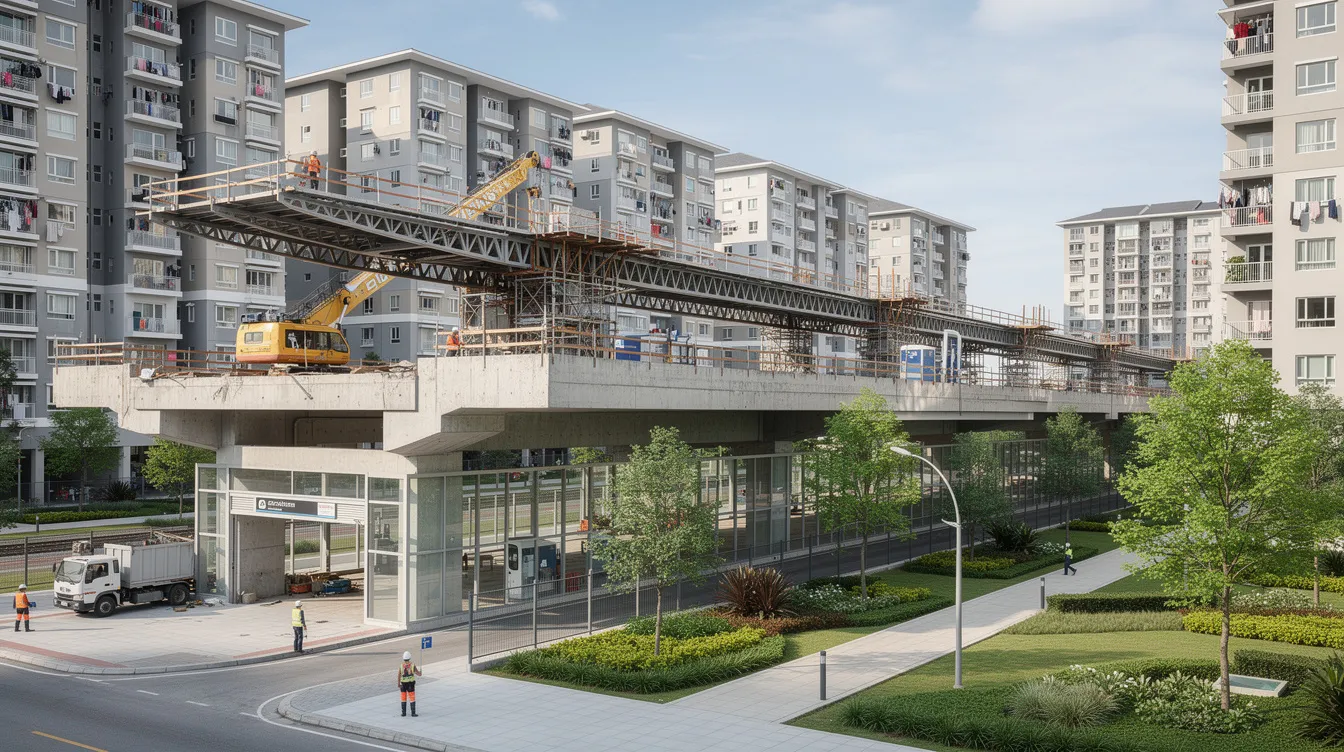
Tengah is adjacent to the upcoming Hong Kah MRT Station on the Jurong Region Line. Hong Kah is an elevated station being built under Contract J103, with an expected opening by mid-2028, delayed from an earlier target of end-2027. The Jurong Region Line will open progressively from 2028, delivered in phases through 2029.
From Hong Kah, residents get a direct link to Jurong East transport hub (an integrated transport hub connecting to the North-South and East-West MRT lines) in a few stops. That connection opens travel to the city centre, Marina Bay, and the downtown core without requiring a bus transfer. Historically, OCR projects within walking distance of upcoming MRT stations have commanded premiums of 10–20% over comparable units further from stations, and they show resilience in both resale and rental markets.
The Jurong Region Line will enhance connectivity in Tengah, linking it not just to Jurong East but also to Choa Chu Kang and the wider Western employment belt. Major expressways like PIE and KJE are also easily accessible from Tengah, giving car-owning residents alternative commute routes.
Jurong Lake District, Tengah And The Western Growth Story
URA’s plan positions Jurong Lake District as Singapore’s second CBD, a mixed-use development zone with commercial, retail, and leisure clusters. That designation spills demand into adjacent residential areas. Tengah provides residential support for future job nodes in Jurong, Tuas Mega Port, and the wider Western manufacturing and logistics belt.
The synergy is concrete: residents at Tengah Garden Residences live within a green, residential environment while being a short MRT ride from commercial and industrial employment. For investors seeking portfolio balance, owning residential assets near industrial and commercial nodes offers exposure to both rental yields and capital appreciation over the medium term.
The Circle Line Stage 6 opens in mid-2026, and the Thomson-East Coast Line Stage 5 opens in late 2026. These expansions across other MRT lines add network effects that benefit Western residents indirectly through improved interchange options.
Green, Smart And Car-Lite Planning As Lifestyle Catalysts
Tengah’s car-lite design places roads and car parks underground, freeing surface-level space for pedestrian paths, cycling routes, and green corridors. The 5 km forest-fringe trail connects residential clusters to parks and community facilities. District cooling replaces individual building-level systems, reducing energy use per household.
These are not abstract planning concepts. They translate into measurable daily benefits: shorter walking distances to amenities, lower utility bills from centralised cooling, and access to recreation without driving. Younger buyers and families increasingly weight these features when comparing new launches. For long-term value, such planning reduces the obsolescence risk that affects some older OCR estates built without these considerations.
Key demand drivers, combined:
-
Transport: Hong Kah MRT station (mid-2028), JRL network connecting to Jurong East and beyond, PIE/KJE access.
-
Employment proximity: Jurong Lake District (second CBD), Tuas Mega Port, Western industrial corridor.
-
Town planning: Car-lite precinct, forest corridors, centralised cooling, smart estate management.
-
Supply scarcity: First private condo in a town with 42,000 planned homes and very few private-title options.
Investment Analysis: What 99% Sold At ~$2,120 PSF Signals
What does the Tengah Garden Residences outcome tell us about OCR price resilience and strategy for upcoming launches? This section places the data into a comparative framework.
Comparing Tengah Garden Residences With Vela Bay And Other 2026 Launches
Two major launches happened in the same period. Their contrasting results are instructive.
|
Metric |
Tengah Garden Residences |
Vela Bay |
Typical 2025–2026 OCR Project |
|---|---|---|---|
|
Location |
OCR, Tengah new town |
Coastal, premium OCR |
Various OCR |
|
Average PSF |
~S$2,120 |
~S$2,886 |
S$2,100–$2,550 |
|
Take-up at Launch |
99% |
~72% |
50–80% |
|
MRT Proximity |
Hong Kah JRL (doorstep) |
Varies |
Varies |
|
Primary Buyer Profile |
Local HDB upgraders (90% Singaporean) |
Mixed, higher foreign demand component |
Mixed |
Tengah Garden Residences’ 99% take-up at a lower psf versus Vela Bay’s 72% at a higher psf shows clear buyer psychology at work: strong demand exists for well-positioned OCR projects when quantum remains accessible. The price gap between the two projects (S$766 psf) reflects the difference between a suburban upgrader market and a premium coastal positioning.
OCR prices at S$2,100–$2,120 psf sit near the lower bound for “strong OCR launches” in 2026. That pricing, combined with 99% take-up, suggests developers who keep quantum within upgrader budgets while delivering MRT adjacency will continue to find robust absorption rates.
Pricing Power Of MRT-Linked OCR Projects After 2026
Tengah Garden Residences reinforces a pattern visible across Singapore’s postal districts: OCR projects within a short walk of upcoming MRT stations sustain S$2,000+ per square foot even before the surrounding town matures. CCR prices grew by 27% from Q3 2020 to Q3 2025; OCR prices grew faster in percentage terms. OCR prices increased by 137.55% since 2007, making OCR remains the segment with the strongest long-run price growth.
For developers bidding on GLS parcels along JRL and Cross Island Line corridors, TGR’s outcome means land bids will factor in S$2,100+ psf as baseline achievable pricing. For investors, buying at launch rather than waiting for sub-sale or resale locks in lower entry points but carries construction costs and timeline risk. For HDB upgraders, the data shows that waiting can mean paying more: Copen Grand launched at S$1,300 psf in 2022, Novo Place at S$1,654 psf in 2024, Otto Place at S$1,700 psf in 2025. TGR at S$2,120 psf in 2026 shows clear upward trajectory.
This launch re-anchors expectations for upcoming Tengah private plots and for new EC sites nearby. Developers of projects along the supply pipeline in the West can expect buyers to compare against TGR’s psf and quantum.
Rental, Exit And Risk Considerations
OCR properties have rental yields of 3.5% to 4% on average. Some OCR properties yield 4% to 6% rental returns depending on unit size and location. CCR rental yields range from 2.5% to 3.5%. This makes OCR highly attractive for investors seeking balanced returns between rental income and capital preservation.
The target tenant pool after TOP (expected 2029–2031) includes professionals working in Jurong Lake District, the Nanyang Technological University area, Tuas industrial zone, and healthcare or education clusters nearby. Tengah’s proximity to these employment nodes should support rental demand once the town matures.
Exit strategy depends on subsequent waves of HDB upgraders. Tengah alone will have 15,476 flats reaching MOP (Minimum Occupation Period) between 2028 and 2031; roughly 3,435 flats reach MOP in 2028 and 6,968 in 2029. Each MOP wave creates a new cohort of potential private condo buyers. Limited private condo stock within Tengah itself provides price support.
Key risks to balance against these upsides:
-
JRL timeline execution: Hong Kah station has already been delayed from end-2027 to mid-2028. Further delays would affect liveability timelines and buyer sentiment.
-
Tengah Airbase noise: Mitigation measures exist, but aircraft operations remain a factor for some stacks and orientations.
-
Cooling measures: If transaction volumes and condo prices spike further, additional government cooling measures could temper capital appreciation.
-
No resale history: Until HDB flats in Tengah pass their 5-year MOP (starting 2028), there are no local resale comparables. Pricing relies on benchmarks from other OCR launches and ECs, which may not perfectly reflect Tengah’s dynamics.
The risk-reward balance still favoured action for 853 out of 863 buyers. The combination of limited supply, MRT adjacency, and accessible quantum overwhelmed the uncertainties.
Common Buyer Challenges And How To Navigate Future Tengah Launches
These three challenges surfaced repeatedly in commentary around the TGR launch. Each applies equally to upcoming projects in Tengah and similar MRT-linked new towns.
Judging Value When OCR Prices Cross $2,000 PSF
Buyers accustomed to OCR as the “affordable” segment struggle when psf approaches figures historically associated with the central region. The median price gap between CCR and RCR is 14.9%, and the CCR OCR gap has significantly narrowed. At S$2,120 psf, TGR sits closer to RCR pricing than to what many associate with suburban condos.
The fix is to evaluate quantum rather than psf in isolation. A two-bedroom at TGR starts at S$1.11 million. The same layout in a central location or CCR properties commands S$1.8–2.5 million. Run the numbers through current TDSR calculations to determine actual monthly commitments. Compare against nearby resale options and ECs (Otto Place at ~S$1,700 psf, Copen Grand at ~S$1,300 psf) to understand the price premium you are paying for private title, no income cap, and no MOP restriction.
Balancing Early-Mover Advantage Against Township Uncertainties
Buying in an unbuilt town raises legitimate concerns: noise from construction, absent retail, and limited school options in the first years. Tengah Garden Residences buyers accepted these trade-offs because the URA Master Plan and JRL phasing timelines provided a concrete schedule for amenity delivery.
Before committing to any new-town launch, check: how many primary schools exist within 1–2 km at expected TOP, when the neighbourhood centre opens, and what retail is planned for the ground-floor commercial space. For Tengah, the project includes commercial space on level 1, and HDB neighbourhood amenities are rolling out as the 14,000+ completed flats bring residents in. Expect the first 3–5 years after TOP to feel like a maturing suburb, not a fully formed estate.
Choosing Between Tengah And Other West-Side Options
Upgraders in the West face a decision matrix: Tengah vs. Jurong vs. Bukit Batok vs. Choa Chu Kang, or even locations further east along the North-South Corridor.
A simple framework: if immediate amenities and an established neighbourhood matter most, consider mature estates with slightly older projects at comparable or lower psf. If long-term value and early-mover gains matter more, Tengah-type launches offer a growth runway that mature estates cannot match. Weigh commute patterns using future MRT maps (not just current routes), children’s schooling proximity, and family support networks.
TGR’s 99% take-up confirms that a large buyer cohort has already voted with their wallets for the growth-runway option. Whether that choice delivers the best value over a 10-year horizon depends on JRL delivery, Jurong Lake District build-out, and the pace at which Tengah’s amenities reach critical mass.
Conclusion And Next Steps
Tengah Garden Residences sold 99% of its 863 units at about S$2,120 per square foot. Singaporean buyers comprised 90% of purchasers, and HDB upgraders formed the largest identifiable segment. The upcoming Hong Kah JRL station and Jurong Lake District growth story were central to buyer confidence. For investors and upgraders, this launch sets pricing and demand benchmarks for the next wave of Tengah and Western region projects.
What to do next:
-
Audit affordability and risk tolerance. Run your finances through current TDSR and ABSD rules before pursuing the next launch. Entry quantum matters more than psf when your budget is fixed.
-
Shortlist future Tengah and JRL-adjacent launches. Track GLS land bids in the West and expected launch psf. Developers will reference TGR’s S$2,120 psf as a floor.
-
Compare residential and commercial assets. Investors with exposure to industrial and commercial properties in Jurong may find that adding a residential position in Tengah creates portfolio diversification across the same growth corridor.
Related topics to explore:
-
OCR vs RCR investment comparisons for 2026–2030, given the narrowing price gap.
-
How the Jurong Region Line and Cross Island Line will redistribute residential demand across Singapore’s western and northern corridors.
-
The role of industrial and business hubs in shaping residential rental yields in the West.
Additional Resources
-
URA Master Plan maps for Tengah and Jurong Lake District: Available on URA’s website, with zoning detail on upcoming facilities, green corridors, and commercial nodes.
-
LTA Jurong Region Line project page: Official station list, phased opening timelines, and construction progress updates for all three JRL stages.
-
HDB MOP supply tracker: Pricevero’s MOP supply guide tracks when Tengah flats reach resale eligibility, useful for timing upgrade decisions.
-
Checklist: 10 Questions To Ask Before Buying In A New Town Like Tengah. Covers transport timelines, school proximity, amenity phasing, noise assessments, and TDSR stress tests.

