

Introduction
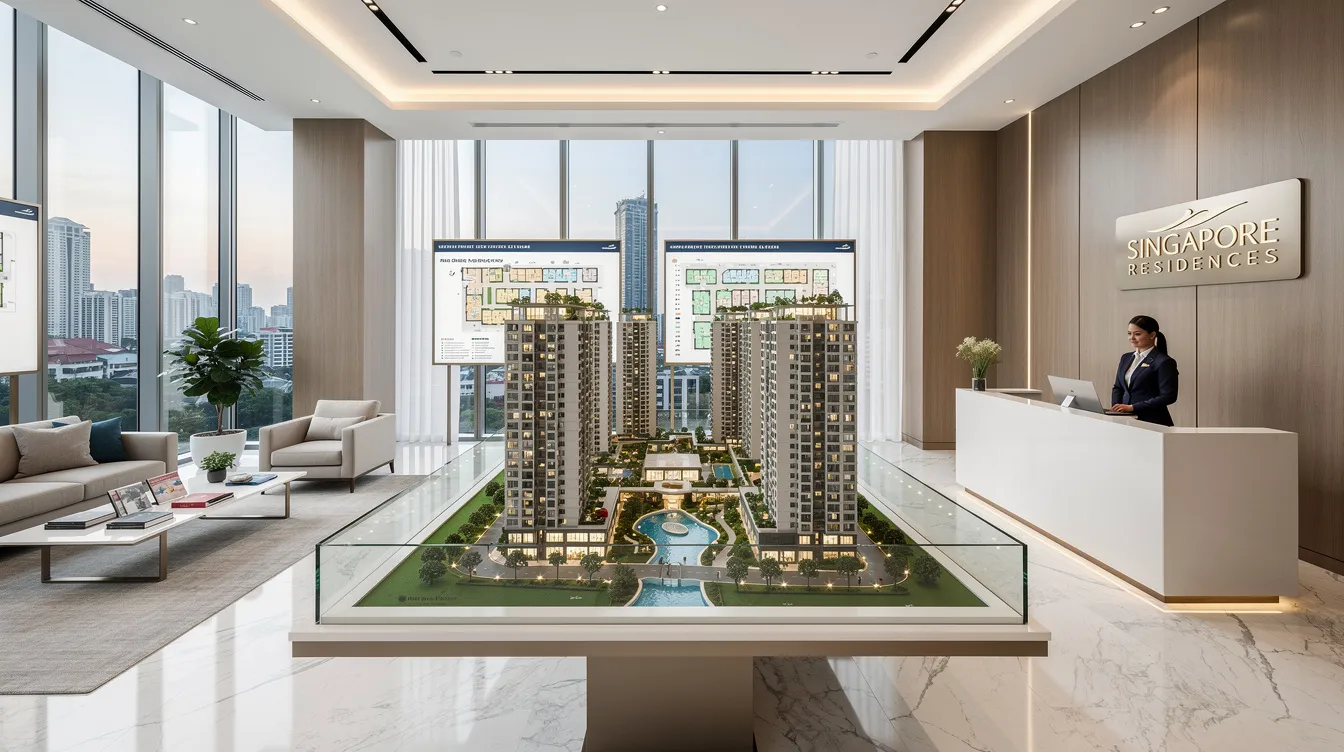
A new launch preview is the window-typically one to three weeks before a project’s official public launch-when developers open showflats as the builder behind the project, release initial price lists, and collect expressions of interest from interested buyers. In Singapore’s real estate market, this preview phase offers three concrete levers that can speed up your asset progression from HDB to condo to landed property: a lower entry price per square foot locked in before public mark-ups, first access to the best unit stacks and facings, and a progressive payment scheme that lets you build equity while preserving cash flow.
Why does entering at preview pricing matter for asset progression? Because every dollar saved on entry quantum is money kept in hand and a dollar of equity you do not need to create through market appreciation. Combined with staged construction payments that keep monthly outlay manageable, preview buyers can control a rising asset at today’s price while still living in and benefiting from their current HDB-compressing the years between each rung on the property ladder.
This article focuses on Singapore private residential property, especially mass-market (OCR) and city-fringe (RCR) condos, and the common upgrade paths from HDB to condo to landed. AESTHETIC HAVENS specialises in evidence-led advisory for investors and business owners navigating these transitions-not short-term flipping tips. If you are a first-time upgrader, a young professional planning your first condo purchase, someone planning a home upgrade, or a buyer assessing a new home for personal use with progression in mind, this guide is written for you.
Here is what you will take away:
-
How preview pricing and early-bird stacks directly impact your capital gains potential.
-
How progressive payment and construction timelines affect cash flow and loan planning.
-
How to align a new launch purchase with your HDB MOP date and eventual exit to landed.
-
A practical framework for comparing preview entry against resale condos and completed units.
-
Common pitfalls when chasing “early” pricing without a clear progression plan.
Understanding Property Investment and Asset Progression in Singapore
Asset progression in Singapore residential property refers to the deliberate, staged movement from subsidised public housing (HDB) into private condominiums, and from there into landed homes or a portfolio of multiple private units. It is not simply about buying bigger properties. The speed at which you move between these stages depends on three variables more than anything else: timing your entry and exit, using leverage efficiently, and securing the lowest defensible entry price at each step.
From HDB to Condo: The First Inflection Point
The typical first upgrade begins when an HDB owner-usually holding a 4-room or 5-room flat-reaches the five-year Minimum Occupancy Period (MOP) and sells, recycling proceeds and CPF savings into a private condo. This is the single most consequential step in any progression plan because the constraints are real: Loan-to-Value ceilings cap borrowing at 75 per cent for buyers with no outstanding housing loan, Total Debt Servicing Ratio (TDSR) limits monthly repayments to 55 per cent of gross income, and Additional Buyer’s Stamp Duty (ABSD) applies if you hold more than one residential property during the transition.
Entering a well-priced new launch condo at preview can allow a buyer to lock in a private property one to two years before MOP with minimal initial cash outlay-just the 5 per cent booking fee, followed by 15 per cent upon exercising the Option to Purchase. This means latent HDB equity, which only becomes liquid after the flat is sold post-MOP, can be timed against the new launch construction period. The overlap shortens your wait to private ownership by years rather than months.
From Condo to Landed or Multiple Private Properties
The second progression step-upgrading from a first private condo to a larger condo, a landed home, or retaining the existing unit as a rental investment while buying another-depends almost entirely on how much equity you built in your first condo and how quickly you built it. Early entry and appreciation during construction create what property planners call “equity velocity”: the rate at which usable equity is created and recycled into the next asset. Investors can benefit from future resale price increases when equity velocity is high, because there is more capital available to fund down payments and reduce loan quantum on the next purchase. To accelerate this progression, the initial condo entry point-and specifically the new launch preview mechanics-become the most important levers you can pull.
How New Launch Previews Work in Singapore
With the logic of asset progression established, the next question is practical: what exactly happens during a new launch preview, and why is this short window strategically valuable for buyers planning long-term progression?
What Happens During a New Launch Preview
During a preview, developers open their showflat, begin collecting expressions of interest, and release an initial price list-often covering selected stacks and floors with the most competitive pricing. A balloting system may determine booking order. For a typical OCR project with 800 units, the preview might run for two weeks before the official launch weekend, during which the developer gauges demand and calibrates subsequent pricing tiers.
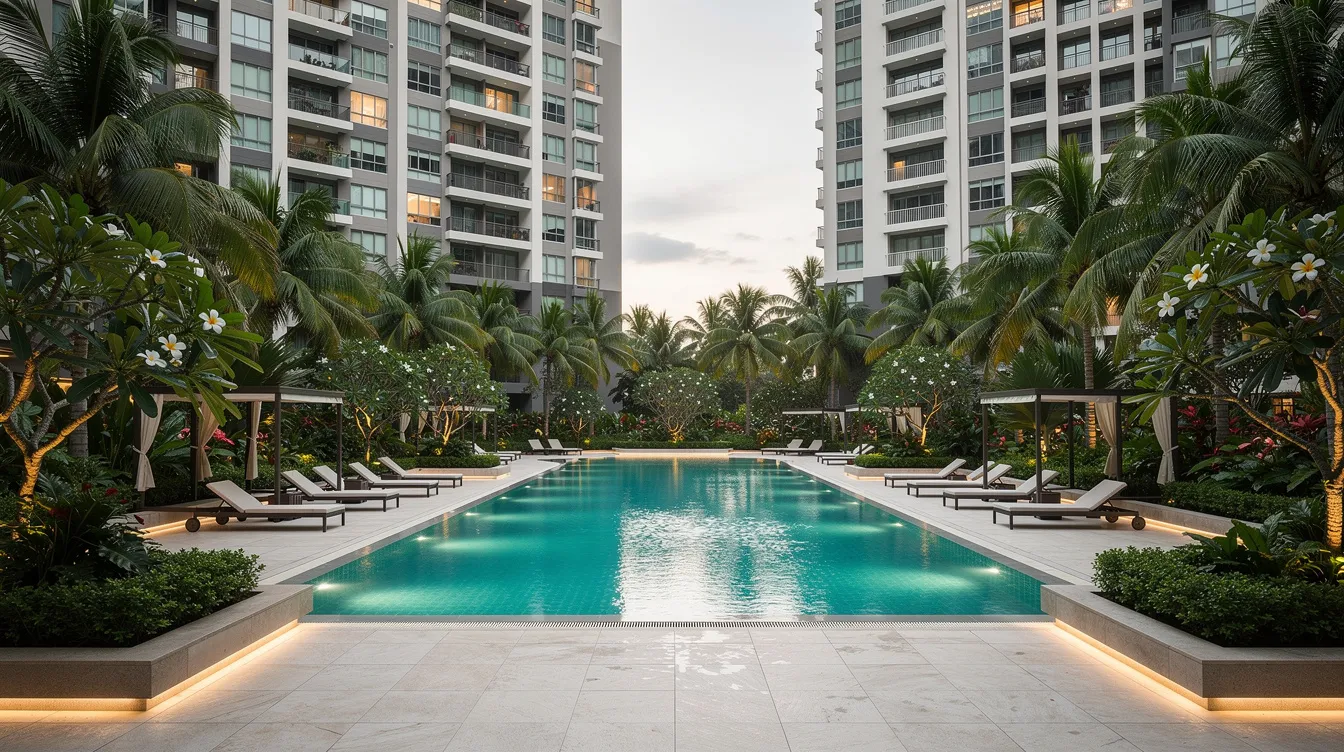
First access to unit selection during previews grants buyers the best choices for resale value. New launches allow buyers to choose preferred units early-prime floor levels, pool-facing stacks set back from road noise, and efficient layouts near side gates to transport links or MRT access. These are the attributes that attract buyers and tenants at exit. Developers typically offer lower prices during the preview phase to generate sales momentum, and more or less aggressive pricing depends on land cost, competitive supply, and prevailing market conditions.
Early-Bird Pricing and Staggered Increments
New launches typically attract early bird discounts-a lower price per square foot for the first batches of units released, with developers raising prices as take-up crosses certain thresholds (commonly 30–50 per cent of total units). Early-bird pricing allows buyers to lock in a lower price per square foot compared to later phases.
To illustrate: if early units in an OCR new launch condo are released at $1,950 per square foot and later batches move to $2,050–$2,100 psf, the $100–$150 psf difference on a 700-square-foot two-bedder translates into $70,000–$105,000 in savings. Price hikes for new launches are common after initial sales. Early buyers can secure properties before price hikes occur, and this lower entry quantum directly increases potential capital gains when the project approaches Temporary Occupation Permit (TOP) or after the Seller’s Stamp Duty (SSD) holding period.
Progressive Payment During Construction
The progressive payment scheme is standard for Singapore new launches and is enshrined in the Housing Developers Rules. Its structure ties payments to construction milestones:
-
5% booking fee upon Option to Purchase (OTP)
-
15% upon signing the Sale & Purchase Agreement (cumulative 20%)
-
~40% spread across six construction milestones-foundation, reinforced concrete framework, brick walls, roofing, internal works, and car park/roads/drains (cumulative ~60%)
-
25% at Temporary Occupation Permit (cumulative ~85%)
-
15% at Certificate of Statutory Completion (100%)
Progressive payment schemes allow buyers to pay in stages tied to construction milestones. For the buyer, this means the bank loan is drawn only on the certified amount at each stage, and interest is charged only on the drawn portion. In the early stages of construction, monthly servicing is significantly lighter than a resale purchase where the full mortgage is drawn immediately. New launches generally do not incur maintenance fees or property taxes during construction, reducing other costs further.
These three mechanics-preview timing, early pricing, and progressive payments-are the levers that can accelerate equity growth versus buying completed units. The next section examines exactly how.
Why Buying at Preview Can Accelerate Equity Growth
The mechanics above are not abstract advantages. When applied to a real Singapore upgrading path, they compound into faster, more capital-efficient asset progression.
Locking In a Lower Entry Price Before Public Mark-Ups
Developers typically benchmark new launch pricing against nearby resale PSF and future competing land bids. At preview, pricing is designed to create momentum-meaning it often undercuts the expected completed value. Purchasing during a new launch preview can accelerate property investment growth because the entry price you lock in remains fixed while the developer raises prices for later batches and the broader real estate sector appreciates around you.
Consider a two-bedder booked at preview for $1.30 million. If the same unit type in a later batch sells for $1.38 million twelve months on, the $80,000 difference is effectively instant paper equity-created not by market movement but by early action. Comparative analysis of entry prices against nearby properties and other relevant alternatives is crucial before buying, because not all launches appreciate and buyers should not rely only on the launch’s own pricing narrative. New launches can underperform compared to nearby resale options if the location lacks future growth catalysts or if future supply in the district is heavy. But when pricing, location, and supply conditions all support the project, preview entry can be a perfect choice because it provides a larger buffer and higher return on initial cash outlay.
Maximising Unit Choice for Future Resale Demand
At preview, buyers usually have first pick of stacks, facings, and floor levels. This matters for asset progression because the unit you choose determines how easily and profitably you can sell it years later. Attributes that consistently support exit value include:
-
Pool-facing orientation set back from external noise sources
-
Efficient dumbbell or split layouts that maximise usable space per square foot
-
Proximity to a side gate with direct MRT access
-
Distance from bin centres, substations, and loading bays
-
Higher floor level with unblocked views-what many future buyers consider the best view stack
Units with stronger demand from future buyers and tenants command higher resale prices and faster take-up, which directly accelerates your progression to the next property. New properties often appeal to tenants desiring modern facilities and fresh appliances, supporting rental yield in the interim if you choose to hold. Investment suitability differs from personal-home suitability-so when selecting units, prioritise what the market will want at exit, not only what suits your personal taste today.
Using Progressive Payment to Build Equity While Preserving Cash Flow
Walk through a practical scenario. An HDB owner books a new launch condo at preview roughly 12–18 months before MOP. At booking, only the 5 per cent booking fee is payable-on a $1.5 million unit, that is $75,000. The next 15 per cent ($225,000) is due upon signing the Sale & Purchase Agreement, typically within eight weeks. After that, progressive payment milestones spread the remaining payments across three to four years of construction.
During this period, the buyer continues living in and paying for the HDB, while the new launch condo’s market value may rise with construction progress and surrounding infrastructure improvements. Monthly cash outlay on the condo remains manageable because the bank draws down the loan only on the certified portion. This structure allows the buyer to accumulate more savings for renovation or loan prepayment, and to exit the HDB after MOP at a favourable price, then fully transition into the condo with a healthier balance sheet. Lower maintenance costs during construction further preserve liquidity.
Compounding Effect on the Asset Progression Ladder
Each well-timed new launch purchase-bought early and exited after significant equity build-up-shortens the gap between rungs on the property ladder. Consider two buyers with similar starting positions:
Buyer A enters a resale condo at prevailing market PSF with the full mortgage drawn from day one. Every dollar of the loan immediately accrues interest. There is no construction-period appreciation buffer, and the unit’s age means the remaining lease is already shorter.
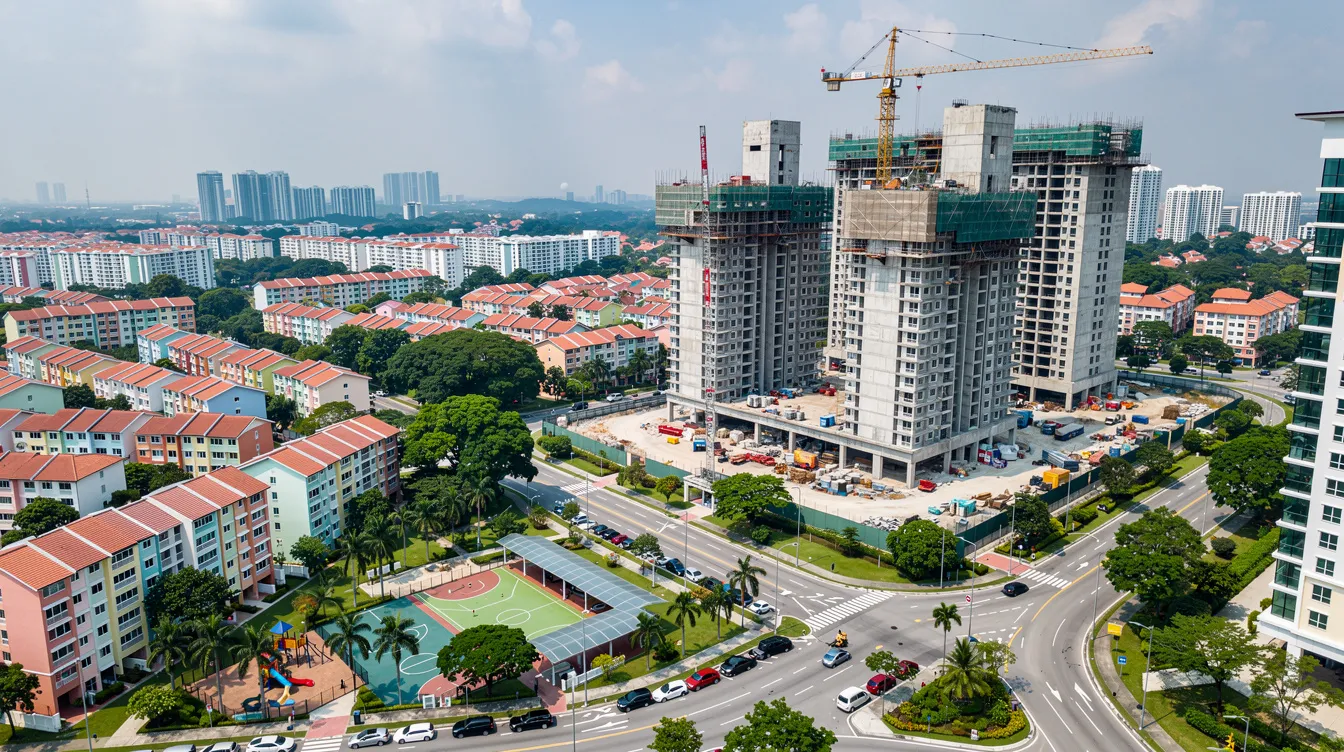
Buyer B enters a comparable newly launched property at preview pricing with progressive payment. During three to four years of construction, the drawn loan portion is smaller, interest costs are lower, and the project’s value has a chance to appreciate as the development completes and the surrounding precinct develops. Temporary Occupation Permit typically leads to a market value increase for new developments, giving Buyer B a further boost.
After seven to ten years, Buyer B typically has more flexibility to upgrade or retain the unit as an investment. The compounding benefit is real: two well-timed new launch cycles across 12–15 years can take a household from HDB to landed, whereas buying resale at market prices with full-draw mortgages may take significantly longer, assuming the same income and savings trajectory.
To harness these advantages, buyers need a clear, practical game plan.
Designing a Practical Asset Progression Plan Around New Launch Previews
Theory must translate into a documented, stress-tested plan. AESTHETIC HAVENS helps investors and business owners structure evidence-based progression plans-here is the framework.
Step-by-Step Planning Framework
The process begins with assessing your current position: HDB type, outstanding loan balance, MOP timeline, cash and CPF balances, and risk appetite. Investors should ideally plan their exit strategy prior to purchasing new real estate-define your exit strategy before treating projected appreciation as certain. Next, identify your target asset path. For example, a household in a 4-room HDB in Sengkang might target an OCR new launch preview in 2026, with a goal of resale or a second new launch investment by 2033. Setting budget guardrails under TDSR (and MSR where applicable) and testing scenarios with conservative interest rates ensures you are not overstretching. Assess ownership costs and financing terms before committing to any booking.
Align likely new launch windows-visible through the Government Land Sales (GLS) pipeline and developer land banks-with your HDB MOP date and savings targets. Pre-approve financing by obtaining an In-Principle Approval (IPA) from your bank, appoint a lawyer, and prepare documentation well before the preview weekend. This framework should be documented so that preview decisions are pre-planned rather than made in a hype-driven environment. Record confirmed facts separately from estimates, and use a comparison table to track location and price evidence for each shortlisted project.
Preview vs Resale vs Completed New Launch: Choosing the Right Route
Three options exist for most upgraders, and each suits a different profile. Buying at a new launch preview offers the lowest entry quantum within the project, the best unit choice, and lighter cash flow in the early stages—while also appealing to buyers focused on buying properties at preview stage to secure lower entry pricing before later increases—but requires patience (three to four years to move in) and acceptance of off-plan uncertainty. Buyers can customize layouts in new launch properties, a benefit unavailable in resale.
Buying the same project nearer TOP or post-TOP gives more certainty—you can see the completed unit, neighbourhood maturity, and actual finishes—but at a higher price and with less choice. Cash flow shifts to full mortgage from day one.
Buying nearby resale condos offers immediate occupancy and rental income, a mature neighbourhood, and sometimes lower PSF. However, resale condos carry older leases, potentially higher maintenance costs, and lose the early equity growth that preview buyers accumulate in rising markets. A resale price below total purchase costs can result in a loss if the unit’s age or location has weakened demand.
For first-time upgraders with sufficient savings, a longer horizon, and no urgency to move immediately, preview entry tends to offer the most acceleration. For those needing to move in quickly or targeting a very specific location where no new launch exists, resale may be one of the relevant alternatives. Making an informed decision means checking current developer pricing against available transaction evidence on URA Realis and comparing on a like-for-like basis.
Illustrative Path: HDB to Condo to Landed Using Two New Launch Cycles
Consider a couple-both working professionals in their early thirties-who own a 4-room HDB in Tampines with three years remaining before MOP. They begin new launch research, attending previews for two OCR projects. At the second preview, they book a two-bedder at an early bird pricing tier, paying the 5 per cent booking fee from savings. Over the next two years, progressive payment milestones draw down their bank loan gradually, and they continue servicing their HDB.
When MOP arrives, they sell their HDB at a favourable price, unlock CPF and cash proceeds, and apply these toward the condo’s remaining payments. They move into the newly launched property at TOP and find it has appreciated meaningfully-partly because of surrounding infrastructure improvements and partly because their chosen stack and floor level are in high demand from future buyers.
Seven years later, with the condo fully paid down to approximately 60 per cent of its original loan, they sell or retain it and use the built-up equity to purchase a landed inter-terrace. The preview advantage made a measurable difference at two points: lower PSF at entry gave them a larger capital gain at exit, and first pick of the best stack shortened their resale marketing period to under three weeks. AESTHETIC HAVENS’ advisory role in this path was scenario-testing different launch timings, verifying project details against resale benchmarks, and stress-testing finances for each transition.
Common Mistakes and Risks When Chasing New Launch Previews
Preview access can accelerate progression, but it can also magnify mistakes if decisions are rushed or overly speculative. Understanding the market dynamics is essential to mitigate risks associated with new launch properties.
Overstretching Just to “Get In Early”
The most common error is maxing out loan eligibility to secure a preview unit without maintaining sufficient buffers. Interest rates can rise, income can be volatile-especially for self-employed or SME owners-and business cycles can tighten cash flow exactly when progressive payment milestones arrive. Future gains depend on market conditions and holding costs, not just entry price. Maintain emergency funds covering at least six to twelve months of total obligations, and keep CPF reserves adequate for stamp duties and initial payments. Never assume guaranteed price appreciation by TOP.
Ignoring Exit Strategy and Future Buyer Profile
Some buyers focus entirely on brochure features and launch hype, neglecting who will buy or rent from them five to eight years later. Market conditions can weaken resale demand and buyer interest. A smaller pool of buyers may delay property sales significantly. Think clearly about your target future buyer-a young family, an expat tenant, a downsizer-and choose unit attributes that match this profile. Deal breakers like poor ventilation, awkward layouts, or distance from transport links will hurt you at exit regardless of how good the preview price was.
Misjudging Holding Power and Interim Housing Logistics
Misaligned timelines between HDB sale and condo TOP can force costly interim housing. If you sell your HDB too early, you face months of rent; too late, and you may trigger ABSD. Investors must be aware of the Seller’s Stamp Duty when selling newly purchased properties within a short period-time-sensitive selling costs can negatively impact profits if properties are sold prematurely. Buyer’s Stamp Duty can significantly affect overall investment returns in Singapore, adding to the total cost burden. For business owners, cash flow timing with company obligations can compound the strain. Stagger timelines conservatively and stress-test for delayed TOP and weaker rental market scenarios.
Following Hype Instead of Evidence
Queuing for every “hot” launch without rigorous comparison is speculation, not property investment. Verify current pricing against comparable transactions for accuracy. Check URA’s transaction database, review the GLS pipeline for future supply in the district, and assess on-the-ground amenities rather than relying solely on glossy presentations. Compare evidence on a like-for-like basis-not marketing PSF against dated resale averages. AESTHETIC HAVENS’ approach centres on data-based property reports and evidence-led advisory precisely because the real estate market rewards discipline, not hype.
Conclusion and Next Steps
Buying at a well-chosen new launch preview can secure lower entry prices, improve unit selection for future resale, and leverage progressive payments to build equity more efficiently than buying resale or waiting for TOP. New launches often offer lower prices than completed homes, and the construction period provides a window for market appreciation while your cash outlay remains staged. Over two property cycles, these advantages can compress the journey from HDB to condo to landed into a realistic 12–15 year timeframe.
Your actionable next steps:
-
Audit your current position-HDB age, outstanding loan, savings, CPF balances-and define a realistic 10–15 year asset progression goal.
-
Map upcoming new launches against your MOP and cash flow milestones, reviewing the GLS pipeline and developer announcements.
-
Shortlist two to three projects and compare preview entry prices against nearby resale options using real transaction data-not just marketing materials.
-
Engage an advisory partner like AESTHETIC HAVENS to validate assumptions, stress-test scenarios, and ensure your plan accounts for financing, stamp duties, and other costs before committing at preview.
If your residential progression plan is on track, you may also explore diversification into industrial or commercial property as a complementary strategy-a topic AESTHETIC HAVENS covers in separate advisory engagements.
Additional Resources and FAQs
This closing section combines practical resources with answers to the most common questions from Singapore buyers considering new launch previews for asset progression.
Useful Tools and References
-
URA Realis transaction database for checking nearby resale prices, new launch caveats, and comparable PSF across districts.
-
MAS website for current LTV limits, TDSR framework, and interest rate guidance from banks.
-
HDB portal for confirming your MOP status, resale procedures, and eligibility conditions.
-
GLS confirmed and reserve list on URA’s site for tracking future supply and upcoming development sites in your target location.
-
AESTHETIC HAVENS’ market reports and launch analyses for private residential projects, including evidence-based comparisons for buyers deciding between preview entry and resale.
Frequently Asked Questions About New Launch Previews and Asset Progression
Is buying at a new launch preview always better than buying resale for asset progression? Not always. If you need immediate occupancy, if a specific location has no upcoming new launch, or if a resale condo in the same district offers a lower PSF with a healthy remaining lease, resale may be the practical and sometimes superior choice. A launch can also make sense as a new home for owner-occupiers, not just as an investment play. Always run the comparison on a like-for-like basis before you decide.
How early before my HDB MOP should I consider a new launch preview? Most upgraders benefit from beginning serious launch research 18 to 24 months before MOP. This allows time to attend previews, secure financing pre-approval, and align progressive payment milestones with your HDB sale timeline.
Can I use a new launch preview to own two properties without paying ABSD? ABSD applies when you own more than one residential property. Timing and sequencing matter-selling the HDB within the required window after purchasing a private property may qualify you for ABSD remission, but the conditions are strict. Consult a qualified advisor and verify the latest IRAS rules before committing. Personal advice on ABSD structuring can prevent costly surprises.
What if the market falls during construction? This is a real risk. If the real estate market weakens during the three to four year build period, your paper equity shrinks and resale demand at TOP may be softer. Holding power-your ability to continue servicing the loan and other costs without being forced to sell-is your primary protection. Focus on fundamentals: a compelling location that attracts buyer demand, manageable leverage, and a unit profile that appeals to a broad pool of future buyers.
Does this strategy work for business owners who also need industrial or commercial space? Yes, but the approach differs. Residential progression and commercial or industrial investing involve different financing structures, stamp duty rules, and holding cost profiles. AESTHETIC HAVENS advises business owners on combining residential asset progression with commercial property investments, ensuring that both goals are aligned within a single, coherent financial plan.
How do I choose between multiple new launches opening previews at the same time? A preview is not automatically the perfect choice when several launches open together. Prioritise based on four factors: entry price versus nearby resale transactions, layout efficiency and unit attributes that match your target exit buyer profile, the project’s locational fundamentals (transport links, schools, future growth drivers), and your personal cash flow timing. Do not let urgency or marketing noise override evidence. Check project details, compare supply pipelines, and invest where the data supports-not where the queue is longest.

