

Introduction
Right-sizing to a smaller condo near family is one of the most financially powerful moves empty nesters in Singapore can make after the kids move out. By selling a larger property and purchasing a well located, compact condo close to your children, you can unlock cash – often several hundred thousand dollars – while cutting monthly outgoings, simplifying daily life, and staying just minutes from the people who matter most.
This article is written for Singaporean parents in their 50s to 70s who are currently living in a bigger home than they need: a 5-room HDB resale flat, a landed house, or a spacious private condo with one or more spare rooms collecting dust. Your children have formed their own households, and you are weighing whether to stay put or make a move that better fits this new phase of life.
Here is the direct answer: selling a large home valued between S$1–2.3 million and buying a smaller condo in the S$1.2–1.5 million range near your adult children can free up S$400,000 to S$900,000 in usable capital (depending on your existing loan, CPF refund obligations, and transaction costs). That freed capital can clear remaining debt, top up your CPF retirement account, and generate steady retirement income – all while you live closer to grandchildren in a home that requires far less upkeep.
This guide focuses on Singapore residential right sizing to private condos or smaller apartments near family, using numbers and rules relevant to 2024–2026. Industrial or commercial property decisions fall outside this scope.
By the end of this article, you will:
-
Understand what “right sizing” truly means for empty nesters – beyond simply shrinking your footprint.
-
Learn how much capital can typically be freed by moving from a larger flat, landed property, or condo to a smaller condo.
-
Know how to choose location (near children), unit size, and timing without overpaying or triggering avoidable taxes.
-
See practical Singapore examples and a step-by-step process to get started.
-
Know when to speak with professionals for tailored advice on your specific situation.
Understanding Right-Sizing For Empty Nesters In Singapore
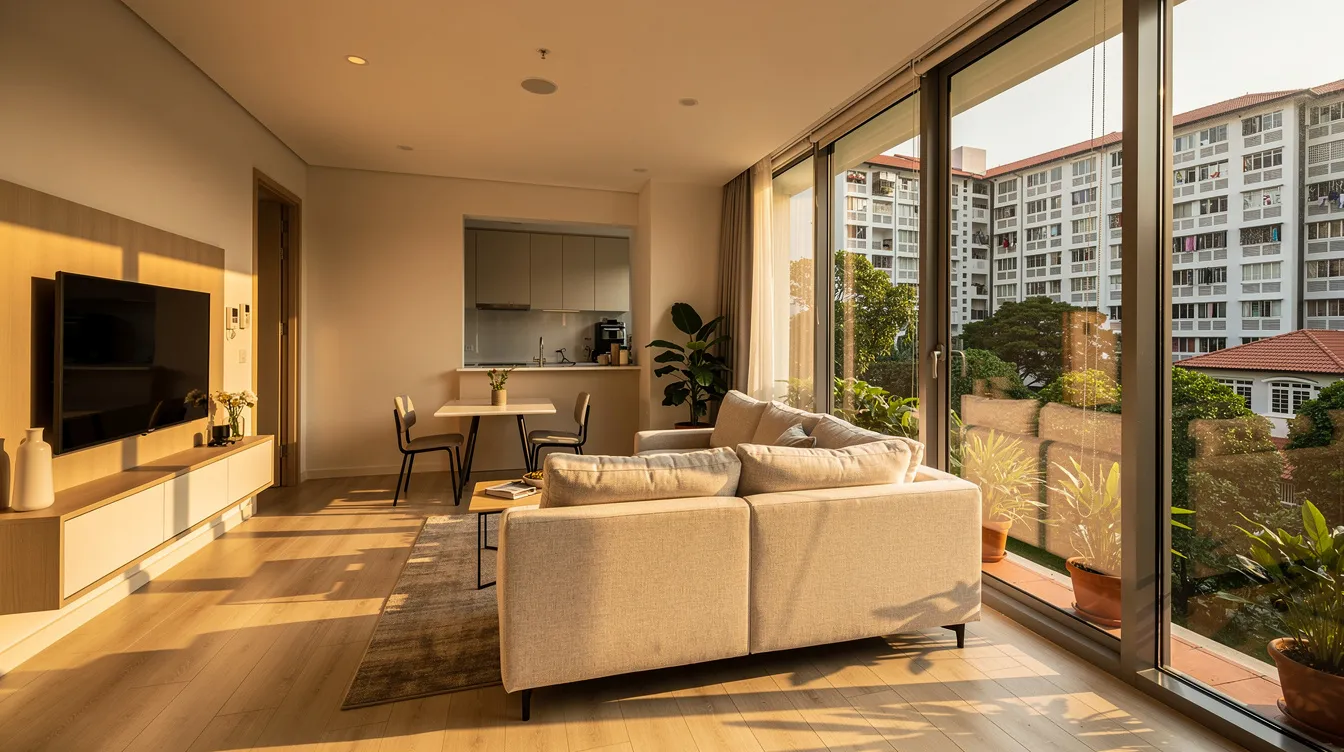
Right sizing means adjusting your housing footprint, location, and financial commitments to match the life you are actually living – not the life you lived when the children were in primary school. It is distinct from simply “downsizing,” which implies loss. Downsizing implies loss; right sizing suggests refinement. For parents whose children left home between 2018 and 2025 to marry, study abroad, or form separate households, it is about aligning space, money, and proximity to family with current reality.
Why does this matter so much in Singapore specifically? Property values here are among the highest in Asia. Many retirees are asset rich but cash light, sitting on S$800,000 to S$2 million of home equity locked inside walls they no longer fully use. At the same time, regulations like Additional Buyer’s Stamp Duty (ABSD) and CPF refund rules make the sequence and timing of any property move financially consequential. Singapore’s ageing population and shrinking household sizes only accelerate the trend: many empty nesters are reassessing whether a large home still serves them.
What Right-Sizing Means When The Kids Have Moved Out
Right sizing, when the children have moved out, means matching your home to who lives in it today – typically two people or sometimes one – rather than maintaining a property designed for a household of four or five. It is about aligning physical space with current needs: your semi-retired or retired lifestyle, your mobility, and your desire for proximity to family.
Consider the typical starting scenarios: a couple rattling around a 5-room flat in Punggol or Yishun with three empty bedrooms; private property owners in an ageing condo in Bukit Timah where the upkeep is climbing; or a landed house in Serangoon where the third storey hasn’t been used in years. In each case, the family home holds decades of memories and identity, but the practical mismatch between space and need is real and growing.
Right sizing to a smaller condo near family can take several forms:
-
Moving from a 1,300–1,800 sq ft family condo to an 800–1,000 sq ft two bedrooms unit, freeing significant equity.
-
Selling a 5-room HDB flat and purchasing a compact city-fringe condo close to married children in estates like Tampines or Potong Pasir.
-
Relocating from a large home in the Core Central Region to a smaller private home in the Outside Central Region where your adult children have settled.
The emotional goals are just as important as the financial considerations: shorter travel to see grandchildren, less weekend cleaning, easier access to medical facilities and MRT stations, and more energy for life rather than house maintenance.
Why Empty Nesters Consider A Smaller Condo Instead Of Staying Put
Several practical drivers push many empty nesters toward a smaller home. Rising maintenance costs are a major factor – whether you are paying conservancy charges on a large HDB, MCST fees on a private condo (typically S$350–600 per month versus S$70–100 for HDB), or managing a landed property with roof repairs and garden upkeep. Under-utilised rooms still cost money in property tax, utility bills, and air-conditioning. And if your children have settled in newer estates like Sengkang, Tampines, or Sembawang, the weekly trip to see grandchildren may involve an hour on public transport each way.
The financial angle is compelling. Selling a high-value larger property often leaves a substantial pool of cash. Many parents are sitting on S$800,000 to over S$2 million of equity in their existing flat or private home, yet their monthly cash flow is tight because almost everything is locked in the property. Right-sizing can improve monthly cash flow for retirees and convert that illiquid wealth into money that actually works for your retirement.
Understanding how right sizing converts this equity into usable retirement capital and better cash flow is the subject of the next section.

How Right-Sizing Frees Up Capital While Keeping You Close To Family
The beauty of right sizing near family is that it achieves two goals simultaneously: you move closer to the people you love, and you free up a significant sum that would otherwise remain locked inside your current home’s walls. This section combines real numbers with lifestyle outcomes so you can see both sides clearly.
Typical Singapore Scenarios: From Big Home To Smaller Condo
Example 1: Large Condo to Smaller Condo Near Daughter in Tampines
A couple in their early 60s owns a 1,600 sq ft condo in Upper Bukit Timah, valued at approximately S$2.3 million in 2026. Their daughter and son-in-law live in Tampines. They sell and purchase a 900 sq ft two-bedroom condo in Tampines, where median resale condo prices sit around S$1,659 per sq ft – roughly S$1.49 million for their target unit. After paying off their remaining mortgage of S$400,000, CPF refunds, agent fees (typically 2%), legal fees, and stamp duties, they walk away with approximately S$350,000–S$450,000 in net sale proceeds beyond the new purchase. Their daughter is now a 10-minute bus ride away instead of 45 minutes.
Example 2: 5-Room HDB to City-Fringe Condo Near Sons
Empty nesters in a 5-room HDB flat in Ang Mo Kio sell for approximately S$950,000 (mature estate pricing). Their two sons live near Potong Pasir. They purchase a 750 sq ft city-fringe condo for S$1.2 million, using a combination of sale proceeds and modest savings. The top-up required is manageable, and because they clear their old HDB loan entirely, they enter retirement debt-free. Monthly maintenance and utility bills drop because the smaller unit requires less upkeep, despite the higher MCST fees typical of condos.
In both scenarios, the pattern holds: selling the larger property and buying smaller near family frees capital and reduces recurring costs. Right-sizing can unlock up to S$900,000 in equity depending on the value gap between current and new home.
Where The Freed Capital Actually Goes: Boosting Retirement Income
Once you have freed capital from the sale, the question becomes: where should it go? A well-planned right-size can free several hundred thousand dollars, and deploying that money wisely is essential for financial security post-move. Investing released equity is essential for improving financial security post-move.
Here is a practical breakdown:
-
Paying off any outstanding home loan to enter retirement completely debt-free, eliminating monthly mortgage obligations.
-
Topping up your CPF retirement account to reach the Full Retirement Sum (S$220,400 in 2026) or Enhanced Retirement Sum (S$440,800), which directly increases your monthly CPF LIFE payouts – potentially from around S$950 to S$1,780 per month at FRS level.
-
Creating a liquid emergency fund covering three to five years of essential expenses, held in accessible instruments rather than locked in property.
-
Allocating for healthcare – medical insurance upgrades, specialist visits, and future care services needs as you age.
-
Optional: a modest allocation for helping children with education top-ups or small gifts, without jeopardising your own retirement.
One critical warning: locking too much capital into the new condo is a common mistake. Over-buying – choosing a flashier or larger unit than you need – recreates the same asset rich, cash light trap you were trying to escape. Keep the new flat purchase lean so that your freed capital remains available.
Non-Financial Gains: Time, Health, And Family Support
Right sizing is about freeing capital and also about freeing energy and time. The non-financial gains are substantial:
-
Closer to grandchildren: A 10-minute bus ride versus an hour-long MRT journey transforms how often you see family. You become available for school pick-ups, weekend dinners, and the spontaneous visits that deepen bonds. Families should clarify expectations regarding visits and assistance when moving closer together – open conversations about how often you will help with childcare or host gatherings prevent misunderstandings.
-
Better access to healthcare: Many well located condos sit near polyclinics, community hospitals, and MRT exits with barrier-free access.
-
Simpler housekeeping: Weekly cleaning in a 900 sq ft condo versus maintaining a three-storey terrace is a night-and-day difference. Less upkeep means more energy for hobbies, exercise, and socialising.
-
Condo facilities supporting active ageing: Pools, gyms, and landscaped walking paths let you stay physically active without separate club memberships. Condos often eliminate exterior maintenance responsibilities for owners, freeing weekends entirely.
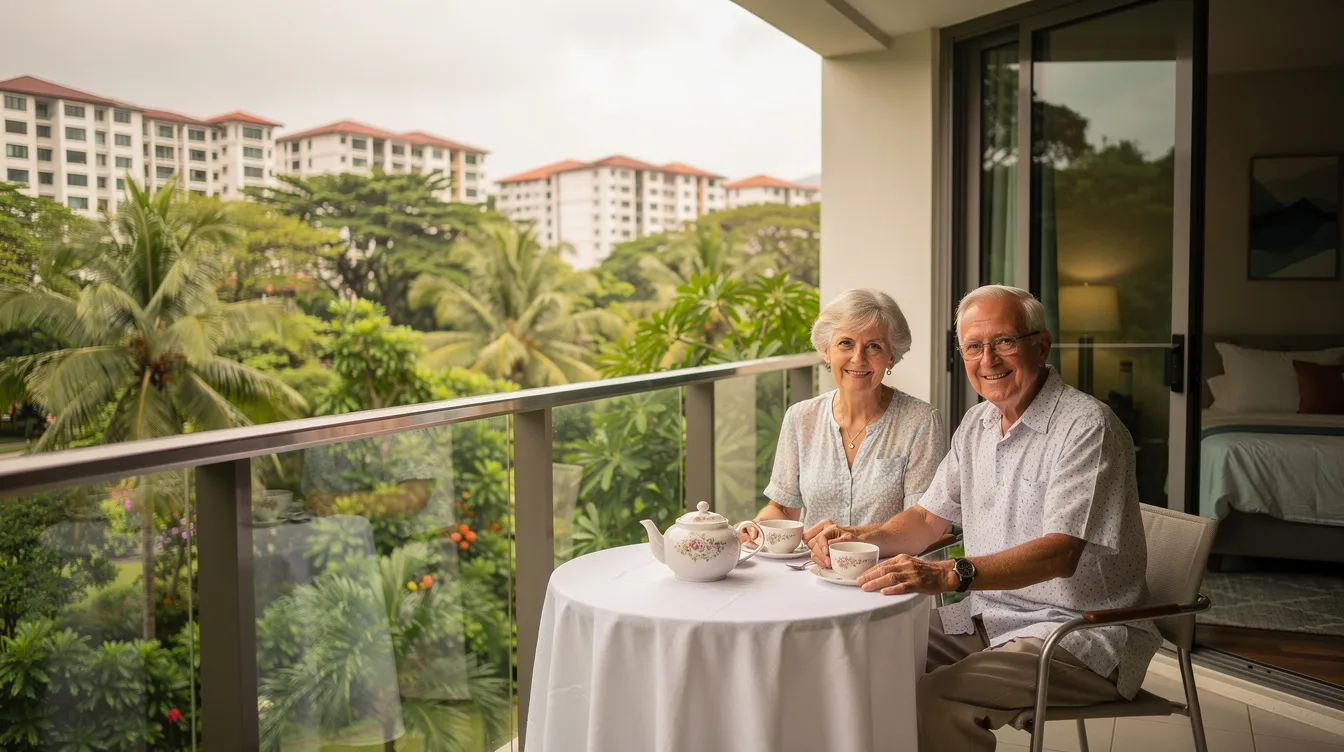
Many retirees find smaller homes improve daily life in ways they did not anticipate – more time for old friends, more energy for travel, and a renewed sense of independence. A strategic approach to relocating can enhance independence for empty nesters rather than diminishing it.
Right sizing is not about giving things up. It is about gaining the next chapter on your own terms.
Planning Your Move: Location, Unit Size, Timing, And Numbers
Now that the “why” is clear, this section addresses the practical “how”: where to buy, how large a unit to target, and when to execute the move within Singapore’s market conditions between 2024 and 2027.
Choosing The Right Location Near Family (Without Overpaying)
Location is the single most important decision in right sizing near family. Here are the factors to weigh:
1. Realistic proximity to your children’s home. Define what “near” means in concrete terms – within 10 to 15 minutes by bus, or two to three MRT stops. Proximity to family requires defining realistic travel time targets for effective relocation. Being in the same town (e.g., Tampines) or an adjacent one (e.g., Pasir Ris to Tampines) is usually sufficient; insisting on the exact same block as your children can mean paying an unsustainable premium for a specific project.
2. Transport connectivity. Prioritise estates along major MRT lines – the Thomson-East Coast Line, Downtown Line, or Cross Island Line – and near bus interchanges. Park connectors linking estates are a bonus for daily walks.
3. Senior-friendly amenities. Look for neighbourhoods with barrier-free walkways, lifts at MRT exits, polyclinics, wet markets, hawker centres, and supermarkets within walking distance. Target neighbourhood amenities should suit all ages for family visits.
4. Price differences by region. The gap between regions is significant. In 2026, condos in the Outside Central Region (e.g., Tampines at ~S$1,659 psf, Punggol at ~S$1,561 psf) cost considerably less per square foot than those in the Core Central Region (often S$2,800–3,000+ psf). For context, HDB resale flats in Tampines average around S$617 psf. Choosing the right region alone can save you hundreds of thousands of dollars – capital that stays in your pocket rather than in the walls.
Deciding On The Right Unit Size And Layout
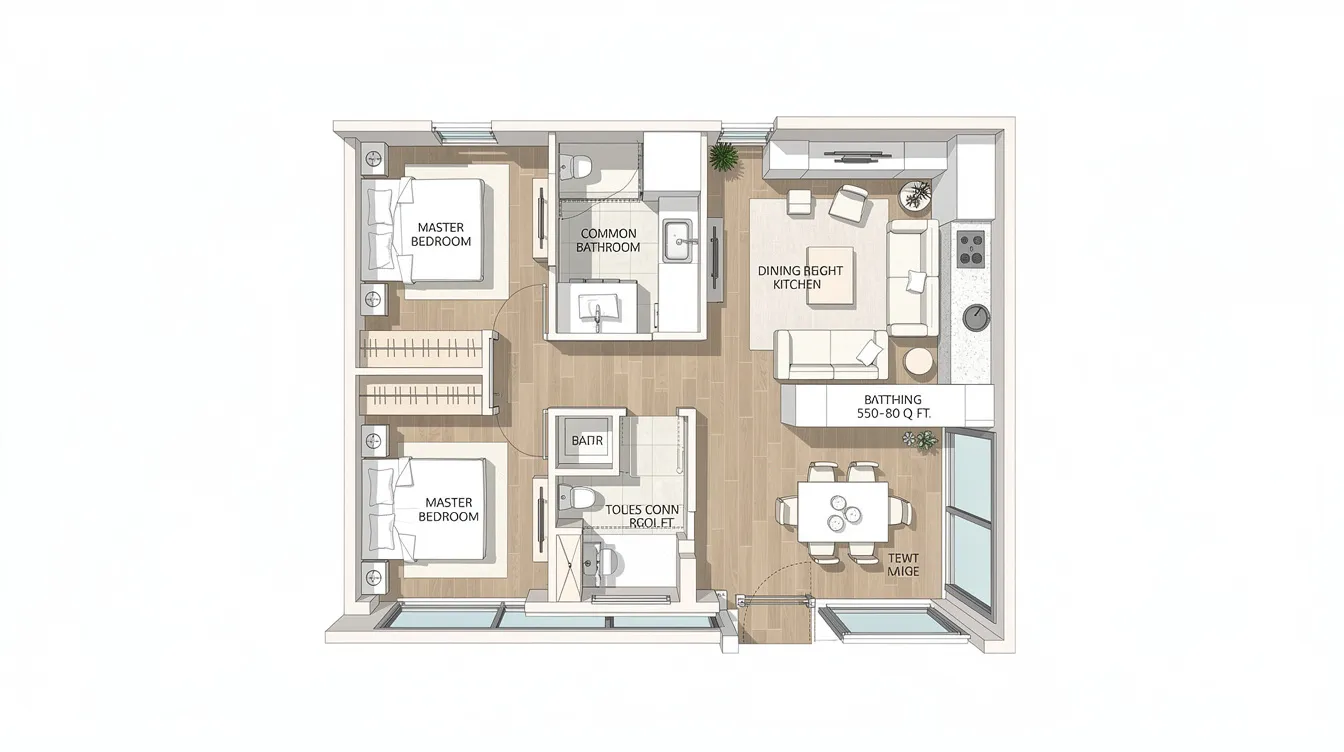
For most married couples who host children and grandchildren on weekends, the sweet spot is a two-bedroom condo of 700 to 900 sq ft – enough for a master bedroom and a flexible guest room or study without the burden of maintaining unused space. For single Singapore citizens or divorced parents whose children live overseas, a compact one-bedroom plus study of 500 to 650 sq ft is a practical, lower-cost option.
Layout matters as much as size. Choosing a condo for lifestyle needs rather than just size can prevent future issues down the road:
-
Single-level living is strongly preferred over split-level or loft units – stairs become a mobility risk as joints age.
-
Wide corridors and bathrooms that can be retrofitted with grab bars and non-slip tiles. Evaluate the layout for accessibility before moving.
-
North-south orientation with good cross-ventilation and natural light reduces reliance on air-conditioning and keeps utility bills manageable.
-
Adequate storage – walk through with a critical eye on where your belongings will actually go, not just how the show flat looks.
When viewing units, take photos and videos to compare layouts later, and consider 3D walkthroughs offered by many agents to visualise how your furniture and daily circulation will actually work.
Timing Your Sale And Purchase To Maximise Capital
The sequence of selling your current home and buying the smaller condo has significant financial consequences.
Sell first, then buy: This is the safer approach for most empty nesters. You know exactly how much cash you have, avoid bridging loans, and do not need to pay ABSD upfront on a second home. The trade-off is a transition period – typically three to twelve months – where you may need to rent a place or stay with family.
Buy first, then sell: This avoids the disruption of temporary housing but means you technically own two properties simultaneously. Singapore Citizens buying a second residential property pay 20% ABSD on the purchase. However, there is an important concession: Singapore Citizens aged 55 and above who buy a replacement property of lower value and sell their first property within six months of taking possession of the new unit can apply for an ABSD refund. Plan the order of sale and purchase to maximise proceeds.
Key timing triggers to watch for:
-
When the youngest child gets married or relocates overseas for work or studies.
-
Before a major renovation is needed in the old home (full re-tiling, roof replacement, repiping) – spending S$50,000–100,000 on a home you plan to sell rarely makes financial sense.
-
Before or shortly after full retirement, while mortgage tenure approval is still feasible based on your age and income.
Once these high-level decisions are made, following a clear step-by-step plan removes much of the stress.
Step-By-Step Right-Sizing Process For Singapore Empty Nesters
This section provides a chronological, practical guide in eight steps. The process applies whether you currently own an HDB resale flat, a private condo, or a landed house.
A Structured Process To Move From Big Home To Smaller Condo
Use this process when you and your spouse have agreed in principle that right sizing makes sense and you are considering a move within the next twelve to twenty-four months. Effective planning can streamline the logistics of moving to a new condo.
-
Clarify goals with your spouse and children. Sit down for a planning conversation – a casual “planning tea session” works better than spreadsheets. Agree on priorities: staying near which child, how much cash you want freed, and your expected move timeframe. Involving children in the decision can ease emotional burdens. Consider emotional non-negotiables and financial must-haves.
-
Get a realistic valuation of your current home. Use recent transaction data from 2024–2026 (URA, HDB portals) and professional opinions, not just asking prices or neighbour gossip. Assessing and comparing housing costs is a crucial step pre-move. Property agents can provide comparative market analyses grounded in actual transacted PSF data.
-
Work out your numbers and budget. Estimate sale proceeds after loan redemption, CPF refund to your retirement account, agent fees (typically 2%), legal fees, and Buyer’s Stamp Duty. Set a purchase budget for the smaller condo that still leaves a clear, quantified cash buffer. Check eligibility for government schemes like the Silver Housing Bonus.
-
Shortlist locations and projects near family. Combine your children’s addresses with MRT maps to narrow your search to two or three zones – for example, Pasir Ris–Tampines if your daughter lives in Tampines, or Clementi–Jurong East if your son is in the west. Look at both resale condos and newer launches in those zones.
-
View units and compare layouts. Focus on functional layouts, not show-flat décor. Take photos and videos during every viewing. Create a simple one-page comparison sheet for each unit covering size, PSF, floor level, orientation, proximity to MRT, and remaining lease. Evaluate the layout for accessibility – can grab bars be installed? Is the entrance step-free?
-
Decide on sale-first or buy-first strategy. Factor in ABSD implications, your comfort with temporary rental, and whether your children have a spare room you can use during the transition. Model both options with realistic numbers under current 2024–2026 rules.
-
Execute sale and purchase. Engage a conveyancing lawyer, sign Options to Purchase, and manage completion dates to minimise overlap stress. Decluttering before a move can significantly reduce moving costs – start clearing out unused items weeks before movers arrive. Photograph the old home for memories before handing over the keys. A family home represents decades of memories and identity; create that photo book or short video tour.
-
Re-allocate freed capital. Top up your CPF retirement account, clear any remaining loan, and allocate diversified investments with a licensed financial adviser. Keep a written plan showing what each block of capital is meant for: retirement income, medical reserves, travel, and legacy.
Comparing Key Options: Stay, Right-Size To Condo, Or Move To Smaller HDB
To help you decide, here is a comparison of the three main right sizing options:
|
Criterion |
Stay In Current Large Home |
Right-Size To Smaller Condo Near Family |
Right-Size To Smaller HDB Near Family |
|---|---|---|---|
|
Monthly costs |
High – larger utilities, higher MCST/conservancy, property tax on higher AV |
Moderate – lower utility bills, moderate MCST (S$350–600/month), lower property tax |
Low – conservancy S$70–100/month, lowest utility bills |
|
Capital freed |
None – equity stays locked in property |
Significant – typically S$300,000–$900,000 depending on price gap |
Moderate to significant – depends on flat type and sale price |
|
Distance to children |
May remain far if children moved to newer estates |
Close – you choose location based on family proximity |
Close – but HDB location depends on flat availability |
|
Facilities |
Varies – may have pool/gym if condo, none if HDB or landed |
Full condo amenities – pool, gym, security, landscaping |
Community amenities, possibly community care apartment features |
|
Flexibility to rent out |
Possible but complex with large unit |
Good – smaller condos have strong rental demand |
Limited – HDB rental rules apply; minimum occupation period |
|
Remaining lease considerations |
Depends on current property |
Choose projects with 70+ years remaining lease to preserve value; avoid short lease flats |
HDB leases vary; shorter lease flats have lower resale but lower cost |
Who fits which option? If you prioritise maximum capital release and want condo-style living near family, Option B is strongest. If you want lowest possible monthly costs and are comfortable with HDB living, Option C works well – and you may qualify for a cash bonus through the Silver Housing Bonus (up to S$40,000) or receive up to S$30,000 from the Lease Buyback Scheme. If disruption is your biggest concern and finances are comfortable, staying put (Option A) is valid but means your home equity remains illiquid.
Private owners who are also business owners may benefit from modelling these scenarios with advisors who understand both personal and commercial property portfolios.
Common Challenges And How To Overcome Them
Right sizing is not only a financial equation. Emotional attachment, family expectations, and regulatory complexity can all stall what is otherwise a sound decision. Here are practical, empathetic solutions to the most common obstacles.
Emotional Attachment To The Family Home
Leaving a family home can feel like leaving years behind. The room flat where your children took their first steps, the kitchen where you cooked every Chinese New Year reunion dinner – these spaces hold identity, not just square footage. Emotional attachment can complicate the decision to move.
How to work through it:
-
Create a photo book or short video tour of every room in your old home before selling. Walk through the house with your phone, narrating memories as you go.
-
Bring meaningful physical elements to your new condo – the dining table you have had for 25 years, framed family photos, your favourite armchair. These anchor your identity in the new space.
-
Hold a farewell gathering with family in the old home. Cook one last meal there, take group photos, and create deliberate closure. This transforms the transition from loss into celebration of the next chapter.
Fear Of Losing Space For Children And Grandchildren To Stay Over
A common worry: “What if my son and his family want to stay during Chinese New Year? Where will the grandchildren sleep?” The fear of losing your spare room is understandable.
Practical solutions:
-
Choose a two-bedroom unit where the second room functions flexibly as a guest room and study. Two bedrooms with a convertible layout handle most overnight stay needs.
-
Use sofa beds and smart storage – wall-mounted tables, under-bed drawers – to accommodate stays without needing four or five bedrooms.
-
Agree openly with your children that longer stays can sometimes happen in their homes instead. This conversation, had early, prevents guilt on both sides.
Complexity Of Regulations, Taxes, And Paperwork
Understanding ABSD, Seller’s Stamp Duty, CPF refund rules, and the timing of resale applications can feel overwhelming – especially when getting it wrong means paying tens of thousands in avoidable taxes. Coordinating sale and purchase timelines without bridging loans spiralling costs adds pressure.
How to manage this:
-
Engage a trusted estate professional early – ideally before you list your home – to map out every deadline, cost estimate, and ABSD refund window applicable to your situation.
-
Keep all key dates on a single page: OTP exercise dates, completion deadlines, ABSD remission windows (6 months for Singapore Citizens aged 55+), and CPF usage refund timelines.
-
Use checklists. Create a checklist to avoid regrets during right-sizing. A simple document listing what must happen by when – grouped by financial, legal, and logistical tasks – eliminates most of the chaos.
Right sizing is highly manageable with structure, support, and the willingness to ask for professional help when needed.
Conclusion And Next Steps
Right sizing to a smaller condo near family lets empty nesters in Singapore free significant capital, simplify daily life, and stay deeply involved in their children’s and grandchildren’s lives. Effective downsizing can unlock equity, reduce ongoing expenses, and simplify daily life – but the “right” move balances emotional comfort, location, and concrete numbers. It is not about taking the smallest or cheapest option; it is about choosing the option that gives you financial freedom, proximity to family, and a home that fits who you are today.
Moving to a smaller home can reduce annual property taxes significantly. Smaller properties generally attract lower baseline property tax evaluations. Monthly condo fees cover many variable expenses, aiding in predictable budgeting. Condo insurance is generally cheaper than homeowners insurance for single-family dwellings. And perhaps most importantly, empty nesters can reduce monthly expenses by downsizing to a smaller property – money that flows into savings, retirement income, and experiences rather than maintenance.
Your immediate next steps:
-
Talk with your spouse and children this month about your ideal living arrangement over the next 10–15 years.
-
Request an updated valuation and cash-flow projection for a sample right-sizing scenario based on your current home’s value and your target area.
-
Shortlist two or three neighbourhoods near family and visit them at different times of day – morning, lunch hour, and evening – to assess noise, crowds, and convenience.
-
Arrange a consultation with a real-estate advisor to stress-test your plan before listing your home.
Related topics worth exploring next:
-
Guides on senior-friendly condo features, barrier-free layouts, and ageing-in-place design.
-
Articles on converting freed capital into stable retirement income through CPF LIFE top-ups, REITs, and bonds.
-
Government schemes such as the Silver Housing Bonus (up to S$40,000 for seniors right sizing), the Lease Buyback Scheme (eligible seniors can receive up to S$30,000), the Proximity Housing Grant (up to S$20,000 for eligible seniors), the Deferred Downpayment Scheme, and the Senior Priority Scheme which allocates 40% of 2-room Flexi flats to seniors.
Additional Resources And FAQs
This section provides quick-reference answers to common Singapore-specific questions about right sizing, along with pointers to useful tools.
Useful Tools And Checklists
-
Printable right-sizing checklist: Condense the eight-step process above into a single page. Include columns for “Done / In Progress / Not Started” beside each step.
-
Online calculators:
-
Estimated sale proceeds calculator factoring in CPF refund obligations, outstanding loan, agent commissions, and legal fees.
-
Monthly affordability calculator for a smaller condo based on your age, income, and remaining working years.
-
-
Transaction data dashboards: Use URA’s REALIS, HDB’s resale transaction records, and third-party platforms to benchmark fair PSF in your target zones before making any offer.
Frequently Asked Questions About Right-Sizing To A Smaller Condo Near Family
How much capital can I typically free by moving from a 5-room HDB to a smaller condo near my children? It depends on your existing flat’s location and the condo you choose. If your 5-room HDB resale flat sells for around S$820,000–950,000 (common in mature estates like Ang Mo Kio or Tampines in 2026) and you buy a compact condo for S$1.2–1.5 million, the net capital freed after CPF refunds and transaction costs may be modest – but you eliminate your mortgage, restructure your savings, and potentially qualify for the Silver Housing Bonus of up to S$40,000 if moving to a smaller flat type. If you are moving from a private property to a smaller condo, the freed capital can range from S$300,000 to over S$800,000.
Is it better to right-size before or after I fully retire from work in Singapore? Generally, executing the move shortly before or within the first year of retirement is ideal. You still have income for mortgage approval purposes if a small loan is needed, and you avoid spending retirement savings on maintaining a large home. However, your financial situation is unique – model both timelines with an adviser.
What if my children move again after I right-size near them? This is a valid concern. Mitigate it by choosing a well located condo near an MRT station with strong rental demand and good resale liquidity, not one that is only desirable because of a single family member’s address. A good location retains value and flexibility regardless of whether your children stay or relocate.
Can I still rent out my smaller condo if I need extra income later? Yes. Private property owners can rent out their condo units without the occupancy restrictions that apply to HDB flats. A compact two-bedroom condo in a well connected location typically attracts steady rental demand – providing a potential source of retirement income if your circumstances change.
How do I know if I am over-stretching on the new condo, even if it is smaller? A useful rule: your new condo’s total cost (including stamp duties, legal fees, and renovation) should leave you with a clear cash buffer equivalent to at least three to five years of living expenses, plus sufficient CPF savings to meet your full retirement sum. If the purchase wipes out your liquid reserves, you are over-buying. Homeowners can often exclude capital gains from taxes under certain conditions, but the freed capital must still be sufficient to fund your lifestyle and healthcare needs for decades.
When should I speak to professionals, and what should I prepare in advance? Engage a property advisor and financial planner as early as possible – ideally when you first start seriously considering a move. Before the meeting, prepare: your current property’s approximate value (check recent transactions), outstanding loan balance, CPF usage on the property, a rough idea of your monthly expenses, and the addresses of your children’s homes. This lets the advisor model realistic scenarios immediately rather than spending the first session gathering basic information.

