

Introduction
The EC income ceiling in 2026 sits at S$16,000 per month for every executive condominium currently on sale – but a new S$18,000 monthly household income ceiling takes effect for EC land parcels tendered on or after 24 August 2026. If you’re a dual-income household earning between $14,000 and $20,000, this distinction determines whether you can book an EC unit now, must wait until roughly 2028, or should pivot to a private property altogether.
This article covers the full scope of EC eligibility conditions in 2026: the two-tier income ceiling, how HDB calculates your gross monthly income, what the CPF housing grant tiers look like, the new 10-year minimum occupation period (MOP), resale EC rules, and how all of this feeds into longer-term asset progression. We also address financing limits – MSR, TDSR, and loan capacity – so you can see whether passing the income ceiling actually translates into affordability. Topics outside this scope include detailed BTO flat eligibility (which has its own ceiling changes) and commercial property acquisition, though we reference both where relevant.
Direct answer: In 2026, households earning above S$16,000 cannot buy new ECs currently available for booking. The $18,000 ceiling only applies to new EC purchases tied to Government Land Sales tenders closing from 24 August 2026 onward, with those projects expected to launch for sale around late 2027 to 2028. This means if your household income falls between $16,001 and $18,000, you’ll need to wait – or explore resale ECs and private condos.
Here’s what you’ll gain from reading this guide:
-
Understand exactly which EC income ceiling – $16,000 or $18,000 – applies to your situation in 2026.
-
Know how HDB and major banks calculate household income for EC eligibility, including tricky cases for business owners and commission earners.
-
Learn how the new 10-year minimum occupation period MOP and stricter privatisation timeline affect your resale and upgrade strategy.
-
See how grants and bank financing interact with the income ceiling so you can gauge true affordability.
-
Get practical next steps for deciding between a 2026 EC launch, a future $18k-ceiling EC, or a private condo – with guidance from AESTHETIC HAVENS as your property advisor.
Understanding EC Eligibility Basics in 2026
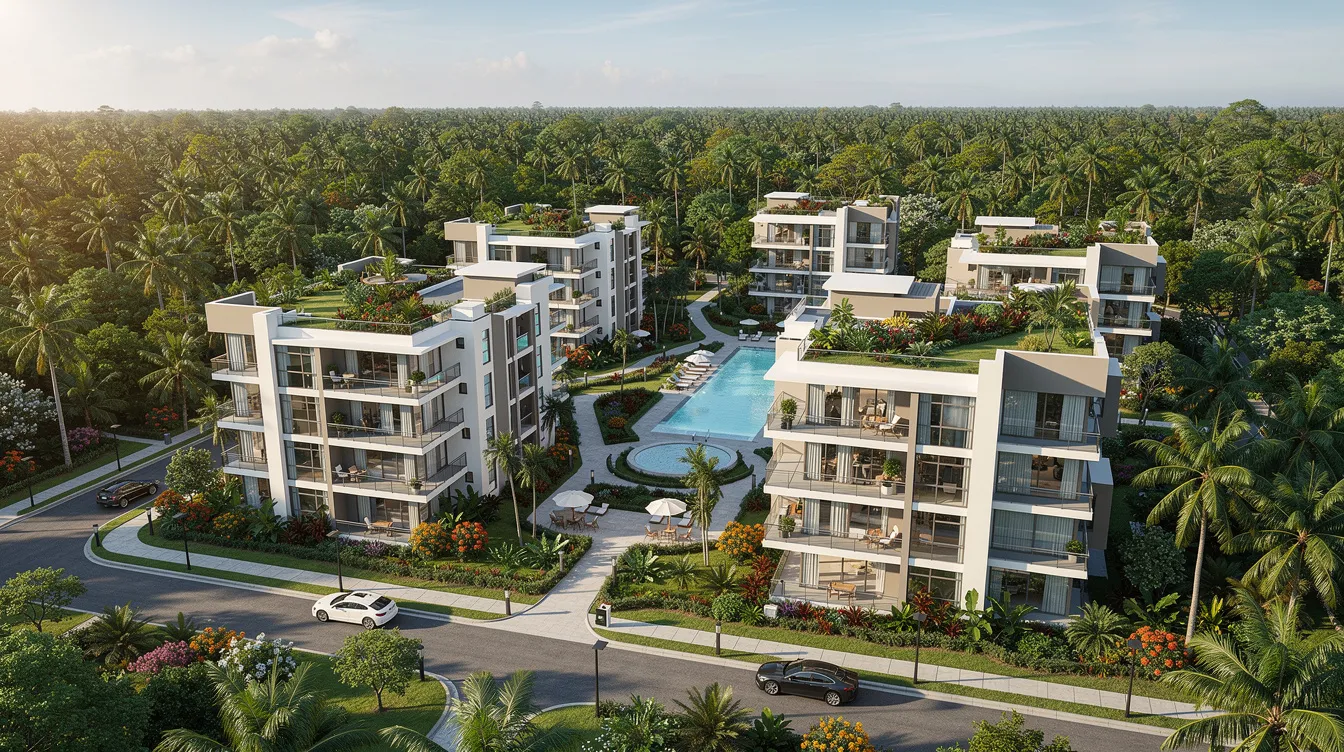
Executive condominiums are a public–private hybrid unique to Singapore’s housing landscape. Developed by private developers on government land, they offer condo-level facilities and finishes but are governed by HDB rules for eligibility – including citizenship requirements, a family nucleus condition, property ownership restrictions, and the income ceiling. Unlike a standard HDB flat, EC purchases are financed through bank loans only; an HDB housing loan is not available for ECs.
EC eligibility has multiple moving parts. You must satisfy conditions around citizenship, age, family structure, and property history before the income ceiling even becomes relevant. And in 2026, there’s an added complexity: some EC projects follow the older rules (5-year MOP, $16,000 ceiling), while sites tendered from mid-2026 onwards follow new rules (10-year MOP, and eventually the $18,000 ceiling). Understanding which set of rules apply to which project is critical for first timer families and upgraders alike.
Core EC Eligibility Conditions (Beyond Income)
Before income matters, you need to clear these eligibility conditions:
-
Citizenship: Eligibility to buy an EC requires at least one Singapore Citizen as an applicant. Other co-applicants or family members listed on the application must be Singapore Citizens or Permanent Residents.
-
Age: Applicants must be at least 21 years old for family schemes. Singles aged 35 and above can apply under the Joint Singles Scheme. Joint singles must both be at least 35 and form a valid nucleus together.
-
Family nucleus: You must form a recognised core family nucleus – married couples, engaged couples (with a marriage certificate to be produced before key collection), parent-and-child arrangements, or orphaned siblings. Single buyers at 35+ use the joint singles scheme.
-
Property ownership: Applicants must not own or have disposed of any private residential property within 30 months before applying for an EC. This includes overseas property. If you currently own an HDB flat, applicants must dispose of any existing HDB flat within 6 months of completing the purchase of a new EC.
Satisfying all of these is necessary just to reach the starting line. Only then does the income ceiling come into play.
For resale ECs – those that have completed their minimum occupation period – the income ceiling does not apply. However, buyers still face considerations around ABSD, loan servicing ratios, and citizenship requirements.
Why the Income Ceiling Matters So Much
The income ceiling is the single sharpest eligibility filter for new executive condominiums. It determines whether a household can access subsidised public housing in condo form or must enter the open market for private property. For dual-income professional households – managers, engineers, business owners – earning between $14,000 and $20,000 per month, the ceiling is often the make-or-break factor.
It also shapes downstream outcomes: your grant amount (if any), your estimated maximum loan under MSR, and your long-term exit options after MOP. A household at $11,000 income gets both EC access and meaningful grants; a household at $17,000 gets neither under current rules.
In 2026, this dynamic becomes more layered because there are now two ceilings – $16,000 and $18,000 – tied to the tender dates of specific EC sites. Understanding which ceiling applies to which project is the next critical step.
The 2026 EC Income Ceiling: $16,000 vs $18,000 Explained
The headline change announced at the National Day Rally 2026 by PM Lawrence Wong is straightforward: the monthly household income ceiling for new EC purchases from developers rises from S$16,000 to S$18,000. But the implementation is more nuanced. The income ceiling will rise to S$18,000 on 24 August 2026, and only new EC projects after 24 August 2026 will use S$18,000 – specifically, projects whose GLS land tender closes on or after that date. Everything currently on the market stays at $16,000.

Current-Rule ECs: The $16,000 Income Ceiling
The EC income ceiling is S$16,000 per month for all projects whose land tenders closed before 24 August 2026. This covers every EC available for booking in 2026, including active launches and balance units from projects like Rivelle, Otto Place, Coastal Cabana, Solano Grand, and Wynwood Grand.
For these current-rule ECs, the older framework applies: a 5-year minimum occupation period from key collection, followed by eligibility to sell to Singapore Citizens and PRs in the resale market, and full privatisation (sale to foreigners) 10 years from TOP. First timer families buying these ECs may also qualify for CPF housing grant support, depending on their income band.
Example profiles under the $16,000 ceiling:
-
Household A: A married couple where one earns $7,500 and the other $7,000 – combined gross monthly income of $14,500. They are comfortably under the $16,000 ceiling and eligible for current EC launches.
-
Household B: Both partners earn $8,500 and $7,800 respectively – combined $16,300. They exceed the $16,000 ceiling by just $300 and are ineligible for any EC on sale today.
New-Rule ECs: The $18,000 Income Ceiling from 2026 Tenders
The policy change means EC land sites whose tenders close on or after 24 August 2026 adopt an $18,000 income ceiling. The trigger is the tender closing date – not the award date, not the sales launch date. Projects confirmed under this regime include the Canberra Drive EC (tender closing 1 October 2026) and Admiralty Walk (tender closing 17 December 2026).
However, these new EC projects will only be launched for sale roughly 18–30 months after tender close, meaning booking is likely from late 2027 to 2028. Households earning $16,001–$18,000 cannot buy existing EC projects today – they must wait for these new-rule EC launches.
These sites also carry the 10-year MOP starting from the Temporary Occupation Permit (TOP) date, with full privatisation pushed to 15 years from TOP. The Deferred Payment Scheme is removed for these projects, and 90% of units are reserved for first timers during the initial two years.
The income ceiling increase is designed to keep ECs accessible to middle-upper income Singaporean households who have been gradually priced out of private property but earn too much for the old $16,000 cap. Prior to 2019, the EC ceiling was S$14,000; it was raised to $16,000 in September 2019 – making the 2026 increase the first adjustment in seven years.
Side-by-Side View: Which Ceiling Applies to You?
Here’s a concise breakdown based on verified data from HDB’s policy announcements:
-
Projects tendered before 8 May 2026 → Income ceiling $16,000 → 5-year MOP → privatisation 10 years from TOP → DPS may be available.
-
Projects tendered between 8 May and 23 August 2026 → Income ceiling $16,000 (unchanged) → but 10-year MOP and 15-year privatisation apply → DPS removed.
-
Projects tendered on or after 24 August 2026 → Income ceiling $18,000 → 10-year MOP → privatisation 15 years from TOP → DPS removed.
-
All EC launches available to book in calendar year 2026 → still use the $16,000 income ceiling, since their tenders closed before the relevant dates.
-
Expected launches from late 2027–2028 onward on new-rule sites → use the $18,000 ceiling but carry stricter occupation rules.
The timing of your planned purchase and your income band together determine whether EC is even an option. But understanding how HDB computes “gross monthly household income” is equally critical – especially for business owners and commission earners where the number isn’t simply what appears on a payslip.
How Your Income Is Calculated for EC Eligibility
The income ceiling uses gross monthly household income – before CPF deductions and before income tax – but not every dollar you earn counts. Gross household income includes basic salary, fixed allowances, bonuses, and commissions as a general category, but HDB applies specific inclusion and exclusion rules that can meaningfully shift your assessed figure.

What Counts Towards the EC Income Ceiling
The following components are included in HDB’s assessment of your monthly household income:
-
Basic monthly salary from employment (before CPF deductions).
-
Regular fixed allowances paid monthly – transport allowance, shift allowance, meal allowance if contractually fixed.
-
Commission income, if it is a regular and recurring component, typically averaged over the past 3–12 months.
-
Director’s fees and regular partnership drawings for business owners, averaged over 12 months.
-
Income from all co-applicants and family members listed on the EC application.
HDB verifies these using payslips, CPF contribution history, and IRAS Notices of Assessment. For salaried employees, the most recent 3 months’ payslips and 6–12 months of CPF history are standard documentation. HDB uses the 12-month period preceding roughly 2 months before your application date.
What Usually Does Not Count to the Ceiling
Several income types are excluded from the EC income ceiling calculation:
-
Bonuses are excluded from the EC income ceiling calculation – this includes annual bonuses, AWS (Annual Wage Supplement), and performance bonuses, unless they are structured as a guaranteed monthly component.
-
Overtime pay that is irregular or ad-hoc.
-
Windfall income such as lottery winnings, inheritance, or one-off business sale proceeds.
-
Non-cash benefits like employer-paid insurance, company car, or staff accommodation (though banks may factor these into loan assessment).
This exclusion matters strategically. A household with $15,000 base pay plus $3,000 in irregular bonuses has a gross monthly income of $15,000 for EC eligibility purposes – well within the $16,000 ceiling – even though their total annual compensation is much higher. However, while excluded from the income ceiling, some of these amounts can still support overall creditworthiness when major banks assess your EC loan.
Employees vs Self-Employed: Verification Differences
For salaried employees, the documentation is relatively straightforward: latest 3 months’ payslips, 6–12 months’ CPF contribution history, latest IRAS NOA, and an employment letter confirming salary and allowances.
For self-employed individuals and business owners, the process is more demanding. You’ll typically need 2–3 years of IRAS Notices of Assessment, ACRA business profile, profit and loss statements, and business bank statements. HDB averages income over 12 months or more.
Common pitfalls include newly incorporated companies with limited track record, large year-to-year swings in declared income, and aggressive expense claims that lower your assessable income on paper. While minimising taxable income saves on tax, it can undercut both your EC eligibility (pushing you below minimum income for the EC price you want) and your loan eligibility with banks. Business owners should plan 2–3 years ahead if an EC purchase is on the horizon.
Even if you pass the income ceiling, you must still meet Mortgage Servicing Ratio (MSR) and Total Debt Servicing Ratio (TDSR) rules when financing your EC – and that’s where many applications get tricky.
Income Ceiling vs Financing Limits: How Much EC You Can Actually Afford
Qualifying for an EC on paper doesn’t mean you can afford the EC you want. The maximum housing loan eligible for EC buyers is subject to a Mortgage Servicing Ratio capped at 30% of gross monthly household income. Beyond that, TDSR, LTV ratios, cash requirements, and interest rates all shape the purchase price you can realistically target. AESTHETIC HAVENS often helps clients map these numbers when planning an upgrade or portfolio move.
MSR and TDSR for EC Buyers
Two ratios govern EC financing:
-
Mortgage Service Ratio (MSR) is capped at 30% of gross income. This limits your monthly EC loan repayments to 30% of your gross monthly household income. For a $14,000-income household, the max monthly repayment under MSR is $4,200. At $16,000 income, it’s approximately $4,800. At $18,000, it rises to roughly $5,400.
-
Total Debt Service Ratio (TDSR) is capped at 55% of gross income. This covers all monthly debt obligations – housing loan, car loans, credit card minimum payments, and any other term loans. At $16,000 income, TDSR allows up to $8,800 in total debt servicing.
For most EC buyers with few other debts, MSR is the stricter binding limit. But if you carry a car loan of $1,500/month and credit card obligations, TDSR can become the constraint instead. EC loans can extend up to 30 years or until age 75, whichever comes first, and Loan-to-Value (LTV) ratios for ECs range from 75% to 90% depending on the loan structure.
Worked Example: Are You Below the Income Ceiling and Within Loan Limits?
Scenario A: Household income $15,500. This passes the $16,000 ceiling for current EC launches. Under MSR at 30%, your max monthly repayment is $4,650. Assuming a 30-year bank loan at around 3.5–4% interest rates, this translates to an estimated maximum loan of roughly $1.1–1.2 million, supporting a purchase price of approximately $1.35–1.45 million with 20% down (cash + CPF). This puts most 3- and 4-bedroom EC units within reach.
Scenario B: Household income $17,000. This exceeds the $16,000 ceiling, so the household cannot buy any 2026 EC launch. Options include: (a) exploring whether a single-name application could work if one applicant’s income alone stays under the ceiling, (b) waiting for $18k-ceiling EC projects launching around 2028, or (c) pivoting to a resale EC or private condo in the open market where no income ceiling applies.
The interaction between income ceiling and financing is important: some households may be well below the ceiling but still constrained by a short remaining loan tenure (if older), existing car loan repayments, or insufficient CPF proceeds for the down payment.
Grants, Cash, and CPF: Staying Within Limits Without Overstretching
CPF Housing Grants can offset purchase price or reduce housing loan, making it easier to stay within MSR and TDSR limits. Here’s how grant tiers work for ECs:
-
First-time families can receive up to S$30,000 in grants if gross monthly household income is $10,000 or below.
-
$20,000 grant for incomes between $10,001 and $11,000.
-
$10,000 grant for incomes between $11,001 and $12,000.
-
Grants taper off for households earning above S$12,000 monthly – at that level and above, grants are zero, even though the income ceiling permits up to $16,000 or $18,000.
-
A Citizen Top-Up of S$10,000 is available for SC/SPR households where applicable.
Families are limited to receiving a maximum of two housing subsidies for property purchases. If you’ve previously received grants for a subsidised flat or HDB flat, a resale levy may apply, reducing the effective benefit.
Note the typical minimum cash requirement: at least 5% of the purchase price must be paid in cash for bank loans. For uncompleted ECs, progressive payments follow the developer’s schedule. Younger buyers with strong CPF balances may find this manageable, but those who have already used significant CPF proceeds on a prior HDB flat should plan carefully.
Understanding how the 5-year vs 10-year MOP and resale rules interact with your income band is the next piece of the puzzle.
MOP, Resale Rules, and 2026 Changes: How Income Ceiling Ties into Strategy
ECs bought under different rule-sets have materially different holding periods and privatisation timelines. This determines when you can sell, rent out your entire EC unit, or redeploy your capital into your next purchase – whether that’s a private condo, an industrial unit, or business premises.

5-Year vs 10-Year MOP: What Changed from 8 May 2026
The minimum occupation period for ECs is 5 years under the old rules. New ECs from 2026 have a 10-year MOP – specifically, sites whose land tenders closed on or after 8 May 2026 carry this extended MOP, with the period starting from the Temporary Occupation Permit (TOP) date. Privatisation – when foreigners and corporate entities can purchase – shifts from 10 years to 15 years from TOP.
Key restrictions during MOP:
-
ECs can only be sold after the MOP is completed.
-
You cannot rent out the whole EC during the MOP (room rentals are permitted, subject to HDB rules).
-
Owners generally cannot purchase another private residential property while serving MOP.
The longer 10-year MOP has significant implications for career advancement and income growth. A household buying at age 30 with a 10-year MOP won’t be able to sell or upgrade until age 40+, by which time their income and family needs may have shifted substantially. Planning loan repayments and cash reserves across this extended period is essential.
Resale EC Eligibility and Why Income Ceiling No Longer Applies
Once an EC completes its year MOP – whether 5 years under old rules or 10 years under new rules – it enters the resale market. At this point, the income ceiling no longer applies to buyers. Singapore Citizens and PRs can purchase resale EC units without meeting the $16,000 or $18,000 threshold, though ABSD, financing limits, and citizenship requirements still apply.
Resale ECs are a viable route for households above $18,000 income who want condo-style housing without waiting for new launches. However, resale EC pricing tends to be higher than new launch prices (reflecting location maturity, renovations, and market appreciation), and supply is more limited. After full privatisation, EC units can be sold on the open market to anyone, including foreigners.
Planning Asset Progression Around EC Rules
Different income levels suggest different pathways:
-
Household $10,000–$13,000: Maximise CPF housing grant eligibility. Use EC as a first step on the property ladder, then upgrade to a private condo or consider industrial property after MOP. Grants meaningfully reduce the loan amount and monthly repayment burden.
-
Household $14,000–$16,000: Choose between a smaller private resale condo now (no income ceiling, no MOP) versus an EC with potential capital gain and a structured upgrade path. First timer couples in this bracket still qualify for current EC launches.
-
Household $16,000–$18,000: Decide whether to wait for $18k-ceiling ECs with a 10-year MOP or go directly for a private condo or resale EC. The opportunity cost of waiting – potentially 2–3 years of rent or staying in your current HDB flat – must be weighed against the lower entry price and structured pathway ECs offer.
AESTHETIC HAVENS can help model these pathways: EC → private condo → business or industrial property as income and portfolio grow. The key is matching your timeline and risk tolerance to the right property type.
Common Challenges with EC Eligibility and 2026 Income Ceiling
Many would-be EC buyers in 2026 find themselves in grey zones – near the ceiling, with variable income, or mid-upgrade from an existing HDB or private property. These are among the most common mistakes and challenges we see.
Problem 1: Household Income Just Above $16,000
Married couples with combined income of $16,100–$17,000 are disqualified from all 2026 EC launches. Being even $100 above the monthly limit is a hard cutoff – there is no partial eligibility.
Solutions to consider:
-
Explore whether the application can be structured with fewer co-applicants. If one spouse’s income alone stays under $16,000 and they meet all other eligibility conditions (citizenship, family nucleus, property ownership), a single-name application may work – though this reduces total loan capacity.
-
Wait for $18k-ceiling EC projects launching around 2028. In the interim, remain in your current HDB flat or rent, using the time to build CPF proceeds and savings.
-
Evaluate moving directly to a private condo or resale EC in the resale market, where no income ceiling applies. Weigh ABSD implications, agent fees, and financing differences carefully.
Problem 2: Variable or Hard-to-Prove Income (Self-Employed, Business Owners)
Business owners and freelancers face a unique tension: aggressive expense write-offs reduce taxable income (which helps pass the income ceiling) but can undercut loan eligibility, since banks use the same documented income for MSR and TDSR calculations.
Approaches:
-
Plan 2–3 years ahead to stabilise and document income properly. Declare consistent director’s fees, reduce aggressive expense claims, and ensure IRAS NOA figures align with the income level needed for both eligibility and financing.
-
Get pre-assessment from banks or a property advisor before committing to an EC booking. This surfaces mismatches between your cashflow reality and your on-paper income early.
-
Consider alternative property routes – such as purchasing industrial strata units or commercial spaces under a business entity – which AESTHETIC HAVENS can advise on for clients whose personal income profile doesn’t suit EC eligibility neatly.
Problem 3: Upgraders Facing MOP and ABSD Constraints
HDB owners who want an EC must juggle multiple timelines: completing their own HDB MOP (if still within the 5-year period), the EC booking window, and ABSD exposure if they hold or recently disposed of a private property.
Strategies:
-
Sequence carefully: sell your HDB flat first (or complete your HDB MOP), then apply for an EC. No ABSD is payable on an EC purchase if at least one buyer is a Singapore Citizen and they don’t hold another private property after required disposals.
-
If you currently own a resale flat, note that HDB approves EC applications on the condition that you dispose of your existing flat within 6 months of completing the EC purchase.
-
Start timeline planning early so your income ceiling eligibility doesn’t lapse while you wait out MOP or ABSD remission windows. A household’s income tends to rise over time due to career advancement, and what qualifies today may not qualify in two years.
With the complexity of 2026 rules – layered between May and August changes – personalised scenario planning has never been more important for EC buyers.
Conclusion and Next Steps
The EC income ceiling in 2026 is $16,000 for all executive condominiums on sale now; the $18,000 limit applies only to new-rule sites whose tenders close from 24 August 2026, with launches expected around 2028 and a 10-year minimum occupation period. Eligibility is a combination of income, citizenship, family structure, property history, and financing limits – passing one test doesn’t guarantee you clear the others. Choosing between a new EC, resale EC, or private condo depends on your income band, your purchase timeline, and your long-term asset progression goals.
Immediate next steps:
-
Compute your current gross monthly household income and determine whether you fall under $16,000, between $16,000 and $18,000, or above $18,000.
-
Map your MOP and property disposal obligations if you currently own an HDB flat or private property.
-
Use bank calculators or consult with brokers to test your MSR, TDSR, and estimated maximum loan amount at current interest rates.
-
Shortlist your next move: (a) a 2026–2027 EC launch under the $16k ceiling, (b) waiting for $18k-ceiling ECs from 2028, or (c) a private condo, resale EC, or industrial unit.
-
Contact AESTHETIC HAVENS for a tailored property roadmap – especially if you intend to add commercial or industrial assets after your EC stage, or if you need help navigating variable income documentation.
Related topics worth exploring next include detailed CPF housing grant tables, the 2026–2028 HDB and EC pipeline of upcoming launches, and industrial property investment strategies for households whose income grows beyond EC ceilings.
Additional Resources and Tools
-
HDB EC Eligibility and Income Ceiling page – the authoritative source for the most current rules, forms, and eligibility checker for new EC purchases.
-
MAS guidelines on MSR, TDSR, and LTV for EC-related bank loans – essential for understanding how much you can actually borrow from major banks.
-
CPF Home Ownership portal – details on using CPF OA for ECs, subsequent properties, and understanding how CPF proceeds interact with your next purchase.
-
AESTHETIC HAVENS consultation services for affordability modelling, upgrade planning, and industrial or commercial property comparisons suited to your income trajectory.
FAQ: EC Eligibility and 2026 Income Ceiling
What is the EC income ceiling in 2026?
The EC income ceiling is S$16,000 per month for all ECs currently on sale in 2026. The $18,000 ceiling applies only to EC land parcels whose GLS tenders close on or after 24 August 2026. Those projects are expected to launch for booking around late 2027 to 2028. The distinction is based on tender closing date, not sales launch date or TOP date.
Does the $18,000 income ceiling mean I can buy any EC today?
No. ECs currently open for booking – including balance units from existing launches – still adhere to the $16,000 ceiling. Households earning between $16,001 and $18,000 must wait for new-rule EC launches tied to later tenders, or consider resale ECs and private property options where the income ceiling does not apply.
How strict is HDB about being slightly above the income ceiling?
The ceiling is applied strictly based on verified data from payslips, CPF records, and IRAS assessments. Being even $100 above the monthly limit disqualifies you – there is no discretion or partial eligibility. If you’re borderline, review whether removing a co-applicant or adjusting which incomes are counted (e.g., a full time student parent with no income) could bring the household total under the ceiling.
Can I still get CPF housing grants at higher income levels?
EC CPF Housing Grants taper off and stop entirely for households earning above $12,000 monthly. Even though the eligibility ceiling extends to $16,000 or $18,000, first-time families can receive up to S$30,000 in grants only if income is $10,000 or below. Between $10,001 and $12,000, grants are reduced. Above $12,000, grant support is zero.
Is an EC or private condo better for my asset progression if my income is near $18,000?
This depends on your timeline and goals:
-
EC: Lower entry price compared to equivalent private condos, potential CPF housing grant if income is under $12,000, and a structured upgrade path. But the 10-year MOP under new rules means your capital is locked for a long period, limiting flexibility for your next purchase.
-
Private condo or resale EC: Higher flexibility for renting out the entire unit and selling on the open market without MOP restrictions. No grants available, and possibly higher ABSD upfront if you hold existing property. But you gain faster access to sale and rental proceeds for reinvestment.
Households near $18,000 should discuss long-term goals – including potential business or industrial property ownership – with an advisor like AESTHETIC HAVENS before committing to either path. The right choice depends on whether you prioritise entry-price savings or capital deployment speed.

