

Introduction: From One Condo to Two in Singapore’s 2026 Market
A Singapore Citizen couple jointly owns a S$2.0M private condo. They want to end up holding two properties – one as a family home, the other as a rental investment – without paying S$300,000 in Additional Buyer’s Stamp Duty on the second purchase. The strategy they’re considering is called decoupling: a legal restructuring of property ownership that, when the numbers work, lets one spouse buy a second residential property as a first time buyer. This investment case study walks through the stamp duties on transfer, legal costs, financing constraints, and the real outcome of a two-property strategy in 2026.
This article is built around a worked numerical case – the “Lim family” scenario – with concrete 2026 rates for buyer’s stamp duty, seller’s stamp duty, ABSD, and CPF refund obligations. It is not a full legal guide and does not cover HDB-specific rules in depth (decoupling is not allowed for HDB flats in Singapore). The focus is private condos and the decision making framework that determines whether the decoupling process makes financial sense.
The direct answer: Decoupling can turn one condo into two efficiently when the ABSD saved (e.g., S$300,000 on a S$1.5M second property) substantially exceeds the combined costs of BSD on the transferred share, legal fees, loan restructuring, and CPF refund impacts – and when one spouse can shoulder the refinanced mortgage alone under TDSR limits. Couples can save S$320,000 in ABSD by decoupling in some scenarios, but the strategy breaks down when SSD applies, income is insufficient, or liquidity is thin.
By the end of this case study, you will understand:
-
What decoupling is and how it works under Singapore’s 2026 stamp duty framework
-
The full cost stack – BSD, SSD, legal fees, financing, and CPF refund – with real rates
-
A step-by-step transaction timeline from valuation to completion
-
A complete numeric comparison: decouple-then-buy vs. paying ABSD outright
-
When this strategy fails and what alternatives exist
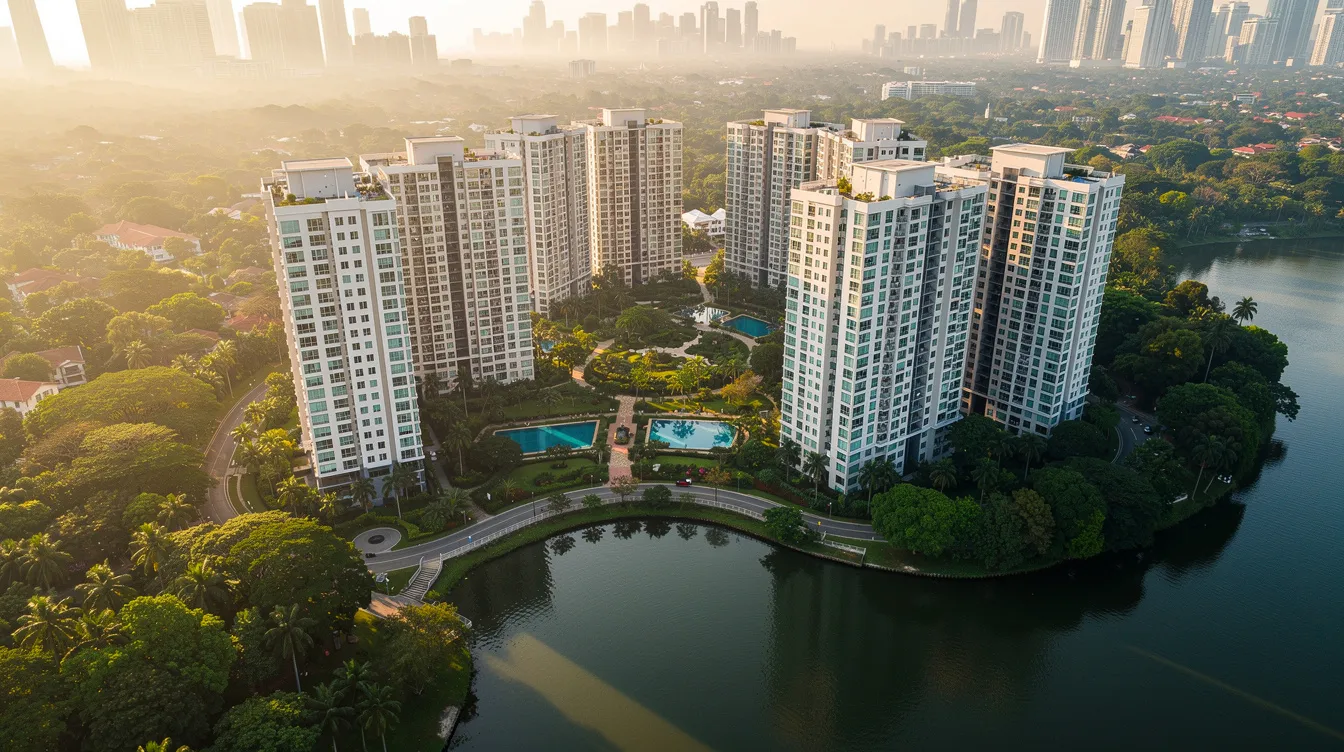
Understanding Decoupling and the “One Condo Into Two” Strategy
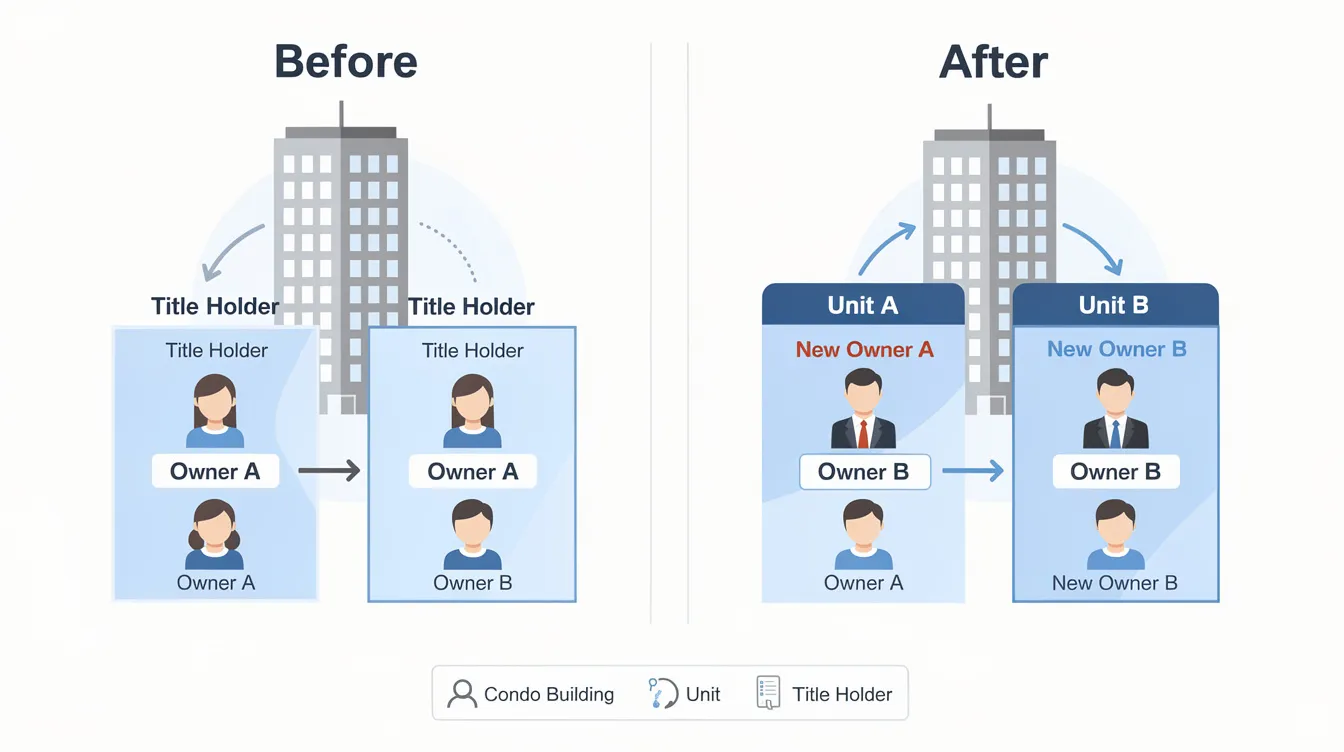
Decoupling is an ownership restructuring where co owners of a single residential property arrange for one spouse to transfer their share to the other owner via a part sale. After the transfer, the existing condo sits in one name only. The spouse whose name is freed – now owning no private properties – can then purchase a second property as a first time buyer, avoiding the 20% ABSD that Singapore Citizens pay on second properties.
This strategy is widely marketed in Singapore’s property advisory circles as “decouple then buy second property.” Agents often emphasise the headline ABSD savings while glossing over BSD on the transferred share, CPF refund obligations, and the financing stress that follows. That is precisely why a numbers-based risk assessment – not just a conceptual pitch – is necessary before any couple commits.
While the concept of splitting one asset into two ownership structures is specific to Singapore’s stamp duty framework, the underlying principle parallels how property owners in other markets unlock equity and adjust ownership when reconfiguring assets. Subdividing a condominium typically involves complex legal and engineering processes, and transforming a condominium into two legally distinct units requires approval from various authorities. In Singapore’s decoupling context, the complexity is regulatory and financial rather than physical – but the need for rigorous feasibility assessments is crucial before attempting any such restructuring.
Key Singapore Rules That Make or Break Decoupling
Four regulatory pillars in 2025–2026 determine whether the decoupling process produces results or burns cash.
Buyer’s Stamp Duty (BSD): BSD is computed on the higher of the contract price or fair market value of the property (or share) being acquired. The 2026 residential BSD schedule is progressive, with marginal rates from 1% on the first S$180,000 up to 6% on amounts above S$3,000,000. Critically, decoupling incurs buyer’s stamp duty on the transferred share – the remaining owner who “buys over” the departing spouse’s share must pay BSD on that portion’s market value. Buyer’s stamp duty BSD is therefore a non-negotiable cost of every decoupling transaction.
Additional Buyer’s Stamp Duty (ABSD):ABSD rates set in April 2023 remain in force. Singapore Citizens pay 0% ABSD on their first residential property, 20% on a second residential property, and 30% on third and subsequent purchases. Permanent residents face 5% on a first property and 30% on a second. The entire rationale for decoupling rests on ensuring the exiting spouse qualifies as holding no existing condo – and therefore faces 0% ABSD on the second purchase; if that buyer commits to the new purchase before the transfer is completed, they can still be treated as an existing owner for ABSD purposes.
Schemes structured to avoid paying ABSD by concealing a retained beneficial interest may amount to tax evasion and attract penalties.
TDSR and Loan-To-Value (LTV): TDSR limits monthly debt obligations to 55% of gross income, covering all outstanding obligations including car loans and credit cards. LTV limits drop to 40–50% for second property loans, but in a decoupling scenario, the remaining owner is refinancing their first property (higher LTV allowed) while the exiting spouse applies for a new loan on what is technically their first property. The remaining owner must qualify for the full outstanding loan on their individual income alone – a constraint that frequently derails plans.
CPF refund obligations: When a co-owner exits via part sale, all CPF funds used for the original purchase – principal plus accrued interest – must be refunded to their CPF account. This CPF refund requirement can consume a significant portion of the exiting spouse’s liquidity, reducing the cash and CPF funds available for the down payment on the second property.
What “Turning One Condo Into Two” Actually Means in Practice
For a married Singapore couple holding a condo in joint tenancy or tenancy-in-common, the standard sequence is:
-
Part sale of shares (decoupling): One spouse sells their share of the existing condo to the other owner. The buyer’s stamp duty on the transferred share’s market value is paid. After the transfer, the existing condo sits with one owner, and the remaining owner refinances into a sole-name mortgage.
-
Second purchase as first time buyer: The freed name spouse – now without property ownership in any residential property – purchases a second condo at 0% ABSD, arranging a fresh bank loan and down payment.
This is not a loophole or magic – it is a reordering of who legally owns what. For example, wife buys her husband’s share, becomes sole owner of the first condo, and frees him to make the second purchase. The couple’s household balance sheet becomes more leveraged: two mortgages, two sets of maintenance fees, two property tax bills, and concentration risk across two properties instead of one. The desired outcome is long-term wealth building through capital appreciation and rental income, but the household’s exposure to interest rate movements, vacancy, and income disruption roughly doubles.
The core issue is not just legality – decoupling allows one spouse to buy a second property without ABSD, and that is entirely legal – but whether the numbers stack up once all costs are fully priced in.
The Four Main Cost Components of Decoupling in Singapore
The financial viability of turning one condo into two hinges on four cost buckets. Each must be quantified with current rates before any couple can make an informed assessment. This section focuses on private condos, since decoupling is not allowed for HDB flats in Singapore, and ECs during minimum occupation period face separate restrictions.
1. Buyer’s Stamp Duty (BSD) on the Transferred Share
When one spouse transfers their share of a jointly-owned condo to the other, IRAS treats this as a property acquisition. Buyer’s stamp duty applies to the transferred share’s market value – not the original purchase price.
Consider a S$2.0M condo where equal shares are held. If a 50% share (current market value S$1.0M) is transferred, the BSD calculation at 2026 rates is:
|
Portion |
Rate |
BSD |
|---|---|---|
|
First S$180,000 |
1% |
S$1,800 |
|
Next S$180,000 |
2% |
S$3,600 |
|
Next S$640,000 |
3% |
S$19,200 |
|
Total on S$1,000,000 |
S$24,600 |
Even though no “new property” is bought in totality, the partial transfer is treated by IRAS as a separate acquisition. Decoupling can trigger a buyer’s stamp duty of approximately S$18,600 to S$24,600 or more depending on the fair market value of the share being transferred.
Ownership splits matter: a 99:1 arrangement means the transferred share is only 1% of market value (tiny BSD), but IRAS has increasingly scrutinised such schemes. A 50:50 split is the most common and defensible structure. The valuation must reflect fair market value – an independent valuation is essential to avoid IRAS queries.
2. Seller’s Stamp Duty (SSD), If Within Holding Period
Seller’s stamp duty is the single biggest deal-breaker filter. Following the July 2025 tightening, SSD applies to residential property acquired on or after 4 July 2025 and disposed within four years:
|
Disposal Period |
SSD Rate |
|---|---|
|
Within 1 year |
16% |
|
Year 2 |
12% |
|
Year 3 |
8% |
|
Year 4 |
4% |
|
After 4 years |
Exempt |
SSD applies even if only a partial interest is sold. For example, if you purchased a condo in August 2025 and attempt to decouple in May 2026 (within 1 year), the SSD on a S$1.0M half-share would be S$160,000 – immediately dwarfing any ABSD savings. SSD is computed on the value of the share disposed, not the entire property.
Rule of thumb: If your property is still within the SSD window, do not proceed with a decoupling assessment until the holding period expires. The seller’s stamp duty alone will almost certainly make decoupling uneconomical.
3. Legal, Conveyancing, and Valuation Fees
Decoupling involves two parallel transactions – a part sale of the existing condo and, subsequently, a part purchase of a new property – each requiring legal work. Decoupling legal fees typically range from S$3,000 to S$8,000, with total professional costs for the full exercise (both parties, including mortgage restructuring) running S$5,000 to S$10,000 or more.
Specific line items include:
-
Conveyancing fees for the sale and purchase of the share
-
Discharge of existing joint mortgage and registration of new sole-name mortgage
-
Title searches and caveat lodgement
-
Bank-required valuation reports (typically S$300–S$600 per valuation)
-
Mortgage processing or refinancing fees charged by the bank
Timing matters: if the existing housing loan is within a lock-in period, early repayment penalties (typically 1.5% of outstanding loan) add to the cash outlay. Coordinating decoupling with the expiry of a loan lock-in can save thousands.
4. Financing Restructuring and CPF Refund Impacts
The departing owner’s CPF usage on the original condo must be refunded to their CPF account – principal plus accrued interest at 2.5% compounded annually. If the exiting spouse used S$200,000 in CPF funds over seven years, the refund including accrued interest could exceed S$236,000. This CPF refund directly reduces the cash and CPF funds available for the down payment on the new purchase.
The remaining owner must refinance the outstanding loan into a sole-name mortgage. Banks will reassess affordability based on one income instead of two, subject to TDSR at 55% of that spouse’s gross monthly income. The maximum loan quantum may shrink, potentially requiring a cash top-up to bridge the gap. The new loan terms – interest rate, tenure – may differ from the original joint mortgage.
If the remaining spouse’s individual income cannot support the full outstanding loan under TDSR, the refinancing simply will not be approved. This is the single most common point of failure in the decoupling process.
Summary of the four cost components:
-
BSD on transferred share: ~S$24,600 for a S$1.0M half-share (2026 rates)
-
SSD: Zero if beyond 4-year holding period; up to 16% if within Year 1
-
Legal fees: S$5,000–S$10,000+ across both transactions
-
CPF refund + financing restructuring: Variable but potentially the largest cash flow impact
With costs assessed, the question becomes: do the numbers justify the strategy for a specific couple? The following case study answers that with real figures.
Worked Case Study: Decoupling a S$2.0M Condo to Buy a Second Unit
This section presents a realistic 2026 scenario: a Singapore Citizen couple, both salaried, jointly own a S$2.0M condo and want to end up with two properties while minimising ABSD exposure. Every figure below is grounded in current stamp duty rates and typical bank lending parameters.
Case Setup: Profile of Mr and Mrs Lim in 2026
Mr and Mrs Lim are both Singapore Citizens in their late 30s. They purchased their existing condo in 2019 for S$1,500,000 – it is now valued at S$2,000,000. They hold it in equal shares (50:50 tenancy-in-common). Their outstanding loan is S$800,000. Each spouse used S$200,000 from their CPF ordinary account toward the original purchase.
Their combined gross monthly income is S$20,000 – Mr Lim earns S$11,000 and Mrs Lim earns S$9,000. They have no other residential property and no significant non-housing debts. Since the condo was acquired in 2019, the SSD period is long past – no seller’s stamp duty applies on any transfer in 2026. Both are young enough to sustain a 25–28 year mortgage tenure on a new loan.
Their objectives are to keep the existing condo as the family home and acquire a second unit for rental income and long-term capital appreciation. To achieve this, Mrs Lim becomes sole owner of the existing condo. Mr Lim exits the title, becomes a first time buyer, and purchases a second S$1,500,000 condo closer to the CBD.
Step-by-Step: How the Decoupling Transaction Unfolds
Step 1 – Valuation and structuring. The Lims engage a bank-panel valuer who confirms the current market value of their existing condo at S$2,000,000. The 50% share to be transferred is therefore valued at S$1,000,000. They decide that Mr Lim will sell his half-share to Mrs Lim via a part sale.
Step 2 – Part sale and stamp duty. Mr Lim transfers his 50% share to Mrs Lim. She pays BSD on the S$1,000,000 transferred share: approximately S$24,600. Since the property was acquired in 2019 (over 4 years ago), SSD is zero. Mr Lim must execute a CPF refund of his S$200,000 principal plus accrued interest (approximately S$236,000 at 2.5% compounded over ~7 years). Legal fees for this conveyancing and mortgage restructuring total approximately S$7,000.
Step 3 – Refinance into sole name. Mrs Lim refinances the outstanding loan of S$800,000 into her sole name. Her bank assesses her S$9,000 monthly income against the TDSR cap of 55% (S$4,950 maximum monthly debt service). At a stress-test rate of approximately 4%, a S$800,000 loan over 25 years produces monthly instalments of roughly S$4,200 – within her TDSR ceiling, though tight. The bank approves the refinancing.
Step 4 – Mr Lim purchases Condo B. With his freed name and no property ownership, Mr Lim qualifies as a first time buyer. He purchases a S$1,500,000 condo. ABSD: 0%. BSD on S$1.5M: approximately S$44,600. He arranges a new loan – with LTV at 75% (his first property loan), his maximum loan is S$1,125,000. The down payment is S$375,000 (5% in cash minimum = S$75,000; remainder from CPF funds and cash). His CPF account has been partially depleted by the refund, so he needs approximately S$150,000–S$200,000 in cash savings to cover the gap.
Step 5 – Completion and rental. Both titles are registered – the existing condo under Mrs Lim, Condo B under Mr Lim. Mr Lim rents out Condo B. Gross rental yields for private condos averaged 3.29% in 2025; applying this to S$1.5M suggests gross rental income of approximately S$4,100/month. After property tax, maintenance, agent commission, and one month vacancy per year, net rental income is closer to S$3,200–S$3,500/month.
Tabulated Cost–Benefit: Decoupling vs Paying ABSD on Second Unit
|
Line Item |
Scenario A: No Decoupling (Pay ABSD) |
Scenario B: Decouple First, Then Buy |
|---|---|---|
|
ABSD on Condo B (S$1.5M) |
20% = S$300,000 |
S$0 (first time buyer) |
|
BSD on Condo B (S$1.5M) |
S$44,600 |
S$44,600 |
|
BSD on 50% share transfer of Condo A |
N/A |
S$24,600 |
|
SSD on share transfer |
N/A |
S$0 (beyond 4-year window) |
|
Legal + conveyancing fees |
~S$5,000 (purchase only) |
~S$12,000 (transfer + purchase) |
|
CPF refund by exiting spouse |
None |
~S$236,000 (refunded to CPF account) |
|
Loan restructuring costs |
None |
~S$2,000–S$3,000 |
|
Total stamp duties + fees |
~S$349,600 |
~S$83,200 |
Net ABSD saving through decoupling: approximately S$266,400.
However, Scenario B introduces costs that do not appear in Scenario A: the CPF refund locks up S$236,000 back into Mr Lim’s CPF account (usable for the new property but reducing flexibility), and Mrs Lim carries the full mortgage on a single income. The additional legal fees of approximately S$7,000 and financing restructuring costs are manageable but not negligible.
The cash outlay picture also shifts. In Scenario A, the couple pays S$300,000 ABSD upfront but their joint income supports both mortgages. In Scenario B, they save the S$300,000 but must fund two separate mortgages on two individual incomes, which pushes each spouse closer to their TDSR ceiling and reduces the household’s financial buffer.
Verdict for the Lim case: Decoupling saves approximately S$266,000 in net stamp duties. The strategy makes financial sense because the property is well outside the SSD window, Mrs Lim can independently service the existing mortgage, Mr Lim has sufficient cash reserves for the second purchase’s down payment, and their combined cash flow can absorb a period of negative returns on the investment condo. Without these conditions, the outcome would be very different.
Financing, Cash Flow, and Risk: Stress-Testing the Two-Property Plan
Attractive tax savings do not guarantee a safe strategy. The Lims’ plan only works if both mortgages remain serviceable under realistic – and pessimistic – scenarios. This section shows how to run a simple stress test on the numbers.
Individual Loan Eligibility After Decoupling
After decoupling, Mrs Lim must carry the S$800,000 outstanding loan on the family home using her S$9,000 gross monthly income alone. Under the 55% TDSR cap, her maximum monthly debt obligation is S$4,950. At a bank stress-test rate of approximately 4%, her monthly mortgage instalment on S$800,000 over 25 years is roughly S$4,200 – leaving only S$750/month of TDSR headroom for any other debts.
Mr Lim applies for a new loan of S$1,125,000 on Condo B. His S$11,000 income gives a TDSR ceiling of S$6,050. Monthly instalments at 4% over 25 years on S$1,125,000 are approximately S$5,930. This is tight – he has just S$120/month of TDSR margin. If he has a car loan or outstanding credit card debt, the bank may reject his application or reduce the loan quantum.
Age and tenure limits can tighten this further. If either spouse is older (e.g., late 40s), banks cap tenure at a shorter period, pushing monthly instalments higher and potentially breaching TDSR. For the Lims at late 30s, 25-year tenure is feasible, but this constraint should be assessed carefully for any couple considering decoupling.
Cash Flow Impact of Owning Two Condos
Monthly cash flow after decoupling for the Lim household:
|
Item |
Monthly Amount |
|---|---|
|
Mortgage on Condo A (Mrs Lim) |
–S$4,200 |
|
Mortgage on Condo B (Mr Lim) |
–S$5,930 |
|
Property tax (both condos combined) |
–S$500 |
|
Maintenance/MCST (both condos) |
–S$700 |
|
Rental income from Condo B (net of agent, vacancy) |
+S$3,400 |
|
Net monthly housing cost |
–S$7,930 |
|
Combined take-home income (after CPF) |
~S$16,000 |
|
Remaining for living expenses + savings |
~S$8,070 |
The two-property strategy is cash flow negative on the investment condo by approximately S$2,530/month (mortgage S$5,930 minus net rental S$3,400). This shortfall must be funded from the household’s employment income. Many two-property strategies are cash flow negative in early years, even when long-term equity gains look attractive on paper. Market conditions and property desirability can significantly influence the financial outcome over time.
Conservative rental assumptions matter: using gross yields of 3.29% (the 2025 average for private condos), deducting property tax, MCST, agent fees (one month per year), and factoring one month of vacancy annually, the net yield drops to approximately 2.5–2.7%. Couples who rely on optimistic 4–5% gross yield figures consistently overestimate cash flow.
Interest Rate and Vacancy Stress Tests
Interest rate and vacancy risk must be stress-tested before committing. Here are three scenarios for the Lims:
-
Base case (4% interest, 1 month vacancy/year): Combined monthly shortfall on Condo B ≈ S$2,530. Total monthly housing cost ≈ S$7,930. Manageable but leaves limited buffer.
-
Rates +1.5% (5.5% interest, 1 month vacancy): Monthly mortgage on Condo B rises to approximately S$6,900. Combined shortfall on Condo B ≈ S$3,500. Total housing cost ≈ S$9,300. Living expense margin shrinks to S$6,700 – pressure on lifestyle and savings.
-
Rates +1.5% AND rental –10% with 2 months vacancy: Net rental drops to approximately S$2,700/month. Shortfall on Condo B ≈ S$4,200. Total housing cost ≈ S$10,100. Remaining household funds ≈ S$5,900 – a level that puts the household at risk if either spouse faces income disruption.
Risk management recommendation: Couples should maintain at least 6–12 months of total housing costs in liquid cash before committing to a decoupling plus second purchase plan. For the Lims, this means keeping S$48,000–S$96,000 in accessible savings as a minimum buffer. Policy changes to interest rates or stamp duties – while impossible to predict precisely – add another layer of uncertainty that this buffer must absorb.

Structural and Legal Constraints: When You Cannot (or Should Not) Decouple
Not every Singapore home can be decoupled, and not every couple should try even if technically allowed. The risks identified in the stress-testing section above are financial – but there are also structural and legal barriers that can make the strategy impossible from the outset.
HDB Flats and ECs: Restrictions and Waiting Periods
Decoupling is not allowed for HDB flats in Singapore. Since 2016, HDB has generally prohibited transfers of flat ownership between spouses except on specific grounds – divorce, death of a co-owner, or other exceptional circumstances assessed case-by-case. Couples living in an HDB flat who want two properties cannot use the decoupling route.
Executive Condominiums (ECs) occupy a middle ground. During the minimum occupation period (typically 5 years), ECs are subject to HDB rules and decoupling is similarly restricted. After the MOP and once the EC is fully privatised (10 years from TOP), it becomes a private residential property and decoupling may become possible – but the couple must still comply with all private property stamp duties and LTV rules.
For HDB owners aiming to expand into two properties, the typical path is to sell the HDB flat entirely, then purchase two private properties sequentially (one per spouse). This triggers its own set of costs and timing constraints, including the need to plan around waiting periods for re-entry into the HDB market if desired.
Key Deal-Breakers for Private Condo Owners
Even for private condo owners, several red flags should halt the decoupling process:
-
Property still within SSD window: If the condo was acquired after 4 July 2025 and the transfer occurs within four years, SSD of up to 16% on the half-share will almost certainly wipe out any ABSD savings. This is the single most common risks identified that makes decoupling uneconomical.
-
One spouse’s income alone insufficient under TDSR: If the remaining owner cannot service the full outstanding loan at a 55% TDSR cap on their individual income, no bank will approve the refinancing. The strategy dies at this stage.
-
Very high CPF usage by exiting spouse: If the exiting spouse’s CPF refund obligation is large relative to their total liquid assets, they may lack funds for the down payment on the new purchase. Financing for the second property depends on adequate cash and CPF reserves after the refund.
-
Age and tenure constraints: Older borrowers face shorter maximum loan tenures, which push monthly instalments beyond safe debt-to-income levels.
-
Unstable or self-employed income: Banks apply significant income haircuts (often 30–50%) for variable, commission-based, or self-employed income. Risks of loan rejection or reduced loan quantum are substantially higher.
If any of these red flags is present, the couple should explore alternative strategies rather than forcing a decoupling that may not produce results.
Alternatives to Decoupling: Other Ways to Go From One Condo to Two
Sometimes the best decision is not to decouple. For the Lims, decoupling was viable because circumstances aligned. For many couples, one of the following alternatives may be the better path to two properties.
Alternative 1: Sell the Existing Condo, Then Buy Two Smaller Units
Sell the current S$2.0M condo, clear the outstanding loan, execute the CPF refund for both spouses, and redeploy the sales proceeds into two smaller condos – for example, one at S$1.3M and one at S$1.1M, each in a single spouse’s name. Since each spouse buys their first residential property, ABSD is 0% on both purchases.
Advantages: Cleaner financing since each spouse applies for a fresh bank loan independently. No part sale mechanics, no mortgage restructuring. No risk of IRAS scrutiny on share transfer valuations. Each property has its own clear title from the start – separate titles create unique property tax assessments for each unit.
Disadvantages: Full transaction costs on the sale (agent commission, legal fees). Temporary rehousing during the transition. Market timing risk – if property prices rise between sale and the two new purchases, the couple may be priced out. The total BSD paid on two purchases may exceed the BSD in a decoupling scenario.
Alternative 2: Buy the Second Property in One Name From the Start
For younger couples who have not yet bought their first property, the most efficient long-term plan is to purchase the first home in one spouse’s name only. The other spouse remains a first time buyer, positioned to acquire a second property years later without any decoupling – and without paying ABSD.
This approach uses foresight to avoid the time consuming and costly decoupling process entirely. The trade-off: a single income must support the first property loan, limiting the purchase price of the initial home. But the total lifetime cost – including stamp duties across both eventual purchases – is typically lower than buying jointly and decoupling later.
Alternative 3: Reposition into One Home Plus a Commercial or Industrial Unit
Some investors choose to pair a residential home with a commercial or industrial property rather than holding two condos or moving from a condo into a landed property plus a home asset mix. Additional buyer’s stamp duty does not apply to non-residential properties, eliminating the primary tax driver for decoupling altogether.
Commercial and industrial units have different loan to value limits (typically 60% LTV), different yield profiles (often higher gross but with greater vacancy risk), and different tenant management demands. Costs associated with subdividing or reconfiguring commercial units may exceed initial estimates due to construction complexities – constructing soundproof separating walls, meeting fire safety codes, and arranging utility sub-metering for independent billing are all potential requirements. Most condominium declarations restrict owners from splitting residential units, but commercial properties may offer more flexibility. Zoning regulations must permit the conversion, and permits and inspection approvals are required for any construction alterations.
This path is better suited to business owners who can use the commercial unit for operations as well as investment. For pure passive investors, the management complexity and illiquidity of commercial property may outweigh the stamp duty savings.
Common Mistakes Singapore Couples Make When Decoupling
Decoupling is heavily marketed in 2025–2026, and missteps frequently stem from incomplete or biased information from property agents whose incentives are aligned with transactions, not with the buyer’s long-term financial health.
Over-Focusing on ABSD Savings, Ignoring Total Costs
The most common error: couples fixate on the headline S$300,000 ABSD avoided and overlook BSD on the transferred share, legal fees, SSD risk, and financing restructuring costs that may total S$60,000–S$100,000 or more. Decoupling incurs buyer’s stamp duty and legal fees that are certain costs, not “maybes.”
Simple rule of thumb: If total decoupling costs exceed one-third of the ABSD saved, pause and run a deeper feasibility check. For a S$1.5M second purchase with S$300,000 ABSD at stake, this threshold is S$100,000 in total decoupling costs – a level that is reachable when SSD, high CPF refunds, or loan penalties are in play.
Underestimating Cash and CPF Liquidity Needs
Decoupling can trigger unexpected cash shortfalls at completion. The CPF refund from the exiting spouse returns funds to their CPF account – usable for the new property but not for legal fees, stamp duties, or living expenses. Some couples discover that the gap between available cash and the required down payment plus closing costs is larger than expected, only late in the process when commitments have been made.
Prepare a full funds flow statement before signing anything. Map where every dollar of sale proceeds, CPF funds, and cash will go across both transactions – the part sale and the new purchase. Include stamp duties, legal costs, loan repayment, CPF refund, and the new down payment in a single consolidated view.
Miscalculating Rental Yields and Vacancy Risks
Marketing materials often quote gross yields of 4–5% without deducting property tax, MCST fees, agent commissions, or vacancy. Gross rental yields for private condos averaged 3.29% in 2025 – and net yields after all deductions typically fall to 2.5–3%. Subdividing units may increase overall property value and rental yield if executed correctly, but for standard condo investments, using an optimistic gross figure is a recipe for negative surprises.
Build the financial model using conservative net yield estimates (2.5–3% net) plus at least one month of vacancy per year. If the investment condo is cash flow negative even under these conservative assumptions, ensure the household has sufficient income and savings to absorb the shortfall for several years.
Conclusion and Practical Next Steps
Decoupling can turn one Singapore condo into two efficiently – but only when the couple passes several strict numerical and regulatory tests. The Lim case study shows a net saving of approximately S$266,000 in stamp duties, but that saving required zero SSD exposure, individual loan eligibility under TDSR for both spouses, sufficient CPF and cash reserves, and a realistic assessment of rental yields and interest rate risk. When any of these conditions fails, the strategy either becomes uneconomical or introduces unacceptable financial risk.
Actionable next steps:
-
Check SSD status and current valuation. Confirm your condo is beyond the SSD holding period and obtain a current market value assessment from a licensed valuer.
-
Compute individual loan eligibility. Run a TDSR-based stress test for each spouse separately – use a stress rate of 4–5%, not the current contracted rate.
-
Obtain indicative quotes. Get legal fee estimates for conveyancing and bank refinancing. Confirm any loan lock-in penalties on your existing mortgage.
-
Model all three scenarios. Compare decoupling vs. paying ABSD vs. sell-then-buy-two using your actual numbers. The scenario with the lowest total cost and acceptable risk profile – not just the lowest stamp duty – is the right choice.
-
Consult qualified professionals. Engage a conveyancing lawyer for the legal structuring and a mortgage specialist for financing. Decoupling typically takes 2 to 3 months to complete, and coordination between legal, banking, and CPF timelines is critical.
Owners managing property assets across multiple markets – Singapore and the GCC, for example – can combine legal structuring strategies like decoupling with engineering-led asset optimisation (subdivision, retrofitting, reconfiguration of built assets) to enhance long-term portfolio value. The principles of rigorous feasibility assessment, risk management, and cost-benefit analysis apply universally, whether you are restructuring ownership of a Singapore condo or reconfiguring a tower in Dubai.
FAQs on Decoupling and Turning One Condo Into Two
Is decoupling still legal in Singapore in 2026, and is IRAS clamping down on 99:1 schemes? Yes, decoupling via part sale of shares remains legal. IRAS expects the transaction to be conducted at fair market value with proper valuation. While “99:1” ownership splits have faced increased scrutiny, no specific law prohibits them – but the arrangement must be substantive and not structured purely as a bare trust to avoid ABSD, and attempts to avoid paying ABSD while secretly retaining a beneficial interest can attract penalties.
How long does decoupling usually take from signing to completion and purchase of the second condo? Decoupling typically takes 2 to 3 months from initial valuation through legal completion of the share transfer and mortgage refinancing. The second purchase timeline depends on whether it is a resale or new launch, potentially adding another 1–3 months. Overall, expect 3–6 months from start to holding two properties.
Can I decouple my HDB flat or EC to buy two properties? Decoupling is not allowed for HDB flats in Singapore, except under special grounds such as divorce or death of a co-owner. For ECs, decoupling is restricted during the minimum occupation period. After full privatisation (typically 10 years from TOP), EC owners may be able to decouple under private property rules.
Roughly how much does decoupling cost for a S$2.0M condo outside the SSD window? For a 50:50 share transfer at S$1.0M market value: BSD approximately S$24,600, legal and conveyancing fees S$5,000–S$10,000, valuation fees S$300–S$600, and potential refinancing costs of a few thousand dollars. Total direct costs before CPF refund impacts: approximately S$30,000–S$35,000.
Who should exit the title – higher-income or lower-income spouse – and why? Generally, the lower-income spouse should exit, because the higher-income remaining owner is more likely to qualify for the refinanced sole-name mortgage under TDSR. The right answer also depends on the couple’s objectives, income profile, and financing constraints. The exiting spouse then buys the second property – typically a smaller or lower-priced unit – on their individual income. However, if the lower-income spouse cannot independently qualify for a mortgage on the second property, roles may need to be reversed based on specific circumstances.
What happens if my income drops or interest rates rise after we own two condos? The remaining borrower’s mortgage on the existing condo and the exiting spouse’s new loan on the second property both become harder to service. If rental income from the investment property also drops due to vacancy or falling rents, the household faces compounding cash flow pressure. Stress-test with rates 1.5–2% above current levels and assume 10–15% lower rental income before committing. Maintain 6–12 months of total housing costs in liquid savings as a buffer.
What basic documents do banks and lawyers usually need to start a decoupling assessment? A recent valuation report for the existing condo, current outstanding loan statements, title documents, CPF statements showing cpf usage and accrued interest for each co-owner, income documentation (payslips, tax assessments, or IR8A forms) for both spouses, identification documents, and the Sale and Purchase Agreement for the new property once identified. Banks may also require evidence of the market value basis for the share transfer.

