


A rental checklist for landlords is a structured, step-by-step framework covering every critical phase of property management, from legal compliance and tenant screening to move-in documentation and ongoing record-keeping. Landlords who skip any phase risk financial penalties, unenforceable agreements, or costly disputes. In Singapore, where regulations from IRAS, HDB, and URA govern rental activity with real consequences, a property management checklist is not optional. It is the difference between a profitable tenancy and a legal headache.
1. Legal and regulatory steps before listing your property
Legal compliance is the foundation of every landlord responsibilities checklist, and in Singapore, the rules are specific and non-negotiable.
HDB eligibility and MOP rules. Standard HDB flats require a 5-year MOP before whole-unit rental is permitted. During the MOP, only room rentals are allowed, and only with HDB approval. Ignoring this rule exposes you to fines and forced lease termination.

MCST by-laws and mortgage covenants. For condominiums, confirm that your Management Corporation Strata Title (MCST) by-laws permit subletting and that your mortgage agreement does not restrict rental activity. Some bank loan agreements require written lender consent before leasing.
Tenancy agreement stamping. IRAS requires tenancy agreements to be e-Stamped within 14 days of signing for leases executed in Singapore. Stamp duty is 0.4% of total rent for leases up to 4 years, and late penalties can reach 4 times the duty amount. While stamp duty is conventionally borne by the tenant, landlords share legal responsibility to confirm the agreement is stamped within statutory deadlines. An unstamped agreement cannot be admitted as evidence in court, which means you lose your primary legal protection.
Safety certificates. The NRLA landlord responsibilities checklist requires Gas Safety Certificates and Electrical Installation Condition Reports to be provided before tenancy begins, with electrical inspections required every 5 years. Singapore landlords should apply the same standard: confirm gas and electrical systems are safe and documented before handing over keys.
Pro Tip: Treat IRAS e-Stamping as part of your rental launch checklist, not an afterthought. Processing it on the day of signing prevents enforceability gaps and removes the risk of penalty entirely.
2. How to screen tenants effectively and legally
Tenant screening is the most consequential decision in your rental property inspection list. A bad tenant costs far more than a vacant unit.
Documents to collect from every applicant:
- Government-issued photo ID (NRIC, passport, or Employment Pass)
- Proof of employment (offer letter, payslip, or CPF contribution history)
- Last 3 months of bank statements or income verification
- Previous landlord reference or rental history
Questions to ask tenants during the interview. Group your questions by category for consistency. For rental history, ask how long they lived at their previous address and why they are moving. For employment, ask about their current role and expected duration in Singapore. For household composition, ask how many people will occupy the unit. These questions are factual and legally defensible.
Avoid questions about nationality, religion, marital status, or family planning. These touch protected characteristics and expose you to discrimination claims. The tenant screening guide from Checkr confirms that allowed questions focus on rental history, employment, and household details, while questions on protected characteristics must be avoided entirely.
Formal screening vs. informal interviews. Interview questions help you understand a tenant’s background, but they do not replace formal screening. Tenant screening criteria consistency helps landlords defend adverse decisions if challenged. Document your evaluation criteria before you start interviewing, apply them to every applicant, and keep written records of your decisions. This separation between informal conversation and formal documented screening is what makes your process defensible. For more on building a compliant process, the landlord roles in leasing guide covers tenant interview frameworks in detail.
Pro Tip: Score every applicant against the same written criteria immediately after each interview. Waiting until you have seen all applicants introduces bias and weakens your documentation trail.
3. Property preparation and marketing checklist
A well-prepared unit rents faster and attracts better tenants. Work through these steps before listing.
- Deep clean the entire unit. This includes carpets, grout, appliances, and window tracks. First impressions set tenant expectations for how they will treat the property.
- Complete all repairs. Fix leaking faucets, broken fixtures, damaged walls, and faulty locks. Unresolved repairs signal neglect and invite negotiation on rent.
- Arrange pest control. A pre-tenancy pest treatment protects you from disputes about infestations that arise during the tenancy.
- Set up utilities. Confirm that electricity, water, and gas accounts are active and ready for transfer or billing.
- Install safety features. Smoke detectors, fire extinguishers, and working door locks are minimum habitability requirements. Check that all are functional.
- Create a furnishings inventory. List every appliance, piece of furniture, and fixture included in the rental. Note the brand, model, and condition of each item. This list becomes part of your lease agreement and your move-in checklist.
- Document the unit’s condition. Photograph every room, every wall, every appliance, and every fixture before the tenant moves in. Use a timestamp-enabled camera or phone. These photos are your primary defense in any deposit dispute.
- Draft compliant lease terms. Your tenancy agreement should specify rent amount, payment date, lease duration, permitted use, maintenance responsibilities, and deposit conditions. Review URA guidelines on minimum tenancy terms before finalizing.
- Prepare your marketing materials. Use the timestamped photos for listings. Write accurate descriptions that match the unit’s actual condition and included furnishings.
4. How to document move-in and move-out inspections
A move-in inspection record is your legal shield. Done correctly, it makes security deposit disputes almost impossible to contest.
What a complete move-in record must include:
- A fully executed, signed tenancy agreement
- A signed inspection checklist walked through with the tenant in person
- Timestamped photographs linked directly to each checklist item
- Signatures and dates on every page of the inspection form
A minimum walkthrough of 50+ inspection items documented with photos and signatures makes the record court-proof. Cover walls, ceilings, floors, windows, doors, locks, plumbing fixtures, electrical outlets, appliances, and all furnishings listed in the inventory. The key principle is that photographic evidence linked to each checklist item with signatures and dates is what makes documentation hold up in court.
Move-out inspection process. Conduct the move-out walkthrough using the same checklist and the same room-by-room sequence. Compare current photos directly against move-in photos for each item. Document every discrepancy with a new photograph and a written description.
Handling deposit deductions. Deductions must be itemized, documented, and supported by repair quotes or receipts. Provide the tenant with a written breakdown within the timeframe specified in your lease. Vague deductions without evidence are the most common cause of deposit disputes.
| Inspection stage | Required documentation |
|---|---|
| Move-in | Signed checklist, timestamped photos, executed lease |
| During tenancy | Maintenance request logs, repair receipts, communication records |
| Move-out | Comparative photos, itemized deduction list, signed acknowledgment |
Pro Tip: Conduct the move-out inspection with the tenant present and have them sign the completed form on the spot. A signature at the time of inspection is far stronger than one obtained days later.
5. Record-keeping and ongoing management tasks
Ongoing documentation is what separates landlords who profit consistently from those who face repeated disputes and tax surprises.
Core records every landlord must maintain:
- Signed tenancy agreements and IRAS stamp certificates
- Move-in and move-out inspection checklists with photos
- Rent payment records with dates and amounts
- Lease renewal dates and notice period deadlines
- Safety certificate renewal dates (gas, electrical)
- Maintenance request logs and repair receipts
- All written communication with tenants
Tax reporting obligations. Rental income must be declared to IRAS, and landlords can choose between claiming allowable expenses or taking a 15% deemed-expense deduction. The deemed-expense option is simpler but may not reflect your actual costs if you spend heavily on maintenance. Keep all receipts either way, because IRAS can request documentation during an audit. For a detailed breakdown of how rental income affects your overall returns, the rental yield guide covers allowable deductions and net yield calculations.
Lease renewal management. Set calendar reminders at least 3 months before lease expiry. This gives you time to assess market rates, negotiate renewal terms, or begin marketing the unit without a vacancy gap. Landlords who manage renewals reactively consistently leave money on the table.
Pro Tip: Use a shared cloud folder per tenancy to store all documents, photos, and communications in one place. If a dispute reaches a tribunal, having everything organized and timestamped saves hours of preparation.
Key takeaways
A complete rental checklist for landlords covers legal compliance, tenant screening, property preparation, inspection documentation, and ongoing record-keeping as one integrated system, not a series of isolated tasks.
| Point | Details |
|---|---|
| Legal compliance first | Confirm HDB MOP eligibility and e-stamp your tenancy agreement within 14 days to avoid penalties. |
| Screen tenants with documented criteria | Apply consistent, written screening criteria to every applicant and keep records of all decisions. |
| Document everything at move-in | A 50-plus-item inspection checklist with timestamped photos and signatures is court-proof evidence. |
| Declare rental income to IRAS | Choose between actual expense deductions or the 15% deemed-expense option each tax year. |
| Manage renewals proactively | Review lease terms and market rates at least 3 months before expiry to avoid vacancy gaps. |
Why most landlords underestimate the checklist
Most landlords I work with treat a rental checklist as a formality. They assume experience replaces process. After years of advising landlords across Singapore, I can tell you the opposite is true. Experienced landlords who skip documentation steps get burned just as often as first-timers. The difference is that experienced landlords are more surprised when it happens.
The single most costly mistake I see is treating the tenancy agreement and stamp duty as paperwork to handle later. Later becomes never, and an unstamped agreement is an unenforceable one. I have seen landlords lose deposit disputes entirely because they could not produce a court-admissible agreement. That is a preventable outcome.
The second pattern I notice is landlords who do thorough move-in documentation but nothing during the tenancy. Maintenance logs and communication records matter just as much. When a tenant claims a repair was never addressed, your written log of every request and response is what protects you.
For first-time landlords, a checklist removes the anxiety of not knowing what you are missing. For experienced landlords, it removes the overconfidence that comes from thinking you already know. The Singapore property leasing guide is a resource I recommend to both groups because it covers the procedural and legal layers together. A systematic approach is not bureaucracy. It is how you protect your income and your reputation at the same time.
— Aman
Let Aesthetic Havens handle the complexity for you
Managing a rental property in Singapore involves legal compliance, tenant vetting, documentation, and ongoing management. Getting any one of these wrong costs time and money.
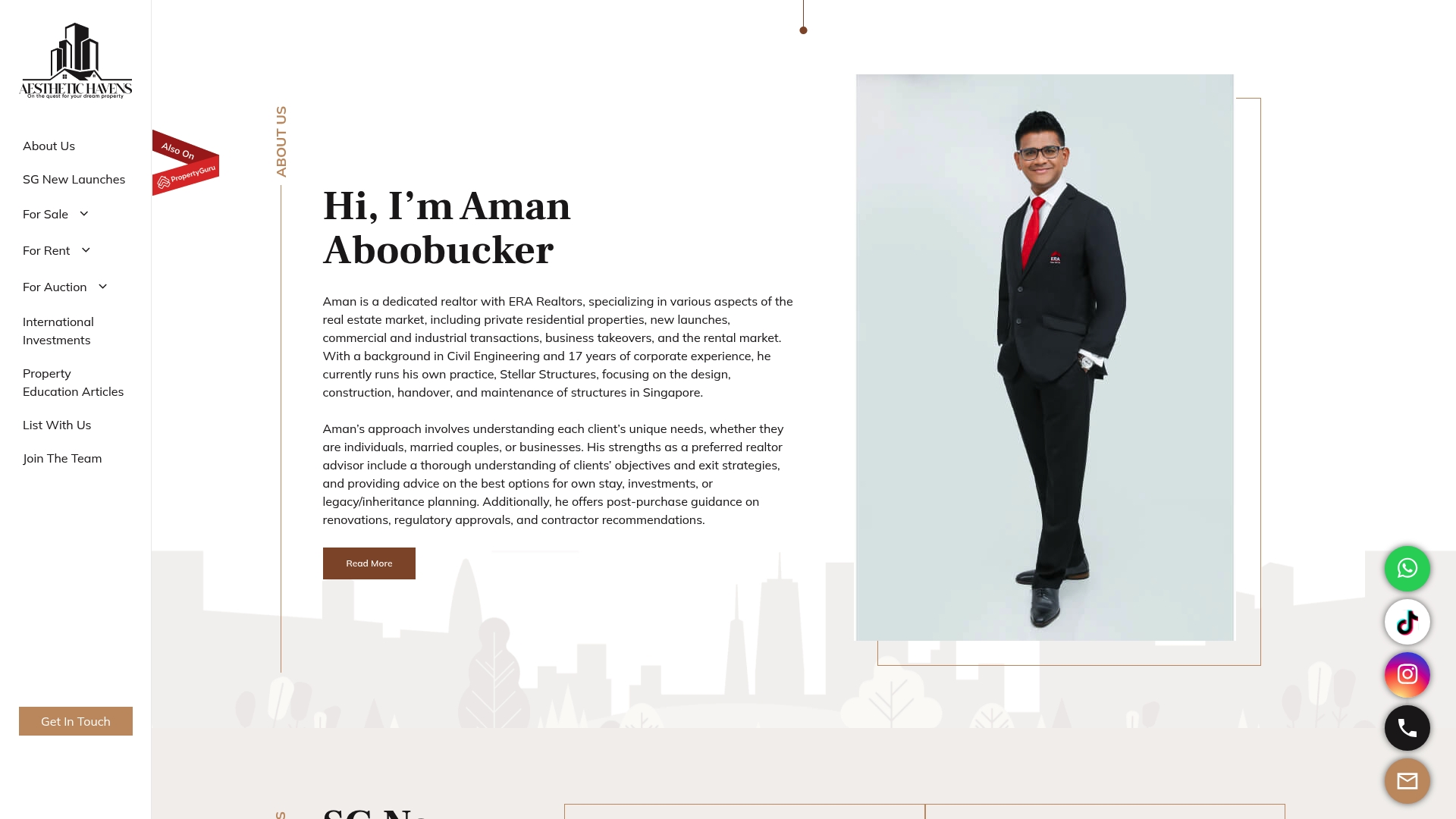
Aesthetic Havens, operated by Aman Aboobucker under ERA Realtors, provides landlords with end-to-end leasing support: from confirming legal eligibility and drafting compliant tenancy agreements to tenant screening support and property marketing. Whether you are renting out your first unit or expanding a portfolio, the team brings Singapore-specific expertise to every step. Explore real estate advisory services or visit Aesthetic Havens to connect with a specialist today.
FAQ
What is a rental checklist for landlords?
A rental checklist for landlords is a step-by-step guide covering legal compliance, tenant screening, property preparation, inspection documentation, and ongoing management tasks. It helps landlords fulfill their responsibilities and reduce the risk of disputes or penalties.
How long do landlords have to stamp a tenancy agreement in Singapore?
IRAS requires tenancy agreements to be e-Stamped within 14 days of signing. Late stamping carries penalties of up to 4 times the original stamp duty amount, and an unstamped agreement cannot be used as evidence in court.
What questions can landlords legally ask tenants?
Landlords can ask about rental history, employment status, income, household composition, and move-in timeline. Questions about nationality, religion, marital status, or family planning must be avoided because they touch protected characteristics.
How many items should a move-in inspection cover?
A thorough move-in inspection should cover a minimum of 50 items, including walls, floors, ceilings, fixtures, appliances, and all furnishings listed in the inventory. Each item should be photographed and signed off by both parties.
Do Singapore landlords need to declare rental income?
Yes. Rental income must be declared to IRAS each tax year. Landlords can claim actual allowable expenses or opt for a 15% deemed-expense deduction, whichever better reflects their costs.


