


Selecting an investment property means choosing a real estate asset that generates consistent rental income and appreciates in value over time. Unlike buying a home, this decision is driven entirely by numbers: cash flow, rental demand, financing feasibility, and neighborhood fundamentals. Objective financial metrics outperform personal preference every time when evaluating properties for long-term success. Whether you are a first-time investor or expanding a portfolio, knowing how to select investment property with discipline separates profitable deals from expensive mistakes.
How to select investment property using financial criteria
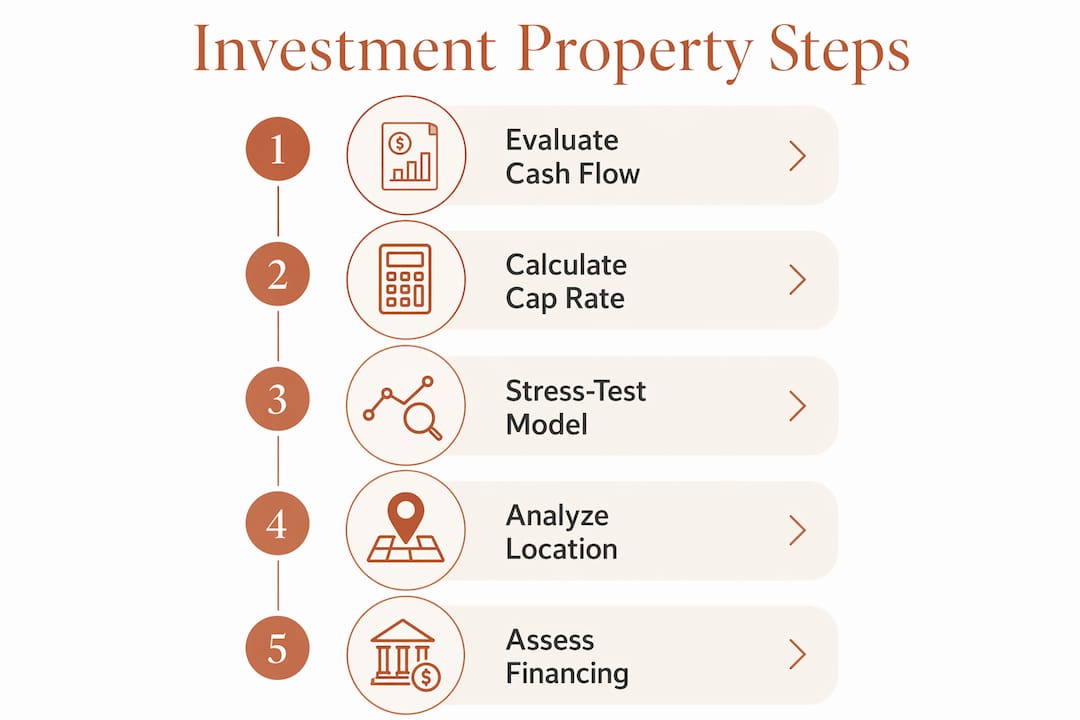
The foundation of any sound property investment is a clear picture of cash flow. Cash flow is the money left over after collecting rent and paying every expense, including mortgage payments, property taxes, insurance, maintenance reserves, and management fees. A property that looks attractive at asking price can destroy returns once realistic costs are factored in. Rental demand is strongest in areas with high renter concentration, low unemployment, rising rents, and low crime rates, so your financial model must reflect the market you are actually buying into.
Understanding cap rate and net operating income
Cap rate equals net operating income divided by property value, giving you an apples-to-apples yield comparison across different investment options. A cap rate of 5% on one property and 8% on another tells you immediately which generates more income relative to its price. The catch is that cap rate is only as reliable as your NOI calculation. Overly optimistic vacancy assumptions or ignored expense reserves will inflate the number and mislead your decision.
Stress-testing your underwriting
Experienced investors do not model best-case scenarios. They model rents 15 to 20% lower and assume higher vacancy to stress-test whether a deal still works under pressure. This means a property must clear your return threshold even in a downside scenario before you consider it worth purchasing. If the numbers only work when everything goes right, walk away.
Pro Tip: Build a simple two-scenario spreadsheet for every property: one with your expected rents and vacancy, and one with rents 15% lower and vacancy doubled. If the pessimistic model produces negative cash flow, the deal is too fragile.
Conservative underwriting also means modeling appraisal shortfalls and lower loan-to-value ratios to avoid funding gaps during acquisition or renovation. Investors who assume the appraisal will match the purchase price often face emergency sales when it does not.
| Financial Metric | What to Calculate | Why It Matters |
|---|---|---|
| Cash flow | Rent minus all expenses monthly | Confirms the property pays for itself |
| Cap rate | NOI divided by purchase price | Compares yield across different assets |
| Debt service coverage ratio | NOI divided by annual debt payments | Shows lender and investor repayment safety |
| Renovation buffer | Estimated cost plus 20% contingency | Prevents budget overruns from killing returns |
How do neighborhood and market factors affect investment success?
Location is not a cliché. It is the single variable that determines whether a great property performs or underperforms. Neighborhood factors such as job market strength, crime rates, school quality, and property taxes directly affect rental feasibility and profitability. A well-renovated unit in a neighborhood with rising vacancies will sit empty far longer than a modest unit in a high-demand area.

The best areas for real estate investment share specific characteristics: population growth, employment diversification, low housing supply relative to demand, and active infrastructure investment. Multifamily investors in particular prioritize community fundamentals like population growth and employment before evaluating any individual asset. The logic is direct: a great building in a weak community will underperform a mediocre building in a strong one.
Here is what to research before committing to any neighborhood:
- Vacancy rates: Compare local vacancy against the city average. Anything significantly above average signals weak demand.
- Employment base: Single-employer towns carry outsized risk. Look for markets with diverse industries.
- Rental price trends: Rising rents over three or more years indicate sustained demand, not a temporary spike.
- Crime statistics: Use publicly available data from local police departments or platforms like NeighborhoodScout to verify safety.
- School ratings: Even if your target tenants are not families, school quality correlates with neighborhood stability and property values.
- Planned infrastructure: New transit lines, commercial developments, or university expansions often precede appreciation.
Pro Tip: Visit the neighborhood at different times of day and on weekends before buying. No amount of online research replaces standing on the street and observing foot traffic, property upkeep, and the general condition of neighboring buildings.
You can also review market fundamentals and pricing trends to understand how demographic and employment factors shape rental demand in specific districts.
What property-level features maximize rental income?
Once you have confirmed the market and neighborhood, the physical property itself becomes the filter. Well-maintained properties with low immediate repair needs reduce maintenance costs and protect cash flow from day one. A property requiring a new roof, HVAC replacement, and exterior work within the first two years will consume months of rental income before you see a return.
When evaluating rental properties at the property level, focus on these criteria:
- Age of major systems: Roof, HVAC, plumbing, and electrical systems each have predictable lifespans. A 20-year-old roof on a property with a 10-year investment horizon is a liability, not a feature.
- Natural light and layout: Tenants pay more and stay longer in units with good light, functional floor plans, and adequate storage.
- Parking and laundry: In most suburban and urban markets, in-unit or on-site laundry and dedicated parking are not optional extras. They are retention tools.
- Property taxes and insurance: These two fixed costs vary dramatically between neighborhoods and property types. A $200 monthly difference in property taxes across two otherwise identical properties changes your annual return by $2,400.
- Tenant demographic fit: A studio near a university attracts students. A three-bedroom near good schools attracts families. Match the property to the tenants most likely to rent in that location.
Selecting properties that align with the dominant tenant demographic in an area reduces vacancy periods and supports consistent rent collection. This is one of the most underrated criteria for property selection that most first-time investors overlook.
What financing strategies influence your property choice?
Financing shapes what you can buy, how much you pay, and how quickly you can act. Lenders typically require 15% to 25% down for investment properties, compared to as little as 3% for primary residences. That gap has a direct impact on which properties fall within your budget and how you structure your offer.
The main loan options available to property investors are:
- Conventional loans: Standard bank financing requiring strong credit scores, documented income, and the higher down payment. Best for investors with stable W-2 income or strong tax returns.
- Home equity loans or HELOCs: Allow existing homeowners to tap equity in their primary residence to fund an investment purchase. Useful for reducing out-of-pocket costs but adds risk to your primary home.
- DSCR loans (Debt Service Coverage Ratio loans): Qualify based on the property’s rental income rather than personal income. Favored by self-employed investors or those with complex income structures.
| Loan Type | Down Payment Requirement | Best For |
|---|---|---|
| Conventional loan | 15% to 25% | Salaried investors with strong credit |
| HELOC or home equity loan | Varies by equity | Existing homeowners expanding portfolio |
| DSCR loan | 20% to 25% | Self-employed or income-complex investors |
Get preapproved before you make offers. Sellers in competitive markets treat preapproved buyers differently, and knowing your exact borrowing limit prevents you from falling in love with properties outside your range. You should also compare at least three lenders, since rate differences of even 0.5% compound significantly over a 30-year loan on an investment property.
What mistakes should you avoid when selecting investment properties?
Most investment property losses are not caused by bad luck. They are caused by predictable errors that disciplined underwriting and research would have caught. Knowing the questions to ask before buying property is as important as knowing what to look for.
- Ignoring local rental demand: Buying in a market with rising vacancy because the price looks attractive is a trap. Extended vacancies eliminate cash flow faster than almost any other variable.
- Underestimating repair costs: First-time investors routinely budget 10% to 15% less than actual renovation costs. Add a 20% contingency to every estimate before you commit.
- Buying on emotion: A property with a beautiful kitchen or a view is not a good investment unless the numbers confirm it. Emotional attachment to a property is the fastest way to overpay.
- Skipping inspections: A professional inspection by a licensed inspector is non-negotiable. Hidden structural issues, mold, or outdated electrical panels can cost tens of thousands of dollars after closing.
- Ignoring landlord-tenant laws: Local regulations on security deposits, eviction timelines, and habitability standards vary widely. Violating them creates legal liability that can exceed your annual rental income.
- No contingency fund: Plan for three to six months of carrying costs in reserve. Unexpected vacancies, major repairs, or financing delays happen. Investors without reserves are forced into bad decisions.
Pro Tip: Run your numbers with a conservative rental market model that assumes pessimistic rent growth and higher vacancy before you sign anything. If the deal only works in an optimistic scenario, it is not a deal.
Key takeaways
Selecting a profitable investment property requires disciplined financial underwriting, rigorous neighborhood analysis, and a clear-eyed assessment of property condition and financing constraints.
| Point | Details |
|---|---|
| Cash flow is the primary filter | Calculate all expenses before assuming a property generates income. |
| Stress-test every deal | Model rents 15 to 20% lower and higher vacancy before committing. |
| Neighborhood drives performance | Strong employment, low vacancy, and growth indicators outweigh property aesthetics. |
| Financing shapes your options | Investment properties require 15% to 25% down; compare at least three lenders. |
| Avoid emotional decisions | Inspections, legal research, and contingency funds are non-negotiable safeguards. |
What I have learned from years of property investment decisions
The investors I have seen succeed consistently share one habit: they walk away from more deals than they close. That discipline is harder than it sounds. When you have spent weeks researching a property, visited it multiple times, and started imagining the rental income, walking away feels like failure. It is not. It is the job.
The most dangerous moment in any acquisition is when you start adjusting your underwriting to make a deal work instead of letting the numbers tell you whether it works. I have seen buyers lower their vacancy assumptions, inflate their rent projections, and ignore inspection findings because they wanted a particular property. Every one of those decisions cost them money.
Local knowledge matters more than any spreadsheet. I always recommend visiting a neighborhood at multiple times of day, talking to local property managers, and checking what comparable units are actually renting for, not what landlords are asking. The gap between asking rent and achieved rent in a given submarket tells you more about demand than any report.
Balancing cash flow with appreciation potential is a real tension. Some markets offer strong yields but slow appreciation. Others offer the reverse. The right answer depends on your investment horizon and income needs. If you need the property to pay for itself from year one, prioritize cash flow markets. If you can carry a modest shortfall for five or more years, appreciation-driven markets may deliver stronger total returns.
Finally, use technology and peer networks. Platforms that aggregate rental data, local investor groups, and professional advisors all reduce the information gap between you and experienced buyers. You do not need to figure this out alone, and the cost of bad information is far higher than the cost of good advice.
— Aman
Find your next investment property with Aesthetic Havens

Aesthetic Havens, operated by Aman Aboobucker under ERA Realtors, provides property investors in Singapore and internationally with the market intelligence and advisory support needed to make disciplined investment decisions. Whether you are evaluating your first rental property or expanding an existing portfolio, the team offers hands-on guidance covering financial analysis, neighborhood assessment, and lender navigation. Explore real estate advisory services tailored to investors at every stage, or visit Aesthetic Havens directly to connect with Aman and start identifying properties that match your return criteria.
FAQ
What makes a property a good investment?
A good investment property generates steady cash flow after expenses with strong rental demand and low maintenance costs. The property must produce positive returns even under conservative rent and vacancy assumptions.
How do I evaluate rental properties before buying?
Calculate cash flow, cap rate, and debt service coverage ratio using realistic expense and vacancy figures. Then verify neighborhood rental demand, compare local vacancy rates, and conduct a professional property inspection before making an offer.
What down payment do I need for an investment property?
Investment property lenders typically require between 15% and 25% down, significantly more than primary residence loans. Confirm your financing requirements with at least three lenders before targeting a price range.
What are the best areas for real estate investment?
The strongest markets combine population growth, employment diversity, low housing supply relative to demand, and active infrastructure investment. Avoid markets where a single employer or industry dominates the local economy.
What questions should I ask before buying an investment property?
Ask what comparable units are actually renting for (not asking price), what the local vacancy rate is, what major systems need replacement within five years, and whether the deal still produces positive returns if rents drop 15% and vacancy doubles.


