


Singapore’s commercial property market in 2026 is not a single story. It is a segmented, data-rich environment where office rents sit at a 17-year high while industrial deal volumes soften and retail plays a quieter but stabilizing role. For investors and business owners navigating this landscape, the difference between a good year and a great one comes down to sector precision, deal structure, and timing. This article gives you an evidence-backed, sector-by-sector breakdown of what is actually moving the market in 2026 and where the real portfolio opportunities lie.
Table of Contents
- How to analyze Singapore’s commercial property trends in 2026
- Office market: Surging rents and limited supply
- Industrial & logistics: Steady demand, compliance, and selective investment
- Investment strategies and portfolio moves for 2026
- What most investors miss: The virtue of patience and selective conviction in 2026
- Unlock your competitive edge with expert guidance
- Frequently asked questions
Key Takeaways
| Point | Details |
|---|---|
| No broad boom | 2026 brings targeted, not universal, opportunities in Singapore’s commercial property market. |
| Prime asset focus | Investors and businesses gain most by prioritizing high-quality offices and industrial assets. |
| Supply remains tight | Office and key industrial segments will see further tightening, supporting rents and asset values. |
| Strategic patience wins | Selective, conviction-driven plays and active management outperform passive approaches in 2026. |
How to analyze Singapore’s commercial property trends in 2026
Before you deploy capital or renegotiate leases, you need a working framework for reading 2026’s commercial market. The conditions this year are not uniform. Some sectors are tightening aggressively, others are plateauing, and a few offer counter-cyclical value for patient investors. Understanding what is driving each segment is the starting point.
The key market forces shaping 2026 include:
- Supply tightening: New completions across office and industrial are significantly below historical averages, pushing rents higher in prime zones.
- Sustained occupier demand: Multinational corporations and regional headquarters continue choosing Singapore as their APAC base, keeping absorption rates healthy.
- Value-add positioning: Investors are actively repositioning assets through retrofits, ESG upgrades, and lease restructuring rather than passive holding.
- Geopolitical risk pricing: US-China tensions, tariff volatility, and global rate uncertainty are built into cap rate expectations and deal timelines.
- Partial stake structures: Large commercial deals increasingly involve partial interest transfers and fund restructurings rather than outright acquisitions.
The dominant theme running through institutional positioning this year is the flight-to-quality approach, where premium asset focus drives decision-making over opportunistic bargain hunting. If your strategy relies on finding discounts in Grade A CBD offices, you will be waiting a long time. The market rewards conviction over hesitation.
For a broader view of what led to these conditions, reviewing the 2025-2026 property forecast gives useful context on how residential and commercial price trajectories have diverged. If you want a deeper sector breakdown of what changed going into this cycle, the real estate outlook for 2025 remains a strong reference for understanding baseline assumptions.
Pro Tip: Do not confuse transaction volume with market health. In 2026, lower deal counts in some sectors reflect selectivity, not weakness. Smart money is moving slowly and deliberately.
Office market: Surging rents and limited supply
If there is one commercial segment delivering clear, measurable momentum in 2026, it is the CBD office market. CBD Grade A rents have climbed to S$12.04 per square foot per month, a level Singapore has not seen in 17 years. This is not a spike. It is a structural shift driven by a near-empty development pipeline and relentless demand from financial services, tech firms, and regional HQ operations.
Islandwide office vacancy has tightened to 11.1%, with Grade A CBD assets seeing even lower availability. The supply picture from 2026 to 2030 adds approximately 4 million square feet of new space, which sounds significant until you compare it to historical delivery rates. It is well below prior decade averages, meaning landlords will retain pricing power for several more years.
| Office segment | Avg rent (psf pm) | Vacancy rate | Outlook |
|---|---|---|---|
| CBD Grade A | S$12.04 | ~8-9% | Strong rent growth |
| CBD Grade B | S$9.50-10.50 | ~11-13% | Stable, selective demand |
| Fringe/decentralized | S$6.00-8.00 | ~14-16% | Tenant-favorable zones |
For investors, the office play is clear but entry-priced accordingly. Key tactics being used in 2026 include:
- Securing leases early on 2027-2028 completions before rents climb further.
- Repositioning Grade B assets in core locations to capture flight-to-quality tenant upgrades.
- Negotiating partial stakes in prime buildings rather than full acquisitions to manage capital exposure.
“With vacancy compressing and new supply limited, landlords are moving from accommodating to assertive. Tenants who delay decisions are paying for it in both rent and fit-out concessions.”
For occupiers on the tenant side, locking in multi-year leases before 2027 renewals is advisable. For investors, the 2025 outlook on offices provides sector-specific context that directly informs 2026 positioning. Understanding navigating rental trends also helps frame how occupier decision-making is evolving across the board.
Pro Tip: If you are evaluating office assets outside the CBD, look at decentralized hubs near Jurong Lake District and Paya Lebar. These offer lower entry costs with improving infrastructure that could compress yields meaningfully by 2028.
Industrial & logistics: Steady demand, compliance, and selective investment
The industrial and logistics segment tells a more nuanced story in 2026. Occupier demand remains solid, particularly for modern logistics facilities, cold chain infrastructure, and tech-compliant manufacturing space. However, investment activity has eased, with capital flowing toward quality assets rather than volume plays.

This is actually a healthy dynamic. The pullback in deal volume is not a signal of weakness. It reflects a maturing market where buyers are unwilling to overpay for assets that do not meet rising environmental, zoning, and operational compliance standards. Industrial properties that cannot meet JTC regulations or lack adequate power capacity for data-sensitive tenants are losing appeal fast.
Key dynamics shaping the industrial and logistics segment this year:
- Logistics demand is structural. E-commerce, pharmaceutical distribution, and semiconductor supply chains continue driving leasing activity regardless of broader economic softness.
- Tech-compliant assets command premiums. Facilities with high power loads, precision climate control, and digital infrastructure integration attract better tenants at higher rents.
- JTC zoning complexity is rising. Investors without deep regulatory understanding are getting caught on permitted use restrictions and change-of-use processes.
- Long-term fundamentals remain strong. Singapore’s position as a regional logistics hub is reinforced by port capacity investments and trade corridor stability.
The role of AI and PropTech in asset evaluation is increasingly relevant here. Smart investors are using predictive analytics to assess tenant retention risk, lease expiry clustering, and power demand projections before acquisition. This is not a future trend. It is happening now in due diligence processes.
Pro Tip: Before acquiring any industrial asset in 2026, verify permitted use classifications and assess whether the facility can accommodate next-generation tenant requirements. A property that looks attractive on yield today may face costly compliance upgrades within 24 months.
Investment strategies and portfolio moves for 2026
With sector dynamics clear, the question becomes: where and how do you allocate? The 2026 market rewards structured, targeted strategies over broad market bets. Singapore ranked among Asia-Pacific’s top three investment destinations in 2025, recording approximately S$17 billion in commercial volumes as part of a S$40 billion total market. That institutional confidence does not disappear in 2026. It becomes more selective.
Here is how leading investors are structuring their 2026 commercial plays:
- Lead with prime CBD offices. Marina Bay and Raffles Place assets remain the strongest conviction plays. Rent growth, limited supply, and tenant quality make these the defensive core of any commercial portfolio.
- Target low-supply retail nodes. Orchard Road and suburban anchor malls with strong footfall are outperforming. Avoid mid-tier retail without clear repositioning upside.
- Play industrial selectively. Focus on modern logistics and high-spec industrial, not legacy warehouse stock. Tech and ESG compliance are the new rent benchmarks.
- Consider alternative assets. Data centers, student accommodation, and co-working spaces are attracting institutional interest as yield diversifiers.
- Monitor interest rate trajectories. Cap rate compression depends on rate stability. Any Fed-driven rate spikes will reset exit assumptions, so structure deals with rate sensitivity buffers.
| Sector | Risk level | Yield range | 2026 strategy |
|---|---|---|---|
| CBD Grade A office | Low-medium | 3.5-4.5% | Core conviction holding |
| Industrial/logistics | Medium | 4.5-6.0% | Selective, tech-compliant assets |
| Retail (prime nodes) | Medium | 4.0-5.5% | Value-add repositioning |
| Alternative assets | Medium-high | 5.5-7.5% | Diversification, high upside |
For investors looking to identify where value still exists below the radar, finding undervalued assets in specific Singapore submarkets can generate meaningful alpha. Understanding how property cooling measures affect commercial deal structures is also critical, particularly for deals involving residential-adjacent zoning or mixed-use assets.
What most investors miss: The virtue of patience and selective conviction in 2026
Here is the uncomfortable reality: most investors looking at Singapore’s 2026 commercial market will do too much, too fast, or in the wrong places. The temptation to chase momentum in the office sector or follow institutional deal flow without independent analysis leads to overpaying or misalignment between asset quality and portfolio goals.
The most rewarded strategies in this cycle are not broad market plays. They are high-conviction, research-backed positions in specific assets where active management can unlock value that passive holding cannot. Think lease restructuring, ESG upgrades, tenant mix optimization, and proactive re-leasing ahead of expiry.
Patience is a structural advantage this year. Sellers who need liquidity are creating negotiation windows that did not exist 18 months ago. Investors who have done the homework on regulatory exposure, zoning, and tenant risk profiles are the ones closing at favorable terms.
The contrarian insight from reviewing commercial real estate positioning across multiple cycles is this: the investors who win in transition years are almost never the fastest movers. They are the most prepared ones.
Unlock your competitive edge with expert guidance
The 2026 Singapore commercial property market is not short on opportunity. It is short on clarity. Knowing which sector to enter, which asset meets your risk profile, and how to structure a deal for maximum return requires more than market data. It requires experience-backed advisory that cuts through the noise.
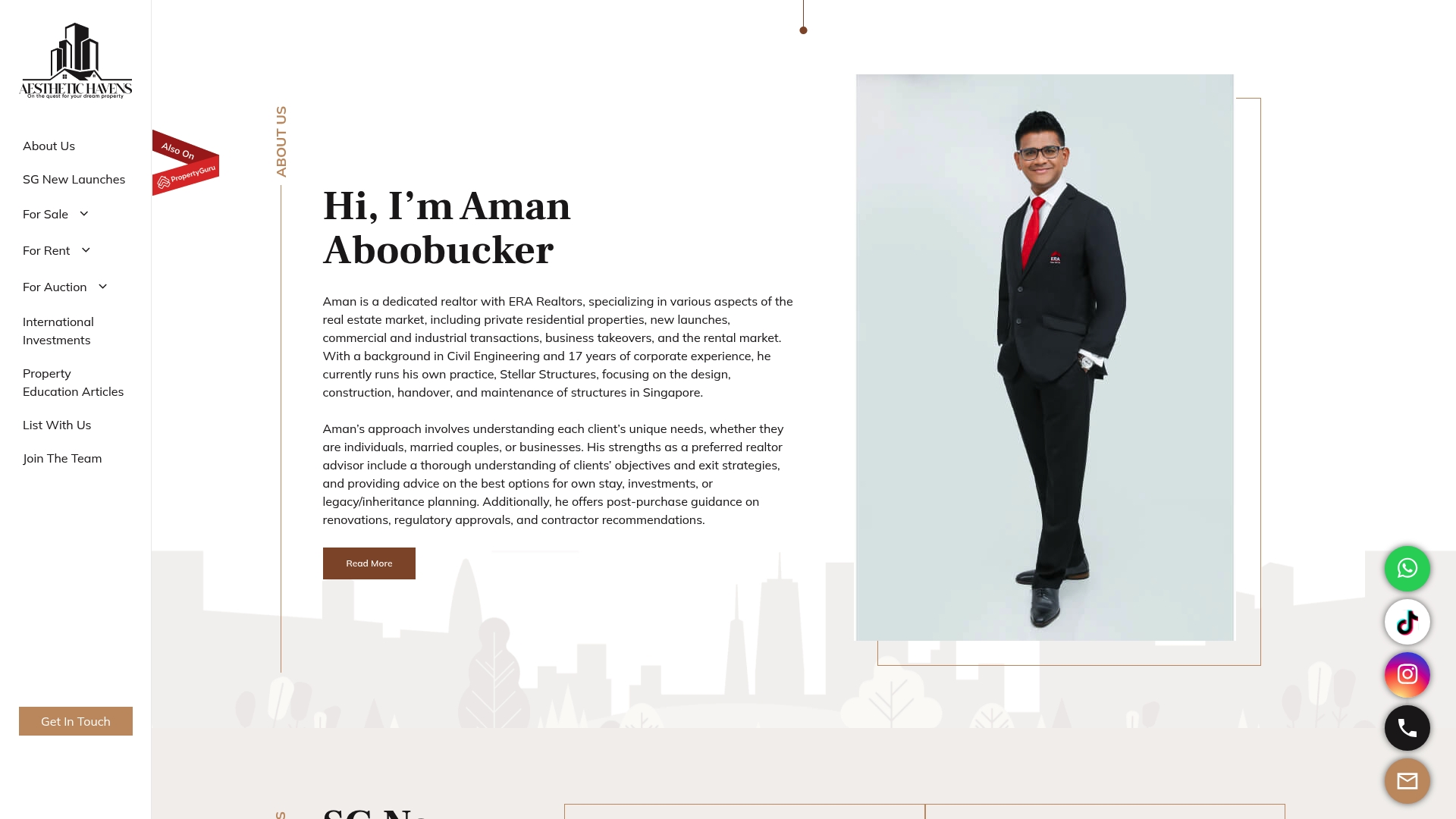
At Aesthetic Havens, we work with commercial investors and business owners to identify targeted opportunities, navigate deal structuring, and build portfolios aligned with 2026’s strategic realities. Whether you are exploring the commercial property benefits of entering this market for the first time or looking to optimize an existing portfolio, understanding agent roles in leasing helps you move faster with fewer missteps. Ready to position for 2026? Speak with our experts and put proven market intelligence to work for your next move.
Frequently asked questions
Are office rents in Singapore expected to keep rising in 2026?
Yes. Limited supply and high demand point to 4-5% rent growth projections for 2026, with CBD Grade A assets leading the climb.
What should investors prioritize for the best commercial real estate opportunities in 2026?
Prime CBD offices, quality industrial assets, and actively managed logistics facilities offer the strongest risk-adjusted returns for 2026 portfolios.
Is 2026 a boom year for Singapore commercial property?
No. Experts forecast a strategic rebound with no broad market surge, but meaningful upside for investors who take selective, high-conviction positions backed by solid research.
What role does technology compliance play in industrial investments?
Industrial zoning and tech compliance are increasingly central to asset value in 2026, and must be factored into due diligence before any industrial acquisition.
Recommended
- Singapore Commercial Real Estate Outlook 2025: A Definitive Guide for Investors & Businesses in the Office, Retail, and Industrial Sectors | Aesthetic Havens
- Singapore Property Market: Navigating the Transition – A Definitive Forecast for 2025-2026 | Aesthetic Havens
- The Singapore Rental Market in 2025: Navigating Opportunities & Challenges | Aesthetic Havens
- Unlocking Value: The Top 5 Undervalued Singapore Neighbourhoods for Property Investment in 2025 | Aesthetic Havens
- Commercial relocation explained: move offices efficiently


