

Introduction
Singapore’s strata office market reached S$1.1 billion in 2025, with 354 units transacted across the city-state. That figure represented a 7.3% year-on-year increase in transaction volume over 2024’s roughly 330 deals, even as total dollar value dipped about 5.2% from S$1.2 billion the prior year. For 2026 buyers, the question is whether this asset class still offers the combination of capital preservation, rental income, and liquidity that drove domestic and international capital into strata offices over the past two years.
This article explains the forces behind the 2025 surge: safe haven demand from regional wealth, limited supply of strata-approved office stock, resilient CBD rents, and a more favorable interest rate environment. It then shifts to what matters for buyers entering in 2026, a year that could see record office investment sales if transactions like the potential S$5.7 billion sale of Marina One close.
The short answer: 2025 volumes surpassed S$1.1 billion because private wealth, particularly from family offices and high-net-worth investors, sought commercial real estate in Singapore as a store of value while prime strata stock shrank due to regulatory changes and institutional absorption. In 2026, buyers need to focus on micro-location, building condition, lease structures, and holding power in an environment where borrowing costs may rise from the current benchmark SORA rate of about 1.2% toward 2% by year-end.
This article focuses on commercial strata office units in Singapore’s CBD, Orchard corridor, city fringe, and decentralised hubs. Residential and industrial strata are outside scope. INTEGRA Consulting Services approaches this topic through the lens of investors and occupier-operators who need to evaluate both financial returns and physical asset quality.
What you’ll learn:
-
The four main drivers behind 2025’s S$1.1 billion tally and how each contributed
-
How supply constraints and rent trends shape pricing in the CBD, fringe, and decentralised nodes
-
Risk factors for 2026 entrants, from capex surprises to en-bloc complexity
-
A step-by-step framework for evaluating individual strata office assets before buying
-
Regulatory and tax nuances that affect foreign and domestic buyers differently
Understanding Singapore’s Strata Office Market
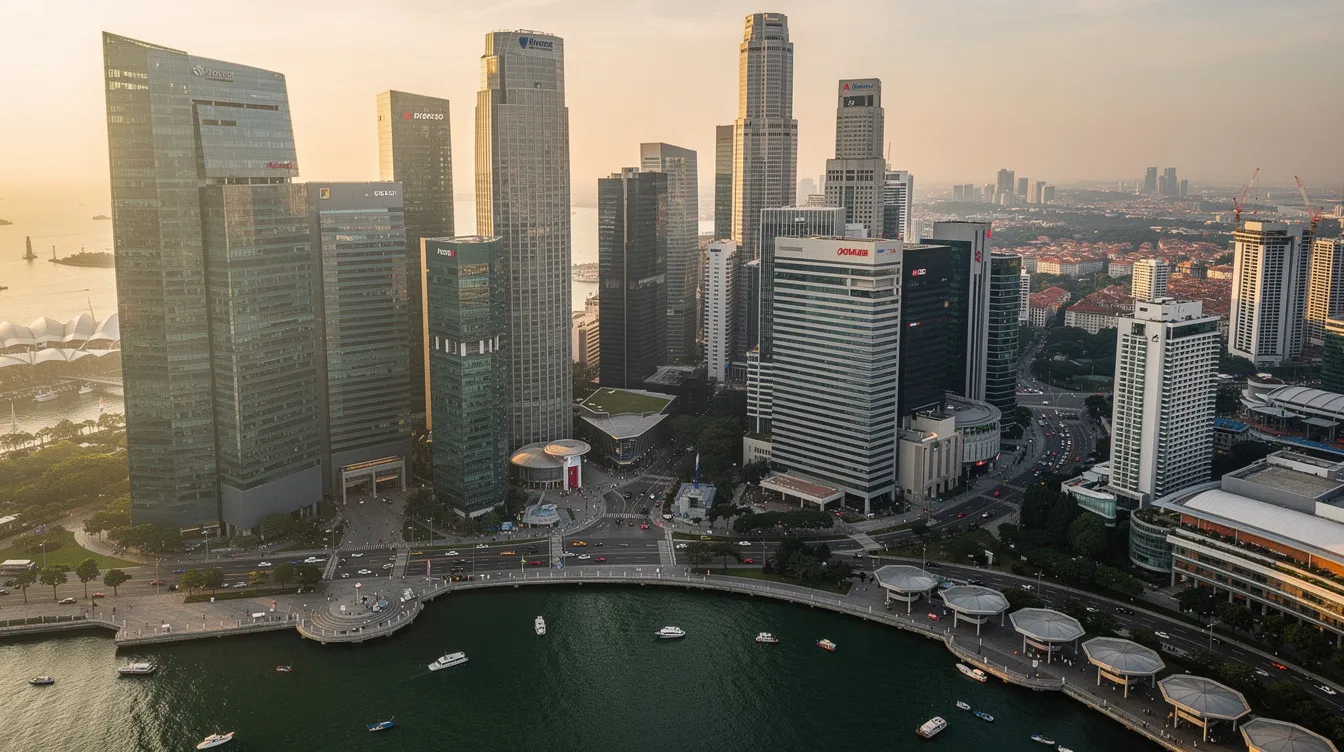
Strata offices occupy a distinct niche in Singapore real estate. Unlike whole-building acquisitions pursued by REITs or institutional investors, strata units allow individual buyers to own a specific floor or suite within a larger commercial building. That accessibility, combined with Singapore’s status as a regional financial hub, has turned strata offices into a preferred vehicle for private capital seeking stable income and long-term value.
Buyers typically fall into three groups: high-net-worth individuals and family offices using strata offices as wealth-preservation assets; SMEs purchasing premises for their own business operations; and regional investors from markets like China, Malaysia, and Indonesia diversifying into a perceived safe haven. These profiles differ from the likes of Frasers Property or Hongkong Land, which acquire or develop entire office towers for portfolio-scale returns.
What Exactly Is a Strata Office in Singapore?
A strata-titled office unit is an individually owned commercial space within a subdivided building, governed by Singapore’s Strata Titles Act. Owners hold title to their specific unit and share ownership of common areas. The legal structure resembles condominium ownership, but units are zoned for commercial use rather than residential.
Building types range across several categories. CBD Grade A towers with strata floors (such as Suntec Tower One, where units sold in H2 2025 for S$3,364 psf in a deal totaling S$34 million) represent the premium end. Older buildings in the city fringe offer lower entry prices. Decentralised office hubs in locations like Paya Lebar, Jurong East, and Tampines serve owner-occupiers and cost-conscious investors.
Key identifying features of strata offices:
-
Commercially zoned; not subject to residential cooling measures such as Additional Buyer’s Stamp Duty (ABSD). Commercial strata office transactions are exempt from Additional Buyer’s Stamp Duty in Singapore, making them attractive to foreign buyers.
-
GST applies to commercial property transactions (currently 9%)
-
Typical unit sizes range from under 1,000 sq ft to full floors of 4,000+ sq ft
-
Leasehold properties represent about 70% of transactions in Singapore’s strata office market in 2025
-
Solitaire on Cecil, a freehold strata project launched in March 2023, sold out within 16 months at prices between S$4,130 and S$4,200 psf
How the Strata Office Segment Fits Into Singapore’s Broader Office Market
Singapore’s office market is layered. At the top sit whole-owned towers and REIT portfolios; Wheelock Place and similar assets trade in single transaction events worth hundreds of millions. Below that layer, business parks and co-working operators serve different occupier needs. Strata offices sit between these categories, offering fractional ownership of institutional-grade buildings without requiring institutional-scale capital.
Institutional investors generally prefer en-bloc or whole-building acquisitions because they provide operational control and cleaner governance. Singapore also appeals to these buyers because the country offers political stability, a transparent legal system, and strong property rights. That preference leaves strata units to private capital and owner-occupiers. The result: strata offices have a distinct liquidity profile. Transactions happen more frequently but in smaller lots, which means exit options depend on the depth of private-buyer demand at any given time rather than on capital markets appetite for large-lot deals.
Regulatory and planning decisions shape this segment. URA’s decentralisation strategy pushes new development toward hubs like Jurong Lake District and Punggol Digital District. At the same time, regulatory changes restrict commercial strata subdivision in Singapore’s CBD; a March 2022 URA policy banned new strata subdivision in parts of the Central Area. These policies constrain new supply while redirecting some demand to fringe and suburban nodes.
Understanding this positioning makes it easier to see why strata volumes exceeded S$1.1 billion in 2025 despite global uncertainty.
Why Singapore’s Strata Office Market Crossed S$1.1 Billion in 2025
The S$1.1 billion threshold in 2025 resulted from four forces operating in parallel: wealth-preservation demand, constrained strata supply, resilient rental income, and an improving interest rate environment. In H1 2025 alone, deals reached about S$736.4 million across 189 transactions. H2 2025 added roughly S$355.8 million from 165 deals, with lower average psf (S$2,224 versus S$2,805 in H1) due to a shift in deal mix toward older, leasehold stock rather than a broad price collapse.
68% of the deal volume in Singapore’s strata office market occurred in the Central Area, amounting to about S$892 million. That concentration reflects the premium buyers place on CBD and Downtown Fringe locations.
Safe-Haven and Wealth-Preservation Demand from Domestic and International Capital
Investors view Singapore as a safe haven amid global uncertainty, and that perception channeled private wealth into tangible commercial assets throughout 2024 and 2025. Currency depreciation in neighboring markets, capital controls in parts of Asia, and geopolitical tensions, including war in the region, reinforced Singapore’s safe-haven appeal to regional wealth. The pull factor: strata offices in Singapore offered ticket sizes of S$2 million to S$10 million, stable tenant demand from the financial services sector, and no ABSD for foreign buyers of commercial property.
Family offices, whose numbers in Singapore surpassed 1,400 by the end of 2024, used strata offices both as investment assets and as operational premises. A family office buying a two-floor strata unit in the CBD simultaneously secures a physical base and a hard asset denominated in SGD. The strong Singapore dollar, backed by the country’s political stability and rule of law, reinforced this thesis.
Unlike conservation shophouses or residential properties, where ABSD rates add 60% for foreign purchasers, commercial strata units carry only Buyer’s Stamp Duty at a top marginal rate of 5%. That tax differential directs foreign investment specifically toward commercial properties, strata offices included.
Tight, Shrinking Stock of Strata-Approved Offices
The supply side of the equation explains why demand translated into price resilience rather than simply higher volumes. Three structural factors make prime strata offices scarce.
First, URA’s 2022 policy preventing new strata subdivision in the Central Area means developers cannot create new small-lot commercial strata units in the CBD. Projects like Solitaire on Cecil, which launched before the restriction took full effect, are already sold out. Second, many CBD buildings are held entirely by REITs or large landlords such as Hongkong Land and Frasers Property, which may retain whole assets for long-term portfolio strategy; Frasers Property has also appointed agents to market major office stakes rather than subdividing them into strata units. Third, older buildings are periodically removed from strata stock through collective sales or adaptive reuse conversions (office-to-hotel, office-to-mixed-use).
The result is a shrinking pool of tradeable strata units in prime locations. When well-located stock does come to market, competition among buyers supports pricing. Solitaire on Cecil’s final units selling at S$4,130 to S$4,200 psf illustrate this dynamic: freehold strata in the CBD now commands a premium that reflects replacement scarcity, not just rental yield.
Resilient Rents and Occupier Demand Post-Covid
Office leasing demand in the CBD recovered unevenly after 2022. Technology sector rightsizing created vacancy, but financial services, wealth management, commodities trading, and professional services absorbed that space. According to Cushman & Wakefield’s H2 2025 market outlook, banking and finance leasing in H1 2025 surpassed 2024 levels, while demand increasingly came from smaller users occupying under 10,000 sq ft.
Rental data confirms the tightness. Premium CBD office rents reached S$11.71 psf in Q2 2025 and rose to approximately S$11.82 psf by Q4 2025, marking full-year growth of about 1.2%. Core CBD Grade A vacancy rates in Singapore are near historic lows at around 3% to 4% by Q4 2025, per Colliers’ Q4 2025 report. Prime strata offices in Singapore are in high demand due to strong tenant interest across wealth management, legal, and consulting sectors.
Hybrid work patterns affected large corporates but had less impact on the strata segment. Smaller firms, owner-occupiers, and regional entrants often prefer owning their premises over signing long leases in institutional buildings. That preference sustained demand for strata units even as some large tenants right-sized.
Interest Rates, Inflation, and FX Conditions in 2025
Interest rates in Singapore saw a notable decline in 2025, influencing investment decisions across the commercial property sector. By mid-2025, 10-year SORA swaps had fallen to approximately 2.13%, down about 82 basis points from the prior year. The benchmark SORA rate for loans is about 1.2% in Singapore currently, making commercial financing more accessible than at the 2023-2024 peak.
Commercial loans for strata offices are typically priced at SORA plus a bank spread. With SORA lower, buyers who fixed rates in 2025 locked in more favorable terms than those who purchased in late 2023. That said, banks remained conservative on underwriting, requiring borrowers to demonstrate stable cash flow and tenancy profiles.
Construction cost inflation also played a role. Rising replacement costs for new office stock made existing strata units comparatively more attractive. Building a new Grade A office tower in the CBD now costs more per square foot than buying a well-maintained strata unit in an established building.
Macroeconomic conditions in Singapore reflected a GDP growth of approximately 5% in 2025, providing a supportive backdrop for commercial property investment.
Summary of 2025 drivers:
-
Safe-haven capital flows from regional wealth and family offices
-
Limited supply due to URA’s strata subdivision ban and institutional building ownership
-
CBD vacancy at 3-4% and rents growing at 1.2% year-on-year
-
Lower borrowing costs with SORA at approximately 1.2%
-
Rising construction costs making existing stock more attractive than new builds
What 2026 Buyers Should Know Before Entering the Strata Office Market
Conditions in 2026 differ from early 2025. Singapore’s big-ticket real estate transfers hit S$42.4 billion in the first nine months of 2026, and Singapore office assets transacted for S$10.8 billion in H1 2026 alone. 2026 could see record office investment sales if Marina One sells for S$5.7 billion; Marina One offers 1.88 million sq ft of premium Grade A office space. These large transactions reshape investor expectations and pricing benchmarks across the market.
For strata office buyers, the environment requires more selectivity. Banks are scrutinizing borrower profiles more closely, interest rates could reach 2% by the end of 2026, and buyers are becoming more price-sensitive. Expectations of rate hikes may motivate year-end transaction completions, as investors are trying to complete transactions before interest rates rise further.
Price Levels, Yields, Investment Sales, and Where Value Still Exists
Pricing across Singapore’s strata office market spans a wide range. In 2025, freehold CBD Grade A strata units sold at S$4,100 to S$4,200 psf (Solitaire on Cecil). Older leasehold buildings in the Central Area traded at S$2,700 to S$3,300 psf depending on remaining lease tenure and building condition. H2 2025’s average of S$2,224 psf reflects the dominance of leasehold and fringe transactions in the second half.
Net yields for CBD Grade A strata units stood at about 3.6% by end-Q4 2025, with capital values around S$3,100 psf across the broader Grade A category. Buyers in Singapore’s strata office market should prioritize asset quality and location when evaluating yield potential. CBD Grade A strata yields of 3.6% compare against Singapore government 10-year bonds yielding roughly 2.5-3% and residential rental yields of 2-3%.
Pockets of value in 2026 include well-maintained older buildings with strong occupancy in city fringe locations; units near newly completed MRT stations where connectivity improvements have not yet been priced in; and larger units (2,000-4,000 sq ft) which rose 25-32% in psf from 2021 to 2025, outperforming smaller sub-1,000 sq ft units.
Stress-test every deal under at least three scenarios: current rent with current rates, a 10% rent decline with rates at 2%, and a six-month vacancy between tenants. If the acquisition still makes sense under the worst case, the price is defensible.
Supply Pipeline and En-Bloc / Conversion Risk
New strata office launches in the CBD are functionally frozen by URA’s subdivision restrictions. Most upcoming office supply is being built as whole buildings for institutional ownership. That limited supply supports pricing for existing strata stock but also means that if a strata building undergoes collective sale or use conversion, those units permanently exit the market.
En-bloc potential cuts both ways. A successful collective sale can deliver capital gains above what individual-unit resale would achieve. But coordinating dozens or hundreds of owners with divergent agendas takes years, and many attempts fail. Developers and sellers who pursued office-to-hotel or office-to-mixed-use conversions in recent years removed strata units from circulation, tightening supply further. Adaptive reuse of older office buildings into hospitality or mixed-use developments is an ongoing trend.
Before buying, check: has the building had past en-bloc attempts? What is the sinking fund balance? Are major capital works planned in the next three to five years? Reading past AGM minutes reveals whether a building’s management council is well-run or dysfunctional, and whether owners face upcoming cash calls for lift upgrades, facade repairs, or fire protection system replacements.
Rental Outlook: Core CBD vs City Fringe and Decentralised Hubs
CBD Premium and Grade A rents grew at roughly 1.2% in 2025, reaching S$11.82 psf by Q4. Knight Frank and other agencies project 3-5% year-on-year rent growth for CBD Grade A space in 2026, supported by vacancy below 4% and limited new supply.
Fringe CBD locations (Bugis, Tanjong Pagar, Beach Road) offer lower entry psf and serve occupiers priced out of Raffles Place and Marina Bay. Demand from professional services firms, regional headquarters, and medical offices supports occupancy in these areas, though rent growth is less predictable than in the core.
Decentralised hubs like Jurong Lake District and Punggol Digital District are still in early development stages. Infrastructure investment (new MRT lines, improved road connectivity) supports long-term rent appreciation, but near-term vacancy risk is higher. One-North continues to attract technology and biomedical tenants, creating a more established rental track record.
Occupier segments driving demand in 2026: wealth management firms expanding in Singapore, professional services partnerships seeking owned premises, regional entrants from sectors including data centres and fintech operations, and co-working operators leasing strata space in fringe locations.
Regulations, Taxes, and Financing Nuances for 2026
Transaction costs for strata office acquisitions:
-
Buyer’s Stamp Duty (BSD): Top marginal rate of 5% for non-residential properties
-
ABSD: Not applicable for commercial property, even for foreign buyers
-
GST: 9% on commercial property purchase price (reclaimable for GST-registered buyers)
-
Seller’s Stamp Duty: Generally does not apply to commercial property transfers, with exceptions for property-holding entities under specific rules
-
Legal, agent, and adviser fees: Typically 1-2% combined. Buyers should confirm fee and tax assumptions with their banker, lawyer, and tax adviser rather than relying on generic guidance.
Interest rates on loans for commercial properties currently sit around the SORA benchmark of 1.2% plus bank spreads, but could reach 2% by end-2026. Loan-to-value ratios for commercial property typically cap at 70-80%, with banks requiring strong debt service coverage ratios. Lenders focus on tenant stability, lease duration, and borrower credit profile.
Three questions every 2026 buyer should ask before committing:
-
To your banker: What is the maximum LTV, and how does the debt service coverage ratio change if rates rise 75 basis points?
-
To your lawyer: Are there any URA use-restrictions, pending legal disputes among strata owners, or outstanding government notices on this building?
-
To your tax adviser: What is the optimal holding structure (personal, company, trust) for my nationality and investment horizon, considering BSD, income tax, and exit flexibility?
This article is for general information only and is not an offer, recommendation, or invitation to buy, sell, or invest in a security or other financial product.
How to Evaluate a Specific Strata Office Asset in 2026
Crossing from market-level analysis to individual asset selection requires a structured process. The framework below applies whether you are buying for own use or as an investment, and whether you are looking at a CBD Grade A unit or a fringe-location office in an older building.
A Step-by-Step Evaluation Framework
-
Define objectives and hold period. Clarify whether you are buying for own use, rental income, capital appreciation, or a combination. Set a target hold period (3 years, 7 years, 10+ years) because exit liquidity varies by market cycle.
-
Shortlist locations by target tenant profile. If your tenants are wealth management firms, CBD and Orchard make sense. If they are tech startups, One-North or Paya Lebar may deliver better rent-to-price ratios. Connectivity to MRT stations within 5 minutes’ walk is a baseline requirement for strong occupancy.
-
Analyse the building. Review age, grade, strata mix (what percentage of the building is strata-titled vs institutionally held), current occupancy rate, and whether past en-bloc attempts have occurred. Buildings with fragmented ownership across many small units face governance challenges.
-
Assess unit attributes. Floor plate efficiency, natural light, floor loading capacity, ceiling height, and restroom-to-unit ratios all affect tenant appeal and fit-out cost. Corner units and units with views command rental premiums of 5-15% over internal units in the same building.
-
Build a financial model. Inputs: realistic market rent (not asking rent), expected vacancy of 1-2 months per lease cycle, sinking fund contributions, property tax, insurance, and financing costs at current rates plus a stress scenario. Output: net yield and internal rate of return over the hold period.
-
Conduct technical due diligence. Engage engineers to assess structural integrity, MEP (mechanical, electrical, plumbing) systems, facade condition, and any retrofit requirements. Strata office units in buildings over 20 years old frequently need air-conditioning upgrades, electrical capacity expansion, or fire protection system replacements. This is where consultancies like INTEGRA add value, particularly when buyers plan heavy fit-outs for specialised uses such as trading floors, medical suites, or data-heavy operations.
-
Stress-test exit scenarios. Model both individual unit resale and en-bloc as exit paths. Individual resale depends on strata market depth at time of sale; en-bloc depends on owner consensus and developer appetite.
-
Negotiate terms with safeguards. Secure financing approval before signing the option. Include conditions precedent for structural inspection. Verify that the seller’s representations about tenancy, lease terms, and building compliance are warranted in the sale agreement.
Comparing Different Strata Options: CBD vs Fringe vs Decentralised
|
Criterion |
CBD Grade A Strata |
Fringe-CBD Older Strata |
Decentralised Office Hub |
|---|---|---|---|
|
Entry price psf (2025-2026) |
S$3,100-4,200 |
S$1,800-2,800 |
S$1,200-2,000 |
|
Typical net yield |
2.8-3.6% |
3.5-4.5% |
4.0-5.5% |
|
Tenant profile |
Banks, wealth mgmt, law firms |
Professional services, regional HQs |
SMEs, owner-occupiers, back-office |
|
Rent growth volatility |
Low (constrained supply) |
Moderate |
Higher (infrastructure-dependent) |
|
En-bloc potential |
Low (large, complex buildings) |
Moderate (smaller, aging buildings) |
Low (newer developments) |
|
Fit-out cost per sq ft |
S$80-150 |
S$60-120 |
S$50-100 |
|
Infrastructure upside |
Stable (mature transport links) |
Moderate |
High (new MRT lines, Jurong Lake District) |
Capital-preservation buyers gravitate toward CBD Grade A strata, accepting lower yields for tenancy stability and exit liquidity. Balanced-return investors find fringe-CBD buildings attractive, where an older but well-maintained property can deliver 4%+ yields with moderate capital upside. Value-focused or own-use buyers benefit from decentralised hubs, where lower entry prices compensate for thinner resale markets.
Common Pitfalls, Risks, and How 2026 Buyers Can Protect Themselves
Every strata office acquisition carries both cyclical and structural risks. The buyers who lost money in past cycles typically fell into one of four traps.
Overpaying on Headline Price Without Checking True Yield
Some buyers in 2024-2025 paid S$4,100+ psf for new freehold strata units where net yields, after service charges, property tax, and realistic vacancy assumptions, fell below 2.5%. At that level, a single quarter of vacancy or a 50-basis-point rate increase erodes returns entirely.
Build a cash-flow model that includes every cost: sinking fund (typically S$0.50-1.50 psf per month), property tax (10% of annual value for non-owner-occupied commercial), maintenance fees, and agent commissions on leasing. Set a minimum acceptable yield threshold. If the deal does not clear 3% net under conservative rent assumptions, the margin of safety is too thin for a 2026 entry.
Underestimating Capex, Maintenance, and Retrofit Costs
Older buildings are where capex surprises hide. A strata office block built in the 1990s may need lift replacement (S$200,000-400,000 per lift, shared among owners), chiller plant overhaul, or facade waterproofing. If the sinking fund is undercapitalized, owners face special levies.
Before buying, request sinking fund statements for the past three years, minutes from the last three AGMs, and any engineering condition reports. Walk the common areas: lobby condition, lift speed, corridor lighting, and restroom standards signal how well the building is managed. For units where you plan heavy fit-outs or change-of-use (e.g., converting to a medical suite), engage architects and M&E engineers to verify floor loading, power capacity, and ventilation adequacy.
Ignoring Tenant Profile and Lease Structures
A unit leased to a single tenant in a cyclical sector with a lease expiring in 12 months presents concentrated risk. If that tenant exits, you face months of vacancy, releasing commissions, and potentially a rent reduction to attract a replacement.
Review every tenancy agreement in detail. Key clauses to examine: rent escalation mechanisms, break options and their notice periods, make-good obligations (does the tenant restore the unit to shell condition on exit?), and any renewal rights that limit your flexibility. Develop a “Plan B” tenant profile before purchasing. If your current tenant is a small tech firm, identify what other types of occupiers (professional services, co-working operators, medical practices) would lease the space and at what rent, and whether leasing brokers can explain which occupier types their clients are actively placing in comparable space.
Misreading En-Bloc Potential
Many strata office buyers factor in en-bloc upside as a core part of their return thesis. The reality: coordinating a collective sale among parties with different financial positions, tax situations, and hold periods is complex and slow. Buildings with more than 50 owners rarely achieve the 80% consent threshold required under Singapore’s Collective Sale Act without years of effort.
En-bloc should be treated as optional upside, not the primary return driver. Signs that an en-bloc attempt has real momentum: a pro-sale committee with experienced members has been formally constituted, a marketing agent such as Knight Frank or similar firm has been appointed, and the proposed reserve price aligns with recent land sale benchmarks in the area. Without all three, discount en-bloc from your base case.
Key mitigation steps for all 2026 buyers:
-
Model cash flows conservatively; assume 1-2 months vacancy per lease cycle
-
Inspect building condition before committing; budget 5-10% of purchase price for potential capex
-
Verify lease terms and tenant creditworthiness directly, not through seller representations alone
-
Treat en-bloc as upside optionality, not a guaranteed exit
-
Pre-arrange financing and understand rate sensitivity on your debt service
Conclusion and Strategic Next Steps for 2026 Strata Office Buyers
Singapore’s strata office market crossed S$1.1 billion in 2025 because constrained supply, safe-haven capital flows, and 3-4% vacancy in the Core CBD created conditions where 354 units found willing buyers across a wide price spectrum. Leasehold properties represented about 70% of those transactions, indicating that the market is broad-based rather than confined to trophy freehold assets.
The market in 2026 is shifting toward a more selective phase. With Singapore office assets transacting for S$10.8 billion in H1 2026 alone and interest rates potentially rising toward 2% by year-end, strata office buyers who rely on disciplined underwriting will outperform those chasing headline psf records. The asset class remains attractive for capital preservation and income, but only when purchased at prices that leave a margin of safety.
Next steps:
-
Clarify whether your objective is own-use, income, capital gain, or a blend, and set a realistic hold period
-
Shortlist 2-3 submarkets (CBD, fringe, decentralised) based on your target tenant profile and risk tolerance
-
Build a simple financial model with conservative rent, vacancy, and rate assumptions
-
Pre-arrange financing; confirm LTV, rate lock options, and debt service requirements with your bank
-
Conduct site visits and engage technical consultants for pre-acquisition building assessments
-
Define exit strategies (individual resale, en-bloc, hold-to-maturity) before committing capital
Adjacent topics worth exploring: comparing office REIT ownership versus direct strata investment for different tax profiles; engineering considerations for sustainable office retrofits; and the emerging market for office-to-alternative-use conversions along Bayshore Drive and other development corridors.
For pre-acquisition assessments, fit-out planning, or technical due diligence on strata office assets, consulting experienced property advisers and engineering firms early in the process reduces the risk of costly surprises after completion.
Additional Resources and Data Points
Useful public data sources for tracking Singapore’s strata office market:
-
URA Realis: Transaction records for all property types, searchable by district, building, and date
-
MAS Financial Stability Review: Interest rate trends and credit conditions affecting commercial property loans
-
Colliers, Cushman & Wakefield, Knight Frank quarterly reports: Rental and vacancy data by submarket, capital value indices, and supply pipeline analysis
-
IRAS Stamp Duty Calculator: Verify BSD and other duties applicable to your specific acquisition structure
For hands-on evaluation, maintain a strata office due-diligence checklist covering: title search, lease tenure remaining, sinking fund adequacy, building condition assessment, tenancy schedule review, URA zoning and use-class verification, and financial model with sensitivity analysis.
If you want the due-diligence checklist or help reviewing a specific strata office opportunity, leave a comment.
Staying current on both macro indicators (SORA trajectory, GDP growth, government policy announcements) and micro factors (building AGM outcomes, tenant credit changes, competing supply in the immediate area) separates buyers who outperform from those who simply participate in the market.


