

Introduction
How much cash do you really need to upgrade from HDB to a new launch condo in 2026? For a typical HDB upgrader targeting a S$1.5M to S$2.0M new launch condo, the realistic cash requirement ranges from S$180,000 to S$450,000, depending on whether you sell your HDB flat first, buy first with ABSD remission, or keep your HDB as a rental investment. That range covers the down payment, stamp duties, legal fees, renovation, and a safety buffer; most upgraders underestimate at least two of those line items.
This article focuses on Singapore HDB owners moving to a new launch condo, not resale condos, not executive condominiums, and not overseas property. If you are near or past your minimum occupation period, earning a combined income as a dual-income household, and thinking about asset progression from HDB to condo to landed, these numbers are built for you.
Cash is the binding constraint because of how 2026 regulations interact. The bank’s loan to value cap means at least 25% of the purchase price must come from cash and CPF funds. Buyer’s stamp duty and additional buyer’s stamp duty must be paid in cash within 14 days of signing the purchase agreement. Renovation invoices do not accept CPF. And if you run out of liquid reserves after closing, a single interest rate hike or income disruption can turn your upgrade into a financial trap.
Here is what you will walk away with after reading:
-
A line-by-line breakdown of every cash component from booking fee to emergency buffer
-
Concrete numbers for S$1.5M, S$1.8M, and S$2.0M new launch condo scenarios in 2026
-
A side-by-side comparison of “sell HDB first” versus “buy new launch first” versus “keep HDB as investment” in terms of pure cash outlay
-
A step-by-step method to calculate your own cash requirement using current rules
-
A checklist of the most common cash flow mistakes HDB upgraders make and how to avoid each one
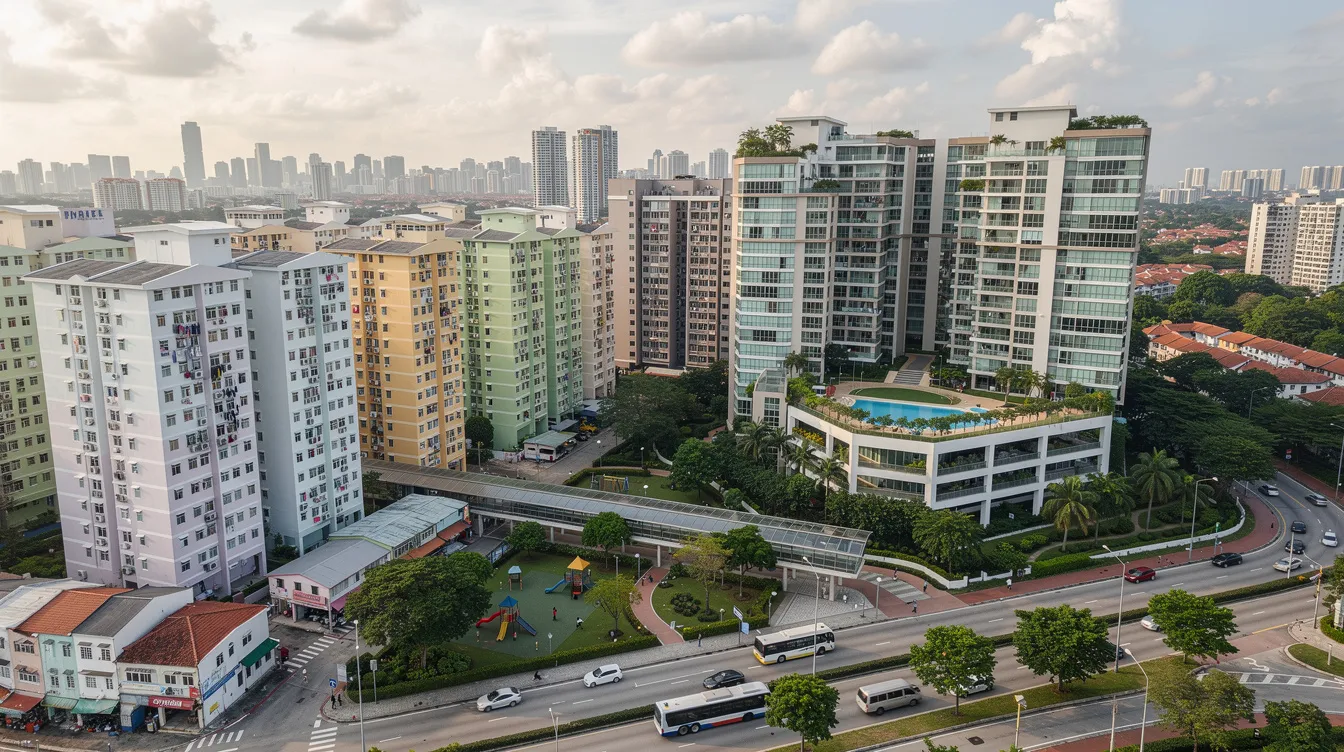
Understanding Cash Outlay When Upgrading From HDB To New Launch Condo
“Cash outlay” here means money you must pay in cash, not CPF, from the moment you book a unit to the day you collect keys and move in. This is different from overall affordability. You might comfortably service a S$6,000 monthly mortgage on a S$16,000 combined income, yet still be unable to upgrade if you lack S$200,000 in cash savings to cover the upfront costs that CPF cannot touch or cannot reach in time.
All examples in this article use 2026 tax and loan rules as the baseline. Policies like ABSD and BSD can change with a single Budget speech. Verify rates with IRAS before committing to any private property purchase.
Key Cost Buckets Every HDB Upgrader Must Plan For
Every dollar of cash you need falls into one of seven buckets. Miss even one and your upgrade timeline can stall.
-
Minimum cash down payment: at least 5% of the purchase price must be cash for a first bank loan. If you still carry an outstanding HDB loan when applying for the condo loan, the loan to value cap drops to 45%, pushing the required cash and CPF portion to 55% of the property price.
-
Buyer’s stamp duty (BSD): payable in cash within 14 days of signing the Sale & Purchase Agreement. CPF can reimburse later, but you must front the cash first.
-
Additional buyer’s stamp duty (ABSD): triggered when you buy a condo before selling your HDB flat. Singapore Citizens pay 20% ABSD on a second property. ABSD must be paid in cash before CPF reimbursement. Missing the 6-month remission window means permanently losing that cash.
-
Legal fees and transaction costs: conveyancing for the HDB sale and private condo purchase, valuation fees, and bridging loan interest if sale and purchase timelines do not align.
-
Renovation and furnishing: new launch units are partially fitted (kitchen, bathrooms), but wardrobes, lighting, carpentry, and furniture still need cash. Renovation costs for new launch units can range from S$40,000 for a compact 2-bedder to over S$100,000 for a 3-bedder with custom built-ins.
-
Moving and interim housing: professional movers, temporary accommodation costs if selling an HDB before the new condo completes, and storage fees.
-
Emergency buffer: 6 to 12 months of housing costs (monthly mortgage, maintenance, utilities) in liquid form. For a S$1.5M to S$2.0M condo, that buffer sits between S$30,000 and S$90,000.
How 2026 Rules On LTV, TDSR, BSD And ABSD Affect Your Cash
These four policy levers determine how much of the condo price you can borrow and how much you must fund from cash and CPF funds.
Loan to value (LTV): You can borrow up to 75% LTV for first property loans. If you still hold an existing property with an outstanding loan, LTV for the second mortgage drops to 45%. A third outstanding housing loan caps LTV at 35%.
Total debt servicing ratio (TDSR): The total debt servicing ratio limits monthly debt repayments to 55% of your gross monthly income, stress-tested at a 4% interest rate. If your combined income is S$16,000, your total monthly debt obligations, including car loans, credit cards, and the new condo loan, cannot exceed S$8,800. A binding TDSR constraint shrinks your eligible loan amount and forces a bigger cash or CPF contribution to make up the gap.
Buyer’s stamp duty (BSD): BSD applies to all condo purchases regardless of HDB status. On a S$1.8M private condo, the tiered BSD works out to approximately S$53,600 to S$60,000.
ABSD: Upgrading from HDB to condo incurs 20% ABSD for a second property purchase if you have not sold your HDB flat before signing. On S$1.8M, that is S$360,000 in cash. You can apply for ABSD remission if you sell your HDB within 6 months, but ABSD must be paid within 14 days of signing the agreement, in full, in cash.
HDB To Condo To Landed: Where This Upgrade Fits In Your Asset Progression
The move from HDB to a new launch condo is a mid-stage step in a broader asset progression path that some owners map out toward eventual landed property ownership. Overstretching cash and CPF at the condo stage, for example by choosing a larger unit or more expensive district than necessary, reduces the equity runway and borrowing power available for a future landed home.
Sound planning of cash buffers now also preserves loan eligibility for a few years down the road. If you lock S$400,000 into ABSD and renovation for a S$2.0M condo and property prices appreciate modestly, you may need another decade to accumulate the cash for a landed move. Mapping the full path before committing to the condo purchase prevents a dead end.
Fast Answer: Typical Cash Needed For Common 2026 Upgrade Scenarios
This section gives ballpark numbers first. Detailed item-by-item breakdowns follow in the next section. Use these as a quick reference to see where your situation lands.
Scenario 1: Selling A Fully-Paid 4-Room HDB, Buying A $1.5M New Launch Condo
A married Singapore Citizen couple, both first-time private property buyers, with a fully paid 4-room HDB flat in a mature estate. The minimum occupation period of 5 years is fulfilled. No other properties, no outstanding HDB loan.
The national median resale price for a 4-room HDB flat sits at approximately S$630,000 to S$650,000 in 2026, though mature estates like Tampines or Serangoon can fetch S$650,000 to S$700,000+. Selling HDB first avoids paying additional buyer’s stamp duty entirely, so ABSD is zero.
-
5% cash down payment on S$1.5M: S$75,000
-
BSD on S$1.5M (tiered calculation): approximately S$44,600, payable in cash first
-
Legal, valuation, and miscellaneous fees: S$5,000 to S$10,000
-
Renovation and furnishing for a new launch 3-bedder after temporary occupation permit: S$60,000 to S$90,000
-
6-month emergency buffer (S$5,000 to S$6,000/month for mortgage plus condo maintenance fees): S$30,000 to S$36,000
Estimated total cash needed: approximately S$200,000 to S$260,000. Some of the BSD amount can later be reimbursed from CPF once HDB sale proceeds are credited, but you need the cash available upfront.
Scenario 2: Selling A 5-Room HDB With Outstanding Loan, Buying A $1.8M New Launch
This is the more stretched but common upgrader case. A couple with a 5-room HDB in a mature estate valued at around S$850,000, carrying an outstanding HDB loan of S$200,000. Combined income of S$16,000 per month, with some existing debt (car loan) affecting TDSR.
The outstanding HDB loan must be cleared before buying a condo for full LTV. After repaying the S$200,000 loan and returning CPF funds plus accrued interest to their ordinary account (CPF refunds must be returned to the CPF account after selling the HDB flat, not available as liquid cash), the net cash proceeds from the HDB sale may be S$300,000 to S$400,000 depending on how much was originally paid in CPF.
Selling your HDB first avoids paying additional buyer’s stamp duty. If the couple sells before signing the condo OTP:
-
5% cash down payment on S$1.8M: S$90,000
-
Additional cash if TDSR-limited loan falls below 75% LTV: S$0 to S$50,000 depending on loan eligibility after stress-testing
-
BSD on S$1.8M: approximately S$53,600 to S$60,000 in cash first
-
Legal, valuation, bridging loan interest (if loan disbursement and HDB sale proceeds timing don’t align): S$7,000 to S$15,000
-
Renovation, appliances, and built-ins for a family of four in a 3-bedder: S$60,000 to S$100,000
-
Emergency buffer sized to a higher monthly mortgage (~S$7,000/month range): S$42,000 to S$50,000
Estimated total cash needed: approximately S$250,000 to S$350,000. The variability comes from three factors: how much of the HDB sale proceeds went to CPF refund versus cash, the renovation scope, and whether a bridging loan is needed.
Scenario 3: Keeping HDB As Investment, Buying A $2.0M New Launch Condo
This route treats the HDB as rental stock. HDB owners can keep their flat if at least one owner is a citizen. The HDB is fully paid and the couple plans to rent it out after the minimum occupation period while living in the new condo. The condo is a second residential property.
Buying a condo first incurs a 20% additional buyer’s stamp duty for Singapore Citizens. Since the HDB is intentionally kept, no ABSD remission applies.
-
5% cash down payment on S$2.0M: S$100,000
-
Additional cash due to LTV capped at 45%: the couple must fund 55% from cash and CPF; depending on CPF balances, this could mean S$200,000+ additional cash beyond the 5%
-
BSD on S$2.0M: approximately S$64,600 in cash first
-
20% ABSD on S$2.0M: S$400,000 in cash, no remission
-
Legal fees for both HDB retention and new condo purchase: S$10,000 to S$15,000
-
Renovation and furnishing for the new condo: S$80,000 to S$120,000
-
Buffer covering months of vacant HDB plus concurrent condo mortgage: S$50,000 to S$80,000
Estimated total cash needed: S$450,000 to S$650,000+. This strategy is viable only for households with high liquid cash reserves. The permanent ABSD cost alone (S$400,000) exceeds the total cost of Scenario 1.
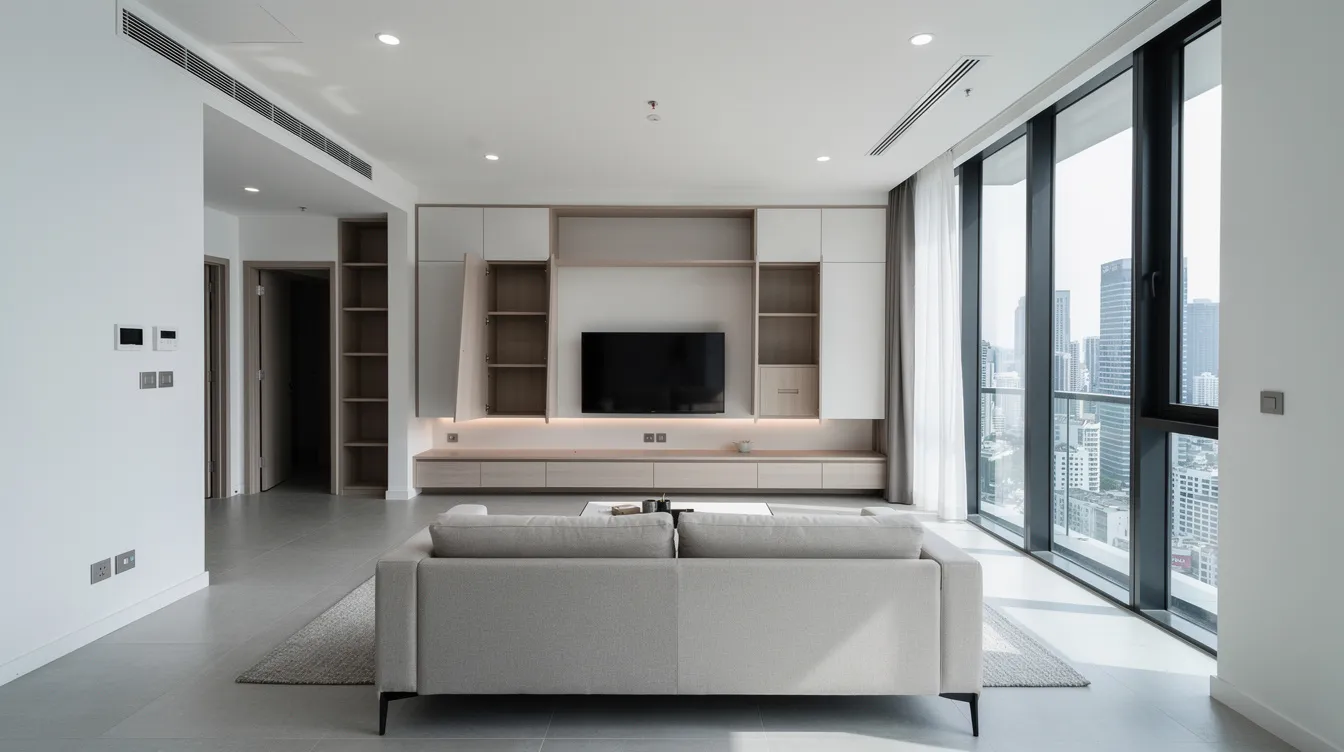
Itemised: Every Dollar Of Cash You Need To Upgrade In 2026
This section gives a structured, item-by-item view. Adapt these numbers to your own target condo price, HDB sale proceeds, and personal circumstances.
1. Cash Down Payment: First 5% And Beyond
MAS rules require at least 5% of the purchase price in cash for a first bank loan. The next 20% of the down payment can come from CPF or additional cash. The 5% cash booking fee must be paid upon exercising the Option to Purchase.
When a buyer exercises the OTP on a second property with an existing outstanding loan, the loan to value for second mortgages is 45%. That means 55% of the property price must come from cash and CPF upfront. If CPF ordinary account balances are insufficient, the excess falls to cash.
-
On a S$1.5M unit: 5% cash = S$75,000
-
On a S$1.8M unit: 5% cash = S$90,000
-
On a S$2.0M unit: 5% cash = S$100,000
For the same amount in percentage terms, a higher condo price translates to tens of thousands more in absolute cash.
2. Buyer’s Stamp Duty (BSD): Compulsory And Cash-First
Buyer’s stamp duty applies to all condo purchases regardless of HDB status. BSD must be paid within 14 days of signing the Sale & Purchase Agreement.
The 2026 BSD tiers run from 1% on the first S$180,000 up to 5% on amounts between S$1.5M and S$3M, and 6% on anything above S$3M. On a S$1.8M private property purchase, the final BSD is approximately S$53,600 to S$60,000.
BSD can be reimbursed from CPF or HDB sale proceeds after the fact, but the buyer needs enough cash to front it. If your HDB sale has not completed by the BSD deadline, that cash must come from savings, not sale proceeds.
3. Additional Buyer’s Stamp Duty (ABSD): When It Hits, When You Can Get It Back
Upgrading from an HDB flat to a private condo triggers ABSD whenever the condo is purchased before the HDB sale is completed. At that point, you are buying a second residential property.
-
Singapore Citizens pay 20% ABSD on second properties. ABSD for third properties is 30% for Singapore Citizens.
-
Singapore PRs pay 5% on their first residential property and 30% on a second.
-
Foreigners pay 60% on any residential property.
ABSD must be paid in cash upfront. You cannot use CPF to pay ABSD at the point of purchase. On a S$1.8M condo, 20% ABSD equals S$360,000 in cash.
ABSD remission is possible if the HDB is sold within 6 months of the condo purchase date (or TOP/CSC date, depending on IRAS conditions). Selling HDB before buying condo avoids ABSD entirely, which is why many upgraders choose that sequence despite the inconvenience of interim housing.
If you fail to sell within the 6-month window, the ABSD payment is permanent. You must sell your HDB within 6 months if all owners are SPRs.
4. Legal, Valuation And Financing-Related Costs
These are the transaction costs that sit below the headline figures but add up:
-
Conveyancing for HDB sale: S$2,500 to S$3,500
-
Conveyancing for condo purchase: S$2,500 to S$3,500
-
Valuation fees for both HDB and new launch condo loan: S$300 to S$600 each
-
Bridging loan interest and admin fees: if you need a bridging loan to cover the gap between your condo payment schedule and HDB sale completion, interest can run into tens of thousands depending on the loan amount and duration
-
Mortgage broker or bank processing charges: often absorbed by the bank for the first bank loan, but not always
Set aside S$6,000 to S$10,000 purely for these transaction-level legal fees and costs. If a bridging loan is involved, budget separately based on the expected gap period.
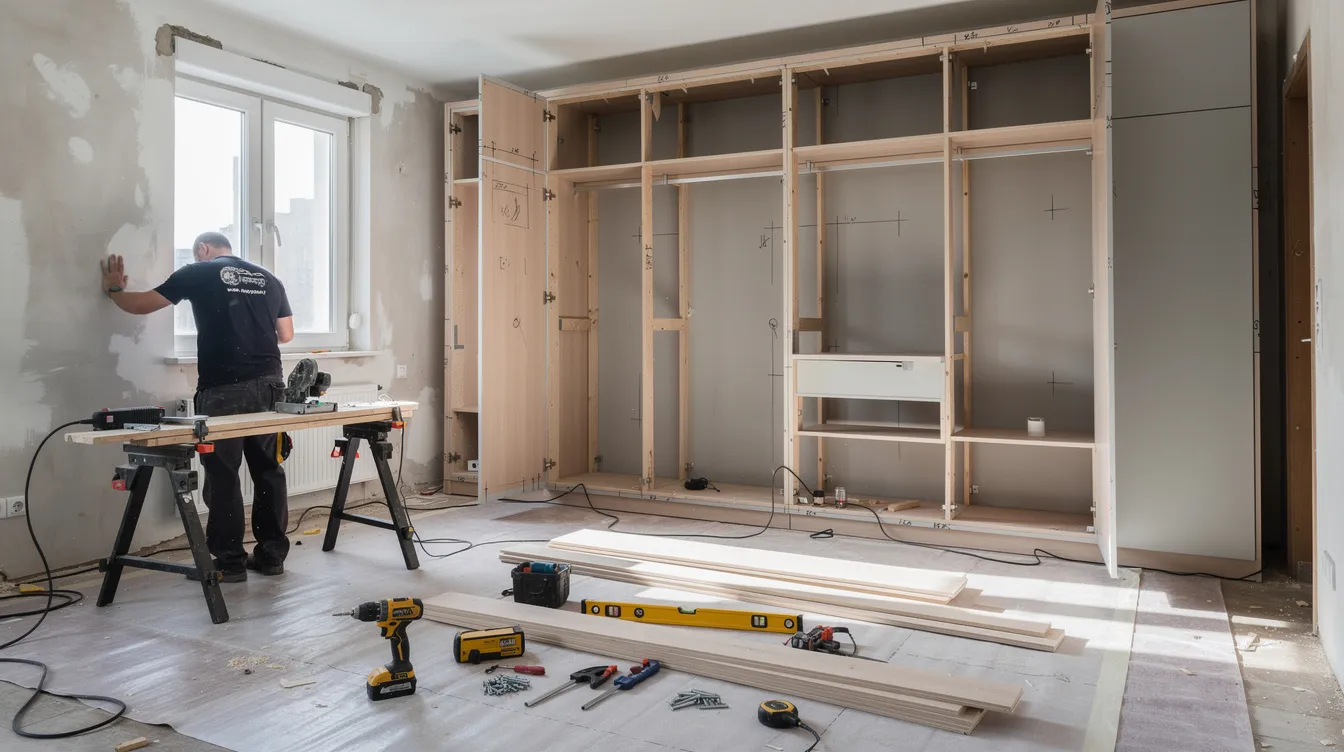
5. Renovation, Built-Ins And Furnishing For A New Launch Condo
New launch units in 2026 typically come with kitchen cabinets, countertops, bathroom fittings, and air-conditioning. What they do not include:
-
Wardrobes, shoe cabinets, and storage carpentry
-
Feature walls, lighting design, and electrical points beyond the base provision
-
Curtains, blinds, and window treatments
-
Loose furniture, mattresses, and household appliances
Realistic cash ranges by unit type:
-
2-bedder: S$40,000 to S$70,000
-
3-bedder: S$60,000 to S$100,000
-
Larger units or custom finishes: S$100,000+
Renovation costs for new launch units can range from modest (ID-managed package with standard materials) to steep (custom carpentry, premium flooring overlays, smart-home wiring). The most common budget blowouts happen in built-in wardrobes and kitchen extensions.
6. Moving, Interim Housing And Holding Costs
These are the costs most HDB upgraders forget until they are staring at a timeline gap:
-
Professional movers: S$800 to S$2,500 depending on volume and distance
-
Temporary accommodation: if you sell your current HDB flat before the new condo reaches its temporary occupation permit date, you may need to rent for months. At S$3,000 to S$4,500/month for a 3-room rental, a 6-month gap costs S$18,000 to S$27,000.
-
Storage fees: S$200 to S$500/month for a storage unit
-
Condo maintenance fees: start from key collection, typically S$300 to S$600/month for a 2- to 3-bedder
-
Higher property tax: if keeping HDB as investment, the non-owner-occupied rate applies, raising annual property tax
Combined transition costs: S$5,000 to S$20,000+ depending on whether interim rental is needed. Temporary accommodation costs should be accounted for if selling an HDB before the new condo completes.
7. Safety Buffer: Why You Should Not Max Out Your Last Dollar
After paying every line item above, you should still hold at least 6 to 12 months of total housing costs in cash or liquid assets. For a S$1.5M to S$2.0M new condo, monthly repayments plus maintenance plus utilities typically run S$5,000 to S$8,000. That means a buffer of S$30,000 to S$90,000.
This buffer exists for three specific risks. First, interest rate increases between the booking date and TOP; the stress test rate is 4%, but actual rates can move higher. Second, income disruption from job loss, business slowdown, or medical leave. Third, unexpected costs even in a new condo: appliance failures, defect rectification delays, or access-card and renovation deposit charges not covered in the original budget.
This buffer sits on top of all itemised costs. It is not a renovation slush fund.
Cash Needed Under Different Upgrade Sequences
The sequence in which you sell your HDB and buy your new launch condo changes the total cost by S$100,000 or more, mainly because of ABSD. Here is how each route compares in terms of pure cash outlay and risk.
Option 1: Sell HDB First, Then Buy New Launch Condo
The sequence: list your HDB, complete the sale, receive cash proceeds and CPF refunds into your ordinary account and retirement account, then commit to the new launch. Selling HDB first avoids paying additional buyer’s stamp duty because you will have zero residential property at the point of condo purchase.
Cash advantages:
-
0% ABSD if you fully dispose of your HDB flat before signing the condo Option to Purchase
-
Maximum 75% LTV as a first bank loan (subject to TDSR), so your minimum cash requirement is 5%
-
Full visibility of net HDB sale proceeds before committing to a property price you can afford
Cash disadvantages:
-
You need funds for interim accommodation between HDB completion and condo TOP, especially if buying an early-stage new launch that is a few years from completion
-
Moving twice (HDB to rental, rental to condo) doubles moving and storage costs
Total typical cash: S$180,000 to S$260,000 for a S$1.5M condo. Lower ABSD risk, higher temporary housing cost. Best for cash-conscious households that can tolerate the inconvenience of renting.
Option 2: Buy New Launch First, Then Sell HDB (ABSD Remission Route)
The typical flow: book the new launch unit, pay the booking fee and 5% cash down payment, pay BSD and the full ABSD payment in cash within 14 days, then sell your HDB flat within 6 months of the purchase or TOP date to claim an ABSD refund.
Buying a condo first incurs a 20% ABSD for Singapore Citizens. On a S$1.8M condo, that is S$360,000 in cash, paid upfront.
Cash advantages:
-
Smoother transition with minimal or no interim rental; you can move from HDB straight to the new condo
-
Time to wait for a reasonable HDB sale price, within the remission deadline
Cash disadvantages:
-
You need very high initial cash to cover ABSD upfront, on top of the down payment and BSD
-
Risk of failing to sell your HDB flat within the 6-month window and permanently losing the ABSD refund
-
If the outstanding HDB loan is still active when you apply for the condo loan, LTV drops to 45%, increasing your upfront cash and CPF requirement
Upgrading from an HDB flat to a new launch private condominium requires careful cash flow management under this route. Before committing, map out realistic HDB sale timelines and consult a property agent who handles resale documents in your estate regularly. The ABSD remission deadline does not have extensions.
Option 3: Keep HDB As Rental Investment, Buy New Launch Condo As Second Property
The flow: fulfill MOP for HDB, buy a new launch condo as a second property, rent the HDB out after obtaining HDB’s approval.
Cash impact:
-
Permanent ABSD cost on the condo; no remission since HDB is intentionally kept. Singapore Citizens pay 20% ABSD on second properties.
-
Loan to value for second mortgages is 45%, so 55% of the purchase price must come from cash and CPF
-
Buffer must cover months when HDB is vacant and the monthly mortgage on the condo runs concurrently
-
Condo maintenance fees and property tax should be factored into the ongoing cost of condo ownership; non-owner-occupied property tax on the HDB is higher than the owner-occupied rate
This is advanced asset progression. It works only if, after accounting for all upfront costs and permanent ABSD, the household still maintains robust cash reserves and positive monthly cash flow from the same income.
|
Factor |
Sell HDB First |
Buy Condo First (ABSD Remission) |
Keep HDB, Buy Condo As 2nd Property |
|---|---|---|---|
|
ABSD payable? |
No |
Yes, refundable if HDB sold within 6 months |
Yes, permanent |
|
Typical LTV |
75% (first housing loan) |
75% if HDB loan cleared; 45% if not |
45% (second housing loan) |
|
Approximate cash % of purchase price needed upfront |
~15–20% including BSD, fees, buffer |
~35–45% including ABSD, BSD, fees |
~45–55%+ including permanent ABSD |
|
Interim housing needed? |
Yes, if condo TOP is far away |
No, move from HDB to condo |
No, move when condo is ready |
Households with under S$300,000 in cash savings should default to Option 1. Option 2 suits those with S$400,000+ in liquid assets and high confidence in a quick HDB sale. Option 3 requires S$500,000+ in cash and strong rental demand for the HDB location.
Step-By-Step: Calculating Your Own 2026 Cash Requirement
The scenarios above use generic numbers. Your situation has specific CPF balances, a specific outstanding loan amount, and a specific target condo. Here is how to arrive at your own figure.
Practical Method To Work Out Your Numbers
-
Estimate your target condo price range by shortlisting 2 to 3 2026 new launch projects and checking their published price lists. OCR launches in 2026 have averaged S$2,120 to S$2,886 PSF; RCR projects start around S$2,458 PSF.
-
Check your current outstanding HDB loan by logging into the HDB portal or requesting a loan statement. Note both the loan balance and the total CPF used plus accrued interest, because CPF refunds must be returned to the CPF account after selling the HDB flat, not available as liquid cash.
-
Estimate your HDB’s market value using recent transactions in your block or estate. The national median for 4-room flats is approximately S$630,000 to S$650,000; 5-room flats approximately S$740,000.
-
Compute net cash proceeds from HDB sale: sale price minus outstanding loan repayment, minus CPF refund (principal + accrued interest to ordinary account), minus any resale levy (resale levy may apply if a subsidized HDB flat is sold for a new EC or other subsidized housing). The remainder is your actual cash from the HDB sale.
-
Determine if your condo will be a first or second property: if you sell your HDB flat before signing the condo OTP, it is a first property (0% ABSD for Singapore Citizens). If you buy the condo while still owning the HDB, it is a second property purchase (20% ABSD).
-
Apply 2026 LTV and TDSR rules: use the 75% LTV for first housing loan or 45% for second. Stress-test your monthly mortgage at 4% interest. The total debt servicing ratio is capped at 55% of income; if your TDSR-constrained loan amount is lower than 75% of the property price, the gap must come from cash and CPF.
-
Add BSD, ABSD (if any), legal fees, and estimated renovation plus furnishing using the itemised ranges above.
-
Layer on interim housing and moving costs depending on whether you sell first or buy first.
-
Add at least 6 to 12 months of housing expenses as contingency. This covers mortgage, maintenance, utilities, and property tax.
Simple Comparison Table: Cash Needed By Strategy
|
Line Item |
Sell HDB First |
Buy Condo First (ABSD Remission) |
Keep HDB As Investment |
|---|---|---|---|
|
ABSD |
S$0 |
20% of purchase price (refundable) |
20% of purchase price (permanent) |
|
LTV band |
75% first loan |
75% if HDB loan cleared |
45% second loan |
|
Cash as % of purchase price (approx.) |
15–20% |
35–45% |
45–55%+ |
|
Interim housing? |
Yes, typically 3–12 months |
No |
No |
For a S$1.8M target condo, “sell first” requires roughly S$250,000 to S$350,000 in cash. “Buy first with remission” requires S$550,000+ upfront but refunds S$360,000 if the HDB sells in time. “Keep HDB” requires S$450,000 to S$650,000+ with no ABSD coming back. Progressive payment schedules for new launches involve payments tied to construction milestones, which can spread some of the non-cash burden over 2 to 3 years, but the cash-heavy items (booking fee, ABSD, BSD) all hit within the first 14 days.
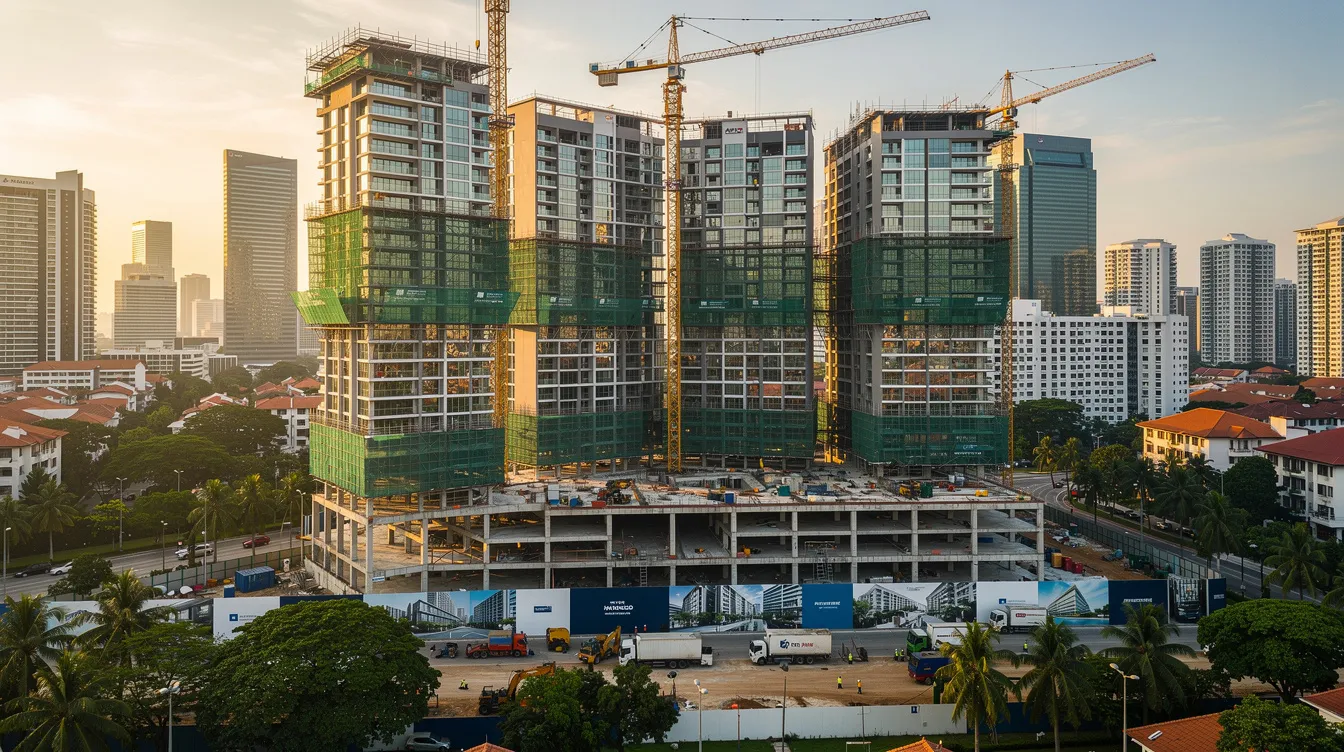
Common Cash-Flow Mistakes HDB Upgraders Make (And How To Avoid Them)
Misjudging cash timing can derail even an otherwise affordable upgrade. These four mistakes are the ones that surface most often in practice.
Mistake 1: Ignoring Timing Gaps Between Sale Proceeds And Payment Deadlines
BSD, ABSD, and the 5% down payment are due within days of signing. HDB sale proceeds, however, take 8 to 12 weeks to complete after the buyer exercises the option. If you are counting on HDB sale proceeds to cover your BSD, and your HDB sale has not completed by the BSD deadline, you face a cash shortfall that no amount of CPF funds can fix in time.
How to avoid it: Budget for a bridging loan with interest costs calculated upfront. Alternatively, negotiate completion dates and request an extension of stay on the HDB sale to align timelines. Work with your property agent and conveyancing lawyer to map exact dates before signing anything.
Mistake 2: Underestimating Renovation And Furnishing Costs
A “simple renovation” quote of S$40,000 can balloon to S$70,000 once you add a feature wall, upgraded flooring, full-height wardrobes in three bedrooms, and a wet-and-dry kitchen divider. Contractors present add-ons during the design phase, and each “small” addition costs S$2,000 to S$5,000.
How to avoid it: Set a hard ceiling on the renovation budget before signing the design contract. Phase non-essential works (study room built-ins, balcony upgrades, smart-home systems) to 6 to 12 months after move-in, once you have rebuilt cash reserves.
Mistake 3: Using Every Last Cent Of CPF And Cash For Down Payment
Deploying your entire ordinary account balance and all cash savings to meet the down payment leaves zero buffer. One interest rate adjustment, one quarter of reduced monthly income, or one unexpected medical bill, and the monthly mortgage becomes unserviceable.
How to avoid it: Deliberately leave a portion of CPF OA and at least S$30,000 in cash untouched as emergency reserves. If maintaining that buffer means you cannot afford your target unit, consider a smaller unit, a different project with a lower condo price, or waiting another year to build up enough cash.
Mistake 4: Not Planning For Higher Ongoing Condo Expenses
Private housing carries costs that HDB flat ownership does not:
-
Monthly condo maintenance fees: S$300 to S$600+ per month
-
Higher utility consumption in larger units with more air-conditioning
-
Property tax at owner-occupied residential rates (higher than HDB rates)
-
Home insurance premiums for private property
If you budget only for the monthly mortgage and ignore these recurring costs, your actual monthly cash flow deficit will be S$500 to S$1,000 higher than projected. Over a year, that is S$6,000 to S$12,000 of unplanned spending. Resale condos appreciated by 17% since April 2020, but appreciation does not help with monthly cash flow; it only matters when you sell.
Conclusion And Next Steps
The true cash needed to upgrade from HDB to a new launch condo in 2026 is far more than the 5% down payment that dominates showflat conversations. For a S$1.5M OCR condo with HDB sold first: approximately S$200,000 to S$260,000. For a S$1.8M condo with loan and timing complexity: S$250,000 to S$350,000. For keeping HDB as investment and buying a S$2.0M condo: S$450,000 to S$650,000+. Every dollar above the minimum 5% represents stamp duties, legal fees, renovation, and buffers that cannot be avoided, only planned for.
Your immediate next steps:
-
Get an updated loan statement and CPF transaction history for your current HDB flat. Know your outstanding loan balance and total CPF used plus accrued interest.
-
Shortlist 2 to 3 realistic new launch projects and review their price lists and progressive payment schedules.
-
Run your own cash calculation using the step-by-step method above, with your actual HDB sale proceeds, CPF balances, and target purchase price.
-
Sit down with a mortgage specialist and, if needed, a property agent experienced in HDB to condo upgrades, to validate your numbers before committing to any showflat booking.
If you found this useful, explore related topics: comparing new launch versus resale condos for HDB upgraders, and long-term asset progression planning from HDB to condo to landed property.
FAQ: Cash Needed To Upgrade From HDB To New Launch Condo In 2026
These FAQs address the most common questions from HDB upgraders planning 2026 moves.
How much cash must I have before even visiting new launch showflats?
At minimum, have the 5% cash for your target purchase price (S$75,000 for a S$1.5M unit) plus S$20,000 to S$30,000 for stamp duties and fees. Without this baseline, visiting a showflat creates emotional attachment to a unit you cannot close on, which leads to rushed financial decisions or overstretching into a higher condo price than your cash savings support.
Can I use CPF for everything except the 5% cash down payment?
Not quite. CPF from your ordinary account can cover the remaining 20% of the down payment (above the 5% cash portion), monthly mortgage instalments, and reimburse BSD after you have first paid it in cash. CPF cannot be used to pay ABSD upfront; that must be cash. CPF also cannot cover renovation, interim housing, moving costs, or bridging loan interest. And CPF refunds from your HDB sale go back into your ordinary account and retirement account; they are not liquid cash you can spend.
Is it still possible to upgrade if I have less than $150,000 cash?
Under specific conditions: a lower-priced new launch or smaller unit (sub-S$1.3M), a fully paid HDB with strong sale proceeds generating substantial cash, minimal other debt, and selling the HDB first to avoid ABSD. HDB owners must complete a 5-year MOP to upgrade, so timing also matters. The trade-offs are location (further from city centre), unit size (2-bedder instead of 3-bedder), or timing (waiting another year or two to save more). Enough cash to cover down payment, BSD, legal fees, and a buffer is non-negotiable.
What happens to my cash plan if government changes ABSD or BSD again after 2026?
Stamp duty changes directly affect upfront cash requirements. The last ABSD revision (April 2023) added 3 to 5 percentage points to most buyer categories overnight. Build at least a 10 to 15% “policy change buffer” into your calculations. If you have budgeted S$250,000 and a new round of cooling measures raises ABSD by 5%, you could need S$90,000 more in cash on a S$1.8M property. Check the latest IRAS stamp duty page and MAS notices before committing to any private property purchase.
How does this upgrade affect my longer-term goal of owning a landed property?
Locking too much cash and CPF into the 2026 condo reduces future loan capacity. If you deplete your ordinary account and S$300,000+ in cash savings for a S$2.0M condo, and landed homes in your target area cost S$3.5M to S$5.0M, you will need to rebuild substantial equity before the next move. Model a full asset progression path from HDB to condo to landed with explicit assumptions: expected condo holding period, annual appreciation rate, planned savings rate, and exit timing. If the numbers do not work across the full path, the right move may be a less expensive condo now that preserves borrowing power and cash reserves for a few years later.


