


Yes, decoupling is possible for private property in Singapore, but it triggers stamp duty, CPF and mortgage consequences and faces IRAS scrutiny if done to avoid ABSD. It works only for private residential property, not HDB flats, and the exiting owner’s share still gets taxed on the way out. Done properly, with genuine commercial substance and clean paperwork, it can lower the ABSD hit on a next purchase. Done as a pure tax move, it can attract penalties.
TL;DR:
- Decoupling only applies to private residential properties and cannot be done for HDB flats, with potential stamp duty, CPF, and mortgage implications.
- IRAS scrutinizes decoupling arrangements that appear solely designed to avoid ABSD, especially two-step 99-to-1 splits executed shortly after purchase.
- Proper decoupling requires documented market valuation, actual cash or CPF refunds, and a genuine commercial reason beyond tax avoidance to withstand legal scrutiny.
- Refinancing, CPF refunds, and legal costs typically extend the process to two or three months and can significantly impact affordability.
- Decoupling may reduce ABSD on a future purchase but involves risks if not properly documented or if done solely as a tax shortcut.
Table of Contents
- What decoupling means and why Singapore homeowners consider it
- How decoupling is executed: gift, part-sale and ownership-split routes
- Stamp duty, ABSD exposure and IRAS audit risk
- CPF, mortgage and affordability for the remaining owner
- Timeline and costs you should budget for
- When decoupling is not viable
- Deciding between decoupling and selling first
- A practitioner’s view on where decoupling goes wrong
- How Aesthetic Havens can support your next move
- Sources
- FAQ
What decoupling means and why Singapore homeowners consider it
Decoupling is the process of removing one co-owner’s name from a property’s title so that person becomes, for tax purposes, a non-owner. Once that transfer is complete, the exiting party can buy a second property under their own name without the count of the first property working against them under the Additional Buyer’s Stamp Duty rules.
Couples and co-owners in Singapore usually look at decoupling for one of three reasons.
- Lower ABSD on a second home: one spouse exits the first property so the other can later buy a second unit without triggering the higher ABSD tier tied to owning multiple properties.
- Estate and succession planning: parents or siblings restructure ownership shares ahead of inheritance, sometimes to simplify a will or avoid disputes later.
- Unequal financial contributions: co-owners who put in different amounts of cash or CPF want the title to reflect actual ownership stakes, not a 50-50 default.
The caveat that trips up a lot of people early: this only works for private residential property. HDB’s policy has, since April 1, 2016, disallowed transfers of ownership between spouses except in narrow situations such as death, divorce or documented extenuating hardship. If your only property is a flat, decoupling is largely off the table unless you fall into one of those exceptions.
How decoupling is executed: gift, part-sale and ownership-split routes
There are two main legal paths, and the one you choose depends on whether the property is fully paid off, whether there’s an outstanding mortgage, and how much cash or CPF the remaining owner can bring to the table.
- Gift transfer: the exiting owner’s share is transferred at no consideration. This route needs either an unencumbered title or the bank’s written consent to discharge the existing mortgage charge, plus a formal valuation to calculate stamp duty on the transferred share.
- Part-sale (equity buyout): the remaining owner buys out the exiting owner’s share at market value through a sale and purchase agreement, similar in structure to buying a resale flat or condo unit. This route usually requires fresh financing, since the remaining owner needs to fund the buyout and often refinance the whole loan solo.
- Ownership-split patterns, commonly 99-to-1: one party holds 99% and the other 1%, then the 1% share is later transferred out. This looks efficient on paper but is the structure IRAS watches most closely, because a two-step transaction completed shortly after the original purchase can look designed purely to dodge ABSD.
What separates a defensible transfer from a “sham” in the eyes of tax authorities usually comes down to timing and paper trail. A genuine restructuring has an independent valuation, a real sale agreement, actual money changing hands or CPF properly refunded, and some documented reason beyond tax planning. A 99-to-1 split executed within weeks of the original purchase, with no real change in who controls or benefits from the property, is exactly the pattern that has drawn prosecutions, detailed further below.
Pro Tip: Get an independent valuation dated close to the transfer and keep every piece of correspondence with your bank and lawyer. That paper trail is your best defense if IRAS ever asks questions.

Stamp duty, ABSD exposure and IRAS audit risk
Every decoupling transfer is dutiable. Buyer’s Stamp Duty and Additional Buyer’s Stamp Duty are both calculated on the higher of the purchase price or market value, and this applies even when only a partial share, not the whole property, changes hands. The dutiable amount is the value of the share being transferred, not the full property price.
Singapore’s current ABSD rates, as set by IRAS, mean a Singapore Citizen buying a second residential property pays 20% ABSD, a Singapore Permanent Resident buying a second property pays 30%, and a foreign buyer faces 60% ABSD. These rates apply on top of BSD, which is charged on a marginal scale regardless of buyer profile. That single figure, a 20% ABSD tier for citizens on their second property is usually the whole reason someone considers decoupling in the first place.

Seller’s Stamp Duty can also apply if the transfer happens within the holding period that triggers SSD on the original purchase, adding another layer of cost to consider before signing anything.
The bigger risk is not the duty itself but what happens when a transfer looks engineered purely to avoid it. IRAS has publicized convictions for giving false or misleading information during stamp duty audits tied to two-step 99-to-1 arrangements, and the agency can recover unpaid duty plus a surcharge on top. The High Court has separately held that decoupling undertaken solely to avoid ABSD may be illegal, which is a meaningful signal that courts, not just the tax authority, are willing to unwind arrangements that lack real substance.
Paperwork that reduces this risk in practice includes:
- An independent valuation obtained around the time of transfer, not months before or after.
- Contemporaneous sale documents showing money actually moved, or a properly recorded CPF refund.
- Some documented reason for the restructuring beyond tax savings, such as an estate plan, a change in financial contribution, or a genuine buyout.
CPF, mortgage and affordability for the remaining owner
The part people underestimate most is the CPF refund. If the exiting owner used CPF savings to fund the original purchase, that money, plus the accrued interest it would have earned sitting in the CPF account, has to be refunded to their CPF account before the transfer can complete, unless a waiver applies. For many households, this is the single biggest cash crunch in the entire process, because it means finding real money to replace CPF funds that were never meant to be spent as cash.
On the mortgage side, any existing bank loan carries a charge against the property. The bank has to either discharge that charge (if the exiting owner is being fully bought out) or the remaining owner needs to refinance the loan solely under their own name. That refinancing is subject to the Total Debt Servicing Ratio framework, which means the remaining owner’s income alone has to qualify for the full loan quantum, without counting the exiting spouse’s income.
Practical points to plan around:
- CPF refund first: confirm the exact amount, including accrued interest, with CPF before assuming the transaction is affordable.
- Solo TDSR test: run the numbers on whether one income can carry the full mortgage before committing to any structure.
- Early redemption penalties: refinancing during a lock-in period on the existing loan can trigger a penalty fee, so check the loan’s terms first.
Pro Tip: Talk to your bank before you talk to your lawyer. A conditional loan approval in hand changes the entire negotiation and stops you from signing paperwork you can’t actually afford to complete.
Timeline and costs you should budget for
A clean decoupling on an unencumbered property, with no outstanding loan, typically moves in 2 to 4 weeks. Add a mortgage, refinancing and a CPF refund into the mix, and the realistic timeline stretches to 2 to 3 months, according to conveyancing guides covering the process.
The sequence generally runs: valuation, then a conversation with your bank about discharging or refinancing the loan, then legal drafting of the sale and purchase agreement or gift transfer, then stamping the document with IRAS, then the CPF discharge or refund if applicable.
Budget for these cost items:
- Legal fees: typically S$3,000 to S$6,000 for conveyancing work on the transfer.
- Valuation fees: usually S$200 to S$1,000 depending on the property type and valuer.
- Stamp duty: varies significantly based on the value of the share transferred and whether ABSD applies to the buying party.
- Early redemption penalties: possible if refinancing happens during an existing loan’s lock-in period.
When decoupling is not viable
HDB flats sit outside this entire strategy for most households. Since April 1, 2016, HDB has generally disallowed transfers of ownership between spouses, with exceptions only for situations like death, divorce or assessed extenuating circumstances.
Singapore Permanent Resident households also face a related constraint: HDB requires disposal of an existing flat within six months of acquiring private property in certain cases, and Minimum Occupation Period rules affect when a flat can even be sold or restructured in the first place.
A few other situations block or seriously complicate decoupling.
- Unconsented mortgage charge: if the bank has not agreed to discharge or transfer the loan, the transaction cannot proceed as planned.
- Unresolved bankruptcy: an owner in bankruptcy proceedings generally cannot transfer property interests freely.
- Disputed beneficial ownership: unresolved disagreements over who actually owns what share can stall or invalidate a transfer.
Deciding between decoupling and selling first
Decoupling keeps the asset in the family and can lower ABSD exposure on a next purchase, but it comes with legal fees, CPF refund pressure, solo mortgage qualification and IRAS audit risk. Selling the existing property outright resets your ABSD profile cleanly and gives you liquidity, though you take on price risk in a moving market and lose the asset entirely. A side-by-side look at selling one to buy two is worth reading if you are weighing both paths seriously.
- Check your ABSD exposure: work out what tier you’d fall into as a buyer under both scenarios before deciding anything.
- Confirm liquidity: make sure you can cover the CPF refund and legal fees without straining your cash position.
- Test solo loan affordability: run the TDSR math for the remaining owner alone, not as a household.
- Factor in estate and family plans: some households decouple for succession reasons that have nothing to do with tax.
- Weigh your tolerance for audit risk: a structure with weak commercial substance is a real liability, not just a paperwork inconvenience.
Pro Tip: If your only motive is tax savings and the structure has no other commercial logic behind it, that is the clearest sign you should talk to a lawyer before signing anything, not after.
A practitioner’s view on where decoupling goes wrong
The mistakes I see most often with clients have nothing to do with the tax rules themselves. They come from underestimating whether one income can actually carry a mortgage alone, forgetting that a CPF refund with accrued interest has to be found in cash, and skipping an independent valuation because it feels like an unnecessary step.
The sequence that holds up best starts with a proper valuation, followed by a lender pre-check so you know exactly what the remaining owner can borrow, then legal drafting that reflects the real commercial reason for the restructuring, and transparent disclosure if IRAS ever asks questions.
Decoupling can be a legitimate part of a long-term property plan, but treating it as a shortcut to dodge ABSD is the fastest way to end up in an audit. Conservative, well-documented decisions tend to age a lot better than clever ones.
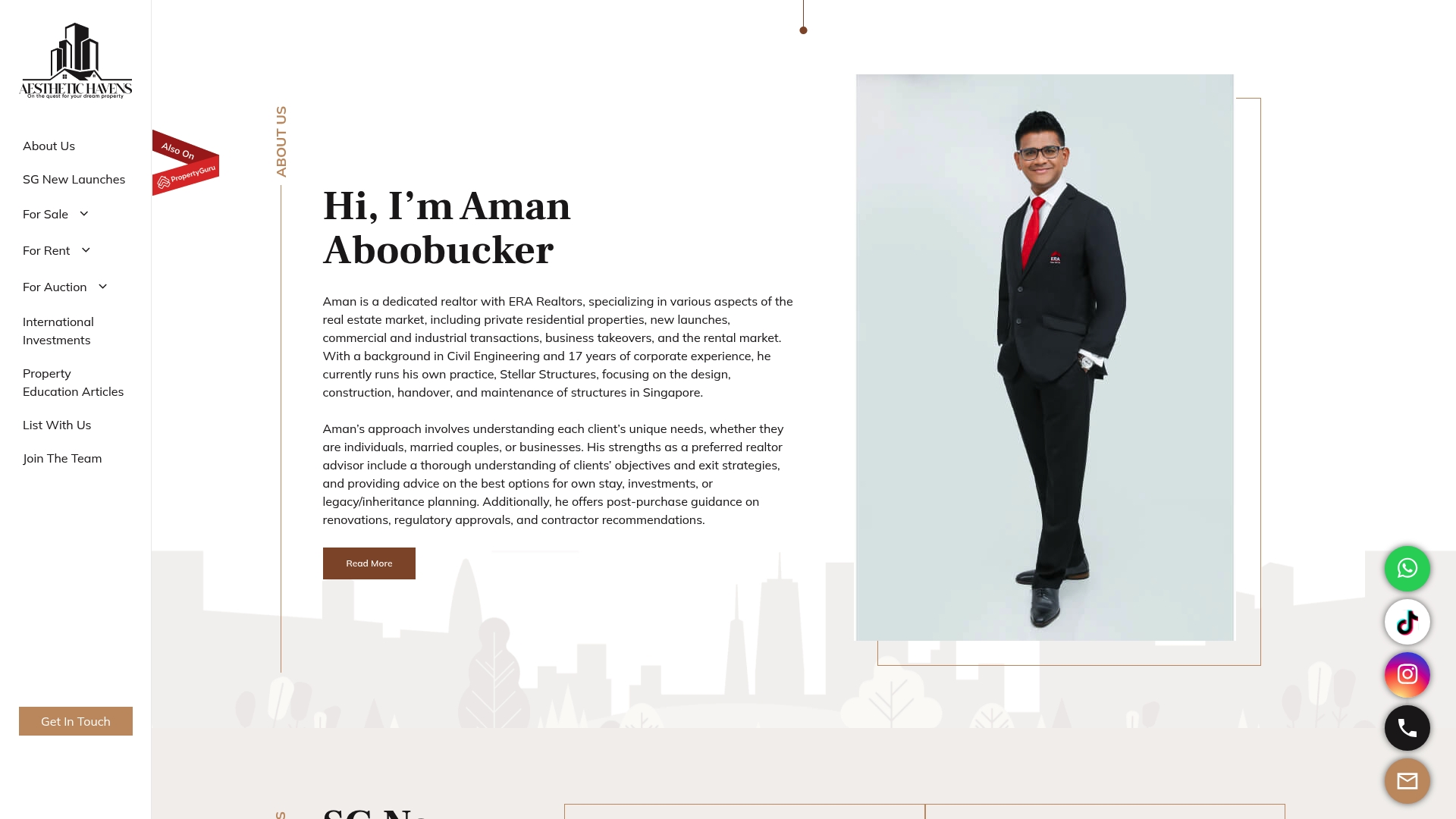
— Aman
How Aesthetic Havens can support your next move
If you’re weighing decoupling against selling, the practical bottleneck is usually coordination, not the concept itself. Aesthetic Havens works alongside Singapore homeowners on the pieces that actually slow this process down.
- Valuation coordination: getting an independent, dated valuation for your stamp duty and lender discussions.
- Mortgage and lender liaison: connecting you with the right conversations early, before you’re locked into paperwork.
- Conveyancing referrals: pointing you to the legal support that handles the actual transfer documentation.
- CPF and IRAS procedural guidance: helping you understand what documentation and timing typically apply.
None of this replaces a lawyer or tax adviser, and we’re upfront about that. What we offer is a starting point: a free initial consultation to walk through your specific ownership structure, your goals, and whether decoupling, selling, or another path fits your situation best.
Sources
- HDB — Change in flat ownership / HDB policies
- IRAS — Additional Buyer’s Stamp Duty (ABSD) / Stamp duty rates
- Yuen & Partners — Decoupling Private Property Ownership in Singapore
- The Straits Times — Property ‘decoupling’ illegal if done solely to avoid taxes: High Court
FAQ
How much does it cost to decouple a property?
Costs typically include legal fees of roughly S$3,000 to S$6,000, a valuation fee of around S$200 to S$1,000, and stamp duty calculated on the value of the share being transferred. The exact stamp duty amount depends heavily on whether ABSD applies to the incoming owner and the market value of the property.
Is decoupling illegal in Singapore?
Decoupling itself is not illegal, but the High Court has ruled that a transfer done solely to avoid ABSD can be found illegal. IRAS has also prosecuted cases involving false or misleading information given during stamp duty audits tied to two-step ownership arrangements.
How do you decouple property in Singapore?
The process generally runs through an independent valuation, a discussion with your bank about discharging or refinancing the existing mortgage, legal drafting of a gift transfer or sale agreement, stamping the document with IRAS, and a CPF refund if CPF savings were used in the original purchase. Timelines run from about 2 to 4 weeks for unencumbered properties up to 2 to 3 months when loans and CPF refunds are involved.
What does it mean to decouple a property?
Decoupling means removing one co-owner’s name from a property’s title so that person is treated as a non-owner for tax purposes going forward. It applies to private residential property in Singapore, not HDB flats, and the transferred share still attracts stamp duty regardless of the method used.


