


COV, or cash over valuation, is the cash difference between the price you agree to pay for an HDB resale flat and HDB’s official valuation of that flat. If the price is higher than the valuation, that gap is COV, and it must be paid entirely in cash, never through CPF or a housing loan. The moment you get an Option to Purchase, request the valuation fast and keep a cash buffer ready in case the number comes in lower than what you agreed to pay.
TL;DR:
- More than 80% of resale flat buyers paid no cash over valuation in 2023, with median COV dropping to zero after grant improvements.
- COV is typically between $0 and $80,000, influenced by estate characteristics like location, rarity, and supply-demand imbalances.
- Financing and CPF rules limit loans and CPF usage to the valuation amount, making COV an entirely cash-focused expense.
- Approaching valuation promptly within 1-2 days of receiving the OTP helps prevent surprises and reduces the risk of overpaying.
- Building a comparable transaction file before negotiations can significantly lower the likelihood of having to pay an unaffordable COV.
Table of Contents
- What Does HDB COV Actually Mean?
- How COV Changes Your Loan, CPF, and Stamp Duty Math
- When Does HDB Valuation Happen, and What Are Your Options?
- How Can You Avoid or Reduce a High COV?
- What Drives COV in Singapore’s Resale Market?
- How Common Is COV Right Now?
- Aesthetic Havens’ Budget Worksheet for COV Buyers
- How I Advise Clients on Accepting or Rejecting COV
- Get a Valuation Review Before You Exercise Your Option
- Sources
What Does HDB COV Actually Mean?
The formula is simple: purchase price minus HDB valuation equals COV, whenever that number lands above zero. If the valuation matches or exceeds the price, COV is zero, and you have nothing extra to fund in cash.
Here’s how it plays out on a real unit. Say you agree to buy a 4-room flat in Bishan for $650,000. HDB’s valuation comes back at $620,000. That $30,000 gap is your COV, on top of the $620,000 that your loan and CPF savings can help cover.
- Purchase price: $650,000
- HDB valuation: $620,000
- COV: $650,000 minus $620,000 = $30,000, payable in cash only
Flip the numbers and the story changes entirely. Agree on $600,000 with a valuation of $620,000, and COV is zero. You’re not overpaying against the bank’s own yardstick, and your loan and CPF calculations run against the full valuation figure instead of a discounted one.
How COV Changes Your Loan, CPF, and Stamp Duty Math
Financing rules key off valuation, not the price you negotiated, and that single fact drives almost every surprise buyers run into. Your loan quantum is capped against whichever is lower: the purchase price or the valuation, per MAS’s loan-to-value guidance. CPF Ordinary Account withdrawals follow the same logic. CPF funds can only be used up to the valuation amount, and CPF Board rules state plainly that CPF cannot be used to pay any COV.
That leaves COV sitting entirely outside your financing stack. It’s the one line item your bank loan and your CPF savings will never touch, so it has to come from cash in hand or from a temporary loan from family.
Stamp duty makes this worse, not better. Buyer’s Stamp Duty and, where applicable, Additional Buyer’s Stamp Duty are assessed on whichever is higher: the purchase price or the valuation. A high COV usually means your price sits above valuation, so BSD gets calculated on that higher purchase price, not on the friendlier valuation figure.
Budget for these cash items on top of COV, and use practical financing tools to prepare your cash flow: Haio
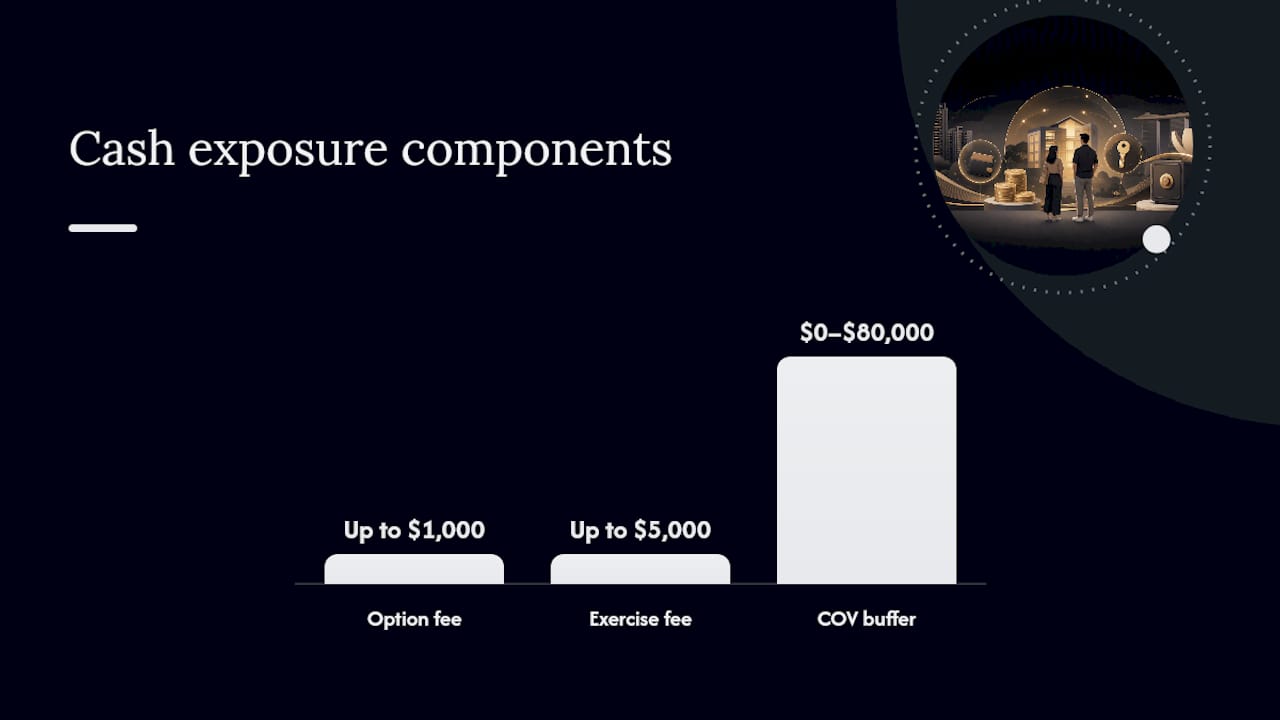
- Option fee (up to $1,000, negotiated with the seller)
- Exercise fee (up to $5,000)
- Legal and conveyancing fees
- BSD, calculated on the higher of price or valuation
Choosing between an HDB loan and a bank loan changes your interest rate and eligibility, but it does nothing to change how COV is funded. Cash is cash, regardless of which lender you pick.
When Does HDB Valuation Happen, and What Are Your Options?
Valuation only happens after you’ve already agreed on a price, which is exactly why COV catches so many buyers off guard. Here’s the sequence, in order:
- Negotiate and agree on a price with the seller, then the seller issues an Option to Purchase.
- Pay the option fee (up to $1,000) to secure the OTP.
- Submit a Request for Value through HDB’s portal soon after receiving the OTP. HDB confirms valuation is only requested after the Option to Purchase is granted, and the result typically arrives within a few working days.
- Decide within your exercise window, generally 21 days from OTP issuance, once you see the valuation.
- Choose one of three paths: top up cash to cover COV and exercise the option, exercise as planned if valuation meets or beats price, or walk away and forfeit the option fee.
That third path stings, but sometimes it’s the cheaper mistake. Losing $1,000 is a lot less painful than locking yourself into a flat with $50,000 of COV you didn’t budget for.
Pro Tip: Submit your Request for Value within a day or two of getting the OTP. Every day you wait is a day less inside your 21 day exercise window to react if the number disappoints you.
How Can You Avoid or Reduce a High COV?
The single most useful thing you can do before making any offer is build a comparable-transaction file. Pull recent resale prices for the same block, similar floor range, and comparable renovation condition from HDB’s resale transaction data, and bring those numbers into every conversation with the seller or agent.
Once you have that file, negotiation gets a lot more concrete:
- Ask the seller to price at or near valuation, or agree to a capped COV before you commit to the OTP.
- Trade non-price concessions for a lower COV. Offering a faster completion date or greater flexibility on the seller’s moving timeline sometimes moves a seller more than a lower number does.
- Propose a structured compromise, such as a smaller COV paired with a quicker exercise and completion, and put every agreed term in writing before paying the option fee.
- Watch for agent language that dodges specifics, like “the market is moving fast” or “another buyer is interested,” without any comparable data to back it up. That’s a pressure tactic, not information.
Sample phrasing that actually works in these conversations: “Based on the last three transactions on this floor range, valuations came in at $X. We’re comfortable moving forward if we can agree on a price closer to that range, or split the difference with a fixed COV cap.” Calm, specific, and backed by data beats an emotional counteroffer every time.
If the seller doesn’t budge and won’t explain the premium with anything beyond “the market,” that’s your signal to walk. A flat with no comparable file to justify its price is a flat priced on hope, not fundamentals.
What Drives COV in Singapore’s Resale Market?
COV rarely shows up randomly. It clusters around specific unit and market characteristics that push buyers to pay above valuation despite the extra cash burden.
Location and access usually top the list. Flats near MRT stations, in central mature estates, or within popular school zones tend to draw more competing offers, and sellers know it. Rare unit features matter too: high floors, corner units, unusual layouts, and heavily renovated flats often carry premiums that valuers are slower to recognize than the market itself.
On the supply side, MOP waves release a burst of newly eligible flats onto the resale market, and when that supply is thin relative to demand, competition pushes prices past valuation. On the buyer side, cash-rich purchasers, urgent movers facing a lease deadline, and speculative momentum in a hot estate all add fuel.
- Central, MRT-linked estates: higher COV risk
- Rare or high-floor units: premium-justified COV
- Post-MOP supply crunches: temporary price spikes
- Urgent or cash-flush buyers: bidding pressure that outpaces valuation
None of these factors guarantee COV. They just tell you where to expect it, so you can budget accordingly before you even start viewing units.
How Common Is COV Right Now?
COV is far less common today than it was a few years ago. After enhancements to CPF Housing Grants took effect in February 2023, about 18% of resale flat buyers paid any COV at all, down from roughly 36% in 2021-since-14-february-2023-when-enhancements-to-the-cpf-housing-grant-were-announced), and the median COV across every transaction, including those that paid nothing extra, sat at $0.
The number that matters: roughly 4 in 5 resale buyers paid zero COV following the 2023 grant enhancements, though the picture isn’t uniform across estates.
Recent reporting backs this up at the high end of the market too. Most buyers of million-dollar HDB flats in 2025 paid no COV at all, with COV concentrated in a handful of hot estates rather than spread evenly across the island. Where it does show up, illustrative ranges in fast-moving pockets run from around $20,000 to $80,000, driven mostly by valuations lagging behind prices that spiked faster than appraisers could keep pace with. That lag, not a broad market trend, is usually the real story behind a high COV.
Aesthetic Havens’ Budget Worksheet for COV Buyers
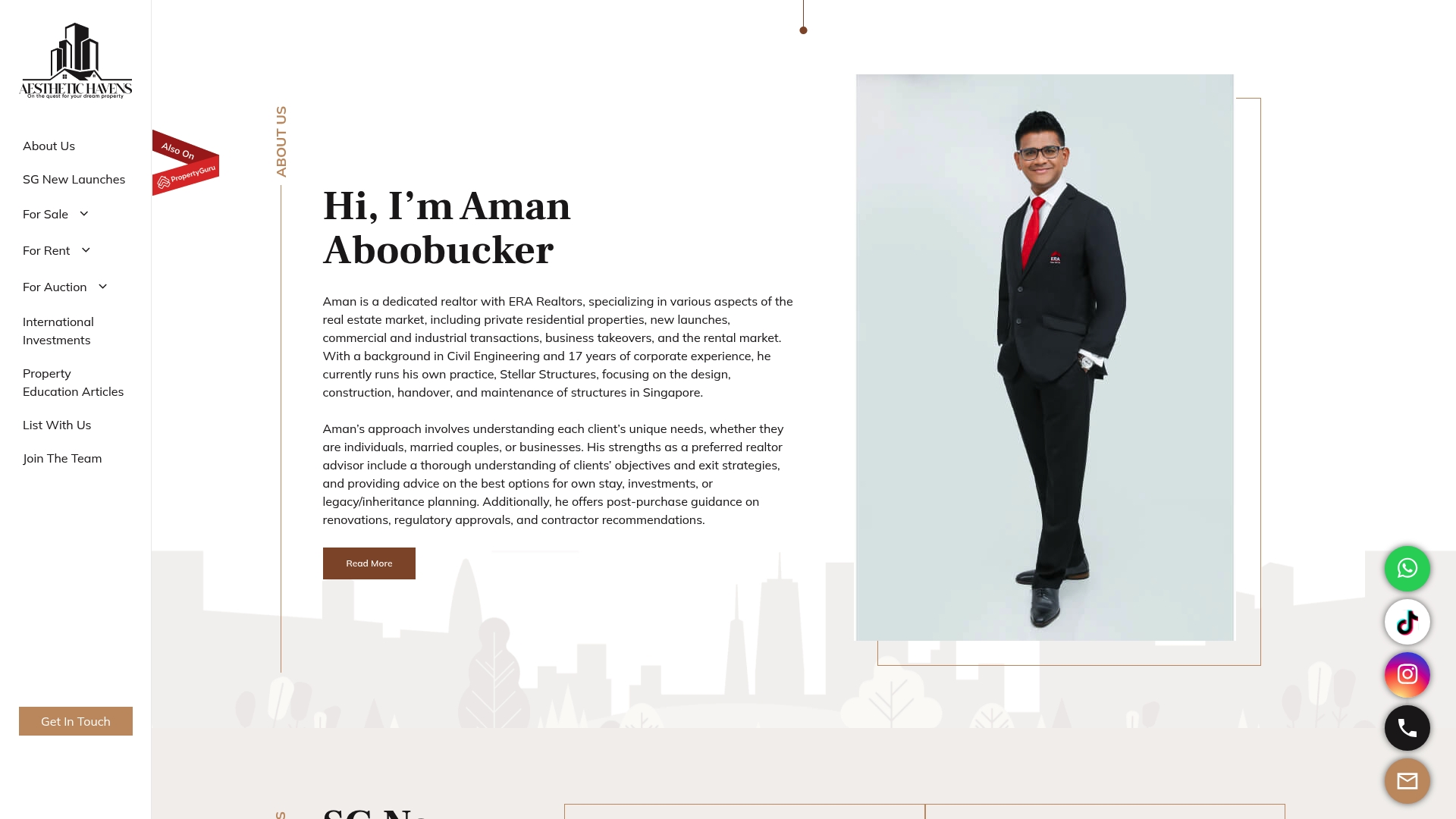
Aman Aboobucker at Aesthetic Havens works with HDB resale buyers across Singapore, and the biggest gap he sees isn’t in negotiation skill. It’s in buyers not knowing what their total cash exposure looks like before they sign an OTP.
Here’s a simple worksheet to fill in before you make an offer:
| Cash item | Typical range | Notes |
|---|---|---|
| Option fee | Up to $1,000 | Negotiated with seller |
| Exercise fee | Up to $5,000 | Paid when exercising OTP |
| COV buffer | $0 to $80,000 | Varies heavily by estate and unit |
| Legal fees | A few hundred to low thousands | Depends on law firm |
| BSD estimate | Based on higher of price or valuation | Confirm before committing |
Three red flags worth watching for in any negotiation: an agent who cites “other interested buyers” without naming a comparable transaction, a seller who refuses any request to see recent block-level resale data, and pressure to exercise the option before your Request for Value has even come back. Aesthetic Havens builds a comparable-transactions file and fast valuation check for clients before they commit cash, so the negotiation happens with numbers on the table rather than guesswork.
- Confirm the option fee and exercise fee amounts in writing
- Request valuation within 1 to 2 days of receiving the OTP
- Set a personal COV ceiling before you start viewing units
- Keep a cash buffer sized to the estate’s recent COV pattern
How I Advise Clients on Accepting or Rejecting COV
I’ve told clients to walk away from flats with COV north of $60,000 when the comparables simply didn’t support it, and I’ve told others to pay a modest premium without hesitation when the unit was genuinely scarce. The difference always comes down to data, not gut feeling. If you’re staring at a valuation number and unsure which side of that line you’re on, get a second opinion before your exercise window runs out.
— Aman
Get a Valuation Review Before You Exercise Your Option
If COV is worrying you, the fastest way to know where you stand is a proper valuation review, not another round of guessing based on portal listings. Aesthetic Havens pulls recent block-level comparables, checks them against your unit’s floor, orientation, and renovation condition, and gives you a realistic price range before you commit cash you can’t recover.
A first consultation gets you a comparable-transactions file for your target block or estate, a recommended offer range based on recent resale data, and a clear read on where your specific unit is likely to land relative to valuation. That’s the difference between negotiating on instinct and negotiating with a number you can defend. Whether you’re deciding between an HDB loan and a bank loan, or weighing tenure and title implications before you sign, getting the valuation question answered early keeps every other decision simpler.
If you’ve already got an OTP in hand and a valuation coming back soon, reach out through Aesthetic Havens now, before your exercise window forces a decision without the data behind it.
Sources
- Request for value — HDB resale process
- Using CPF to buy a home — CPF Board
- Loan tenure and loan-to-value limits — MAS


